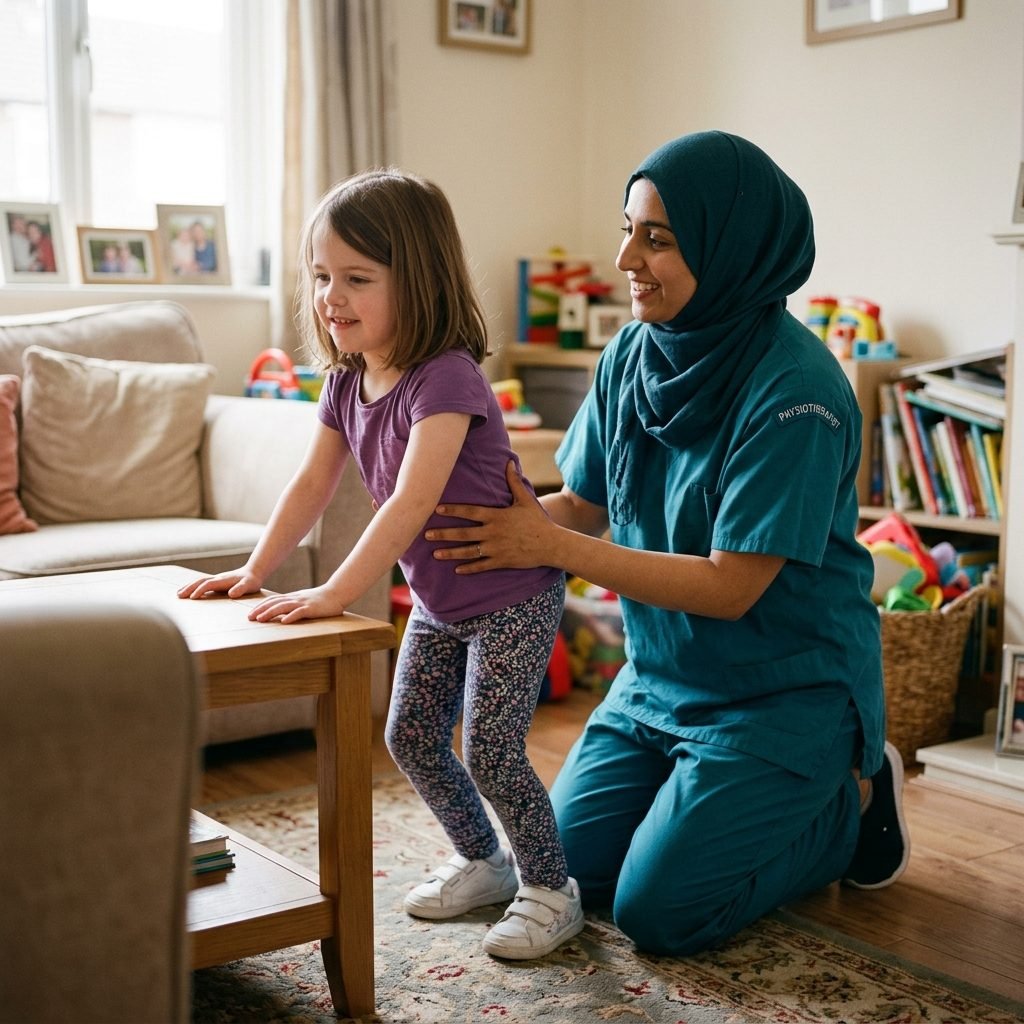
A definitive guide for parents on physiotherapy for Cerebral Palsy. Explore strategies for spasticity management, motor milestone development, bracing, and maximizing your child's functional independence.
What is Cerebral Palsy? Understanding the Brain Injury
Cerebral Palsy (CP) is not a singular disease, but rather an umbrella term for a group of complex neurological disorders that permanently affect body movement, muscle coordination, and balance. 'Cerebral' refers to the brain, and 'Palsy' refers to muscle weakness or poor control. CP is caused by an injury to, or abnormal development of, the immature brain—most often occurring before birth, during delivery, or shortly after birth (due to factors like oxygen deprivation, premature birth, or brain infections). It is paramount for parents to understand one foundational truth: the brain injury itself is 'non-progressive.' This means the actual damage to the brain will not worsen or spread over time. However, the physical manifestations—the muscle tightness, joint contractures, and bone deformities—are highly progressive and will worsen as the child grows and gains weight if left unmanaged. The core mission of physiotherapy is to actively manage these evolving physical symptoms, guide musculoskeletal growth, and prevent bodily deterioration.
Classifications of CP and Their Motor Impact
Cerebral Palsy is classified based on the predominant type of movement disorder, which directly correlates to the specific area of the brain damaged. 1. Spastic CP: The most common type (affecting ~80% of individuals). It is characterized by hypertonia—stiff, tight muscles that make movements jerky, restricted, and exhausting. 2. Dyskinetic (Athetoid) CP: Characterized by uncontrollable, involuntary, and often twisting or writhing movements (fluctuating between slow and rapid). These involuntary movements frequently affect the face and tongue, severely impacting speech and swallowing. 3. Ataxic CP: Affects balance and spatial coordination. Children with Ataxic CP often walk with a wide-based, unsteady gait and struggle with precise, quick movements like writing or buttoning clothes. 4. Mixed CP: A combination of symptoms from more than one type (most commonly Spastic and Dyskinetic). The physiotherapist conducts a meticulous assessment to determine the specific motor presentation and tailors the intervention to address the unique challenges of that CP type.
The Ultimate Goal: Maximizing Functional Independence
There is currently no medical 'cure' that can reverse the brain damage that causes Cerebral Palsy. However, structured, intensive physiotherapy makes an astronomical difference in the trajectory of the child's life. The primary objective is not necessarily to make the child walk 'normally' or perfectly like their peers. Instead, the ultimate goal is to 'Maximize Functional Independence' and optimize quality of life. We focus relentlessly on enabling the child to perform Activities of Daily Living (ADLs) with the least amount of physical assistance possible. This includes teaching them how to safely transition from the floor to a chair, sit upright to eat and learn, and ambulate (if biologically feasible) safely with or without mobility aids. 'Early Intervention' (initiating therapy in the first months and years of life) is critical. During this window, the infant's brain exhibits peak neuroplasticity—the ability to rewire itself and forge new neural pathways to bypass damaged areas and learn foundational motor skills.
Spasticity Management and Muscle Tone Regulation
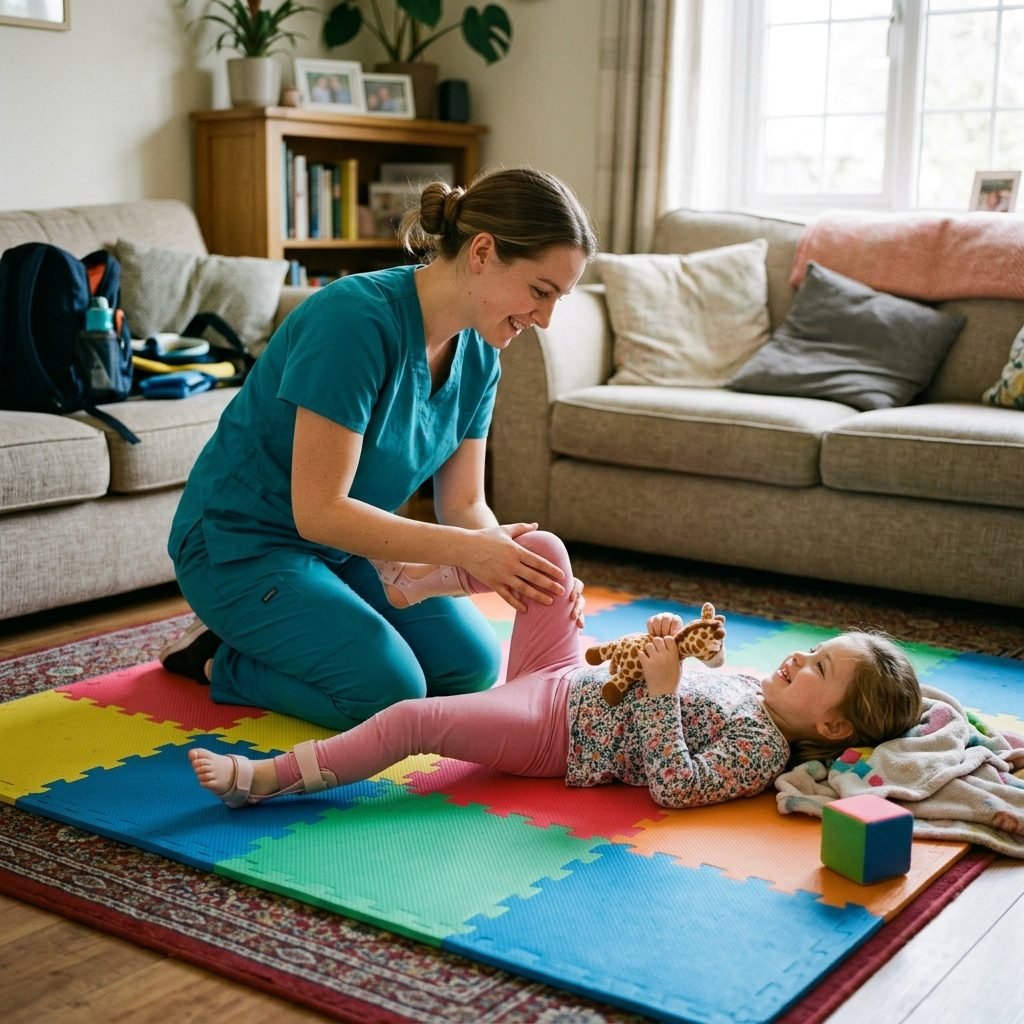
Spasticity is the defining challenge for the majority of children with CP. The injured brain continuously misfires, sending relentless signals demanding the muscles stay contracted. This chronic tightness is painful, expends massive amounts of energy, and forcefully pulls joints into abnormal alignments (resulting in toe-walking or 'scissoring' legs). Physiotherapy manages this through rigorous, daily passive and active stretching protocols to maintain muscle length and prevent the tendons from shortening permanently. We frequently utilize splints and serial casting to hold joints in a prolonged, gentle stretch. In many cases, we collaborate closely with pediatric neurologists who administer Botulinum Toxin (Botox) injections into the most severely spastic muscles. Botox temporarily paralyzes the overactive muscle (lasting 3-6 months). This creates a 'golden window' of opportunity for the physiotherapist to aggressively strengthen the opposing (antagonist) muscles and teach the brain new, healthier movement patterns that were previously blocked by the spasticity.
Facilitating Gross Motor Skill Development
Children with CP typically experience significant delays in achieving standard gross motor milestones, such as establishing head control, rolling over independently, sitting without support, crawling, and pulling to stand. The pediatric physiotherapist acts as a facilitator for these milestones. We utilize a 'Motor Learning' approach, breaking complex skills down into manageable, teachable components. Because repetition is the absolute key to neuroplastic change in the brain, we disguise grueling therapy as play. We use therapy balls, bolsters, and highly engaging auditory/visual toys to motivate the child to reach, stretch, and bear weight on their limbs. Through thousands of repetitions in a playful environment, we build the crucial core strength and neuromuscular coordination required for the child to successfully transition to the next developmental stage.
24-Hour Postural Management and Adaptive Equipment
Children with severe physical involvement often lack the core strength to hold their bodies upright against gravity. Sitting or lying in distorted, asymmetrical postures for hours every day, especially while their bones are actively growing, inevitably leads to devastating structural deformities like severe scoliosis (spinal curvature) or hip dislocation. Therefore, '24-Hour Postural Management' is a cornerstone of CP care. We assess for and prescribe highly customized adaptive equipment. This includes specialized seating systems (wheelchairs with molded lateral trunk, pelvic, and head supports) to ensure the child sits symmetrically for learning and eating. Crucially, we prescribe 'Standing Frames' (Standers) for children unable to stand independently. Daily supported standing is a medical necessity; it promotes bone density (preventing osteoporosis), improves respiratory and digestive function, provides a prolonged stretch to spastic leg muscles, and offers the immense psychological benefit of interacting with peers at eye level.
Gait Retraining and the Critical Role of Orthotics (AFOs)
If a child possesses the neurological capacity for ambulation, gait training becomes a central focus. The gait pattern in CP is often highly inefficient, characterized by crouched walking, scissoring, or toe-walking, leading to rapid fatigue and joint damage. To correct biomechanical alignment and provide stability, we rely heavily on orthotic devices, most commonly the Ankle-Foot Orthosis (AFO). Custom-molded from rigid or semi-rigid plastic, an AFO encompasses the lower leg and foot. Its purpose is to prevent foot drop, stabilize a wobbly ankle, and provide a flat, stable base of support, physically preventing the spastic calf muscle from pulling the child onto their toes. With the AFO providing mechanical stability, walking becomes safer, more biomechanically correct, and far less energy-consuming. Physiotherapy integrates the use of AFOs with gait training using assistive devices (like posterior walkers or loftstrand crutches) to maximize the child's speed, balance, and independence.
Aquatic Therapy and Hippotherapy (Equine Movement)
Because performing exercises against gravity on land can be exhausting and painful for a spastic child, we frequently utilize highly effective alternative environments. 'Aquatic Therapy' (hydrotherapy) in a warm pool is exceptional. The warm water immediately helps to relax spastic muscles, while the water's buoyancy eliminates the effects of gravity. This allows the child to practice large movements, balance, and walking without the paralyzing fear or consequence of falling. Another strongly evidenced-based modality is 'Hippotherapy' (therapy utilizing equine movement). The three-dimensional, rhythmic walking motion of a horse precisely mimics the movement of the human pelvis during walking. Sitting on the horse sends natural, organizing motor signals to the child's brain while forcing their deep core muscles to constantly fire to maintain balance. It yields remarkable improvements in posture, trunk control, and balance, all while the child simply enjoys 'riding.'
Preventing Contractures and Surgical Interventions
If severe spasticity is not aggressively managed, the constantly contracted muscle will permanently shorten, and the joint will become rigidly 'frozen' in a distorted position—this is known as a contracture. Contractures cause chronic pain and make basic hygiene and dressing extremely difficult. Physiotherapy (via daily stretching and bracing) is the primary defense against them. However, if contractures develop or spasticity is intractable, orthopedic surgeons must intervene with procedures like 'Tendon Lengthening' (cutting and elongating the tight tendon) or neurosurgeons may perform Selective Dorsal Rhizotomy (SDR) on the spinal cord to permanently cut the sensory nerves causing the spasticity. Physiotherapy following these major surgeries is absolutely mandatory and incredibly intense. While surgery removes the mechanical restriction, the child requires months of grueling rehabilitation to strengthen the profoundly weak muscles and teach the brain how to move the body with its newly altered mechanics.
Constraint-Induced Movement Therapy (CIMT) for Hemiplegia
Children diagnosed with Hemiplegic CP have impairment affecting only one side of their body (one arm and one leg). A natural consequence of this is 'Learned Non-use'; the child quickly realizes it is easier to use their unaffected, strong arm for everything and completely ignores the affected arm. To combat this, we utilize a highly effective, neuroplasticity-driven intervention called Constraint-Induced Movement Therapy (CIMT). This involves placing a lightweight cast, splint, or mitt on the child's 'good' (unaffected) hand for several hours a day over consecutive weeks. This physical constraint forces the child—often out of frustration but driven by the desire to play—to engage and use their affected, neglected arm. Through intensive, repetitive, task-oriented training during the constraint period, we literally rewire the cortical maps in the brain, permanently improving the motor function and spontaneous use of the affected limb.
Empowering the Family: Home Exercise Programs (HEP)
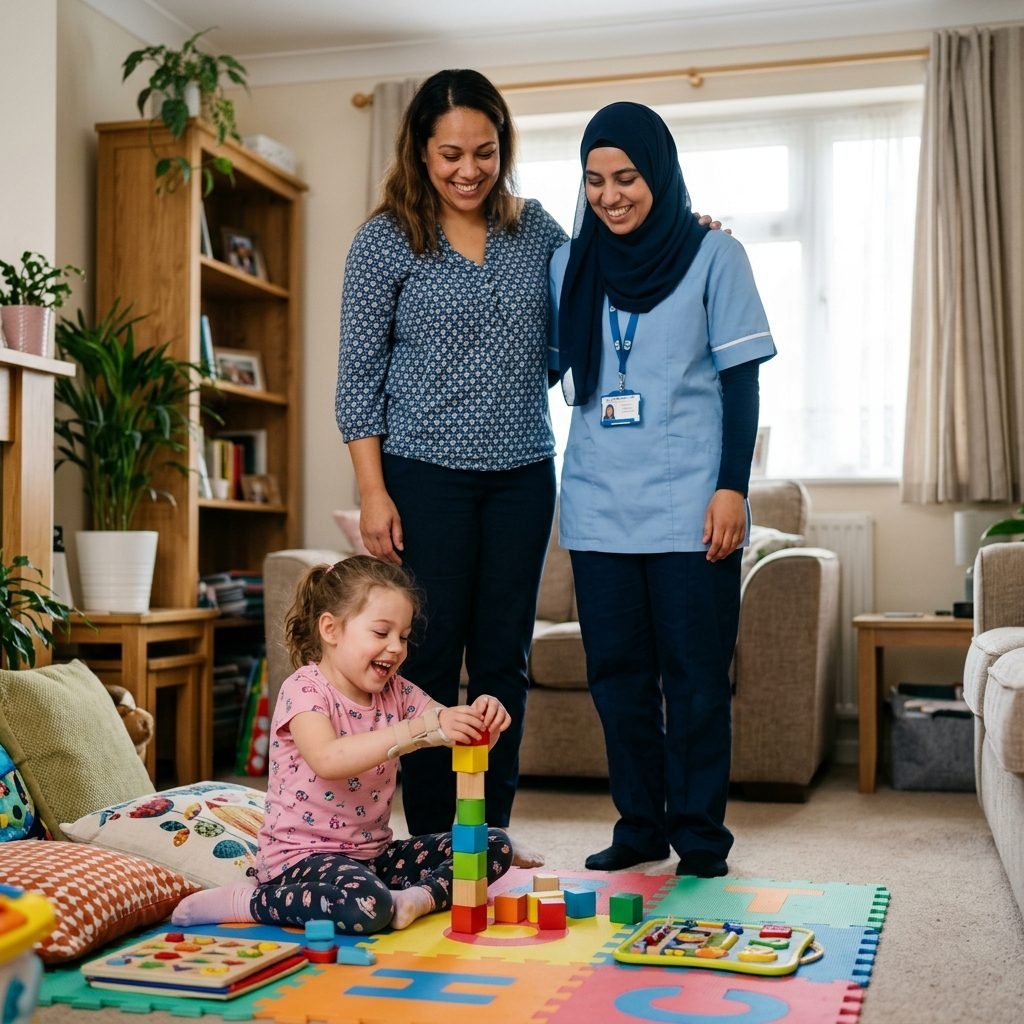
The most important and influential physiotherapists in a child's life are their parents. Attending a clinic for one or two hours a week is vastly insufficient to drive the necessary neurological changes. Therefore, the family is an integral partner in the treatment plan. We dedicate significant time to educating and physically training parents on how to safely perform daily stretching routines and how to seamlessly integrate 'therapy into play' at home. We teach critical 'Handling Techniques'—showing parents how to carry, feed, and dress their child in specific ways that inhibit spasticity and promote normal movement patterns, rather than triggering abnormal reflexes. Providing the family with robust psychological support, practical guidance, and a realistic, manageable Home Exercise Program (HEP) is the undisputed cornerstone of successful, long-term CP rehabilitation.
Transitioning to Adulthood: Maintaining Function
Cerebral Palsy is a lifelong condition, and the physical challenges evolve significantly as the child transitions into adolescence and adulthood. While longitudinal bone growth stops, the body mass increases, placing a exponentially heavier mechanical burden on compromised, weakened joints. Tragically, many adolescents who were ambulatory as children lose the ability to walk in adulthood due to chronic pain, severe fatigue, and early-onset joint degeneration (osteoarthritis). The focus of physiotherapy shifts radically in this phase; it moves from 'acquiring new motor skills' to 'maintaining existing function.' We prioritize pain management protocols, cardiovascular fitness, and obesity prevention. Crucially, we focus on community independence, which may involve transitioning the young adult to a power wheelchair for navigating college campuses or workplaces, ensuring they have the environmental adaptations necessary to participate fully in society as independent adults.
Unified Home Physical Therapy Standards & Geographical Coverage
Bidayah Center delivers highly structured home rehabilitation and clinical conditioning across all served territories, including Jeddah, Makkah, and Qatif districts. We deploy licensed physical therapists directly to your home, ensuring that you receive the same standards of care, specialized portable modalities, and treatment protocols as premier inpatient facilities.
Our medical coordinators screen each referral and coordinate field operations using regional dispatch networks to ensure prompt scheduling and strict adherence to appointment times. We maintain active communication channels with orthopedic surgeons and neurologists at major local hospitals to coordinate care.
While this generic page outlines the core clinical details of this service, we invite you to choose your specific city page. Doing so allows you to explore local neighborhood guidelines, read region-specific FAQs, and coordinate with male or female physical therapists according to the clinical needs of your family.