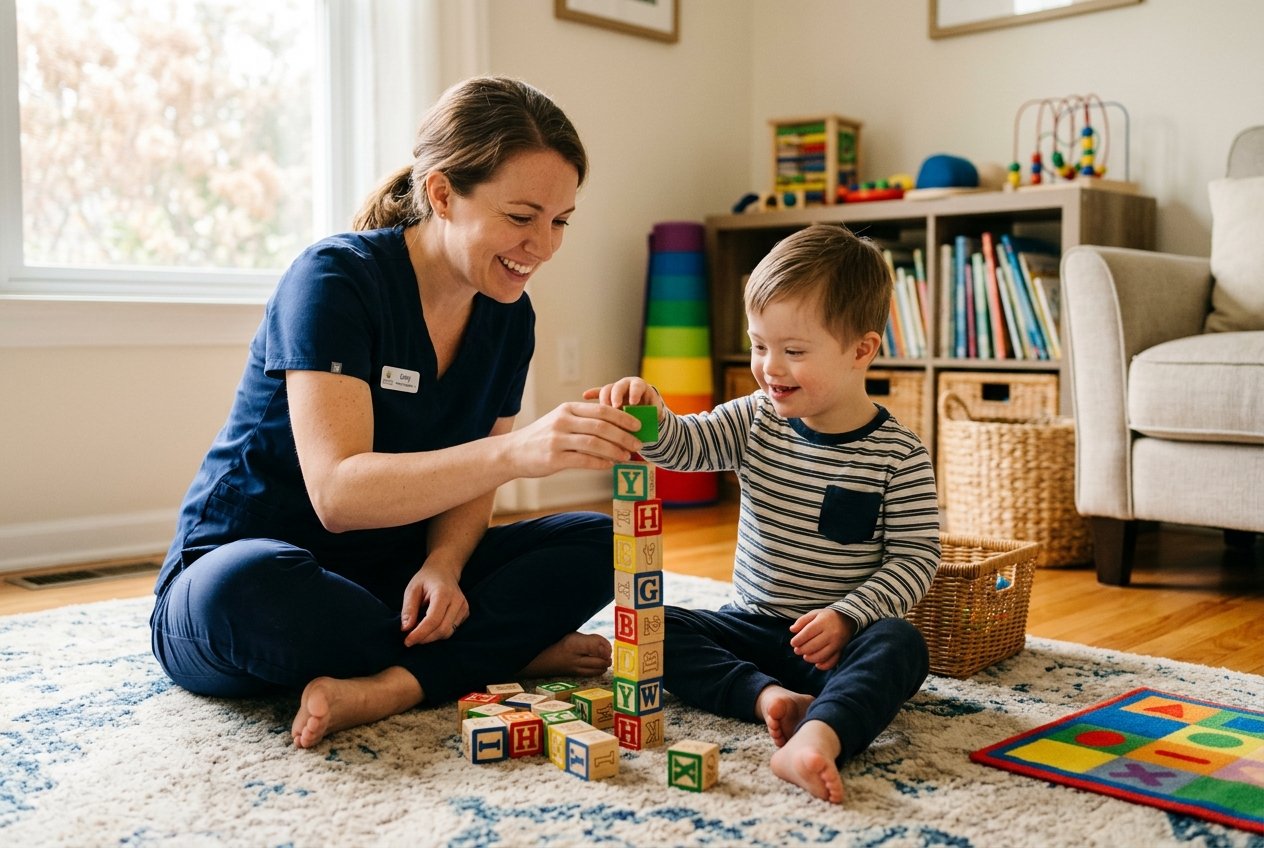
Children with Down syndrome typically experience generalized muscle hypotonia (low muscle tone) and ligamentous laxity (loose joints), leading to delays in motor milestones like sitting, crawling, and walking. Physical therapy plays a vital role from infancy, utilizing targeted strengthening exercises to build a solid physical foundation, protect joints from misalignment, and stimulate motor pathways for functional independence.
Rehabilitation for Down Syndrome
Children with Down syndrome typically experience generalized muscle hypotonia (low muscle tone) and ligamentous laxity (loose joints), leading to delays in motor milestones like sitting, crawling, and walking. Physical therapy plays a vital role from infancy, utilizing targeted strengthening exercises to build a solid physical foundation, protect joints from misalignment, and stimulate motor pathways for functional independence.
The Power of Early Physical Therapy
Early intervention harnesses the high neuroplasticity of an infant's brain. We teach correct movement patterns to prevent compensatory strategies (like wide-base sitting) that can strain joints. The therapist focuses on core and extremity strengthening, ensuring the child learns to transition between postures safely and achieves motor milestones effectively.
Home Physical Therapy Protocol
Infant Stimulation & Head Control
Tummy time protocols and neck/trunk activation exercises to build head control and support elbow weight-bearing.
Sitting & Core Stability
Strengthening back and abdominal muscles to facilitate independent, upright, and stable sitting posture.
Transitional Movements & Crawling
Facilitating rolling, transition into quadruped position, and coordinated reciprocal arm-leg movements for crawling.
Standing & Gait Training
Promoting safe weight-bearing, standing balance, and retraining a functional, aligned, and independent walking pattern.
Benefits of In-Home Therapy
Overcoming Low Muscle Tone
Intensive activation and strengthening to lift baseline muscle tone and strength.
Joint Stabilization & Safety
Protecting hypermobile joints by strengthening surrounding muscle groups to prevent subluxations.
Accelerating Milestones
Guiding the child to crawl and walk earlier using natural, biomechanically correct habits.
Parent Empowerment
Training parents in daily therapeutic play techniques to maintain consistent progress at home.
Book a Home Assessment for Your Child Now
Our home services cover all areas of Jeddah, Makkah, and Qatif.