Advanced Gait Re-education: Restoring Biomechanical Efficiency in Jeddah
Gait training goes far beyond simply encouraging a care recipient to walk; it is about restoring the biomechanical efficiency and rhythm of the walking cycle. Many care recipients develop compensatory, asymmetrical gait patterns due to pain (antalgic gait) or weakness, which lead to premature fatigue and secondary articular structure pain in the hips or spine. This is customized to meet home-based rehab standards in Jeddah, ensuring a private and fully supervised treatment.
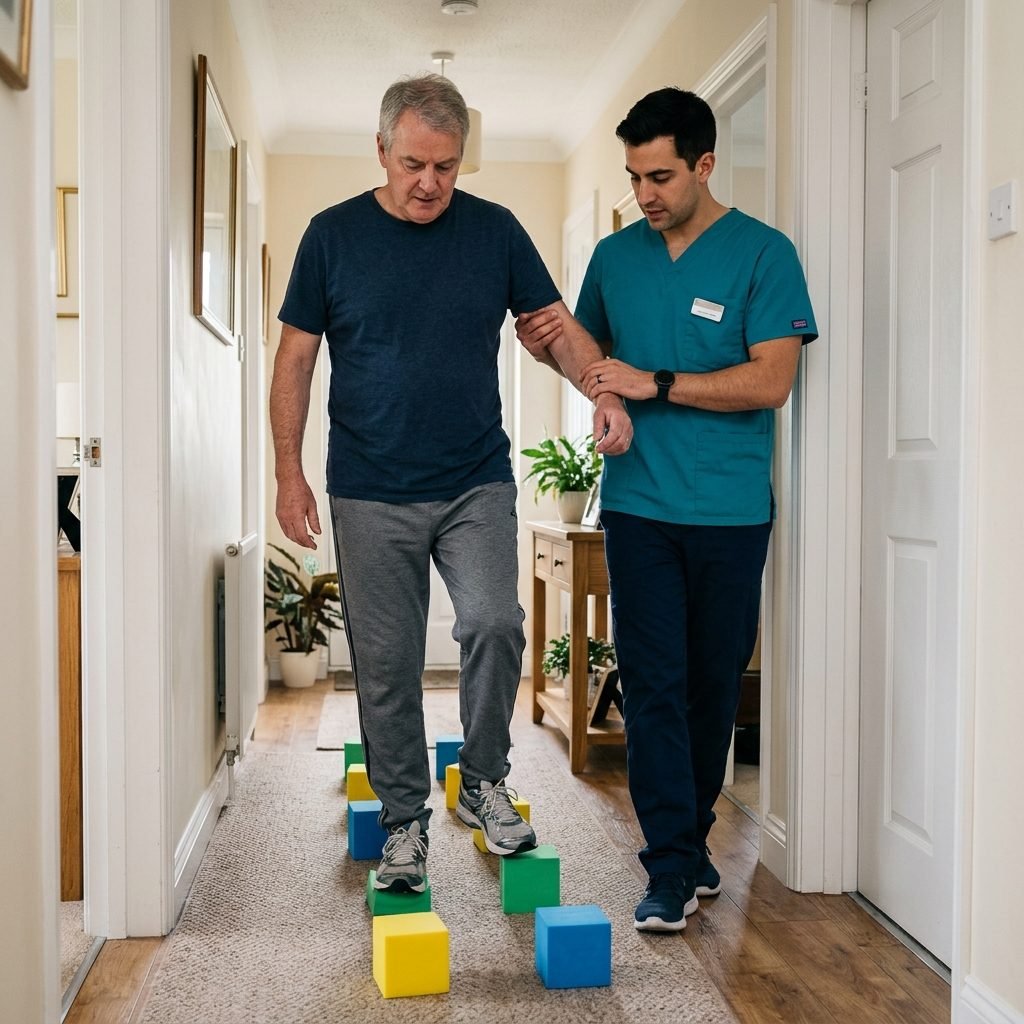
Our licensed clinicians meticulously break down the gait cycle into its swing and stance phases. We focus on correcting heel strike, promoting adequate knee flexion during the swing phase to ensure foot clearance, enhancing hip extension for propulsion, and ensuring proper weight shifting. We utilize verbal, visual, and tactile cues to help the care recipient internalize the correct motor patterns. This enhances the safety and mobility of our patients in Jeddah, reducing the risk of musculoskeletal complications.
When necessary, we provide expert assessment and fitting for assistive devices—ranging from standard canes and four-wheeled rollator walkers to custom Ankle-Foot Orthoses (AFOs). An improperly fitted device can actually increase the risk of falls. Our team ensures the device is perfectly sized, and we provide intensive training on how to use it correctly on level ground, stairs, and uneven surfaces, transforming the device into a safe extension of the care recipient. We deliver this service directly to your residence in Jeddah, saving valuable time and effort for caregivers.
Advanced Comprehensive Clinical Assessment: The Blueprint for Recovery in Jeddah
A successful, transformative functional recovery program must be anchored in a meticulous initial assessment. Our licensed clinicians perform exhaustive clinical evaluations right in the care recipient's private residence. We utilize globally standardized assessment tools such as the Berg Balance Scale, the Timed Up and Go (TUG) Test, the Dynamic Gait Index, and the Functional Reach Test to objectively quantify the care recipient's fall risk and establish a definitive baseline. This forms an essential part of our specialized home care in Jeddah, addressing transportation and humidity challenges.
The assessment delves deep into evaluating active and passive articular structure range of motion, specific muscle group strength testing, reflex integrity, and sensory mapping. We also conduct a detailed Gait Analysis, observing the care recipient during various phases of walking to detect asymmetries, foot drag, shortened stride lengths, or lack of arm swing. Our physical therapists in Jeddah focus on achieving these goals to help families restore comfort and peace of mind.
Equally vital is the comprehensive Home Safety Evaluation. We audit the living environment to identify latent hazards: unsecured scatter rugs, inadequate night-time lighting, clutter, lack of bathroom grab bars, and improper footwear. By integrating the clinical findings with environmental modifications, we create a foolproof, customized functional recovery blueprint that addresses both intrinsic (physical) and extrinsic (environmental) fall risk factors. This is customized to meet home-based rehab standards in Jeddah, ensuring a private and fully supervised treatment.
Advanced Progressive Rehabilitation Techniques: From Static Stability to Dynamic Agility in Jeddah
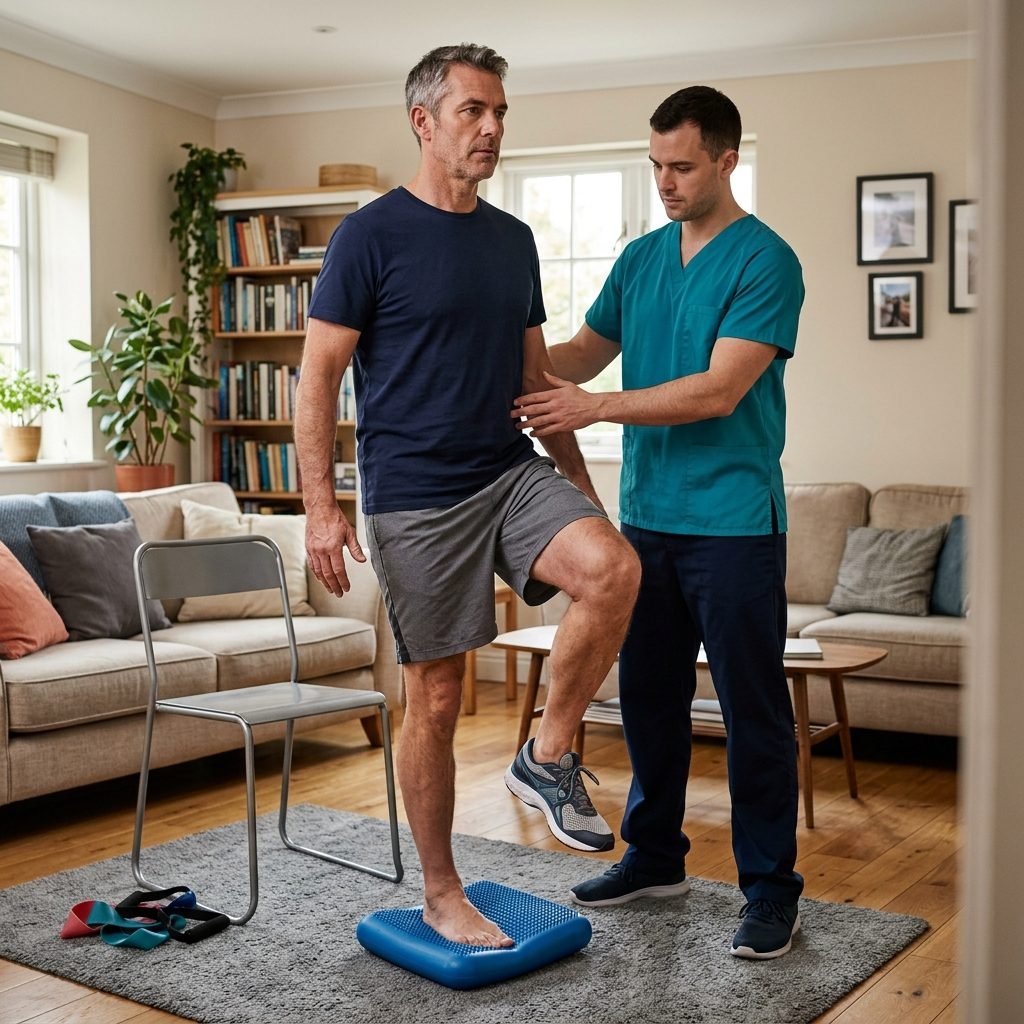
The therapeutic journey progresses methodically. We commence with Static Balance Training, focusing on the care recipient's ability to maintain a steady posture while seated or standing still. Exercises involve gradually narrowing the base of support—progressing from a wide stance to feet together, then to a tandem (heel-to-toe) stance, and eventually single-leg standing, ensuring absolute safety at all times. Our physical therapists in Jeddah focus on achieving these goals to help families restore comfort and peace of mind.
Once a solid foundation is established, we advance to Dynamic Balance Training. This phase involves maintaining equilibrium while the body is in motion. We incorporate functional tasks such as walking while simultaneously turning the head, pivoting 360 degrees, stepping over small hurdles, and practicing tandem walking. These therapeutic movement drills directly simulate the unpredictable challenges encountered in real-world environments. This is customized to meet home-based rehab standards in Jeddah, ensuring a private and fully supervised treatment.
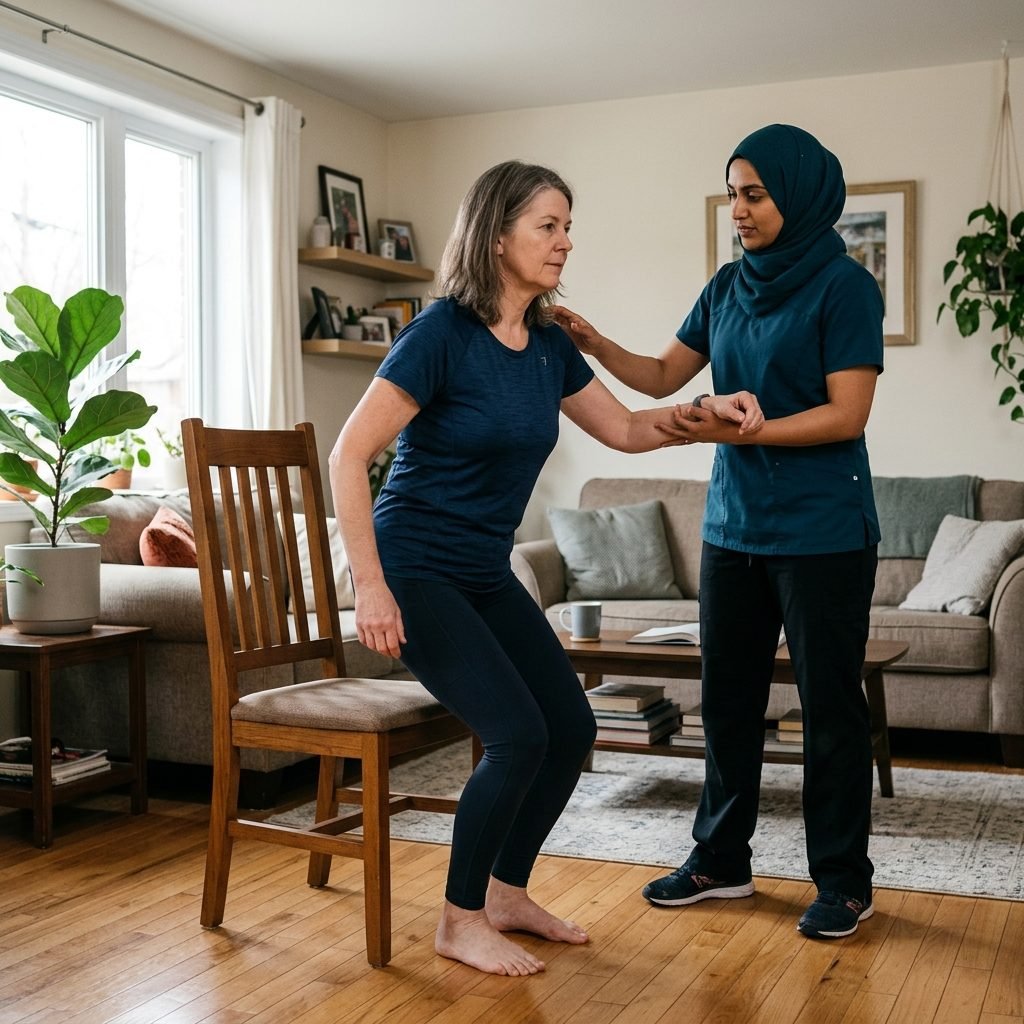
Furthermore, we utilize Anticipatory and Reactive Postural Control training. Anticipatory training involves tasks that require the body to brace itself before a movement, like reaching for an object on a high shelf. Reactive training, on the other hand, trains the body's automatic reflexes. The licensed clinician applies gentle, controlled perturbations (nudges) to the care recipient’s trunk, training the neuromuscular system to immediately initiate corrective stepping strategies to prevent a fall. This enhances the safety and mobility of our patients in Jeddah, reducing the risk of musculoskeletal complications.
Advanced Navigating Complex Neurological Conditions: Stroke, Parkinson's, and Ataxia in Jeddah
Neurological functional recovery requires specialized paradigms rooted in neuroplasticity—the brain's remarkable ability to rewire itself. For cerebrovascular accident (CVA) survivors, our focus is heavily on overcoming hemiparesis (one-sided weakness), managing spasticity (abnormal muscle tightness), and facilitating weight-bearing through the affected limb to encourage brain-muscle reconnection. This enhances the safety and mobility of our patients in Jeddah, reducing the risk of musculoskeletal complications.
For care recipients battling Parkinson’s Disease, gait disturbances such as shuffling steps, forward stooped posture, and 'freezing' of gait (a sudden, temporary inability to move) are profound challenges. We employ specialized strategies using sensory cueing. Visual cues, such as placing brightly colored tape lines on the floor, or auditory cues, such as the rhythmic ticking of a metronome or counting aloud, act as external pacemakers that bypass damaged areas of the basal ganglia, allowing the care recipient to initiate and sustain smooth walking. We deliver this service directly to your residence in Jeddah, saving valuable time and effort for caregivers.
In cases of cerebellar ataxia or severe sensory neuropathies, where coordination and spatial awareness are deeply compromised, therapy emphasizes compensatory visual training and intense core stabilization. Repetitive, precision-focused coordination therapeutic movement drills help the central nervous system adapt to sensory loss and improve the accuracy of limb placement. This supports long-term physical wellness for clients in Jeddah, allowing them to rebuild strength in comfort.
Advanced Vestibular Rehabilitation Therapy (VRT): Resolving Vertigo and Dizziness in Jeddah
Dizziness and vertigo are highly debilitating symptoms often stemming from vestibular disorders in the inner ear, such as Benign Paroxysmal Positional Vertigo (BPPV), vestibular neuritis, or Meniere's disease. These conditions send chaotic signals to the brain, causing the illusion of violent spinning and severe unsteadiness. This supports long-term physical wellness for clients in Jeddah, allowing them to rebuild strength in comfort.
For BPPV, our trained clinicians perform precise canalith repositioning maneuvers, such as the Epley Maneuver, which physically guide displaced calcium crystals back into their correct chamber within the inner ear, frequently resolving vertigo almost immediately. For other vestibular hypofunctions, we deploy specialized Vestibular Rehabilitation Therapy (VRT). This involves habituation and gaze stabilization therapeutic movement drills (like focusing on a fixed target while moving the head) to promote central nervous system compensation, significantly reducing dizziness and improving postural stability during head movements. This ensures excellent functional outcomes for patients in Jeddah under strict compliance with medical standards.
Advanced Cognitive-Motor Interference and Dual-Task Training in Jeddah
Cutting-edge research underscores that walking is not an automated reflex; it demands substantial cognitive resources and executive function. This is evident in 'dual-tasking' scenarios, such as walking while having a complex conversation or carrying a tray of food. When cognitive capacity diminishes due to aging or neurological disease, the brain struggles to divide its attention, making the individual highly vulnerable to falls under distracted conditions. This ensures excellent functional outcomes for patients in Jeddah under strict compliance with medical standards.
To combat this, our advanced functional recovery protocols explicitly incorporate Cognitive-Motor Dual-Task Training. We challenge care recipients to perform physical postural stability therapeutic movement drills while simultaneously engaging in cognitive tasks—for example, walking over obstacles while naming animals, counting backward from 100 by 7s, or catching a ball. This rigorous training enhances the brain's processing speed and attention allocation, yielding a robust, 'distraction-proof' postural stability capability crucial for complex real-world navigation. This accelerates the clinical recovery of our clients in Jeddah and facilitates direct access to quality home care.
Advanced Integrating Technology and Advanced Modalities in Home Care in Jeddah
We bring the sophistication of a modern outcare recipient clinic directly into your private residence setting. Our licensed clinicians utilize advanced, portable modalities to accelerate recovery. We employ unstable surfaces like Bosu balls, foam pads, and wobble boards to progressively overload the proprioceptive system and force the neuromuscular system to adapt. This accelerates the clinical recovery of our clients in Jeddah and facilitates direct access to quality home care.
Furthermore, we utilize Functional Electrical Stimulation (FES) devices for conditions like foot drop. The FES unit delivers perfectly timed, low-level electrical impulses to the peroneal nerve, actively lifting the foot during the swing phase of gait. This not only prevents tripping but also provides massive sensory feedback to the brain, actively promoting the relearning of the correct walking pattern. This forms an essential part of our specialized home care in Jeddah, addressing transportation and humidity challenges.
Advanced The Crucial Role of Nutrition, Hydration, and Medication Management in Jeddah
Rehabilitation does not occur in a vacuum; it requires a holistic approach to care recipient health. Dehydration, vitamin B12 deficiency, and low Vitamin D levels can directly cause muscle weakness, peripheral neuropathy, and cognitive fogginess, all of which sabotage postural stability. Furthermore, polypharmacy (the use of multiple medications) is a primary culprit for drug-induced dizziness, sedation, and drops in blood pressure. This forms an essential part of our specialized home care in Jeddah, addressing transportation and humidity challenges.
Our physical licensed clinicians act as vigilant advocates, collaborating closely with the care recipient’s primary care physicians to review medication lists and flag drugs that may be exacerbating fall risks. We also provide essential guidance on optimal hydration and nutritional strategies to ensure the muscular and nervous systems have the necessary building blocks to rebuild strength and endure intensive private residence clinical rehabilitation. Our physical therapists in Jeddah focus on achieving these goals to help families restore comfort and peace of mind.
Advanced Empowering Families and Caregivers: Building a Safety Network in Jeddah
The ultimate success and sustainability of our functional recovery programs depend heavily on the engagement of families and caregivers. We do not just treat the care recipient; we educate and empower the entire household. We conduct hands-on training sessions for caregivers, teaching them ergonomic, safe transfer techniques to assist the care recipient without risking their own spinal health. Our physical therapists in Jeddah focus on achieving these goals to help families restore comfort and peace of mind.
We construct highly detailed, customized, and easy-to-follow Home Exercise Programs (HEPs) illustrated with clear diagrams. We emphasize to the family that the physical licensed clinician acts as the architect of recovery, but daily, consistent practice by the care recipient is the actual construction work that drives neuroplasticity. By fostering a culture of mobility and safety within the private residence, we ensure that the gains achieved during therapy sessions become permanent lifestyle improvements. This is customized to meet home-based rehab standards in Jeddah, ensuring a private and fully supervised treatment.
Clinical Pathways & Field Dispatch in Jeddah
📍 Coordinated by Ms. Reem Al-Ghamdi, PT Coordinator for the Jeddah Region
In Jeddah, our mobile physical therapy teams cover all major residential neighborhoods, including Al-Safa, Al-Naeem, Al-Rawdah, Al-Hamra, Al-Mohammadiyah, and Al-Zahra, traveling with portable clinical tools.
For post-surgical rehabilitation and complex stroke profiles, we coordinate directly with referring physicians at King Fahd General Hospital Jeddah or King Faisal Specialist Hospital to align in-home therapy plans.
Local Coordination & Clinical Pathways in Jeddah
📍 Coordinated through the Jeddah home-visit scheduling pathway
In Jeddah, our mobile physical therapy teams cover all major residential neighborhoods, including Al-Safa, Al-Naeem, Al-Rawdah, Al-Hamra, Al-Mohammadiyah, and Al-Zahra, traveling with portable clinical tools.
For post-surgical rehabilitation and complex neurological profiles, families are asked to share the latest medical reports and physician instructions so the home programme stays aligned with the treating doctor's restrictions.