Advanced 4. Specialized Rehabilitation for Spinal Cord Injuries (SCI) in Jeddah
Spinal cord injury functional recovery is highly specialized and depends on the level of the lesion (cervical, thoracic, or lumbar) and whether the injury is complete or incomplete. Our program aims to maximize the strength of remaining innervated muscle groups, improve core stability, and optimize functional mobility. This is customized to meet home-based rehab standards in Jeddah, ensuring a private and fully supervised treatment.
We maintain high clinical vigilance for autonomic dysreflexia, a potentially life-threatening hypertensive emergency that can occur in care recipients with lesions at or above the T6 level. Our clinical team and the care recipient's caregivers are trained to recognize the symptoms (sudden headache, sweating, flushing) and immediately address the triggers. This enhances the safety and mobility of our patients in Jeddah, reducing the risk of musculoskeletal complications.
Our SCI program includes intensive wheelchair mobility training, pressure-relief strategies (such as weight-shifts and wheelchair tilts), and skin protection protocols. For care recipients with high-level cervical injuries, we incorporate specific respiratory training to build endurance of the diaphragm and intercostal muscle groups. We deliver this service directly to your residence in Jeddah, saving valuable time and effort for caregivers.
We focus on helping the care recipient achieve maximum independence in activities of daily living and transfers, utilizing assistive technology, sliding boards, and modifications. We also provide support and resources to facilitate community reintegration and return to vocational activities. This supports long-term physical wellness for clients in Jeddah, allowing them to rebuild strength in comfort.
Advanced 2. Clinical Evaluation and the Functional Independence Measure (FIM) in Jeddah
To objectively assess the care recipient's functional status, we utilize the Functional Independence Measure (FIM) instrument. This globally recognized clinical tool evaluates 18 functional items across self-care, sphincter control, transfers, locomotion, communication, and social cognition, allowing us to quantify the exact level of assistance required. This forms an essential part of our specialized home care in Jeddah, addressing transportation and humidity challenges.
Our physical evaluation includes the clinical assessment of muscle spasticity using the Modified Ashworth Scale (MAS). Measuring spasticity is vital for care recipients with central nervous system lesions, as hypertonia can significantly restrict range of motion, impair movement efficiency, and cause chronic articular structure pain. Our physical therapists in Jeddah focus on achieving these goals to help families restore comfort and peace of mind.
We perform a cognitive and executive function screening, evaluating memory, attention, comprehension, and problem-solving. Cognitive deficits can directly impact a care recipient's capacity to process therapeutic instructions, perform motor tasks safely, and adapt to environmental changes, requiring specific modifications to our clinical approach. This is customized to meet home-based rehab standards in Jeddah, ensuring a private and fully supervised treatment.
A critical component of the initial assessment is checking skin integrity, particularly over bony prominences. Patients with limited mobility or sensory deficits are at high risk for developing pressure injuries (decubitus ulcers). We evaluate skin condition and design specific pressure-relief protocols to protect tissue health. This enhances the safety and mobility of our patients in Jeddah, reducing the risk of musculoskeletal complications.
Advanced 3. Clinical Stroke Rehabilitation and Motor Recovery Protocols in Jeddah
Post-cerebrovascular accident (CVA) functional recovery must be initiated immediately following hemodynamic and medical stabilization. Our protocols focus on activating the paretic side, utilizing proprioceptive neuromuscular facilitation (PNF) and guided active-assisted movements to re-establish cortical representations and prevent hemispatial neglect. Our physical therapists in Jeddah focus on achieving these goals to help families restore comfort and peace of mind.
For eligible care recipients, we implement Constraint-Induced Movement Therapy (CIMT). This evidence-based technique involves restricting the non-paretic upper extremity using a specialized mitt, forcing the care recipient to use the paretic limb for functional tasks. This intensive practice stimulates cortical reorganization and motor recovery. This is customized to meet home-based rehab standards in Jeddah, ensuring a private and fully supervised treatment.
Our training protocols place strong emphasis on safe transfer training, including bed-to-chair, toilet, and wheelchair transfers. We teach proper body mechanics, weight distribution, and alignment, which are essential prerequisites for restoring independent standing postural stability, postural control, and dynamic ambulation. This enhances the safety and mobility of our patients in Jeddah, reducing the risk of musculoskeletal complications.
To manage spasticity and prevent contractures, we prescribe specific static and dynamic splints, combined with prolonged stretching and manual soft tissue mobilization. We educate caregivers on proper articular structure positioning and passive stretching techniques to maintain tissue length and prevent articular structure deformities. We deliver this service directly to your residence in Jeddah, saving valuable time and effort for caregivers.
Advanced 5. Orthopedic Rehabilitation Following Major Musculoskeletal Surgeries in Jeddah
We provide comprehensive private residence clinical rehabilitation for care recipients recovering from total hip arthroplasty (THA), total knee arthroplasty (TKA), and complex fracture fixation. Our clinical interventions strictly adhere to the post-operative protocols and weight-bearing status specified by the orthopedic surgeon. This enhances the safety and mobility of our patients in Jeddah, reducing the risk of musculoskeletal complications.
In the early post-operative phase, we prioritize pain control, edema reduction, and deep vein thrombosis (DVT) prevention. We utilize cryotherapy, compression, elevation, and active ankle pumps to promote venous return, combined with gentle passive and active-assisted range of motion therapeutic movement drills. We deliver this service directly to your residence in Jeddah, saving valuable time and effort for caregivers.
The therapeutic progression focuses on build endurance ofing the musculature stabilizing the articular structure (such as the quadriceps and gluteals) to reclaim lost normal gait mechanics. We guide the care recipient through safe ambulation progression, using appropriate assistive devices, and train them in safe stair climbing. This supports long-term physical wellness for clients in Jeddah, allowing them to rebuild strength in comfort.
For THA care recipients, we provide rigorous instruction on hip precautions (avoiding flexion > 90 degrees, adduction past midline, and internal rotation) to prevent articular structure dislocation. We train care recipients and caregivers to maintain these precautions during transfers, sitting, bathing, and sleeping. This ensures excellent functional outcomes for patients in Jeddah under strict compliance with medical standards.
Advanced 7. Occupational Therapy Integration and Activities of Daily Living (ADL) Training in Jeddah
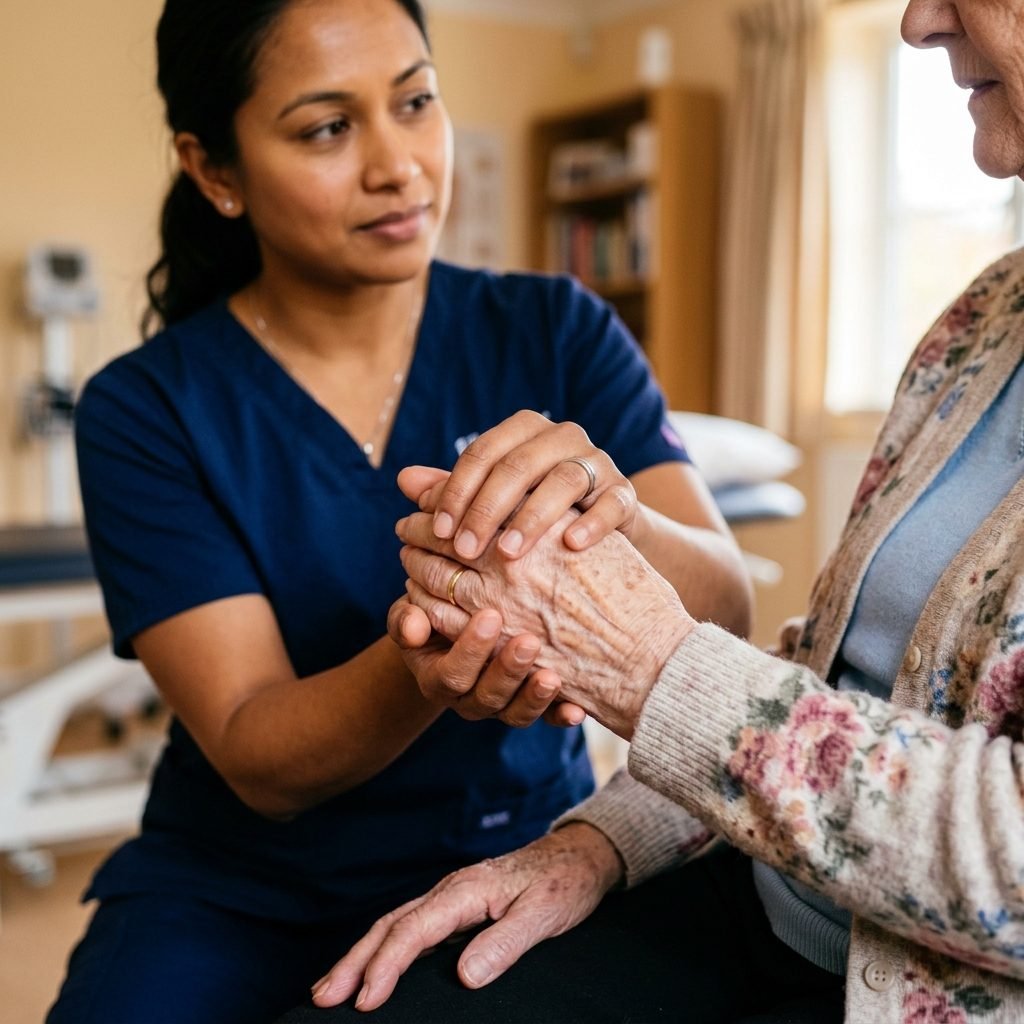
The integration of occupational therapy (OT) is essential for a comprehensive functional recovery program. While private residence clinical rehabilitation focuses on mobility, occupational therapy targets the care recipient's ability to perform activities of daily living (ADLs), such as feeding, bathing, dressing, toileting, and grooming. This supports long-term physical wellness for clients in Jeddah, allowing them to rebuild strength in comfort.
Our licensed clinicians evaluate fine motor coordination, hand-eye coordination, and grip strength. We design specific therapeutic movement drills to improve hand function and train care recipients in the use of adaptive equipment, such as built-up utensils, button hooks, and long-handled shoehorns, to support independent self-care. This ensures excellent functional outcomes for patients in Jeddah under strict compliance with medical standards.
We train care recipients in energy conservation techniques and articular structure protection principles. This coaching helps care recipients structure their daily activities, manage fatigue, and perform tasks with optimal biomechanics, reducing the risk of musculoskeletal strain and physical exhaustion. This accelerates the clinical recovery of our clients in Jeddah and facilitates direct access to quality home care.
By focusing on functional independence in ADLs, occupational therapy supports the care recipient's psychological well-being and self-esteem. Reclaiming the ability to perform basic self-care tasks reduces the burden on caregivers and enhances the care recipient's quality of life. This forms an essential part of our specialized home care in Jeddah, addressing transportation and humidity challenges.
Advanced 8. Home-Based Management of Progressive Neurological Disorders (MS and Parkinson's) in Jeddah
Progressive neurological conditions, such as Multiple Sclerosis (MS) and Parkinson's Disease, require long-term, adaptive functional recovery. Our private residence-based programs focus on managing symptoms, maintaining functional mobility, preventing secondary complications, and slowing functional decline. This ensures excellent functional outcomes for patients in Jeddah under strict compliance with medical standards.
For care recipients with MS, we focus on strength, postural stability, and fatigue management. Exercise prescription must avoid overexertion and heat stress, as elevated body temperature can temporarily exacerbate neurological symptoms (Uhthoff's phenomenon). We structure sessions with frequent rest periods. This accelerates the clinical recovery of our clients in Jeddah and facilitates direct access to quality home care.
For Parkinson's care recipients, we utilize high-amplitude movement training (LSVT BIG concepts) and sensory cueing strategies (auditory and visual cues) to address bradykinesia and freezing of gait. This training helps care recipients overcome motor blocks, increase stride length, and improve dynamic postural stability. This forms an essential part of our specialized home care in Jeddah, addressing transportation and humidity challenges.
Our private residence-based interventions help care recipients maintain articular structure flexibility, reduce rigidity, and improve postural stability. Maintaining mobility at private residence decreases the risk of falls, supports respiratory health, and enables care recipients to remain active participants in their family and community life. Our physical therapists in Jeddah focus on achieving these goals to help families restore comfort and peace of mind.
Advanced 9. Caregiver Empowerment, Training, and Safe Transfer Techniques in Jeddah
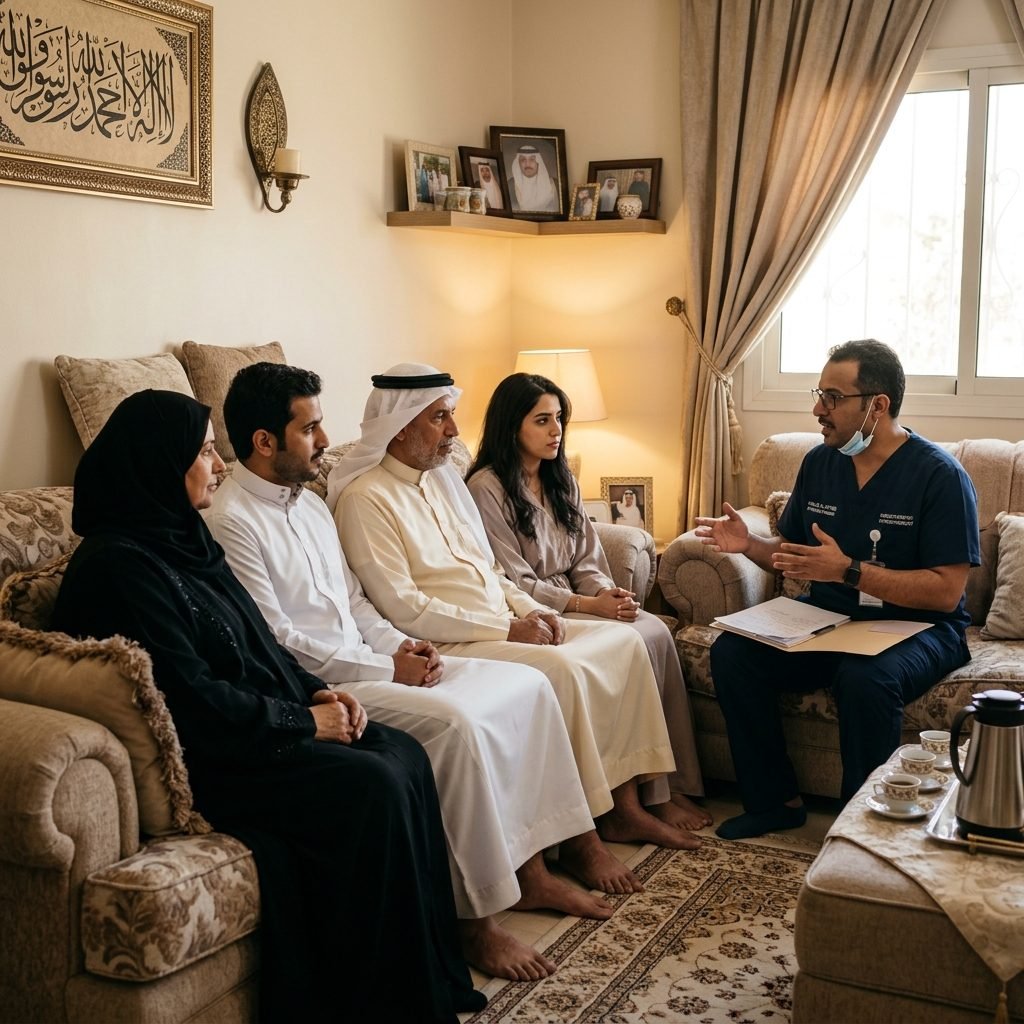
Family members and caregivers play a vital role in the functional recovery process. We provide comprehensive, hands-on training for caregivers, teaching them safe transfer techniques, positioning, and assist levels, emphasizing proper body mechanics to prevent back injuries. This accelerates the clinical recovery of our clients in Jeddah and facilitates direct access to quality home care.
Caregivers are trained to implement the customized Home Exercise Program (HEP) between our therapy visits. We teach them how to provide the appropriate level of assistance (such as minimal, moderate, or maximal assist), encouraging the care recipient to perform tasks independently whenever safe. This forms an essential part of our specialized home care in Jeddah, addressing transportation and humidity challenges.
We provide education and resources to help caregivers manage the psychological stress, anxiety, and depression that can occur when caring for a loved one with a chronic disability. Fostering a supportive, positive family dynamic is critical for the care recipient's long-term recovery. Our physical therapists in Jeddah focus on achieving these goals to help families restore comfort and peace of mind.
Empowering caregivers ensures that the care recipient receives consistent support and reinforcement throughout the day. This ongoing support accelerates motor learning, maintains articular structure mobility, and creates a safe private residence environment that supports the functional recovery process. This is customized to meet home-based rehab standards in Jeddah, ensuring a private and fully supervised treatment.
Advanced 10. Cognitive-Motor Integration and Psychosocial Support in Rehabilitation in Jeddah
Motor function is closely linked to cognitive processes, including attention, planning, and executive control. We incorporate cognitive-motor dual-task training into our functional recovery sessions, requiring the care recipient to perform physical tasks while simultaneously engaging in cognitive activities. This forms an essential part of our specialized home care in Jeddah, addressing transportation and humidity challenges.
This integrated training helps rebuild neural networks connecting the motor cortex and prefrontal areas, improving the care recipient's ability to navigate complex environmental challenges and maintain postural stability during daily activities when distracted. Our physical therapists in Jeddah focus on achieving these goals to help families restore comfort and peace of mind.
We address the psychosocial impact of major physical disabilities, such as depression, anxiety, and loss of role identity. Our licensed clinicians provide continuous encouragement, help care recipients set realistic, achievable goals, and celebrate functional progress, which supports motivation. This is customized to meet home-based rehab standards in Jeddah, ensuring a private and fully supervised treatment.
A positive, encouraging therapeutic relationship is essential for optimizing recovery. Fostering hope, self-efficacy, and resilience helps care recipients overcome barriers, adhere to their functional recovery program, and achieve the highest possible level of physical and mental recovery. This enhances the safety and mobility of our patients in Jeddah, reducing the risk of musculoskeletal complications.
Advanced 11. Clinical Glossary of Physical Therapy and Rehabilitation Terms in Jeddah
This glossary provides essential medical and clinical definitions that form the basis of our private residence functional recovery protocols. Understanding these terms helps care recipients and caregivers comprehend the functional recovery plan. Our physical therapists in Jeddah focus on achieving these goals to help families restore comfort and peace of mind.
Advanced 12. Clinical Precautions, Contraindications, and Emergency Protocols in Jeddah
Comprehensive functional recovery requires strict adherence to clinical safety guidelines. Physical licensed clinicians must monitor for specific red flags, including sudden chest pain, severe dyspnea, sudden neurological changes, or signs of deep vein thrombosis. This is customized to meet home-based rehab standards in Jeddah, ensuring a private and fully supervised treatment.
We coordinate closely with the care recipient's medical team to monitor pharmacological parameters, particularly for care recipients on anticoagulants or antiplatelet therapies, adapting our manual therapy and mobilization techniques to prevent bleeding or bruising. This enhances the safety and mobility of our patients in Jeddah, reducing the risk of musculoskeletal complications.
For care recipients with a history of cardiovascular disease or cerebrovascular accident (CVA), we closely monitor heart rate, blood pressure, and rate of perceived exertion during exercise, keeping hemodynamic parameters within the limits specified by their cardiologist. We deliver this service directly to your residence in Jeddah, saving valuable time and effort for caregivers.
At Bidayah Center, we establish clear communication pathways with the care recipient's physicians and surgeons, sharing regular progress reports. This collaborative care model ensures that the private residence functional recovery program is aligned with medical management, optimizing safety. This supports long-term physical wellness for clients in Jeddah, allowing them to rebuild strength in comfort.
Clinical Pathways & Field Dispatch in Jeddah
📍 Coordinated by Ms. Reem Al-Ghamdi, PT Coordinator for the Jeddah Region
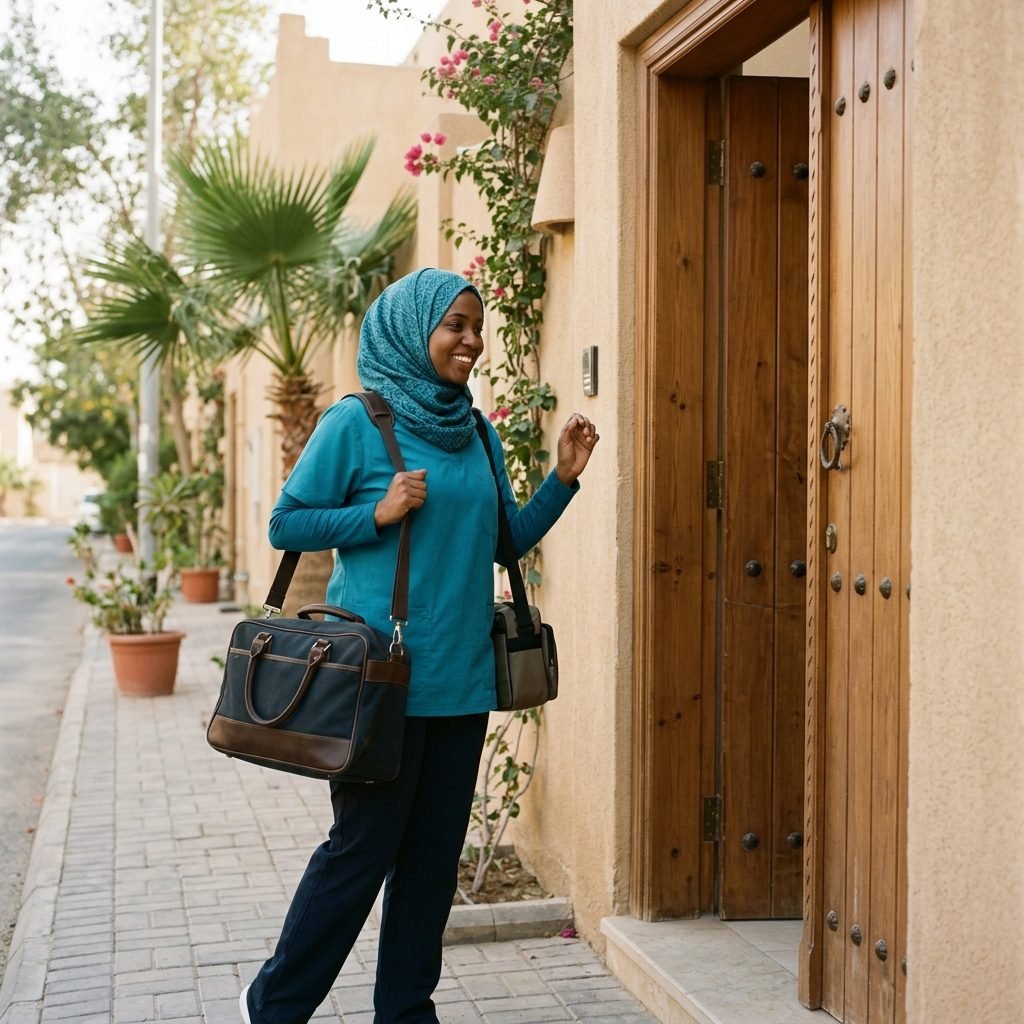
In Jeddah, our mobile physical therapy teams cover all major residential neighborhoods, including Al-Safa, Al-Naeem, Al-Rawdah, Al-Hamra, Al-Mohammadiyah, and Al-Zahra, traveling with portable clinical tools.
For post-surgical rehabilitation and complex stroke profiles, we coordinate directly with referring physicians at King Fahd General Hospital Jeddah or King Faisal Specialist Hospital to align in-home therapy plans.
Local Coordination & Clinical Pathways in Jeddah
📍 Coordinated through the Jeddah home-visit scheduling pathway
In Jeddah, our mobile physical therapy teams cover all major residential neighborhoods, including Al-Safa, Al-Naeem, Al-Rawdah, Al-Hamra, Al-Mohammadiyah, and Al-Zahra, traveling with portable clinical tools.
For post-surgical rehabilitation and complex neurological profiles, families are asked to share the latest medical reports and physician instructions so the home programme stays aligned with the treating doctor's restrictions.