Advanced Deep Vein Thrombosis (DVT) and Pulmonary Embolism (PE) Prevention in Jeddah
The formation of blood clots in the deep veins of the legs, medically termed Deep Vein Thrombosis (DVT), stands as one of the most formidable and potentially catastrophic complications following major orthopedic orthopedic surgical intervention. The prophylactic protocol relies on a multifaceted clinical approach encompassing prescribed anticoagulant medications (blood thinners), the utilization of thromboembolic deterrent (TED) compression stockings, and sequential compression devices (SCDs). Nevertheless, private residence clinical rehabilitation and the active mechanical contraction of the leg muscle groups remain among the most potent preventative measures available. This is customized to meet home-based rehab standards in Jeddah, ensuring a private and fully supervised treatment.
Your physical licensed clinician will instruct you to perform continuous, rhythmic therapeutic movement drills specifically designed to activate the 'calf muscle pump,' which forcefully propels venous blood back toward the heart, effectively preventing the stasis of blood that leads to clotting. Moreover, we intensely educate both the care recipient and caregivers regarding the clinical red flags of a DVT. Recognizing sudden, severe swelling in the calf, localized heat, redness, throbbing pain unresponsive to medication, or the sudden onset of shortness of breath is critical. These symptoms warrant immediate emergency medical intervention to avert a life-threatening pulmonary embolism. This enhances the safety and mobility of our patients in Jeddah, reducing the risk of musculoskeletal complications.
Advanced The Critical Role of Pre-habilitation (Pre-Op Therapy) in Jeddah
Recent orthopedic medical research has conclusively demonstrated that initiating a targeted private residence clinical rehabilitation program before undergoing orthopedic surgical intervention—commonly referred to as 'pre-habilitation' or 'pre-hab'—plays a pivotal role in accelerating the post-operative recovery trajectory. This proactive program is strategically designed to build endurance of the musculature surrounding the targeted articular structure, enhance overall cardiovascular fitness, and pre-educate the care recipient on the proper usage of assistive devices like walkers, canes, and crutches. Mastering these skills beforehand significantly mitigates post-surgical anxiety and ensures immediate mobility from day one. This forms an essential part of our specialized home care in Jeddah, addressing transportation and humidity challenges.
Beyond the undeniable physical benefits, pre-habilitation establishes a powerful foundation of 'muscle memory,' enabling the muscular system to rebound and regain its strength much faster after the inevitable surgical trauma. Furthermore, the pre-op program includes comprehensive care recipient education regarding crucial private residence environment modifications to drastically reduce fall risks. It provides crystal-clear expectations regarding pain levels, milestones, and daily routines in the acute post-operative days, thereby transforming the care recipient from a passive recipient of care into a highly proactive and empowered partner in their own functional recovery journey. Our physical therapists in Jeddah focus on achieving these goals to help families restore comfort and peace of mind.
Advanced The Immediate Post-Operative Phase: Day 1 to Day 14 (Acute Phase) in Jeddah
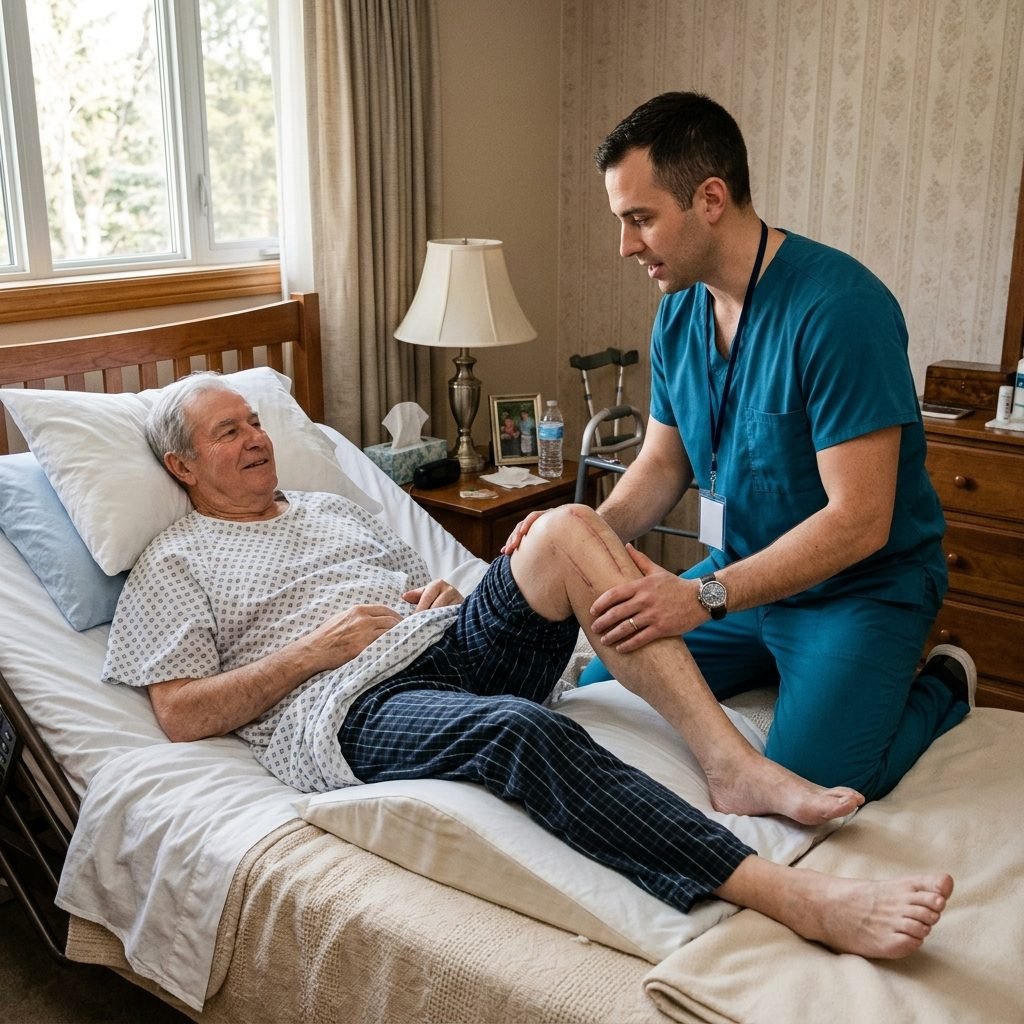
The first two weeks following a major articular structure replacement represent the most critical and sensitive phase of the entire recovery timeline. Physical therapy typically commences on post-operative day one, with an intense focus on early and safe mobilization to categorically prevent severe, life-threatening complications such as deep vein thrombosis (blood clots) and post-operative pneumonia. During this acute phase, your in-private residence physical licensed clinician will meticulously guide you through foundational isometric contractions, such as quad sets and glute squeezes, alongside vigorous ankle pumping therapeutic movement drills to aggressively stimulate venous return and combat blood pooling. Our physical therapists in Jeddah focus on achieving these goals to help families restore comfort and peace of mind.
Primary objectives during this initial window also include rigorous training on safe transfer biomechanics—specifically how to move correctly from the bed to a chair or commode—and initiating short-distance ambulation using the appropriate assistive device. Significant clinical attention is devoted to wound site monitoring for early detection of potential infections. A careful, highly calculated progression in daily activities ensures that the newly implanted articular structure is protected from excessive biomechanical stress while simultaneously allowing the incised soft tissues to initiate their natural, delicate healing cascade without disruption. This is customized to meet home-based rehab standards in Jeddah, ensuring a private and fully supervised treatment.
Advanced Comprehensive Pain Management and Edema Control Strategies in Jeddah
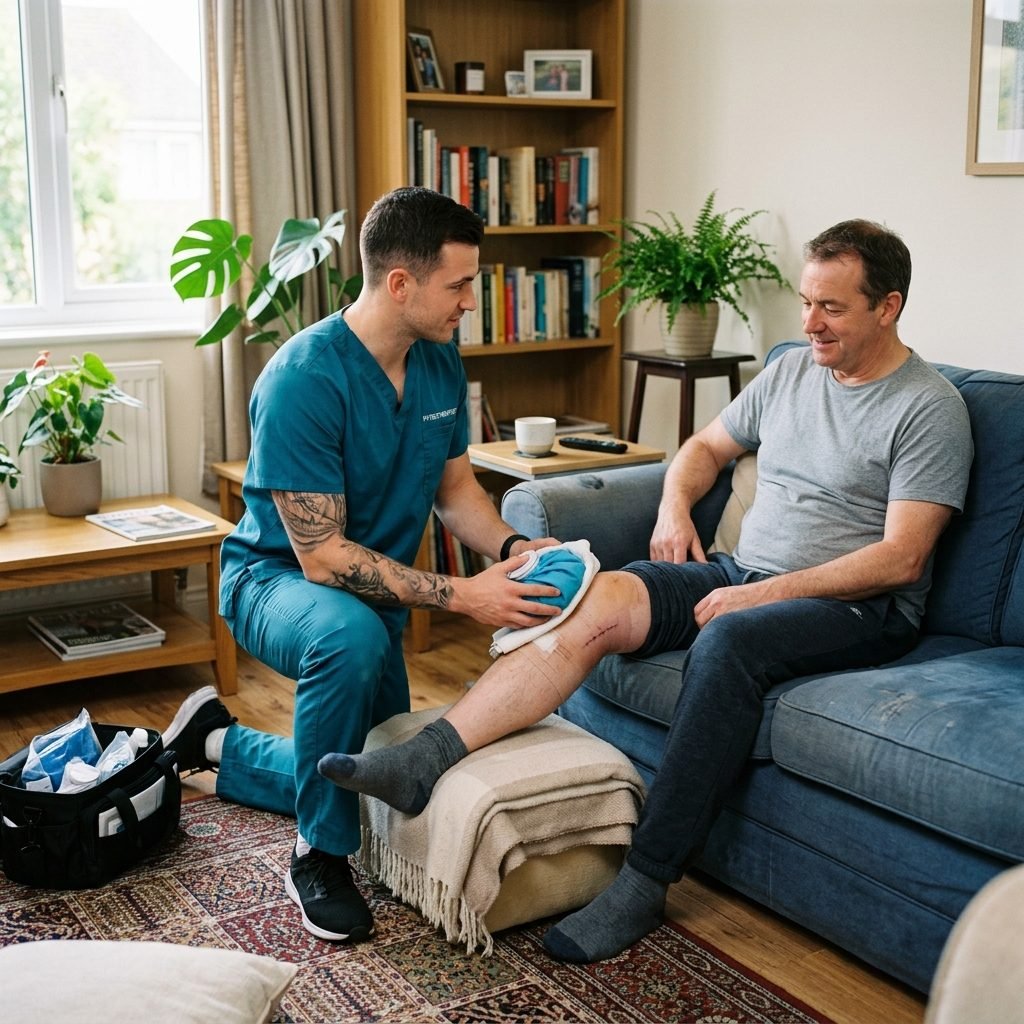
Post-surgical pain and pronounced swelling (edema) are normal, expected physiological responses to major tissue trauma, yet managing them effectively is absolutely imperative to allow the care recipient to actively participate in their functional recovery sessions. At Bidayah Center, we rigidly apply a modified 'R.I.C.E' (Rest, Ice, Compression, Elevation) protocol. This includes strategic relative rest, the aggressive use of cryotherapy (ice packs) applied in scheduled intervals to suppress the inflammatory cascade, and crucial limb elevation above the level of the heart to facilitate gravity-assisted venous and lymphatic drainage. This enhances the safety and mobility of our patients in Jeddah, reducing the risk of musculoskeletal complications.
Our specialized physical licensed clinicians routinely apply gentle retrograde massage techniques—stroking from the distal limb toward the heart—to physically push accumulated interstitial fluids away from the congested articular structure capsule. Furthermore, we strongly emphasize the clinical necessity of striking a perfect postural stability between taking prescribed analgesic medications approximately 30 to 45 minutes prior to therapy sessions to maximize pain-free movement, while simultaneously avoiding long-term dependency through the eventual integration of natural pain management strategies, relaxation techniques, and transcutaneous electrical nerve stimulation (TENS) if indicated. We deliver this service directly to your residence in Jeddah, saving valuable time and effort for caregivers.
Advanced Phase 3: Weeks 6 to 12 - Advanced Strengthening and Gait Normalization in Jeddah
With substantial biological tissue healing now underway, the functional recovery program dramatically transitions into an advanced phase of aggressive muscular build endurance ofing and the restoration of complex, multi-articular structure functional mobility. We introduce progressive resistance training utilizing varying tensions of elastic resistance bands and incrementally heavier ankle weights. The focus intensifies on hyper-build endurance ofing the core musculature and the primary dynamic stabilizers surrounding the articular structure. Equally important is the integration of advanced proprioceptive training (neuromuscular control) utilizing unstable surfaces like postural stability boards to retrain the brain's spatial awareness of the artificial articular structure. This supports long-term physical wellness for clients in Jeddah, allowing them to rebuild strength in comfort.
During this timeline, the gradual weaning process from all assistive devices is typically completed, culminating in the monumental achievement of safe, independent, and biomechanically flawless ambulation. We systematically build the care recipient's local muscular endurance and systemic cardiovascular capacity to empower them to perform prolonged, demanding daily activities—such as grocery shopping, navigating crowded environments, or walking significant distances—without experiencing rapid muscular fatigue, movement breakdown, or irritating articular structure soreness. This ensures excellent functional outcomes for patients in Jeddah under strict compliance with medical standards.
Advanced Long-Term Rehabilitation: Months 3 to 6 and Beyond in Jeddah
Clinical functional recovery does not abruptly end the moment a care recipient achieves independent walking; the intricate process of bone remodeling and the complete physiological osteointegration of the prosthetic components with the surrounding host tissues can take upwards of a full calendar year. Throughout these extended months, therapy shifts toward sophisticated eccentric loading therapeutic movement drills designed to exponentially increase the muscle groups' capacity to absorb ground reaction forces and decelerate the body smoothly. We actively diagnose and relentlessly correct any lingering, subtle biomechanical or kinetic chain impostural stabilitys that may have developed during years of pre-surgical chronic pain. This ensures excellent functional outcomes for patients in Jeddah under strict compliance with medical standards.
This final phase is highly bespoke, customized entirely to align with the care recipient's specific, high-level lifestyle goals. Whether the objective is safely returning to a specific recreational sport, managing the rigorous physical demands of a specific occupation, or simply maintaining pace with active grandchildren, we simulate complex functional activities. We train the care recipient in agility, rapid directional changes, and high-speed motor response to guarantee they are fully protected against future soft tissue injuries and to instill total, unshakable psychological confidence in their newly rebuilt articular structure. This accelerates the clinical recovery of our clients in Jeddah and facilitates direct access to quality home care.
Advanced Specific Rehabilitation Protocols for Total Knee Arthroplasty (TKA) in Jeddah
Total Knee Arthroplasty presents unique, highly specific biomechanical challenges, the most critical of which is achieving absolute terminal knee extension. Failing to reach zero degrees of extension inevitably results in a 'flexed knee gait,' a biomechanically disastrous walking pattern that places massive, unrelenting strain on the quadriceps muscle, the patellofemoral articular structure, and the contralateral hip and lower back. Consequently, we prioritize prolonged, sustained end-range extension stretching and aggressive superior-inferior patellar mobilization techniques from day one. This accelerates the clinical recovery of our clients in Jeddah and facilitates direct access to quality home care.
Patellar (kneecap) mobilization is a non-negotiable clinical necessity to prevent a condition known as 'patella baja,' where the kneecap becomes irreversibly scarred down and tethered to the underlying tibia. A restricted patella catastrophically limits the extensor mechanism's efficiency and blocks the knee from bending fully. Our licensed clinicians utilize precise manual techniques to ensure the patella glides smoothly and flawlessly in all anatomical planes, maintaining the vital integrity of the knee's extensor apparatus. This forms an essential part of our specialized home care in Jeddah, addressing transportation and humidity challenges.
Advanced Specific Rehabilitation Protocols for Total Hip Arthroplasty (THA) and Precautions in Jeddah
Rehabilitation protocols following a Total Hip Arthroplasty are heavily dictated by the specific surgical approach utilized by the orthopedic surgeon (e.g., traditional posterior, direct anterior, or lateral). For the widely performed posterior approach, strict 'hip precautions' are mandatorily enforced for typically 6 to 12 weeks to eliminate the risk of posterior dislocation. These critical rules include zero hip flexion past 90 degrees, absolute avoidance of adduction (crossing the legs past the body's midline), and no internal rotation of the operative leg. This forms an essential part of our specialized home care in Jeddah, addressing transportation and humidity challenges.
Physical licensed clinicians exhaustively train the care recipient on how to strictly adhere to these uncompromising precautions while performing essential activities of daily living, such as dressing, utilizing the toilet, and safely transferring from low seating surfaces. Simultaneously, an intense, targeted build endurance ofing program is directed at the gluteal musculature, particularly the gluteus medius (hip abductors), to swiftly correct and prevent a 'Trendelenburg gait'—a highly visible and inefficient limp characterized by the distinct dropping of the pelvis on the non-operative side during the stance phase of walking. Our physical therapists in Jeddah focus on achieving these goals to help families restore comfort and peace of mind.
Advanced Specific Rehabilitation Protocols for Shoulder Replacement in Jeddah
Rehabilitating a shoulder replacement varies drastically depending on whether the procedure was an anatomic Total Shoulder Arthroplasty (TSA) or a Reverse Total Shoulder Arthroplasty (rTSA). In a reverse TSA—typically performed when the care recipient has a massive, irreparable rotator cuff tear—the complex biomechanics of the articular structure are fundamentally altered. The articular structure's stability and elevation become almost entirely dependent on the deltoid muscle rather than the deficient rotator cuff. This necessitates a highly specialized and structurally different build endurance ofing protocol. Our physical therapists in Jeddah focus on achieving these goals to help families restore comfort and peace of mind.
During the initial post-operative weeks, the care recipient is strictly immobilized in a specialized sling, and movement is exclusively limited to gentle pendulum therapeutic movement drills and purely passive range of motion to fiercely protect the surgically repaired tissues, particularly the subscapularis tendon which is often detached and reattached during the procedure. A meticulously slow, cautious progression from passive to active-assisted, and eventually to resisted active movement is absolutely imperative to prevent catastrophic surgical failure, tendon rupture, or persistent chronic shoulder instability. This is customized to meet home-based rehab standards in Jeddah, ensuring a private and fully supervised treatment.
Advanced Scar Tissue Mobilization and Soft Tissue Management in Jeddah
As the primary surgical incision heals, the body naturally deposits collagen to form scar tissue. Unfortunately, this tissue is often laid down in a chaotic, irregular pattern that can aggressively adhere to underlying fascial layers, muscle bellies, and articular structure capsules, causing localized sharp pain and severely restricting physiological movement. Once the wound is completely, securely closed and all surgical staples or sutures have been removed, the physical licensed clinician initiates specialized cross-friction massage and instrument-assisted soft tissue mobilization (IASTM) techniques. This is customized to meet home-based rehab standards in Jeddah, ensuring a private and fully supervised treatment.
These advanced manual therapies are critical for physically breaking down thick, fibrotic adhesions and mechanically encouraging the newly formed collagen fibers to realign parallel to the lines of normal tissue stress. This remodeling process transforms a rigid, painful scar into a pliable, functional, and visually minimized tissue structure. Crucially, it proactively prevents the devastating onset of arthrofibrosis, a severe pathological condition characterized by dense, concrete-like articular structure stiffness that often necessitates a second, painful surgical intervention (manipulation under anesthesia) if not aggressively managed early. This enhances the safety and mobility of our patients in Jeddah, reducing the risk of musculoskeletal complications.
Advanced Proper Usage of Assistive Devices and the Weaning Process in Jeddah
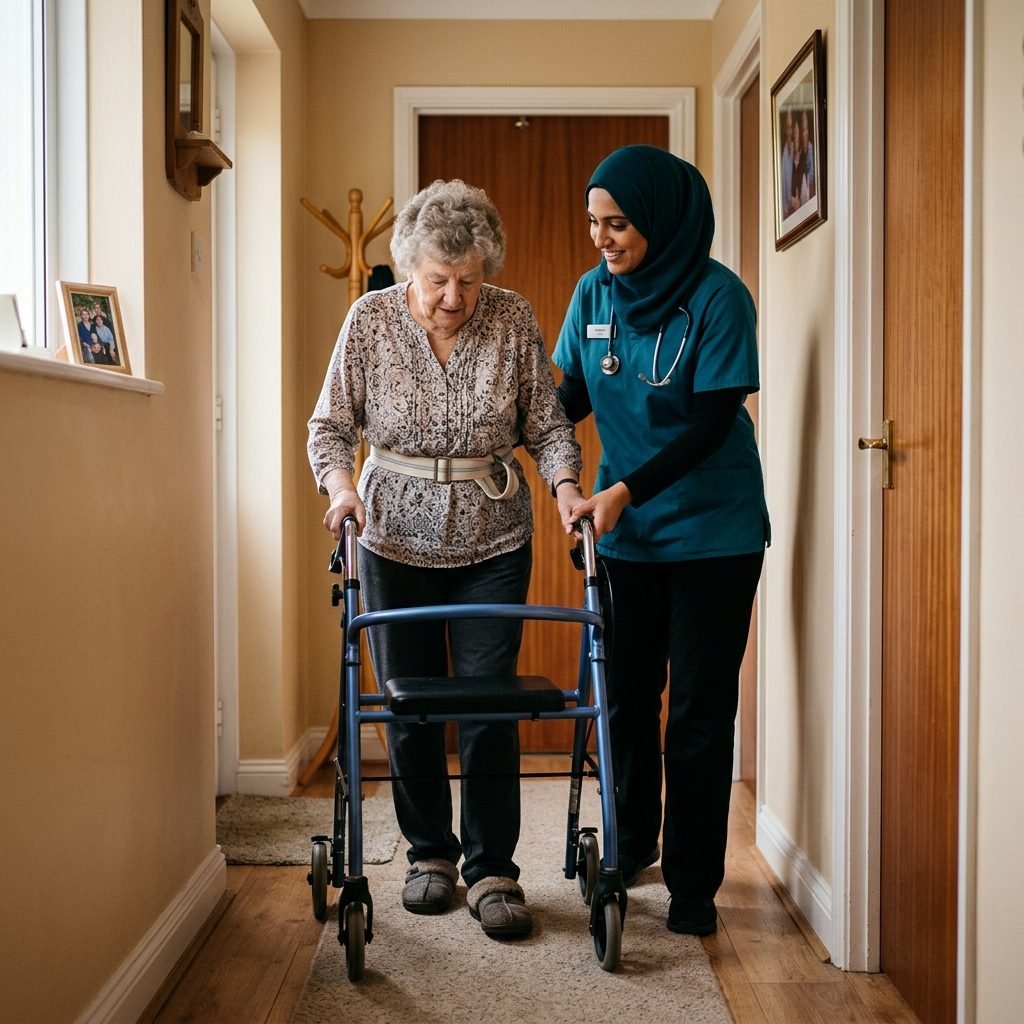
Assistive devices, specifically customized walkers and canes, are non-negotiable tools during the initial phases of functional recovery. They serve the vital purpose of protecting the implant by unweighting the articular structure, providing a wide base of support for postural stability, and preventing catastrophic falls. The physical licensed clinician precisely calibrates the height of these devices to match the care recipient's unique anthropometrics, thereby preventing secondary postural issues like severe upper back, neck, or wrist pain that commonly arise from improper, hunched usage. Patients are immediately drilled on the golden rule for stair negotiation: 'Up with the good leg, down with the bad leg.' This enhances the safety and mobility of our patients in Jeddah, reducing the risk of musculoskeletal complications.
The strategic weaning process—gradually transitioning from a walker to a cane, and eventually to unassisted ambulation—is entirely dictated by objective clinical milestones, not arbitrary timelines. The licensed clinician assesses the complete elimination of limping, the restoration of adequate quadriceps and gluteal strength, flawless static and dynamic postural stability, and minimal pain levels. Rushing this critical transition invariably leads to the development of deeply ingrained, compensatory gait deviations that can cause severe, chronic secondary pain in the healthy contralateral articular structures or the lumbar spine. We deliver this service directly to your residence in Jeddah, saving valuable time and effort for caregivers.
Advanced Fall Prevention and Critical Home Environment Modifications in Jeddah
Experiencing a fall during the vulnerable early months following articular structure replacement orthopedic surgical intervention is a catastrophic event that frequently results in devastating periprosthetic fractures (bones breaking around the metal implant). These complex fractures invariably require massive, highly complicated revision surgeries with prolonged, arduous recovery periods. Consequently, conducting a rigorous, uncompromising assessment of the care recipient's private residence environment to guarantee maximum safety is a cornerstone of our in-private residence private residence clinical rehabilitation service. We deliver this service directly to your residence in Jeddah, saving valuable time and effort for caregivers.
Critical, non-negotiable safety modifications include the immediate removal of all loose throw rugs and electrical cords, ensuring brilliant, hazard-free lighting in all hallways (especially for nighttime bathroom trips), the professional installation of sturdy grab bars in showers and near toilets, and the mandatory use of elevated toilet seats and non-slip shower chairs. These simple yet profoundly effective environmental adaptations drastically reduce fall risk, significantly boost the care recipient's psychological confidence, and preserve their dignity by allowing safe, independent personal care. This supports long-term physical wellness for clients in Jeddah, allowing them to rebuild strength in comfort.
Advanced Nutritional Support and Hydration for Optimal Tissue Healing in Jeddah
Physical therapy provides the mechanical stimulus for recovery, but the body desperately requires high-quality fuel to physically execute the massive cellular repair required after articular structure replacement. Surgical wound healing and muscular hypertrophy demand a substantial increase in daily caloric and macronutrient intake. We strongly counsel our care recipients on the absolute necessity of consuming high biological value protein to synthesize new muscle tissue, alongside therapeutic doses of Vitamin C and Zinc, which are fundamental biochemical precursors for robust collagen formation and wound closure. This supports long-term physical wellness for clients in Jeddah, allowing them to rebuild strength in comfort.
Furthermore, adequate dietary intake of Calcium and Vitamin D is non-negotiable to optimize the critical process of osteointegration, ensuring the surrounding bone firmly and permanently bonds to the porous metal coating of the new prosthesis. Equally important is aggressive daily hydration. Copious water intake maintains the elasticity and pliability of recovering soft tissues, optimizes systemic blood volume for efficient nutrient delivery, and effectively combats the severe, uncomfortable constipation frequently induced by the heavy narcotic pain medications prescribed post-operatively. This ensures excellent functional outcomes for patients in Jeddah under strict compliance with medical standards.
Advanced The Psychological Journey of Recovery and Mental Health in Jeddah
The grueling private residence-based physical training is only half the battle; the psychological and emotional toll of a major articular structure replacement is frequently underestimated but profoundly impactful. A vast majority of care recipients experience what is clinically referred to as the 'post-op blues' or mild depression. This is typically triggered by relentless, exhausting pain, severe sleep deprivation caused by discomfort, and a sudden, temporary loss of total independence. Frustration often peaks during the middle weeks when the rapid, visible daily improvements suddenly plateau into a slow, grinding grind of subtle gains. This ensures excellent functional outcomes for patients in Jeddah under strict compliance with medical standards.
The physical licensed clinician acts as a crucial psychological anchor and behavioral coach during these dark periods. We combat emotional fatigue by collaboratively setting realistic, highly measurable 'micro-goals' on a weekly basis, providing the care recipient with a continuous, tangible sense of achievement. Unrelenting positive reinforcement, transparent education regarding the normal, non-linear, 'rollercoaster' trajectory of recovery, and actively validating the care recipient's deep anxieties and fears are therapeutic tools that are just as critical as any physical exercise we prescribe. This accelerates the clinical recovery of our clients in Jeddah and facilitates direct access to quality home care.
Advanced Guidelines for Returning to Work, Driving, and Social Life in Jeddah
The projected timeline for safely returning to employment is entirely dependent on the specific anatomical articular structure replaced and the physical demands of the care recipient's profession. Sedentary, desk-bound roles may reasonably permit a return within 4 to 6 weeks, provided the care recipient takes frequent, mandatory breaks to stand, stretch, and walk to prevent severe articular structure stiffening. Conversely, labor-intensive occupations requiring heavy lifting, prolonged standing, or repetitive squatting frequently necessitate 3 to 6 months of highly specialized, work-hardening private residence clinical rehabilitation. This accelerates the clinical recovery of our clients in Jeddah and facilitates direct access to quality home care.
Regarding the critical milestone of resuming driving, the universal medical rule mandates the absolute cessation of all narcotic (opioid) pain medications. Furthermore, the care recipient must demonstrably regain sufficient lower extremity muscular strength and lightning-fast motor reaction times necessary to forcefully and instantly slam the brake pedal in an emergency. Typically, care recipients are cleared to drive automatic vehicles approximately 4 to 6 weeks following a right leg orthopedic surgical intervention, and slightly sooner for a left leg orthopedic surgical intervention, strictly pending final, official clearance from the operating orthopedic surgeon. This forms an essential part of our specialized home care in Jeddah, addressing transportation and humidity challenges.
Advanced Resuming Sports, Hobbies, and High-Impact Activities in Jeddah
For the vast majority of articular structure replacement care recipients, the ultimate, driving goal is an ecstatic return to a vibrant, active lifestyle. Broadly speaking, orthopedic surgeons enthusiastically encourage lifelong participation in low-impact recreational sports that brilliantly maintain cardiovascular fitness and muscular tone without subjecting the prosthetic components to repetitive, destructive jarring. Highly recommended activities include swimming, stationary or road cycling, golf, brisk walking, and doubles tennis. This forms an essential part of our specialized home care in Jeddah, addressing transportation and humidity challenges.
In stark contrast, care recipients are generally strongly advised to permanently abandon high-impact, articular structure-loading activities that involve relentless pounding, explosive jumping, or violent, sudden changes in direction—such as long-distance running, singles tennis, competitive basketball, or high-intensity interval training (HIIT) involving plyometrics. These aggressive activities exponentially multiply the articular structure reaction forces transmitted through the prosthesis, which dramatically accelerates the microscopic wear and tear of the polyethylene plastic insert, potentially leading to catastrophic, premature failure of the articular structure. Our physical therapists in Jeddah focus on achieving these goals to help families restore comfort and peace of mind.
Advanced Long-Term Maintenance and Joint Preservation Strategies in Jeddah
An artificial articular structure is, fundamentally, a highly sophisticated mechanical device with a finite, expected lifespan (historically ranging from 15 to 25 years). To maximize this longevity and protect this monumental investment in your health, lifelong, disciplined weight management is undeniably the single most critical variable. Every single excess kilogram of body weight translates into three to five kilograms of crushing, additional pressure on the weight-bearing articular structures of the lower extremities during every single step and stair climb. Our physical therapists in Jeddah focus on achieving these goals to help families restore comfort and peace of mind.
Our comprehensive functional recovery program concludes by deeply instilling the absolute necessity of maintaining a lifelong, dedicated fitness regimen. Continuing the core build endurance ofing and flexibility therapeutic movement drills long after formal private residence clinical rehabilitation ends acts as a permanent, dynamic muscular shield protecting the articular structure. Additionally, we educate the care recipient on the critical importance of attending routine, periodic follow-up appointments with their orthopedic surgeon for serial X-rays. This proactive monitoring ensures the early detection of silent, asymptomatic issues such as insidious polyethylene wear or aseptic loosening before they evolve into irreversible clinical disasters. This is customized to meet home-based rehab standards in Jeddah, ensuring a private and fully supervised treatment.
Advanced Why In-Home Physiotherapy is the Absolute Optimal Choice in Jeddah
During the agonizing, highly vulnerable early weeks following invasive articular structure orthopedic surgical intervention, pain levels are formidable, physical mobility is severely compromised, and the immune system is significantly suppressed. Forcing a care recipient to navigate the treacherous logistics of daily or weekly commutes—getting in and out of low vehicles, traversing uneven clinic parking lots, and waiting in crowded reception areas—imposes an immense, unnecessary physical burden and drastically multiplies the risk of falls and exposure to pathogens. In-private residence private residence clinical rehabilitation completely eradicates this entire barrier, offering unmatched, luxurious comfort, absolute safety, and profound peace of mind. This is customized to meet home-based rehab standards in Jeddah, ensuring a private and fully supervised treatment.
Beyond sheer convenience, conducting therapy within the care recipient's actual living environment allows the licensed clinician to execute a hyper-functional, context-specific functional recovery plan. We don't practice on generic clinic stairs; we practice on your actual staircase. We don't train on a clinic plinth; we train you to safely navigate your own bed, your own toilet, and your own shower. Furthermore, in-private residence care ensures the intimate, active involvement of your family members or caregivers, empowering them with the exact hands-on skills needed to provide safe, effective assistance 24/7. This creates a highly robust, impenetrable support network that dramatically accelerates the healing trajectory and obliterates the deep-seated anxiety associated with this critical recovery phase. This enhances the safety and mobility of our patients in Jeddah, reducing the risk of musculoskeletal complications.
Clinical Pathways & Field Dispatch in Jeddah
📍 Coordinated by Ms. Reem Al-Ghamdi, PT Coordinator for the Jeddah Region
In Jeddah, our mobile physical therapy teams cover all major residential neighborhoods, including Al-Safa, Al-Naeem, Al-Rawdah, Al-Hamra, Al-Mohammadiyah, and Al-Zahra, traveling with portable clinical tools.
For post-surgical rehabilitation and complex stroke profiles, we coordinate directly with referring physicians at King Fahd General Hospital Jeddah or King Faisal Specialist Hospital to align in-home therapy plans.
Local Coordination & Clinical Pathways in Jeddah
📍 Coordinated through the Jeddah home-visit scheduling pathway
In Jeddah, our mobile physical therapy teams cover all major residential neighborhoods, including Al-Safa, Al-Naeem, Al-Rawdah, Al-Hamra, Al-Mohammadiyah, and Al-Zahra, traveling with portable clinical tools.
For post-surgical rehabilitation and complex neurological profiles, families are asked to share the latest medical reports and physician instructions so the home programme stays aligned with the treating doctor's restrictions.