Advanced Mastering Rolling and Positional Transitions in Jeddah
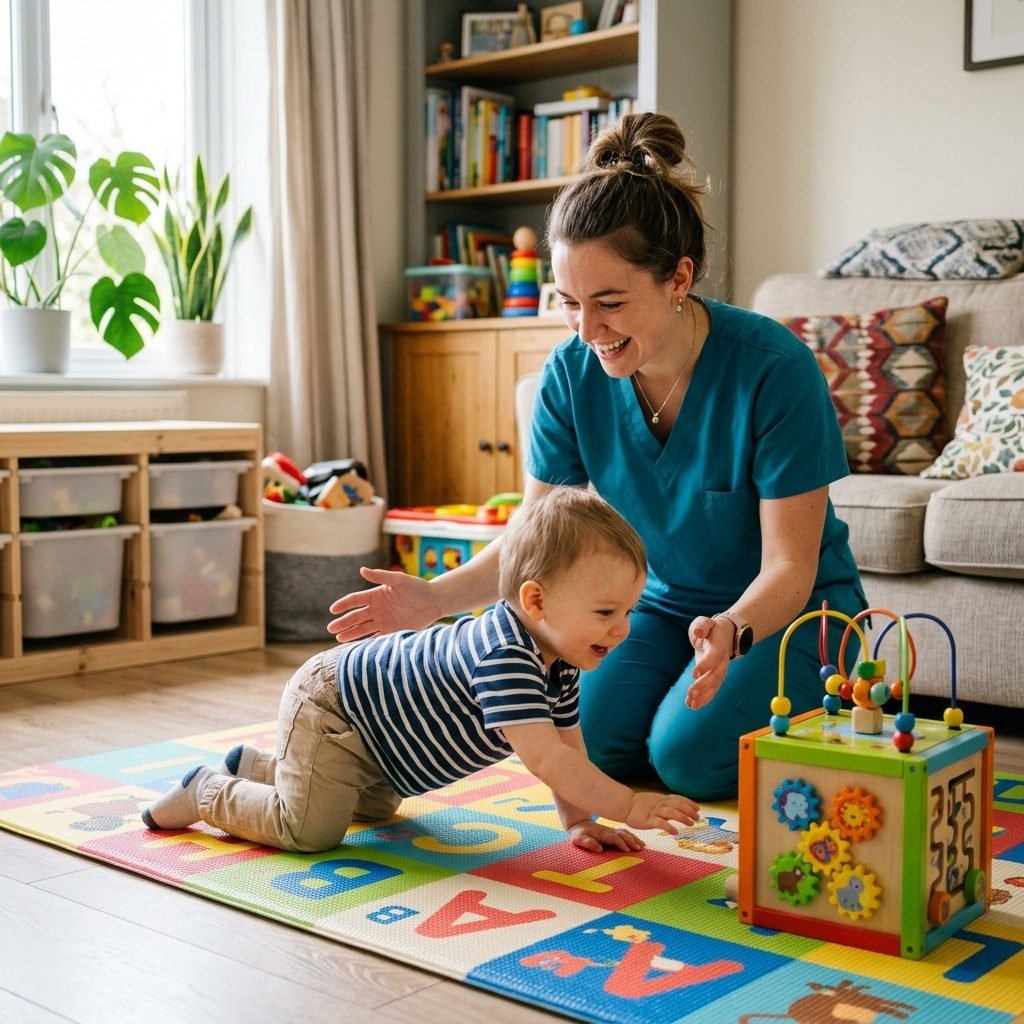
Rolling from back-to-belly and belly-to-back is much more than a way for a baby to reach a distant toy. Neurologically, it represents the child's first true experience with 'Dissociation'—the ability to move the upper half of the body independently from the lower half. Mastering this skill requires rotational mobility in the spine and the active engagement of the oblique abdominal muscle groups. Infants presenting with core weakness (hypotonia) struggle immensely with rolling and may become chronically 'stuck' on their backs. In clinical rehabilitation sessions, we utilize gentle, manual facilitation techniques to help the infant physically experience the sensation of shifting their weight laterally and using their limbs to generate momentum. We focus intensely on 'Transitions'—the fluid movement from lying down to sitting, or sitting to a hands-and-knees position. Mastering these transitions builds profound functional core strength and grants the child the true physical independence needed to explore their environment. This is customized to meet home-based rehab standards in Jeddah, ensuring a private and fully supervised treatment.
Advanced The Critical Importance of Early Intervention (Neuroplasticity) in Jeddah
Early intervention is not merely a recommendation; it is a scientific imperative. During the first three years of life, an infant's brain undergoes a phenomenal period of rapid growth and structural development known as 'Neuroplasticity.' Within this golden window, the brain is exceptionally receptive to environmental stimulation and motor training. It possesses a remarkable ability to rapidly forge new neural pathways to compensate for weaknesses or bypass injured areas. Adopting a 'wait and see' approach is a significant risk; it allows incorrect, compensatory movement patterns to become deeply ingrained in the nervous system, making them exceedingly difficult to correct later. Early pediatric clinical rehabilitation provides the precise sensory and motor inputs the developing nervous system requires to mature correctly. By helping the child acquire skills with correct biomechanics early on, we build a robust foundation for complex future movements and prevent a compounding cascade of delays that can eventually impact cognitive and social development. This forms an essential part of our specialized home care in Jeddah, addressing transportation and humidity challenges.
Advanced Tummy Time: The Essential Foundation of Core Strength in Jeddah
'Tummy Time' is arguably the most important physical exercise an infant performs; it is the absolute foundation of all future gross motor development. When placed on their stomach while awake, an infant is forced to work against gravity to lift and turn their head. This rigorous effort builds massive strength in the extensor muscle groups of the neck, shoulders, and upper back. It simultaneously promotes visual-motor tracking and prevents deformational plagiocephaly (flat head syndrome). Many infants with underlying motor delays detest tummy time and cry intensely because it is physically exhausting for them. A core role of the physiolicensed clinician is to educate parents on strategies to make this critical activity tolerable and engaging. This includes modifying positions (like laying the baby chest-to-chest with a parent), using a small supportive towel roll under their chest, or utilizing high-contrast toys and mirrors for distraction. Incrementally increasing tummy time tolerance is the prerequisite for rolling and crawling. Our physical therapists in Jeddah focus on achieving these goals to help families restore comfort and peace of mind.
Advanced Developing Independent Sitting and Postural Balance in Jeddah
Achieving independent sitting marks a monumental cognitive and physical leap. It literally changes the child's perspective of the world and frees their hands for complex play and bilateral visual exploration. To sit securely, a child requires excellent head control, substantial strength in the spinal extensors and abdominal muscle groups to maintain an upright posture against gravity, and sufficient flexibility to open the pelvis widely. Therapy typically begins by supporting the child in 'Tripod Sitting' (propping themselves on their hands) and progressively withdrawing support as their internal stability improves. Developmentally delayed children frequently topple backward or sideways due to immature postural stability reflexes. We utilize therapy balls and unstable surfaces in the clinic to provoke and build endurance of 'Righting Reactions' (the automatic muscle responses that keep us upright). We also meticulously monitor their resting posture to actively discourage 'W-Sitting,' a common compensatory posture in weak children that severely damages hip and knee articular structures and completely inhibits the development of core strength. This enhances the safety and mobility of our patients in Jeddah, reducing the risk of musculoskeletal complications.
Advanced Standing, Cruising, and Taking the First Steps in Jeddah
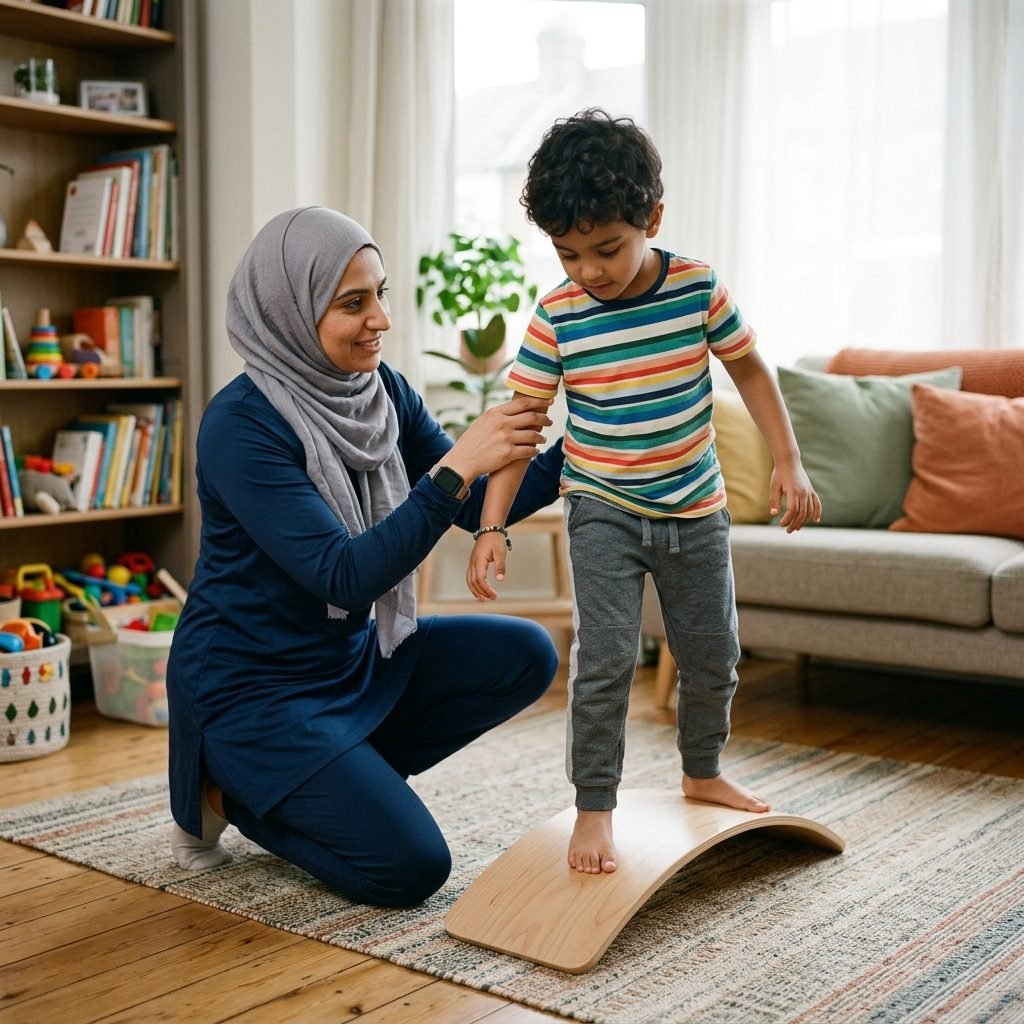
Transitioning to a standing position demands tremendous lower extremity strength and the ability to bear full body weight against gravity while maintaining postural stability on a very small base of support (the feet). The progression naturally begins with pulling to a stand at furniture, followed by 'Cruising' (walking sideways while holding onto a support surface). Cruising is an absolutely vital preparatory phase; it trains the hip articular structures to accept full weight on a single leg and develops the lateral postural stability mechanisms required for walking. Children with motor delays often exhibit poor standing mechanics, such as locking their knees rigidly, standing with an excessively wide base, or bearing weight solely on their toes. The physiolicensed clinician focuses on correcting this biomechanical alignment, ensuring proper weight distribution through the entire foot, and build endurance ofing the lateral hip stabilizers (abductors). We safely facilitate those crucial first independent steps using push toys, building the child's confidence and mitigating their fear of falling. This supports long-term physical wellness for clients in Jeddah, allowing them to rebuild strength in comfort.
Advanced Evaluating Muscle Tone: Hypotonia vs. Hypertonia in Jeddah
A very frequent underlying culprit in pediatric motor delays is an abnormality in 'Muscle Tone.' Muscle tone is defined as the baseline level of tension or resistance in a resting muscle. Many delayed infants present with 'Hypotonia' (low muscle tone). They often feel 'floppy' or like a ragdoll when picked up, and their articular structures may be hypermobile. For these children, moving against gravity requires a Herculean effort. Physiotherapy for hypotonia focuses on intense, active build endurance ofing therapeutic movement drills and robust sensory input to 'wake up' the sluggish muscle groups. Conversely, some children present with 'Hypertonia' or spasticity (high muscle tone), where the muscle groups are chronically stiff and movement is severely restricted. This presentation requires a completely different approach, emphasizing prolonged stretching, relaxation techniques, and careful positioning. The physiolicensed clinician's ability to accurately assess and differentiate these tonal abnormalities dictates the entire trajectory of the treatment plan. This ensures excellent functional outcomes for patients in Jeddah under strict compliance with medical standards.
Advanced Play Therapy: The Art of Pediatric Rehabilitation in Jeddah
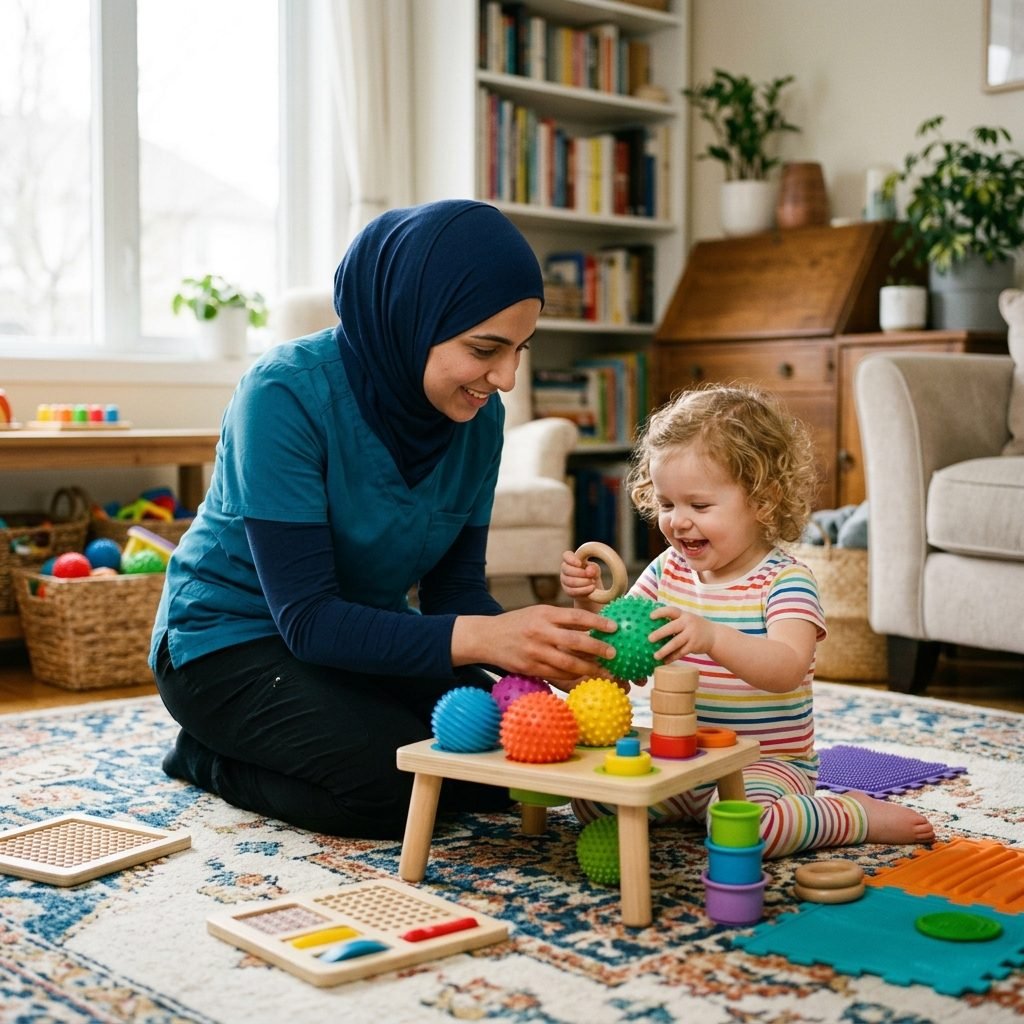
You cannot instruct a one-year-old to perform three sets of ten repetitions to build endurance of their lumbar extensors. Pediatric clinical rehabilitation differs fundamentally from adult functional recovery because 'Play' is our primary and most potent therapeutic tool. To the child, a therapy session simply looks and feels like a fun, interactive playtime. To the skilled licensed clinician, however, the environment is meticulously engineered to elicit specific movements. We strategically utilize vibrant colors, engaging sounds, bubbles, and diverse textures to entice the child to perform the target action. If the clinical goal is to train a child to perform a squat, we will place their favorite toys on the floor and a sorting bucket on a low table, compelling them to continuously transition up and down. This positive, playful atmosphere is crucial; it prevents tantrums, maintains the child's attention, and ensures the brain is in an optimal, receptive state for learning new motor skills. This accelerates the clinical recovery of our clients in Jeddah and facilitates direct access to quality home care.
Advanced The Crucial Role of Parents: Integrating Therapy at Home in Jeddah
Sustainable progress in overcoming a motor delay cannot be achieved solely through clinical sessions (typically one to two hours per week). Parents are the most important members of the functional recovery team; they are the true drivers of neuroplasticity. A significant portion of the treatment plan involves comprehensive family education. We instruct parents on specific 'Handling Techniques'—teaching them how to pick up, carry, and position their infant in ways that actively stimulate muscle engagement rather than passively supporting them. We provide the family with a practical, customized 'Home Exercise Program' (HEP) consisting of specific play-based activities that directly target the current therapeutic goals. The ultimate success of the child is heavily reliant on the parents' dedication to consistently repeating these therapeutic play activities throughout the day in the child's natural, comfortable private residence environment. This forms an essential part of our specialized home care in Jeddah, addressing transportation and humidity challenges.
Advanced The Inseparable Link Between Gross and Fine Motor Skills in Jeddah
While clinical rehabilitation primarily concentrates on Gross Motor skills (walking, sitting, crawling), these are inextricably linked to the development of Fine Motor skills (using the hands and fingers), which are the domain of Occupational Therapy (OT). A fundamental principle of development is 'Proximal Stability for Distal Mobility.' A child cannot manipulate a small object with dexterity and precision if they do not possess robust stability in their trunk (core) and shoulder girdles. Physiotherapy builds this essential central foundation. We work collaboratively with OTs to ensure synchronized development. For example, helping a child achieve stable, independent sitting is the critical prerequisite step that frees their hands from supporting their body weight, enabling them to reach for, grasp, and manipulate toys, thereby developing crucial hand-eye coordination. Our physical therapists in Jeddah focus on achieving these goals to help families restore comfort and peace of mind.
Advanced Monitoring Progress and When to Consult a Neurologist in Jeddah
Throughout the clinical rehabilitation process, we rigorously monitor the child's progress using standardized, evidence-based developmental assessment tools. In the majority of simple motor delay cases (often resulting from mild hypotonia or lack of environmental opportunity), the child responds rapidly to intervention and successfully 'catches up' to their peers. However, certain clinical indicators prompt us to refer the family to a Pediatric Neurologist. These critical signs include: 'Regression' (the alarming loss of a motor skill the child had previously mastered), the presence of severe spasticity or rigidity that resists stretching, a lack of progress despite months of intensive therapy, or if the motor delay is accompanied by profound delays in speech, cognitive function, or a lack of social eye contact. A thorough neurological evaluation is essential in these scenarios to rule out underlying genetic syndromes, muscular dystrophies, or cerebral palsy that may necessitate specialized medical intervention. This is customized to meet home-based rehab standards in Jeddah, ensuring a private and fully supervised treatment.
Clinical Pathways & Field Dispatch in Jeddah
📍 Coordinated by Ms. Reem Al-Ghamdi, PT Coordinator for the Jeddah Region
In Jeddah, our mobile physical therapy teams cover all major residential neighborhoods, including Al-Safa, Al-Naeem, Al-Rawdah, Al-Hamra, Al-Mohammadiyah, and Al-Zahra, traveling with portable clinical tools.
For post-surgical rehabilitation and complex stroke profiles, we coordinate directly with referring physicians at King Fahd General Hospital Jeddah or King Faisal Specialist Hospital to align in-home therapy plans.
Local Coordination & Clinical Pathways in Jeddah
📍 Coordinated through the Jeddah home-visit scheduling pathway
In Jeddah, our mobile physical therapy teams cover all major residential neighborhoods, including Al-Safa, Al-Naeem, Al-Rawdah, Al-Hamra, Al-Mohammadiyah, and Al-Zahra, traveling with portable clinical tools.
For post-surgical rehabilitation and complex neurological profiles, families are asked to share the latest medical reports and physician instructions so the home programme stays aligned with the treating doctor's restrictions.