Advanced Phase 2: Task-Specific Training and Coordination in Jeddah
As voluntary control improves, private residence clinical rehabilitation transitions to task-specific training. This approach is based on motor learning principles, stating that the best way to relearn a motor skill is to practice that specific skill in a real-world environment. We design functional circuits in the private residence, breaking down activities like sitting to standing, bed mobility, and reaching for household objects into practice steps. Exercises are repeated with variable practice conditions to promote motor learning and retention. This is customized to meet home-based rehab standards in Jeddah, ensuring a private and fully supervised treatment.
For cerebrovascular accident (CVA) survivors with hemiparesis, we may implement Constraint-Induced Movement Therapy (CIMT). CIMT involves restraining the unaffected arm in a mitt, forcing the care recipient to use their paretic arm for functional tasks. This intensive training counteracts learned non-use and drives neuroplastic changes in the motor cortex. Additionally, mirror therapy is utilized for care recipients with severe motor deficits. By placing a mirror between the limbs, the care recipient watches the reflection of their healthy limb, creating a visual illusion of movement in the paretic limb that stimulates motor pathways. This enhances the safety and mobility of our patients in Jeddah, reducing the risk of musculoskeletal complications.
Coordination and postural stability training are progressed in this phase. Patients practice weight-shifting therapeutic movement drills, stepping in different directions, and navigating domestic obstacles. We incorporate postural stability activities on unstable surfaces, such as foam mats, to challenge proprioceptive pathways. Vestibular functional recovery therapeutic movement drills, including gaze stabilization drills, are introduced for care recipients experiencing dizziness or postural stability deficits related to central vestibular dysfunction. Our licensed clinicians focus on maintaining high quality of movement, preventing abnormal compensations. We deliver this service directly to your residence in Jeddah, saving valuable time and effort for caregivers.
Advanced Clinical Assessment Protocols for Neurological Patients in Jeddah
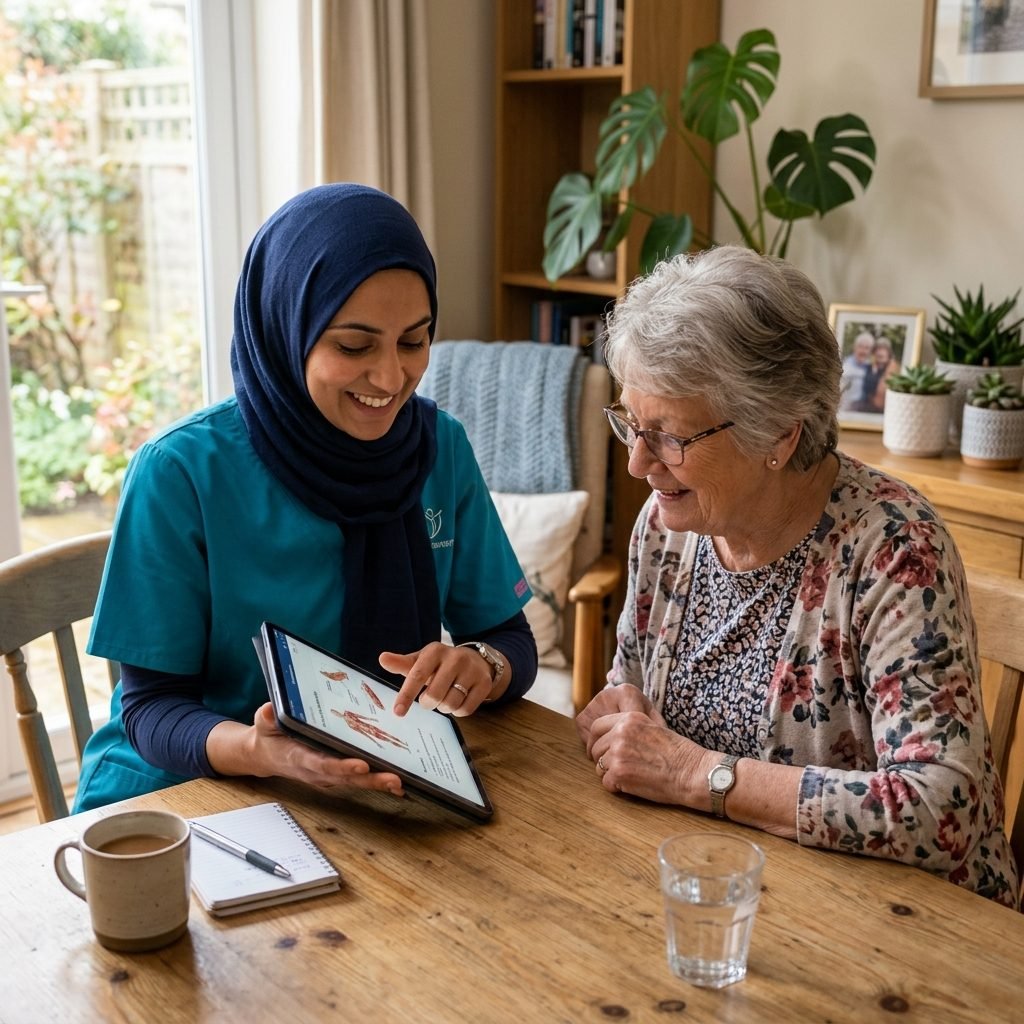
A thorough clinical evaluation is critical to identify specific deficits and track neurological recovery. Our licensed clinicians employ validated clinical tools to assess motor, sensory, reflex, and functional abilities. We evaluate spasticity using the Modified Ashworth Scale (MAS), grading muscle resistance to passive stretch from 0 (no increase in tone) to 4 (affected part rigid in flexion or extension). Sensory assessments evaluate light touch, sharp-dull discrimination, and articular structure position sense (proprioception) to identify sensory pathway lesions. This forms an essential part of our specialized home care in Jeddah, addressing transportation and humidity challenges.
Coordination and postural stability are assessed using standardized functional tests. We evaluate motor coordination through tests like the finger-to-nose and heel-to-shin tests to screen for cerebellar ataxia or dysmetria. Dynamic and static postural stability are measured using the Berg Balance Scale (BBS) and the Tinetti Performance-Oriented Mobility Assessment (POMA). These tests evaluate a care recipient's ability to maintain postural stability during functional tasks, such as sitting, standing, transitioning, and turning. Additionally, we analyze gait parameters, checking for abnormalities like foot drop, circumduction, or a festinating gait. Our physical therapists in Jeddah focus on achieving these goals to help families restore comfort and peace of mind.
Cardiovascular and cognitive tolerance are also assessed during the initial 60-minute evaluation. Neurological care recipients often experience severe post-cerebrovascular accident (CVA) fatigue or cognitive deficits that affect safety and exercise adherence. We monitor heart rate, blood pressure, and oxygen saturation to assess autonomic function, which can be impaired in spinal cord injuries (e.g., orthostatic hypotension). Cognitive screeners like the Montreal Cognitive Assessment (MoCA) help licensed clinicians modify communication, using simple visual or tactile cues to enhance motor learning. This is customized to meet home-based rehab standards in Jeddah, ensuring a private and fully supervised treatment.
Advanced Phase 1: Neurofacilitation and Motor Activation in Jeddah
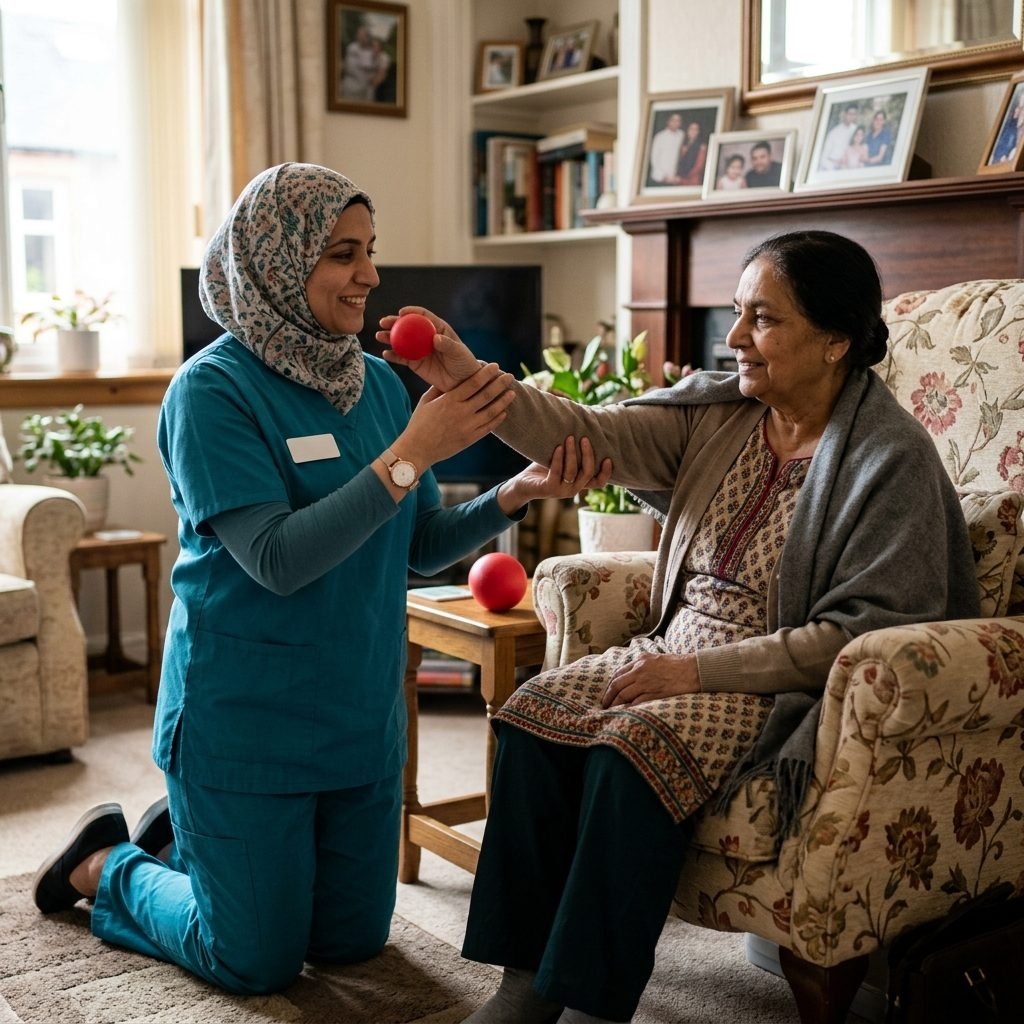
In the early stages of neuro-functional recovery, or when care recipients present with flaccid paralysis and minimal voluntary movement, private residence clinical rehabilitation focuses on neurofacilitation. We utilize the Neurodevelopmental Treatment (NDT/Bobath) concept, which emphasizes normal movement patterns, postural alignment, and sensory feedback. Therapists use specific handling techniques at key points of control (such as the pelvis and shoulders) to inhibit abnormal muscle tone, facilitate normal muscle recruitment, and guide the care recipient through passive and active-assisted functional movements. Our physical therapists in Jeddah focus on achieving these goals to help families restore comfort and peace of mind.
Proprioceptive Neuromuscular Facilitation (PNF) techniques are integrated to stimulate motor unit recruitment. PNF utilizes diagonal movement patterns that mimic natural motor activities. Techniques like 'Rhythmic Initiation' and 'Quick Stretch' utilize muscle spindle reflexes and sensory feedback to initiate contractions in paretic muscle groups. Therapists use tactile stimulation, verbal commands, and articular structure compression to enhance sensory awareness. These interventions improve the cortical representation of the affected limb, helping to overcome 'learned non-use' in cerebrovascular accident (CVA) survivors. This is customized to meet home-based rehab standards in Jeddah, ensuring a private and fully supervised treatment.
To support motor activation, we may utilize Functional Electrical Stimulation (FES). FES applies controlled electrical currents to paretic muscle groups to facilitate functional movements. For example, stimulating the tibialis anterior muscle during the swing phase of gait prevents foot drop, allowing a safer walk. FES promotes motor recovery, prevents disuse atrophy, and improves local blood flow. Our licensed clinicians also teach family members correct positioning and transferring techniques, ensuring the care recipient is supported safely between sessions. This enhances the safety and mobility of our patients in Jeddah, reducing the risk of musculoskeletal complications.
Advanced Phase 3: Advanced Gait Re-education and Community Reintegration in Jeddah
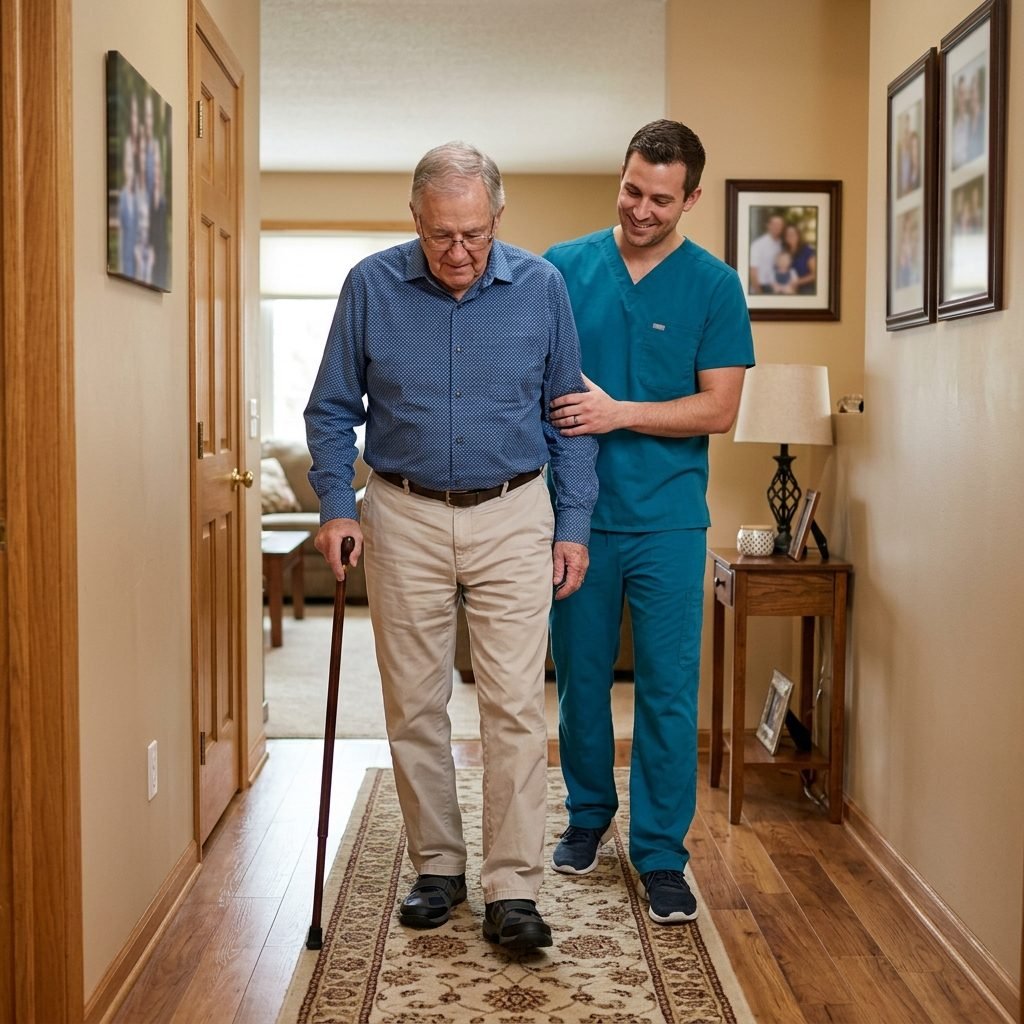
The final phase of neuro-clinical rehabilitation focuses on advanced gait re-education and restoring independence in community mobility. Gait training incorporates body-weight support techniques and assistive devices (such as quad canes, rollators, or ankle-foot orthoses) to optimize safety and mechanics. Therapists focus on correcting gait phases, including heel strike, knee stability during stance, hip extension, and foot clearance during the swing phase. We train care recipients to walk on varied terrains, such as carpets, tile, and outdoor slopes. This enhances the safety and mobility of our patients in Jeddah, reducing the risk of musculoskeletal complications.
To prepare care recipients for real-world environments, we introduce dual-task training. In daily life, walking is rarely done in isolation; it is combined with talking, carrying objects, or navigating crowds. Dual-task therapeutic movement drills require care recipients to perform cognitive tasks (such as counting backward or naming objects) or motor tasks (like carrying a cup of water) while walking. This training improves cognitive-motor interference, reduces fall risks, and enhances the automation of gait patterns, which is critical for safe community reintegration. We deliver this service directly to your residence in Jeddah, saving valuable time and effort for caregivers.
A comprehensive private residence exercise program is provided to ensure long-term maintenance of functional gains. Therapists work with the care recipient and caregivers to design a sustainable daily routine. This includes active stretching to manage contractures, build endurance ofing therapeutic movement drills for key muscle groups, and safe postural stability activities. By establishing this long-term framework, we ensure the care recipient can maintain their mobility, prevent secondary complications, and enjoy a higher level of independence and quality of life in their private residence. This supports long-term physical wellness for clients in Jeddah, allowing them to rebuild strength in comfort.
Advanced Long-Term Neurological Maintenance and Preventing Secondary Decline in Jeddah
Managing chronic neurological conditions requires lifelong functional recovery to maintain function and prevent secondary complications. Conditions like Parkinson's disease and Multiple Sclerosis are progressive, and without continuous therapy, care recipients face gradual declines in mobility and independence. Even in stable conditions like cerebrovascular accident (CVA), lack of physical activity can lead to muscle contractures, cardiovascular deconditioning, and increased fall risks. Our team designs personalized maintenance programs focused on preserving functional abilities. This supports long-term physical wellness for clients in Jeddah, allowing them to rebuild strength in comfort.
To combat progressive decline, the maintenance plan incorporates regular strength, flexibility, and postural stability therapeutic movement drills. We emphasize articular structure range of motion therapeutic movement drills to prevent contractures and manage spasticity, combined with moderate-intensity aerobic exercise to support cardiovascular health. Our licensed clinicians provide guidance on using assistive devices and orthoses to maximize independence and safety during daily activities. We also educate caregivers on assisting with transfers and private residence therapeutic movement drills safely, reducing caregiver strain. This ensures excellent functional outcomes for patients in Jeddah under strict compliance with medical standards.
Periodic follow-up evaluations are conducted to monitor functional status and adjust the maintenance plan as needed. If a care recipient experiences a change in condition or a decline in mobility, we modify the private residence program or resume active therapy. By establishing this ongoing system of care, we support care recipients throughout their functional recovery journey, helping them maintain their independence, prevent hospitalizations, and achieve the highest possible quality of life at private residence. This accelerates the clinical recovery of our clients in Jeddah and facilitates direct access to quality home care.
Clinical Pathways & Field Dispatch in Jeddah
📍 Coordinated by Ms. Reem Al-Ghamdi, PT Coordinator for the Jeddah Region
In Jeddah, our mobile physical therapy teams cover all major residential neighborhoods, including Al-Safa, Al-Naeem, Al-Rawdah, Al-Hamra, Al-Mohammadiyah, and Al-Zahra, traveling with portable clinical tools.
For post-surgical rehabilitation and complex stroke profiles, we coordinate directly with referring physicians at King Fahd General Hospital Jeddah or King Faisal Specialist Hospital to align in-home therapy plans.
Local Coordination & Clinical Pathways in Jeddah
📍 Coordinated through the Jeddah home-visit scheduling pathway
In Jeddah, our mobile physical therapy teams cover all major residential neighborhoods, including Al-Safa, Al-Naeem, Al-Rawdah, Al-Hamra, Al-Mohammadiyah, and Al-Zahra, traveling with portable clinical tools.
For post-surgical rehabilitation and complex neurological profiles, families are asked to share the latest medical reports and physician instructions so the home programme stays aligned with the treating doctor's restrictions.