Guidelines for the Selection, Fitting, and Training of Prosthetics and Assistive Walking Devices and Home Care in Makkah
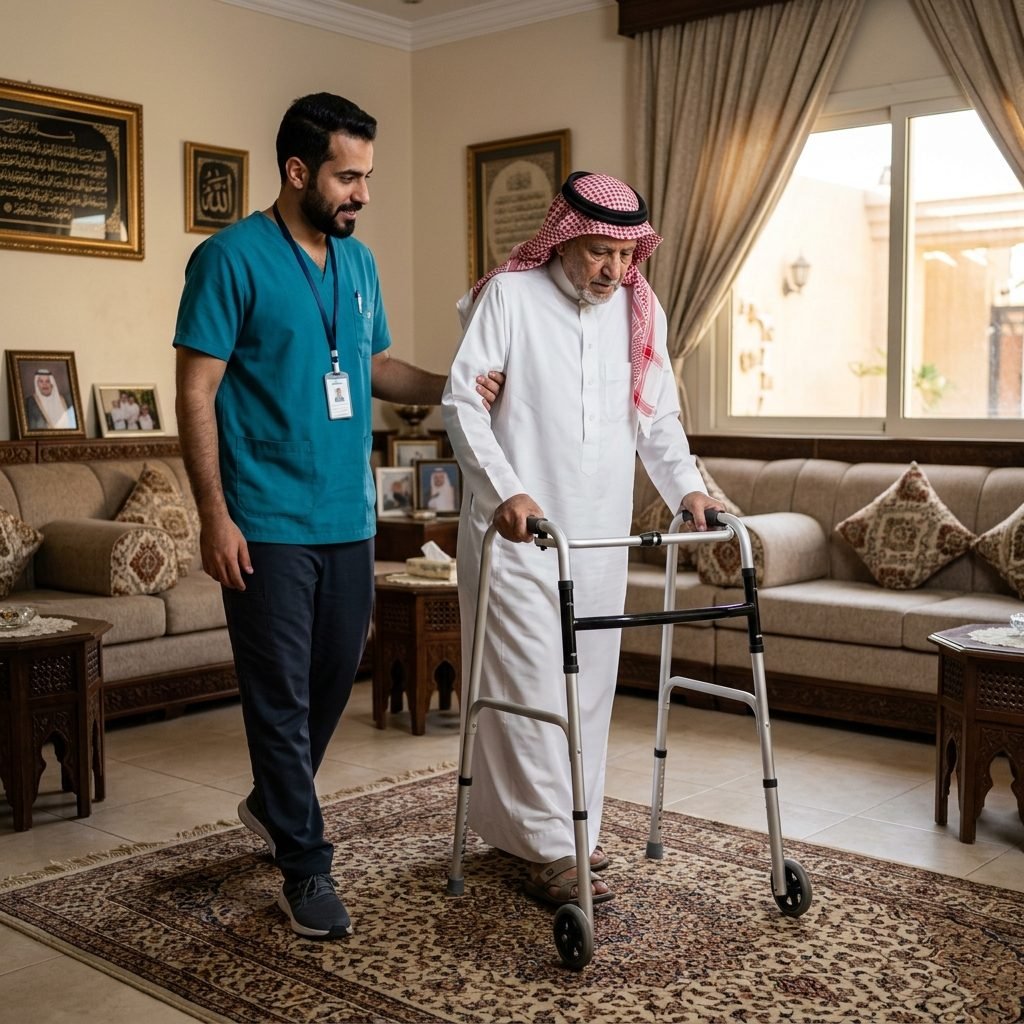
Assistive walking devices—such as standard canes, crutches, and various types of walkers (both standard and wheeled rollators)—are absolutely fundamental clinical interventions required to safely empower the senior to navigate their environment. However, the totally incorrect selection of the device, or the failure to precisely adjust its height to perfectly match the rehab client's specific anatomical proportions, can cause immense bodily harm. This harm typically manifests as severe new onset back pain, a rapid deterioration of their natural gait pattern, and an ironically massive increase in the probability of a catastrophic fall. This supports safe and effective physical recovery in Makkah, offering absolute peace of mind to local households.
The clinical mobility clinical reconditioning specialist conducts a highly rigorous evaluation of the rehab client's overall weight-bearing capacity, their upper extremity arm strength, and their exact level of dynamic equilibrium control to accurately prescribe the absolute optimal assistive device. Once the correct device is procured, it is adjusted with strict biomechanical precision to ensure the rehab client maintains a perfectly upright spinal posture while using it. This is immediately followed by a phase of highly intensive, repetitive training on exactly how to use this device safely across a variety of complex real-world scenarios: walking securely on completely flat indoor surfaces, executing safe turns without tripping, and safely transferring from a seated position on a chair or bed to a full standing posture. Our Makkah clinical team prioritizes these recovery steps to ensure physical safety and prevent progressive atrophy.
Crucially, both the rehab client and their family members are extensively trained on the highly specific, perfectly safe techniques for ascending and descending staircases using the assistive device, accompanied by a highly detailed, practical explanation of the absolutely correct mechanical weight distribution required. Our continuous, watchful clinical follow-up absolutely guarantees that the rehab client is utilizing the device completely naturally and safely, ensuring it successfully becomes a secure, highly reliable physical extension of their own body that deeply enhances their independence, rather than becoming a dangerous, cumbersome additional burden. This is tailored to optimize patient mobility in Makkah, keeping families active and functionally independent.
Effective Chronic Pain Management to Reduce Excessive Reliance on Pharmaceutical Painkillers and Home Care in Makkah
Chronic, unrelenting pain—whether located in the lumbar spine, the knees, or the cervical neck—is the heavy, constant companion for a vast number of seniors. The excessive, unchecked reliance on potent pharmaceutical painkillers carries incredibly grave risks to the health of the kidneys, liver, and gastrointestinal tract, in addition to highly dangerous neurological side effects such as severe dizziness, sedation, and mental confusion. It is precisely here that the indispensable role of clinical mobility clinical reconditioning emerges brilliantly as a highly safe, highly effective, and sustainable natural alternative for long-term pain management. This aligns perfectly with our rehabilitation standards in Makkah, catering to hilly terrains and step-climbing needs.
We rely heavily on advanced clinical techniques such as Myofascial Release and highly targeted deep tissue massage to effectively dismantle the chronic, painful muscle spasms that invariably accompany and fiercely exacerbate joint complex pain. Furthermore, carefully prescribed, moderate therapeutic rehabilitative exercise patterns play a monumental role in naturally stimulating the central nervous system's secretion of endorphins (the body's immensely powerful natural painkillers). These rehabilitative exercise patterns also crucially assist in nourishing the avascular joint complex cartilage and massively improving localized blood circulation in the afflicted areas, thereby dramatically accelerating the body's innate self-healing and recovery processes. This supports safe and effective physical recovery in Makkah, offering absolute peace of mind to local households.
We actively guide our rehab clients on practical, daily strategies for coping with pain. This involves meticulously teaching them the biomechanically correct sitting and sleeping postures that effectively relieve undue pressure on the spine. We also educate them on exactly how and when to correctly utilize cold compresses to immediately suppress acute, flaring inflammation, versus the application of warm compresses to soothe deep, aching muscular stiffness. This highly comprehensive, holistic approach ultimately grants the rehab client total control over their pain, dramatically improving their sleep quality, entirely without the dangerous need to constantly escalate their pharmaceutical dosages. Our Makkah clinical team prioritizes these recovery steps to ensure physical safety and prevent progressive atrophy.
The Role of Psychological and Social Support in Overcoming Senior Depression and Therapy Refusal and Home Care in Makkah
A vast majority of the severe mobility issues afflicting the elderly are intimately intertwined with profound psychological repercussions. These manifest vividly as overwhelming feelings of complete helplessness, deep frustration, and severe clinical depression directly stemming from the devastating loss of their independence and their sudden, constant reliance on others for basic survival. This highly complex psychological state frequently translates into a state of absolute, stubborn refusal to receive any medical treatment or a blatant lack of cooperation with the specialist during therapy sessions—a formidable challenge we encounter frequently and manage with the utmost clinical professionalism and deep empathy. This is key to our structured physiotherapy plans in Makkah, designed specifically for rapid motor adaptation.
Our rehab specialists are rigorously trained in the core principles of rehabilitative psychology and highly refined, compassionate human interaction. The solution fundamentally begins by painstakingly building a solid, unbreakable bridge of trust and genuine warmth with the rehab client. This involves actively, deeply listening to their intense fears and frustrations without any dismissal or marginalization. The therapeutic rehabilitative exercise patterns are then presented in a highly encouraging, deeply motivating format, carefully linking every single movement and tiny bit of physical progress to a specific, deeply personal goal that matters immensely to the rehab client—such as simply regaining the ability to walk to the local mosque independently or the joy of playing freely with their beloved grandchildren. This aligns perfectly with our rehabilitation standards in Makkah, catering to hilly terrains and step-climbing needs.
We make it a strict point to enthusiastically celebrate even the smallest of physical achievements to significantly boost the rehab client's morale. We meticulously avoid subjecting the rehab client to any level of physical exhaustion that might breed an intense aversion to future sessions. By seamlessly integrating pleasant, highly engaging social conversations directly into the physical workout, we successfully transform the demanding therapy session into a delightful, eagerly anticipated visit. This effectively converts what could be perceived as a grueling physical burden into a highly positive, uplifting experience that contributes massively to improving their overall mood and vital social integration. This supports safe and effective physical recovery in Makkah, offering absolute peace of mind to local households.
Fall Prevention Programs: Environmental Assessment and Proactive Clinical Interventions and Home Care in Makkah
Falls are universally recognized as one of the most perilous, life-threatening health hazards facing the elderly population. A single fall frequently results in catastrophic fractures that may mandate immediate surgical intervention and prolonged, debilitating hospitalizations, severely jeopardizing their life and long-term independence. Consequently, our robust Fall Prevention Program occupies the absolute highest priority in our clinical protocols. The program initiates by thoroughly identifying intrinsic (physical) risk factors, which include severely impaired vision, vestibular equilibrium control disorders, chronic dizziness, and the highly dangerous side effects of specific polypharmacy medications that commonly induce severe vertigo or orthostatic hypotension. We maintain strict clinical standards for home visits in Makkah, aligning every session with discharge instructions.
On the clinical front, we rigorously implement intensive exercise regimens explicitly designed to drastically improve both static and dynamic equilibrium control. We painstakingly train the senior on exactly how to rapidly and effectively correct their bodily posture the instant they experience a sudden loss of equilibrium control. We heavily utilize Proprioceptive Training techniques to profoundly enhance their deep spatial motor awareness, alongside training specific Stepping Strategies that quickly empower the rehab client to catch themselves and rapidly widen their base of support right before an actual, disastrous fall occurs. This contributes to successful functional restoration in Makkah, restoring confidence in performing daily chores.
Furthermore, taking a highly pragmatic approach, we deliberately train the rehab client on the absolutely safest, biomechanically correct method to rise from the floor in the unfortunate event that a fall does occur. This specific training is vital to dramatically reduce the state of absolute panic and terror that typically ensues post-fall, and to actively prevent highly dangerous, improper attempts to stand up that could easily multiply the severity of the injury or cause a fatal strain on a weakened cardiovascular system. This is key to our structured physiotherapy plans in Makkah, designed specifically for rapid motor adaptation.
Advanced Therapeutic Methods and Modern Techniques Used in Geriatric Rehabilitation and Home Care in Makkah
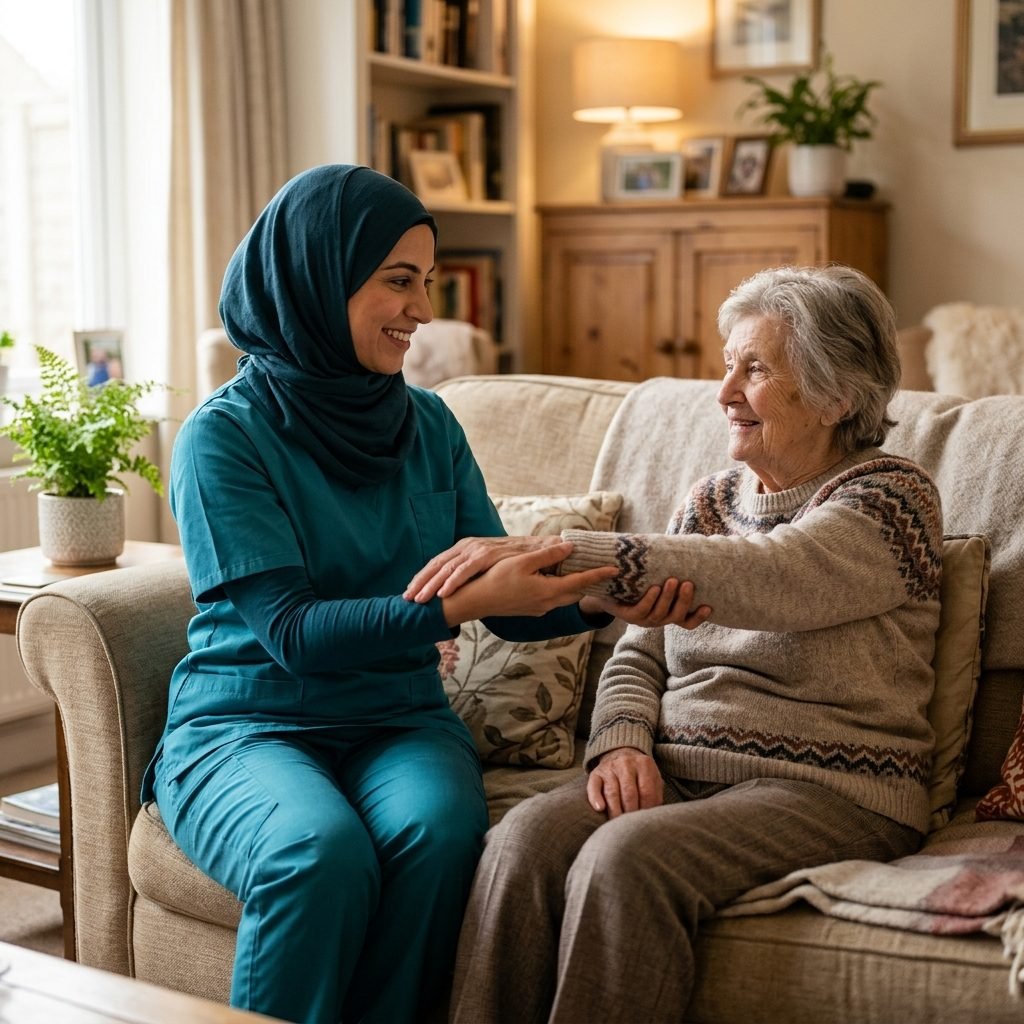
The therapeutic methodologies and clinical techniques we deploy are incredibly diverse and specifically adapted to comfortably accommodate the inherent fragility and physical weakness characterizing the aging body. Manual Therapy constitutes the foundational pillar of these critical interventions. Here, the specialist relies heavily on joint complex mobilizations and soft tissue manipulation utilizing highly calculated, profoundly gentle techniques. These methods are explicitly aimed at breaking down painful muscle adhesions and reducing severe spasms without ever inflicting any additional stress or traumatic pain on the rehab client. This facilitates daily physical independence for families in Makkah, promoting safety in all transfers and walks.
Customized therapeutic rehabilitative exercise patterns represent the largest and most active portion of the therapy session. These rehabilitative exercise patterns are progressively scaled, starting carefully from passive range of motion rehabilitative exercise patterns (where the rehab specialist completely performs the movement for the rehab client), advancing to active-assisted movements, and finally progressing to fully active rehabilitative exercise patterns and light resistance training utilizing elastic Therabands. The clinical focus is overwhelmingly placed on functional rehabilitative exercise patterns that directly mimic the exact movements of daily life, ensuring the rehab client derives immediate, practical, and highly applicable benefits. We maintain strict clinical standards for home visits in Makkah, aligning every session with discharge instructions.
Moreover, we effectively integrate modern, portable clinical mobility clinical reconditioning modalities into our treatment plans. Devices such as Transcutaneous Electrical Nerve Stimulation (TENS) and Electrical Muscle Stimulation (EMS) units play a highly effective role in managing chronic, stubborn pain and safely re-educating severely weakened muscular structures. Furthermore, the strategic, timed application of thermal modalities—using clinical heat packs for morning joint complex stiffness and cold packs to control acute inflammation—significantly aids in regulating local blood circulation and providing immense comfort to the senior rehab client. This contributes to successful functional restoration in Makkah, restoring confidence in performing daily chores.
The Meticulous Clinical Assessment at Home for Seniors (The Initial Evaluation) and Home Care in Makkah
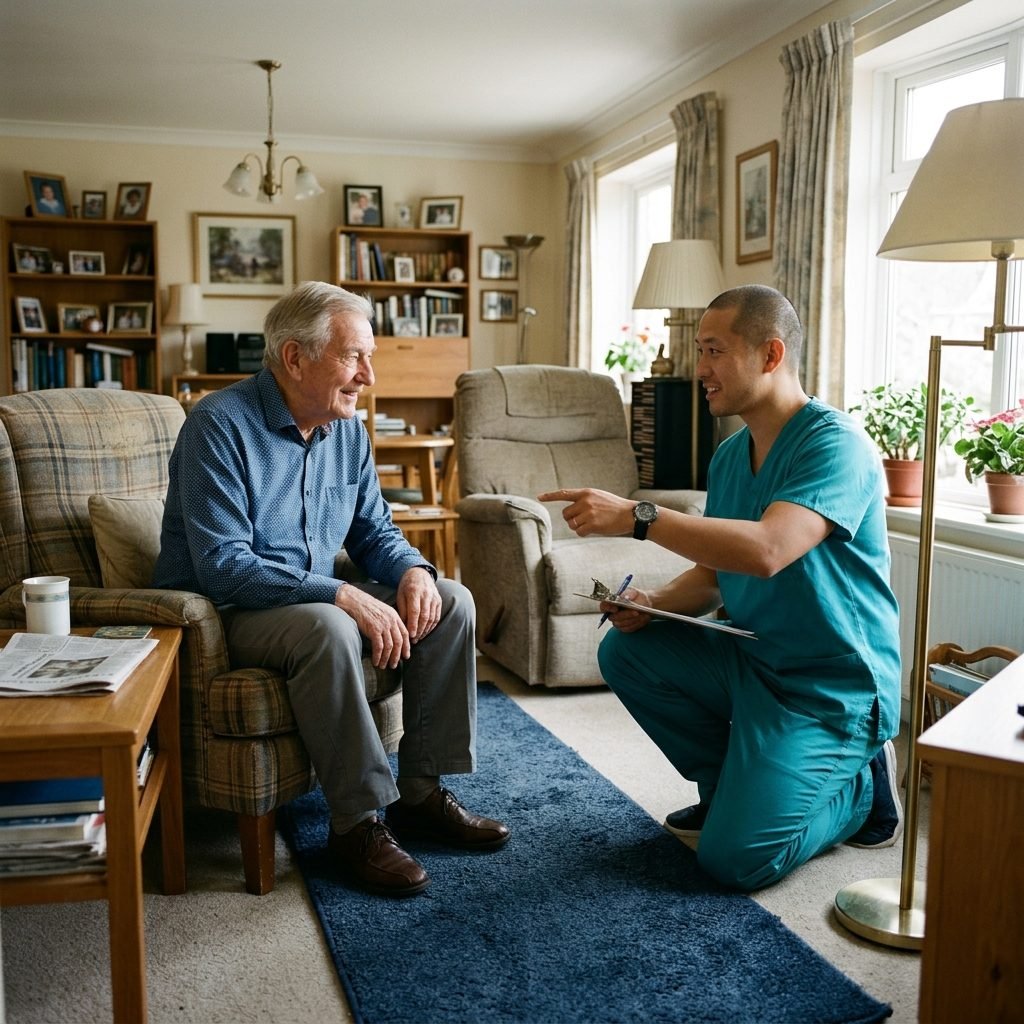
The trajectory of any successful clinical mobility clinical reconditioning regimen strictly begins with a comprehensive, highly detailed clinical assessment conducted by the specialist during the very first domestic setting visit. This vital evaluation commences with obtaining a thorough, exhaustive medical history of the rehab client. This involves a deep dive into the current pharmaceutical drugs they are consuming and investigating the presence of any chronic systemic illnesses—such as advanced cardiac disease or poorly controlled Diabetes Mellitus—which could drastically alter the course of the treatment plan. The rehab specialist also listens intently to the rehab client's primary complaints and explicitly identifies the specific physical barriers hindering their daily life. This is tailored to optimize patient mobility in Makkah, keeping families active and functionally independent.
Following the interview, the specialist smoothly transitions into a rigorous physical examination. This critical phase involves precisely measuring the active and passive range of motion across all major joint complexs and evaluating baseline muscle strength using internationally validated and standardized clinical scales. The examination also encompasses a thorough check of muscle tone and spasticity, and verifies the absolute integrity of the peripheral nervous system by carefully testing deep tendon reflexes and tactile sensation across both the upper and lower extremities. This facilitates daily physical independence for families in Makkah, promoting safety in all transfers and walks.
The most pivotal component of the geriatric assessment is, without a doubt, the Balance and Gait Analysis. The rehab specialist strictly employs standardized, evidence-based clinical tests—such as the Timed Up and Go (TUG) test and various static and dynamic standing equilibrium control assessments—to accurately and objectively quantify the rehab client's exact risk of falling. Based entirely on the synthesis of this exhaustive clinical data, the specialist collaboratively engages the rehab client and their family to draft a highly customized treatment plan and mutually agree upon the desired rehabilitative goals. We maintain strict clinical standards for home visits in Makkah, aligning every session with discharge instructions.
Comprehensive Therapeutic Goals: From Immediate Pain Relief to Functional Independence and Home Care in Makkah
Our elite medical team operates strictly based on a highly customized therapeutic plan featuring clear, time-bound objectives tailored uniquely to the individual clinical presentation of each rehab client. In the short term, our primary, immediate objective revolves around the expert management and mitigation of acute or chronic pain. We achieve this utilizing gentle manual therapy techniques, portable physical modalities, and by effectively reducing inflammation and swelling associated with recent injuries or surgeries, thereby providing the rehab client with instant relief that heavily encourages their continued compliance with the program. Our Makkah clinical team prioritizes these recovery steps to ensure physical safety and prevent progressive atrophy.
Transitioning to the medium term, we actively strive to recover baseline the complete, natural range of motion to stiffened joint complexs. Simultaneously, we focus intensely on significantly boosting functional muscle strength—specifically targeting the core musculature and the lower extremities. These muscle groups play the most monumental role in bearing the body's weight and maintaining postural equilibrium control, effectively enabling the senior to transition safely and completely independently from a supine to a seated position, and subsequently to a firm, stable standing posture. This is tailored to optimize patient mobility in Makkah, keeping families active and functionally independent.
Looking at the long-term horizon, the ultimate, overarching goal is the absolute realization of maximum functional independence. We rigorously train the elderly rehab client to seamlessly perform their Activities of Daily Living (ADLs)—such as utilizing the restroom safely, independent dressing, and walking acceptable distances both indoors and outdoors. A paramount objective is also to profoundly boost their self-confidence and completely eradicate the paralyzing fear of falling (Kinesiophobia), which routinely serves as the largest psychological obstacle hindering motor progress in the geriatric population. This facilitates daily physical independence for families in Makkah, promoting safety in all transfers and walks.
Normal Physiological Changes in Seniors and Their Direct Impact on Mobility and Balance and Home Care in Makkah
As the human body ages, it undergoes a series of complex physiological transformations that cast a heavy shadow over general motor capabilities. One of the most prominent of these transformations is the significant loss of muscle mass and power, medically known as Sarcopenia. This steady decline directly weakens the elderly person's ability to endure customary daily physical burdens, such as rising from a low chair or climbing a flight of stairs, rendering them increasingly dependent on external assistance. This aligns perfectly with our rehabilitation standards in Makkah, catering to hilly terrains and step-climbing needs.
Parallel to this muscular weakening, bone density progressively diminishes (Osteopenia), ultimately leading to full-blown osteoporosis in many cases. This condition leaves the skeletal framework highly fragile and susceptible to severe fractures even upon sustaining very minor trauma or impact. Furthermore, articular cartilage loses a substantial portion of its water content, which precipitates joint complex stiffness, severely restricted ranges of motion, and chronic pain that acts as a major barrier to smooth, effortless movement. This supports safe and effective physical recovery in Makkah, offering absolute peace of mind to local households.
Neurologically speaking, the transmission speed of nerve impulses from the brain to the peripheral muscular structures and vice versa slows down considerably. This delay directly compromises the rapid reflexive responses absolutely necessary to avoid a fall upon stumbling. Additionally, the efficiency of deep sensory receptors (proprioceptors) located in joint complexs and tendons—which are fundamentally responsible for the body's spatial awareness—deteriorates, resulting in recurrent equilibrium control disturbances during standing or walking. Our Makkah clinical team prioritizes these recovery steps to ensure physical safety and prevent progressive atrophy.
Clinical Pathways & Field Dispatch in Makkah
📍 Coordinated by Ms. Sara Al-Harbi, PT Coordinator for the Makkah Region
In Makkah, we cover Al-Awali, Al-Shawqiyyah, Al-Naseem, Al-Batha, Al-Zaidi, and Al-Aziziyah. We provide female clinical therapists to ensure maximum comfort and compliance in Makkah households.
For patients discharged from King Abdullah Medical City (KAMC) or Al-Noor Specialist Hospital, we review surgical discharge guidelines carefully to initiate safe mobilization.
Local Coordination & Clinical Pathways in Makkah
📍 Coordinated through the Makkah home-visit scheduling pathway
In Makkah, we cover Al-Awali, Al-Shawqiyyah, Al-Naseem, Al-Batha, Al-Zaidi, and Al-Aziziyah. We provide female clinical therapists to ensure maximum comfort and compliance in Makkah households.
For patients recently discharged after surgery or medical admission, the first visit starts with reviewing discharge instructions, movement precautions, and any warning signs that require physician follow-up.