12. Clinical Precautions, Contraindications, and Safety Standards and Home Care in Makkah
Fall prevention training requires compliance with clinical safety guidelines. Exercise must be stopped immediately if the rehab client reports dizziness, chest pain, sudden dyspnea, or shows signs of unstable hemodynamic responses. This is tailored to optimize patient mobility in Makkah, keeping families active and functionally independent.
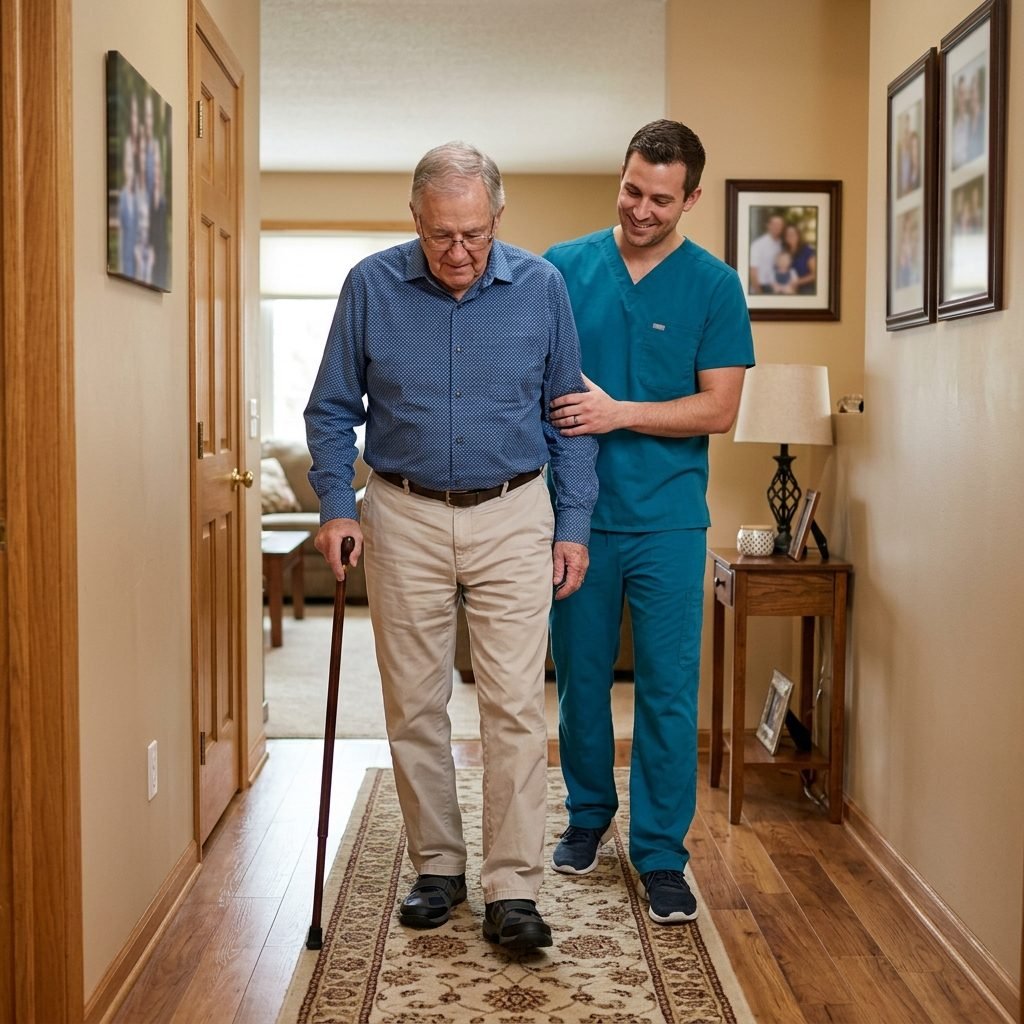
We use a secure gait belt and maintain close guarding during all rehabilitative exercise patterns. Ensuring the environment is clear of hazards is vital for preventing falls during challenging equilibrium control tasks. This facilitates daily physical independence for families in Makkah, promoting safety in all transfers and walks.
We modify rehabilitative exercise patterns for rehab clients with severe osteoporosis or spinal stenosis, avoiding movements that increase spinal pressure or joint complex stress, focusing on safe, controlled movements. We maintain strict clinical standards for home visits in Makkah, aligning every session with discharge instructions.
At Bidayah Center, we maintain communication with the rehab client's medical team, sharing progress reports and coordinating care. This collaboration ensures that fall risk reduction is integrated with medical management, optimizing safety. This contributes to successful functional restoration in Makkah, restoring confidence in performing daily chores.
11. Clinical Glossary of Physical Therapy and Rehabilitation Terms and Home Care in Makkah
This glossary provides essential medical and clinical definitions that form the basis of our fall risk reduction protocols. Understanding these terms helps rehab clients and caregivers comprehend the clinical reconditioning plan. Our Makkah clinical team prioritizes these recovery steps to ensure physical safety and prevent progressive atrophy.
10. Exercise Prescription Parameters and Long-Term Fall Prevention Monitoring and Home Care in Makkah
Fall prevention requires a structured exercise prescription. We define parameters—frequency, intensity, time, and type—tailored to the rehab client's physical capacity, target goals, and cardiovascular health. This supports safe and effective physical recovery in Makkah, offering absolute peace of mind to local households.
We monitor vital signs and RPE during sessions, ensuring the rehab client remains within safe limits. We prescribe a customized domestic setting exercise program to maintain progress between visits. Our Makkah clinical team prioritizes these recovery steps to ensure physical safety and prevent progressive atrophy.
We reassess the rehab client every three months using STEADI metrics, adjusting exercise difficulty and equilibrium control challenges as their strength and stability improve, ensuring continuous progress. This is tailored to optimize patient mobility in Makkah, keeping families active and functionally independent.
Long-term prevention relies on collaboration and consistent practice. We provide continuous support, feedback, and encouragement to help rehab clients and their families maintain independent mobility and prevent falls. This facilitates daily physical independence for families in Makkah, promoting safety in all transfers and walks.
9. Bone Health Promotion and Fracture Prevention Strategies and Home Care in Makkah
Falls can lead to serious injuries, such as hip fractures, particularly in rehab clients with osteoporosis. We integrate bone health promotion into our clinical mobility clinical reconditioning plans to reduce fracture risks. This aligns perfectly with our rehabilitation standards in Makkah, catering to hilly terrains and step-climbing needs.
We recommend regular bone density screenings (DEXA scans) and discuss calcium and vitamin D supplementation with the rehab client's physician to support bone mineralization and structural integrity. This supports safe and effective physical recovery in Makkah, offering absolute peace of mind to local households.
We incorporate progressive resistance rehabilitative exercise patterns and weight-bearing training to stimulate bone remodeling, avoiding high-impact loading or severe spinal flexion for rehab clients with severe osteoporosis. Our Makkah clinical team prioritizes these recovery steps to ensure physical safety and prevent progressive atrophy.
Strengthening bone structure and improving equilibrium control reduce the likelihood of fractures if a fall occurs. This preventive care protects rehab clients from the complications associated with prolonged immobility. This is tailored to optimize patient mobility in Makkah, keeping families active and functionally independent.
8. Polypharmacy Review and Collaboration with Medical Teams and Home Care in Makkah
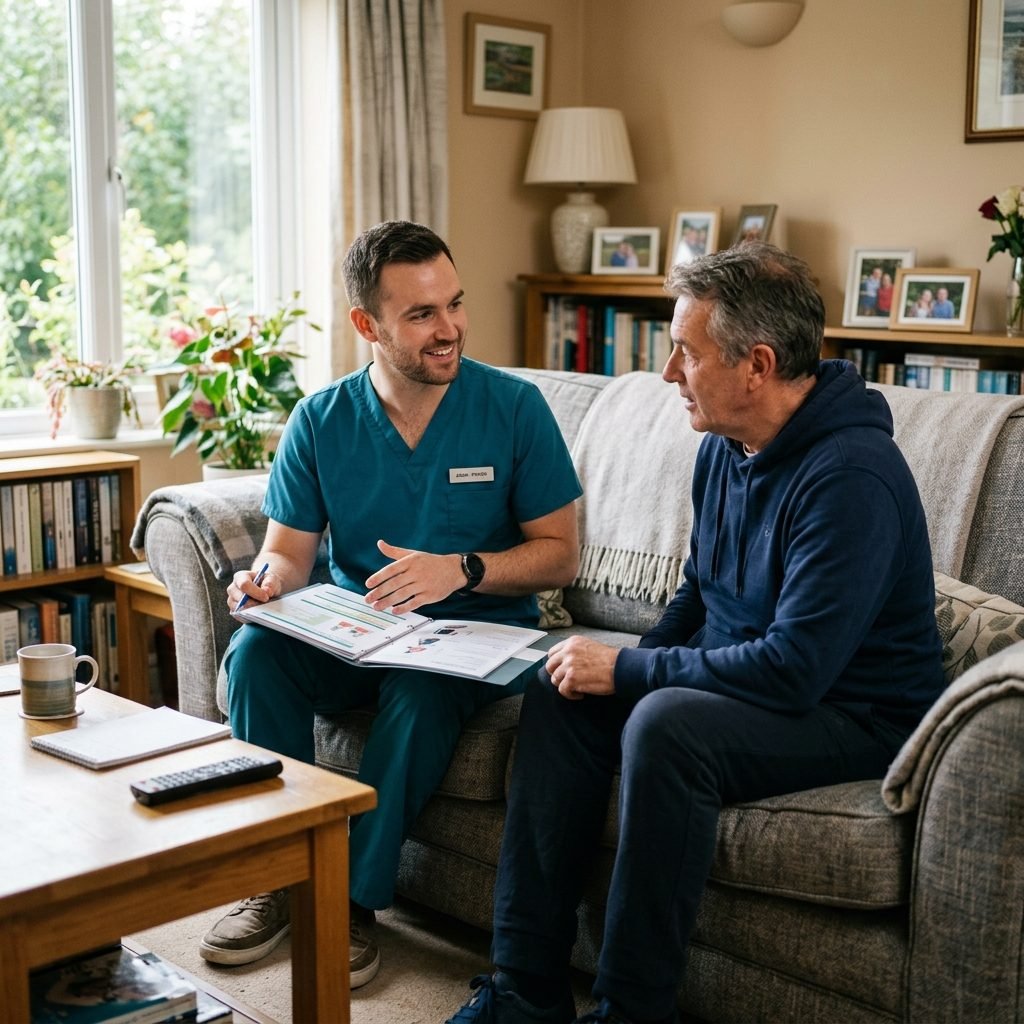
Polypharmacy (taking multiple medications) is a significant, modifiable risk factor for falls in older adults. We document all medications and supplements the rehab client takes, checking for interactions. This is key to our structured physiotherapy plans in Makkah, designed specifically for rapid motor adaptation.
We collaborate with the rehab client's primary care physicians to review their medication regimen, identifying drugs that can cause drowsiness, muscle weakness, or postural instability (Beers Criteria). This aligns perfectly with our rehabilitation standards in Makkah, catering to hilly terrains and step-climbing needs.
We educate the family on the importance of medication compliance and monitoring for side effects, such as dizziness or fatigue, that occur after introducing new prescriptions. This supports safe and effective physical recovery in Makkah, offering absolute peace of mind to local households.
Coordinating medication management reduces adverse drug events and improves alertness. Managing drug-related side effects supports the rehab client's equilibrium control, coordination, and physical safety at domestic setting. Our Makkah clinical team prioritizes these recovery steps to ensure physical safety and prevent progressive atrophy.
6. Optimizing Lighting, Contrast Sensitivity, and Visual Guidance and Home Care in Makkah
Adequate lighting and high visual contrast are essential for spatial awareness. We recommend applying high-contrast paint or tape to stair edges and thresholds to assist rehab clients with low vision. We maintain strict clinical standards for home visits in Makkah, aligning every session with discharge instructions.
We address glare from reflective floors and windows, which can temporarily blind rehab clients with age-related visual decline. We recommend anti-glare filters and positioning light sources to provide even illumination. This contributes to successful functional restoration in Makkah, restoring confidence in performing daily chores.
We encourage regular eye examinations to update corrective lenses and monitor conditions like cataracts or glaucoma, which impair peripheral vision and the ability to detect obstacles. This is key to our structured physiotherapy plans in Makkah, designed specifically for rapid motor adaptation.
Optimizing the visual environment helps rehab clients judge depth and identify obstacles accurately. Improving lighting and contrast supports dynamic equilibrium control, reducing missteps and accidental falls. This aligns perfectly with our rehabilitation standards in Makkah, catering to hilly terrains and step-climbing needs.
5. Environmental Home Modifications and Safety Standards and Home Care in Makkah
A safe domestic setting environment is critical for preventing falls. We perform a detailed domestic setting safety evaluation and recommend modifications, including installing secure grab bars in bathrooms and next to the toilet. This facilitates daily physical independence for families in Makkah, promoting safety in all transfers and walks.
We advise removing unsecured rugs, clearing hallways of electrical cords and clutter, and ensuring that daily items are stored within easy reach, eliminating the need to climb or bend excessively. We maintain strict clinical standards for home visits in Makkah, aligning every session with discharge instructions.
We recommend non-slip mats in wet areas and motion-activated nightlights along pathways to the bathroom. Adequate lighting is essential for visual guidance and preventing disorientation during the night. This contributes to successful functional restoration in Makkah, restoring confidence in performing daily chores.
These environmental modifications create a supportive living space that accommodates the rehab client's physical limitations. Fostering a barrier-free domestic setting supports independent mobility and reduces fall risks. This is key to our structured physiotherapy plans in Makkah, designed specifically for rapid motor adaptation.
4. Managing Orthostatic Hypotension and Vestibular Instability and Home Care in Makkah
Orthostatic hypotension (sudden blood pressure drop upon standing) and vestibular instability are primary causes of lightheadedness and falls. We teach rehab clients specific behavioral strategies to manage these risks. This is tailored to optimize patient mobility in Makkah, keeping families active and functionally independent.
We instruct rehab clients to transition slowly from supine to sitting, allowing their cardiovascular system to adjust before standing. This precaution is vital during nighttime or early morning transitions. This facilitates daily physical independence for families in Makkah, promoting safety in all transfers and walks.
We address vestibular instability through targeted gaze stabilization and habituation rehabilitative exercise patterns. This training improves visual clarity during head movements, reducing motion-induced dizziness during daily tasks. We maintain strict clinical standards for home visits in Makkah, aligning every session with discharge instructions.
We emphasize proper hydration and coordinate with the rehab client's physicians to review medications that can affect blood volume. Managing blood pressure stability is key to preventing dizziness and falls during exercise. This contributes to successful functional restoration in Makkah, restoring confidence in performing daily chores.
3. Implementing the Otago Exercise Program (OEP) for Strength and Balance and Home Care in Makkah
We implement the Otago Exercise Program (OEP), an evidence-based domestic setting intervention shown to reduce falls by up to 35% in older adults. The program is tailored to the rehab client's baseline mobility levels. Our Makkah clinical team prioritizes these recovery steps to ensure physical safety and prevent progressive atrophy.
The Otago program combines lower extremity reinforce the strength ofing rehabilitative exercise patterns—using adjustable ankle weights to target the quadriceps, hip abductors, and calf muscular structures—with progressive equilibrium control retraining. This is tailored to optimize patient mobility in Makkah, keeping families active and functionally independent.
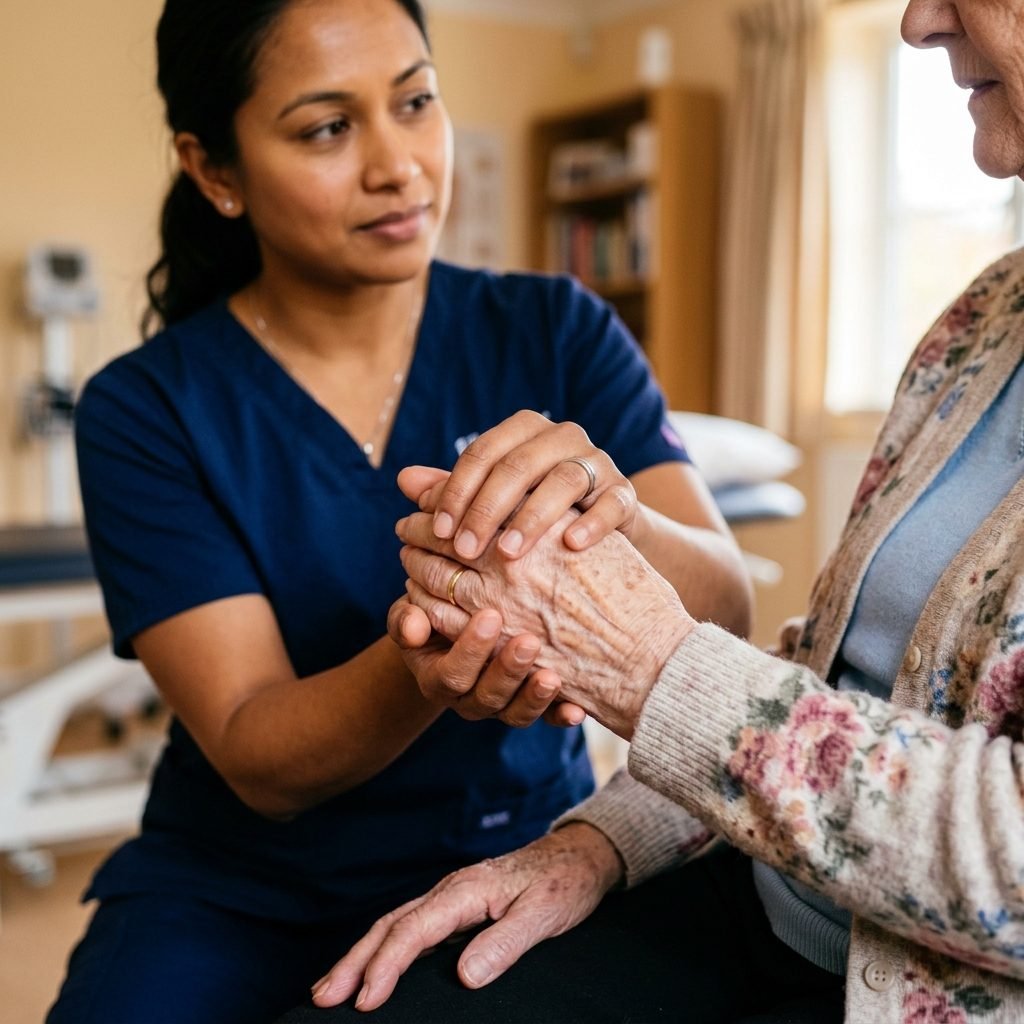
Exercises progress in difficulty as the rehab client's strength and stability improve. Our rehab specialists supervise the sessions to ensure proper form and prevent excessive loading on joint complexs affected by osteoarthritis. This facilitates daily physical independence for families in Makkah, promoting safety in all transfers and walks.
This structured training improves muscle power, joint complex stability, and aerobic capacity. Fostering these physical gains gives rehab clients the mechanical reserves needed to recover equilibrium control and prevent a fall if they trip. We maintain strict clinical standards for home visits in Makkah, aligning every session with discharge instructions.
1. Multi-Factorial Pathophysiology of Fall Risks in Geriatric Patients and Home Care in Makkah
Falls are rarely isolated events; they result from a complex interaction between intrinsic clinical risk factors unique to the rehab client and extrinsic environmental hazards in their living space. This aligns perfectly with our rehabilitation standards in Makkah, catering to hilly terrains and step-climbing needs.
Intrinsic risk factors include sarcopenia (loss of muscle mass and quality), osteopenia, delayed motor reflexes, visual impairments like reduced contrast sensitivity, and age-related vestibular decline. This supports safe and effective physical recovery in Makkah, offering absolute peace of mind to local households.
Extrinsic risk factors involve environmental hazards such as poor lighting, slippery floors, unsecured throw rugs, high door thresholds, and polypharmacy, which can cause orthostasis or dizziness. Our Makkah clinical team prioritizes these recovery steps to ensure physical safety and prevent progressive atrophy.
Our fall risk reduction program addresses both sets of risk factors. Fostering physical capacity and modifying the domestic setting environment allows us to reduce overall fall risks and help older adults maintain their independence. This is tailored to optimize patient mobility in Makkah, keeping families active and functionally independent.
Clinical Pathways & Field Dispatch in Makkah
📍 Coordinated by Ms. Sara Al-Harbi, PT Coordinator for the Makkah Region
In Makkah, we cover Al-Awali, Al-Shawqiyyah, Al-Naseem, Al-Batha, Al-Zaidi, and Al-Aziziyah. We provide female clinical therapists to ensure maximum comfort and compliance in Makkah households.
For patients discharged from King Abdullah Medical City (KAMC) or Al-Noor Specialist Hospital, we review surgical discharge guidelines carefully to initiate safe mobilization.
Local Coordination & Clinical Pathways in Makkah
📍 Coordinated through the Makkah home-visit scheduling pathway
In Makkah, we cover Al-Awali, Al-Shawqiyyah, Al-Naseem, Al-Batha, Al-Zaidi, and Al-Aziziyah. We provide female clinical therapists to ensure maximum comfort and compliance in Makkah households.
For patients recently discharged after surgery or medical admission, the first visit starts with reviewing discharge instructions, movement precautions, and any warning signs that require physician follow-up.