12. Clinical Precautions, Contraindications, and Safety Standards and Home Care in Makkah
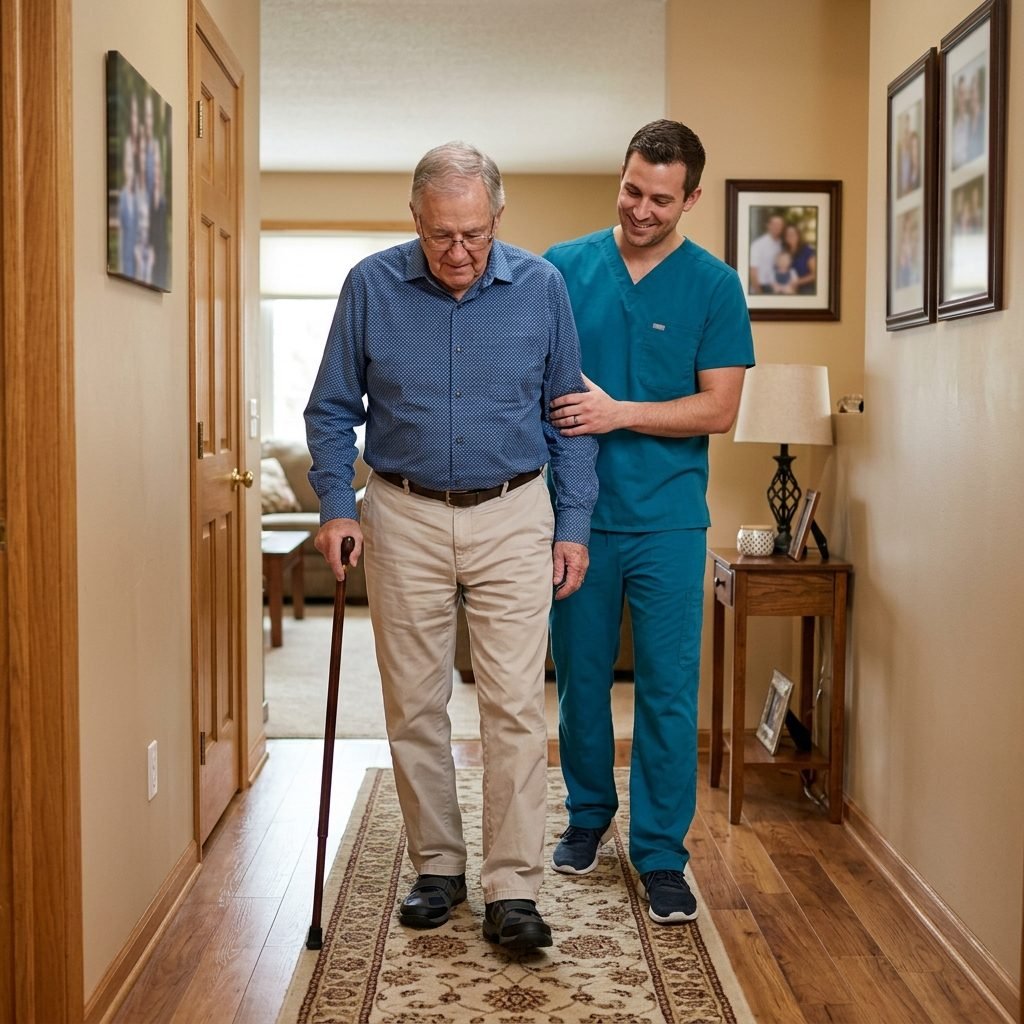
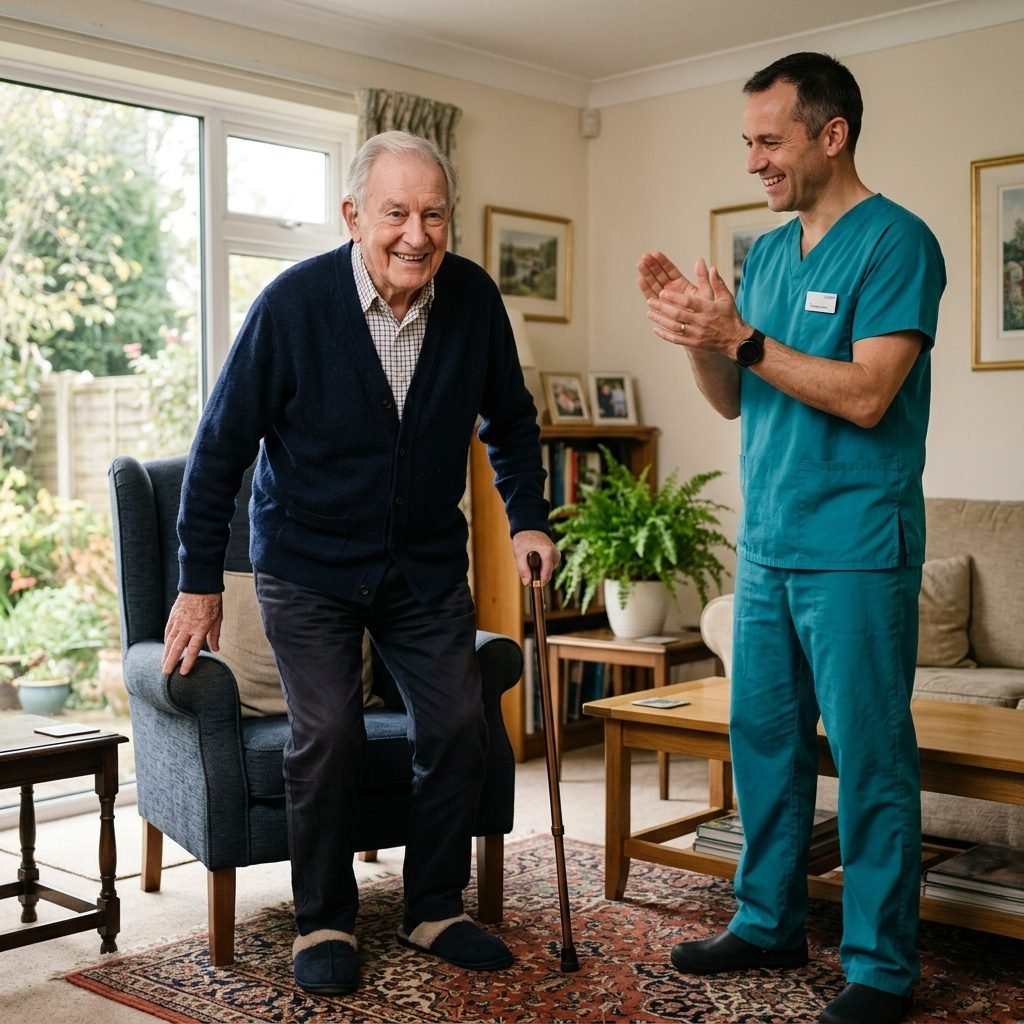
Gait training requires compliance with clinical safety guidelines. Exercise must be stopped immediately if the rehab client reports dizziness, chest pain, sudden dyspnea, or shows signs of unstable hemodynamic responses. This is tailored to optimize patient mobility in Makkah, keeping families active and functionally independent.
We check skin integrity daily for rehab clients using orthoses or prostheses (such as Ankle-Foot Orthoses - AFOs) or those with peripheral neuropathies, ensuring footwear is properly fitted to prevent pressure injuries. This facilitates daily physical independence for families in Makkah, promoting safety in all transfers and walks.
We exercise caution when treating rehab clients with healing fractures or joint complex replacements, adhering to the weight-bearing restrictions specified by their surgeon to prevent structural damage to bone or implants. We maintain strict clinical standards for home visits in Makkah, aligning every session with discharge instructions.
At Bidayah Center, we maintain communication with the rehab client's medical team, sharing progress reports and coordinating care. This collaboration ensures that gait training is integrated with medical management, optimizing safety. This contributes to successful functional restoration in Makkah, restoring confidence in performing daily chores.
11. Clinical Glossary of Physical Therapy and Rehabilitation Terms and Home Care in Makkah
This glossary provides essential medical and clinical definitions that form the basis of our gait training protocols. Understanding these terms helps rehab clients and caregivers comprehend the clinical reconditioning plan. Our Makkah clinical team prioritizes these recovery steps to ensure physical safety and prevent progressive atrophy.
10. Exercise Prescription Dosage and Gait Rehabilitation Progression and Home Care in Makkah
Restoring gait requires a structured exercise prescription. We define parameters—frequency, intensity, time, and type—tailored to the rehab client's physical capacity, target goals, and cardiovascular health, avoiding overexertion. This supports safe and effective physical recovery in Makkah, offering absolute peace of mind to local households.
We monitor vital signs (heart rate, blood pressure, oxygen saturation) and RPE during sessions, ensuring the rehab client remains within safe limits. We prescribe a customized domestic setting exercise program to maintain progress between visits. Our Makkah clinical team prioritizes these recovery steps to ensure physical safety and prevent progressive atrophy.
We document progress using objective measures, adjusting exercise difficulty and gait challenges as the rehab client's strength and equilibrium control improve, ensuring continuous stimulation of neural pathways without mechanical strain. This is tailored to optimize patient mobility in Makkah, keeping families active and functionally independent.
Long-term recovery relies on collaboration and consistent practice. We provide continuous support, feedback, and encouragement to help rehab clients and their families achieve independent mobility and reach their goals. This facilitates daily physical independence for families in Makkah, promoting safety in all transfers and walks.
9. Fall Prevention Integration and Loss of Balance Recovery and Home Care in Makkah
Integrating fall risk reduction strategies is essential in gait clinical reconditioning. We teach rehab clients how to respond to unexpected equilibrium control disturbances, practicing stepping strategies to recover their center of mass and prevent a fall. This aligns perfectly with our rehabilitation standards in Makkah, catering to hilly terrains and step-climbing needs.
We train rehab clients in safe falling techniques and fall recovery strategies, teaching them how to transition to the floor safely if a fall is unavoidable and how to get up from the floor using sturdy furniture for support. This supports safe and effective physical recovery in Makkah, offering absolute peace of mind to local households.
During all training sessions, we prioritize rehab client safety. Our rehab specialists utilize a secure gait belt and maintain close guarding to support the rehab client during challenging rehabilitative exercise patterns, providing a safe environment for motor learning. Our Makkah clinical team prioritizes these recovery steps to ensure physical safety and prevent progressive atrophy.
This comprehensive safety training reduces the fear of falling, which can limit mobility. Fostering physical stability and teaching recovery strategies support the rehab client's independence and decrease the risk of serious fall-related injuries. This is tailored to optimize patient mobility in Makkah, keeping families active and functionally independent.
8. Cognitive-Motor Dual-Task Training and Advanced Gait Mechanics and Home Care in Makkah
Real-world mobility requires walking while distracted, such as carrying items or conversing. We incorporate cognitive-motor dual-task training, challenging the rehab client to walk while performing cognitive tasks (like counting backward or naming words). This is key to our structured physiotherapy plans in Makkah, designed specifically for rapid motor adaptation.
Dual-task training improves the rehab client's cognitive-motor control, helping them maintain a stable gait pattern and postural alignment when distracted, which is vital for preventing falls in busy environments. This aligns perfectly with our rehabilitation standards in Makkah, catering to hilly terrains and step-climbing needs.
We focus on restoring trunk rotation and arm swing, which are often reduced in rehab clients with acute stroke condition or Parkinson's disease. Restoring these movements improves energy efficiency, equilibrium controls the body, and reduces physical exhaustion during long walks. This supports safe and effective physical recovery in Makkah, offering absolute peace of mind to local households.
Improving advanced gait mechanics reduces the cardiopulmonary energy expenditure of walking. This efficiency enables rehab clients to walk longer distances, improving overall endurance and supporting participation in community activities. Our Makkah clinical team prioritizes these recovery steps to ensure physical safety and prevent progressive atrophy.
6. Sensory Cueing Strategies for Parkinson's Disease and Stroke and Home Care in Makkah
Sensory cueing is an evidence-based clinical strategy used to manage gait deficits, such as freezing of gait (FOG) and bradykinesia, in rehab clients with Parkinson's disease and certain post-acute stroke condition syndromes. We maintain strict clinical standards for home visits in Makkah, aligning every session with discharge instructions.
We utilize visual cues, such as colored tape on the floor or laser lines from specialized canes. These visual targets stimulate the visual cortex and premotor areas, helping the brain bypass damaged basal ganglia pathways to initiate steps. This contributes to successful functional restoration in Makkah, restoring confidence in performing daily chores.
Auditory cues, including metronomes or rhythmic music, are implemented to regulate cadence and step frequency. Synchronizing steps with an external auditory rhythm helps rehab clients maintain a consistent walking speed and prevent festination. This is key to our structured physiotherapy plans in Makkah, designed specifically for rapid motor adaptation.
We train rehab clients and their families to use these cueing techniques independently at domestic setting. Fostering the use of sensory cues provides rehab clients with an immediate tool to overcome motor blocks, reducing anxiety and enhancing safety during daily walking. This aligns perfectly with our rehabilitation standards in Makkah, catering to hilly terrains and step-climbing needs.
5. Environmental Adaptation and Multi-Surface Gait Training and Home Care in Makkah
To ensure functional community mobility, gait training must transition from flat indoor surfaces to varied and challenging environments. We incorporate walking training on uneven surfaces, such as grass, gravel, and foam pads, to challenge joint complex proprioception. This facilitates daily physical independence for families in Makkah, promoting safety in all transfers and walks.
We provide structured training for stair climbing, teaching rehab clients proper sequencing: ascending with the uninvolved limb first ('up with the good') and descending with the involved limb first ('down with the bad'), using handrails for stability. We maintain strict clinical standards for home visits in Makkah, aligning every session with discharge instructions.
Training includes navigating common household obstacles, such as door thresholds, transition strips, and tight corners. We teach rehab clients how to perform safe turns, walk backward, and step sideward to manage varied environmental demands. This contributes to successful functional restoration in Makkah, restoring confidence in performing daily chores.
This diverse training builds the rehab client's confidence and adaptability. Fostering the ability to navigate different surfaces safely reduces anxiety and enables rehab clients to participate in activities of daily living inside and outside their domestic settings. This is key to our structured physiotherapy plans in Makkah, designed specifically for rapid motor adaptation.
4. Phases of the Gait Cycle and Focused Phase Training and Home Care in Makkah
The gait cycle is divided into the stance phase (60% of the cycle) and the swing phase (40%). We break down training into these components, addressing specific biomechanical deficits within each phase to ensure a smooth transition. This is tailored to optimize patient mobility in Makkah, keeping families active and functionally independent.
During stance phase training, we focus on heel strike (initial contact) and loading response. We train the rehab client to accept weight on the stance limb with optimal knee stability, preventing knee hyperextension or buckle during mid-stance. This facilitates daily physical independence for families in Makkah, promoting safety in all transfers and walks.
During swing phase training, we target limb clearance and advancement. We train the rehab client to achieve sufficient ankle dorsiflexion and knee flexion to prevent foot drop, combined with proper pelvic rotation to facilitate forward step progression. We maintain strict clinical standards for home visits in Makkah, aligning every session with discharge instructions.
We progressively integrate these phase-specific rehabilitative exercise patterns into a continuous walking pattern. Providing real-time visual, verbal, and tactile feedback during walking helps correct errors immediately, facilitating motor learning and the retention of normal gait mechanics. This contributes to successful functional restoration in Makkah, restoring confidence in performing daily chores.
3. Neuromuscular Re-education and Pre-Gait Strengthening and Home Care in Makkah
Neuromuscular re-education is a critical preparatory phase that must precede active walking training. We design targeted rehabilitative exercise patterns to activate essential gait muscular structures, such as the tibialis anterior for dorsiflexion and the quadriceps for knee extension. Our Makkah clinical team prioritizes these recovery steps to ensure physical safety and prevent progressive atrophy.
We implement proprioceptive neuromuscular facilitation (PNF) patterns to help the brain coordinate the timing and force of muscle contractions during the gait cycle, combined with weight-shifting rehabilitative exercise patterns in standing positions. This is tailored to optimize patient mobility in Makkah, keeping families active and functionally independent.
Core stability rehabilitative exercise patterns are integrated to provide a stable base for lower extremity movement. Strengthening the abdominal, back, and pelvic floor muscular structures improves pelvic alignment, enhances dynamic equilibrium control, and supports smooth leg progression. This facilitates daily physical independence for families in Makkah, promoting safety in all transfers and walks.
These preparatory rehabilitative exercise patterns are repeated consistently to stimulate neuroplastic changes and establish healthy motor pathways. Preparing the muscular structures and joint complexs first allows rehab clients to transition to active walking with optimal biomechanics and minimal compensatory strain. We maintain strict clinical standards for home visits in Makkah, aligning every session with discharge instructions.
1. Pathophysiology of Gait Deviations and Motor Impairments and Home Care in Makkah
Normal human ambulation requires complex coordination between the cerebral cortex, cerebellum, spinal pathways, and peripheral mechanoreceptors. Musculoskeletal injuries or neurological lesions disrupt this coordination, leading to specific, pathological gait deviations. This aligns perfectly with our rehabilitation standards in Makkah, catering to hilly terrains and step-climbing needs.
Common clinical gait deviations include the Trendelenburg gait, caused by weakness in the gluteus medius muscle, which leads to pelvic drop during the stance phase, and foot drop, resulting from peroneal nerve injury, causing the rehab client to present with a steppage gait. This supports safe and effective physical recovery in Makkah, offering absolute peace of mind to local households.
Neurological conditions like acute stroke condition often result in hemiplegic circumduction, where the rehab client swings the paretic leg in a lateral arc to clear the ground. Parkinson's disease typically causes a festinating gait, characterized by short, rapid steps and forward-leaning posture. Our Makkah clinical team prioritizes these recovery steps to ensure physical safety and prevent progressive atrophy.
Understanding these biomechanical deviations allows us to target the specific muscle groups and neural pathways responsible for the impairment. This focused approach ensures the restoration of safe walking mechanics and prevents secondary pain in the spine and hips. This is tailored to optimize patient mobility in Makkah, keeping families active and functionally independent.
Clinical Pathways & Field Dispatch in Makkah
📍 Coordinated by Ms. Sara Al-Harbi, PT Coordinator for the Makkah Region
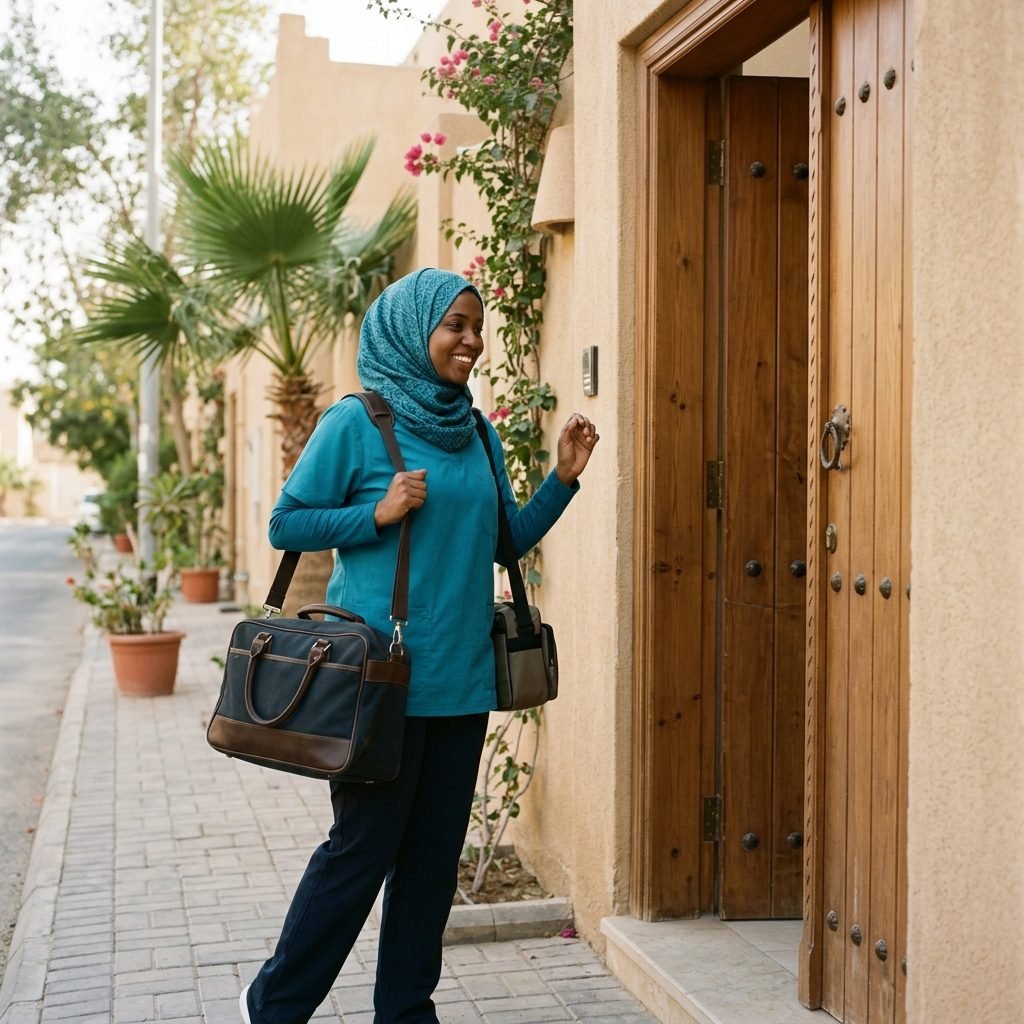
In Makkah, we cover Al-Awali, Al-Shawqiyyah, Al-Naseem, Al-Batha, Al-Zaidi, and Al-Aziziyah. We provide female clinical therapists to ensure maximum comfort and compliance in Makkah households.
For patients discharged from King Abdullah Medical City (KAMC) or Al-Noor Specialist Hospital, we review surgical discharge guidelines carefully to initiate safe mobilization.
Local Coordination & Clinical Pathways in Makkah
📍 Coordinated through the Makkah home-visit scheduling pathway
In Makkah, we cover Al-Awali, Al-Shawqiyyah, Al-Naseem, Al-Batha, Al-Zaidi, and Al-Aziziyah. We provide female clinical therapists to ensure maximum comfort and compliance in Makkah households.
For patients recently discharged after surgery or medical admission, the first visit starts with reviewing discharge instructions, movement precautions, and any warning signs that require physician follow-up.