Vital Psychological Support, Coping Mechanisms, and the Emotional Dimensions of Chronic Edema Management and Home Care in Makkah
The immense burden of living with chronic conditions such as lymphedema and lipedema extends far beyond the severe, visible physical symptoms; it inflicts a massive, often unspoken, psychological and emotional toll on the rehab client. The permanent, visible distortion of limb symmetry, the frustrating reality of struggling to find fitting footwear or clothing, the unrelenting physical heaviness, and the daily, exhausting requirement to wear tight compression garments frequently lead to severe body image distortion, profound social isolation, chronic anxiety, and deep clinical depression. This contributes to successful functional restoration in Makkah, restoring confidence in performing daily chores.
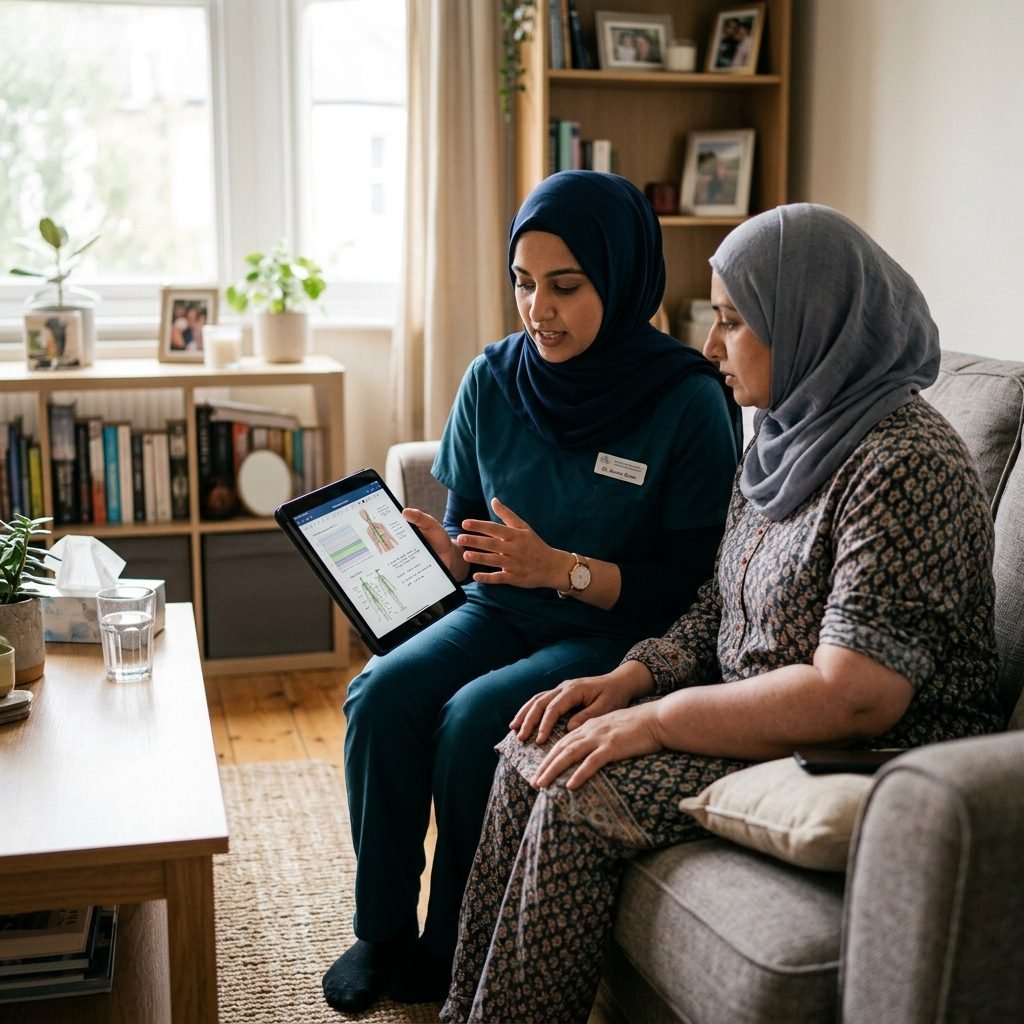
Our elite medical team at Bidayah Center possesses a profound, empathetic understanding of this highly sensitive psychological dimension. We approach every single rehab client with unwavering compassion, deep respect, and infinite patience. We actively listen to their profound fears and frustrations, provide continuous, uplifting emotional encouragement, and deliver empowering health education. Our ultimate goal is to transition the rehab client from a state of passive suffering to active, confident self-management. We firmly believe that integrating positive, compassionate psychological support with expert, in-domestic setting clinical care drastically boosts the rehab client's resilience, dramatically enhances their compliance with strict medical protocols, and fundamentally transforms their overall healing journey. This is key to our structured physiotherapy plans in Makkah, designed specifically for rapid motor adaptation.
Rigorous Clinical Assessment, Circumferential Measurements, and Evidence-Based Progress Tracking and Home Care in Makkah
To definitively guarantee the efficacy of the customized treatment plan and to achieve our aggressive therapeutic goals, our clinical team strictly adheres to rigorous, documented, evidence-based assessment protocols. During the comprehensive initial consultation, the treating rehab specialist meticulously takes circumferential measurements of both the affected and the unaffected contralateral limb using specialized, non-stretch medical measuring tapes. These precise measurements are taken at universally standardized anatomical landmarks to ensure absolute clinical consistency and accuracy. We maintain strict clinical standards for home visits in Makkah, aligning every session with discharge instructions.
These vital metrics are systematically re-evaluated and rigorously documented at predetermined intervals throughout the treatment course to objectively quantify the reduction in interstitial fluid volume and scientifically validate the efficacy of the interventions. However, our holistic assessment extends far beyond mere numerical data. We continuously evaluate the progressive softening of previously fibrotic skin, the restoration of tissue pliability, the significant reduction in the rehab client's subjective reports of pain, tightness, and limb heaviness, and most importantly, the profound, measurable improvement in the rehab client’s ability to perform their daily functional activities and self-care tasks entirely independently. This contributes to successful functional restoration in Makkah, restoring confidence in performing daily chores.
The Intricate Science of Compression Therapy: Garments, Bandaging, and Hemodynamics and Home Care in Makkah
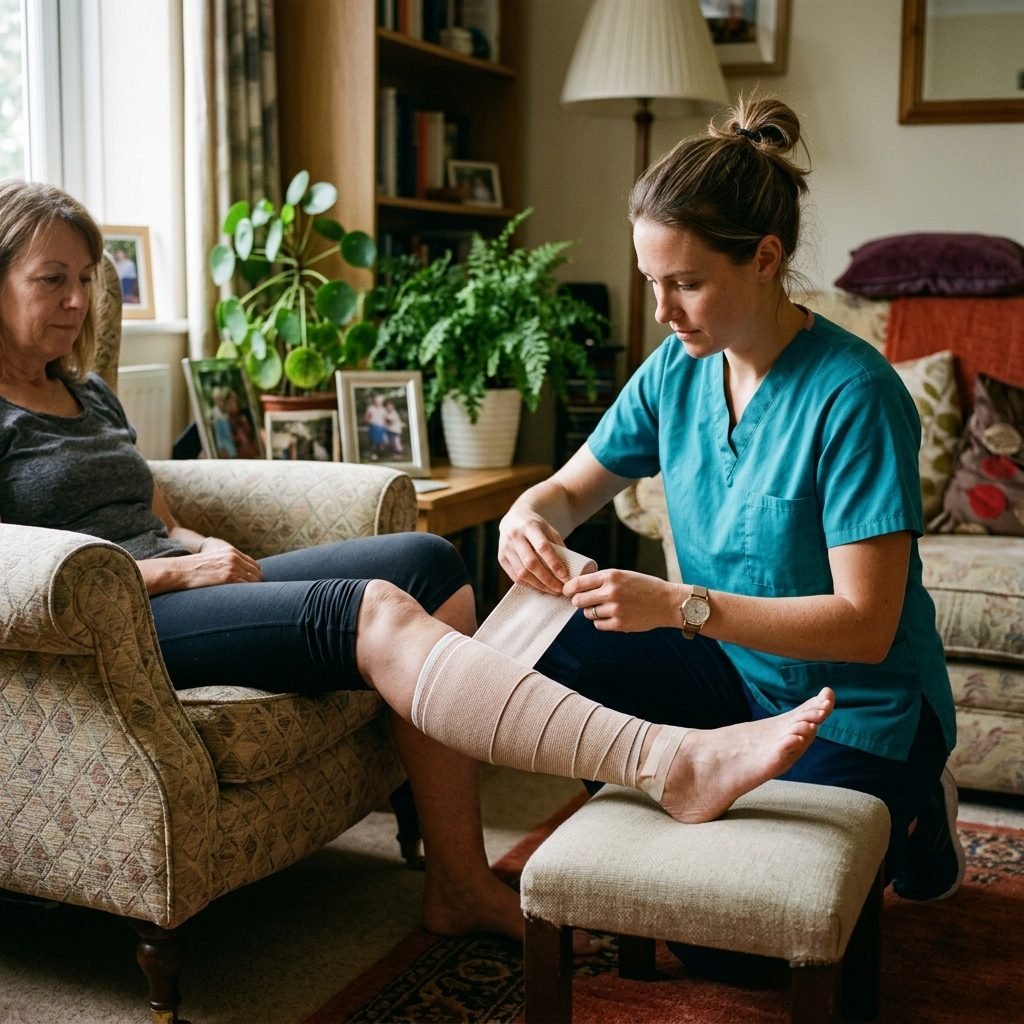
Compression therapy is the non-negotiable anchor that secures the success of the entire MLD treatment plan. Without the immediate application of appropriate external compression following a successful drainage session, the mobilized fluid will rapidly and inevitably re-accumulate in the dependent extremities due to the unrelenting forces of gravity and internal hydrostatic pressure. During Phase I of the intensive CDT protocol, rehab specialists exclusively utilize specialized, multi-layer short-stretch bandages. These unique bandages provide a high 'working pressure' that acts as an unyielding wall for the muscular structures to pump against during movement, while safely maintaining a low 'resting pressure' when the rehab client is asleep or immobile. This facilitates daily physical independence for families in Makkah, promoting safety in all transfers and walks.
Once the limb has successfully reached a stable, decongested volume plateau, the rehab client transitions to the crucial maintenance phase. This involves the meticulous fitting, prescription, and daily wearing of medical-grade, circular or flat-knit compression garments, custom-measured to the millimeter. We comprehensively train the rehab client and their family on the correct techniques for donning and doffing these tight garments without causing skin sheer, how to properly wash and care for the specialized fabric, and we strictly enforce the medical necessity of completely replacing the garments every 4 to 6 months to guarantee that the therapeutic compression gradient remains continually effective and uncompromised. We maintain strict clinical standards for home visits in Makkah, aligning every session with discharge instructions.
Meticulous Skin Care Protocols, Hygiene Management, and the Absolute Prevention of Cellulitis and Home Care in Makkah
The skin serves as the body's primary and most critical barrier against infection. For individuals battling lymphedema, even the most microscopic breach in this defense—a tiny scratch, a minor insect bite, a small paper cut, or simply dry, cracked skin—can act as an open gateway for aggressive pathogenic bacteria. This frequently leads to Cellulitis, a severe, acute bacterial skin infection. In the context of lymphedema, cellulitis is considered a serious medical emergency; it not only causes systemic illness but inherently destroys even more of the surviving lymphatic vessels, leading to a catastrophic worsening of the baseline swelling. This is tailored to optimize patient mobility in Makkah, keeping families active and functionally independent.
At Bidayah Center, we dedicate a significant portion of our time to rigorously educating and training our rehab clients on flawless, daily skin and nail care protocols. This comprehensive regimen includes the mandatory daily application of high-quality, hypoallergenic, low-pH moisturizers to maintain skin elasticity. It also encompasses extremely careful nail trimming (avoiding cutting the cuticles), the proactive use of insect repellents and broad-spectrum sunscreens, and the critical habit of performing a thorough daily visual inspection of the affected limb to instantly detect any unusual redness, unnatural warmth, or microscopic abrasions, ensuring immediate disinfection and medical attention if necessary. This facilitates daily physical independence for families in Makkah, promoting safety in all transfers and walks.
Therapeutic Nutrition, Dietary Interventions, and Vital Lifestyle Modifications Supporting Lymphatic Health and Home Care in Makkah
A rehab client's daily nutritional intake and lifestyle choices are paramount determinants in the successful long-term management of chronic edemas. Clinically, we strictly advise rehab clients to aggressively adhere to a low-sodium diet, as excessive salt intake acts as a powerful magnet for unnecessary fluid retention. It is imperative to eliminate processed, canned, and high-preservative foods. Conversely, the diet must be rich in potent anti-inflammatory and antioxidant-rich whole foods, particularly dark leafy greens, a variety of berries, cruciferous vegetables, and high-quality sources of Omega-3 fatty acids. Our Makkah clinical team prioritizes these recovery steps to ensure physical safety and prevent progressive atrophy.
Beyond nutritional adjustments, maintaining an optimal, healthy Body Mass Index (BMI) is critically important. Extensive medical literature consistently demonstrates that obesity and excess adipose tissue exert massive, continuous mechanical pressure on already compromised lymphatic vessels, severely degrading their transport capacity. We also strictly warn against the use of tight, restrictive clothing, undergarments, or heavy jewelry that can create a tourniquet effect and block vital lymphatic return pathways. Finally, establishing a daily routine of deep, diaphragmatic breathing rehabilitative exercise patterns is highly recommended to stimulate the cisterna chyli and the thoracic duct, the body's largest lymphatic vessel. This is tailored to optimize patient mobility in Makkah, keeping families active and functionally independent.
Optimal Patient Preparation for the In-Home MLD Session and Strict Safety Protocols and Home Care in Makkah
To guarantee the maximum therapeutic efficacy of every MLD session, we strongly urge our rehab clients to prepare a meticulously clean, warm, exceptionally quiet, and thoroughly relaxing domestic setting environment. Achieving total physical and mental relaxation is paramount because it powerfully activates the Parasympathetic Nervous System, which physiological studies have proven to dramatically enhance intrinsic lymphatic contractility and flow rate. The designated treatment area must be entirely free from all auditory and visual distractions, with comfortable, dim lighting. This supports safe and effective physical recovery in Makkah, offering absolute peace of mind to local households.
From a clinical preparation standpoint, rehab clients should shower prior to the session to ensure optimal skin hygiene. It is absolutely crucial to completely avoid the application of any moisturizing lotions, aromatic oils, or topical creams before the rehab specialist arrives. Medical MLD inherently relies on maintaining a slight friction against clean, dry skin to create the precise mechanical tissue stretch required to manually pull open the microscopic anchoring filaments of the lymphatic capillaries; any surface lubrication will cause the hands to slip, rendering the technique completely ineffective. Generous hydration with pure water is strongly advised both before and after the session to assist the kidneys in flushing the mobilized metabolic waste. Our Makkah clinical team prioritizes these recovery steps to ensure physical safety and prevent progressive atrophy.
Medically Approved MLD Techniques, Methodologies, and Elite Therapeutic Schools and Home Care in Makkah
Our distinguished clinical team exclusively employs advanced techniques derived directly from the world’s leading and most scientifically validated schools of lymphology. These include the original Vodder method, famous for its precise pumping and rotary motions; the Földi approach, which masterfully integrates MLD into comprehensive lymphedema management; and the Leduc method, which emphasizes the critical opening of alternative lymphatic anastomoses based on the latest mapping and anatomical research. This aligns perfectly with our rehabilitation standards in Makkah, catering to hilly terrains and step-climbing needs.
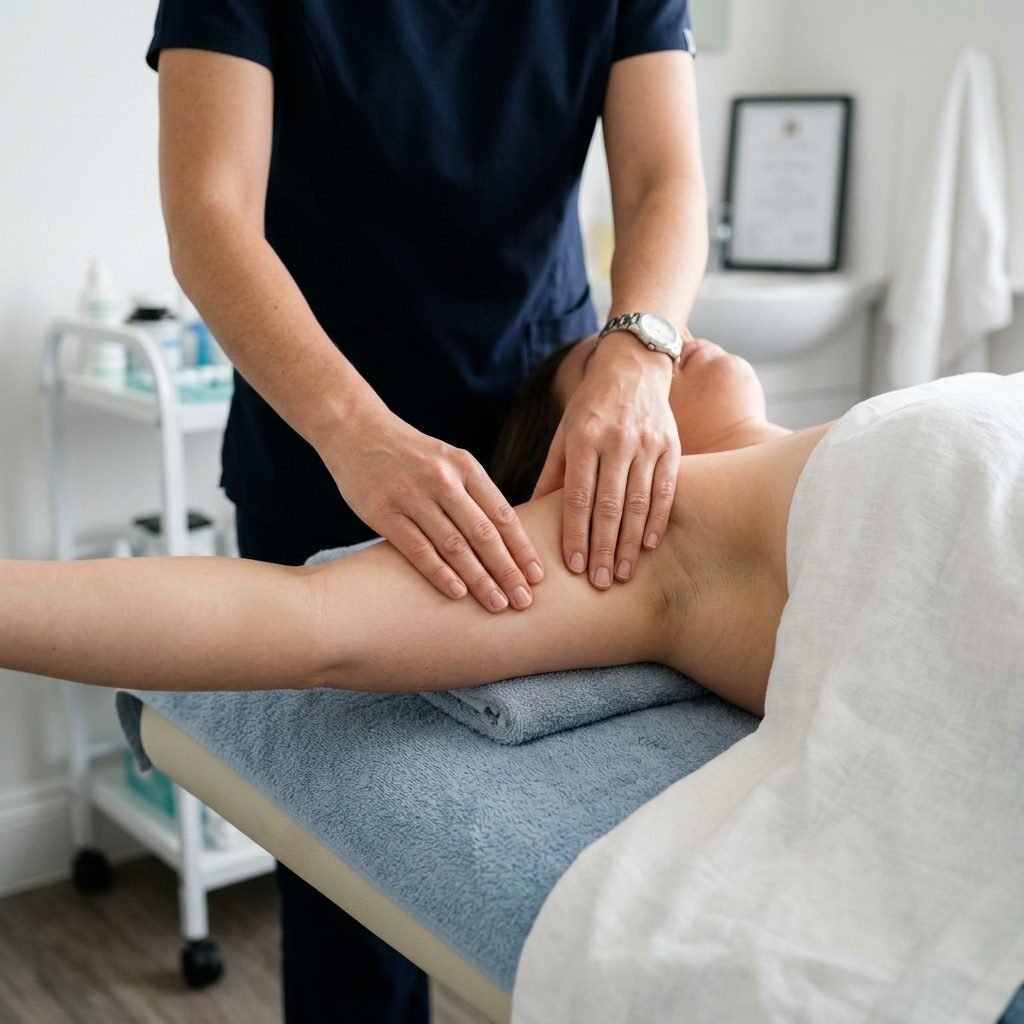
All of these elite techniques share non-negotiable fundamental principles. Treatment must invariably commence by deeply clearing the central, core lymph node basins located in the neck, thorax, and deep abdomen. This crucial step creates a powerful negative-pressure 'suction' effect prior to moving to the congested, affected limbs. Furthermore, the manual acute stroke conditions must be exceptionally slow to perfectly match the naturally sluggish rhythm of lymphatic vessel contractions (which merely pulsate about 5 to 10 times per minute at rest), demanding immense patience, profound expertise, and a masterful touch from the treating clinician. This supports safe and effective physical recovery in Makkah, offering absolute peace of mind to local households.
Complete Decongestive Therapy (CDT): The Global Gold Standard Paradigm for Lymphedema Management and Home Care in Makkah
The optimal, evidence-based management of chronic lymphedema dictates that Manual Lymphatic Drainage must never be utilized as an isolated treatment. Rather, it is the central, driving component of an intensive, multi-modal clinical protocol globally recognized as Complete Decongestive Therapy (CDT). The CDT protocol is clinically bifurcated into two distinct phases: Phase I, the Intensive Decongestive Phase aimed at maximizing volume reduction; and Phase II, the Maintenance Phase designed to preserve and optimize the achieved reductions over the rehab client's lifetime. This is key to our structured physiotherapy plans in Makkah, designed specifically for rapid motor adaptation.
This rigorous medical protocol relies equally on four indispensable, interconnected pillars: First, continuous Manual Lymphatic Drainage (MLD) to mobilize fluid; second, the precise application of Multi-layer Short-Stretch Compression Bandaging to maintain the reduced limb volume and prevent gravity-induced fluid reflux; third, meticulous, obsessive skin and nail care to maintain dermal integrity and completely prevent bacterial entry; and fourth, targeted Remedial Lymphatic Exercises performed while fully bandaged to safely and effectively activate the physiological muscle pump mechanism. This aligns perfectly with our rehabilitation standards in Makkah, catering to hilly terrains and step-climbing needs.
The Crucial and Indispensable Role of MLD in Major Post-Surgical and Orthopedic Rehabilitation and Home Care in Makkah
Following major orthopedic interventions—such as total knee or hip arthroplasties, complex fracture internal fixations, or extensive spinal fusion surgeries—the human body initiates a massive systemic and localized inflammatory response. This trauma inevitably results in severe, widespread tissue edema. This dense, unyielding swelling acts as a mechanical blockade, severely restricting the joint complex's Range of Motion (ROM), escalating the rehab client's perceived pain levels to intolerable heights, and significantly delaying the initiation of standard clinical mobility clinical reconditioning and mobility clinical reconditioning. We maintain strict clinical standards for home visits in Makkah, aligning every session with discharge instructions.
Intervening with expert Manual Lymphatic Drainage during this critical acute phase is absolute game-changing. MLD systematically decongests the surgical site, aggressively flushing out inflammatory exudate, dead cellular debris, and trapped metabolic toxins resulting from surgical tissue trauma. By rapidly alleviating this tremendous local hydrostatic pressure, MLD facilitates a dramatic reduction in acute pain, recover baselines crucial elasticity to the periarticular tissues, massively accelerates wound healing, and empowers the physical rehab specialist to safely commence necessary joint complex mobilization rehabilitative exercise patterns much earlier in the recovery timeline. This contributes to successful functional restoration in Makkah, restoring confidence in performing daily chores.
Lipedema: Complex Diagnostic Criteria, Clinical Challenges, and the Proven Efficacy of MLD and Home Care in Makkah
Lipedema is a chronic, progressive, and deeply misunderstood adipose tissue disorder that almost exclusively afflicts women. It is clinically characterized by a pathological, disproportionate, and strikingly symmetrical accumulation of painful fat and trapped fluid in the lower extremities (and occasionally the arms), remarkably sparing the hands and feet. The hallmark symptoms of this debilitating condition include extreme hypersensitivity to touch, chronic feelings of heavy, aching limbs, and a pronounced tendency to bruise easily due to the extreme fragility of the microvascular capillary beds within the affected adipose tissue. This facilitates daily physical independence for families in Makkah, promoting safety in all transfers and walks.
Although lipedema fat is highly resistant to strict caloric deficits, rigorous diets, and intensive physical exercise, the integration of Manual Lymphatic Drainage within a Complete Decongestive Therapy (CDT) protocol serves as the paramount, first-line defense for symptomatic management. MLD actively extracts the trapped interstitial fluid that accumulates between the pathologically enlarged fat cells. This essential fluid extraction drastically reduces the mechanical pressure exerted on peripheral nerve endings, offering rehab clients immense, immediate relief from constant pain and significantly alleviating the oppressive sensation of limb heaviness. We maintain strict clinical standards for home visits in Makkah, aligning every session with discharge instructions.
Lymphedema: Detailed Pathophysiology, Primary vs. Secondary Classifications, and Stages of Progression and Home Care in Makkah
Medically, lymphedema is categorically divided into two main types. Primary Lymphedema is relatively rare and stems from genetic mutations or congenital developmental anomalies of the lymphatic vessels, manifesting either at birth, during puberty, or later in life. Secondary Lymphedema is overwhelmingly the most common form; it develops as a direct consequence of an acquired, external insult that irreversibly damages an otherwise healthy lymphatic system. This damage is frequently secondary to massive oncological surgeries (particularly mastectomies involving axillary lymph node clearance), intensive radiation therapies, traumatic crush injuries, or parasitic filariasis infections. This is tailored to optimize patient mobility in Makkah, keeping families active and functionally independent.
The pathological progression of lymphedema is clinically classified into distinct stages. It begins at Stage 0 (the latent or subclinical phase), where lymphatic transport is already impaired but visible swelling is absent. Stage 1 involves the onset of visible pitting edema that typically resolves upon limb elevation. If neglected, it aggressively advances to Stage 2, characterized by non-pitting edema, the onset of irreversible tissue fibrosis, and persistent swelling that does not respond to elevation. The final, most devastating phase is Stage 3 (lymphostatic elephantiasis), presenting with massive, disabling enlargement of the limb, severe, irreversible skin changes, and recurrent, life-threatening infections, underscoring the vital importance of early MLD intervention. This facilitates daily physical independence for families in Makkah, promoting safety in all transfers and walks.
The Fundamental and Critical Clinical Differences Between Medical MLD and Traditional Deep Tissue Massage and Home Care in Makkah
One of the most dangerous and widespread misconceptions in clinical mobility clinical reconditioning is the conflation of medical Manual Lymphatic Drainage with traditional, recreational massages (such as Swedish or deep tissue massage). Clinical MLD relies exclusively on extremely light, rhythmic, and carefully directed circular acute stroke conditions. The applied pressure is minuscule—often compared to the weight of a coin—and is meticulously designed to stretch the skin just enough to stimulate the superficial lymphatic capillaries located immediately beneath the dermis without compressing the underlying musculature. Our Makkah clinical team prioritizes these recovery steps to ensure physical safety and prevent progressive atrophy.
Conversely, traditional massage therapies employ aggressive, deep pressure meant to break down muscle knots, relieve muscular spasms, and significantly increase arterial blood flow. Applying such forceful techniques to a rehab client suffering from lymphedema or one who has recently undergone major surgical procedure will undoubtedly yield catastrophic results. Deep pressure crushes the fragile, superficial lymphatic channels, impairs existing drainage routes, and the resultant increase in local blood flow forces even more fluid into the compromised area, aggressively exacerbating swelling, intense inflammation, and severe localized pain. This is tailored to optimize patient mobility in Makkah, keeping families active and functionally independent.
A Comprehensive Introduction to Clinical Manual Lymphatic Drainage and Its Historical Evolution and Home Care in Makkah
Manual Lymphatic Drainage was pioneered in the 1930s by Dr. Emil Vodder and his wife, Estrid Vodder. Since its inception, this groundbreaking technique has continuously evolved and is now recognized as a fundamental pillar in motor reconditioning and clinical edema management worldwide. This therapy is deeply rooted in a precise understanding of fluid dynamics within the human body and the critical interplay between the lymphatic system and other vital organs in maintaining fluid equilibrium control and immune integrity. This aligns perfectly with our rehabilitation standards in Makkah, catering to hilly terrains and step-climbing needs.
Today, MLD is universally acknowledged and endorsed by the International Society of Lymphology (ISL) as the gold standard non-invasive procedure for managing both primary and secondary lymphedema. Beyond its mechanical role in fluid mobilization, MLD profoundly influences the immune system, effectively decreases chronic inflammatory responses, and substantially mitigates the continuous, agonizing pain experienced by lymphedema rehab clients, thereby restoring their functional independence and significantly improving their overall quality of life. This supports safe and effective physical recovery in Makkah, offering absolute peace of mind to local households.
Clinical Pathways & Field Dispatch in Makkah
📍 Coordinated by Ms. Sara Al-Harbi, PT Coordinator for the Makkah Region
In Makkah, we cover Al-Awali, Al-Shawqiyyah, Al-Naseem, Al-Batha, Al-Zaidi, and Al-Aziziyah. We provide female clinical therapists to ensure maximum comfort and compliance in Makkah households.
For patients discharged from King Abdullah Medical City (KAMC) or Al-Noor Specialist Hospital, we review surgical discharge guidelines carefully to initiate safe mobilization.
Local Coordination & Clinical Pathways in Makkah
📍 Coordinated through the Makkah home-visit scheduling pathway
In Makkah, we cover Al-Awali, Al-Shawqiyyah, Al-Naseem, Al-Batha, Al-Zaidi, and Al-Aziziyah. We provide female clinical therapists to ensure maximum comfort and compliance in Makkah households.
For patients recently discharged after surgery or medical admission, the first visit starts with reviewing discharge instructions, movement precautions, and any warning signs that require physician follow-up.