Clinical Precautions, Contraindications, and Safety Red Flags and Home Care in Makkah
Safety is the primary consideration in neurological clinical mobility clinical reconditioning, as rehab clients often present with multiple systemic deficits. Absolute contraindications to physical exertion include acute cerebral hemorrhage, unstable intracranial pressure, uncontrolled seizures, acute deep vein thrombosis (DVT), and severe orthostatic hypotension (a drop in systolic blood pressure >20 mmHg upon standing). Initiating therapy under these conditions can cause severe medical emergencies, such as acute stroke condition recurrence or cardiovascular collapse. We maintain strict clinical standards for home visits in Makkah, aligning every session with discharge instructions.
Autonomic Dysreflexia (AD) is a life-threatening medical emergency that can occur in rehab clients with spinal cord injuries at or above the T6 level. AD is triggered by noxious stimuli below the level of injury, such as a blocked catheter or pressure sore, leading to uncontrolled vasoconstriction and dangerous spikes in blood pressure. Therapists monitor for symptoms like severe headache, profuse sweating above the lesion level, and bradycardia. If AD is suspected, therapy is stopped immediately, the rehab client is placed upright, and the noxious stimulus is identified and removed. This contributes to successful functional restoration in Makkah, restoring confidence in performing daily chores.
Relative contraindications require careful monitoring and modification of rehabilitative exercise patterns. These include sensory deficits, skin breakdown, and cognitive impairment. Patients with sensory loss cannot feel tissue stress or skin friction, placing them at high risk for pressure ulcers. Therapists perform regular skin checks and educate caregivers on pressure-relief positioning. We monitor fatigue levels, especially in rehab clients with Multiple Sclerosis, as overexertion can cause temporary exacerbations of neurological symptoms (Uthoff's phenomenon). Exercises are paced with frequent rest breaks. This is key to our structured physiotherapy plans in Makkah, designed specifically for rapid motor adaptation.
Phase 3: Advanced Gait Re-education and Community Reintegration and Home Care in Makkah
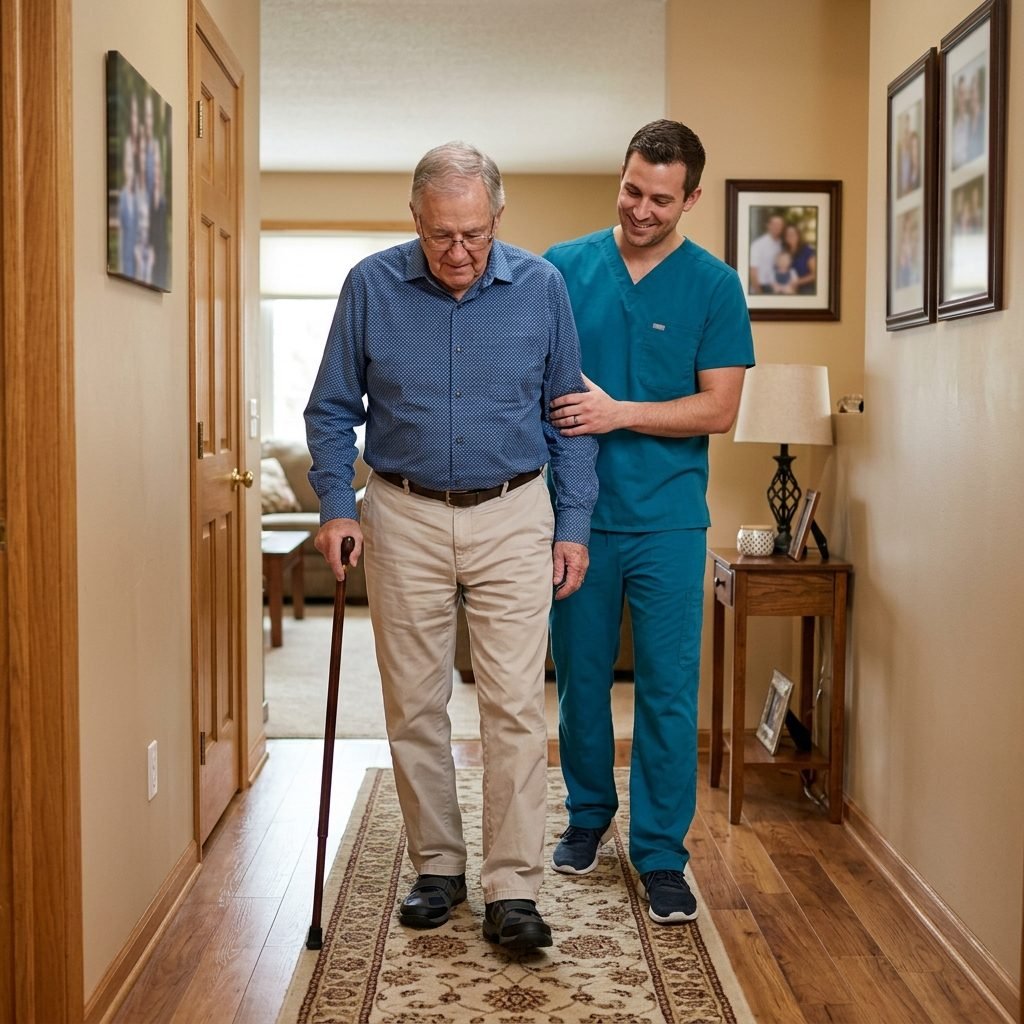
The final phase of neuro-motor therapy focuses on advanced gait re-education and restoring independence in community mobility. Gait training incorporates body-weight support techniques and assistive devices (such as quad canes, rollators, or ankle-foot orthoses) to optimize safety and mechanics. Therapists focus on correcting gait phases, including heel strike, knee stability during stance, hip extension, and foot clearance during the swing phase. We train rehab clients to walk on varied terrains, such as carpets, tile, and outdoor slopes. This facilitates daily physical independence for families in Makkah, promoting safety in all transfers and walks.
To prepare rehab clients for real-world environments, we introduce dual-task training. In daily life, walking is rarely done in isolation; it is combined with talking, carrying objects, or navigating crowds. Dual-task rehabilitative exercise patterns require rehab clients to perform cognitive tasks (such as counting backward or naming objects) or motor tasks (like carrying a cup of water) while walking. This training improves cognitive-motor interference, reduces fall risks, and enhances the automation of gait patterns, which is critical for safe community reintegration. We maintain strict clinical standards for home visits in Makkah, aligning every session with discharge instructions.
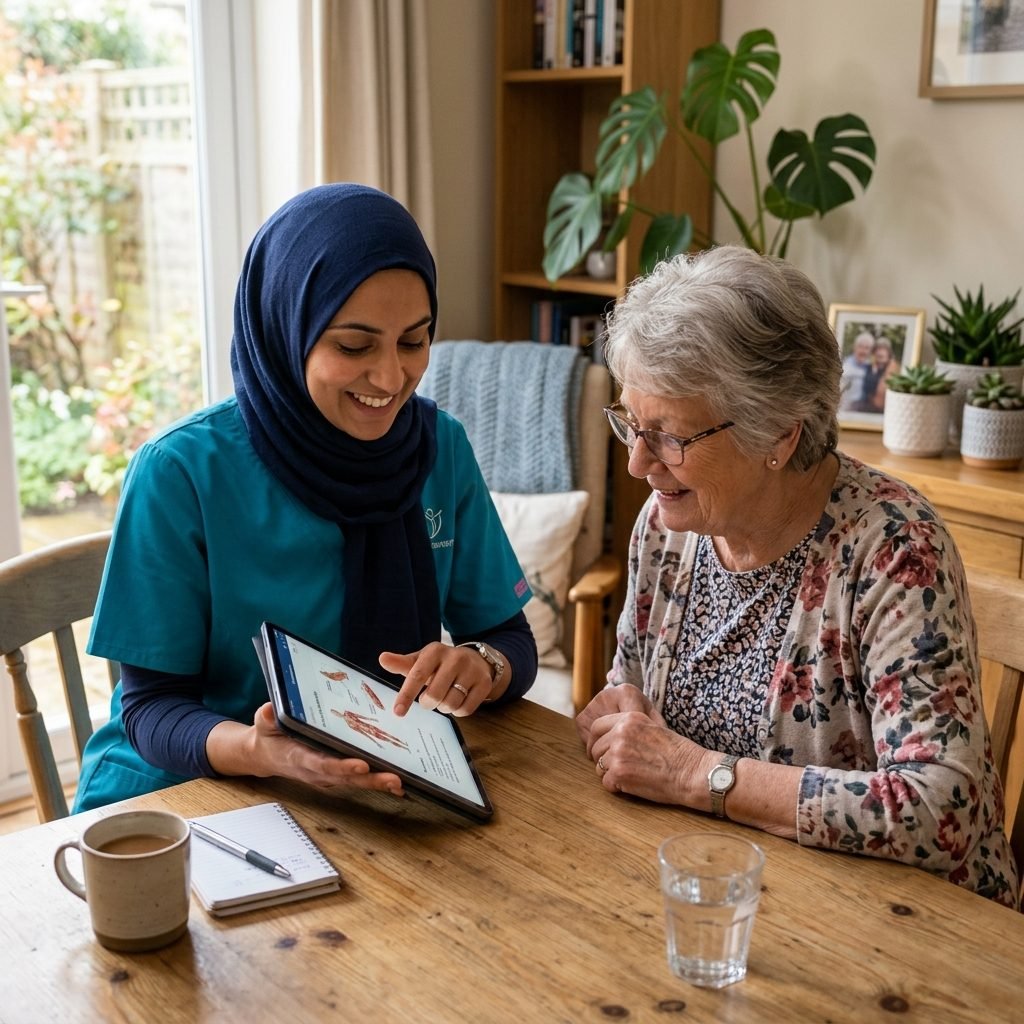
A comprehensive domestic setting exercise program is provided to ensure long-term maintenance of functional gains. Therapists work with the rehab client and caregivers to design a sustainable daily routine. This includes active stretching to manage contractures, reinforce the strength ofing rehabilitative exercise patterns for key muscle groups, and safe equilibrium control activities. By establishing this long-term framework, we ensure the rehab client can maintain their mobility, prevent secondary complications, and enjoy a higher level of independence and quality of life in their domestic setting. This contributes to successful functional restoration in Makkah, restoring confidence in performing daily chores.
Phase 2: Task-Specific Training and Coordination and Home Care in Makkah
As voluntary control improves, clinical mobility clinical reconditioning transitions to task-specific training. This approach is based on motor learning principles, stating that the best way to relearn a motor skill is to practice that specific skill in a real-world environment. We design functional circuits in the domestic setting, breaking down activities like sitting to standing, bed mobility, and reaching for household objects into practice steps. Exercises are repeated with variable practice conditions to promote motor learning and retention. This is tailored to optimize patient mobility in Makkah, keeping families active and functionally independent.
For acute stroke condition survivors with hemiparesis, we may implement Constraint-Induced Movement Therapy (CIMT). CIMT involves restraining the unaffected arm in a mitt, forcing the rehab client to use their paretic arm for functional tasks. This intensive training counteracts learned non-use and drives neuroplastic changes in the motor cortex. Additionally, mirror therapy is utilized for rehab clients with severe motor deficits. By placing a mirror between the limbs, the rehab client watches the reflection of their healthy limb, creating a visual illusion of movement in the paretic limb that stimulates motor pathways. This facilitates daily physical independence for families in Makkah, promoting safety in all transfers and walks.
Coordination and equilibrium control training are progressed in this phase. Patients practice weight-shifting rehabilitative exercise patterns, stepping in different directions, and navigating domestic obstacles. We incorporate equilibrium control activities on unstable surfaces, such as foam mats, to challenge proprioceptive pathways. Vestibular clinical reconditioning rehabilitative exercise patterns, including gaze stabilization drills, are introduced for rehab clients experiencing dizziness or equilibrium control deficits related to central vestibular dysfunction. Our rehab specialists focus on maintaining high quality of movement, preventing abnormal compensations. We maintain strict clinical standards for home visits in Makkah, aligning every session with discharge instructions.
Phase 1: Neurofacilitation and Motor Activation and Home Care in Makkah
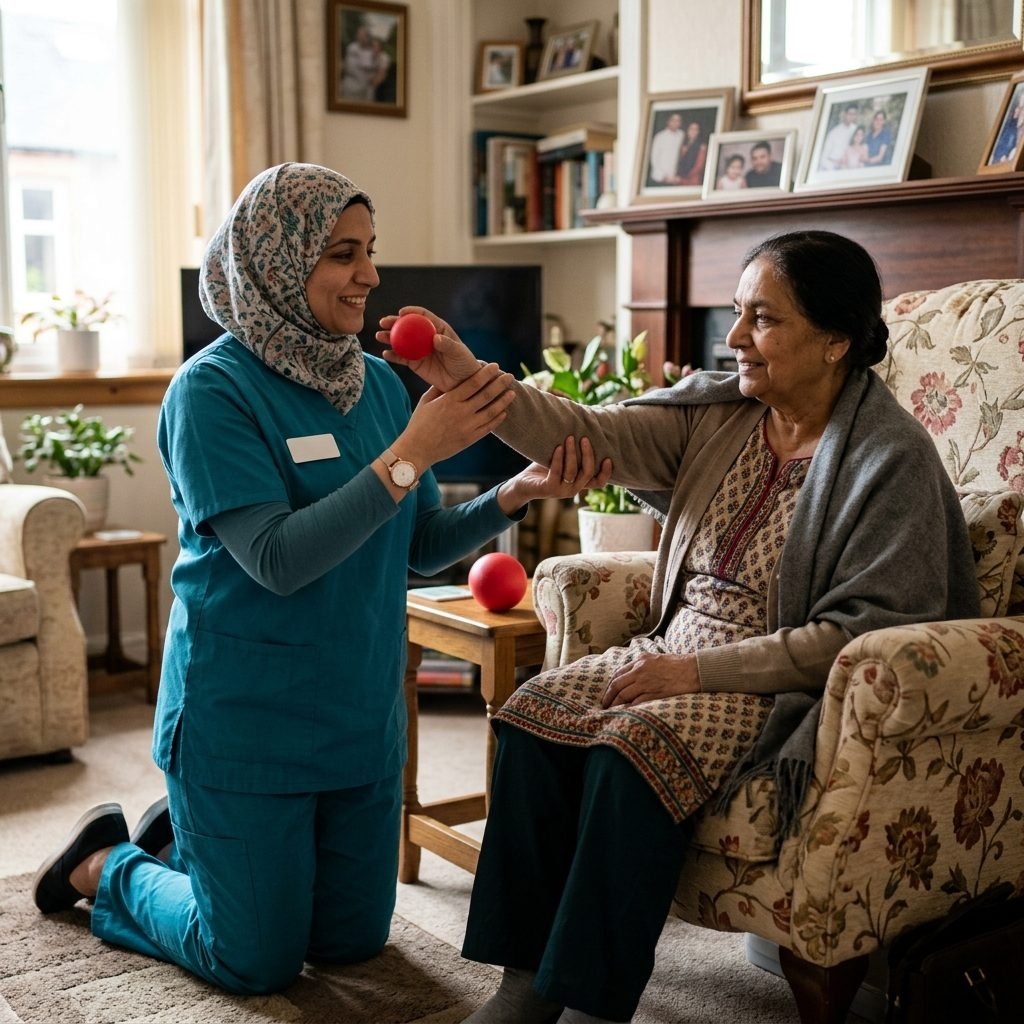
In the early stages of neuro-clinical reconditioning, or when rehab clients present with flaccid paralysis and minimal voluntary movement, clinical mobility clinical reconditioning focuses on neurofacilitation. We utilize the Neurodevelopmental Treatment (NDT/Bobath) concept, which emphasizes normal movement patterns, postural alignment, and sensory feedback. Therapists use specific handling techniques at key points of control (such as the pelvis and shoulders) to inhibit abnormal muscle tone, facilitate normal muscle recruitment, and guide the rehab client through passive and active-assisted functional movements. Our Makkah clinical team prioritizes these recovery steps to ensure physical safety and prevent progressive atrophy.
Proprioceptive Neuromuscular Facilitation (PNF) techniques are integrated to stimulate motor unit recruitment. PNF utilizes diagonal movement patterns that mimic natural motor activities. Techniques like 'Rhythmic Initiation' and 'Quick Stretch' utilize muscle spindle reflexes and sensory feedback to initiate contractions in paretic muscular structures. Therapists use tactile stimulation, verbal commands, and joint complex compression to enhance sensory awareness. These interventions improve the cortical representation of the affected limb, helping to overcome 'learned non-use' in acute stroke condition survivors. This is tailored to optimize patient mobility in Makkah, keeping families active and functionally independent.
To support motor activation, we may utilize Functional Electrical Stimulation (FES). FES applies controlled electrical currents to paretic muscular structures to facilitate functional movements. For example, stimulating the tibialis anterior muscle during the swing phase of gait prevents foot drop, allowing a safer walk. FES promotes motor recovery, prevents disuse atrophy, and improves local blood flow. Our rehab specialists also teach family members correct positioning and transferring techniques, ensuring the rehab client is supported safely between sessions. This facilitates daily physical independence for families in Makkah, promoting safety in all transfers and walks.
Pathophysiology of Neurological Lesions and Neuroplasticity and Home Care in Makkah
Neurological injuries cause profound disruptions in motor control and sensory processing due to cell death or axonal tract interruption. In conditions like acute stroke condition, local ischemia leads to rapid cellular depolarization, excitotoxicity, and neuronal death in the cerebral cortex. This disrupts the corticospinal tract, which transmits voluntary motor commands. The loss of these descending signals results in muscle weakness, flaccid paralysis, or spasticity. Spasticity, a velocity-dependent increase in muscle tone, arises from abnormal spinal cord reflex excitability, leading to hyperactive stretch reflexes. This aligns perfectly with our rehabilitation standards in Makkah, catering to hilly terrains and step-climbing needs.
In neurodegenerative disorders, the pathology is progressive. For instance, Parkinson's disease is characterized by the loss of dopaminergic neurons in the substantia nigra, leading to basal ganglia dysfunction. This causes symptoms such as rigidity, bradykinesia (slowness of movement), postural instability, and tremors. Multiple sclerosis, on the other hand, involves autoimmune destruction of the myelin sheath around axons in the central nervous system, which slows or blocks nerve conduction. This demyelination leads to muscle weakness, sensory paresthesia, cerebellar ataxia, and severe equilibrium control deficits. This supports safe and effective physical recovery in Makkah, offering absolute peace of mind to local households.
Neuro-motor therapy relies on neuroplasticity to rebuild motor function. Neuroplasticity occurs through mechanisms like axonal sprouting (uninjured axons growing new connections) and synaptic unmasking (activating previously silent neural pathways). Consistently practicing functional movements promotes motor learning and cortical reorganization. Practicing high-repetition, task-specific activities, such as reaching or stepping, reorganizes the motor cortex, allowing healthy brain areas to take over functions previously controlled by damaged regions. This physiological adaptation is the foundation of successful neurological recovery. Our Makkah clinical team prioritizes these recovery steps to ensure physical safety and prevent progressive atrophy.
Clinical Pathways & Field Dispatch in Makkah
📍 Coordinated by Ms. Sara Al-Harbi, PT Coordinator for the Makkah Region
In Makkah, we cover Al-Awali, Al-Shawqiyyah, Al-Naseem, Al-Batha, Al-Zaidi, and Al-Aziziyah. We provide female clinical therapists to ensure maximum comfort and compliance in Makkah households.
For patients discharged from King Abdullah Medical City (KAMC) or Al-Noor Specialist Hospital, we review surgical discharge guidelines carefully to initiate safe mobilization.
Local Coordination & Clinical Pathways in Makkah
📍 Coordinated through the Makkah home-visit scheduling pathway
In Makkah, we cover Al-Awali, Al-Shawqiyyah, Al-Naseem, Al-Batha, Al-Zaidi, and Al-Aziziyah. We provide female clinical therapists to ensure maximum comfort and compliance in Makkah households.
For patients recently discharged after surgery or medical admission, the first visit starts with reviewing discharge instructions, movement precautions, and any warning signs that require physician follow-up.