Long-Term Musculoskeletal Maintenance and Joint Care and Home Care in Makkah
Maintaining musculoskeletal health and preventing degenerative changes requires long-term commitment to exercise and joint complex care. Once clinical clinical mobility clinical reconditioning has concluded, rehab clients must continue domestic setting-based protocols to prevent muscle imequilibrium controls and maintain joint complex range of motion. This is especially important for rehab clients with chronic conditions like osteoarthritis or those who have undergone major surgeries. Our team designs personalized maintenance programs focused on preserving joint complex health and structural strength. We maintain strict clinical standards for home visits in Makkah, aligning every session with discharge instructions.
We emphasize joint complex preservation strategies to minimize mechanical wear and tear on weight-bearing joint complexs. This includes education on body weight management to reduce joint complex loading, using supportive footwear, and modifying daily activities to protect joint complexs. We recommend low-impact rehabilitative exercise patterns, such as swimming, cycling, or brisk walking, to promote joint complex mobility and cardiovascular health without overloading the joint complexs. Our rehab specialists provide guidance on ergonomics, helping rehab clients set up domestic setting and work spaces to prevent repetitive strain and joint complex overload. This contributes to successful functional restoration in Makkah, restoring confidence in performing daily chores.
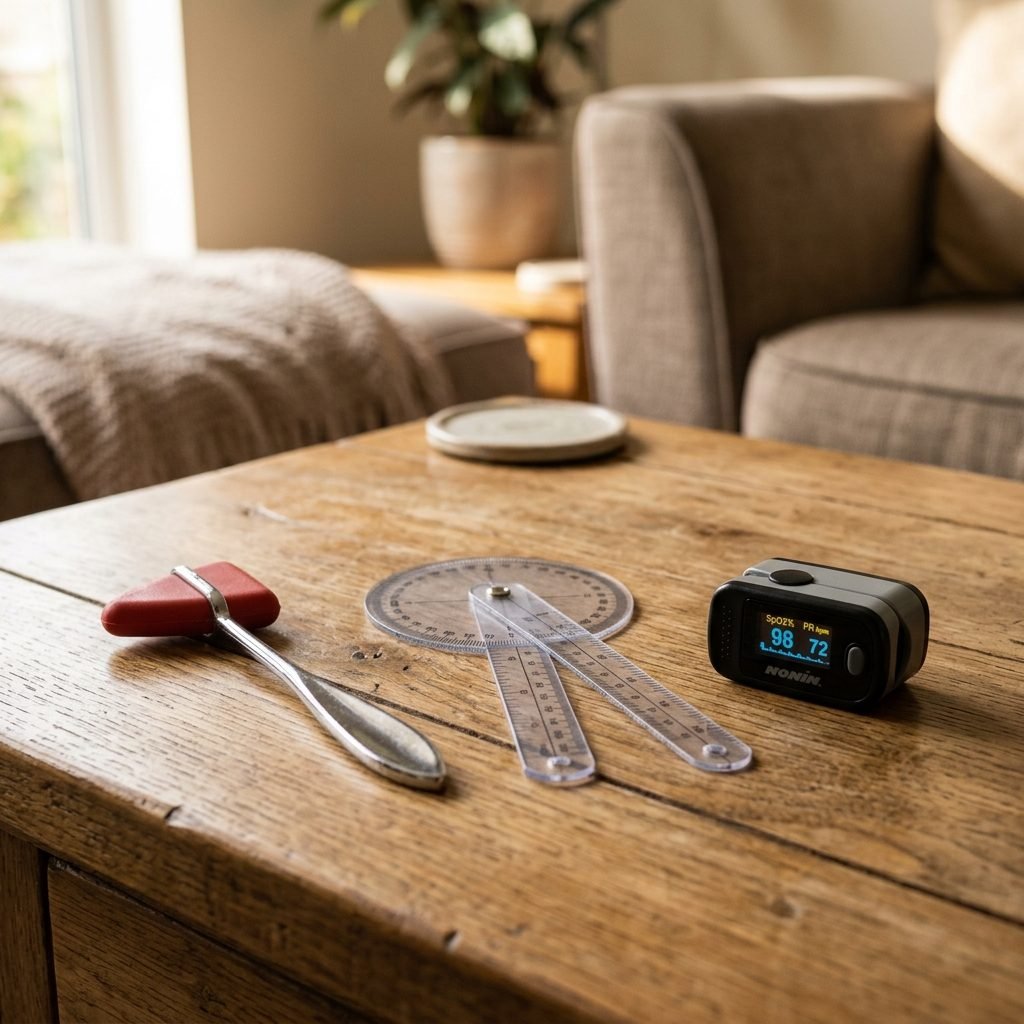
Periodic follow-up evaluations are scheduled to monitor joint complex health and functional status. During these check-ins, the physical rehab specialist assesses joint complex range of motion, muscle strength, and movement mechanics to identify any emerging deficits. If early signs of degeneration or muscle weakness are detected, we modify the domestic setting program or schedule brief clinical sessions to address the issues proactively. This ongoing support ensures that the gains made during clinical reconditioning are preserved, protecting long-term musculoskeletal health. This is key to our structured physiotherapy plans in Makkah, designed specifically for rapid motor adaptation.
Phase 3: Advanced Strengthening and Functional Return and Home Care in Makkah
The final phase of orthopedic clinical mobility clinical reconditioning focuses on advanced reinforce the strength ofing, functional retraining, and preparing the rehab client to return to work or sports activities. We transition to high-intensity resistance training, multi-directional agility drills, and sport-specific movements. Exercises are designed to challenge the musculoskeletal system in multiple planes of motion (sagittal, frontal, and transverse), improving structural integrity and dynamic stability under loaded conditions. This facilitates daily physical independence for families in Makkah, promoting safety in all transfers and walks.
We integrate advanced proprioceptive and equilibrium control training to recover baseline neuromuscular control. Patients perform rehabilitative exercise patterns on unstable surfaces (such as equilibrium control boards or foam pads), single-leg stability drills, and reaction-time challenges. This training improves the speed and coordination of stabilizing muscle contractions, reducing the risk of reinjury. We utilize plyometric rehabilitative exercise patterns, such as jump-landing training, to rebuild explosive power and teach safe landing mechanics, focusing on preventing dynamic knee valgus (inward collapsing of the knee), which is a major risk factor for ACL injuries. We maintain strict clinical standards for home visits in Makkah, aligning every session with discharge instructions.
As the rehab client approaches their functional goals, we design a comprehensive, long-term domestic setting exercise program. This program details specific rehabilitative exercise patterns, sets, repetitions, and progression guidelines to maintain structural strength and prevent future musculoskeletal issues. Our physical rehab specialists conduct a final functional assessment to ensure the rehab client meets all clinical criteria for a safe return to full activity. This ensures that the recovery achieved during active clinical mobility clinical reconditioning is sustained long-term, preserving joint complex health and functional independence. This contributes to successful functional restoration in Makkah, restoring confidence in performing daily chores.
Phase 2: Subacute Mobilization and Progressive Loading and Home Care in Makkah
Once the acute inflammatory phase resolves and tissue healing enters the proliferative stage, the clinical reconditioning program progresses to subacute mobilization. The focus shifts to restoring full joint complex range of motion, improving tissue flexibility, and initiating active reinforce the strength ofing. We transition from passive to active-assisted (AAROM) and active (AROM) movements, utilizing stretching techniques to target shortened muscular structures and tight joint complex capsules. Gentle joint complex mobilizations (Maitland Grade I and II) are applied to reduce pain and improve accessory joint complex motion. This is tailored to optimize patient mobility in Makkah, keeping families active and functionally independent.
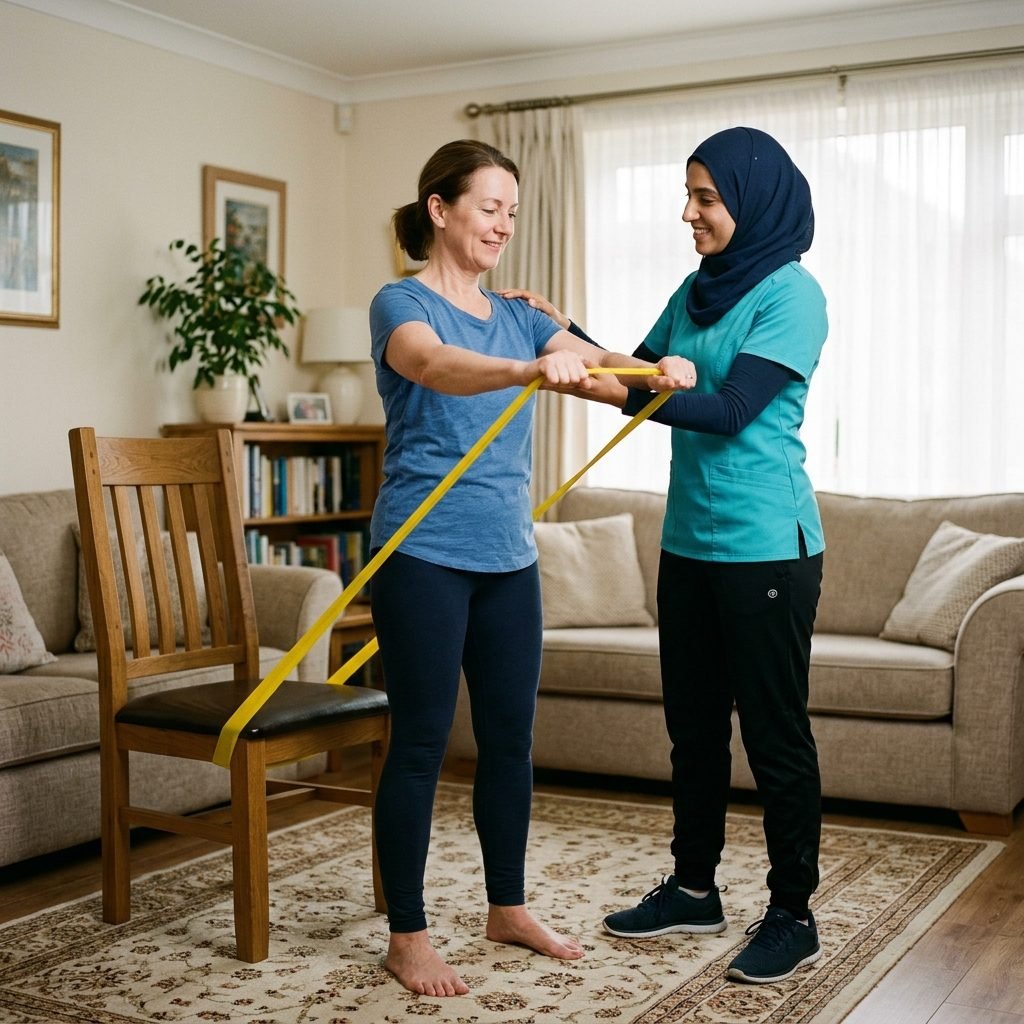
Progressive reinforce the strength ofing is initiated using open kinetic chain (OKC) and closed kinetic chain (CKC) rehabilitative exercise patterns. Open kinetic chain rehabilitative exercise patterns, where the distal segment of the limb moves freely (such as seated knee extensions), are used to isolate specific muscular structures. Closed kinetic chain rehabilitative exercise patterns, where the foot or hand remains fixed on a surface (such as squats or leg presses), are introduced to engage multiple joint complexs and muscular structures, improving joint complex stability and functional capacity. We apply progressive resistance training, starting with light loads (elastic bands or light weights) and progressing as tissue tolerance improves. This facilitates daily physical independence for families in Makkah, promoting safety in all transfers and walks.
We implement specialized tendon loading protocols for rehab clients recovering from chronic tendinopathies (such as Achilles or patellar tendonitis). We utilize the Alfredson Eccentric Training Protocol, which involves performing slow, controlled eccentric (lengthening) contractions under load. This specific mechanical strain stimulates tenocyte activity, promoting tendon remodeling and collagen synthesis. Therapists monitor pain levels during loading, ensuring that pain remains within acceptable limits and does not persist into the following day, which would indicate overtraining. We maintain strict clinical standards for home visits in Makkah, aligning every session with discharge instructions.
Phase 1: Acute Protection and Pain Management and Home Care in Makkah
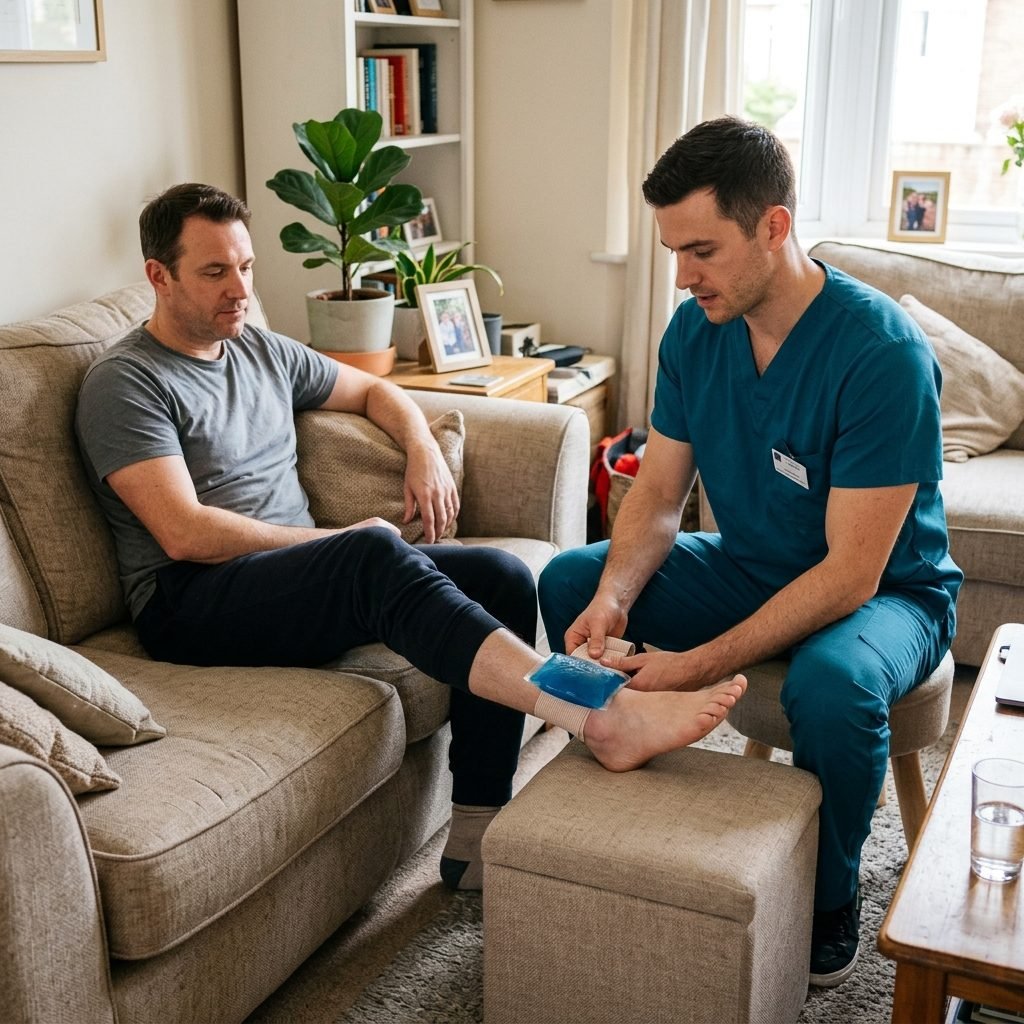
During the acute phase of recovery, or immediately following orthopedic surgical procedure, clinical mobility clinical reconditioning focuses on protecting healing tissues, managing pain, and reducing inflammatory swelling. We implement the clinical POLICE principle (Protect, Optimal Loading, Ice, Compression, Elevation) to guide early management. Protection may involve assistive devices or braces to shield the joint complex, while optimal loading introduces gentle, pain-free movements (such as ankle pumps or setting rehabilitative exercise patterns) to prevent muscle inhibition and improve blood flow without straining healing tissues. Our Makkah clinical team prioritizes these recovery steps to ensure physical safety and prevent progressive atrophy.
Pain and edema are managed using targeted therapeutic modalities. We utilize transcutaneous electrical nerve stimulation (TENS) to manage acute pain, sending electrical currents to stimulate sensory nerves and block pain signals from reaching the brain (gate control theory). Localized cryotherapy (ice therapy) is applied for 15 to 20 minutes to constrict blood vessels, reduce swelling, and numb nerve endings. Therapists perform gentle passive range of motion rehabilitative exercise patterns (PROM) within pain-free limits to maintain joint complex mobility and promote synovial fluid circulation. This is tailored to optimize patient mobility in Makkah, keeping families active and functionally independent.
Patient education is prioritized to ensure compliance with post-operative precautions and weight-bearing restrictions. For rehab clients recovering from total hip replacement, we instruct them on hip precautions, such as avoiding hip flexion beyond 90 degrees, adduction past midline, and internal rotation to prevent joint complex dislocation. We instruct caregivers on safe transferring techniques, ensuring the rehab client's domestic setting environment is prepared to prevent falls. This early protection establishes a safe foundation for active clinical reconditioning. This facilitates daily physical independence for families in Makkah, promoting safety in all transfers and walks.
Pathophysiology of Musculoskeletal Injuries and Tissue Healing Phases and Home Care in Makkah
Musculoskeletal injuries, whether acute trauma (like ligament sprains and tendon tears) or chronic degeneration (like osteoarthritis), trigger a cascade of tissue responses. Osteoarthritis is characterized by progressive degradation of articular cartilage, subchondral bone remodeling, and osteophyte formation, leading to mechanical pain, joint complex space narrowing, and range of motion loss. In contrast, acute soft tissue injuries undergo a cellular response that progresses through three distinct phases: the inflammatory phase, the proliferative phase, and the remodeling phase. This aligns perfectly with our rehabilitation standards in Makkah, catering to hilly terrains and step-climbing needs.
The inflammatory phase begins immediately after injury and lasts 3 to 5 days, characterized by vasodilation, edema, and neutrophil infiltration to clear cellular debris. The proliferative phase occurs from day 4 to day 21, during which fibroblasts lay down disorganized Type III collagen, forming immature scar tissue. The remodeling phase begins around week 3 and can last for over a year. During this final phase, the disorganized Type III collagen is gradually replaced by stronger Type I collagen, which aligns along lines of mechanical stress to recover baseline tensile strength. This supports safe and effective physical recovery in Makkah, offering absolute peace of mind to local households.
Orthopedic clinical mobility clinical reconditioning utilizes controlled mechanical loading to optimize this healing process. If tissues are immobilized for too long, the collagen fibers remodel in disorganized patterns, leading to weak tissue and adhesions. Conversely, excessive early loading can disrupt healing tissue and cause chronic inflammation. Our rehab specialists apply progressive resistance and mobilization rehabilitative exercise patterns designed to match tissue tolerance, promoting optimal collagen alignment and preventing scar tissue formation. This biological approach ensures that the healed tissue can withstand functional demands. Our Makkah clinical team prioritizes these recovery steps to ensure physical safety and prevent progressive atrophy.
Clinical Pathways & Field Dispatch in Makkah
📍 Coordinated by Ms. Sara Al-Harbi, PT Coordinator for the Makkah Region
In Makkah, we cover Al-Awali, Al-Shawqiyyah, Al-Naseem, Al-Batha, Al-Zaidi, and Al-Aziziyah. We provide female clinical therapists to ensure maximum comfort and compliance in Makkah households.
For patients discharged from King Abdullah Medical City (KAMC) or Al-Noor Specialist Hospital, we review surgical discharge guidelines carefully to initiate safe mobilization.
Local Coordination & Clinical Pathways in Makkah
📍 Coordinated through the Makkah home-visit scheduling pathway
In Makkah, we cover Al-Awali, Al-Shawqiyyah, Al-Naseem, Al-Batha, Al-Zaidi, and Al-Aziziyah. We provide female clinical therapists to ensure maximum comfort and compliance in Makkah households.
For patients recently discharged after surgery or medical admission, the first visit starts with reviewing discharge instructions, movement precautions, and any warning signs that require physician follow-up.