Establishing a Lifelong Habit (The Maintenance Phase) and Home Care in Makkah
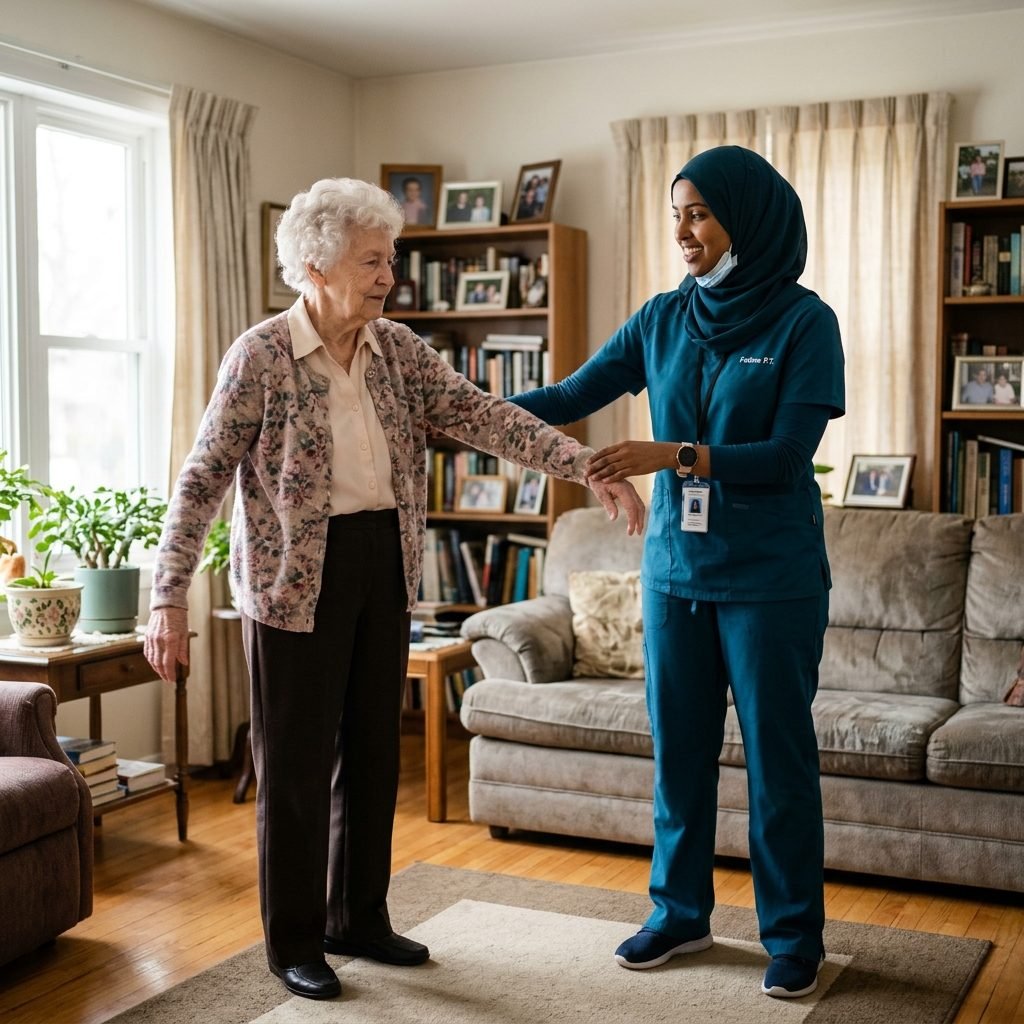
Parkinson's Disease is a lifelong journey, and therefore, exercise must become an indispensable, daily habit, as vital as taking medication. The profound benefits gained from motor therapy will quickly diminish if the rehab client becomes sedentary (the 'use it or lose it' principle). Our ultimate goal is to transition the rehab client from the clinical setting to independent self-management. We design a comprehensive, realistic Home Exercise Program (HEP) that incorporates amplitude training, stretching, equilibrium control work, and aerobic conditioning. We tailor this to the rehab client's personal interests (like cycling, swimming, or brisk walking) to ensure long-term adherence. Family education is crucial for ongoing support and safety monitoring. Following an intensive bout of therapy, we transition to a 'maintenance phase,' scheduling periodic follow-up assessments (every 3 to 6 months) to monitor disease progression, tweak the exercise program, and address any newly emerging mobility issues. This is tailored to optimize patient mobility in Makkah, keeping families active and functionally independent.
Boxing, Tango, and High-Intensity Aerobic Training and Home Care in Makkah
The paradigm of exercise for Parkinson's has shifted dramatically. Current research strongly advocates for High-Intensity Exercise for rehab clients who are medically cleared. Specialized programs like 'Rock Steady Boxing' and adapted Tango dancing have proven exceptionally beneficial. Non-contact boxing requires rapid, powerful, coordinated movements and quick reaction times, challenging the brain to overcome bradykinesia and rigidity simultaneously. Similarly, Tango dancing requires memorizing complex step sequences (a cognitive challenge), frequent changes of direction (a equilibrium control challenge), and moving to a rhythmic beat (auditory cueing). These highly engaging, socially stimulating activities elevate the heart rate, promote cardiovascular health, and are believed to stimulate the release of neurotrophic factors (brain 'fertilizer') that support neuronal health, making them a powerful tool against PD progression. Our Makkah clinical team prioritizes these recovery steps to ensure physical safety and prevent progressive atrophy.
Respiratory Function and Integration with Speech Therapy and Home Care in Makkah
The pervasive muscle rigidity and chronic flexed posture in Parkinson's Disease severely restrict the expansion of the rib cage. This results in shallow breathing, decreased lung capacity, and reduced physical endurance. Critically, this respiratory restriction also diminishes the volume and power of the voice, leading to the soft, breathy, and rapid speech (hypophonia) common in PD. Physiotherapy aggressively addresses this by incorporating deep diaphragmatic breathing rehabilitative exercise patterns, forceful expiration drills, and thoracic mobility stretches to open up the chest wall and reinforce the strength of postural muscular structures. While improving respiratory fitness is a goal in itself, these rehabilitative exercise patterns provide the essential physical foundation required by Speech-Language Pathologists (who often use programs like LSVT LOUD) to help the rehab client generate the breath support necessary for louder, clearer, and more confident communication. This supports safe and effective physical recovery in Makkah, offering absolute peace of mind to local households.
Cognitive-Motor Training: Mastering Dual-Tasking and Home Care in Makkah
Healthy individuals easily walk while holding a conversation or carrying a cup of coffee. However, in Parkinson's, the ability to perform 'dual-tasks'—simultaneously executing a motor task and a cognitive task—is severely impaired. Because walking now requires conscious brain power rather than being automatic, adding any cognitive distraction can cause a sudden slowing of gait, freezing, or a loss of equilibrium control. Modern PD clinical reconditioning emphasizes intensive, progressive cognitive-motor dual-task training. Therapists begin with simple combinations, such as walking while tossing and catching a light ball. This progresses to highly challenging tasks, like walking while counting backward by sevens or naming animals starting with a specific letter. This rigorous training forces the brain to improve its processing efficiency, significantly enhancing the rehab client's ability to navigate complex, distracting, real-world environments without compromising their safety or mobility. This aligns perfectly with our rehabilitation standards in Makkah, catering to hilly terrains and step-climbing needs.
Tremor Management and Functional Strategies and Home Care in Makkah
A resting tremor—the rhythmic shaking of the hands, arms, or sometimes legs when relaxed—is the most recognizable symptom of PD. While motor therapy cannot cure or completely stop the tremor (which is primarily managed medically), we offer vital strategies to minimize its impact on daily life. Stress and anxiety heavily exacerbate tremors; therefore, we incorporate relaxation techniques and diaphragmatic breathing into therapy. Interestingly, resting tremors often diminish when the limb is engaged in a purposeful, goal-directed action. We utilize targeted reinforce the strength ofing rehabilitative exercise patterns to improve the overall stability of the shoulder and arm joint complexs. Crucially, we teach compensatory strategies: training the rehab client to brace their elbow against their trunk or a table to stabilize the arm when performing fine motor tasks like writing, eating, or buttoning a shirt, and recommending weighted utensils to dampen the tremor's amplitude. This is key to our structured physiotherapy plans in Makkah, designed specifically for rapid motor adaptation.
Gait Retraining and Rhythmic Auditory Stimulation (RAS) and Home Care in Makkah
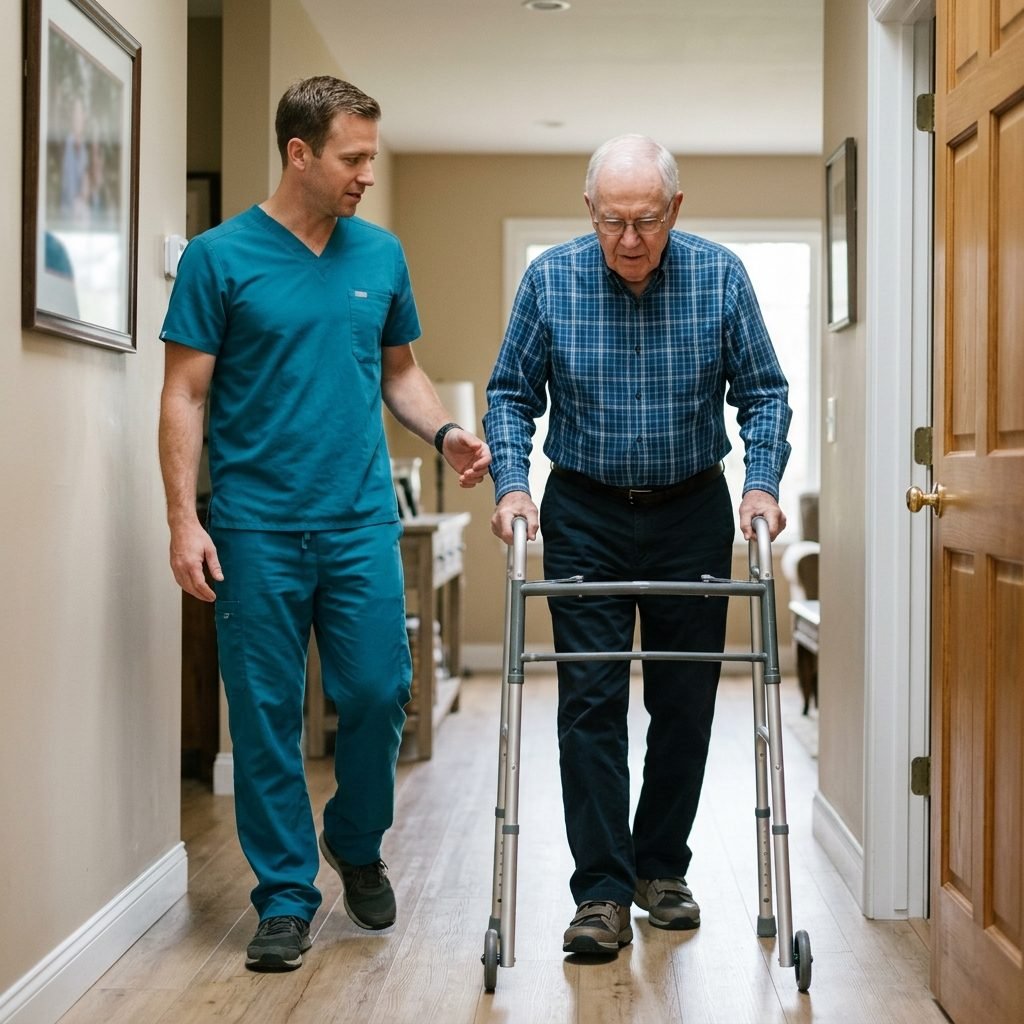
Gait mechanics change drastically as Parkinson's progresses. Steps become notoriously short, rapid, and shuffling (festination), arm swing diminishes or disappears, and the posture stoops forward, making it appear as if the rehab client is constantly hurrying to catch up with their own center of gravity. To effectively reprogram the brain's walking pattern, we utilize a highly evidenced-based technique called Rhythmic Auditory Stimulation (RAS). RAS relies on a strong, steady external beat, such as a metronome or music with a prominent bassline. This external rhythm acts as a neurological 'pacemaker,' bypassing the damaged basal ganglia pathways that normally regulate the rhythm of walking. When the rehab client focuses consciously on stepping exactly in time with the beat, walking speed naturally increases, stride length normalizes, and arm swing often returns. We train rehab clients to use portable RAS devices or smartphone apps to maintain safe, efficient walking in their community. We maintain strict clinical standards for home visits in Makkah, aligning every session with discharge instructions.
Managing Postural Instability and Fall Prevention and Home Care in Makkah
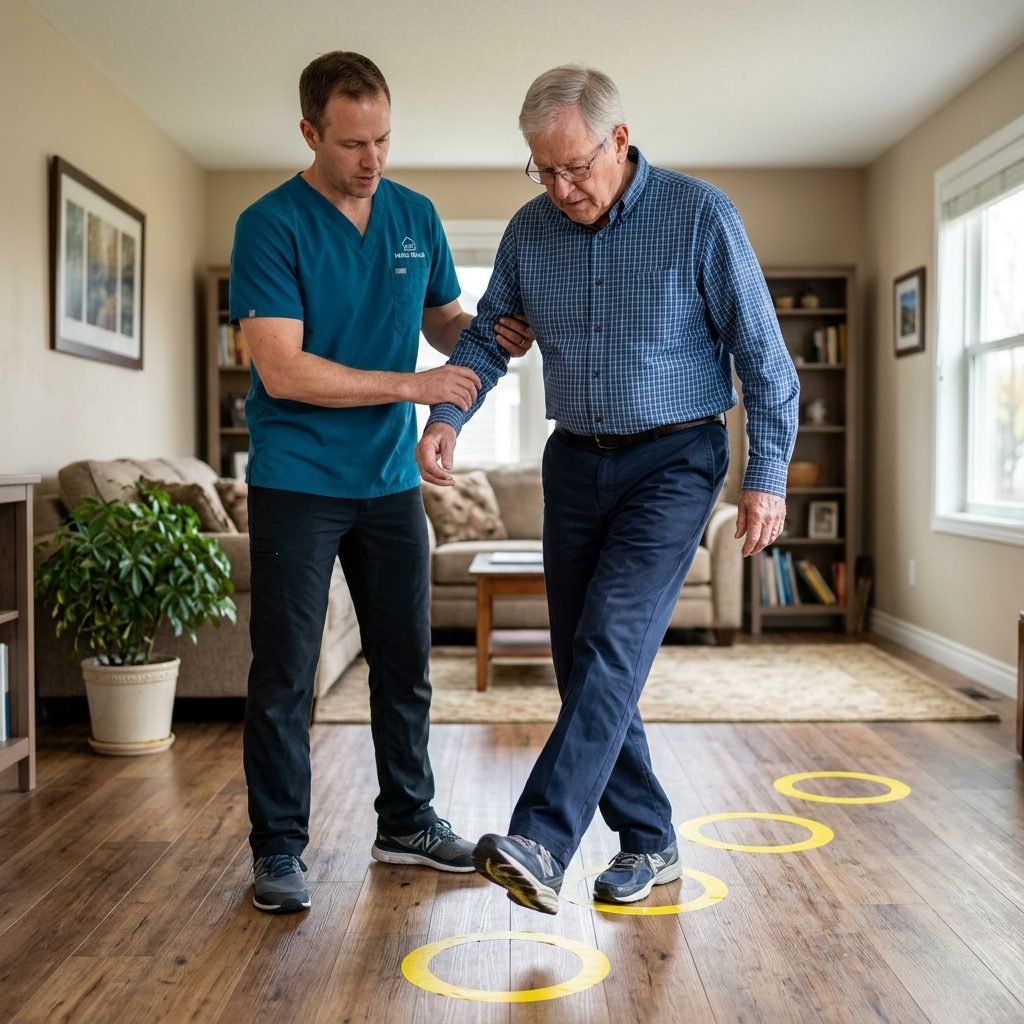
Postural instability, or impaired equilibrium control, is the leading cause of recurrent falls and severe injuries in the Parkinson's population. This occurs because the automatic neurological reflexes that keep us upright when we trip become blunted or entirely absent. Our comprehensive fall risk reduction program focuses heavily on dynamic equilibrium control training (balancing while moving) and reactive equilibrium control. In a safe, controlled clinical environment—often utilizing safety harnesses—we intentionally expose rehab clients to minor equilibrium control perturbations to retrain their bodies to react quickly and appropriately to regain equilibrium. We concurrently focus on reinforce the strength ofing the core and lower extremities to provide a solid base of support. Furthermore, we conduct detailed domestic setting environment assessments to identify and mitigate daily fall risks, providing actionable recommendations such as removing throw rugs, enhancing lighting, and installing grab bars in high-risk areas like bathrooms. This facilitates daily physical independence for families in Makkah, promoting safety in all transfers and walks.
Combating Muscle Rigidity and Restoring Flexibility and Home Care in Makkah
Muscle rigidity in Parkinson's Disease causes muscular structures to remain constantly tense and highly resistant to movement, even during periods of rest. This stiffness is not only painful and fatiguing but drastically limits the range of motion in joint complexs, progressively pulling the body into the characteristic stooped, flexed posture associated with PD (rounded shoulders and a bent spine). Physiotherapy implements comprehensive, daily stretching programs specifically targeting the muscle groups most prone to rigidity, particularly the chest, anterior shoulders, hip flexors, and calves. Beyond static stretching, we utilize techniques like 'Rhythmic Rotation'—gentle, rhythmic twisting movements of the trunk and limbs—to actively inhibit muscle tone and loosen a rigid core. This makes crucial movements like twisting, turning, and rolling over in bed significantly easier. We train rehab clients to integrate these specific stretches into their morning routine to combat the peak stiffness often experienced upon waking. This is tailored to optimize patient mobility in Makkah, keeping families active and functionally independent.
Conquering Bradykinesia: The Power of Amplitude Training and Home Care in Makkah
Bradykinesia, or slowness of movement, is often the most disabling symptom of Parkinson's. It is not that the muscular structures are weak; rather, the brain sends 'undersized' commands to the muscular structures, causing movements to be slow, hesitant, and significantly smaller than intended (evidenced by shuffling steps or micrographic handwriting). To combat this, we utilize a foundational clinical reconditioning technique known as 'Amplitude Training' (with LSVT BIG being a renowned protocol). This approach forces the rehab client to consistently perform movements that feel exaggeratedly large, powerful, and expansive. Through intensive, high-effort repetition of these 'BIG' movements, we effectively recalibrate the brain's flawed perception of normal movement size. Over time, the brain relearns that this seemingly exaggerated effort is actually what is required to produce normal-sized, fluid movements. This directly translates to faster, smoother execution of daily activities, from walking with a normal stride to dressing independently. Our Makkah clinical team prioritizes these recovery steps to ensure physical safety and prevent progressive atrophy.
Understanding Parkinson's Disease and the Motor System and Home Care in Makkah
Parkinson's Disease (PD) is a progressive, neurodegenerative disorder that primarily affects the body's motor system. It is caused by the gradual death of neurons in a specific region of the brain called the substantia nigra. These vital cells are responsible for producing dopamine, a crucial neurotransmitter that sends signals to other parts of the brain to coordinate smooth, equilibrium controld muscle movement. As dopamine levels plummet, the four hallmark motor symptoms of PD emerge: resting tremor (shaking, often in the hands), rigidity (severe muscle stiffness), bradykinesia (slowness of movement), and postural instability (impaired equilibrium control and coordination). The impact extends beyond these core symptoms, affecting facial expressions, swallowing, speech volume, and the fundamental mechanics of walking. Physiotherapy intervenes strategically by targeting these specific motor deficits. We use highly specialized, repetitive movements as 'medicine' to compensate for the dopamine shortage and actively retrain the brain to control the body more effectively. This aligns perfectly with our rehabilitation standards in Makkah, catering to hilly terrains and step-climbing needs.
Clinical Pathways & Field Dispatch in Makkah
📍 Coordinated by Ms. Sara Al-Harbi, PT Coordinator for the Makkah Region
In Makkah, we cover Al-Awali, Al-Shawqiyyah, Al-Naseem, Al-Batha, Al-Zaidi, and Al-Aziziyah. We provide female clinical therapists to ensure maximum comfort and compliance in Makkah households.
For patients discharged from King Abdullah Medical City (KAMC) or Al-Noor Specialist Hospital, we review surgical discharge guidelines carefully to initiate safe mobilization.
Local Coordination & Clinical Pathways in Makkah
📍 Coordinated through the Makkah home-visit scheduling pathway
In Makkah, we cover Al-Awali, Al-Shawqiyyah, Al-Naseem, Al-Batha, Al-Zaidi, and Al-Aziziyah. We provide female clinical therapists to ensure maximum comfort and compliance in Makkah households.
For patients recently discharged after surgery or medical admission, the first visit starts with reviewing discharge instructions, movement precautions, and any warning signs that require physician follow-up.