Long-Term Compliance and Joint Preservation Strategies and Home Care in Makkah
Maintaining joint complex flexibility and preserving cartilage health requires continuous long-term compliance with stretching and movement protocols. Once clinical clinical mobility clinical reconditioning has concluded, the joint complex structures can begin to contract if they are not regularly moved through their full ranges. This is particularly true for rehab clients with chronic conditions like osteoarthritis, rheumatoid arthritis, or post-surgical scarring. Our rehab specialists design a structured, realistic maintenance program that fits into the rehab client's daily routine, emphasizing joint complex preservation techniques and regular active stretching. We maintain strict clinical standards for home visits in Makkah, aligning every session with discharge instructions.
Joint preservation strategies are taught to minimize cumulative mechanical stress on weight-bearing joint complexs. This includes education on body weight management to reduce joint complex loading, utilizing assistive devices when necessary, and avoiding prolonged static postures that lead to joint complex stiffness. We encourage low-impact cardiovascular rehabilitative exercise patterns, such as swimming or stationary cycling, which promote synovial fluid circulation and cartilage health without overloading the joint complexs. Patients are instructed on how to modify activities of daily living (ADLs) to protect compromised joint complexs. This contributes to successful functional restoration in Makkah, restoring confidence in performing daily chores.
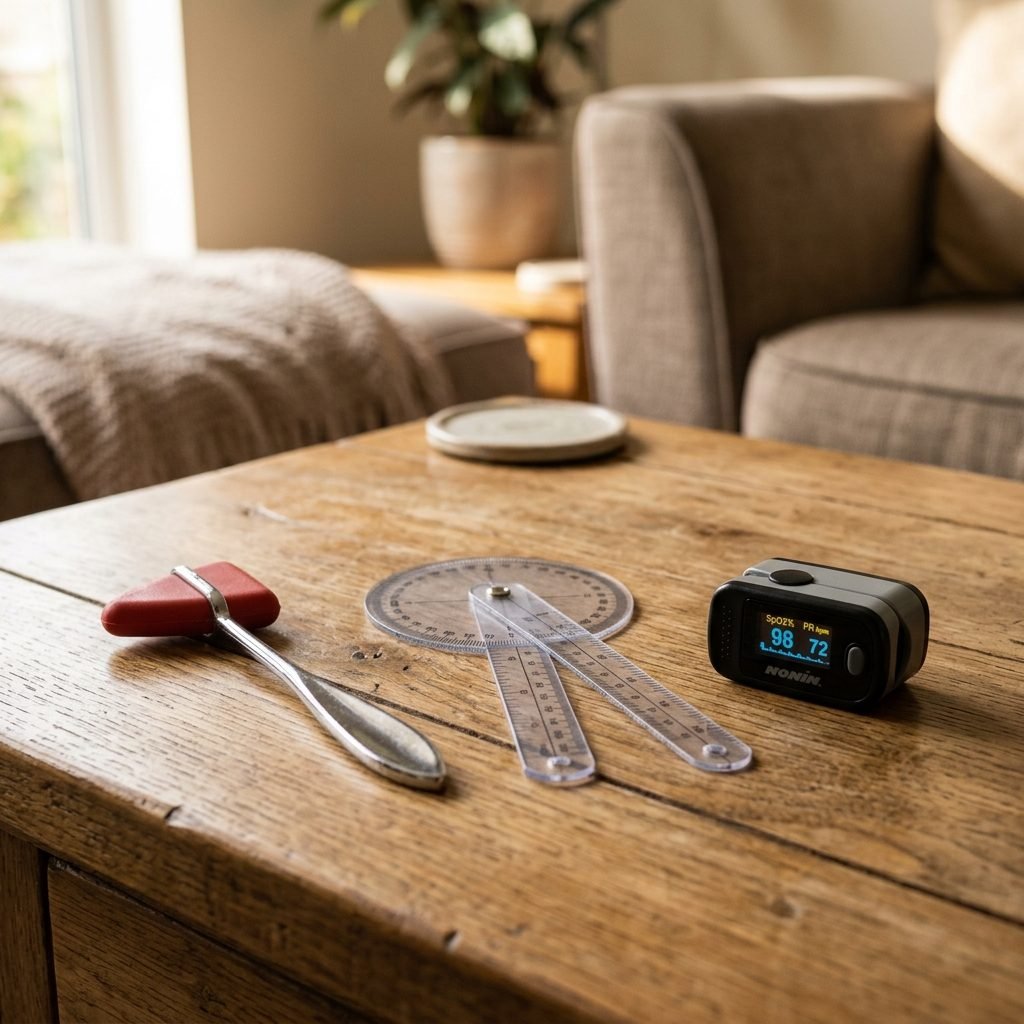
Follow-up assessments are scheduled periodically to monitor joint complex range of motion and functional status. During these check-ins, the physical rehab specialist re-evaluates goniometric measurements and assesses for any signs of regression or tissue tightening. If early signs of stiffness are detected, the domestic setting stretching program is modified, or brief clinical sessions are scheduled to apply targeted manual mobilizations. This proactive approach ensures that the gains made during clinical reconditioning are preserved, protecting joint complex health and maintaining the rehab client's quality of life. This is key to our structured physiotherapy plans in Makkah, designed specifically for rapid motor adaptation.
Phase 3: Advanced Mobilization and Functional Integration and Home Care in Makkah
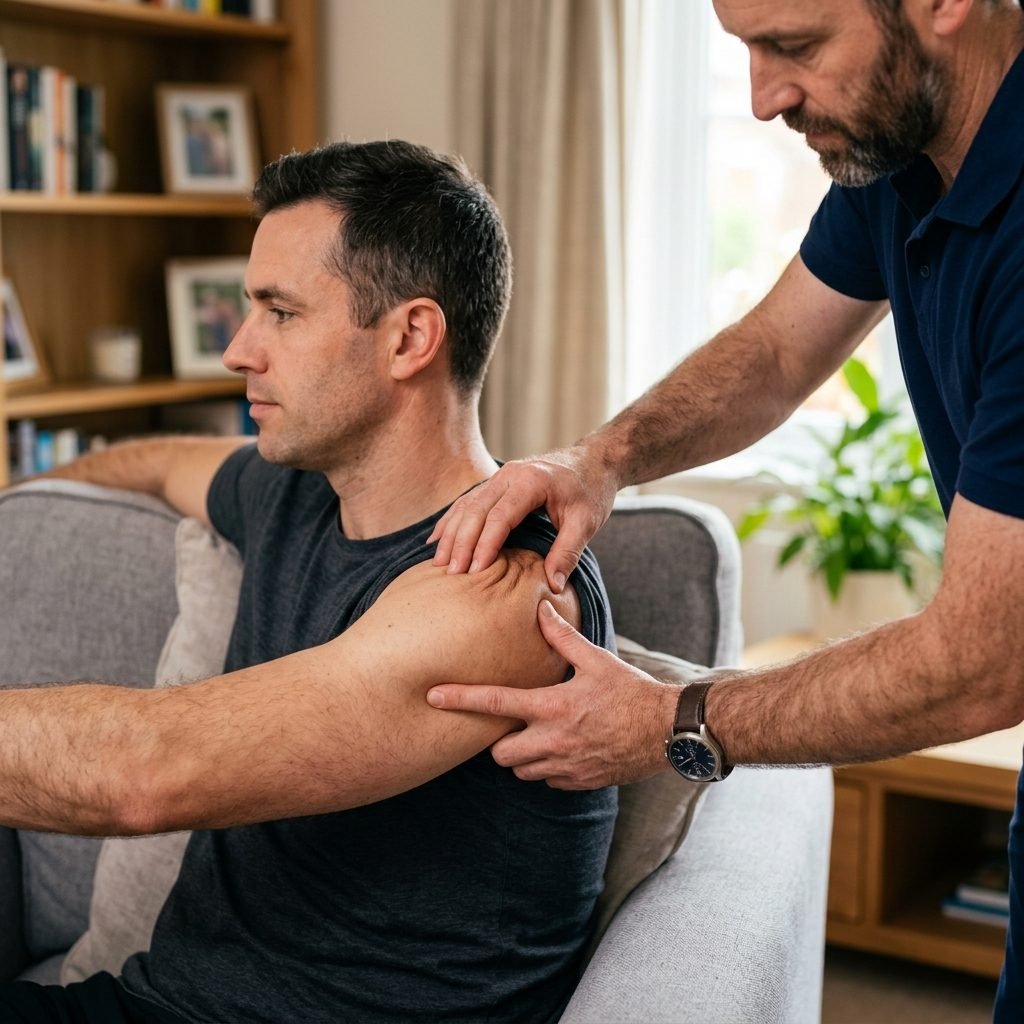
The final phase of ROM clinical reconditioning focuses on restoring full accessory joint complex motion and integrating range of motion into functional movement patterns. Our rehab specialists apply advanced manual therapy techniques, including Maitland Grade III and IV joint complex mobilizations. Unlike earlier grades, Grade III and IV mobilizations involve large and small-amplitude oscillations pushed into the point of tissue resistance. These techniques are designed to stretch tight joint complex capsules and break down deep adhesions, restoring the natural glide and roll mechanics required for pain-free joint complex function. This facilitates daily physical independence for families in Makkah, promoting safety in all transfers and walks.
To ensure that recover baselined mobility is maintained long-term, it must be integrated into active functional movements. Muscles must be reinforce the strength ofed in their newly acquired ranges of motion to establish neuromuscular control and joint complex stability. If a joint complex gains range but lacks the muscular strength to control that range, it becomes susceptible to instability and reinjury. We prescribe progressive eccentric reinforce the strength ofing rehabilitative exercise patterns, functional reaching tasks, and multi-joint complex kinetic chain movements to ensure that the rehab client can safely utilize their recover baselined mobility during daily activities. We maintain strict clinical standards for home visits in Makkah, aligning every session with discharge instructions.
At this stage, we also address ergonomics and body mechanics. The rehab specialist analyzes the rehab client's daily routines and domestic setting environment to identify habits that may contribute to joint complex stiffness. For example, a rehab client recovering from a frozen shoulder will be guided on correct sleeping posture, workspace setup, and domestic setting rehabilitative exercise patterns. A comprehensive, customized domestic setting exercise plan is provided, detailing specific stretching and reinforce the strength ofing rehabilitative exercise patterns to preserve range of motion and prevent regression, ensuring lasting physical independence. This contributes to successful functional restoration in Makkah, restoring confidence in performing daily chores.
Phase 2: Active-Assisted and Active Stretching Protocols and Home Care in Makkah
As tissue healing progresses and the rehab client is cleared to actively contract muscular structures, the therapy shifts to Active-Assisted Range of Motion (AAROM). During AAROM, the rehab client initiates joint complex movement, and the rehab specialist or an assistive device (such as a strap, pulley, or cane) provides the support needed to complete the motion. This phase serves as a bridge to independent movement, beginning to rebuild muscle strength while continuing to expand joint complex range. It helps retrain the nervous system to coordinate joint complex movement, reducing muscular inhibition caused by pain. This is tailored to optimize patient mobility in Makkah, keeping families active and functionally independent.
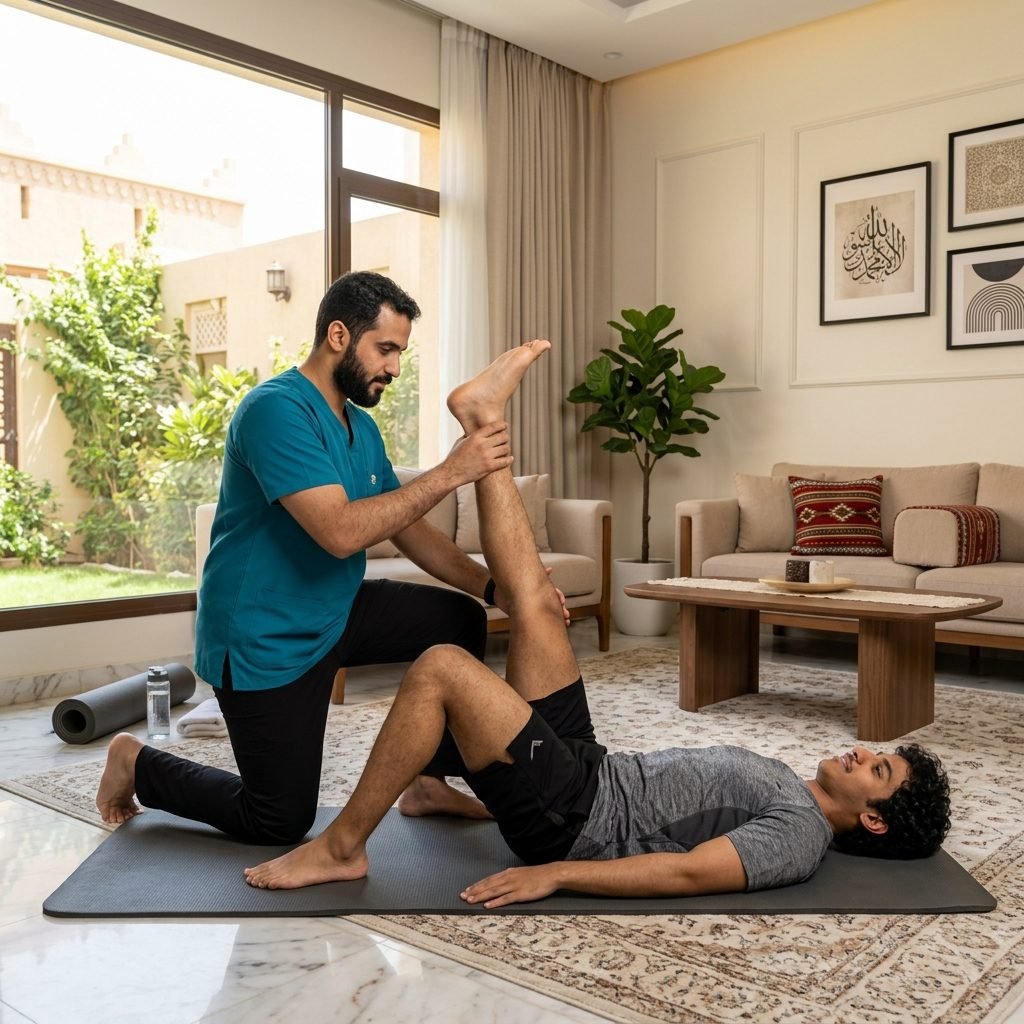
Once AAROM is tolerated, the rehab client progresses to Active Range of Motion (AROM) and targeted stretching. We utilize Proprioceptive Neuromuscular Facilitation (PNF) stretching techniques, particularly the 'Contract-Relax' and 'Hold-Relax' protocols. These techniques utilize neurological inhibition pathways to relax hyperactive muscular structures. For example, during a Hold-Relax stretch of the hamstrings, the rehab client performs an isometric contraction against the rehab specialist's resistance, followed by voluntary relaxation, during which the rehab specialist gently moves the limb into a deeper passive stretch. This utilizes the autogenic inhibition reflex mediated by Golgi tendon organs to achieve rapid increases in muscle length. This facilitates daily physical independence for families in Makkah, promoting safety in all transfers and walks.
In addition to PNF, static stretching is prescribed to target chronic connective tissue tightness. Patients are instructed to hold stretches for 30 to 60 seconds at a point of mild discomfort, repeating the stretch 3 to 4 times per set. Dynamic stretching, involving controlled movements through the joint complex's functional range, is introduced to prepare the musculoskeletal system for daily activities. The rehab specialist constantly monitors movement quality to prevent compensatory patterns, such as shrugging the shoulder to compensate for limited glenohumeral elevation. We maintain strict clinical standards for home visits in Makkah, aligning every session with discharge instructions.
Phase 1: Early Mobilization and Passive Range of Motion (PROM) and Home Care in Makkah
In the acute phase post-injury or post-surgical procedure, when active muscle contraction could disrupt healing tissues, passive range of motion (PROM) is the primary therapeutic intervention. During PROM, the physical rehab specialist supports the limb and moves the joint complex through a pain-free range without any effort from the rehab client. This helps maintain joint complex mobility, stimulates synovial fluid circulation to nourish articular cartilage, prevents venous stasis, and decreases the formation of intra-articular adhesions. PROM also helps inhibit pain pathways through sensory stimulation of joint complex mechanoreceptors. Our Makkah clinical team prioritizes these recovery steps to ensure physical safety and prevent progressive atrophy.
To enhance tissue extensibility, our rehab specialists may apply localized thermal modalities, such as moist heat packs, prior to mobilization. Superficial heat increases local blood flow, relaxes surrounding muscular structures, and increases collagen tissue viscoelasticity, making the subsequent stretching safer and more effective. For joint complexs with severe restrictions, gentle joint complex mobilization techniques (Maitland Grade I and II oscillations) are applied. These low-amplitude movements work within the pain-free range to reduce joint complex pain, manage muscle guarding, and prepare the joint complex for deeper tissue stretching. This is tailored to optimize patient mobility in Makkah, keeping families active and functionally independent.
Patient safety is maintained through continuous feedback and monitoring. The rehab specialist moves the joint complex slowly and rhythmically, avoiding sudden jerks that could trigger muscle guarding or damage healing tissues. Caregivers are educated on basic positioning techniques, splinting compliance, and safe support methods to ensure the joint complex is protected between therapy sessions. This collaborative approach ensures that early mobilization goals are achieved safely, paving the way for active-assisted rehabilitative exercise patterns in the next phase. This facilitates daily physical independence for families in Makkah, promoting safety in all transfers and walks.
Pathophysiology of Joint Stiffness and Tissue Contractures and Home Care in Makkah
Joint stiffness and range of motion restriction result from complex pathophysiological changes within articular and periarticular structures. When a joint complex is immobilized, synovial fluid production decreases, reducing joint complex lubrication and causing cartilage malnutrition. At the same time, the surrounding connective tissue undergoes morphological remodeling. Collagen fibers, which normally slide past one another, form abnormal cross-links, transforming the joint complex capsule and ligaments into dense, unyielding fibrotic tissue. This process, known as capsular contracture, significantly limits the joint complex's ability to undergo normal translation and rotation. This aligns perfectly with our rehabilitation standards in Makkah, catering to hilly terrains and step-climbing needs.
In addition to capsular changes, skeletal muscular structures and tendons surrounding the joint complex undergo adaptive shortening. Under chronic disuse or neural spasticity, sarcomeres—the functional contractile units of muscle fibers—decrease in number, leading to myogenic contractures. Tendons lose their elastic properties, and fascial sheets become bound by myofascial adhesions. This combination of muscle tightness and joint complex capsule thickening restricts both active range of motion (AROM, controlled by the rehab client's muscular structures) and passive range of motion (PROM, achieved via external assistance), leading to severe functional impairment. This supports safe and effective physical recovery in Makkah, offering absolute peace of mind to local households.
Clinical range of motion restoration aims to stimulate tissue remodeling by applying controlled mechanical tension. Consistent, progressive stretching triggers a process called mechanotransduction, where cellular signals stimulate fibroblast activity. This activity promotes the deposition of new collagen fibers in parallel alignments and degrades abnormal cross-links through matrix metalloproteinase enzymes. Furthermore, prolonged low-load stretching facilitates plastic deformation of connective tissue, allowing the joint complex structures to safely elongate and maintain their recover baselined lengths over time. Our Makkah clinical team prioritizes these recovery steps to ensure physical safety and prevent progressive atrophy.
Clinical Pathways & Field Dispatch in Makkah
📍 Coordinated by Ms. Sara Al-Harbi, PT Coordinator for the Makkah Region
In Makkah, we cover Al-Awali, Al-Shawqiyyah, Al-Naseem, Al-Batha, Al-Zaidi, and Al-Aziziyah. We provide female clinical therapists to ensure maximum comfort and compliance in Makkah households.
For patients discharged from King Abdullah Medical City (KAMC) or Al-Noor Specialist Hospital, we review surgical discharge guidelines carefully to initiate safe mobilization.
Local Coordination & Clinical Pathways in Makkah
📍 Coordinated through the Makkah home-visit scheduling pathway
In Makkah, we cover Al-Awali, Al-Shawqiyyah, Al-Naseem, Al-Batha, Al-Zaidi, and Al-Aziziyah. We provide female clinical therapists to ensure maximum comfort and compliance in Makkah households.
For patients recently discharged after surgery or medical admission, the first visit starts with reviewing discharge instructions, movement precautions, and any warning signs that require physician follow-up.