Secondary Prevention and Lifestyle Modifications and Home Care in Makkah
Experiencing one acute stroke condition significantly increases the statistical risk of suffering another. Consequently, motor therapy is deeply intertwined with comprehensive secondary prevention strategies. Physiorehab specialists design safe, individualized cardiovascular exercise programs to improve heart health, lower blood pressure, and assist with weight management—all critical factors in reducing acute stroke condition risk. We educate rehab clients on how to safely incorporate aerobic activity into their daily routines despite their physical limitations. Working collaboratively with the broader healthcare team, rehab specialists reinforce the importance of vital lifestyle modifications, including smoking cessation, adhering to a heart-healthy diet, and strict compliance with prescribed medications for managing hypertension, cholesterol, and diabetes. By combining rigorous motor reconditioning with proactive lifestyle management, we empower acute stroke condition survivors to take control of their health and minimize future risks. This is tailored to optimize patient mobility in Makkah, keeping families active and functionally independent.
The Essential Role of Family and Caregivers and Home Care in Makkah
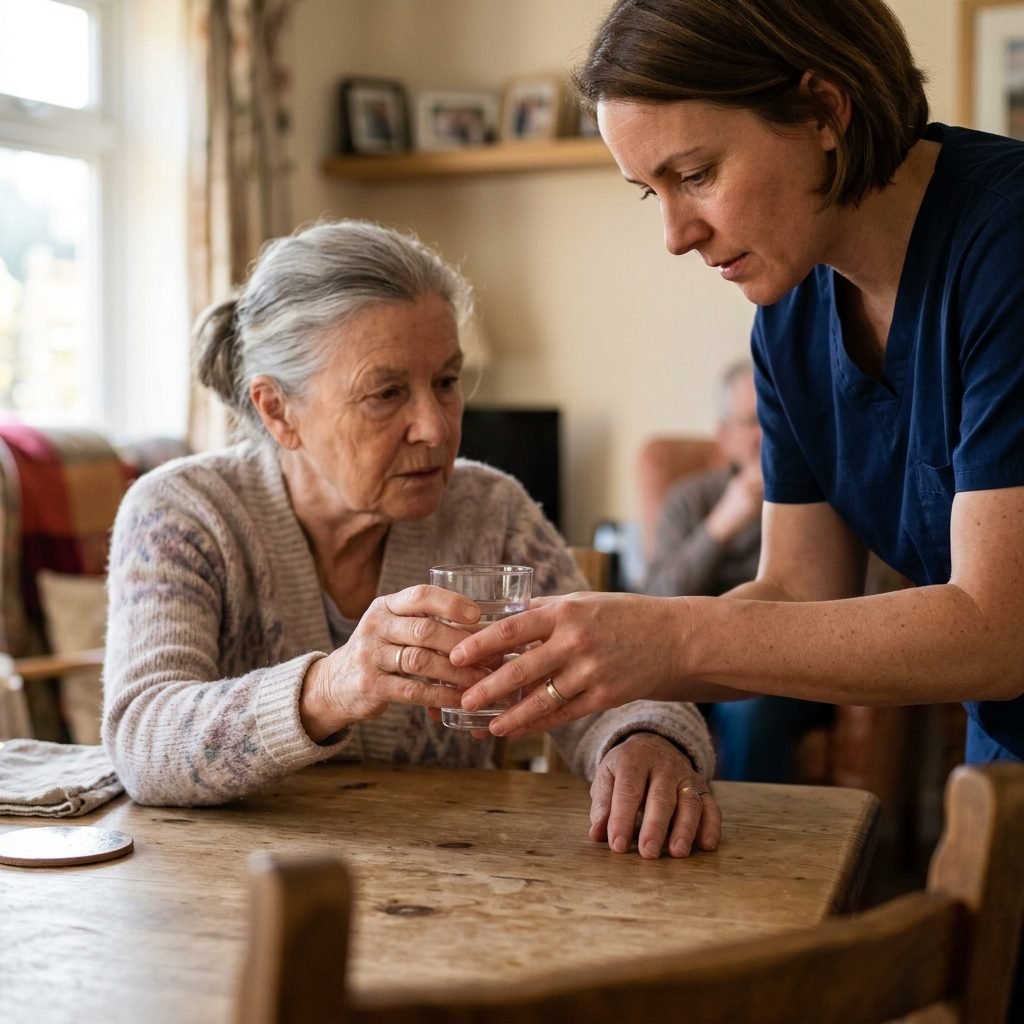
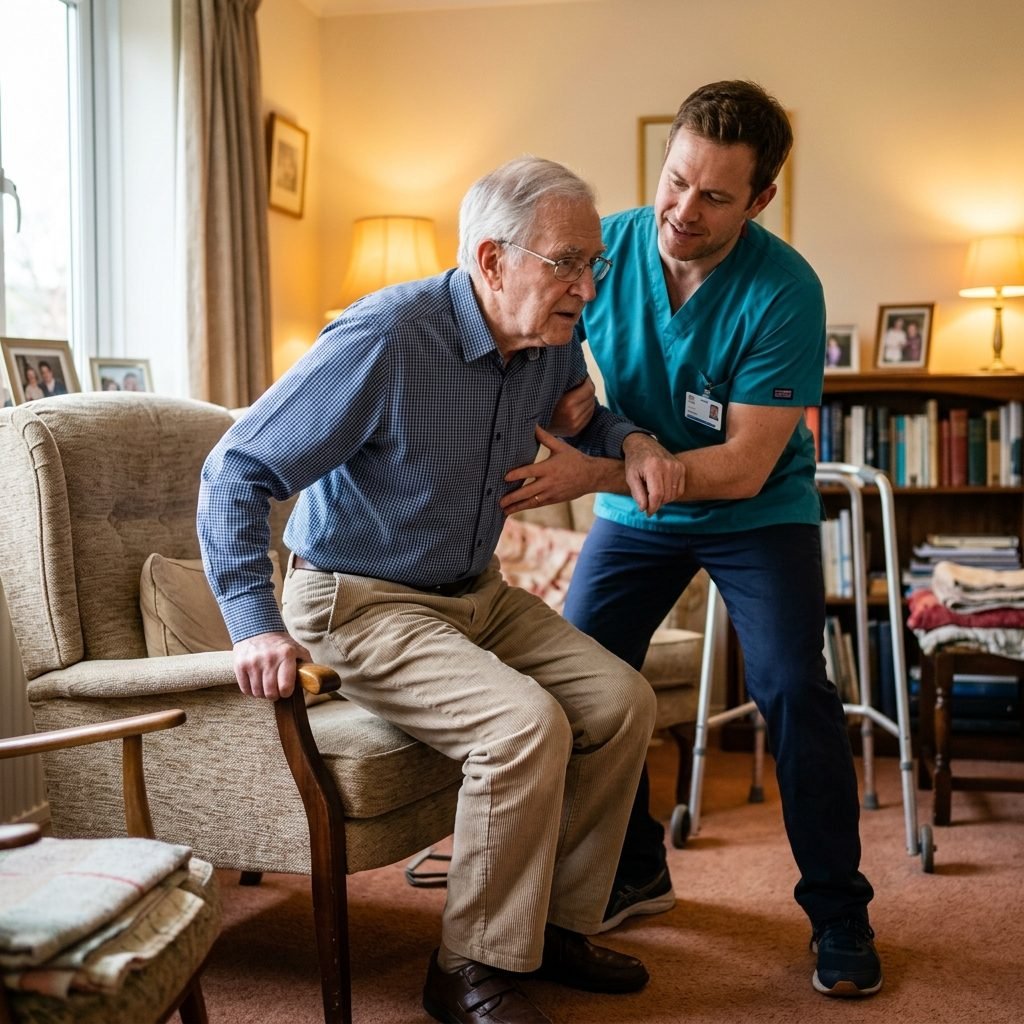
Stroke recovery is a profound life event that affects the entire family, and caregivers are indispensable members of the clinical reconditioning team. Physiorehab specialists invest significant time in educating and training family members. We teach safe and ergonomic techniques for assisting the rehab client with transfers (e.g., moving from a bed to a wheelchair) to protect both the rehab client from falls and the caregiver from back injuries. Therapists conduct thorough assessments of the domestic setting environment, recommending necessary modifications—such as removing trip hazards or installing grab bars—to ensure safety and accessibility. Furthermore, family members are trained to become 'therapy assistants' at domestic setting, ensuring that domestic setting exercise programs are performed correctly and consistently. Beyond physical assistance, the emotional support, patience, and persistent encouragement provided by the family are often the most powerful motivators driving a rehab client's recovery. Our Makkah clinical team prioritizes these recovery steps to ensure physical safety and prevent progressive atrophy.
Sensory Re-education for Better Motor Control and Home Care in Makkah
Motor weakness after a acute stroke condition is frequently accompanied by significant sensory deficits on the affected side. Patients may experience a loss of tactile sensation (touch), inability to perceive temperature or pain, or a profound loss of proprioception—the brain's crucial ability to sense the position and movement of the body's joint complexs in space without looking at them. Intact sensation is absolutely vital for coordinated movement; without sensory feedback, the brain cannot accurately adjust the force or trajectory of a limb. Physiotherapy incorporates sensory re-education protocols to address this. Therapists expose the affected limb to various textures, weights, and temperatures, encouraging the rehab client to consciously focus on the sensory input while simultaneously performing movements. This integrated sensorimotor training helps the brain re-establish the critical feedback loops necessary for smooth, coordinated, and functional movement. This supports safe and effective physical recovery in Makkah, offering absolute peace of mind to local households.
Integrating Assistive Technology and Robotics and Home Care in Makkah
The integration of cutting-edge technology has fundamentally transformed acute stroke condition clinical reconditioning. Modern motor therapy clinics utilize these tools to amplify the effectiveness of traditional therapy and accelerate recovery timelines. Functional Electrical Stimulation (FES) is widely used; it delivers precise electrical impulses to paralyzed or weak muscular structures, prompting them to contract. A common application is for 'foot drop,' where FES stimulates the nerve to lift the foot at the exact right moment during the walking cycle. Robotic-assisted therapy devices provide intensive, highly repetitive, and task-specific movement practice that would be impossible to achieve manually, offering varying levels of mechanical assistance based on the rehab client's real-time capabilities. Additionally, biofeedback sensors and Virtual Reality (VR) environments provide immediate, engaging visual and auditory feedback, enhancing rehab client motivation and promoting better motor learning through gamified rehabilitative exercise patterns. This aligns perfectly with our rehabilitation standards in Makkah, catering to hilly terrains and step-climbing needs.
Upper Limb Function and Fine Motor Recovery and Home Care in Makkah
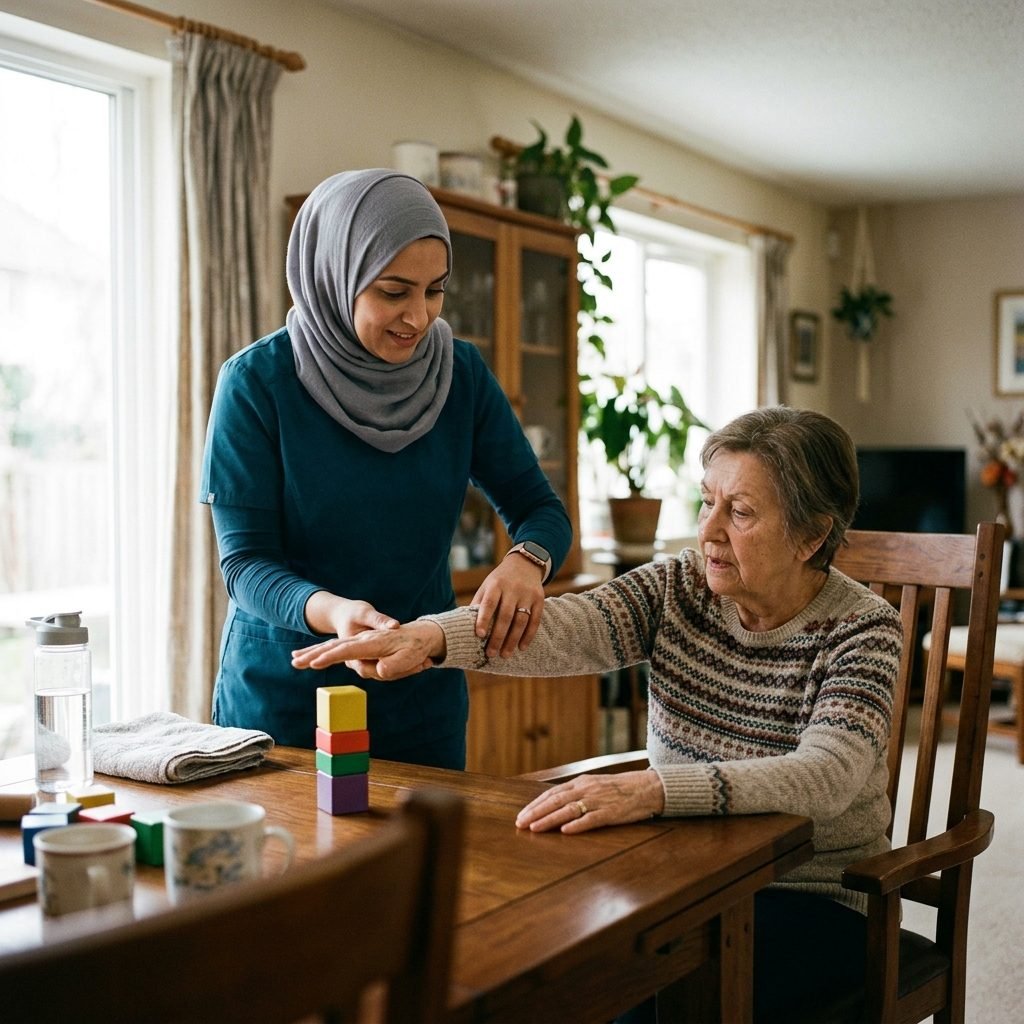
Recovery of the affected arm and hand is notoriously slower and more complex than leg recovery. This is due to the intricate neurological control required for fine motor tasks and a phenomenon known as 'learned non-use,' where rehab clients instinctively favor their unaffected arm and chronically neglect the weak one. To combat this, physiorehab specialists employ intensive, evidence-based strategies. Constraint-Induced Movement Therapy (CIMT) is a highly effective protocol where the unaffected arm is physically restrained, forcing the brain to engage and practice using the affected arm for several hours a day. Therapy heavily involves repetitive, task-oriented training—practicing the specific movements needed to grasp a cup, turn a key, or button a shirt. Modalities like Mirror Therapy, which uses visual illusions to trick the brain into perceiving movement in the paralyzed arm, are also utilized to stimulate cortical reorganization. This is key to our structured physiotherapy plans in Makkah, designed specifically for rapid motor adaptation.
Managing Spasticity and Preventing Contractures and Home Care in Makkah
Spasticity is a highly common motor disorder following a acute stroke condition, characterized by an abnormal, velocity-dependent increase in muscle tone. It causes certain muscular structures to remain continuously contracted, making the limbs feel incredibly stiff and difficult to move voluntarily. For example, the elbow may remain bent, or the foot may point rigidly downwards. If unmanaged, spasticity inevitably leads to permanent muscle shortening and joint complex deformities known as contractures. Physiorehab specialists employ a multifaceted approach to manage spasticity, which includes prolonged gentle stretching, sustained weight-bearing rehabilitative exercise patterns to inhibit overactive muscular structures, and the use of specialized splints or orthotics to maintain muscle length overnight. In moderate to severe cases, rehab specialists work closely with neurologists who may administer Botulinum Toxin (Botox) injections. Botox temporarily paralyzes the spastic muscular structures, creating a critical 'therapeutic window' that allows the physiorehab specialist to stretch the affected area and reinforce the strength of the opposing, weaker muscular structures. We maintain strict clinical standards for home visits in Makkah, aligning every session with discharge instructions.
Chronic Phase Rehabilitation (Beyond Six Months) and Home Care in Makkah
Historically, it was believed that acute stroke condition recovery plateaued after six months. However, modern neuroscience proves that significant functional improvements can continue for years post-acute stroke condition provided the rehab client remains engaged in active clinical reconditioning. In the chronic phase, motor therapy focuses on integrating acquired motor skills into complex, real-world activities. We prioritize improving cardiovascular endurance, refining fine motor skills, and enhancing the overall quality and efficiency of movement. Managing long-term complications, such as persistent spasticity, and correcting ingrained compensatory movement patterns are crucial aspects of care. Programs may involve group exercise classes, adaptive sports, and the development of highly customized, sustainable domestic setting exercise routines. The ultimate goal in the chronic phase is to maximize the rehab client's independence, promote long-term community reintegration, and maintain a high quality of physical health. This facilitates daily physical independence for families in Makkah, promoting safety in all transfers and walks.
Subacute Rehabilitation (Weeks to Early Months) and Home Care in Makkah
The subacute phase is universally recognized as the 'golden window' of acute stroke condition recovery, a period where the brain exhibits its highest potential for neuroplastic change. During these weeks and months, rehab clients typically transition to specialized inrehab client clinical reconditioning centers or intensive outrehab client programs. The focus shifts aggressively toward regaining voluntary motor control, enhancing sitting and standing equilibrium control, and re-learning how to walk. Therapists utilize evidence-based interventions such as Task-Specific Training, partial body-weight supported treadmill training, and intensive upper limb protocols. The intensity, frequency, and duration of therapy sessions are significantly increased to drive neuroplasticity. This phase demands immense dedication from the rehab client, as the rigorous therapy is designed to push their physical limits safely, ensuring steady functional progress and preventing the loss of newly acquired skills. This is tailored to optimize patient mobility in Makkah, keeping families active and functionally independent.
Acute Phase Rehabilitation (The First Days) and Home Care in Makkah
Physiotherapy for acute stroke condition begins in the hospital setting as soon as the rehab client's medical condition has stabilized, frequently within the first 24 to 48 hours. The primary objective during this acute phase is to prevent severe secondary complications associated with prolonged immobility. These include deep vein thrombosis (DVT), pressure ulcers, severe joint complex stiffness (contractures), and respiratory infections. The physiorehab specialist performs passive range-of-motion rehabilitative exercise patterns and educates the nursing staff and family on proper bed positioning. Early mobilization is paramount; rehab specialists will assist the rehab client in sitting on the edge of the bed and, if possible, attempting to stand and bear weight. These early vertical and weight-bearing activities send vital sensory signals to the brain, laying the groundwork for future mobility. Furthermore, careful attention is paid to protecting the affected shoulder joint complex, which is highly vulnerable to dislocation or injury in the early stages. Our Makkah clinical team prioritizes these recovery steps to ensure physical safety and prevent progressive atrophy.
Understanding Stroke and Its Impact on Mobility and Home Care in Makkah
A acute stroke condition, or 'brain attack,' is a life-threatening medical emergency that occurs when the blood supply to part of your brain is interrupted or reduced, preventing brain tissue from getting oxygen and nutrients. Brain cells begin to die in minutes. This neurological damage often leads to a sudden loss of the functions controlled by that specific part of the brain. From a physical and motor perspective, the most common consequence is weakness or paralysis on one side of the body, known as hemiparesis or hemiplegia. This profound impairment directly affects a person's ability to walk, maintain equilibrium control, and use their affected arm and hand, drastically altering their ability to perform activities of daily living (ADLs) independently. Early intervention with intensive motor therapy is critical. Physiorehab specialists evaluate the extent of the neuromuscular deficit and design a comprehensive, individualized treatment plan aimed at retraining the brain and muscular structures to communicate and function together once again. This aligns perfectly with our rehabilitation standards in Makkah, catering to hilly terrains and step-climbing needs.
Clinical Pathways & Field Dispatch in Makkah
📍 Coordinated by Ms. Sara Al-Harbi, PT Coordinator for the Makkah Region
In Makkah, we cover Al-Awali, Al-Shawqiyyah, Al-Naseem, Al-Batha, Al-Zaidi, and Al-Aziziyah. We provide female clinical therapists to ensure maximum comfort and compliance in Makkah households.
For patients discharged from King Abdullah Medical City (KAMC) or Al-Noor Specialist Hospital, we review surgical discharge guidelines carefully to initiate safe mobilization.
Local Coordination & Clinical Pathways in Makkah
📍 Coordinated through the Makkah home-visit scheduling pathway
In Makkah, we cover Al-Awali, Al-Shawqiyyah, Al-Naseem, Al-Batha, Al-Zaidi, and Al-Aziziyah. We provide female clinical therapists to ensure maximum comfort and compliance in Makkah households.
For patients recently discharged after surgery or medical admission, the first visit starts with reviewing discharge instructions, movement precautions, and any warning signs that require physician follow-up.