Clinical What is a Disc Herniation (Slipped Disc) and How Does it Happen? Sessions in Qatif
A disc herniation, commonly referred to as a 'slipped disc' or 'ruptured disc,' occurs when the tough outer ring of the disc tears. This tear allows the soft, jelly-like inner material (the nucleus) to bulge or completely extrude outwards. This usually results from acute trauma (like lifting a heavy object improperly), repetitive strain, or age-related degenerative wear and tear. The problem arises when this protruding disc material impinges upon the adjacent spinal canal or the exiting nerve roots. This causes severe mechanical compression and releases inflammatory chemicals that highly irritate the nerve. The immediate result is localized acute pain and protective muscle spasms in the back or neck. More significantly, it often triggers 'radicular pain'—a sharp, shooting electrical pain that radiates down the path of the compressed nerve, such as pain traveling down the leg (sciatic nerve irritation) or arm, frequently accompanied by numbness, tingling, or muscular weakness. This eases the recovery journey for individuals in Qatif and Tarout, matching their schedule with precise sessions.
Clinical Acute Phase: Pain Relief and Inflammation Management Sessions in Qatif
During the initial days following a disc herniation, the pain is typically excruciating and accompanied by severe, protective muscle spasms that severely limit mobility. The primary objective of physiotherapeutic care in this acute phase is aggressive pain modulation and inflammation reduction. Complete bed rest is strongly discouraged beyond one or two days, as prolonged inactivity rapidly weakens supporting skeletal myofibers and exacerbates anatomical joint stiffness. Instead, physical therapists utilize pain-relieving modalities such as cryotherapy (ice) for immediate inflammation control, targeted thermotherapy (heat) to relax spasming skeletal myofibers, and Transcutaneous Electrical Nerve Stimulation (TENS) to block pain signals. Crucially, we educate the recovering individual on 'active resting positions'—specific postures (like lying on the back with legs elevated on a chair) that mechanically unload the injured disc. We also introduce very gentle, pain-free mobility motor training protocols to promote blood circulation and prevent anatomical joint locking. This is built to promote functional independence in Qatif, helping patients manage joint stiffness effectively.
Clinical The McKenzie Method (MDT) and the Phenomenon of Centralization Sessions in Qatif
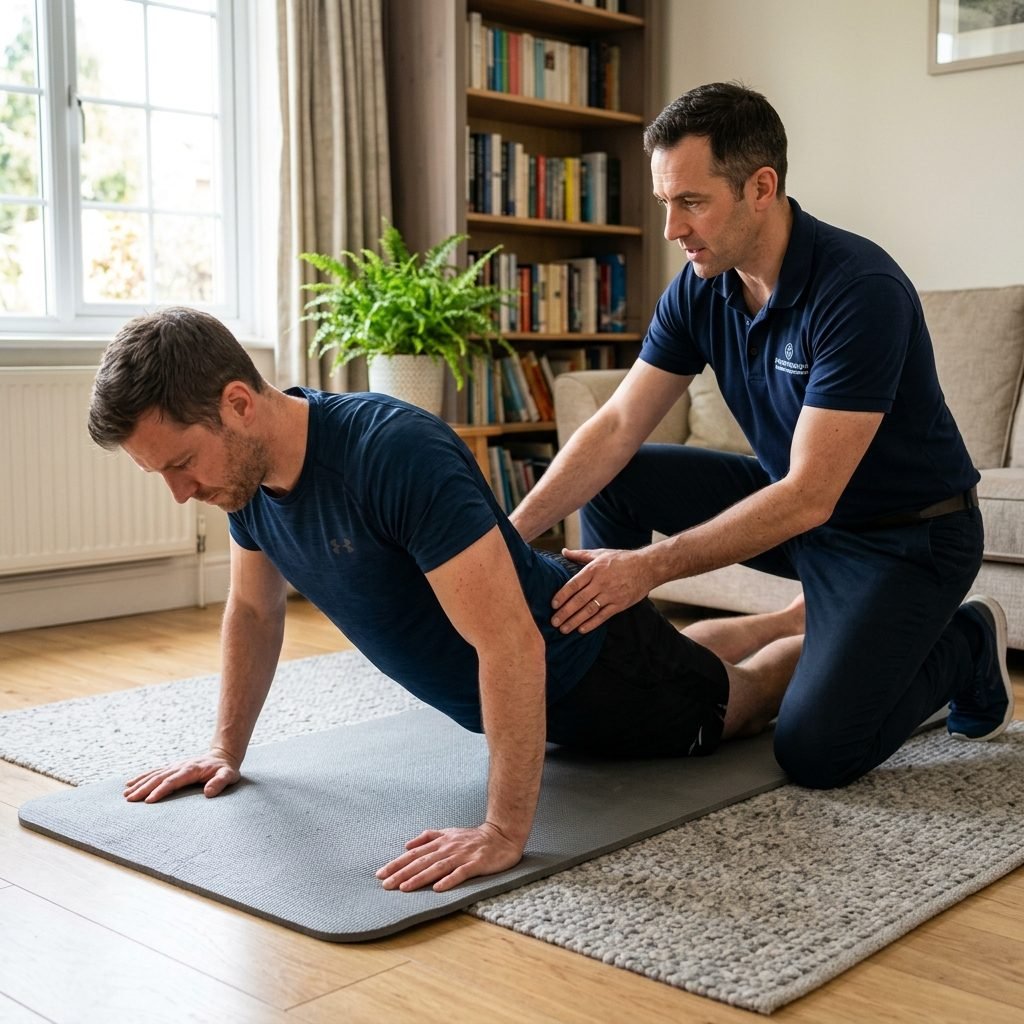
The McKenzie Method (Mechanical Diagnosis and Therapy - MDT) is arguably the most scientifically validated and effective approach for treating lumbar disc herniations. This method relies on a meticulous clinical assessment of how the recovering individual's pain responds to specific, repeated movements. The physical therapist guides the recovering individual through various directional movements (most commonly extension, or bending backwards, for posterior herniations). The ultimate goal is to identify a movement that produces a phenomenon called 'Centralization.' Centralization occurs when the radiating pain in the leg (sciatic nerve irritation) begins to retreat upwards toward the spine, even if the localized back pain temporarily intensifies. This is an excellent clinical indicator; it signifies that the mechanical pressure on the nerve root is decreasing and the bulging disc material is being mechanically encouraged back toward its center. Once this 'directional preference' is identified, a highly specific, intensive home environment exercise program is prescribed based entirely on this movement. This helps patients in the Qatif governorate regain their strength, enabling smooth and coordinated movement patterns.
Clinical Core Stability: Building Your Natural Spinal Corset Sessions in Qatif
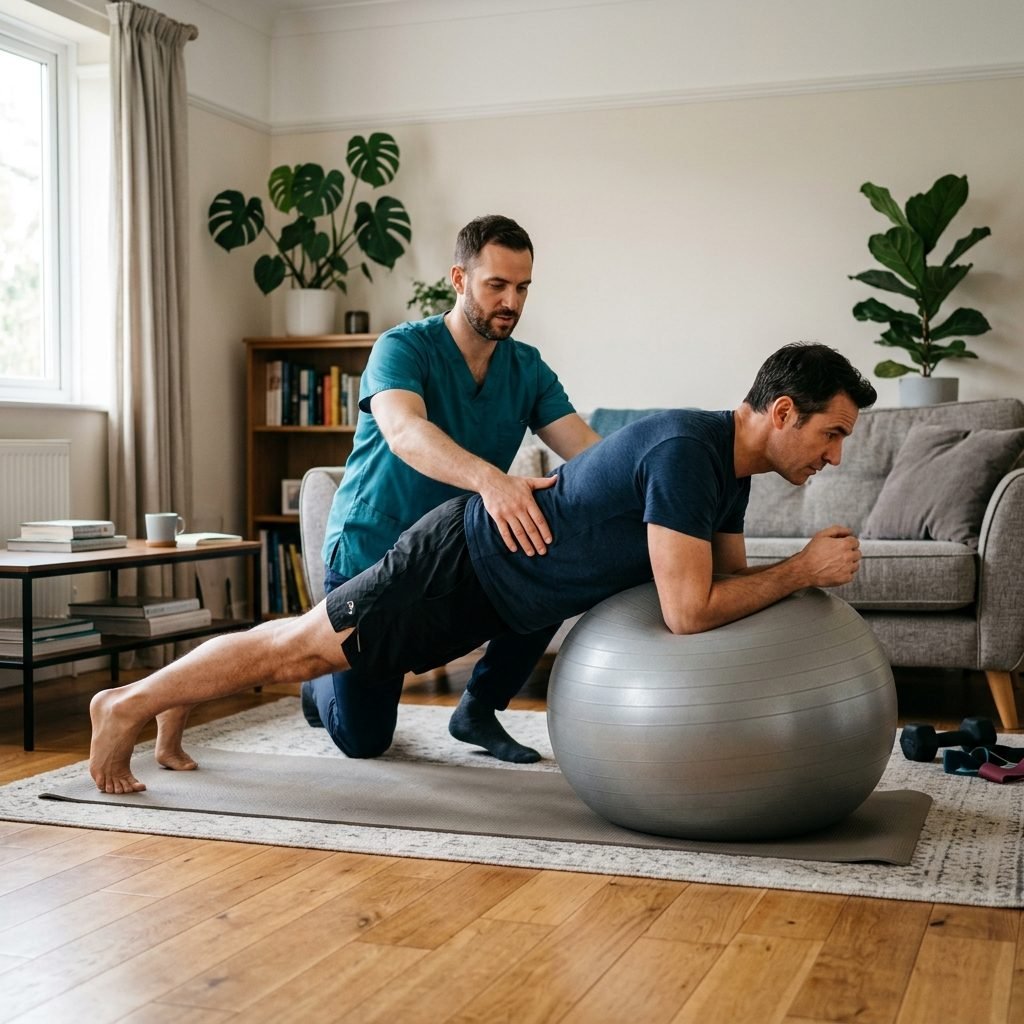
Once acute pain is managed and centralization is achieved, the focus of physiotherapeutic care programs shifts entirely to prevention through stabilization. The superficial 'six-pack' abdominal skeletal myofibers and large back skeletal myofibers are insufficient to stabilize the individual segments of the spine. Instead, we target the deep core skeletal myofibers—specifically the Transversus Abdominis (which acts like a natural weightlifting belt) and the Multifidus (tiny skeletal myofibers that control motion between individual vertebrae). These deep skeletal myofibers form a dynamic corset that provides circumferential support to the spine, bracing it before movement occurs and significantly reducing the abnormal micro-movements and sheer forces that damage intervertebral discs. Physiotherapy involves a progressive core stabilization program, starting with teaching the recovering individual how to isolate and activate these deep skeletal myofibers (often using biofeedback), and advancing to dynamic stability motor training protocols using stability balls, Pilates principles, and functional movement training. We deliver this specialized service across all sectors of Qatif, maintaining high clinical standards for every case.
Clinical Postural Correction and Workplace Ergonomics Sessions in Qatif
Prolonged sitting with poor posture (specifically slouching or forward flexion) is a leading contributor to disc herniations. Slouching exponentially increases the internal pressure on the lower lumbar discs, mechanically forcing the jelly-like nucleus backward toward the sensitive nerve roots. A critical component of the physiotherapeutic care program is comprehensive postural re-education and ergonomic workplace modification. We thoroughly evaluate the recovering individual's seated posture at their desk or while driving. Interventions include prescribing a customized lumbar roll to actively maintain the spine's natural lordotic curve, advising on optimal chair and monitor height, and instilling the crucial habit of 'micro-breaks.' We mandate that recovering individuals stand up, walk, and perform standing extension motor training protocols every 30-40 minutes to reverse the compressive forces accumulated during sitting. Correcting posture is not just for symptom relief; it is the most critical preventative strategy against future herniations. This is crucial for restoring motor coordination in Qatif, coordinating care with local hospital consultants.
Clinical Nerve Gliding (Flossing) to Resolve Sciatica Sessions in Qatif
When a herniated disc compresses a nerve root, the surrounding tissues become inflamed. During the healing process, scar tissue (adhesions) can form, effectively 'tethering' the nerve to the surrounding structures. A healthy nerve needs to slide and glide smoothly through its anatomical tunnel as the arm or leg moves. When tethered, normal movement stretches the nerve excessively, causing the sharp, burning, and excruciating radiating pain characteristic of sciatic nerve irritation. To resolve this, physiophysical therapists employ a highly specialized technique called 'Nerve Gliding' or 'Nerve Flossing.' These are gentle, specific, and rhythmic movements designed to mobilize the nerve, gently pulling it back and forth through its pathway without putting it under aggressive tension. This flossing action helps break down early scar tissue adhesions, improves blood flow to the compromised nerve, and dramatically reduces sensitivity and radiating leg pain. This guarantees top-tier rehabilitative care for patients in Qatif, removing the need to travel to regional clinics.
Clinical Manual Therapy and Spinal Joint Mobilization Sessions in Qatif
Alongside specific therapeutic motor training protocols, hands-on manual therapy is a vital component of the physiotherapeutic care programs plan. The facet anatomical joints of the spine often become severely stiff and restricted due to the intense muscle spasms surrounding the herniated disc, significantly limiting functional mobility. Physiophysical therapists utilize precise anatomical joint mobilization techniques—applying skilled, graded pressures to specific vertebrae—to rebuild optimal normal anatomical joint mechanics and alleviate pain. Furthermore, we employ deep tissue massage and myofascial release techniques to deactivate stubborn 'trigger points' (knots) in the lumbar and gluteal skeletal myofibers that often refer pain and mimic radicular symptoms. In appropriate cases, mechanical or manual spinal traction is utilized. Traction applies a controlled pulling force to the spine, aiming to temporarily widen the intervertebral space, create negative pressure within the disc, and potentially facilitate the retraction of the bulging disc material away from the nerve root. This eases the recovery journey for individuals in Qatif and Tarout, matching their schedule with precise sessions.
Clinical Safe Body Mechanics and Lifting Techniques Sessions in Qatif
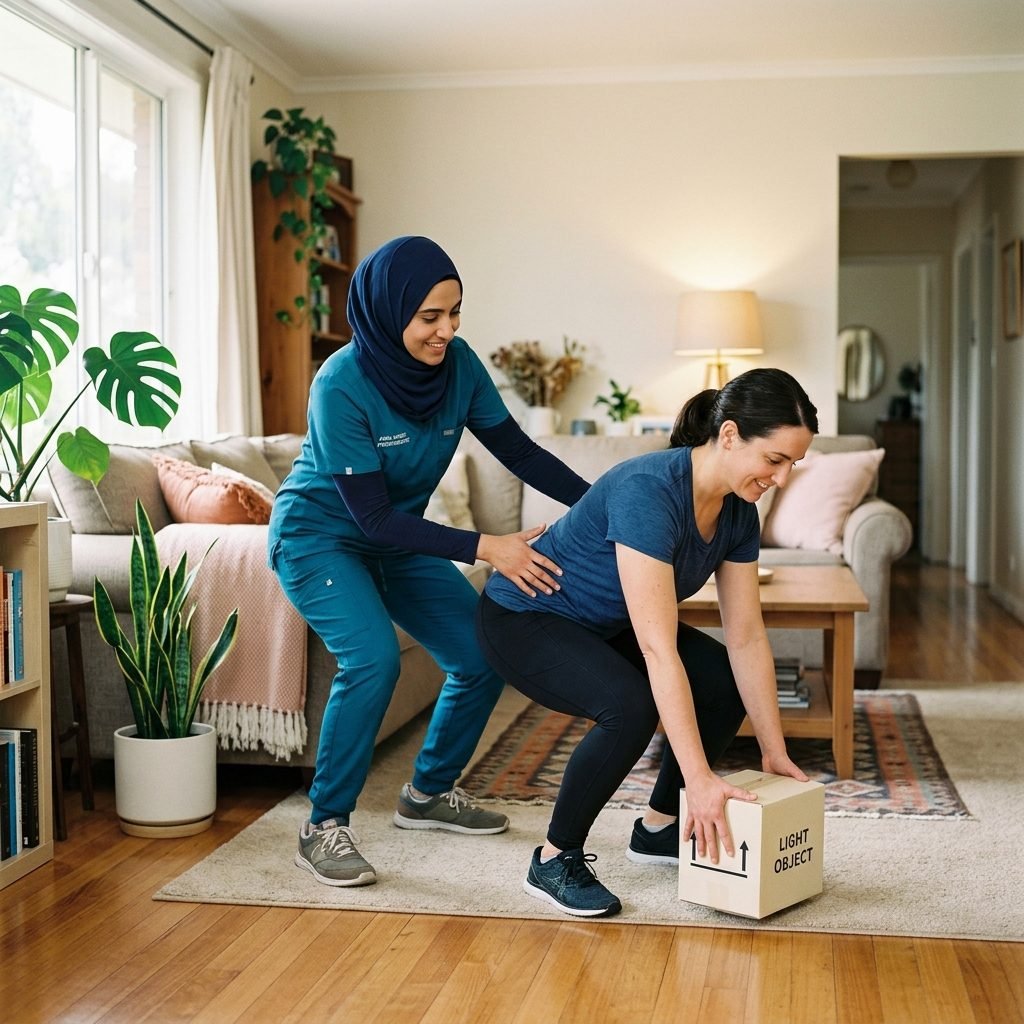
A vast number of disc herniations are triggered or exacerbated by poor movement habits, most notably lifting heavy objects while simultaneously bending and twisting the spine. To ensure long-term recovery and prevent devastating re-injury, 'kinesthetic re-education' is absolutely crucial. We intensively train the recovering individual in safe body mechanics for all activities of daily living. The cornerstone of this training is mastering the 'hip hinge'—learning to bend forward by pivoting at the hips and knees while maintaining a rigidly straight, neutral spine, rather than flexing the lower back. We practice safe lifting protocols: keeping the load close to the center of gravity, engaging the core before lifting, and using the powerful leg skeletal myofibers to generate force rather than the vulnerable back skeletal myofibers. This education extends to safe techniques for getting in and out of bed, entering a car, and even bracing the core during coughing or sneezing. Our clinical specialists in Qatif ensure safe execution of these tasks under steady monitoring of vital parameters.
Clinical Preventing Recurrence and Long-Term Spinal Health Sessions in Qatif
A disc herniation is not an injury that simply 'heals' and is forgotten; it signifies an underlying mechanical vulnerability that requires ongoing management. Once the acute pain has subsided and intensive therapy concludes, we transition the recovering individual into a 'preventative maintenance' phase. The recovering individual is equipped with a sustainable, lifelong home environment exercise program focused on preserving spinal mobility and maintaining a strong, reactive core. We strongly emphasize the importance of weight management, as excess abdominal weight drastically multiplies the mechanical forces exerted on the lower lumbar discs. We advocate for a consistently active lifestyle, incorporating low-impact aerobic motor training protocols like brisk walking or swimming, which are essential for pumping vital nutrients into the avascular spinal discs. By strictly adhering to these ergonomic principles and maintaining core fitness, recovering individuals can confidently return to a highly active life while minimizing the risk of future herniations. This is built to promote functional independence in Qatif, helping patients manage joint stiffness effectively.
Clinical Spinal Anatomy: Understanding the Intervertebral Disc Sessions in Qatif
To effectively treat a disc herniation, it's essential to understand the basic anatomy of the spine. The spine is constructed from a column of individual bones called vertebrae. Sandwiched between each vertebra is a soft, flexible cushion known as the 'intervertebral disc.' These discs act as vital shock absorbers, enabling the spine to bend, twist, and absorb impact while preventing the bones from grinding against one another. Structurally, a disc consists of two primary components: a tough, fibrous outer ring (the Annulus Fibrosus) and a soft, jelly-like inner core (the Nucleus Pulposus). Crucially, sensitive spinal nerves exit the spinal cord through small openings situated immediately adjacent to these discs, branching out to supply sensation and motor function to the arms and legs. Healthy discs rely on movement; they lack a direct blood supply and depend on the mechanical pumping action of spinal movement to draw in nutrients and expel waste products. This guarantees top-tier rehabilitative care for patients in Qatif, removing the need to travel to regional clinics.
Clinical Pathways & Field Dispatch in Qatif
📍 Coordinated by Ms. Fatima Al-Khaldi, PT Coordinator for the Qatif District
In the Qatif governorate, we cover Saihat, Anak, Al-Nasirah, Tarout, Al-Jish, and Safwa with flexible appointment configurations.
We maintain close lines of communication with orthopedic and neurosurgical consultants at Qatif Central Hospital to safely align strengthening and walk-training cycles.
Local Coordination & Clinical Pathways in Qatif
📍 Coordinated through the Qatif home-visit scheduling pathway
In the Qatif governorate, we cover Saihat, Anak, Al-Nasirah, Tarout, Al-Jish, and Safwa with flexible appointment configurations.
For orthopedic and neurological rehabilitation, the plan is adjusted according to the patient's reports, pain response, walking tolerance, and any limits set by the treating physician.