Clinical 2. Clinical Screening and Assessment Protocols (STEADI Framework) Sessions in Qatif
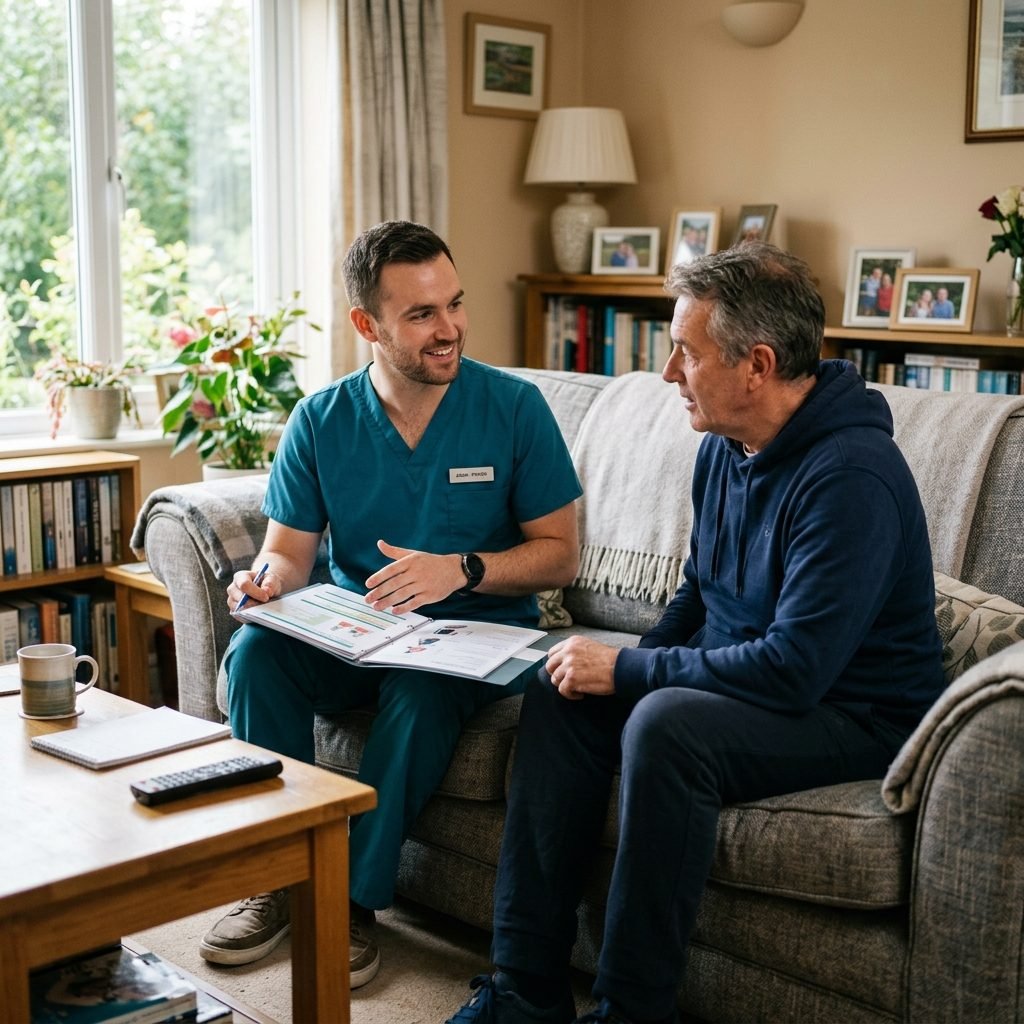
We utilize the medically recognized Stopping Elderly Accidents, Deaths, and Injuries (STEADI) toolkit developed by the CDC. This system categorizes fall risk into low, moderate, or high categories. This eases the recovery journey for individuals in Qatif and Tarout, matching their schedule with precise sessions.
The clinical screening includes three physical tests: the Timed Up and Go (TUG) test for mobility, the 30-Second Chair Stand test to evaluate lower body strength, and the 4-Stage Balance Test. Our clinical specialists in Qatif ensure safe execution of these tasks under steady monitoring of vital parameters.
We review the recovering individual's medications in collaboration with their physicians. We identify high-risk medications (using the Beers Criteria) that can impair motor balance and coordination or cause orthostatic hypotension, such as sedatives or diuretics. This is built to promote functional independence in Qatif, helping patients manage joint stiffness effectively.
We assess the recovering individual's fear of falling using the Falls Efficacy Scale-International (FES-I). A high fear of falling can lead to self-restricted activity, accelerating muscle wasting, anatomical joint stiffness, and physical decline. This helps patients in the Qatif governorate regain their strength, enabling smooth and coordinated movement patterns.
Clinical 4. Managing Orthostatic Hypotension and Vestibular Instability Sessions in Qatif
Orthostatic hypotension (sudden blood pressure drop upon standing) and vestibular instability are primary causes of lightheadedness and falls. We teach recovering individuals specific behavioral strategies to manage these risks. This is built to promote functional independence in Qatif, helping patients manage joint stiffness effectively.
We instruct recovering individuals to transition slowly from supine to sitting, allowing their cardiovascular system to adjust before standing. This precaution is vital during nighttime or early morning transitions. This helps patients in the Qatif governorate regain their strength, enabling smooth and coordinated movement patterns.
We address vestibular instability through targeted gaze stabilization and habituation motor training protocols. This training improves visual clarity during head movements, reducing motion-induced dizziness during daily tasks. We deliver this specialized service across all sectors of Qatif, maintaining high clinical standards for every case.
We emphasize proper hydration and coordinate with the recovering individual's physicians to review medications that can affect blood volume. Managing blood pressure stability is key to preventing dizziness and falls during exercise. This is crucial for restoring motor coordination in Qatif, coordinating care with local hospital consultants.
Clinical 5. Environmental Home Modifications and Safety Standards Sessions in Qatif
A safe home environment environment is critical for preventing falls. We perform a detailed home environment safety evaluation and recommend modifications, including installing secure grab bars in bathrooms and next to the toilet. This helps patients in the Qatif governorate regain their strength, enabling smooth and coordinated movement patterns.
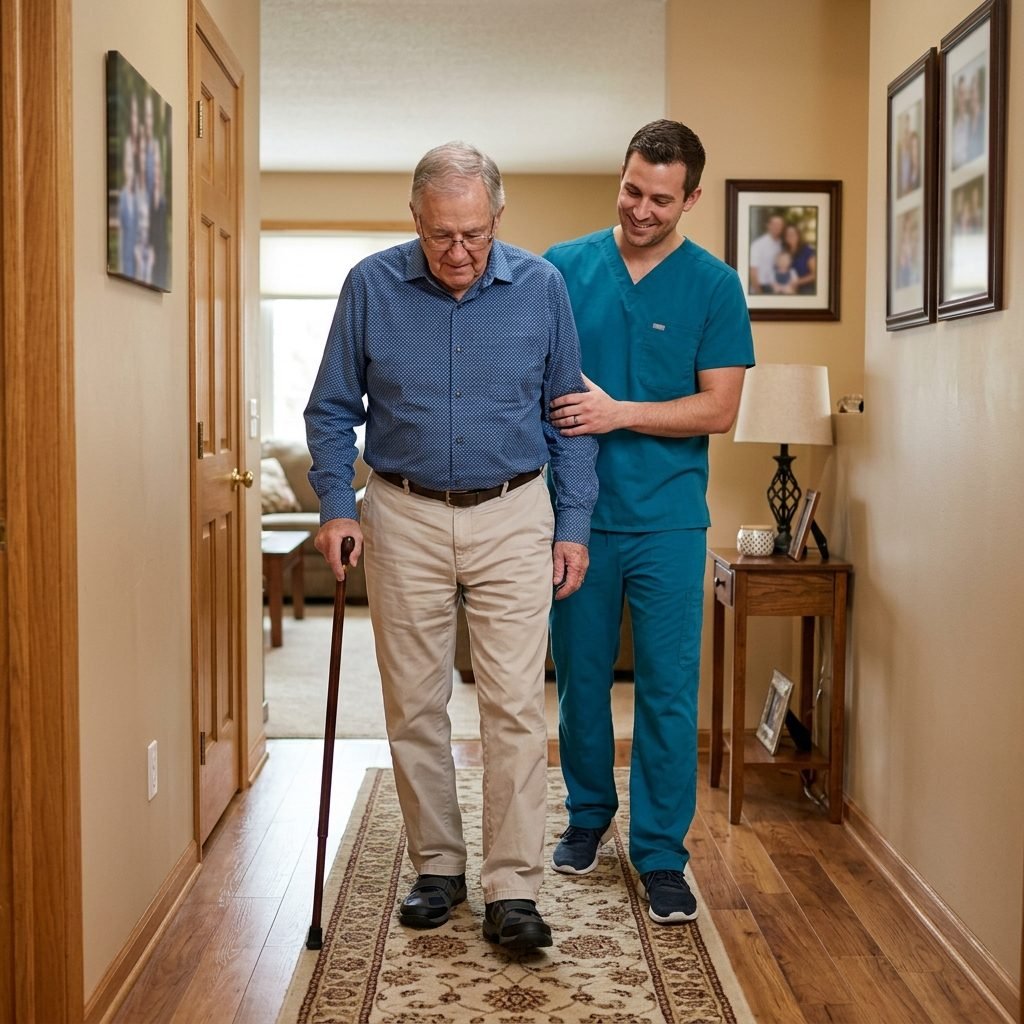
We advise removing unsecured rugs, clearing hallways of electrical cords and clutter, and ensuring that daily items are stored within easy reach, eliminating the need to climb or bend excessively. We deliver this specialized service across all sectors of Qatif, maintaining high clinical standards for every case.
We recommend non-slip mats in wet areas and motion-activated nightlights along pathways to the bathroom. Adequate lighting is essential for visual guidance and preventing disorientation during the night. This is crucial for restoring motor coordination in Qatif, coordinating care with local hospital consultants.
These environmental modifications create a supportive living space that accommodates the recovering individual's physical limitations. Fostering a barrier-free home environment supports independent mobility and reduces fall risks. This supports optimal therapeutic outcomes for our Qatif clients, bringing expert hands right to their bedroom.
Clinical 6. Optimizing Lighting, Contrast Sensitivity, and Visual Guidance Sessions in Qatif
Adequate lighting and high visual contrast are essential for spatial awareness. We recommend applying high-contrast paint or tape to stair edges and thresholds to assist recovering individuals with low vision. We deliver this specialized service across all sectors of Qatif, maintaining high clinical standards for every case.
We address glare from reflective floors and windows, which can temporarily blind recovering individuals with age-related visual decline. We recommend anti-glare filters and positioning light sources to provide even illumination. This is crucial for restoring motor coordination in Qatif, coordinating care with local hospital consultants.
We encourage regular eye examinations to update corrective lenses and monitor conditions like cataracts or glaucoma, which impair peripheral vision and the ability to detect obstacles. This supports optimal therapeutic outcomes for our Qatif clients, bringing expert hands right to their bedroom.
Optimizing the visual environment helps recovering individuals judge depth and identify obstacles accurately. Improving lighting and contrast supports dynamic motor balance and coordination, reducing missteps and accidental falls. This guarantees top-tier rehabilitative care for patients in Qatif, removing the need to travel to regional clinics.
Clinical 7. Safe Falling Techniques and Dynamic Floor Recovery Training Sessions in Qatif
If a fall occurs, knowing how to react can prevent serious injury. We teach recovering individuals safe falling techniques (safe landing principles) to protect the head, spine, and hips from direct impact. This is crucial for restoring motor coordination in Qatif, coordinating care with local hospital consultants.
We instruct recovering individuals to remain calm after a fall, taking deep breaths to assess for pain or injury before attempting to get up, preventing secondary injuries caused by sudden movement. This supports optimal therapeutic outcomes for our Qatif clients, bringing expert hands right to their bedroom.
We train recovering individuals in floor recovery strategies, teaching them how to roll, transition to all fours, crawl to sturdy furniture, and use it for support to rise safely, combined with caregiver training. This guarantees top-tier rehabilitative care for patients in Qatif, removing the need to travel to regional clinics.
This hands-on training reduces the anxiety of being stranded on the floor. Fostering these recovery skills builds confidence, empowers recovering individuals, and ensures they can manage emergency situations safely. This eases the recovery journey for individuals in Qatif and Tarout, matching their schedule with precise sessions.
Clinical 9. Bone Health Promotion and Fracture Prevention Strategies Sessions in Qatif
Falls can lead to serious injuries, such as hip fractures, particularly in recovering individuals with osteoporosis. We integrate bone health promotion into our in-home environment physical therapy plans to reduce fracture risks. This guarantees top-tier rehabilitative care for patients in Qatif, removing the need to travel to regional clinics.
We recommend regular bone density screenings (DEXA scans) and discuss calcium and vitamin D supplementation with the recovering individual's physician to support bone mineralization and structural integrity. This eases the recovery journey for individuals in Qatif and Tarout, matching their schedule with precise sessions.
We incorporate progressive resistance motor training protocols and weight-bearing training to stimulate bone remodeling, avoiding high-impact loading or severe spinal flexion for recovering individuals with severe osteoporosis. Our clinical specialists in Qatif ensure safe execution of these tasks under steady monitoring of vital parameters.
Strengthening bone structure and improving motor balance and coordination reduce the likelihood of fractures if a fall occurs. This preventive care protects recovering individuals from the complications associated with prolonged immobility. This is built to promote functional independence in Qatif, helping patients manage joint stiffness effectively.
Clinical 10. Exercise Prescription Parameters and Long-Term Fall Prevention Monitoring Sessions in Qatif
Fall prevention requires a structured exercise prescription. We define parameters—frequency, intensity, time, and type—tailored to the recovering individual's physical capacity, target goals, and cardiovascular health. This eases the recovery journey for individuals in Qatif and Tarout, matching their schedule with precise sessions.
We monitor vital signs and RPE during sessions, ensuring the recovering individual remains within safe limits. We prescribe a customized home environment exercise program to maintain progress between visits. Our clinical specialists in Qatif ensure safe execution of these tasks under steady monitoring of vital parameters.
We reassess the recovering individual every three months using STEADI metrics, adjusting exercise difficulty and motor balance and coordination challenges as their strength and stability improve, ensuring continuous progress. This is built to promote functional independence in Qatif, helping patients manage joint stiffness effectively.
Long-term prevention relies on collaboration and consistent practice. We provide continuous support, feedback, and encouragement to help recovering individuals and their families maintain independent mobility and prevent falls. This helps patients in the Qatif governorate regain their strength, enabling smooth and coordinated movement patterns.
Clinical 11. Clinical Glossary of Physical Therapy and Rehabilitation Terms Sessions in Qatif
This glossary provides essential medical and clinical definitions that form the basis of our accidental slip prevention protocols. Understanding these terms helps recovering individuals and caregivers comprehend the physiotherapeutic care programs plan. Our clinical specialists in Qatif ensure safe execution of these tasks under steady monitoring of vital parameters.
Clinical 12. Clinical Precautions, Contraindications, and Safety Standards Sessions in Qatif
Fall prevention training requires compliance with clinical safety guidelines. Exercise must be stopped immediately if the recovering individual reports dizziness, chest pain, sudden dyspnea, or shows signs of unstable hemodynamic responses. This is built to promote functional independence in Qatif, helping patients manage joint stiffness effectively.
We use a secure gait belt and maintain close guarding during all motor training protocols. Ensuring the environment is clear of hazards is vital for preventing falls during challenging motor balance and coordination tasks. This helps patients in the Qatif governorate regain their strength, enabling smooth and coordinated movement patterns.
We modify motor training protocols for recovering individuals with severe osteoporosis or spinal stenosis, avoiding movements that increase spinal pressure or anatomical joint stress, focusing on safe, controlled movements. We deliver this specialized service across all sectors of Qatif, maintaining high clinical standards for every case.
At Bidayah Center, we maintain communication with the recovering individual's medical team, sharing progress reports and coordinating care. This collaboration ensures that accidental slip prevention is integrated with medical management, optimizing safety. This is crucial for restoring motor coordination in Qatif, coordinating care with local hospital consultants.
Clinical 1. Multi-Factorial Pathophysiology of Fall Risks in Geriatric Patients Sessions in Qatif
Falls are rarely isolated events; they result from a complex interaction between intrinsic clinical risk factors unique to the recovering individual and extrinsic environmental hazards in their living space. This guarantees top-tier rehabilitative care for patients in Qatif, removing the need to travel to regional clinics.
Intrinsic risk factors include sarcopenia (loss of muscle mass and quality), osteopenia, delayed motor reflexes, visual impairments like reduced contrast sensitivity, and age-related vestibular decline. This eases the recovery journey for individuals in Qatif and Tarout, matching their schedule with precise sessions.
Extrinsic risk factors involve environmental hazards such as poor lighting, slippery floors, unsecured throw rugs, high door thresholds, and polypharmacy, which can cause orthostasis or dizziness. Our clinical specialists in Qatif ensure safe execution of these tasks under steady monitoring of vital parameters.
Our accidental slip prevention program addresses both sets of risk factors. Fostering physical capacity and modifying the home environment environment allows us to reduce overall fall risks and help older adults maintain their independence. This is built to promote functional independence in Qatif, helping patients manage joint stiffness effectively.
Clinical Pathways & Field Dispatch in Qatif
📍 Coordinated by Ms. Fatima Al-Khaldi, PT Coordinator for the Qatif District
In the Qatif governorate, we cover Saihat, Anak, Al-Nasirah, Tarout, Al-Jish, and Safwa with flexible appointment configurations.
We maintain close lines of communication with orthopedic and neurosurgical consultants at Qatif Central Hospital to safely align strengthening and walk-training cycles.
Local Coordination & Clinical Pathways in Qatif
📍 Coordinated through the Qatif home-visit scheduling pathway
In the Qatif governorate, we cover Saihat, Anak, Al-Nasirah, Tarout, Al-Jish, and Safwa with flexible appointment configurations.
For orthopedic and neurological rehabilitation, the plan is adjusted according to the patient's reports, pain response, walking tolerance, and any limits set by the treating physician.