Clinical Clinical Assessment Protocols for Neurological Patients Sessions in Qatif
A thorough clinical evaluation is critical to identify specific deficits and track neurological recovery. Our physical therapists employ validated clinical tools to assess motor, sensory, reflex, and functional abilities. We evaluate spasticity using the Modified Ashworth Scale (MAS), grading muscle resistance to passive stretch from 0 (no increase in tone) to 4 (affected part rigid in flexion or extension). Sensory assessments evaluate light touch, sharp-dull discrimination, and anatomical joint position sense (proprioception) to identify sensory pathway lesions. This eases the recovery journey for individuals in Qatif and Tarout, matching their schedule with precise sessions.
Coordination and motor balance and coordination are assessed using standardized functional tests. We evaluate motor coordination through tests like the finger-to-nose and heel-to-shin tests to screen for cerebellar ataxia or dysmetria. Dynamic and static motor balance and coordination are measured using the Berg Balance Scale (BBS) and the Tinetti Performance-Oriented Mobility Assessment (POMA). These tests evaluate a recovering individual's ability to maintain motor balance and coordination during functional tasks, such as sitting, standing, transitioning, and turning. Additionally, we analyze gait parameters, checking for abnormalities like foot drop, circumduction, or a festinating gait. Our clinical specialists in Qatif ensure safe execution of these tasks under steady monitoring of vital parameters.
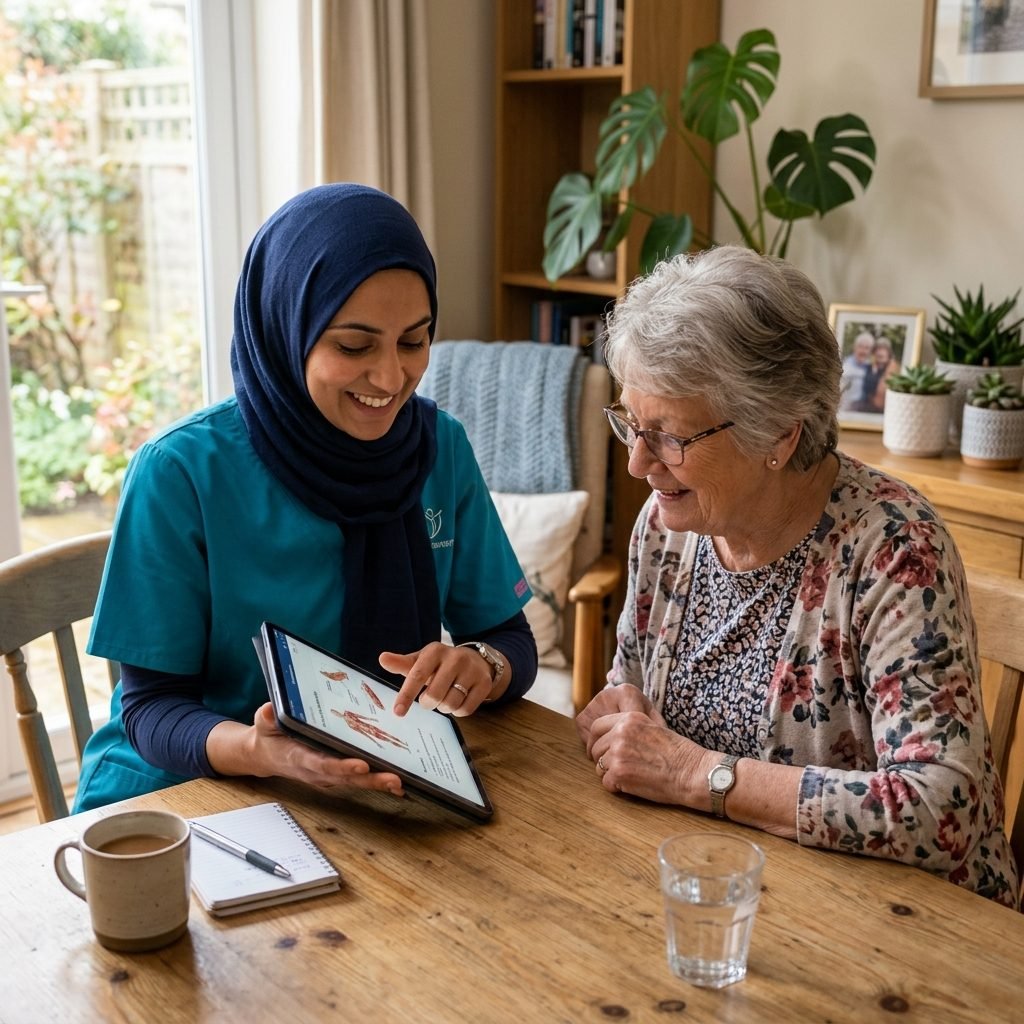
Cardiovascular and cognitive tolerance are also assessed during the initial 60-minute evaluation. Neurological recovering individuals often experience severe post-cerebral ischemia event fatigue or cognitive deficits that affect safety and exercise adherence. We monitor heart rate, blood pressure, and oxygen saturation to assess autonomic function, which can be impaired in spinal cord injuries (e.g., orthostatic hypotension). Cognitive screeners like the Montreal Cognitive Assessment (MoCA) help physical therapists modify communication, using simple visual or tactile cues to enhance motor learning. This is built to promote functional independence in Qatif, helping patients manage joint stiffness effectively.
Clinical Phase 2: Task-Specific Training and Coordination Sessions in Qatif
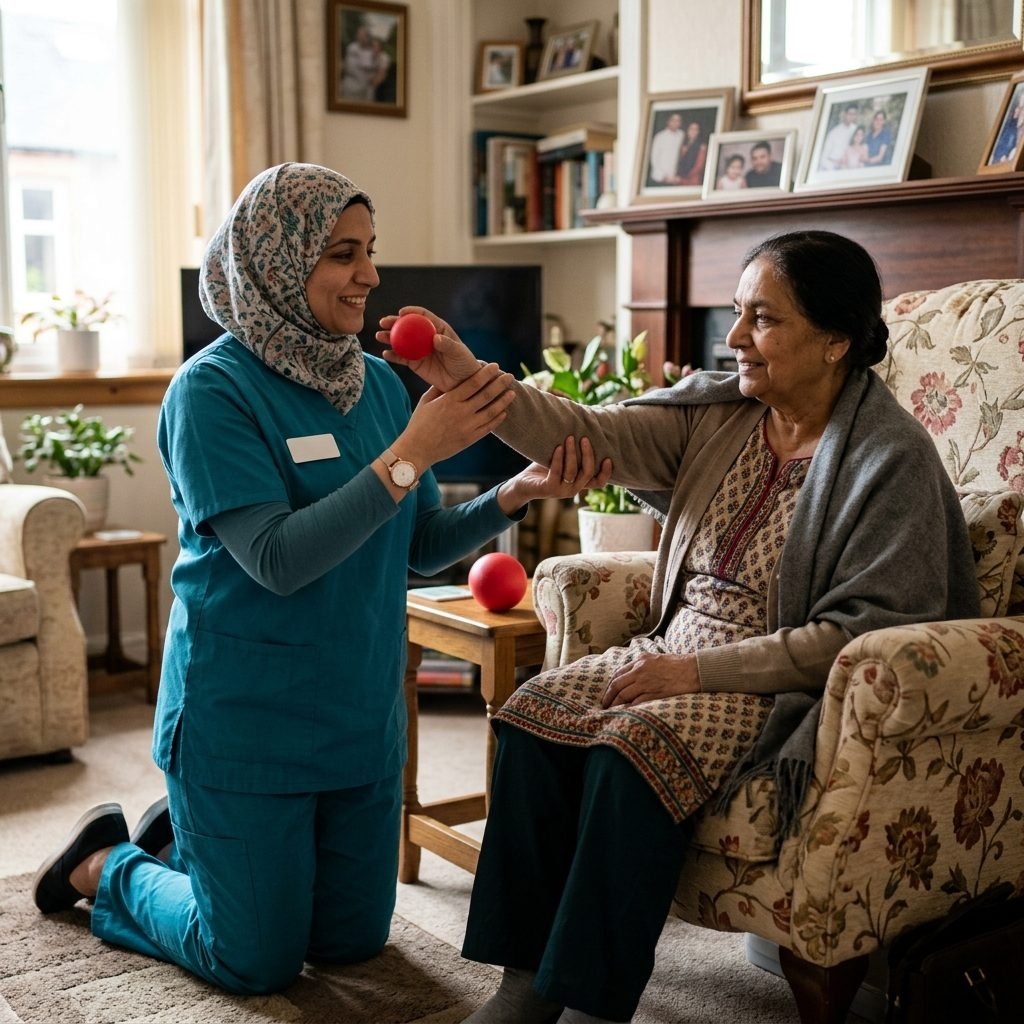
As voluntary control improves, in-home environment physical therapy transitions to task-specific training. This approach is based on motor learning principles, stating that the best way to relearn a motor skill is to practice that specific skill in a real-world environment. We design functional circuits in the home environment, breaking down activities like sitting to standing, bed mobility, and reaching for household objects into practice steps. Exercises are repeated with variable practice conditions to promote motor learning and retention. This is built to promote functional independence in Qatif, helping patients manage joint stiffness effectively.
For cerebral ischemia event survivors with hemiparesis, we may implement Constraint-Induced Movement Therapy (CIMT). CIMT involves restraining the unaffected arm in a mitt, forcing the recovering individual to use their paretic arm for functional tasks. This intensive training counteracts learned non-use and drives neuroplastic changes in the motor cortex. Additionally, mirror therapy is utilized for recovering individuals with severe motor deficits. By placing a mirror between the limbs, the recovering individual watches the reflection of their healthy limb, creating a visual illusion of movement in the paretic limb that stimulates motor pathways. This helps patients in the Qatif governorate regain their strength, enabling smooth and coordinated movement patterns.
Coordination and motor balance and coordination training are progressed in this phase. Patients practice weight-shifting motor training protocols, stepping in different directions, and navigating domestic obstacles. We incorporate motor balance and coordination activities on unstable surfaces, such as foam mats, to challenge proprioceptive pathways. Vestibular physiotherapeutic care programs motor training protocols, including gaze stabilization drills, are introduced for recovering individuals experiencing dizziness or motor balance and coordination deficits related to central vestibular dysfunction. Our physical therapists focus on maintaining high quality of movement, preventing abnormal compensations. We deliver this specialized service across all sectors of Qatif, maintaining high clinical standards for every case.
Clinical Phase 3: Advanced Gait Re-education and Community Reintegration Sessions in Qatif
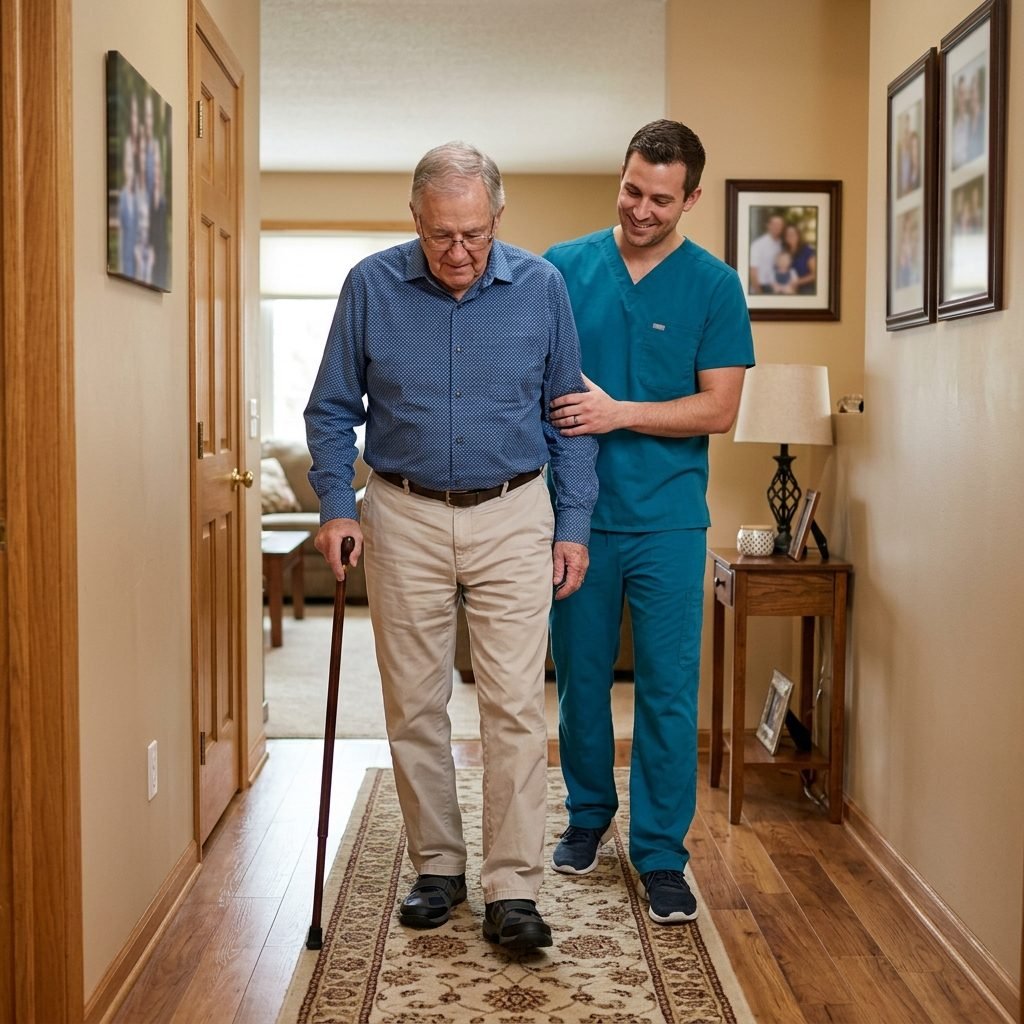
The final phase of neuro-physiotherapeutic care focuses on advanced gait re-education and restoring independence in community mobility. Gait training incorporates body-weight support techniques and assistive devices (such as quad canes, rollators, or ankle-foot orthoses) to optimize safety and mechanics. Therapists focus on correcting gait phases, including heel strike, knee stability during stance, hip extension, and foot clearance during the swing phase. We train recovering individuals to walk on varied terrains, such as carpets, tile, and outdoor slopes. This helps patients in the Qatif governorate regain their strength, enabling smooth and coordinated movement patterns.
To prepare recovering individuals for real-world environments, we introduce dual-task training. In daily life, walking is rarely done in isolation; it is combined with talking, carrying objects, or navigating crowds. Dual-task motor training protocols require recovering individuals to perform cognitive tasks (such as counting backward or naming objects) or motor tasks (like carrying a cup of water) while walking. This training improves cognitive-motor interference, reduces fall risks, and enhances the automation of gait patterns, which is critical for safe community reintegration. We deliver this specialized service across all sectors of Qatif, maintaining high clinical standards for every case.
A comprehensive home environment exercise program is provided to ensure long-term maintenance of functional gains. Therapists work with the recovering individual and caregivers to design a sustainable daily routine. This includes active stretching to manage contractures, enhance the capacity ofing motor training protocols for key muscle groups, and safe motor balance and coordination activities. By establishing this long-term framework, we ensure the recovering individual can maintain their mobility, prevent secondary complications, and enjoy a higher level of independence and quality of life in their home environment. This is crucial for restoring motor coordination in Qatif, coordinating care with local hospital consultants.
Clinical Clinical Precautions, Contraindications, and Safety Red Flags Sessions in Qatif
Safety is the primary consideration in neurological in-home environment physical therapy, as recovering individuals often present with multiple systemic deficits. Absolute contraindications to physical exertion include acute cerebral hemorrhage, unstable intracranial pressure, uncontrolled seizures, acute deep vein thrombosis (DVT), and severe orthostatic hypotension (a drop in systolic blood pressure >20 mmHg upon standing). Initiating therapy under these conditions can cause severe medical emergencies, such as cerebral ischemia event recurrence or cardiovascular collapse. We deliver this specialized service across all sectors of Qatif, maintaining high clinical standards for every case.
Autonomic Dysreflexia (AD) is a life-threatening medical emergency that can occur in recovering individuals with spinal cord injuries at or above the T6 level. AD is triggered by noxious stimuli below the level of injury, such as a blocked catheter or pressure sore, leading to uncontrolled vasoconstriction and dangerous spikes in blood pressure. Therapists monitor for symptoms like severe headache, profuse sweating above the lesion level, and bradycardia. If AD is suspected, therapy is stopped immediately, the recovering individual is placed upright, and the noxious stimulus is identified and removed. This is crucial for restoring motor coordination in Qatif, coordinating care with local hospital consultants.
Relative contraindications require careful monitoring and modification of motor training protocols. These include sensory deficits, skin breakdown, and cognitive impairment. Patients with sensory loss cannot feel tissue stress or skin friction, placing them at high risk for pressure ulcers. Therapists perform regular skin checks and educate caregivers on pressure-relief positioning. We monitor fatigue levels, especially in recovering individuals with Multiple Sclerosis, as overexertion can cause temporary exacerbations of neurological symptoms (Uthoff's phenomenon). Exercises are paced with frequent rest breaks. This supports optimal therapeutic outcomes for our Qatif clients, bringing expert hands right to their bedroom.
Clinical Long-Term Neurological Maintenance and Preventing Secondary Decline Sessions in Qatif
Managing chronic neurological conditions requires lifelong physiotherapeutic care programs to maintain function and prevent secondary complications. Conditions like Parkinson's disease and Multiple Sclerosis are progressive, and without continuous therapy, recovering individuals face gradual declines in mobility and independence. Even in stable conditions like cerebral ischemia event, lack of physical activity can lead to muscle contractures, cardiovascular deconditioning, and increased fall risks. Our team designs personalized maintenance programs focused on preserving functional abilities. This is crucial for restoring motor coordination in Qatif, coordinating care with local hospital consultants.
To combat progressive decline, the maintenance plan incorporates regular strength, flexibility, and motor balance and coordination motor training protocols. We emphasize anatomical joint range of motion motor training protocols to prevent contractures and manage spasticity, combined with moderate-intensity aerobic exercise to support cardiovascular health. Our physical therapists provide guidance on using assistive devices and orthoses to maximize independence and safety during daily activities. We also educate caregivers on assisting with transfers and home environment motor training protocols safely, reducing caregiver strain. This supports optimal therapeutic outcomes for our Qatif clients, bringing expert hands right to their bedroom.
Periodic follow-up evaluations are conducted to monitor functional status and adjust the maintenance plan as needed. If a recovering individual experiences a change in condition or a decline in mobility, we modify the home environment program or resume active therapy. By establishing this ongoing system of care, we support recovering individuals throughout their physiotherapeutic care programs journey, helping them maintain their independence, prevent hospitalizations, and achieve the highest possible quality of life at home environment. This guarantees top-tier rehabilitative care for patients in Qatif, removing the need to travel to regional clinics.
Clinical Pathophysiology of Neurological Lesions and Neuroplasticity Sessions in Qatif
Neurological injuries cause profound disruptions in motor control and sensory processing due to cell death or axonal tract interruption. In conditions like cerebral ischemia event, local ischemia leads to rapid cellular depolarization, excitotoxicity, and neuronal death in the cerebral cortex. This disrupts the corticospinal tract, which transmits voluntary motor commands. The loss of these descending signals results in muscle weakness, flaccid paralysis, or spasticity. Spasticity, a velocity-dependent increase in muscle tone, arises from abnormal spinal cord reflex excitability, leading to hyperactive stretch reflexes. This guarantees top-tier rehabilitative care for patients in Qatif, removing the need to travel to regional clinics.
In neurodegenerative disorders, the pathology is progressive. For instance, Parkinson's disease is characterized by the loss of dopaminergic neurons in the substantia nigra, leading to basal ganglia dysfunction. This causes symptoms such as rigidity, bradykinesia (slowness of movement), postural instability, and tremors. Multiple sclerosis, on the other hand, involves autoimmune destruction of the myelin sheath around axons in the central nervous system, which slows or blocks nerve conduction. This demyelination leads to muscle weakness, sensory paresthesia, cerebellar ataxia, and severe motor balance and coordination deficits. This eases the recovery journey for individuals in Qatif and Tarout, matching their schedule with precise sessions.
Neuro-physiotherapeutic care relies on neuroplasticity to rebuild motor function. Neuroplasticity occurs through mechanisms like axonal sprouting (uninjured axons growing new connections) and synaptic unmasking (activating previously silent neural pathways). Consistently practicing functional movements promotes motor learning and cortical reorganization. Practicing high-repetition, task-specific activities, such as reaching or stepping, reorganizes the motor cortex, allowing healthy brain areas to take over functions previously controlled by damaged regions. This physiological adaptation is the foundation of successful neurological recovery. Our clinical specialists in Qatif ensure safe execution of these tasks under steady monitoring of vital parameters.
Clinical Pathways & Field Dispatch in Qatif
📍 Coordinated by Ms. Fatima Al-Khaldi, PT Coordinator for the Qatif District
In the Qatif governorate, we cover Saihat, Anak, Al-Nasirah, Tarout, Al-Jish, and Safwa with flexible appointment configurations.
We maintain close lines of communication with orthopedic and neurosurgical consultants at Qatif Central Hospital to safely align strengthening and walk-training cycles.
Local Coordination & Clinical Pathways in Qatif
📍 Coordinated through the Qatif home-visit scheduling pathway
In the Qatif governorate, we cover Saihat, Anak, Al-Nasirah, Tarout, Al-Jish, and Safwa with flexible appointment configurations.
For orthopedic and neurological rehabilitation, the plan is adjusted according to the patient's reports, pain response, walking tolerance, and any limits set by the treating physician.