Clinical The Critical Importance of Early Intervention in Child Development Sessions in Qatif
Early intervention is the absolute cornerstone of a successful paediatric physiotherapeutic care programs program. During the first few years of life, a child's brain exhibits extraordinary neuroplasticity—the remarkable capacity of the nervous system to adapt, rewire, and form new neural connections in response to experiences and learning. This eases the recovery journey for individuals in Qatif and Tarout, matching their schedule with precise sessions.
Identifying and treating a motor deficit or developmental delay early significantly amplifies the child's chances of catching up to their peers rapidly and overcoming physical barriers. Crucially, early intervention also prevents the onset of secondary complications such as severe muscle contractures, permanent skeletal deformities, or the establishment of compensatory—and often harmful—movement patterns. Our clinical specialists in Qatif ensure safe execution of these tasks under steady monitoring of vital parameters.
We strongly advise parents against adopting a "wait and see" approach. Proactive clinical evaluation carries no risk but provides immense peace of mind and establishes a clear, strategic roadmap to support the child's optimal growth during their most formative years. This is built to promote functional independence in Qatif, helping patients manage joint stiffness effectively.
Clinical Play-Based Therapy: The Science of Learning Through Fun Sessions in Qatif
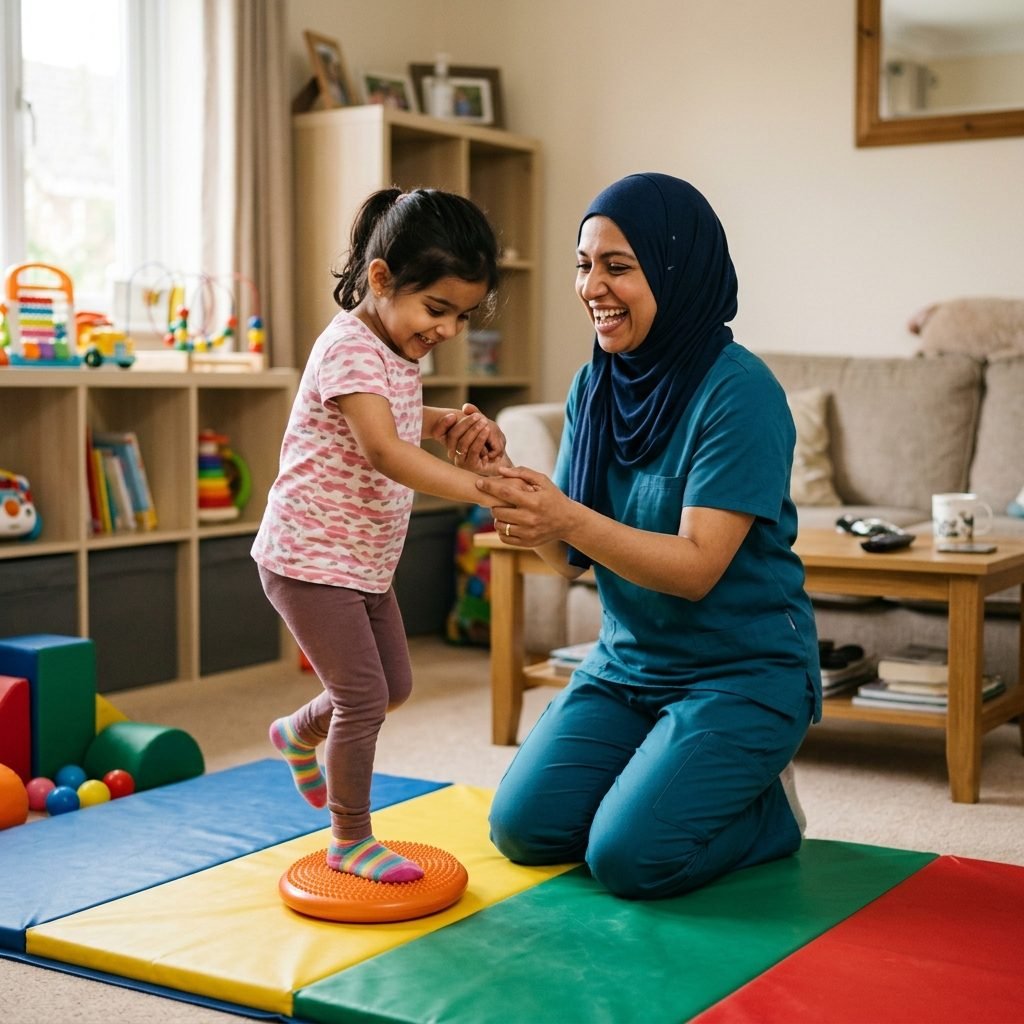
For a child, play is not just recreation; it is their primary occupation and the primary mechanism through which they explore the world, learn, and develop skills. Therefore, our physical therapists utilize "Play-Based Therapy" as a core strategy, disguising complex, repetitive clinical motor training protocols as highly engaging, interactive games. This is built to promote functional independence in Qatif, helping patients manage joint stiffness effectively.
For instance, rather than instructing a toddler to perform multiple squats to enhance the capacity of leg skeletal myofibers, a physical therapist might scatter their favorite toys across the floor and place a toy box on an elevated surface. The child naturally squats to retrieve a toy and stands to place it in the box, achieving the exact therapeutic goal with enthusiasm and zero perception of physical strain. This helps patients in the Qatif governorate regain their strength, enabling smooth and coordinated movement patterns.
This innovative approach sustains the child's attention span for longer periods, eliminates frustration and boredom, and concurrently fosters cognitive, spatial, and social skills alongside gross and fine motor enhancements. We deliver this specialized service across all sectors of Qatif, maintaining high clinical standards for every case.
Clinical Comprehensive Initial Assessment: The Foundation of Success Sessions in Qatif
Our therapeutic journey commences with a meticulous and exhaustive initial evaluation. This assessment extends far beyond current motor capabilities; we delve deep into the child's complete medical history, including prenatal and birth details, previous medical interventions, and co-existing health conditions. This helps patients in the Qatif governorate regain their strength, enabling smooth and coordinated movement patterns.
The physiophysical therapist conducts a systematic examination of muscle tone, anatomical joint range of motion, reflex integrity, motor balance and coordination, postural control, and gait or crawling patterns. We utilize globally recognized standardized pediatric assessment scales to accurately benchmark the child's developmental level against age-matched peers. We deliver this specialized service across all sectors of Qatif, maintaining high clinical standards for every case.
Based on these precise findings, we formulate a highly customized treatment plan featuring clear, measurable, and realistic short-term and long-term goals. This plan is transparently discussed with the parents to align expectations, ensuring that the clinical team and the family operate as a unified front. This is crucial for restoring motor coordination in Qatif, coordinating care with local hospital consultants.
Clinical Treating Cerebral Palsy (CP): A Multidisciplinary Motor Approach Sessions in Qatif
Cerebral Palsy is a complex neurological disorder caused by damage to the developing brain, profoundly affecting movement coordination, muscle tone, and posture. We provide specialized, intensive physiotherapeutic care programs programs designed to address all subtypes of CP, including spastic, dyskinetic, and ataxic presentations. We deliver this specialized service across all sectors of Qatif, maintaining high clinical standards for every case.
Our targeted treatment plans focus heavily on managing spasticity (abnormal muscle tightness) through precise stretching protocols and postural management. Concurrently, we prioritize enhance the capacity ofing the weaker antagonist skeletal myofibers to ensure better anatomical joint alignment and functional motor balance and coordination. This is crucial for restoring motor coordination in Qatif, coordinating care with local hospital consultants.
A major emphasis is placed on training the child to execute foundational functional movements—such as transitioning from lying to sitting, crawling, and assisted walking. We also coordinate the use of appropriate orthotics, splints, and adaptive equipment to maintain anatomical joint integrity, prevent orthopedic deformities, and drastically elevate the child's quality of life. This supports optimal therapeutic outcomes for our Qatif clients, bringing expert hands right to their bedroom.
Clinical Managing Developmental Delays: Catching Up to Milestones Sessions in Qatif
Motor developmental delay occurs when a child fails to achieve expected physical milestones (e.g., independent head control, rolling over, sitting unsupported, crawling, or walking) within the typical age range. These delays can be idiopathic or stem from premature birth or underlying medical conditions. This is crucial for restoring motor coordination in Qatif, coordinating care with local hospital consultants.
Physiotherapy intervention stimulates the child's neuromotor system through intensive, targeted motor training protocols aimed at building profound core strength and enhancing equilibrium. We employ neuromuscular facilitation techniques to activate correct neural pathways and muscle firing sequences. This supports optimal therapeutic outcomes for our Qatif clients, bringing expert hands right to their bedroom.
Once a child masters a specific motor skill, we systematically and progressively introduce challenges that guide them toward the next milestone in the natural developmental sequence. This structured progression ensures a solid biomechanical foundation, safeguarding the child against future motor regressions or awkward movement compensations. This guarantees top-tier rehabilitative care for patients in Qatif, removing the need to travel to regional clinics.
Clinical Torticollis and Plagiocephaly: Early Correction and Positioning Sessions in Qatif
Congenital Muscular Torticollis (wryneck) is a prevalent condition in infants characterized by unilateral shortening and tightness of the sternocleidomastoid muscle in the neck. This causes the infant's head to tilt consistently to one side and rotate to the opposite side, frequently leading to Plagiocephaly (asymmetrical flattening of the skull). This guarantees top-tier rehabilitative care for patients in Qatif, removing the need to travel to regional clinics.
Physiotherapy plays a highly effective, curative role in managing this condition through gentle, sustained stretching of the tight musculature and targeted enhance the capacity ofing of the weaker, opposing neck skeletal myofibers. Parents are meticulously trained in proper handling, carrying, and visual tracking techniques to encourage the baby to turn their head actively toward the restricted side. This eases the recovery journey for individuals in Qatif and Tarout, matching their schedule with precise sessions.
The comprehensive treatment protocol also includes vital postural education for sleeping and sitting, along with the implementation of robust, engaging "Tummy Time" routines. These strategies are essential for correcting the neck tilt, relieving localized pressure on the skull, and allowing the head shape to round out naturally. Our clinical specialists in Qatif ensure safe execution of these tasks under steady monitoring of vital parameters.
Clinical Spina Bifida and Neural Tube Defects: Enhancing Independence Sessions in Qatif
Spina Bifida is a congenital neural tube defect affecting the development of the spinal cord, resulting in varying degrees of muscular paralysis, weakness in the lower extremities, and significant sensory deficits depending on the lesion level. This eases the recovery journey for individuals in Qatif and Tarout, matching their schedule with precise sessions.
Our home environment-based physiotherapeutic care program is entirely focused on maximizing the child's functional independence within the parameters of their physical capabilities. We concentrate on aggressively enhance the capacity ofing the intact musculature, particularly the core, trunk, and upper extremities, to functionally compensate for lower limb weakness. Our clinical specialists in Qatif ensure safe execution of these tasks under steady monitoring of vital parameters.
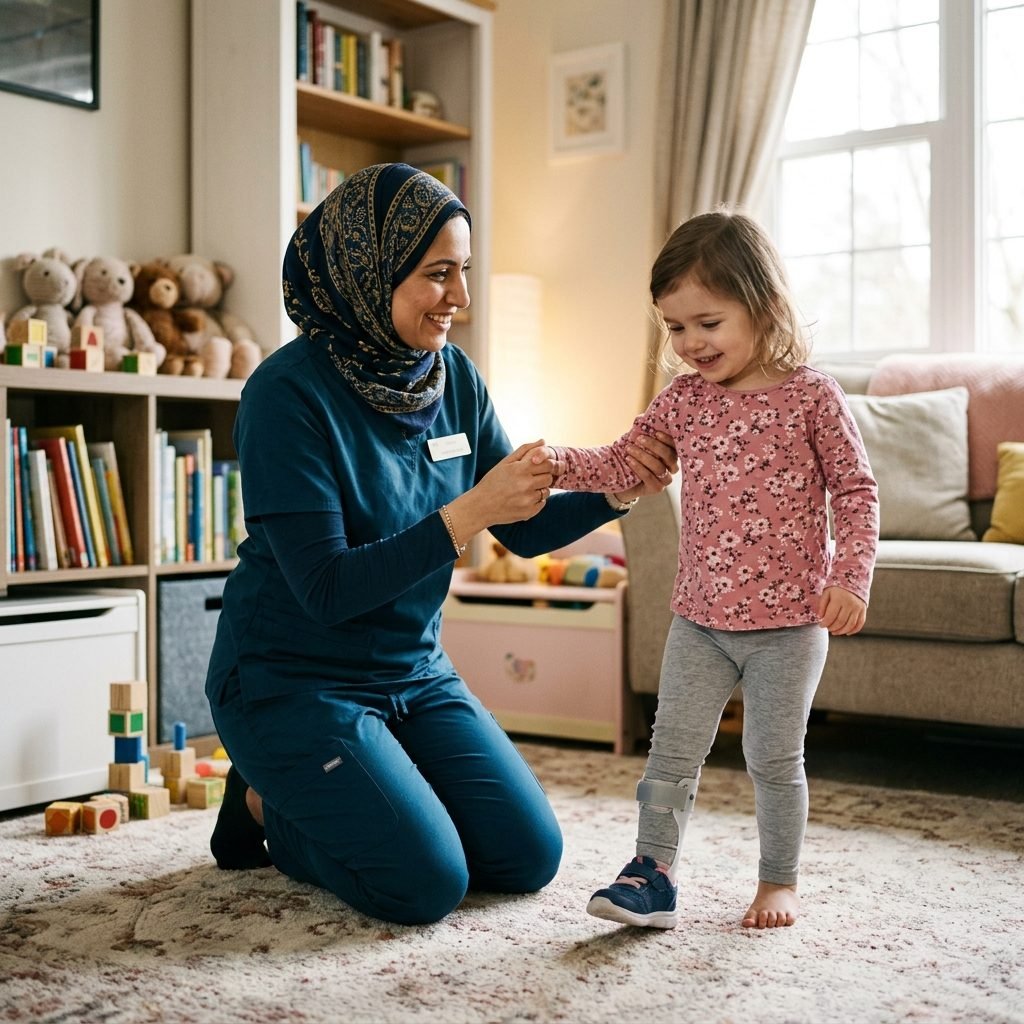
Furthermore, we extensively train both the child and the family in the optimal use of assistive devices such as Ankle-Foot Orthoses (AFOs), specialized walkers, or pediatric wheelchairs. Critical education is also provided on safe transfer mechanics and skin integrity management to prevent pressure ulcers in areas lacking sensation. This is built to promote functional independence in Qatif, helping patients manage joint stiffness effectively.
Clinical Neuromuscular Disorders and Muscular Dystrophy Management Sessions in Qatif
Conditions like Muscular Dystrophy (e.g., Duchenne or Becker) are progressive genetic disorders characterized by gradual muscle fiber degeneration and escalating weakness over time. Managing these conditions requires a highly nuanced, delicate therapeutic approach designed to preserve muscle function as long as possible without inducing exhaustion or accelerating damage. Our clinical specialists in Qatif ensure safe execution of these tasks under steady monitoring of vital parameters.
Therapy sessions emphasize continuous, gentle, passive and active-assisted stretching to prevent the formation of debilitating muscle and tendon contractures, which can lead to severe anatomical joint deformities. We also introduce light, functional enhance the capacity ofing routines that can often be adapted for aquatic therapy if accessible. This is built to promote functional independence in Qatif, helping patients manage joint stiffness effectively.
Providing unwavering psychological support and ongoing education to the family is an integral component of the care plan. We assist families in adapting to the progressive nature of the disease, recommending essential mobility aids and adaptive technologies to sustain the child's mobility and delay the onset of total physical dependence. This helps patients in the Qatif governorate regain their strength, enabling smooth and coordinated movement patterns.
Clinical Post-Surgical Orthopedic Rehabilitation for Children Sessions in Qatif
Children with chronic neuromotor conditions or congenital skeletal deformities frequently undergo complex orthopedic surgeries, such as tendon lengthenings, osteotomies, or spinal fusions. Intensive post-operative physiotherapeutic care is absolutely vital to ensure the surgical outcomes are maximized and complications are minimized. This is built to promote functional independence in Qatif, helping patients manage joint stiffness effectively.
Home-based physiotherapeutic care programs commences as soon as surgical clearance is granted. The initial phases focus strictly on acute pain management, dramatic reduction of post-surgical edema, and gentle mobilization of adjacent anatomical joints to prevent stiffness and immobility complications. This helps patients in the Qatif governorate regain their strength, enabling smooth and coordinated movement patterns.
As the healing process progresses, the focus shifts aggressively toward restoring full, pain-free range of motion in the operated anatomical joint, rebuilding atrophied muscle strength, and retraining the child in safe weight-bearing, gait mechanics, and the gradual, safe resumption of their daily activities and schooling. We deliver this specialized service across all sectors of Qatif, maintaining high clinical standards for every case.
Clinical Sensory Integration and Motor Planning in Autism Spectrum Disorder Sessions in Qatif
Many children diagnosed with Autism Spectrum Disorder (ASD) experience profound difficulties with motor planning (dyspraxia), poor muscular coordination, and challenges in processing and integrating sensory inputs, which severely impacts their ability to interact smoothly with their physical environment. This helps patients in the Qatif governorate regain their strength, enabling smooth and coordinated movement patterns.
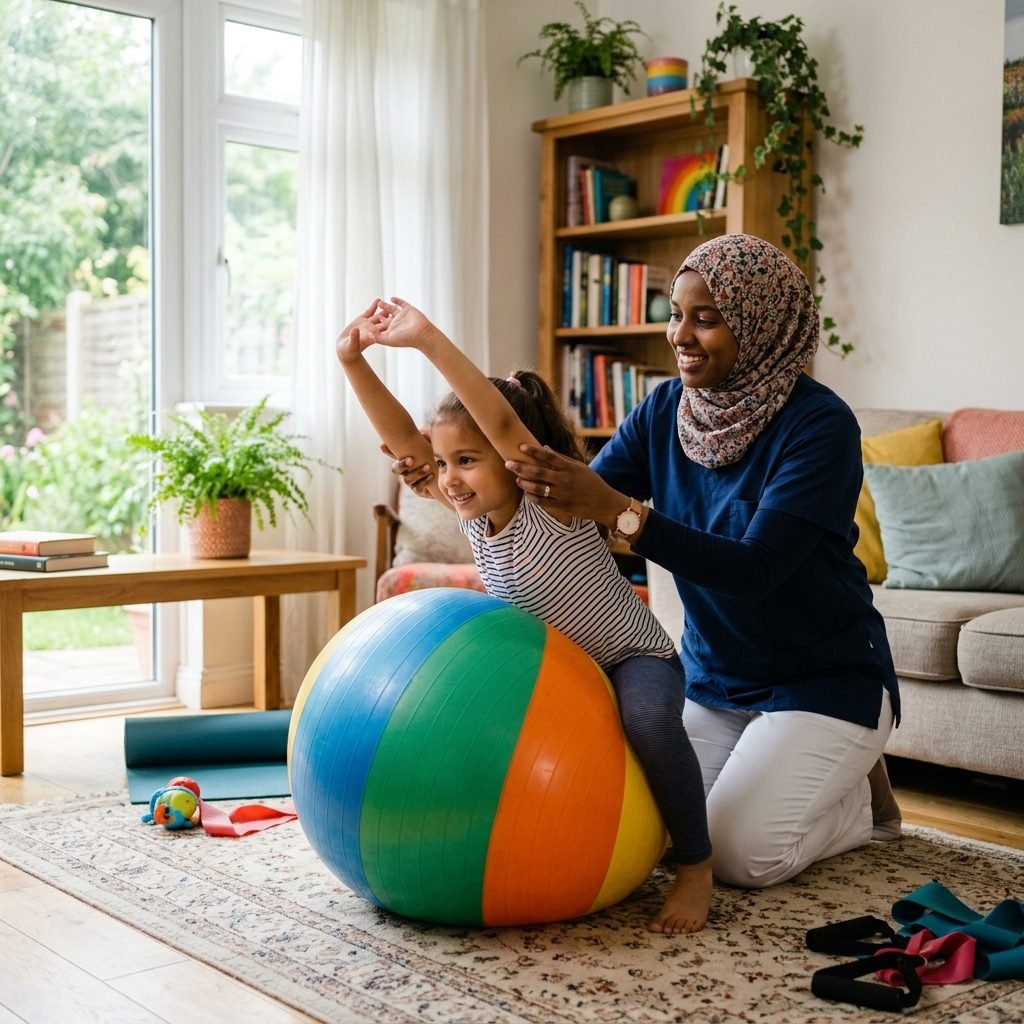
Physiotherapy for these children incorporates structured, goal-oriented motor activities specifically designed to foster sensory integration and drastically improve proprioception (the body's awareness of its position in space). Therapists utilize tools like large therapy balls, motor balance and coordination boards, and sensory swings to stimulate the vestibular system and enhance dynamic motor balance and coordination. We deliver this specialized service across all sectors of Qatif, maintaining high clinical standards for every case.
By refining gross motor skills and spatial awareness, we empower the child to gain confidence in their own body and physical capabilities. This newly found physical confidence frequently translates into remarkable improvements in social interaction, a reduction in repetitive stereotypic behaviors, and increased participation in inclusive school and sports environments. This is crucial for restoring motor coordination in Qatif, coordinating care with local hospital consultants.
Clinical The Vital Role of Parental Involvement and Family-Centered Care Sessions in Qatif
In the realm of paediatric physiotherapeutic care, the family is undeniably the most critical partner in ensuring therapeutic success. Two or three scheduled therapy sessions a week cannot enact monumental change unless the clinical principles are consistently integrated into the child's daily life throughout the rest of the week. We deliver this specialized service across all sectors of Qatif, maintaining high clinical standards for every case.
Therefore, during every single home environment visit, we dedicate specific time to actively coach parents and primary caregivers. We teach precise handling techniques, optimal sleeping and seating postures, and demonstrate how to seamlessly weave simple, effective therapeutic motor training protocols into daily routines like bathing, dressing, or playtime. This is crucial for restoring motor coordination in Qatif, coordinating care with local hospital consultants.
We offer robust psychological encouragement to parents, addressing all their concerns with empathy and clarity. We provide comprehensive educational materials, including customized written or video exercise programs, empowering families to confidently and professionally assist their child's development during the times when the physical therapist is not present. This supports optimal therapeutic outcomes for our Qatif clients, bringing expert hands right to their bedroom.
Clinical Neurodevelopmental Treatment (NDT) Techniques in Practice Sessions in Qatif
The Bobath Concept, or Neurodevelopmental Treatment (NDT), is one of the most globally recognized, evidence-based, and highly effective therapeutic approaches for treating Cerebral Palsy and other pediatric neuromotor disorders. This is crucial for restoring motor coordination in Qatif, coordinating care with local hospital consultants.
Using NDT, the physical therapist utilizes highly specific, hands-on physical guidance (known as 'handling') to inhibit abnormal, spastic, or compensatory movement patterns while actively facilitating normal, biomechanically correct movement sequences. This provides the child's central nervous system with the correct sensorimotor experience, allowing the brain to memorize and build upon appropriate responses. This supports optimal therapeutic outcomes for our Qatif clients, bringing expert hands right to their bedroom.
Applying these advanced techniques within the home environment environment is incredibly advantageous. We train the child on real, functional skills they need daily—such as the biomechanically correct way to get out of their own bed or how to maintain postural stability in their highchair—making the therapy immediately relevant, functional, and deeply impactful. This guarantees top-tier rehabilitative care for patients in Qatif, removing the need to travel to regional clinics.
Clinical Utilizing Assistive Devices and Adaptive Equipment at Home Sessions in Qatif
Many children with motor impairments require supplemental structural support to enable them to move, stand, or sit with proper anatomical alignment. The physiophysical therapist rigorously evaluates the child's biomechanical need for various assistive devices, such as custom orthotics (AFOs, SMOs), day or night resting splints, specialized seating systems, or standing frames. This supports optimal therapeutic outcomes for our Qatif clients, bringing expert hands right to their bedroom.
Our role extends far beyond simply recommending equipment. We comprehensively train the child to use the device efficiently, meticulously adjust the settings to fit the child's unique home environment environment and body dimensions, and vigilantly ensure the equipment does not cause adverse pressure points, skin breakdown, or anatomical joint stress. This guarantees top-tier rehabilitative care for patients in Qatif, removing the need to travel to regional clinics.
Furthermore, we continuously monitor the child's growth trajectory and developmental progress. This ensures that timely modifications or upgrades to the equipment are made, accommodating increases in height or improvements in motor capability, guaranteeing the child extracts maximum benefit from their adaptive aids at every stage. This eases the recovery journey for individuals in Qatif and Tarout, matching their schedule with precise sessions.
Clinical Long-Term Goal Setting and Transitioning Through Growth Stages Sessions in Qatif
The physiotherapeutic care programs journey for children with chronic motor challenges is a marathon that demands immense patience, strategic flexibility, and constant adaptation. A child's physical, emotional, and social needs evolve dramatically as they transition from infancy through early childhood, into the school-aged years, and eventually adolescence. This guarantees top-tier rehabilitative care for patients in Qatif, removing the need to travel to regional clinics.
To address this, we conduct comprehensive reassessments every few months to recalibrate therapeutic goals. We must account for new challenges introduced by physical growth spurts, changes in body mass index, and the demand for more complex life skills, such as navigating a busy school playground or engaging in advanced social interactions. This eases the recovery journey for individuals in Qatif and Tarout, matching their schedule with precise sessions.
This ongoing, dynamic evaluation process ensures that our treatment plan remains proactive rather than merely reactive. We physically and functionally prepare the child for the next stage of life before they reach it, providing them with the strongest possible foundation to lead an independent, productive, and deeply fulfilling life. Our clinical specialists in Qatif ensure safe execution of these tasks under steady monitoring of vital parameters.
Clinical Respiratory Physiotherapy for Children with Complex Needs Sessions in Qatif
Children afflicted with severe generalized muscle weakness or advanced neurological diseases often suffer from compromised respiratory function. They may lack the muscular strength to cough effectively and clear pulmonary secretions, placing them at a significantly elevated risk for recurrent, severe respiratory infections and pneumonia. This eases the recovery journey for individuals in Qatif and Tarout, matching their schedule with precise sessions.
We provide specialized pediatric Chest Physiotherapy (CPT) services. This includes manual techniques such as percussions, vibrations, and postural drainage to assist in loosening, mobilizing, and clearing excess mucus from the lungs. We also implement breathing control motor training protocols and thoracic expansion techniques. Our clinical specialists in Qatif ensure safe execution of these tasks under steady monitoring of vital parameters.
A critical component of this care is meticulously training parents in daily respiratory hygiene protocols. We teach them how to identify respiratory distress early and how to position the child optimally during sleep to facilitate unobstructed breathing. This proactive respiratory management is vital for maintaining the child's pulmonary health and preventing recurrent hospital admissions. This is built to promote functional independence in Qatif, helping patients manage joint stiffness effectively.
Clinical Understanding Paediatric Physiotherapy: A Comprehensive Overview Sessions in Qatif
Paediatric physiotherapeutic care is a dedicated branch of healthcare focused entirely on the assessment, diagnosis, treatment, and long-term management of infants, children, and adolescents experiencing congenital, developmental, neuromuscular, skeletal, or acquired conditions that affect mobility. This guarantees top-tier rehabilitative care for patients in Qatif, removing the need to travel to regional clinics.
The primary objective is to optimize physical independence, facilitate active participation in daily routines, enhance overall muscle strength, and promote gross motor development appropriate to the child's age. Our clinicians serve as experts in movement analysis and developmental trajectories. This eases the recovery journey for individuals in Qatif and Tarout, matching their schedule with precise sessions.
Our approach merges advanced medical science with the nuanced art of childcare. Recognizing that young children often cannot articulate pain or pinpoint their physical difficulties, our physical therapists rely on sharp observational skills, standardized pediatric assessment tools, and an intuitive understanding of children's body language to deliver the highest standard of tailored care. Our clinical specialists in Qatif ensure safe execution of these tasks under steady monitoring of vital parameters.
Clinical Pathways & Field Dispatch in Qatif
📍 Coordinated by Ms. Fatima Al-Khaldi, PT Coordinator for the Qatif District
In the Qatif governorate, we cover Saihat, Anak, Al-Nasirah, Tarout, Al-Jish, and Safwa with flexible appointment configurations.
We maintain close lines of communication with orthopedic and neurosurgical consultants at Qatif Central Hospital to safely align strengthening and walk-training cycles.
Local Coordination & Clinical Pathways in Qatif
📍 Coordinated through the Qatif home-visit scheduling pathway
In the Qatif governorate, we cover Saihat, Anak, Al-Nasirah, Tarout, Al-Jish, and Safwa with flexible appointment configurations.
For orthopedic and neurological rehabilitation, the plan is adjusted according to the patient's reports, pain response, walking tolerance, and any limits set by the treating physician.