Clinical The Critical Role of Physiotherapy (Can it slow progression?) Sessions in Qatif
While pharmacological treatments (like Levodopa) are essential for replenishing dopamine and managing symptoms, medications alone are insufficient to maintain optimal motor function and prevent long-term complications. This is where the critical role of physiotherapeutic care begins. Cutting-edge neuroscience research strongly suggests that intensive, specific types of exercise are not merely symptom management; they may actually be 'neuroprotective.' This means that regular, high-effort physical activity could potentially slow the continuous degeneration of dopamine-producing cells and delay disease progression. In physiotherapeutic care, we advocate strongly for 'pre-habilitation'—starting therapy immediately upon diagnosis, rather than waiting for severe disability to set in. Physiophysical therapists design rigorous programs that challenge recovering individuals both physically and cognitively, harnessing the brain's inherent neuroplasticity to forge new, healthy neural pathways that bypass the damaged areas, thereby preserving independence and quality of life for as long as possible. This eases the recovery journey for individuals in Qatif and Tarout, matching their schedule with precise sessions.
Clinical Combating Muscle Rigidity and Restoring Flexibility Sessions in Qatif
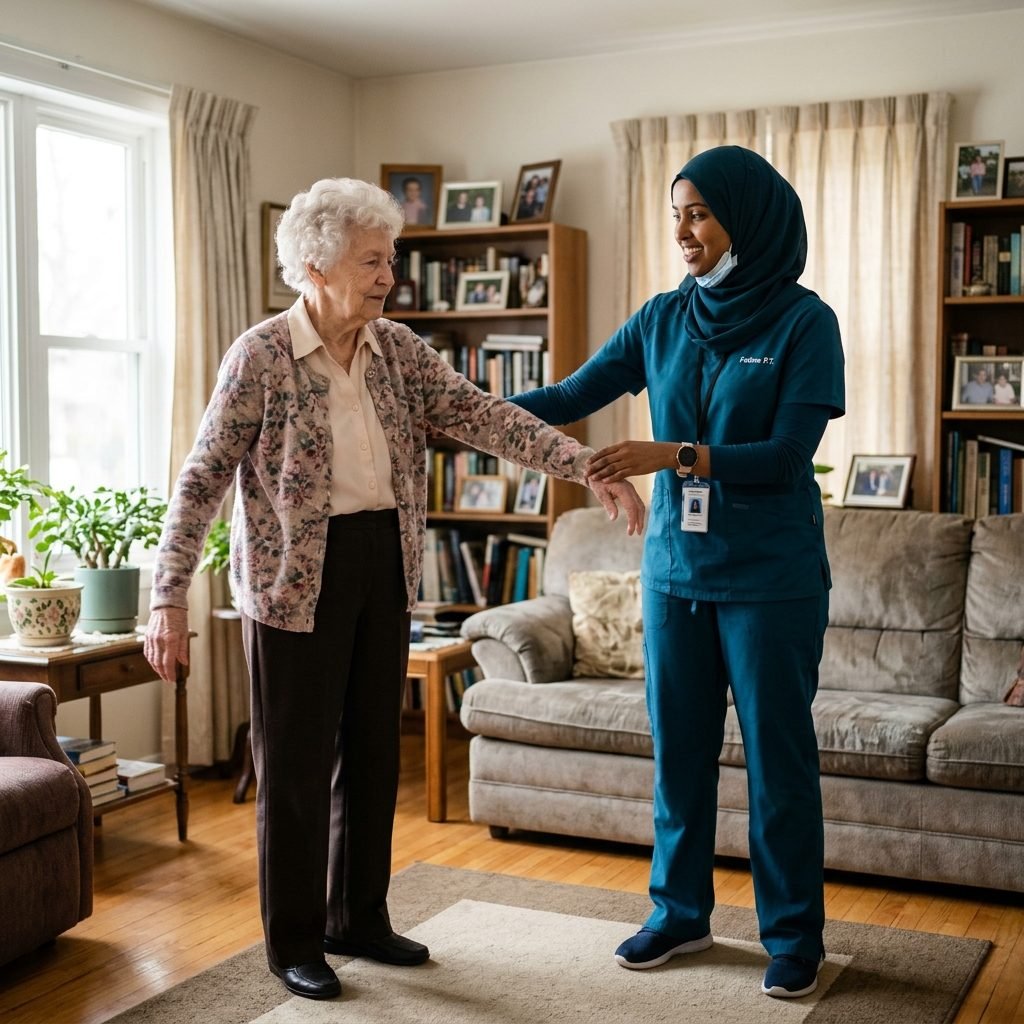
Muscle rigidity in Parkinson's Disease causes skeletal myofibers to remain constantly tense and highly resistant to movement, even during periods of rest. This stiffness is not only painful and fatiguing but drastically limits the range of motion in anatomical joints, progressively pulling the body into the characteristic stooped, flexed posture associated with PD (rounded shoulders and a bent spine). Physiotherapy implements comprehensive, daily stretching programs specifically targeting the muscle groups most prone to rigidity, particularly the chest, anterior shoulders, hip flexors, and calves. Beyond static stretching, we utilize techniques like 'Rhythmic Rotation'—gentle, rhythmic twisting movements of the trunk and limbs—to actively inhibit muscle tone and loosen a rigid core. This makes crucial movements like twisting, turning, and rolling over in bed significantly easier. We train recovering individuals to integrate these specific stretches into their morning routine to combat the peak stiffness often experienced upon waking. This is built to promote functional independence in Qatif, helping patients manage joint stiffness effectively.
Clinical Managing Postural Instability and Fall Prevention Sessions in Qatif
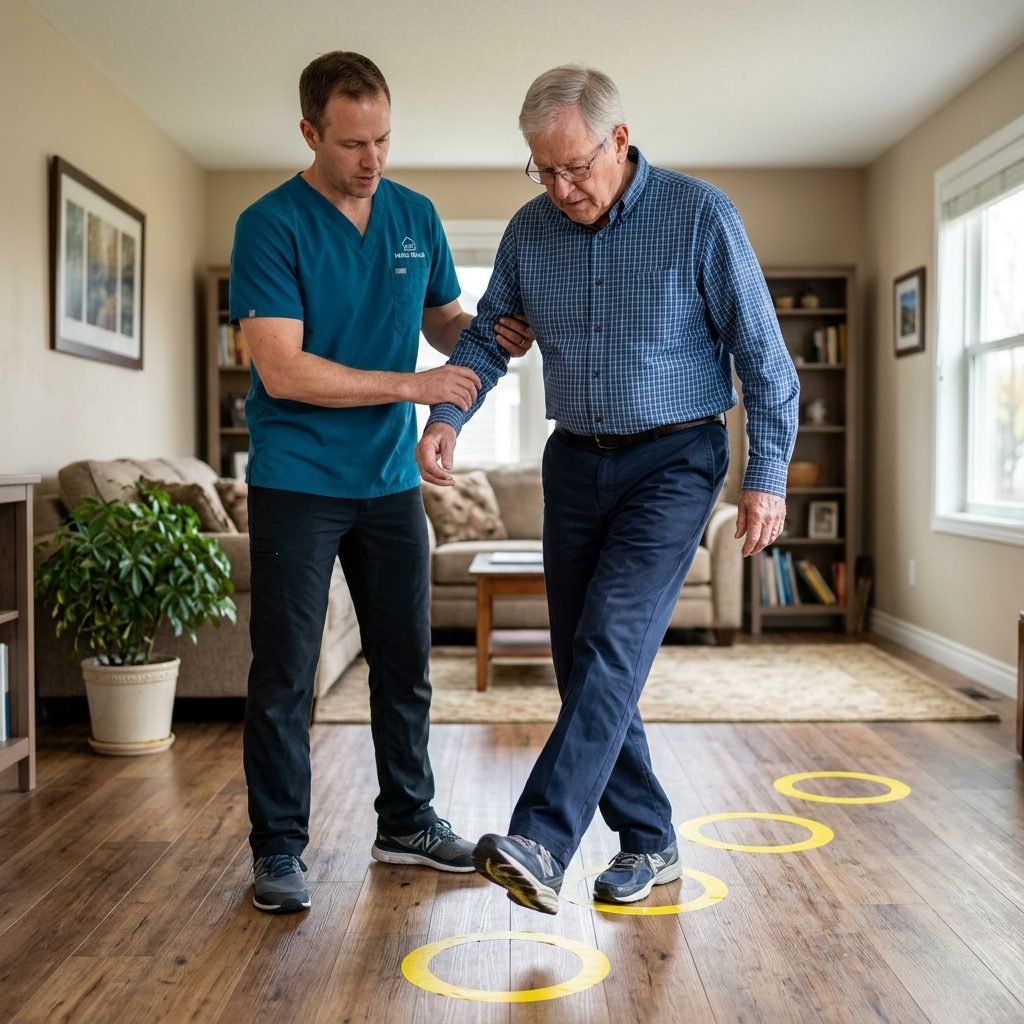
Postural instability, or impaired motor balance and coordination, is the leading cause of recurrent falls and severe injuries in the Parkinson's population. This occurs because the automatic neurological reflexes that keep us upright when we trip become blunted or entirely absent. Our comprehensive accidental slip prevention program focuses heavily on dynamic motor balance and coordination training (balancing while moving) and reactive motor balance and coordination. In a safe, controlled clinical environment—often utilizing safety harnesses—we intentionally expose recovering individuals to minor motor balance and coordination perturbations to retrain their bodies to react quickly and appropriately to regain equilibrium. We concurrently focus on enhance the capacity ofing the core and lower extremities to provide a solid base of support. Furthermore, we conduct detailed home environment environment assessments to identify and mitigate daily fall risks, providing actionable recommendations such as removing throw rugs, enhancing lighting, and installing grab bars in high-risk areas like bathrooms. This helps patients in the Qatif governorate regain their strength, enabling smooth and coordinated movement patterns.
Clinical Gait Retraining and Rhythmic Auditory Stimulation (RAS) Sessions in Qatif
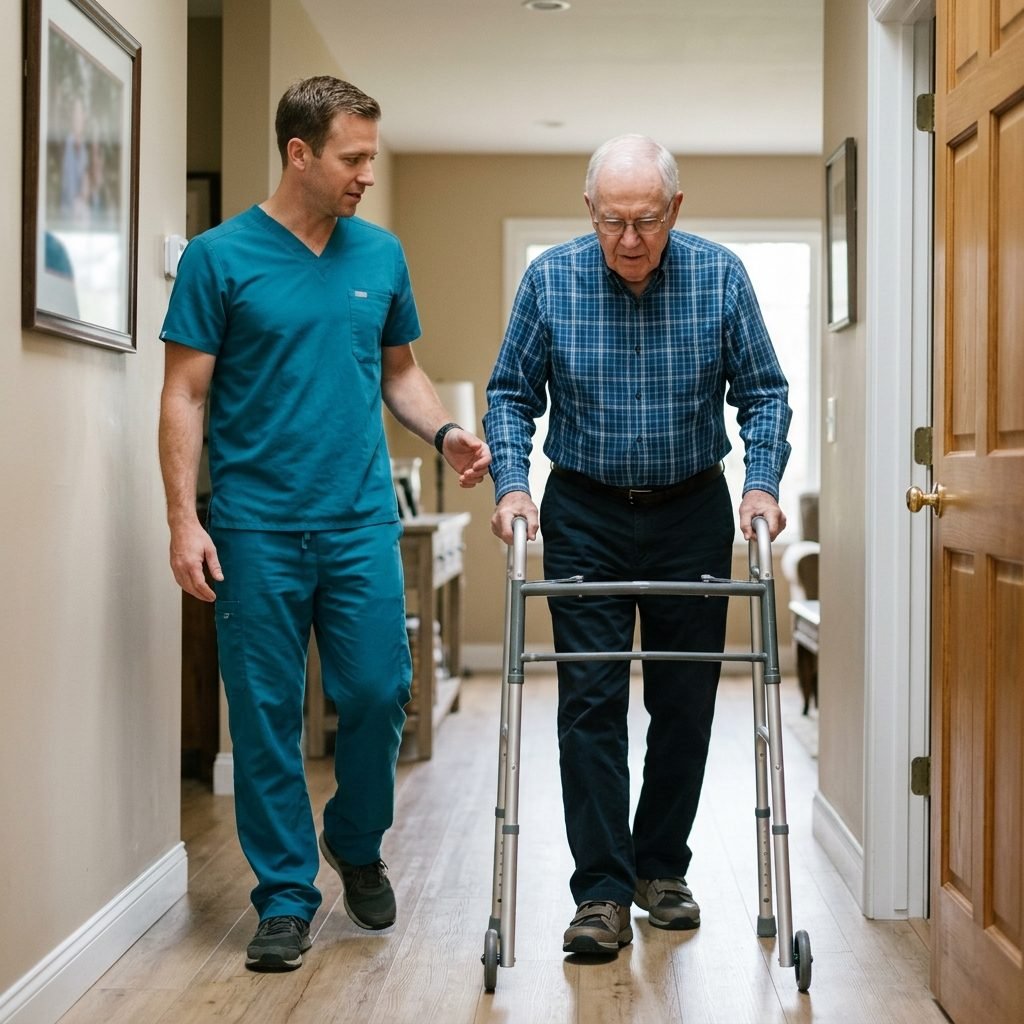
Gait mechanics change drastically as Parkinson's progresses. Steps become notoriously short, rapid, and shuffling (festination), arm swing diminishes or disappears, and the posture stoops forward, making it appear as if the recovering individual is constantly hurrying to catch up with their own center of gravity. To effectively reprogram the brain's walking pattern, we utilize a highly evidenced-based technique called Rhythmic Auditory Stimulation (RAS). RAS relies on a strong, steady external beat, such as a metronome or music with a prominent bassline. This external rhythm acts as a neurological 'pacemaker,' bypassing the damaged basal ganglia pathways that normally regulate the rhythm of walking. When the recovering individual focuses consciously on stepping exactly in time with the beat, walking speed naturally increases, stride length normalizes, and arm swing often returns. We train recovering individuals to use portable RAS devices or smartphone apps to maintain safe, efficient walking in their community. We deliver this specialized service across all sectors of Qatif, maintaining high clinical standards for every case.
Clinical Overcoming 'Freezing of Gait' (FOG) with Cueing Strategies Sessions in Qatif
Freezing of Gait (FOG) is a terrifying and dangerous symptom described as a sudden, temporary sensation that the feet are 'glued to the floor.' It typically occurs when initiating walking, turning in tight spaces, or approaching doorways. The recovering individual intends to step but cannot, frequently leading to forward falls. Dopamine medication does not always resolve FOG. Physiotherapy provides practical solutions through 'Cueing Strategies.' We teach recovering individuals to use external cues to trigger movement. Visual cues might involve stepping over a laser line projected on the floor or imagining an obstacle. Auditory cues involve rhythmic counting out loud ('One, two, step!'). Somatosensory cues might involve tapping the leg before moving. These external stimuli forcefully activate the frontal cortex of the brain, breaking the 'freeze' circuit and allowing the recovering individual to successfully initiate and complete the movement safely. This is crucial for restoring motor coordination in Qatif, coordinating care with local hospital consultants.
Clinical Cognitive-Motor Training: Mastering Dual-Tasking Sessions in Qatif
Healthy individuals easily walk while holding a conversation or carrying a cup of coffee. However, in Parkinson's, the ability to perform 'dual-tasks'—simultaneously executing a motor task and a cognitive task—is severely impaired. Because walking now requires conscious brain power rather than being automatic, adding any cognitive distraction can cause a sudden slowing of gait, freezing, or a loss of motor balance and coordination. Modern PD physiotherapeutic care programs emphasizes intensive, progressive cognitive-motor dual-task training. Therapists begin with simple combinations, such as walking while tossing and catching a light ball. This progresses to highly challenging tasks, like walking while counting backward by sevens or naming animals starting with a specific letter. This rigorous training forces the brain to improve its processing efficiency, significantly enhancing the recovering individual's ability to navigate complex, distracting, real-world environments without compromising their safety or mobility. This guarantees top-tier rehabilitative care for patients in Qatif, removing the need to travel to regional clinics.
Clinical Respiratory Function and Integration with Speech Therapy Sessions in Qatif
The pervasive muscle rigidity and chronic flexed posture in Parkinson's Disease severely restrict the expansion of the rib cage. This results in shallow breathing, decreased lung capacity, and reduced physical endurance. Critically, this respiratory restriction also diminishes the volume and power of the voice, leading to the soft, breathy, and rapid speech (hypophonia) common in PD. Physiotherapy aggressively addresses this by incorporating deep diaphragmatic breathing motor training protocols, forceful expiration drills, and thoracic mobility stretches to open up the chest wall and enhance the capacity of postural skeletal myofibers. While improving respiratory fitness is a goal in itself, these motor training protocols provide the essential physical foundation required by Speech-Language Pathologists (who often use programs like LSVT LOUD) to help the recovering individual generate the breath support necessary for louder, clearer, and more confident communication. This eases the recovery journey for individuals in Qatif and Tarout, matching their schedule with precise sessions.
Clinical Boxing, Tango, and High-Intensity Aerobic Training Sessions in Qatif
The paradigm of exercise for Parkinson's has shifted dramatically. Current research strongly advocates for High-Intensity Exercise for recovering individuals who are medically cleared. Specialized programs like 'Rock Steady Boxing' and adapted Tango dancing have proven exceptionally beneficial. Non-contact boxing requires rapid, powerful, coordinated movements and quick reaction times, challenging the brain to overcome bradykinesia and rigidity simultaneously. Similarly, Tango dancing requires memorizing complex step sequences (a cognitive challenge), frequent changes of direction (a motor balance and coordination challenge), and moving to a rhythmic beat (auditory cueing). These highly engaging, socially stimulating activities elevate the heart rate, promote cardiovascular health, and are believed to stimulate the release of neurotrophic factors (brain 'fertilizer') that support neuronal health, making them a powerful tool against PD progression. Our clinical specialists in Qatif ensure safe execution of these tasks under steady monitoring of vital parameters.
Clinical Establishing a Lifelong Habit (The Maintenance Phase) Sessions in Qatif
Parkinson's Disease is a lifelong journey, and therefore, exercise must become an indispensable, daily habit, as vital as taking medication. The profound benefits gained from physiotherapeutic care will quickly diminish if the recovering individual becomes sedentary (the 'use it or lose it' principle). Our ultimate goal is to transition the recovering individual from the clinical setting to independent self-management. We design a comprehensive, realistic Home Exercise Program (HEP) that incorporates amplitude training, stretching, motor balance and coordination work, and aerobic conditioning. We tailor this to the recovering individual's personal interests (like cycling, swimming, or brisk walking) to ensure long-term adherence. Family education is crucial for ongoing support and safety monitoring. Following an intensive bout of therapy, we transition to a 'maintenance phase,' scheduling periodic follow-up assessments (every 3 to 6 months) to monitor disease progression, tweak the exercise program, and address any newly emerging mobility issues. This is built to promote functional independence in Qatif, helping patients manage joint stiffness effectively.
Clinical Understanding Parkinson's Disease and the Motor System Sessions in Qatif
Parkinson's Disease (PD) is a progressive, neurodegenerative disorder that primarily affects the body's motor system. It is caused by the gradual death of neurons in a specific region of the brain called the substantia nigra. These vital cells are responsible for producing dopamine, a crucial neurotransmitter that sends signals to other parts of the brain to coordinate smooth, motor balance and coordinationd muscle movement. As dopamine levels plummet, the four hallmark motor symptoms of PD emerge: resting tremor (shaking, often in the hands), rigidity (severe muscle stiffness), bradykinesia (slowness of movement), and postural instability (impaired motor balance and coordination and coordination). The impact extends beyond these core symptoms, affecting facial expressions, swallowing, speech volume, and the fundamental mechanics of walking. Physiotherapy intervenes strategically by targeting these specific motor deficits. We use highly specialized, repetitive movements as 'medicine' to compensate for the dopamine shortage and actively retrain the brain to control the body more effectively. This guarantees top-tier rehabilitative care for patients in Qatif, removing the need to travel to regional clinics.
Clinical Pathways & Field Dispatch in Qatif
📍 Coordinated by Ms. Fatima Al-Khaldi, PT Coordinator for the Qatif District
In the Qatif governorate, we cover Saihat, Anak, Al-Nasirah, Tarout, Al-Jish, and Safwa with flexible appointment configurations.
We maintain close lines of communication with orthopedic and neurosurgical consultants at Qatif Central Hospital to safely align strengthening and walk-training cycles.
Local Coordination & Clinical Pathways in Qatif
📍 Coordinated through the Qatif home-visit scheduling pathway
In the Qatif governorate, we cover Saihat, Anak, Al-Nasirah, Tarout, Al-Jish, and Safwa with flexible appointment configurations.
For orthopedic and neurological rehabilitation, the plan is adjusted according to the patient's reports, pain response, walking tolerance, and any limits set by the treating physician.