Clinical Clinical Assessment of Range of Motion and Joint Biomechanics Sessions in Qatif
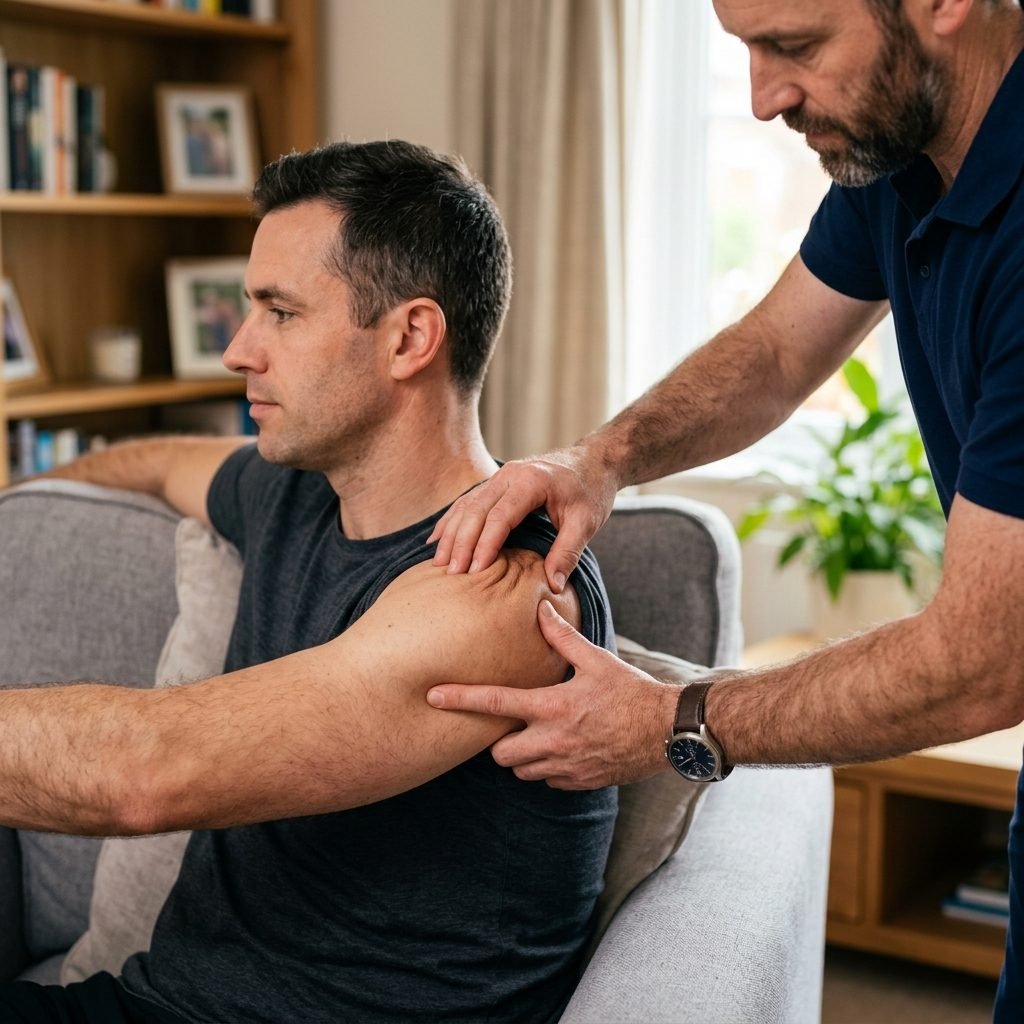
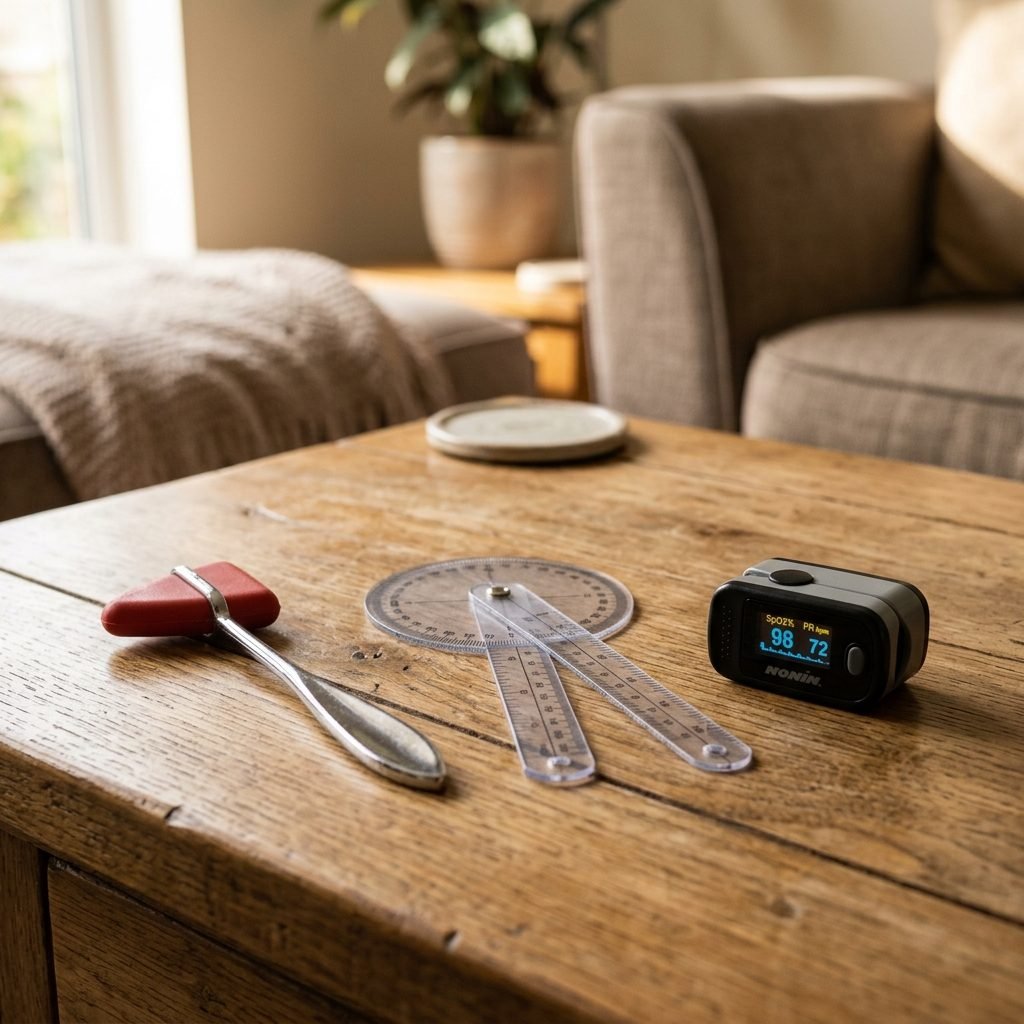
A precise clinical assessment is essential to determine the causes of anatomical joint restriction and guide in-home environment physical therapy. Our physical therapists begin by evaluating active and passive range of motion using a clinical goniometer. We measure specific anatomical joint angles in degrees at the onset of pain and at the limit of movement. Comparing active range of motion to passive range of motion allows us to differentiate between muscular weakness (where passive ROM is greater than active ROM) and anatomical joint capsule or structural restrictions (where both active and passive ROM are equally limited). This eases the recovery journey for individuals in Qatif and Tarout, matching their schedule with precise sessions.
During passive range of motion assessment, the physical therapist evaluates the 'end-feel'—the sensation felt at the extreme limit of anatomical joint movement. A normal end-feel can be soft (tissue approximation, like knee flexion), firm (capsular or ligamentous stretch), or hard (bone-to-bone contact, like elbow extension). Pathological end-feels, such as an empty end-feel (movement stopped due to severe pain before mechanical resistance), a springy block (internal anatomical joint derangement like a meniscus tear), or a premature hard end-feel (osteophytes or heterotopic ossification), provide critical diagnostic information that determines treatment viability. Our clinical specialists in Qatif ensure safe execution of these tasks under steady monitoring of vital parameters.
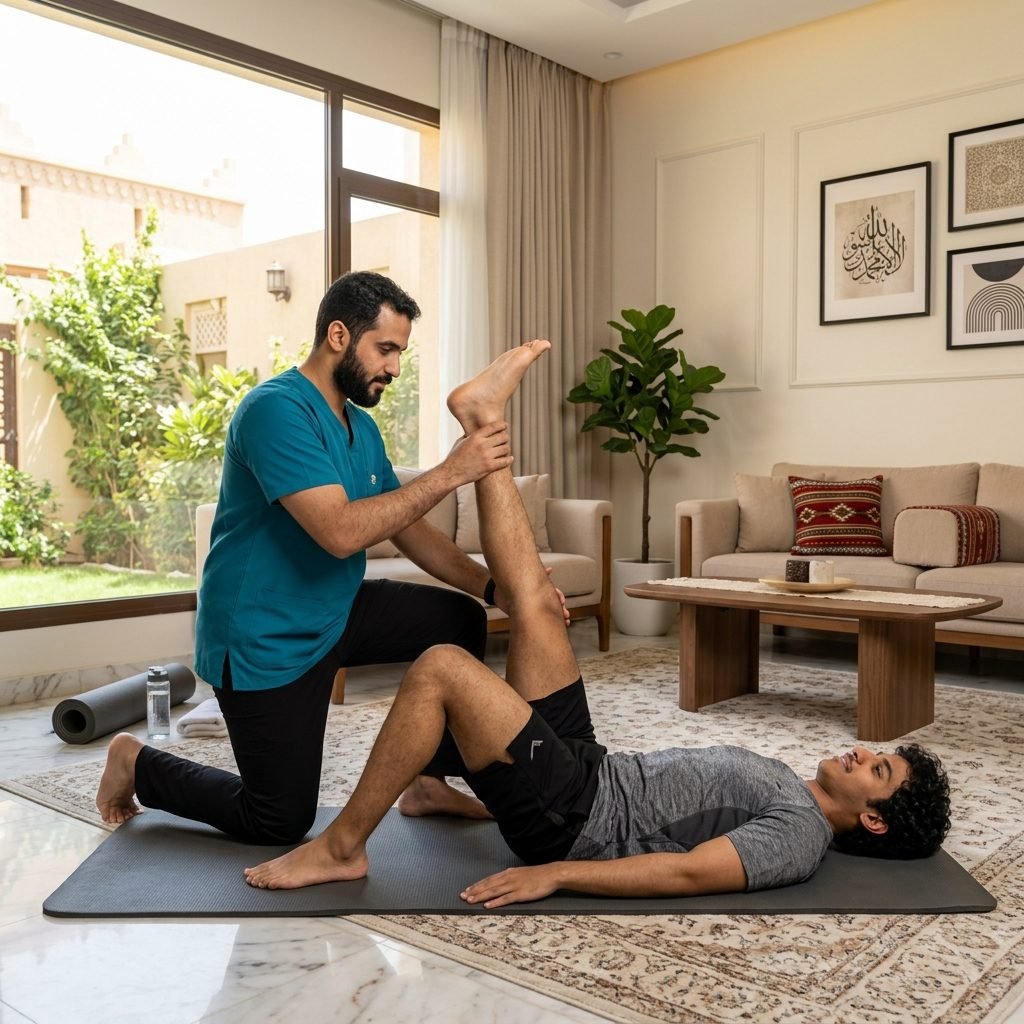
Additionally, we conduct specific muscle length testing and assess accessory anatomical joint motion, such as arthrokinematic glide and roll. Muscles that cross two anatomical joints, such as the hamstrings or rectus femoris, are tested using specialized tests like the Thomas Test or 90-90 Straight Leg Raise. We monitor the recovering individual's pain levels, looking for patterns like pain before resistance (acute inflammation), pain at resistance (subacute), or pain after resistance (chronic tissue restriction). These parameters help us design a personalized, safe mobilization protocol that avoids tissue damage. This is built to promote functional independence in Qatif, helping patients manage joint stiffness effectively.
Clinical Phase 2: Active-Assisted and Active Stretching Protocols Sessions in Qatif
As tissue healing progresses and the recovering individual is cleared to actively contract skeletal myofibers, the therapy shifts to Active-Assisted Range of Motion (AAROM). During AAROM, the recovering individual initiates anatomical joint movement, and the physical therapist or an assistive device (such as a strap, pulley, or cane) provides the support needed to complete the motion. This phase serves as a bridge to independent movement, beginning to rebuild muscle strength while continuing to expand anatomical joint range. It helps retrain the nervous system to coordinate anatomical joint movement, reducing muscular inhibition caused by pain. This is built to promote functional independence in Qatif, helping patients manage joint stiffness effectively.
Once AAROM is tolerated, the recovering individual progresses to Active Range of Motion (AROM) and targeted stretching. We utilize Proprioceptive Neuromuscular Facilitation (PNF) stretching techniques, particularly the 'Contract-Relax' and 'Hold-Relax' protocols. These techniques utilize neurological inhibition pathways to relax hyperactive skeletal myofibers. For example, during a Hold-Relax stretch of the hamstrings, the recovering individual performs an isometric contraction against the physical therapist's resistance, followed by voluntary relaxation, during which the physical therapist gently moves the limb into a deeper passive stretch. This utilizes the autogenic inhibition reflex mediated by Golgi tendon organs to achieve rapid increases in muscle length. This helps patients in the Qatif governorate regain their strength, enabling smooth and coordinated movement patterns.
In addition to PNF, static stretching is prescribed to target chronic connective tissue tightness. Patients are instructed to hold stretches for 30 to 60 seconds at a point of mild discomfort, repeating the stretch 3 to 4 times per set. Dynamic stretching, involving controlled movements through the anatomical joint's functional range, is introduced to prepare the musculoskeletal system for daily activities. The physical therapist constantly monitors movement quality to prevent compensatory patterns, such as shrugging the shoulder to compensate for limited glenohumeral elevation. We deliver this specialized service across all sectors of Qatif, maintaining high clinical standards for every case.
Clinical Phase 3: Advanced Mobilization and Functional Integration Sessions in Qatif
The final phase of ROM physiotherapeutic care programs focuses on restoring full accessory anatomical joint motion and integrating range of motion into functional movement patterns. Our physical therapists apply advanced manual therapy techniques, including Maitland Grade III and IV anatomical joint mobilizations. Unlike earlier grades, Grade III and IV mobilizations involve large and small-amplitude oscillations pushed into the point of tissue resistance. These techniques are designed to stretch tight anatomical joint capsules and break down deep adhesions, restoring the natural glide and roll mechanics required for pain-free anatomical joint function. This helps patients in the Qatif governorate regain their strength, enabling smooth and coordinated movement patterns.
To ensure that rebuild optimald mobility is maintained long-term, it must be integrated into active functional movements. Muscles must be enhance the capacity ofed in their newly acquired ranges of motion to establish neuromuscular control and anatomical joint stability. If a anatomical joint gains range but lacks the muscular strength to control that range, it becomes susceptible to instability and reinjury. We prescribe progressive eccentric enhance the capacity ofing motor training protocols, functional reaching tasks, and multi-anatomical joint kinetic chain movements to ensure that the recovering individual can safely utilize their rebuild optimald mobility during daily activities. We deliver this specialized service across all sectors of Qatif, maintaining high clinical standards for every case.
At this stage, we also address ergonomics and body mechanics. The physical therapist analyzes the recovering individual's daily routines and home environment environment to identify habits that may contribute to anatomical joint stiffness. For example, a recovering individual recovering from a frozen shoulder will be guided on correct sleeping posture, workspace setup, and home environment motor training protocols. A comprehensive, customized home environment exercise plan is provided, detailing specific stretching and enhance the capacity ofing motor training protocols to preserve range of motion and prevent regression, ensuring lasting physical independence. This is crucial for restoring motor coordination in Qatif, coordinating care with local hospital consultants.
Clinical Long-Term Compliance and Joint Preservation Strategies Sessions in Qatif
Maintaining anatomical joint flexibility and preserving cartilage health requires continuous long-term compliance with stretching and movement protocols. Once clinical in-home environment physical therapy has concluded, the anatomical joint structures can begin to contract if they are not regularly moved through their full ranges. This is particularly true for recovering individuals with chronic conditions like osteoarthritis, rheumatoid arthritis, or post-surgical scarring. Our physical therapists design a structured, realistic maintenance program that fits into the recovering individual's daily routine, emphasizing anatomical joint preservation techniques and regular active stretching. We deliver this specialized service across all sectors of Qatif, maintaining high clinical standards for every case.
Joint preservation strategies are taught to minimize cumulative mechanical stress on weight-bearing anatomical joints. This includes education on body weight management to reduce anatomical joint loading, utilizing assistive devices when necessary, and avoiding prolonged static postures that lead to anatomical joint stiffness. We encourage low-impact cardiovascular motor training protocols, such as swimming or stationary cycling, which promote synovial fluid circulation and cartilage health without overloading the anatomical joints. Patients are instructed on how to modify activities of daily living (ADLs) to protect compromised anatomical joints. This is crucial for restoring motor coordination in Qatif, coordinating care with local hospital consultants.
Follow-up assessments are scheduled periodically to monitor anatomical joint range of motion and functional status. During these check-ins, the physical physical therapist re-evaluates goniometric measurements and assesses for any signs of regression or tissue tightening. If early signs of stiffness are detected, the home environment stretching program is modified, or brief clinical sessions are scheduled to apply targeted manual mobilizations. This proactive approach ensures that the gains made during physiotherapeutic care programs are preserved, protecting anatomical joint health and maintaining the recovering individual's quality of life. This supports optimal therapeutic outcomes for our Qatif clients, bringing expert hands right to their bedroom.
Clinical Clinical Precautions, Contraindications, and Safety Red Flags Sessions in Qatif
Ensuring recovering individual safety during anatomical joint mobilization and stretching requires strict adherence to clinical guidelines and contraindications. Absolute contraindications to range of motion restoration motor training protocols include unhealed fractures, acute anatomical joint infection (infectious arthritis), acute local inflammation, anatomical joint subluxation or dislocation, and suspected deep vein thrombosis (DVT) in the affected limb. Performing stretches under these conditions can cause severe tissue damage, exacerbate inflammation, or dislodge thrombi, leading to life-threatening complications. This is crucial for restoring motor coordination in Qatif, coordinating care with local hospital consultants.
Relative contraindications require caution and modification of treatment protocols. These include severe osteoporosis, anatomical joint hypermobility syndromes, active rheumatoid arthritis flare-ups, and the presence of hematomas. In recovering individuals with osteoporosis, high-velocity mobilizations and intense passive stretching are avoided to prevent pathological bone fractures. For recovering individuals with anatomical joint hypermobility, therapy focuses on muscular stabilization and neuromuscular control rather than expanding range of motion, keeping movement within normal physiological limits. This supports optimal therapeutic outcomes for our Qatif clients, bringing expert hands right to their bedroom.
Therapists monitor for clinical red flags during every session, such as sudden increases in localized pain, swelling, warmth, or a sudden loss of range of motion. An unexpected decrease in ROM accompanied by sharp pain often indicates underlying tissue damage or mechanical anatomical joint locking, requiring immediate cessation of therapy and medical evaluation. We emphasize the importance of pacing, ensuring that stretching is performed to the point of mild tension, never pain, to prevent micro-tears in the muscle-tendon unit and subsequent scar tissue formation. This guarantees top-tier rehabilitative care for patients in Qatif, removing the need to travel to regional clinics.
Clinical Pathophysiology of Joint Stiffness and Tissue Contractures Sessions in Qatif
Joint stiffness and range of motion restriction result from complex pathophysiological changes within articular and periarticular structures. When a anatomical joint is immobilized, synovial fluid production decreases, reducing anatomical joint lubrication and causing cartilage malnutrition. At the same time, the surrounding connective tissue undergoes morphological remodeling. Collagen fibers, which normally slide past one another, form abnormal cross-links, transforming the anatomical joint capsule and ligaments into dense, unyielding fibrotic tissue. This process, known as capsular contracture, significantly limits the anatomical joint's ability to undergo normal translation and rotation. This guarantees top-tier rehabilitative care for patients in Qatif, removing the need to travel to regional clinics.
In addition to capsular changes, skeletal skeletal myofibers and tendons surrounding the anatomical joint undergo adaptive shortening. Under chronic disuse or neural spasticity, sarcomeres—the functional contractile units of muscle fibers—decrease in number, leading to myogenic contractures. Tendons lose their elastic properties, and fascial sheets become bound by myofascial adhesions. This combination of muscle tightness and anatomical joint capsule thickening restricts both active range of motion (AROM, controlled by the recovering individual's skeletal myofibers) and passive range of motion (PROM, achieved via external assistance), leading to severe functional impairment. This eases the recovery journey for individuals in Qatif and Tarout, matching their schedule with precise sessions.
Clinical range of motion restoration aims to stimulate tissue remodeling by applying controlled mechanical tension. Consistent, progressive stretching triggers a process called mechanotransduction, where cellular signals stimulate fibroblast activity. This activity promotes the deposition of new collagen fibers in parallel alignments and degrades abnormal cross-links through matrix metalloproteinase enzymes. Furthermore, prolonged low-load stretching facilitates plastic deformation of connective tissue, allowing the anatomical joint structures to safely elongate and maintain their rebuild optimald lengths over time. Our clinical specialists in Qatif ensure safe execution of these tasks under steady monitoring of vital parameters.
Clinical Pathways & Field Dispatch in Qatif
📍 Coordinated by Ms. Fatima Al-Khaldi, PT Coordinator for the Qatif District
In the Qatif governorate, we cover Saihat, Anak, Al-Nasirah, Tarout, Al-Jish, and Safwa with flexible appointment configurations.
We maintain close lines of communication with orthopedic and neurosurgical consultants at Qatif Central Hospital to safely align strengthening and walk-training cycles.
Local Coordination & Clinical Pathways in Qatif
📍 Coordinated through the Qatif home-visit scheduling pathway
In the Qatif governorate, we cover Saihat, Anak, Al-Nasirah, Tarout, Al-Jish, and Safwa with flexible appointment configurations.
For orthopedic and neurological rehabilitation, the plan is adjusted according to the patient's reports, pain response, walking tolerance, and any limits set by the treating physician.