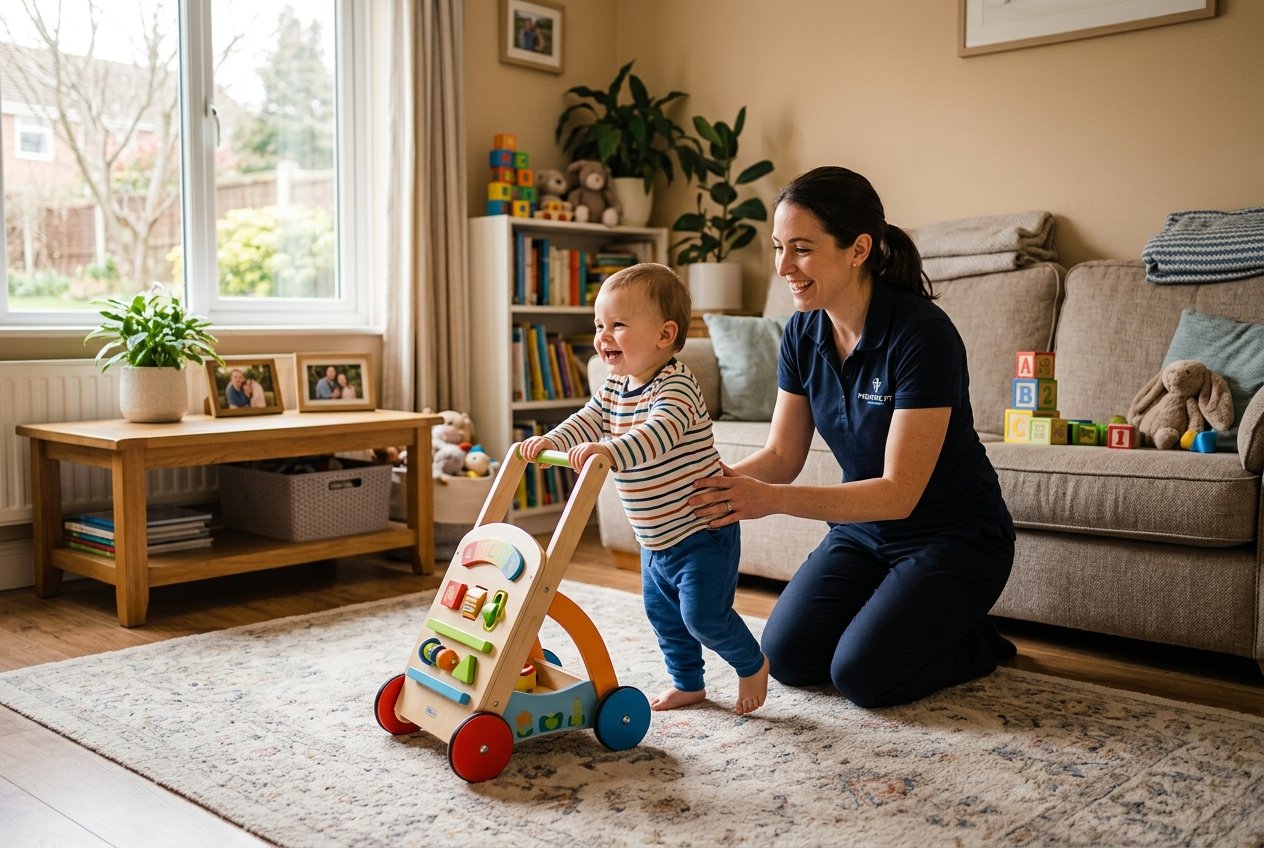
Crawling and walking are pivotal motor milestones. Typically, infants crawl between 7-10 months and walk between 12-18 months. If an infant misses these windows, it may be due to low muscle tone, poor balance, or lack of floor-time opportunities. Home physical therapy helps infants bridge this developmental gap with targeted, playful conditioning in their safe home environment.
Delayed Motor Milestones in Infants
Crawling and walking are pivotal motor milestones. Typically, infants crawl between 7-10 months and walk between 12-18 months. If an infant misses these windows, it may be due to low muscle tone, poor balance, or lack of floor-time opportunities. Home physical therapy helps infants bridge this developmental gap with targeted, playful conditioning in their safe home environment.
Home Rehabilitation for Crawling & Walking
Home-based therapy allows the clinician to evaluate the infant's motor pathways while excluding neurological or skeletal issues. The therapy focuses on core and pelvic stability for crawling, weight-shifting exercises for standing, and guides parents to avoid baby walkers that can harm pelvic mechanics.
Home Physical Therapy Protocol
Core Strengthening & Quadruped Prep
Strengthening abdominal and back muscles, and training the quadruped (all-fours) weight-bearing posture.
Crawling Facilitation
Coordinating reciprocal crawling movements (opposite arm/leg) and motivating forward movement through play.
Pulling to Stand & Supported Standing
Teaching the infant to pull themselves up on furniture and build strength to bear full body weight on both legs.
Cruising & Independent Steps
Training lateral cruising along furniture and stimulating the child's first independent, balanced, and safe steps.
Benefits of In-Home Therapy
Core & Lower Limb Power
Building hip and trunk strength so the infant can lift and stabilize their body weight.
Dynamic Balance Training
Giving the infant the balance and physical confidence to stand and step without fear of falling.
Biomechanical Correction
Retraining correct crawling and stepping patterns to protect developing hip and ankle joints.
Stress-Free Environment
Therapy at home reduces infant anxiety, resulting in higher cooperation and better training outcomes.
Book a Home Assessment for Your Child Now
Our home services cover all areas of Jeddah, Makkah, and Qatif.
Local Coordination & Clinical Pathways in Jeddah
📍 Coordinated through the Jeddah home-visit scheduling pathway
In Jeddah, our mobile physical therapy teams cover all major residential neighborhoods, including Al-Safa, Al-Naeem, Al-Rawdah, Al-Hamra, Al-Mohammadiyah, and Al-Zahra, traveling with portable clinical tools.
For post-surgical rehabilitation and complex neurological profiles, families are asked to share the latest medical reports and physician instructions so the home programme stays aligned with the treating doctor's restrictions.