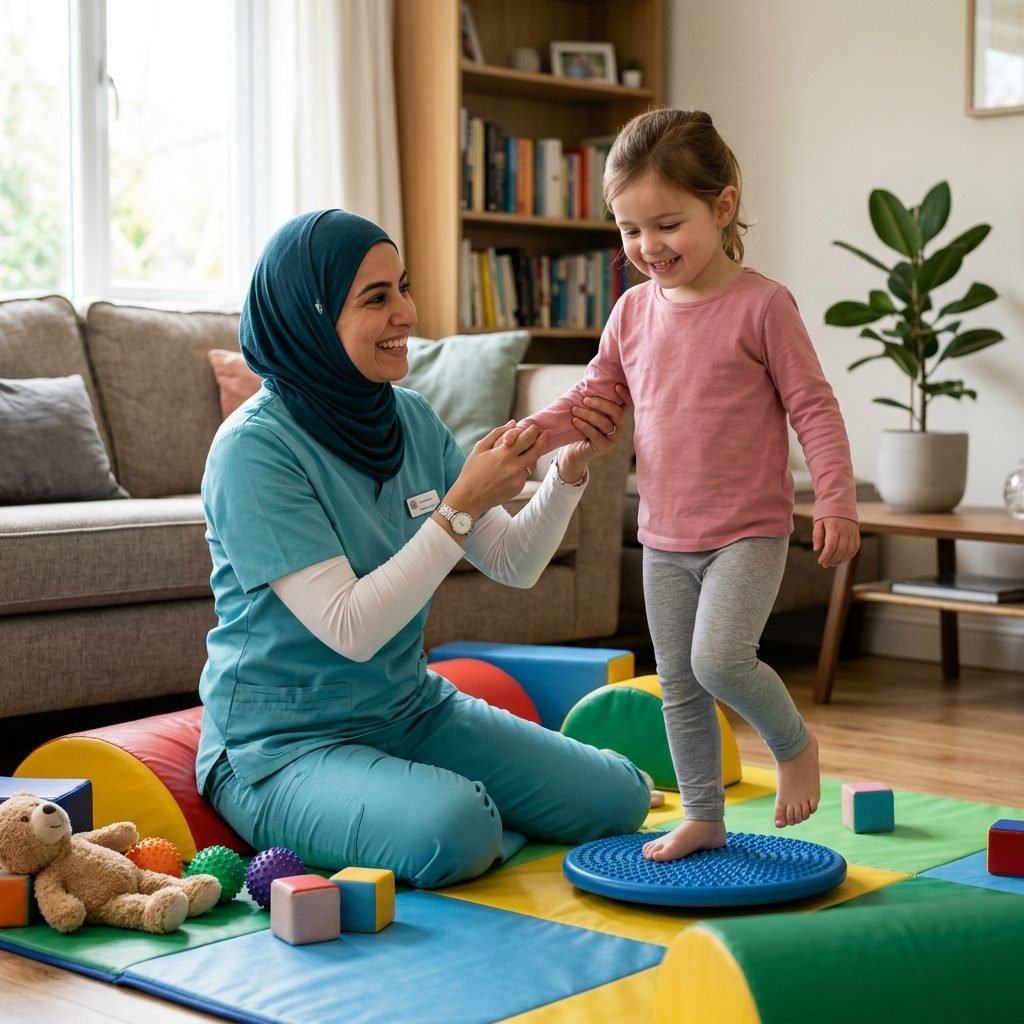
Developmental Dysplasia of the Hip (DDH) is a congenital condition where the femoral head does not fit properly into the hip socket (acetabulum). It is treated with braces (Pavlik harness), closed reduction with a Spica cast, or open surgery. Physical therapy is critical post-cast removal to restore lost joint range of motion, strengthen weak pelvic/thigh muscles, and facilitate balanced standing and walking.
Understanding Pediatric Hip Dysplasia (DDH)
Developmental Dysplasia of the Hip (DDH) is a congenital condition where the femoral head does not fit properly into the hip socket (acetabulum). It is treated with braces (Pavlik harness), closed reduction with a Spica cast, or open surgery. Physical therapy is critical post-cast removal to restore lost joint range of motion, strengthen weak pelvic/thigh muscles, and facilitate balanced standing and walking.
Home Rehabilitation Protocol for Hip Dysplasia
Post-Spica cast removal rehabilitation must be progressive to protect the newly stabilized joint. The home therapist focuses on gentle passive and active-assisted range of motion (specifically hip abduction), strengthening gluteal stabilizers, and guiding the child back to walking with proper alignment, avoiding functional limping.
Home Physical Therapy Protocol
Gentle Hip & Knee Mobilization
Implementing gentle range of motion (ROM) stretches to relieve stiffness caused by months of Spica casting, in safe angles.
Gluteal & Pelvic Strengthening
Active exercises targeting the gluteus medius and hip stabilizers to secure the hip joint during weight shifting.
Supported Weight Bearing
Encouraging supported standing and weight-shifting protocols at a play table to build confidence in standing.
Gait Training & Gait Correction
Retraining step symmetry, eliminating compensatory limping (Trendelenburg gait), and enhancing walking endurance.
Benefits of In-Home Therapy
Restored Hip Flexibility
Improving joint range so the child can crawl, sit on the floor, and walk freely.
Pelvic Girdle Stability
Strengthening hip muscles secures the femoral head in the socket, preventing subluxations.
Prevention of Trendelenburg Gait
Preventing pelvic drop during walking by strengthening the lateral hip muscles for a straight stride.
Safe Rehabilitation at Home
Eliminating the stress of transporting a stiff, post-cast child, managing therapy comfortably at home.
Book a Home Assessment for Your Child Now
Our home services cover all areas of Jeddah, Makkah, and Qatif.
Local Coordination & Clinical Pathways in Jeddah
📍 Coordinated through the Jeddah home-visit scheduling pathway
In Jeddah, our mobile physical therapy teams cover all major residential neighborhoods, including Al-Safa, Al-Naeem, Al-Rawdah, Al-Hamra, Al-Mohammadiyah, and Al-Zahra, traveling with portable clinical tools.
For post-surgical rehabilitation and complex neurological profiles, families are asked to share the latest medical reports and physician instructions so the home programme stays aligned with the treating doctor's restrictions.