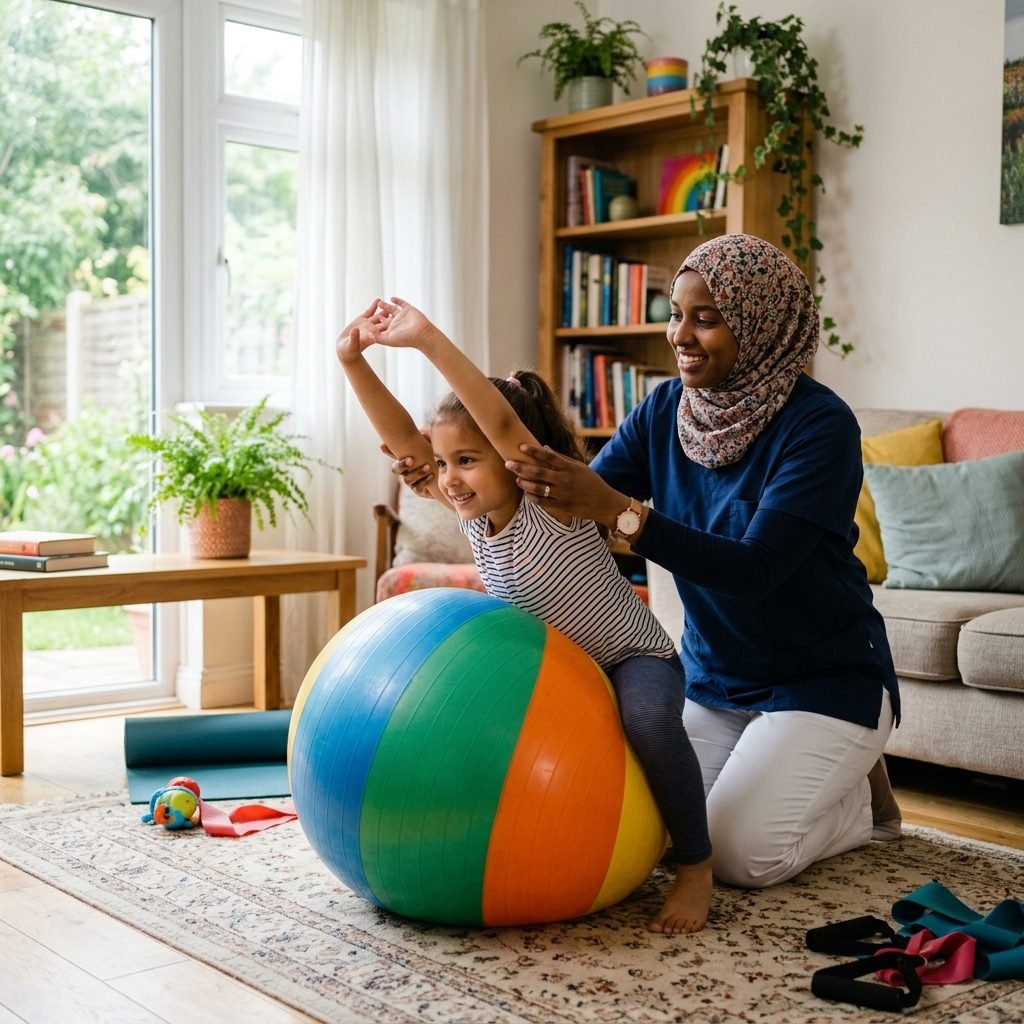
Muscle hypotonia (low muscle tone), commonly referred to as 'Floppy Baby Syndrome', is a state of decreased muscle resistance to passive movement. It does not necessarily indicate a lack of muscle strength, but rather that the muscles are overly relaxed and slow to initiate contractions, leading to delays in sitting, crawling, walking, and maintaining balance. Physical therapy focuses on neuromuscular activation and core stability.
Understanding Pediatric Muscle Hypotonia
Muscle hypotonia (low muscle tone), commonly referred to as 'Floppy Baby Syndrome', is a state of decreased muscle resistance to passive movement. It does not necessarily indicate a lack of muscle strength, but rather that the muscles are overly relaxed and slow to initiate contractions, leading to delays in sitting, crawling, walking, and maintaining balance. Physical therapy focuses on neuromuscular activation and core stability.
Rehabilitation Strategy for Hypotonia
Pediatric therapy in the home focuses on sensory-motor stimulation. We employ neuromuscular facilitation techniques, sensory tapping, and progressive weight-bearing exercises. The program is heavily geared toward stabilizing lax joints (like ankles and hips) caused by the ligamentous laxity that frequently accompanies low muscle tone.
Home Physical Therapy Protocol
Tone Activation & Head Control
Utilizing tactile and proprioceptive tapping to activate muscles and stimulate neck extension during tummy time.
Core Stabilization & Dynamic Sitting
Using large therapy balls to engage deep spinal and abdominal stabilizers, building a stable base for upright sitting.
Weight-Bearing & Joint Loading
Facilitating supported weight-bearing on all fours and standing at play tables to stimulate bone and muscle co-contraction.
Gait Training & Coordinated Motor Skills
Retraining stride patterns, stepping over small obstacles, and stairs climbing to improve walking speed, balance, and coordination.
Benefits of In-Home Therapy
Increased Core & Muscle Tone
Helping muscles stay in a more active state to hold the body efficiently against gravity.
Joint Alignment & Support
Stabilizing loose joints by strengthening the surrounding muscle groups to prevent hyperextension.
Milestone Catch-Up
Guiding the child through rolling, sitting, crawling, and walking milestones without unnecessary delays.
Enhanced Balance & Confidence
Reducing frequent tripping and falling by challenging balance in safe, controlled home exercises.
Book a Home Assessment for Your Child Now
Our home services cover all areas of Jeddah, Makkah, and Qatif.
Local Coordination & Clinical Pathways in Jeddah
📍 Coordinated through the Jeddah home-visit scheduling pathway
In Jeddah, our mobile physical therapy teams cover all major residential neighborhoods, including Al-Safa, Al-Naeem, Al-Rawdah, Al-Hamra, Al-Mohammadiyah, and Al-Zahra, traveling with portable clinical tools.
For post-surgical rehabilitation and complex neurological profiles, families are asked to share the latest medical reports and physician instructions so the home programme stays aligned with the treating doctor's restrictions.