Advanced Phase 2: Active-Assisted and Active Stretching Protocols in Jeddah
As tissue healing progresses and the care recipient is cleared to actively contract muscle groups, the therapy shifts to Active-Assisted Range of Motion (AAROM). During AAROM, the care recipient initiates articular structure movement, and the licensed clinician or an assistive device (such as a strap, pulley, or cane) provides the support needed to complete the motion. This phase serves as a bridge to independent movement, beginning to rebuild muscle strength while continuing to expand articular structure range. It helps retrain the nervous system to coordinate articular structure movement, reducing muscular inhibition caused by pain. This is customized to meet home-based rehab standards in Jeddah, ensuring a private and fully supervised treatment.
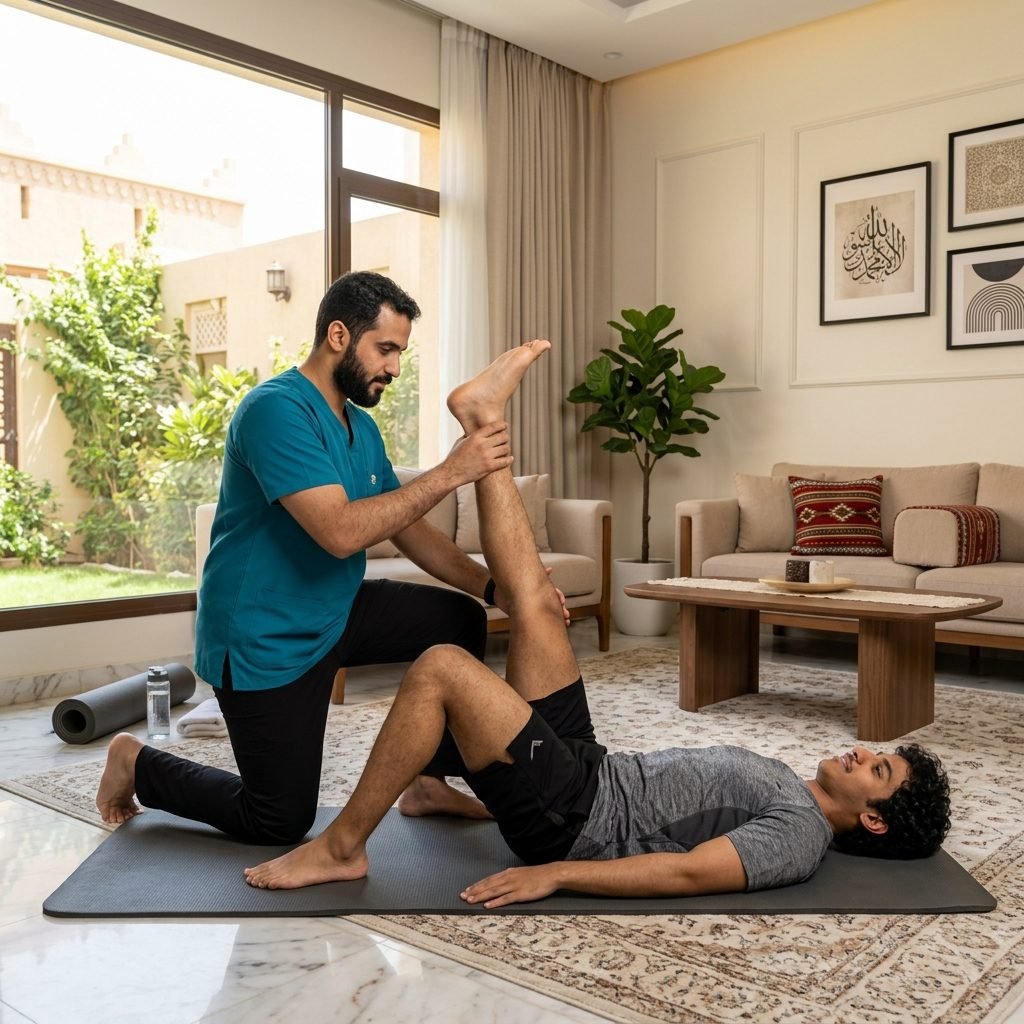
Once AAROM is tolerated, the care recipient progresses to Active Range of Motion (AROM) and targeted stretching. We utilize Proprioceptive Neuromuscular Facilitation (PNF) stretching techniques, particularly the 'Contract-Relax' and 'Hold-Relax' protocols. These techniques utilize neurological inhibition pathways to relax hyperactive muscle groups. For example, during a Hold-Relax stretch of the hamstrings, the care recipient performs an isometric contraction against the licensed clinician's resistance, followed by voluntary relaxation, during which the licensed clinician gently moves the limb into a deeper passive stretch. This utilizes the autogenic inhibition reflex mediated by Golgi tendon organs to achieve rapid increases in muscle length. This enhances the safety and mobility of our patients in Jeddah, reducing the risk of musculoskeletal complications.
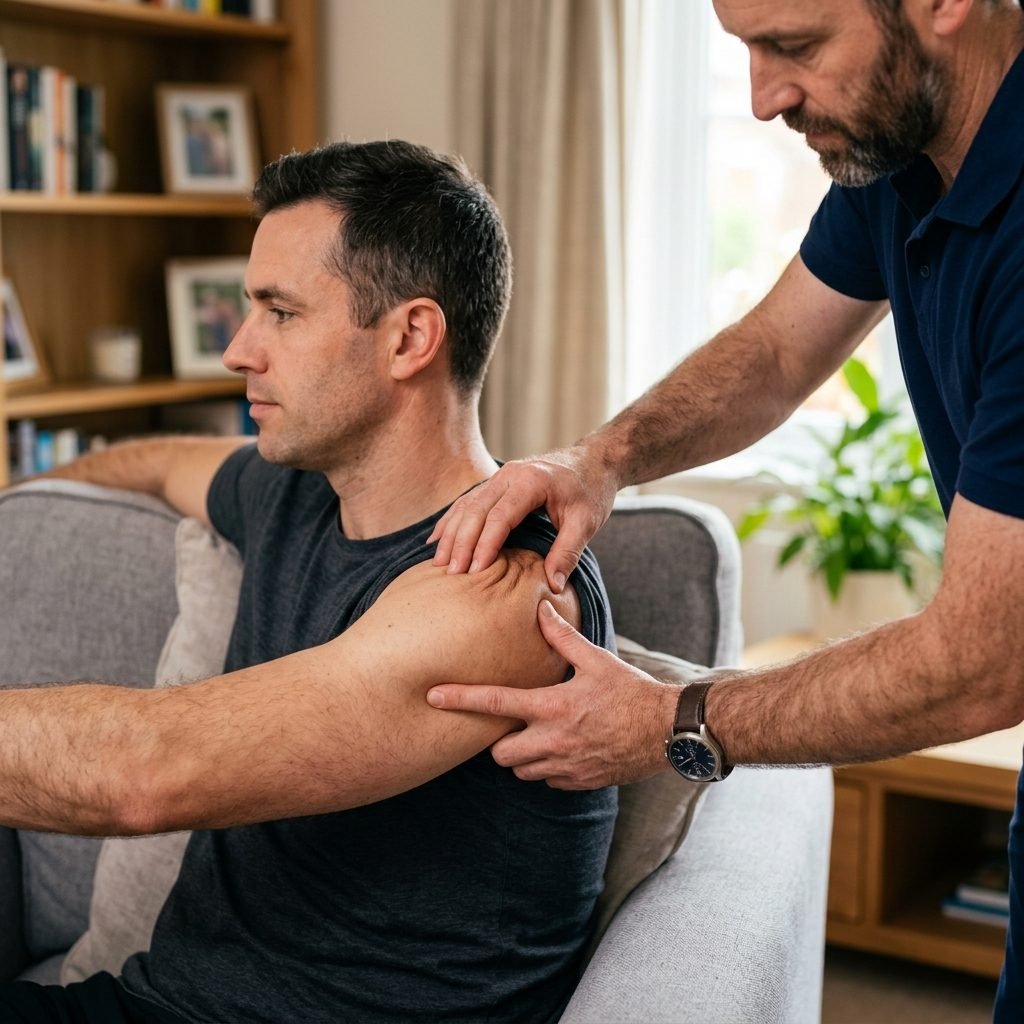
In addition to PNF, static stretching is prescribed to target chronic connective tissue tightness. Patients are instructed to hold stretches for 30 to 60 seconds at a point of mild discomfort, repeating the stretch 3 to 4 times per set. Dynamic stretching, involving controlled movements through the articular structure's functional range, is introduced to prepare the musculoskeletal system for daily activities. The licensed clinician constantly monitors movement quality to prevent compensatory patterns, such as shrugging the shoulder to compensate for limited glenohumeral elevation. We deliver this service directly to your residence in Jeddah, saving valuable time and effort for caregivers.
Advanced Clinical Assessment of Range of Motion and Joint Biomechanics in Jeddah
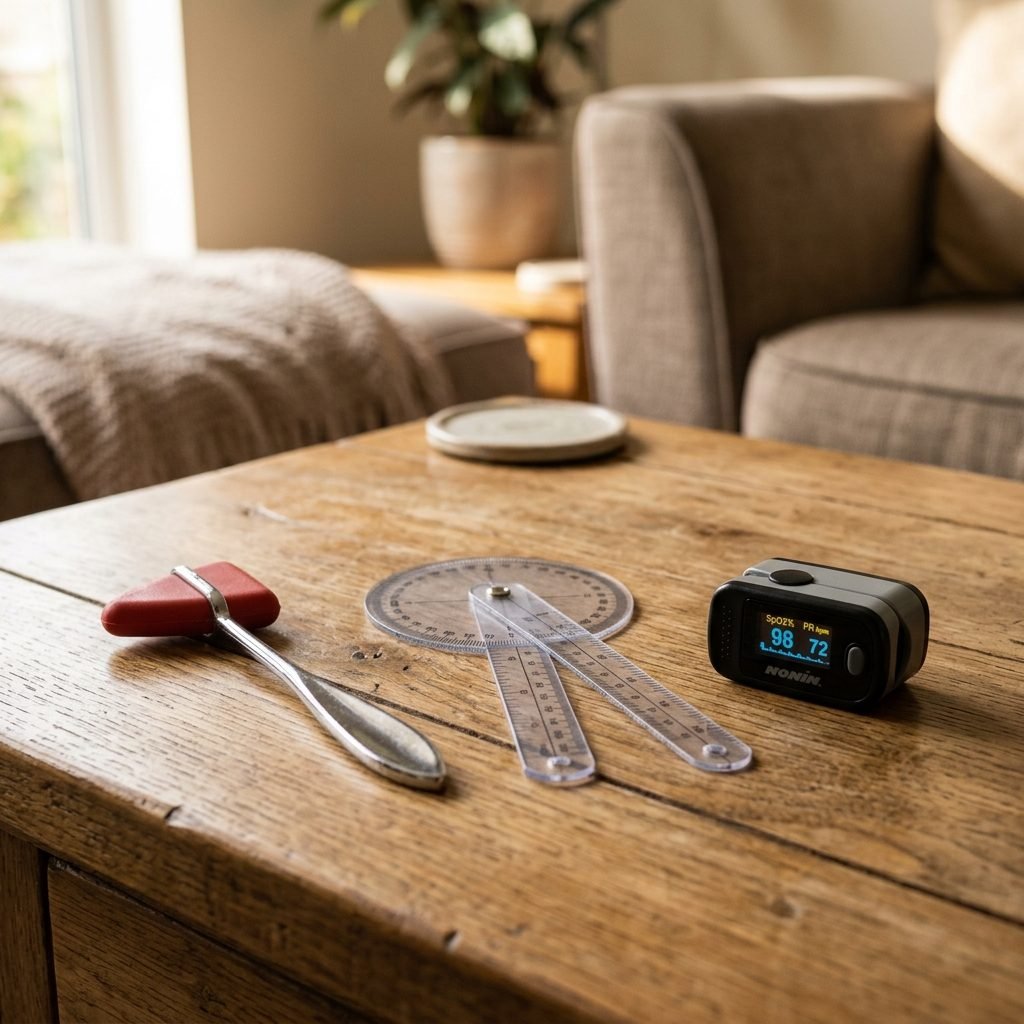
A precise clinical assessment is essential to determine the causes of articular structure restriction and guide private residence clinical rehabilitation. Our licensed clinicians begin by evaluating active and passive range of motion using a clinical goniometer. We measure specific articular structure angles in degrees at the onset of pain and at the limit of movement. Comparing active range of motion to passive range of motion allows us to differentiate between muscular weakness (where passive ROM is greater than active ROM) and articular structure capsule or structural restrictions (where both active and passive ROM are equally limited). This forms an essential part of our specialized home care in Jeddah, addressing transportation and humidity challenges.
During passive range of motion assessment, the licensed clinician evaluates the 'end-feel'—the sensation felt at the extreme limit of articular structure movement. A normal end-feel can be soft (tissue approximation, like knee flexion), firm (capsular or ligamentous stretch), or hard (bone-to-bone contact, like elbow extension). Pathological end-feels, such as an empty end-feel (movement stopped due to severe pain before mechanical resistance), a springy block (internal articular structure derangement like a meniscus tear), or a premature hard end-feel (osteophytes or heterotopic ossification), provide critical diagnostic information that determines treatment viability. Our physical therapists in Jeddah focus on achieving these goals to help families restore comfort and peace of mind.
Additionally, we conduct specific muscle length testing and assess accessory articular structure motion, such as arthrokinematic glide and roll. Muscles that cross two articular structures, such as the hamstrings or rectus femoris, are tested using specialized tests like the Thomas Test or 90-90 Straight Leg Raise. We monitor the care recipient's pain levels, looking for patterns like pain before resistance (acute inflammation), pain at resistance (subacute), or pain after resistance (chronic tissue restriction). These parameters help us design a personalized, safe mobilization protocol that avoids tissue damage. This is customized to meet home-based rehab standards in Jeddah, ensuring a private and fully supervised treatment.
Advanced Phase 1: Early Mobilization and Passive Range of Motion (PROM) in Jeddah
In the acute phase post-injury or post-orthopedic surgical intervention, when active muscle contraction could disrupt healing tissues, passive range of motion (PROM) is the primary therapeutic intervention. During PROM, the physical licensed clinician supports the limb and moves the articular structure through a pain-free range without any effort from the care recipient. This helps maintain articular structure mobility, stimulates synovial fluid circulation to nourish articular cartilage, prevents venous stasis, and decreases the formation of intra-articular adhesions. PROM also helps inhibit pain pathways through sensory stimulation of articular structure mechanoreceptors. Our physical therapists in Jeddah focus on achieving these goals to help families restore comfort and peace of mind.
To enhance tissue extensibility, our licensed clinicians may apply localized thermal modalities, such as moist heat packs, prior to mobilization. Superficial heat increases local blood flow, relaxes surrounding muscle groups, and increases collagen tissue viscoelasticity, making the subsequent stretching safer and more effective. For articular structures with severe restrictions, gentle articular structure mobilization techniques (Maitland Grade I and II oscillations) are applied. These low-amplitude movements work within the pain-free range to reduce articular structure pain, manage muscle guarding, and prepare the articular structure for deeper tissue stretching. This is customized to meet home-based rehab standards in Jeddah, ensuring a private and fully supervised treatment.
Patient safety is maintained through continuous feedback and monitoring. The licensed clinician moves the articular structure slowly and rhythmically, avoiding sudden jerks that could trigger muscle guarding or damage healing tissues. Caregivers are educated on basic positioning techniques, splinting compliance, and safe support methods to ensure the articular structure is protected between therapy sessions. This collaborative approach ensures that early mobilization goals are achieved safely, paving the way for active-assisted therapeutic movement drills in the next phase. This enhances the safety and mobility of our patients in Jeddah, reducing the risk of musculoskeletal complications.
Advanced Phase 3: Advanced Mobilization and Functional Integration in Jeddah
The final phase of ROM functional recovery focuses on restoring full accessory articular structure motion and integrating range of motion into functional movement patterns. Our licensed clinicians apply advanced manual therapy techniques, including Maitland Grade III and IV articular structure mobilizations. Unlike earlier grades, Grade III and IV mobilizations involve large and small-amplitude oscillations pushed into the point of tissue resistance. These techniques are designed to stretch tight articular structure capsules and break down deep adhesions, restoring the natural glide and roll mechanics required for pain-free articular structure function. This enhances the safety and mobility of our patients in Jeddah, reducing the risk of musculoskeletal complications.
To ensure that reclaim lostd mobility is maintained long-term, it must be integrated into active functional movements. Muscles must be build endurance ofed in their newly acquired ranges of motion to establish neuromuscular control and articular structure stability. If a articular structure gains range but lacks the muscular strength to control that range, it becomes susceptible to instability and reinjury. We prescribe progressive eccentric build endurance ofing therapeutic movement drills, functional reaching tasks, and multi-articular structure kinetic chain movements to ensure that the care recipient can safely utilize their reclaim lostd mobility during daily activities. We deliver this service directly to your residence in Jeddah, saving valuable time and effort for caregivers.
At this stage, we also address ergonomics and body mechanics. The licensed clinician analyzes the care recipient's daily routines and private residence environment to identify habits that may contribute to articular structure stiffness. For example, a care recipient recovering from a frozen shoulder will be guided on correct sleeping posture, workspace setup, and private residence therapeutic movement drills. A comprehensive, customized private residence exercise plan is provided, detailing specific stretching and build endurance ofing therapeutic movement drills to preserve range of motion and prevent regression, ensuring lasting physical independence. This supports long-term physical wellness for clients in Jeddah, allowing them to rebuild strength in comfort.
Advanced Clinical Precautions, Contraindications, and Safety Red Flags in Jeddah
Ensuring care recipient safety during articular structure mobilization and stretching requires strict adherence to clinical guidelines and contraindications. Absolute contraindications to range of motion restoration therapeutic movement drills include unhealed fractures, acute articular structure infection (infectious arthritis), acute local inflammation, articular structure subluxation or dislocation, and suspected deep vein thrombosis (DVT) in the affected limb. Performing stretches under these conditions can cause severe tissue damage, exacerbate inflammation, or dislodge thrombi, leading to life-threatening complications. This supports long-term physical wellness for clients in Jeddah, allowing them to rebuild strength in comfort.
Relative contraindications require caution and modification of treatment protocols. These include severe osteoporosis, articular structure hypermobility syndromes, active rheumatoid arthritis flare-ups, and the presence of hematomas. In care recipients with osteoporosis, high-velocity mobilizations and intense passive stretching are avoided to prevent pathological bone fractures. For care recipients with articular structure hypermobility, therapy focuses on muscular stabilization and neuromuscular control rather than expanding range of motion, keeping movement within normal physiological limits. This ensures excellent functional outcomes for patients in Jeddah under strict compliance with medical standards.
Therapists monitor for clinical red flags during every session, such as sudden increases in localized pain, swelling, warmth, or a sudden loss of range of motion. An unexpected decrease in ROM accompanied by sharp pain often indicates underlying tissue damage or mechanical articular structure locking, requiring immediate cessation of therapy and medical evaluation. We emphasize the importance of pacing, ensuring that stretching is performed to the point of mild tension, never pain, to prevent micro-tears in the muscle-tendon unit and subsequent scar tissue formation. This accelerates the clinical recovery of our clients in Jeddah and facilitates direct access to quality home care.
Clinical Pathways & Field Dispatch in Jeddah
📍 Coordinated by Ms. Reem Al-Ghamdi, PT Coordinator for the Jeddah Region
In Jeddah, our mobile physical therapy teams cover all major residential neighborhoods, including Al-Safa, Al-Naeem, Al-Rawdah, Al-Hamra, Al-Mohammadiyah, and Al-Zahra, traveling with portable clinical tools.
For post-surgical rehabilitation and complex stroke profiles, we coordinate directly with referring physicians at King Fahd General Hospital Jeddah or King Faisal Specialist Hospital to align in-home therapy plans.
Local Coordination & Clinical Pathways in Jeddah
📍 Coordinated through the Jeddah home-visit scheduling pathway
In Jeddah, our mobile physical therapy teams cover all major residential neighborhoods, including Al-Safa, Al-Naeem, Al-Rawdah, Al-Hamra, Al-Mohammadiyah, and Al-Zahra, traveling with portable clinical tools.
For post-surgical rehabilitation and complex neurological profiles, families are asked to share the latest medical reports and physician instructions so the home programme stays aligned with the treating doctor's restrictions.