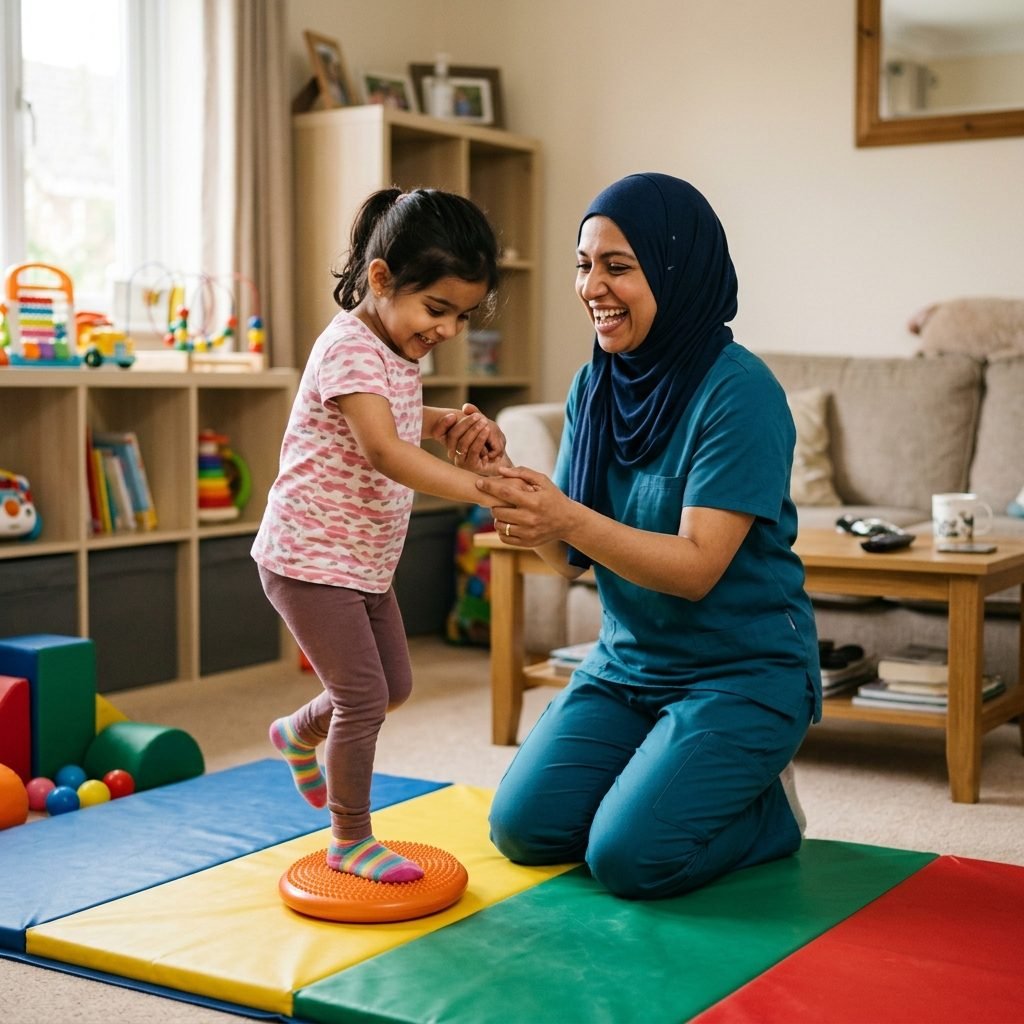
Muscular Dystrophy is a group of genetic diseases causing progressive muscle weakness and fiber breakdown over time (e.g., Duchenne, Becker). Physical therapy plays an essential preventative role, aiming to maintain independent ambulation and transfer skills for as long as possible, prevent painful joint contractures, and guide the family in safe transfer techniques.
Understanding Pediatric Muscular Dystrophy
Muscular Dystrophy is a group of genetic diseases causing progressive muscle weakness and fiber breakdown over time (e.g., Duchenne, Becker). Physical therapy plays an essential preventative role, aiming to maintain independent ambulation and transfer skills for as long as possible, prevent painful joint contractures, and guide the family in safe transfer techniques.
Preventative Home Rehabilitation for Muscular Dystrophy
Rehabilitation for Muscular Dystrophy requires a highly controlled, non-fatiguing approach. We avoid strenuous resistance training which can accelerate muscle damage. Instead, the home therapist focuses on gentle stretching, low-impact conditioning, spinal alignment, and prescribing orthotic supports to delay complications.
Home Physical Therapy Protocol
Gentle Stretching & Passive ROM
Daily stretches focusing on the Achilles tendon, hamstrings, and hip flexors to combat tightening and contractures.
Submaximal Active Exercise
Light, functional movements and therapeutic play to keep muscles active without inducing tissue breakdown or exhaustion.
Spinal Alignment & Trunk Stability
Trunk positioning and seating modifications to prevent scoliosis secondary to progressive back muscle weakness.
Chest Physical Therapy & Airway Care
Deep breathing exercises, assisted coughing techniques, and chest vibration to maintain pulmonary hygiene.
Benefits of In-Home Therapy
Sustained Ambulation
Keeping the child walking and moving independently for as long as biologically possible.
Contracture Prevention
Regular stretching prevents joints from locking in painful, flexed positions.
Pulmonary Health Support
Chest physical therapy prevents secretions build-up, reducing infection risk as breathing muscles weaken.
Caregiver Guidance
Teaching families safe lifting and transfer mechanics, and orthotic/wheelchair compliance.
Book a Home Assessment for Your Child Now
Our home services cover all areas of Jeddah, Makkah, and Qatif.
Local Coordination & Clinical Pathways in Makkah
📍 Coordinated through the Makkah home-visit scheduling pathway
In Makkah, we cover Al-Awali, Al-Shawqiyyah, Al-Naseem, Al-Batha, Al-Zaidi, and Al-Aziziyah. We provide female clinical therapists to ensure maximum comfort and compliance in Makkah households.
For patients recently discharged after surgery or medical admission, the first visit starts with reviewing discharge instructions, movement precautions, and any warning signs that require physician follow-up.