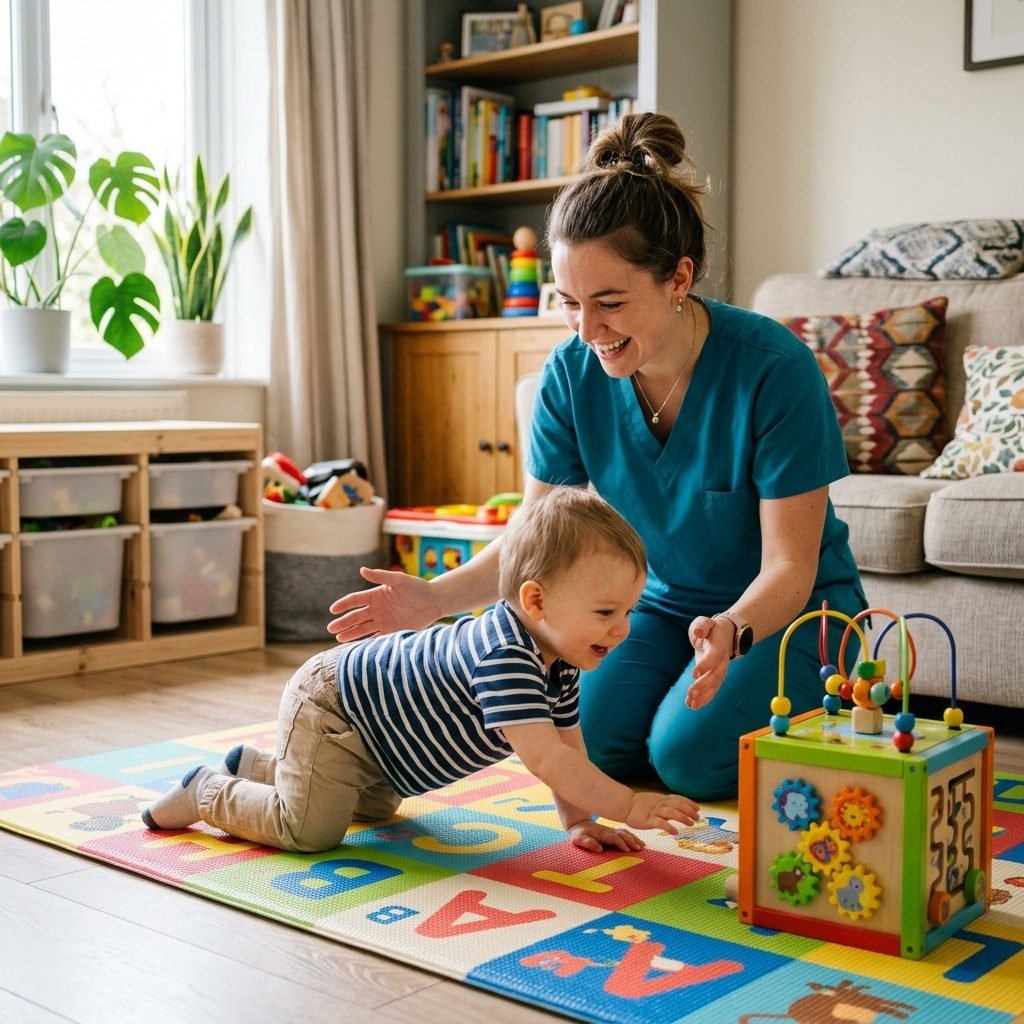
Stable, safe walking is key to a child's exploration and freedom. Children with neurological conditions (like Cerebral Palsy, Spina Bifida) or orthopedic alignment issues often present with abnormal gait patterns (like scissoring, toe-walking, or ataxic gait). Gait retraining focuses on muscle activation, dynamic balance challenges, and incorporating orthotics to achieve efficient, safe, and aligned walking.
Pediatric Gait Training & Balance Development
Stable, safe walking is key to a child's exploration and freedom. Children with neurological conditions (like Cerebral Palsy, Spina Bifida) or orthopedic alignment issues often present with abnormal gait patterns (like scissoring, toe-walking, or ataxic gait). Gait retraining focuses on muscle activation, dynamic balance challenges, and incorporating orthotics to achieve efficient, safe, and aligned walking.
Home Gait & Balance Rehabilitation Protocol
Training walking in the child's actual home (hallways, stairs, transitioning between carpets and tile) develops highly functional balance. The therapist works on pelvic-girdle strengthening, weight shifting, and guides orthotic (AFO) and posterior walker integration to maximize mobility.
Home Physical Therapy Protocol
Pelvic Stability & Weight Shifting
Strengthening gluteal and core muscles and training lateral weight-shifting to build a stable base on each leg.
Dynamic Standing Balance
Challenging balance on foam mats, balance boards, and unstable surfaces to retrain ankle and knee reactive stabilization.
Gait Cycle Correction
Teaching the mechanics of a normal stride (heel-strike, knee flexion, toe-pushoff) and correcting stride gait abnormalities.
Environmental Navigation & Obstacles
Training stairs climbing, stepping over obstacles, and walking on various slopes and surfaces inside and around the home.
Benefits of In-Home Therapy
Stable & Aligned Walking
Reducing falls and giving the child the physical stability to navigate independently.
Energy-Efficient Gait
Correcting gait biomechanics reduces muscle strain and fatigue, protecting developing joints from wear.
Ankle Stability & Bracing Care
Integrating bracing (AFOs) corrects foot alignment, offering a solid support base for walking.
Functional Home Practice
Practicing walking in the child's actual living environment accelerates target motor transfer and success.
Book a Home Assessment for Your Child Now
Our home services cover all areas of Jeddah, Makkah, and Qatif.
Local Coordination & Clinical Pathways in Qatif
📍 Coordinated through the Qatif home-visit scheduling pathway
In the Qatif governorate, we cover Saihat, Anak, Al-Nasirah, Tarout, Al-Jish, and Safwa with flexible appointment configurations.
For orthopedic and neurological rehabilitation, the plan is adjusted according to the patient's reports, pain response, walking tolerance, and any limits set by the treating physician.