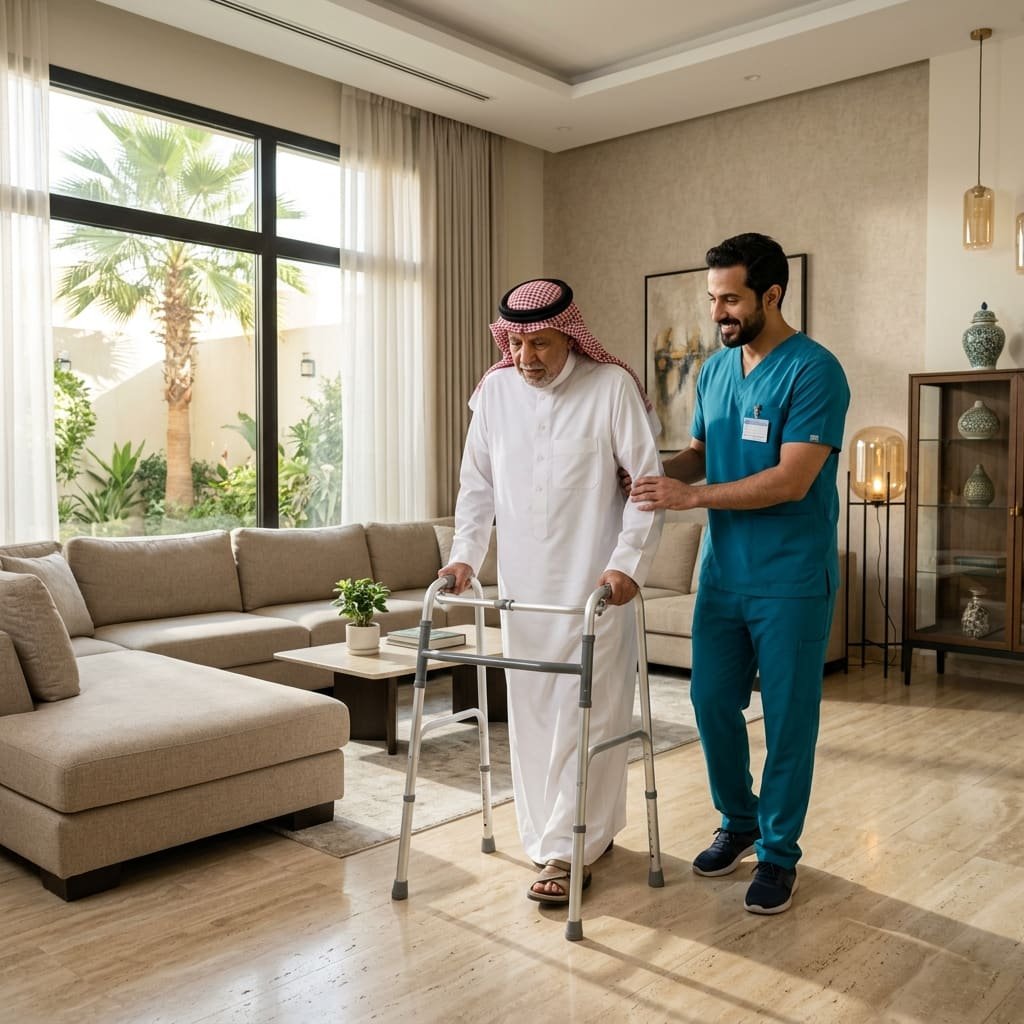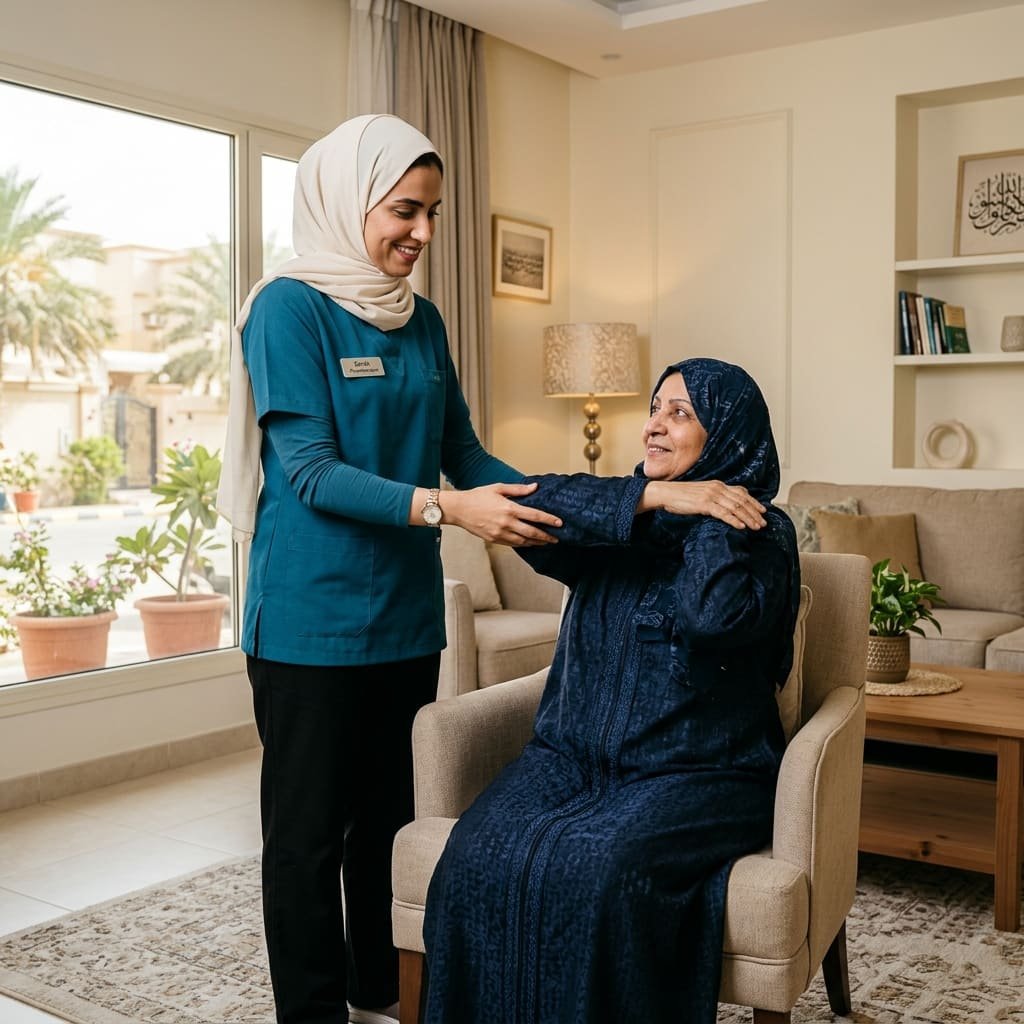
What happens when you request a visit?
When a family requests home physiotherapy, the first question should not be the appointment time alone. The coordination starts with the reason for the request: pain, weakness, walking difficulty, post-operative rehabilitation, stroke recovery, paediatric motor delay, or fall-risk reduction for an older adult. The team also needs the city and neighborhood, the patient's current mobility, whether there is an elevator or stairs, and whether a family member will be present.
Organized booking protects the patient from a random start. After surgery, discharge notes and surgeon precautions are especially useful. For neurological cases, hospital reports and current medication details help the therapist plan safely. For gait training, it matters whether the patient uses a walker, cane, wheelchair, or needs hands-on assistance. These details allow the first visit to become both an assessment and a practical beginning.
Information needed before confirmation
The team needs a first name or case identifier, age, city, neighborhood, contact number, diagnosis if available, reason for physiotherapy, current movement level, severe pain if present, and medical conditions such as heart disease, respiratory disease, diabetes, or blood pressure problems. This information is not used to diagnose remotely. It is used to screen the case and decide whether a home assessment is safe and appropriate.
It is also helpful to state whether the patient needs a male or female therapist before the appointment is confirmed. Practical home details matter too: narrow space, stairs, low bed height, recent falls, or the need for transfer assistance. The clearer the home description, the better prepared the therapist will be with time, tools, and a safe starting point for the assessment.
When home booking should wait
Some symptoms should not wait for a routine home physiotherapy appointment. Sudden chest pain, severe breathlessness, fainting, new facial or limb weakness, hot painful swelling in the calf, fever after surgery, unusually severe pain, or new loss of bladder or bowel control with nerve pain all require urgent medical review. These signs should not be treated as normal rehabilitation discomfort.
If a warning sign appears during the booking conversation, the responsible advice is to seek appropriate medical care first. Once the condition is medically stable and the treating physician's instructions are clear, a home assessment can be arranged. This sequence keeps patient safety ahead of the desire to begin exercise quickly. Physiotherapy works best when it is built on enough medical information and a stable clinical state.
How to prepare for the first visit
Preparation does not require complex equipment. A safe flat space, good lighting, a stable chair, comfortable clothing, and available medical reports are usually enough. If the patient uses a walker, cane, brace, wheelchair, or special footwear, keep it nearby. If falls are the concern, the therapist may need to see the corridor, bathroom entrance, bedroom layout, or the place where the patient usually loses balance.
A family member should be present for older adults, children, patients with memory difficulty, and anyone who needs transfer assistance. The family is not being asked to replace the therapist, but they often need to understand safe support between visits. In home rehabilitation, caregiver education can make the difference between a plan that stays on paper and a plan that becomes part of daily life.
What the therapist does during the session
The first session starts with the goal and a focused history, followed by an assessment appropriate for the case. This may include pain review, joint range, muscle strength, balance, standing ability, bed-to-chair transfer, or short-distance walking inside the home. Not every test is used for every patient. The important point is that the assessment should connect directly to the exercises and advice that follow.
After assessment, the therapist explains the findings and begins suitable exercise or functional training. The session may focus on pain control, joint mobility, walking practice, strengthening, balance, or caregiver instruction. By the end, the patient should know what to repeat, what to avoid, and when to contact the team if symptoms change. A clear ending makes the visit useful beyond the time the therapist spends in the home.
Cities and neighborhoods covered
The booking workflow is tied to the service areas published on the site: Jeddah, Makkah, and Qatif, with detailed neighborhood pages for the areas currently documented. Confirming the city and neighborhood helps organize therapist schedules and reduce delays, especially for patients who need regular visits. Some neighborhoods have dedicated pages because they contain detailed local content and service information.
If a neighborhood does not yet have its own page, the family can use the city page or contact page to confirm coverage. The site should not create neighborhood pages simply to increase keyword volume. Bidayah's content approach is to publish useful pages that can be maintained and expanded when there is a genuine service basis, not thin lists of place names.
After the first appointment
After the first assessment, the therapist may recommend a short education-and-exercise plan, a longer follow-up programme, or medical review before rehabilitation continues. There is no single duration that fits all cases. A patient after joint replacement may need range, strength, swelling control, and walking goals. A stroke survivor may need gradual neurological and functional objectives. The plan should follow the assessment rather than a fixed package.
Good follow-up means exercises are adjusted when pain, balance, range, or strength changes. Sessions may become less frequent when independence improves, or remain regular during early recovery. The patient should understand why the plan continues, what marker is being watched, and what the family should do between visits. That transparency turns booking into the start of an organized care relationship.
Privacy and responsible communication
Booking details are health information and should be treated as private. Reports should not be shared publicly, and patient photos or videos should not be used without clear consent. The team uses the information to understand need and coordinate the visit. If progress documentation is requested, it should have a clear clinical or educational purpose, not casual marketing use.
To request a visit, use the contact page or the relevant city and service links on the site. Prepare the diagnosis, reports, neighborhood, and male or female therapist preference before contacting the team. This helps the request arrive clearly and allows the first visit to become a structured assessment that can be continued safely inside the home.
Choosing the best page before booking
Before sending a booking request, it can help to start from the page closest to the need. If the problem is a clear service type such as elderly physiotherapy or post-operative rehabilitation, the service page explains the goal and expected approach. If the problem is a diagnosis such as stroke or sciatica, the condition page may be more useful. If the main question is geographic coverage, the city page or neighborhood guide is the shortest route.
This choice does not limit the patient's right to contact the team, but it makes the request more precise. A message saying that a patient in Jeddah needs help after joint replacement with walking difficulty gives the team more useful information than a general request for physiotherapy. Precision at the beginning reduces repeated calls and helps the therapist prepare appropriate tools and questions.
If the patient's condition changes after booking
A patient's condition may change between the booking request and the visit. Pain may increase, fever may appear, a fall may occur, or the physician may give new instructions. The team should be informed before the appointment because a plan that was suitable at the time of booking may need to be modified or postponed. Sharing these changes early supports safer decision-making.
If the change is mild and stable, the therapist may simply adjust intensity or turn the visit into assessment and education. If a warning sign appears, medical review may need to come first. That does not remove the value of physiotherapy; it places it at the correct point after the patient is stable. Early communication protects the patient and makes the booking process more professional.
Practical questions to send with the booking request
Families can make the booking request clearer by sending a few short questions with the basic details. Useful questions include: is the first visit an assessment or a full treatment session, does the patient need a report before the appointment, can a female therapist be arranged for a female patient, what room space is suitable for exercise, and should a family member attend? These questions help the team prepare a useful reply instead of only confirming a time.
If the patient is recovering after surgery, it is helpful to ask how surgeon instructions and weight-bearing limits will affect the first session. If the condition is neurological, ask how balance and walking will be assessed at home. If the patient is a child, ask whether a parent should attend and how play will be used in therapy. Each practical question adds information that makes the first visit more organized and less confusing.
How the patient knows the first visit worked
A successful first visit does not mean pain disappears immediately or that the patient walks a long distance on the same day. The real sign of success is that the family leaves with a clearer understanding of the condition, one measurable short-term goal, safe exercise or guidance, and warning signs that should stop the session or trigger contact. The first useful result may be learning how to rise from a chair safely or how to use a walker in the corridor without stumbling.
If the session ends without explanation or without linking exercises to a goal, the family should ask for clarification before continuing. If the plan is understandable and realistic, the next visits can build on it gradually. In this way, booking becomes the start of a clear rehabilitation pathway, not just another appointment in the family calendar.
What makes the booking page different from contact
The contact page receives broad questions, while the booking page owns a narrower decision: whether the patient is ready for a scheduled home physiotherapy visit and what information must be prepared before that visit. It therefore focuses on city, neighborhood, diagnosis when available, functional goal, mobility level, therapist-gender preference, and safety changes since the request was first made.
This separation prevents the booking page from competing with service pages or the general contact page. Service pages explain treatment types, condition pages explain clinical problems, and the booking page turns that understanding into a visit request. When internal links follow this logic, the family can move from learning to scheduling without repeating the same information on every page.