How the neighborhood guide helps the patient journey
A neighborhood guide is not a decorative list of place names. When a family searches for home physiotherapy in Jeddah, they usually want to know whether a visit can be arranged in their area, what will happen inside the home, and whether they should begin with the city page or a more local page. This guide brings together the published pages such as Al-Safa, Al-Naeem, Al-Rawdah and keeps them close to the homepage and sitemap rather than leaving them isolated.
A dedicated neighborhood page is useful when local details matter: housing type, building access, arrival instructions, family support, or common service needs in the area. If those details are not confirmed, the better route is to use the main Jeddah page or the contact page instead of creating a thin page. This approach protects content quality and makes the site structure clearer for both search engines and visitors.
What home visits are like in the city
Jeddah combines dense residential districts, busy roads, apartment towers, and larger family homes. That variety makes visit planning important because travel time, elevator access, and the exercise area inside the home can change the entire session structure.
A home visit in Jeddah is not planned from the neighborhood name alone. The team needs to understand the patient's condition, current mobility, whether there are stairs or an elevator, whether a family member will attend, and whether the goal is pain reduction, walking practice, balance training, or post-operative rehabilitation. These details change the visit because a patient using a walker needs a different plan from someone needing shoulder mobility or paediatric motor support.
Choosing the right neighborhood page
If the patient's neighborhood appears in this guide, start with that page because it connects local content with city and service links. If the neighborhood is not listed, that does not automatically mean coverage is unavailable; it means the site has not yet published a dedicated page for it. The practical next step is to use the main Jeddah page or the booking page to confirm whether a visit can be arranged.
The right starting page reduces confusion. A neighborhood page gives local context, a service page explains the rehabilitation type, and a condition page explains the clinical problem. A visitor may start with the guide, move to elderly physiotherapy or stroke rehabilitation, and then request a visit. Good internal linking makes that journey short, understandable, and useful rather than a random collection of links.
Location details that improve coordination
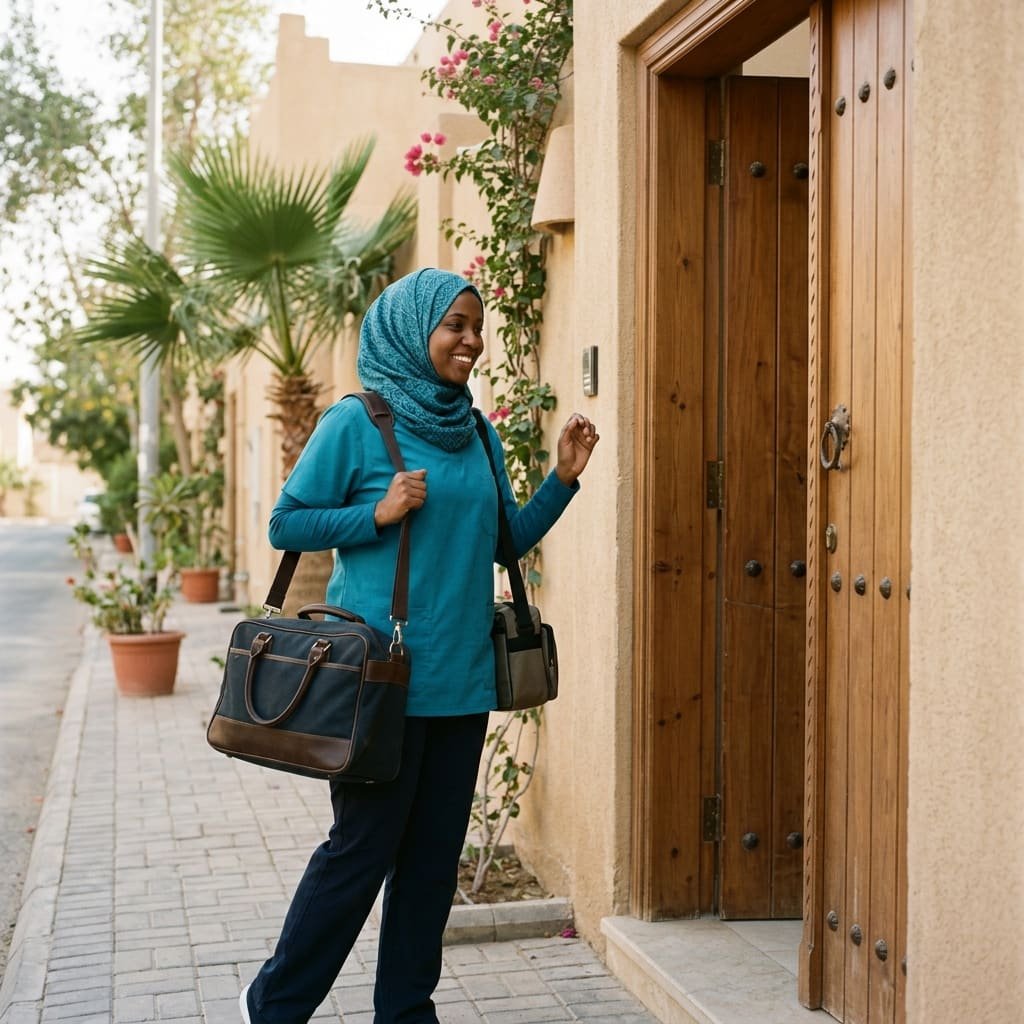
In Jeddah, precise neighborhood details and a clear nearby landmark can help the therapist arrive on time. Parking, building gate access, elevator availability, and floor number should be clarified before the visit.
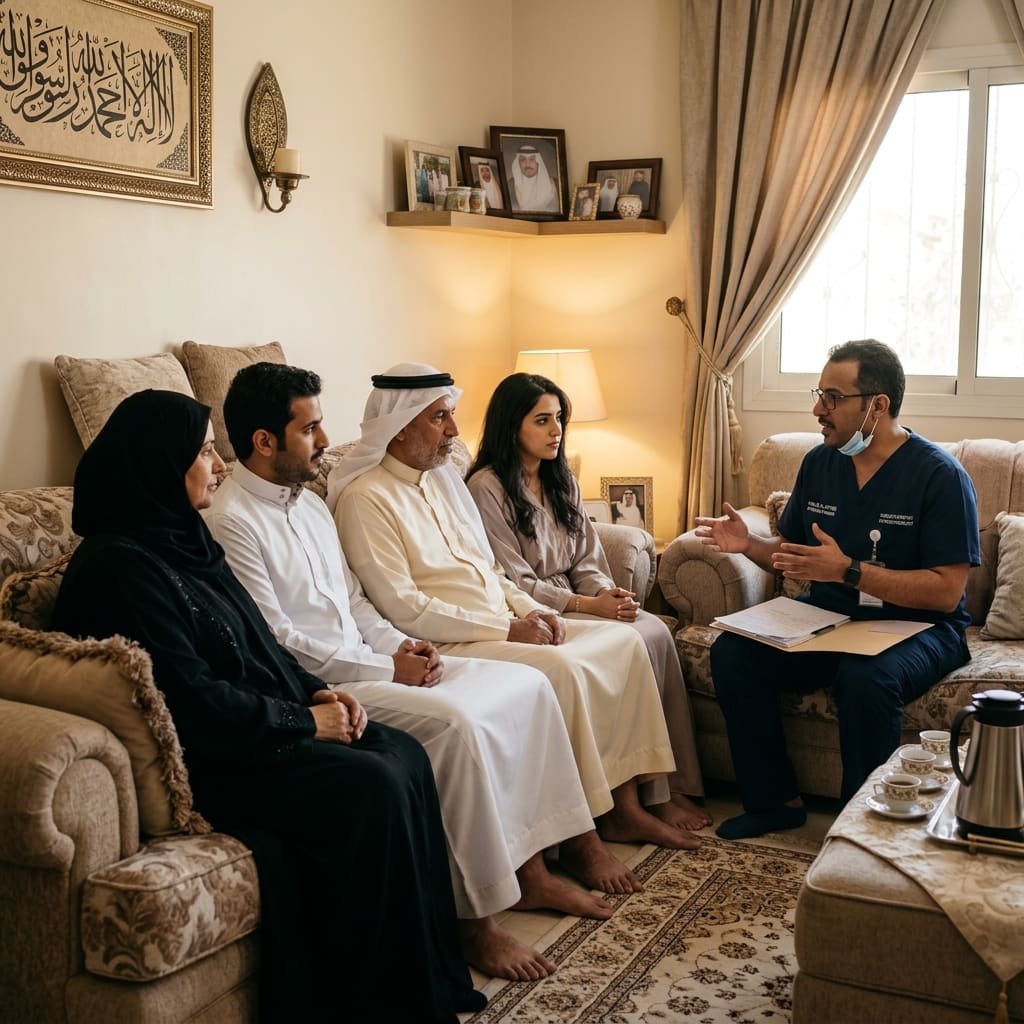
It also helps to mention whether the patient needs assistance at the entrance and whether there are barriers such as narrow stairs, a long corridor, or limited exercise space. These details are not used to judge the home; they are used to prepare the session. Some patients need a small bedside area, some need a walking corridor, and some need a stable chair close to a table. Home details make the rehabilitation plan realistic.
Currently published neighborhoods
The neighborhoods currently included in this guide are: Al-Safa, Al-Naeem, Al-Rawdah. Each has its own page connected to the city, relevant services, and appropriate conditions. The list is intentionally limited because it represents real published pages, not future promises. When a new neighborhood is added, it should contain meaningful local content, clear internal links, and suitable images before it enters the sitemap and homepage directory.
This organization helps search engines understand the relationship between city, neighborhood, and service, but it is even more important for the patient. Families do not need dozens of pages before finding the right path. They need a page that moves them toward the correct service, condition, or booking action quickly. That is why the neighborhood links appear here and the service links appear inside each local page.
Services most connected to neighborhood searches
In Jeddah, common home physiotherapy requests include general home physiotherapy, elderly care, stroke rehabilitation, post-operative recovery, balance training, walking practice, and muscle strengthening. The service should not be selected by name only. The family should define the practical goal: safer standing, more confident walking, reduced joint stiffness, improved range, or caregiver training for bed-to-chair transfer.
When the goal is clear, the neighborhood page becomes an entry point rather than the end of the journey. The family can move from the neighborhood guide to the service page and then to booking or contact. Internal links should serve the visitor's next question, not merely add search phrases. A guide that answers the patient's intent performs better because it is genuinely useful.
Images and local content quality
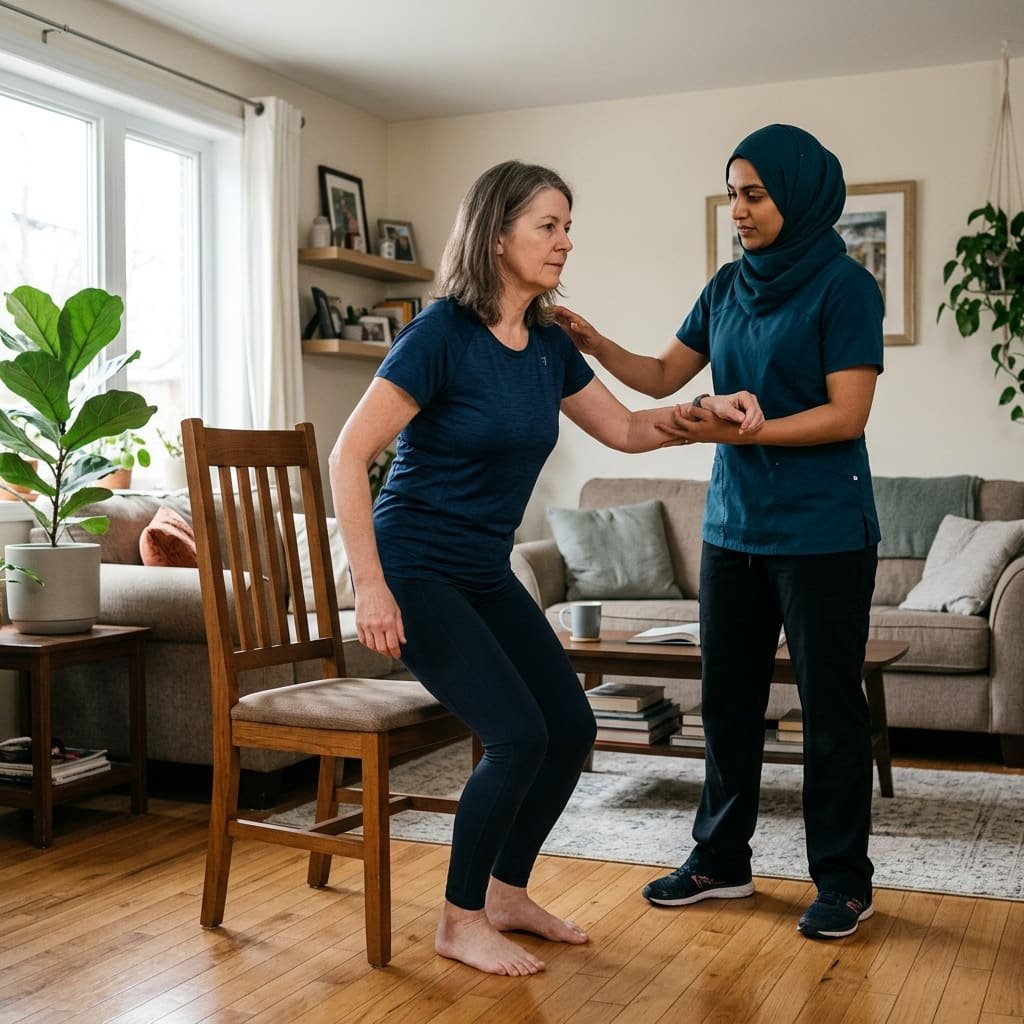
Neighborhood pages should use images that actually support the idea of in-home care: therapist arrival, balance assessment, caregiver education, or simple equipment used inside a real home-like setting. The image should not be a generic background. It should help the visitor picture the session inside their own home. Every neighborhood hub should therefore include at least three distinct images with descriptive alternative text.
Local content does not require unverified names, license claims, or details that cannot be maintained. Useful content can explain visit preparation, access considerations, room setup, family presence, and when a physician should be contacted before exercise. Those topics are stable and helpful. Exaggerated claims or unapproved staff details weaken trust and create a credibility problem for a medical site.
Safety before exercise
Even when a neighborhood is covered, some cases need medical review before a home visit. Sudden chest pain, severe breathlessness, fainting, new weakness, fever after surgery, or hot painful leg swelling are not routine booking issues. The visitor should understand that home physiotherapy supports stable cases and does not replace emergency care or diagnosis.
Once the patient is medically stable, the home visit becomes valuable because the therapist can see the real environment: bed, chair, corridor, rugs, bathroom entrance, walking path, and the way family members assist. These details are not visible in a clinic in the same way, which is why home physiotherapy is often chosen for patients who struggle to travel safely.
How this guide should expand
Future expansion of the Jeddah neighborhood guide should follow three rules: confirm that a real page is needed, write local content that is not duplicated, and link it from the homepage, city page, and sitemap. Creating a new URL without useful text or relevant images does not help the patient. Thin pages can increase similarity, dilute trust, and make the site harder to navigate.
For now, this guide acts as both a navigation page and a content-quality checkpoint. New neighborhoods can be added when demand is repeated and coverage is confirmed. Until then, the guide provides clear links to published neighborhoods and essential services, making the visitor's path from search to booking shorter, calmer, and more trustworthy.
Why the Jeddah Guide Cannot Be a City Name Swap
Jeddah is not a city guide that can be reduced to a neighborhood name. The visit may involve northern districts, coastal routes, dense apartment towers, compound gates, family villas, elevator access, parking limits, and different travel patterns between north, central, and south Jeddah. The guide therefore focuses on practical access details, not only a list of areas.
A family searching from Jeddah usually wants to know whether therapy can be done inside a compact apartment, whether the corridor can support walking practice, and whether traffic, building access, or elevator availability will affect the session. Those questions make the Jeddah hub a local planning page rather than a copy of the Makkah or Qatif guide.
Jeddah-Specific Booking Details
Before booking in Jeddah, the family should mention whether the home is in a tower, villa, walk-up apartment, or gated compound. That information shapes arrival timing and session setup more than the district name alone. A walker user on an upper floor needs different preparation from a shoulder-pain patient in a ground-floor home or a child doing motor practice in a small living room.
That is why the guide connects Al-Safa, Al-Naeem, and Al-Rawdah to relevant services such as elderly therapy, stroke rehabilitation, and post-operative care. The page turns a local search into a clear pathway: identify access details, read the right service, prepare reports, then contact the team.
How the guide supports home session request processs
When a Jeddah family reaches the Jeddah Jeddah district directory, they are often comparing several questions at once: is the service available near this area, does the patient need a male or female clinical therapist in Jeddah, should the first step be a broad assessment or a specific service, and is there a condition page that explains the medical problem before contact? The guide keeps neighborhood and service links in one place so home sessionors do not have to guess their way through the site.
A home session request process becomes easier when the home sessionor understands that a neighborhood page is not a substitute for assessment; it is an organized entry point. The Jeddah family can review access considerations, open the relevant service such as elderly physiotherapy or stroke rehabilitation, and prepare reports before contacting the team. Internal structure then becomes a practical pathway instead of a collection of pages with no clear next step.
Reviewing and updating the guide over time
The Jeddah Jeddah district directory should not remain static if service areas change or new neighborhoods deserve their own pages. Periodic review should confirm that links work, images render, every neighborhood page has useful text, and each page is connected from the homepage and sitemap. Titles and meta descriptions should also be checked so pages do not unintentionally compete for the same search intent.
Before a new neighborhood is added, the editorial process should ask what value the page adds for the Jeddah resident. Does it include useful access details, housing considerations, or common service needs? Are there three suitable images with clear alternative text? Does the page guide the home sessionor toward booking or the correct service? If the answers are not clear, it is better to keep the neighborhood within the city page until genuine content is available.