Why credential transparency matters at home
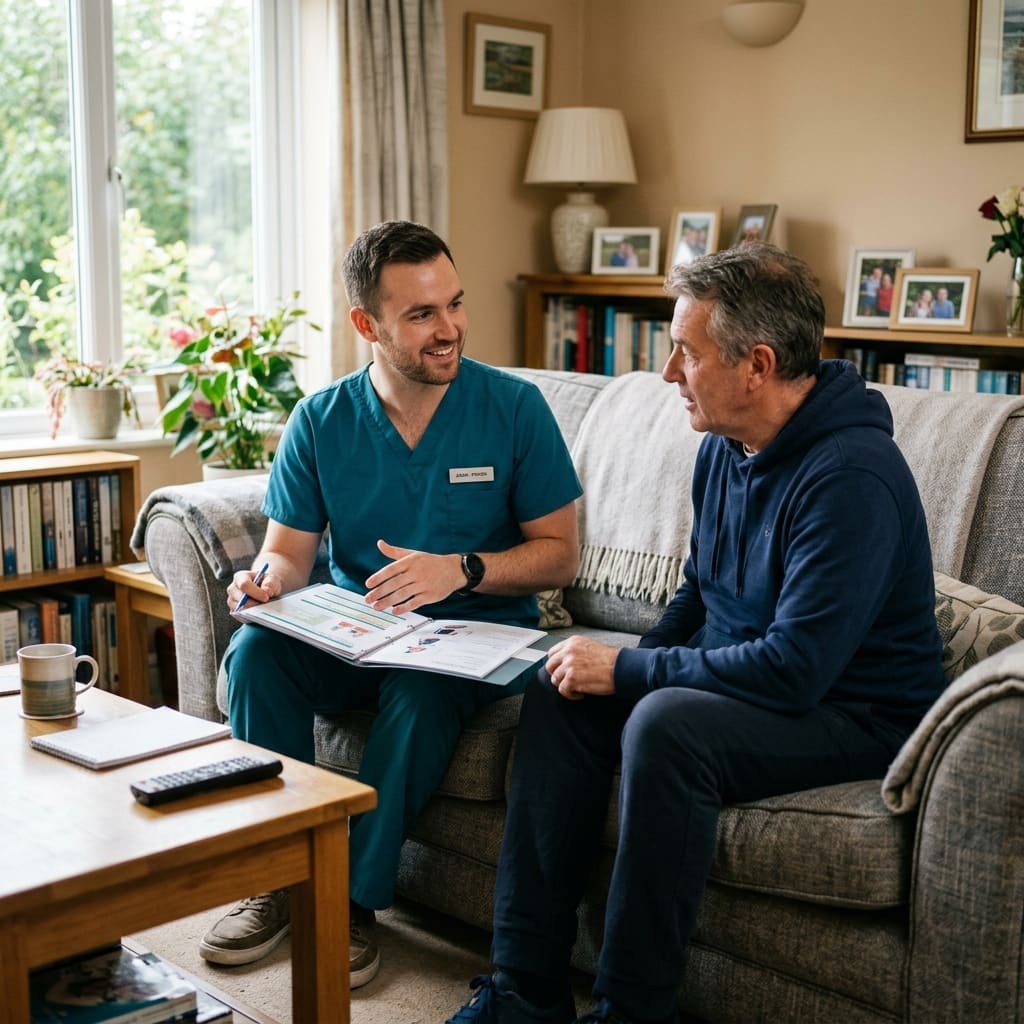
Home physiotherapy takes place in the patient's private environment: the bedroom, living room, corridor, stairs, and daily family routine. The patient is not entering a clinic with visible departments and reception systems, so the family needs a clear understanding of the professional framework behind the visit. Credentials matter because the therapist is not only showing exercises; they are judging pain, movement, balance, fatigue, safety, and the point at which exercise should stop.
This page does not publish individual names or license numbers because personal professional information should not be displayed unless it has been formally approved and can be kept accurate. Instead, it explains what families can reasonably ask, what documents may be relevant, how experience should be matched to the condition, and why responsible clinicians avoid fixed promises of cure. That is more useful than an outdated profile list that cannot be verified.
What verification looks like before the visit
Professional verification begins with triage. The coordinator should ask about the diagnosis, reason for referral, current mobility, age, recent surgery, medications that affect exertion, weight-bearing restrictions, and warning signs. These questions are not administrative friction; they protect the patient from a generic session that may be unsuitable. When essential information is missing, a careful service asks for a report or delays intensive exercise until the medical limits are clear.
The same standard continues when the therapist arrives. A competent visit includes safe range-of-motion checks, strength review, balance observation, transfer assessment, gait review, and a look at the home environment. The therapist should explain why each exercise is chosen and what it is meant to change. They should not force painful movement without a clinical reason or ignore signs such as severe breathlessness, chest pain, faintness, or rapidly worsening weakness.
Questions families can ask
Families can ask about the therapist's education route, experience with the relevant diagnosis, and the structure of the first assessment. For example, a stroke survivor may need someone experienced in gait retraining and transfer safety, while a patient after knee replacement needs attention to surgical precautions, swelling, range, and progressive loading. A child with motor delay requires a different style again, with play, parent coaching, and developmental observation.
If the family wants to review personal credential details, that should happen through an appropriate official channel and with respect for the therapist's consent and privacy. A website should not publish copied documents, unclear images, or license claims that are not maintained. Bidayah therefore describes the verification method and care standards here rather than inventing personal profiles. Any future staff profile should be approved, documented, and updated when professional status changes.
Privacy and gender matching
Privacy is part of clinical quality. In home care, the patient may need loose clothing, transfer practice, bed mobility, balance support, or help moving from sitting to standing. For cultural comfort and therapeutic trust, Bidayah's visit coordination respects therapist-patient gender matching: male therapists for male patients and female physiotherapists for female patients when home care is arranged. The goal is not only dignity; it is better participation in assessment and exercise.
Privacy also covers photos, videos, and health information. Patients should not be photographed, filmed, or discussed publicly unless there is clear, specific consent. Even positive recovery stories need boundaries. The credential page is therefore connected to patient media privacy, editorial policy, and medical disclaimer pages. A professional service is measured by what it refuses to exaggerate as much as by what it can provide.
Experience does not guarantee a fixed outcome
A therapist may be experienced and still cannot guarantee the same result for every patient. Recovery after stroke depends on the size and location of injury, time since onset, cognition, communication, balance, comorbidities, and daily support. Back pain may settle quickly for one person and take longer for another because of fear of movement, sleep, work demands, or nerve symptoms. A responsible therapist sets measurable goals rather than selling certainty.
Useful goals include safer transfers, better walking tolerance inside the home, reduced fall risk, improved knee range after surgery, stronger sit-to-stand ability, or clearer caregiver technique. These goals can be reviewed over time. When the plan changes because the patient's response changes, the family can see clinical reasoning in action. That adaptability is one of the clearest signs of professional competence in home physiotherapy.
Medical warning signs come first
A qualified clinician knows the limits of home exercise. Physiotherapy does not replace emergency care, medical diagnosis, or surgical follow-up. Sudden chest pain, severe breathlessness, fainting, hot painful calf swelling, rapidly worsening limb weakness, new loss of bladder or bowel control with nerve pain, unexplained fever after surgery, or pain that does not match the exercise requires urgent medical review. These are not normal rehabilitation discomforts.
When a warning sign appears, the correct professional decision is to stop the session and guide the family toward medical care. This protects the patient and keeps physiotherapy within its proper role. A therapist does not prove skill by pushing through unsafe symptoms; they prove it by adjusting intensity, communicating clearly, and escalating when the patient needs a physician rather than another repetition.
How families can monitor quality over time
Quality should remain visible beyond the first visit. Families can ask whether progress is being measured, whether exercises are changing as function improves, whether the caregiver understands safe assistance, and whether daily independence is improving. If sessions repeat in exactly the same way for weeks without a functional reason, it is appropriate to ask why. The answer should connect back to the patient's goals, tolerance, and medical status.
Progress is not always fast, especially with neurological conditions, long bed rest, frailty, or complex post-operative recovery. Still, there should be meaningful markers: safer standing, steadier steps, less fear during transfers, better control of pain after exercise, or more confident family support. These practical details matter more than impressive language. They show whether credentials are translating into real clinical value.
How this page supports safer decision-making
Credential verification is not a single document; it is a pattern of responsible behavior. The family should receive clear communication, realistic goals, respect for privacy, and a plan that adapts to the patient. The therapist should understand when to ask for medical records, when to coordinate with a physician, and when to avoid exercise. The website should avoid exaggerated claims and keep its medical content within evidence-informed boundaries.
The next practical step is to request an initial home assessment, prepare available reports, and ask credential-related questions before the programme begins. That makes verification part of the care conversation instead of a separate argument. Bidayah's position is simple: safe home physiotherapy depends on enough information, the right professional fit, measurable goals, privacy, and readiness to refer when the situation is beyond rehabilitation.
How families can document their questions
Families often get more value from the first visit when they write down their main questions beforehand. Useful questions include: What is the nearest functional goal? Which sign shows the exercise is appropriate? Which sign means we should stop? Does the patient need another medical report? How will the plan change if standing or walking improves? Written questions turn credential verification into a practical conversation about patient safety rather than a tense formal exchange.
It also helps to keep simple notes after each visit: exercises explained, fatigue level, pain changes, how much help the patient needed, and questions that came up after the therapist left. These notes help the therapist adjust the programme and help the family notice small improvements that are easy to miss day by day. A simple written review makes quality easier to evaluate fairly.
Credential documents versus professional behavior
A credential document matters, but it is not the only sign of safe care. Professional behavior appears in punctuality, hand hygiene, clear explanation, asking permission before touching or adjusting the patient, respecting pain, and acknowledging the limits of the visit. It also appears when the therapist takes family concerns seriously and does not push movement the patient does not understand. These daily behaviors make professional skill visible inside the home.
When families need further reassurance, they can ask about the service pathway, data privacy, and how reports are shared with a physician when needed. Trust should not rely on broad statements such as guaranteed results or being the best. Professional trust is built through steps that can be understood: assessment, planning, follow-up, documentation, referral when necessary, and full respect for the patient's private home.