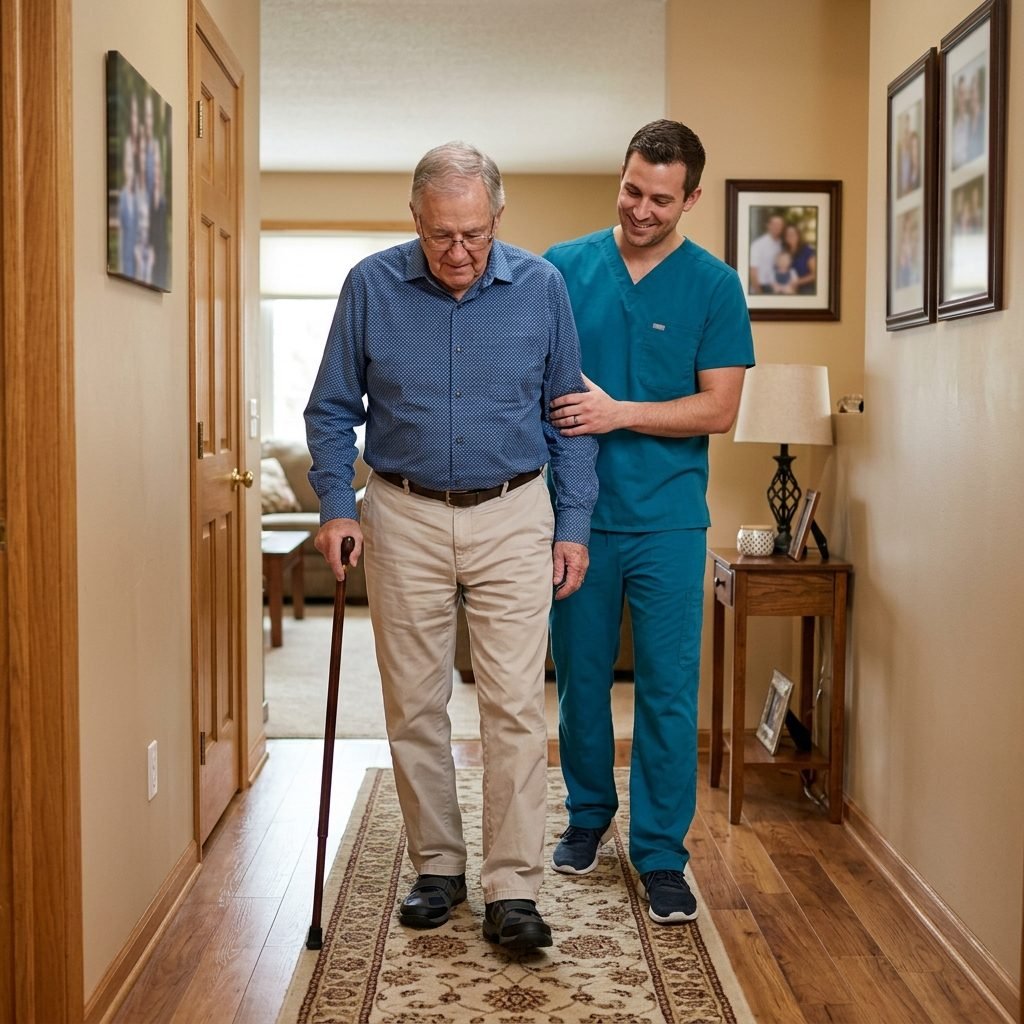
Accidental falls in older adults are a major medical concern that can lead to severe fractures, loss of independence, and increased mortality. Clinical data shows that one-third of adults over 65 fall at least once a year. Our structured home-based fall prevention program is designed in compliance with guidelines from global geriatric societies. We focus on identifying multi-factorial risks and implementing targeted interventions to help patients age safely in place.
1. Multi-Factorial Pathophysiology of Fall Risks in Geriatric Patients
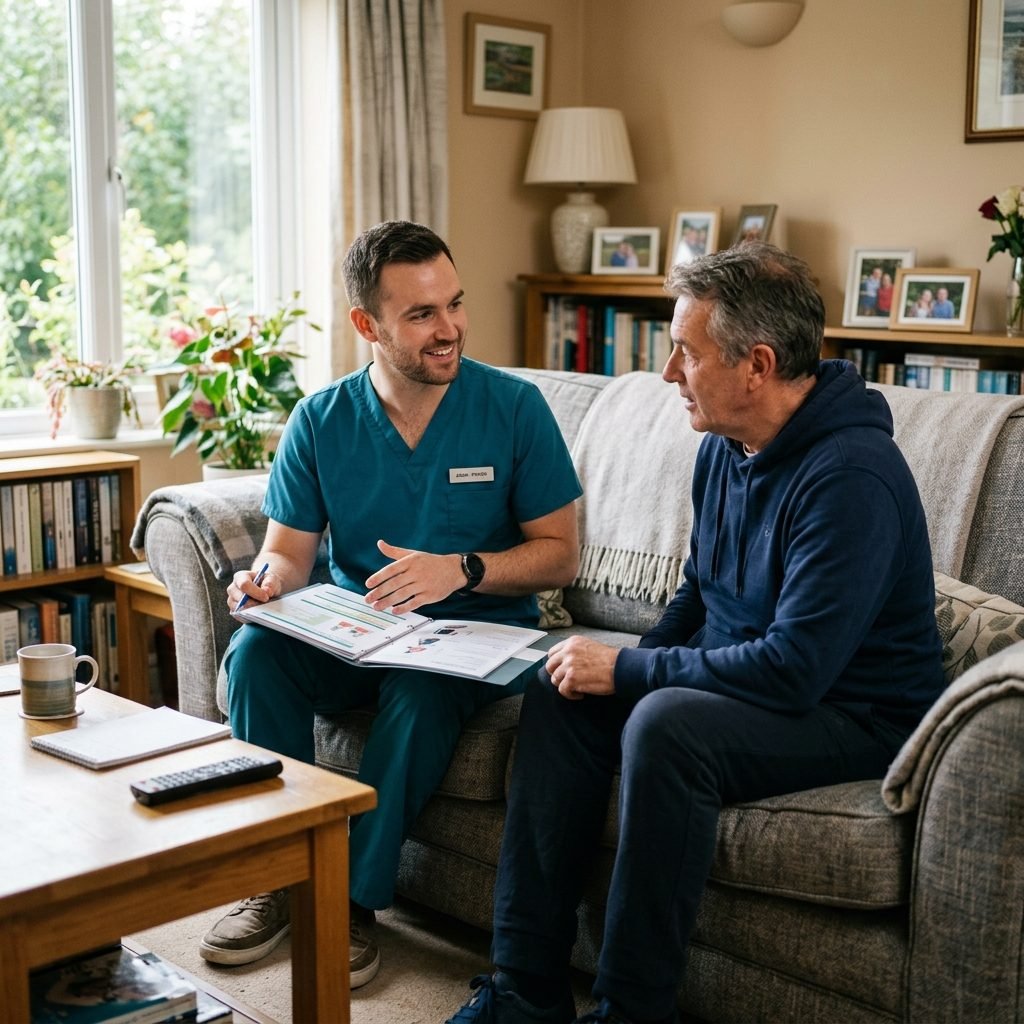
Falls are rarely isolated events; they result from a complex interaction between intrinsic clinical risk factors unique to the patient and extrinsic environmental hazards in their living space.
Intrinsic risk factors include sarcopenia (loss of muscle mass and quality), osteopenia, delayed motor reflexes, visual impairments like reduced contrast sensitivity, and age-related vestibular decline.
Extrinsic risk factors involve environmental hazards such as poor lighting, slippery floors, unsecured throw rugs, high door thresholds, and polypharmacy, which can cause orthostasis or dizziness.
Our fall prevention program addresses both sets of risk factors. Fostering physical capacity and modifying the home environment allows us to reduce overall fall risks and help older adults maintain their independence.
2. Clinical Screening and Assessment Protocols (STEADI Framework)
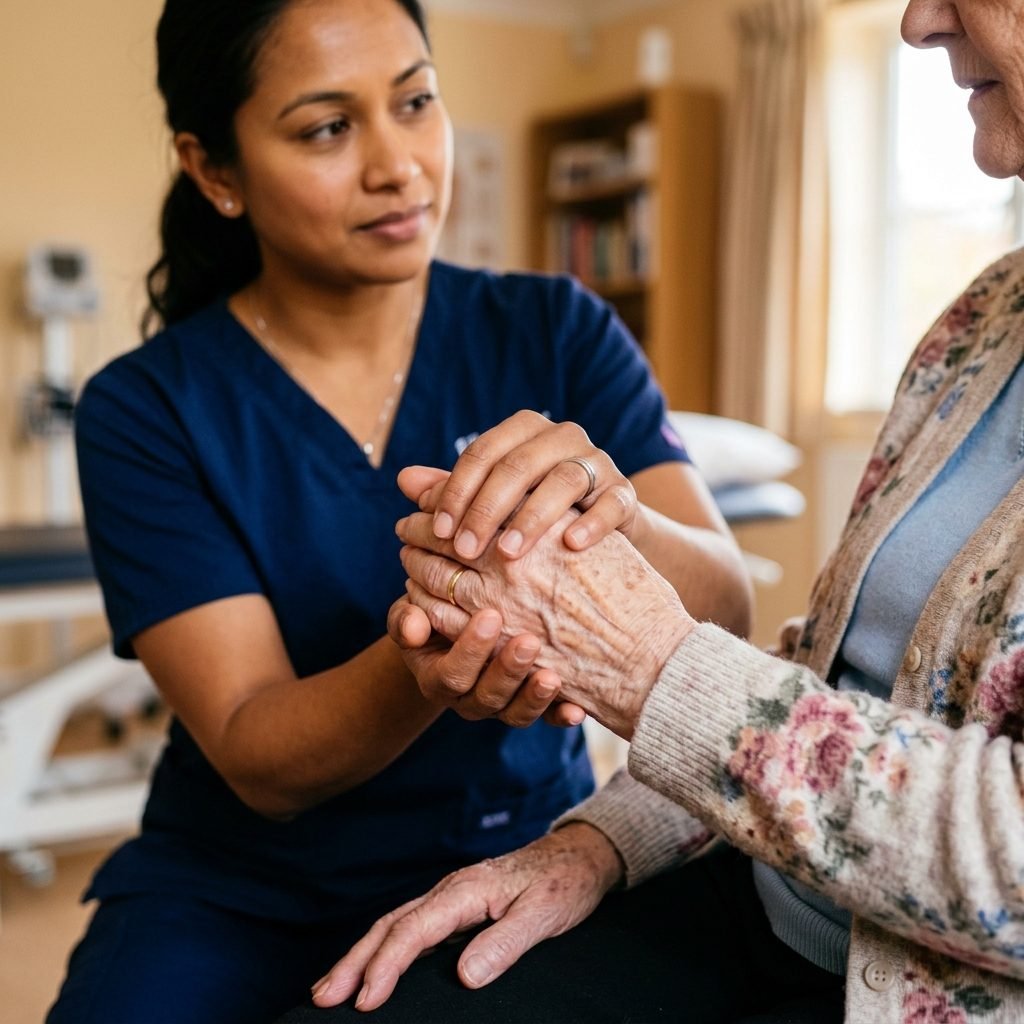
We utilize the medically recognized Stopping Elderly Accidents, Deaths, and Injuries (STEADI) toolkit developed by the CDC. This system categorizes fall risk into low, moderate, or high categories.
The clinical screening includes three physical tests: the Timed Up and Go (TUG) test for mobility, the 30-Second Chair Stand test to evaluate lower body strength, and the 4-Stage Balance Test.
We review the patient's medications in collaboration with their physicians. We identify high-risk medications (using the Beers Criteria) that can impair balance or cause orthostatic hypotension, such as sedatives or diuretics.
We assess the patient's fear of falling using the Falls Efficacy Scale-International (FES-I). A high fear of falling can lead to self-restricted activity, accelerating muscle wasting, joint stiffness, and physical decline.
3. Implementing the Otago Exercise Program (OEP) for Strength and Balance
We implement the Otago Exercise Program (OEP), an evidence-based home intervention shown to reduce falls by up to 35% in older adults. The program is tailored to the patient's baseline mobility levels.
The Otago program combines lower extremity strengthening exercises—using adjustable ankle weights to target the quadriceps, hip abductors, and calf muscles—with progressive balance retraining.
Exercises progress in difficulty as the patient's strength and stability improve. Our therapists supervise the sessions to ensure proper form and prevent excessive loading on joints affected by osteoarthritis.
This structured training improves muscle power, joint stability, and aerobic capacity. Fostering these physical gains gives patients the mechanical reserves needed to recover balance and prevent a fall if they trip.
4. Managing Orthostatic Hypotension and Vestibular Instability
Orthostatic hypotension (sudden blood pressure drop upon standing) and vestibular instability are primary causes of lightheadedness and falls. We teach patients specific behavioral strategies to manage these risks.
We instruct patients to transition slowly from supine to sitting, allowing their cardiovascular system to adjust before standing. This precaution is vital during nighttime or early morning transitions.
We address vestibular instability through targeted gaze stabilization and habituation exercises. This training improves visual clarity during head movements, reducing motion-induced dizziness during daily tasks.
We emphasize proper hydration and coordinate with the patient's physicians to review medications that can affect blood volume. Managing blood pressure stability is key to preventing dizziness and falls during exercise.
5. Environmental Home Modifications and Safety Standards
A safe home environment is critical for preventing falls. We perform a detailed home safety evaluation and recommend modifications, including installing secure grab bars in bathrooms and next to the toilet.
We advise removing unsecured rugs, clearing hallways of electrical cords and clutter, and ensuring that daily items are stored within easy reach, eliminating the need to climb or bend excessively.
We recommend non-slip mats in wet areas and motion-activated nightlights along pathways to the bathroom. Adequate lighting is essential for visual guidance and preventing disorientation during the night.
These environmental modifications create a supportive living space that accommodates the patient's physical limitations. Fostering a barrier-free home supports independent mobility and reduces fall risks.
6. Optimizing Lighting, Contrast Sensitivity, and Visual Guidance
Adequate lighting and high visual contrast are essential for spatial awareness. We recommend applying high-contrast paint or tape to stair edges and thresholds to assist patients with low vision.
We address glare from reflective floors and windows, which can temporarily blind patients with age-related visual decline. We recommend anti-glare filters and positioning light sources to provide even illumination.
We encourage regular eye examinations to update corrective lenses and monitor conditions like cataracts or glaucoma, which impair peripheral vision and the ability to detect obstacles.
Optimizing the visual environment helps patients judge depth and identify obstacles accurately. Improving lighting and contrast supports dynamic balance, reducing missteps and accidental falls.
7. Safe Falling Techniques and Dynamic Floor Recovery Training
If a fall occurs, knowing how to react can prevent serious injury. We teach patients safe falling techniques (safe landing principles) to protect the head, spine, and hips from direct impact.
We instruct patients to remain calm after a fall, taking deep breaths to assess for pain or injury before attempting to get up, preventing secondary injuries caused by sudden movement.
We train patients in floor recovery strategies, teaching them how to roll, transition to all fours, crawl to sturdy furniture, and use it for support to rise safely, combined with caregiver training.
This hands-on training reduces the anxiety of being stranded on the floor. Fostering these recovery skills builds confidence, empowers patients, and ensures they can manage emergency situations safely.
8. Polypharmacy Review and Collaboration with Medical Teams
Polypharmacy (taking multiple medications) is a significant, modifiable risk factor for falls in older adults. We document all medications and supplements the patient takes, checking for interactions.
We collaborate with the patient's primary care physicians to review their medication regimen, identifying drugs that can cause drowsiness, muscle weakness, or postural instability (Beers Criteria).
We educate the family on the importance of medication compliance and monitoring for side effects, such as dizziness or fatigue, that occur after introducing new prescriptions.
Coordinating medication management reduces adverse drug events and improves alertness. Managing drug-related side effects supports the patient's balance, coordination, and physical safety at home.
9. Bone Health Promotion and Fracture Prevention Strategies
Falls can lead to serious injuries, such as hip fractures, particularly in patients with osteoporosis. We integrate bone health promotion into our physical therapy plans to reduce fracture risks.
We recommend regular bone density screenings (DEXA scans) and discuss calcium and vitamin D supplementation with the patient's physician to support bone mineralization and structural integrity.
We incorporate progressive resistance exercises and weight-bearing training to stimulate bone remodeling, avoiding high-impact loading or severe spinal flexion for patients with severe osteoporosis.
Strengthening bone structure and improving balance reduce the likelihood of fractures if a fall occurs. This preventive care protects patients from the complications associated with prolonged immobility.
10. Exercise Prescription Parameters and Long-Term Fall Prevention Monitoring
Fall prevention requires a structured exercise prescription. We define parameters—frequency, intensity, time, and type—tailored to the patient's physical capacity, target goals, and cardiovascular health.
We monitor vital signs and RPE during sessions, ensuring the patient remains within safe limits. We prescribe a customized home exercise program to maintain progress between visits.
We reassess the patient every three months using STEADI metrics, adjusting exercise difficulty and balance challenges as their strength and stability improve, ensuring continuous progress.
Long-term prevention relies on collaboration and consistent practice. We provide continuous support, feedback, and encouragement to help patients and their families maintain independent mobility and prevent falls.
11. Clinical Glossary of Physical Therapy and Rehabilitation Terms
This glossary provides essential medical and clinical definitions that form the basis of our fall prevention protocols. Understanding these terms helps patients and caregivers comprehend the rehabilitation plan.
- ✓Humerus: The long bone of the upper arm, extending from the shoulder to the elbow and providing muscular support.
- ✓Radius: The lateral bone of the forearm, situated on the thumb side, facilitating pronation and supination.
- ✓Ulna: The medial bone of the forearm, extending parallel to the radius and forming the elbow joint.
- ✓Femur: The longest and strongest bone in the human body, connecting the pelvis to the knee and bearing weight.
- ✓Tibia: The larger medial bone of the lower leg, commonly called the shinbone, bearing most mechanical weight.
- ✓Fibula: The slender lateral bone of the lower leg, running parallel to the tibia and stabilizing the ankle.
- ✓Clavicle: A curved long bone connecting the sternum to the scapula, protecting superior vessels and nerves.
- ✓Scapula: A flat, triangular bone located on the posterior aspect of the shoulder girdle, assisting arm motion.
- ✓Sternum: A flat bone located in the middle of the anterior chest wall, anchoring the ribs for protection.
- ✓Ribs: Curved bones forming the thoracic cage, protecting internal organs and assisting in respiration.
- ✓Pelvis: A bony basin connecting the spine to the lower limbs and supporting abdominal visceral organs.
- ✓Sacrum: A triangular bone formed by fused sacral vertebrae, situated at the base of the vertebral column.
- ✓Coccyx: The small terminal portion of the spinal column, formed by fused rudimentary vertebrae.
- ✓Vertebra: An individual bone of the spinal column, enclosing and protecting the spinal cord.
- ✓Cervical Vertebrae: The first seven vertebrae of the spinal column, supporting the skull and head mobility.
- ✓Thoracic Vertebrae: The twelve middle vertebrae of the spine, articulating with the ribs to form the back.
- ✓Lumbar Vertebrae: The five lower vertebrae of the spine, bearing the greatest mechanical weight and load.
- ✓Cranium: The bony structure enclosing and protecting the brain and sensory organs, including facial bones.
- ✓Mandible: The only mobile bone of the skull, essential for mastication and speech production.
- ✓Maxilla: A fixed bone forming the upper jaw, nose, and the floor of the orbital cavities.
- ✓Zygomatic: The cheekbone forming the lateral portion of the eye orbit and facial structure.
- ✓Sphenoid: A complex bone at the skull base, articulating with and binding almost all other cranial bones.
- ✓Ethmoid: A light bone separating the nasal cavity from the brain and forming part of the orbit.
- ✓Temporal: A bone situated at the sides and base of the skull, housing the auditory organs.
- ✓Frontal: The bone forming the forehead, anterior cranial roof, and superior eye orbits.
- ✓Parietal: A paired bone forming the sides and roof of the cranium, protecting the cerebral cortex.
- ✓Occipital: A bone situated at the posterior-inferior region of the skull, containing the foramen magnum.
- ✓Carpals: Eight small bones forming the wrist joint, enabling multidirectional manual flexibility.
- ✓Metacarpals: Five bones forming the palm of the hand, connecting the wrist to the digits.
- ✓Phalanges: Small bones forming the digits of hands and feet, facilitating grip and prehension.
- ✓Tarsals: Seven bones forming the ankle and rearfoot, bearing the initial mechanical load of walking.
- ✓Metatarsals: Five long bones forming the arch of the foot, connecting the ankle to the toes.
- ✓Patella: A small sesamoid bone situated anterior to the knee joint, protecting it and enhancing quadriceps pull.
- ✓Biceps Brachii: A two-headed muscle on the anterior arm acting to flex the elbow and supinate the forearm.
- ✓Triceps Brachii: A three-headed muscle on the posterior arm acting to extend the elbow joint.
- ✓Deltoid: The triangular muscle covering the shoulder, acting to abduct, flex, and extend the arm.
- ✓Pectoralis Major: A large chest muscle acting to adduct, flex, and medially rotate the humerus.
- ✓Trapezius: A broad back muscle controlling scapular elevation, depression, retraction, and rotation.
- ✓Latissimus Dorsi: A broad back muscle acting to extend, adduct, and medially rotate the arm.
- ✓Rectus Abdominis: The straight abdominal muscle acting to flex the trunk and stabilize the pelvis.
- ✓Obliques: Lateral abdominal muscles facilitating trunk rotation, lateral flexion, and intra-abdominal pressure.
- ✓Gluteus Maximus: The largest gluteal muscle acting to extend the hip and maintain upright posture.
- ✓Sartorius: The longest muscle in the body, running across the thigh to flex the hip and knee.
- ✓Gracilis: A medial thigh muscle acting to adduct the hip and assist in knee flexion.
- ✓Iliopsoas: A primary hip flexor muscle composed of the psoas major and iliacus muscle units.
- ✓Piriformis: A deep gluteal muscle acting to laterally rotate the hip; can compress the sciatic nerve.
- ✓Supraspinatus: A rotator cuff muscle initiating arm abduction and stabilizing the humeral head.
- ✓Infraspinatus: A rotator cuff muscle acting to laterally rotate the arm and stabilize the glenohumeral joint.
- ✓Subscapularis: A rotator cuff muscle acting to medially rotate the arm and stabilize the shoulder joint.
- ✓Teres Minor: A small rotator cuff muscle assisting in external rotation and stability of the humerus.
- ✓Radial Nerve: A nerve innervating the extensor muscles of the arm, forearm, and hand.
- ✓Ulnar Nerve: A nerve running along the elbow, innervating the intrinsic hand and finger muscles.
- ✓Median Nerve: A nerve passing through the carpal tunnel, controlling the thumb and hand grip.
- ✓Femoral Nerve: A nerve innervating the quadriceps muscle and providing sensation to the anterior thigh.
- ✓Peroneal Nerve: A nerve controlling foot dorsiflexion; injury leads to clinical foot drop.
- ✓Tibial Nerve: A nerve innervating the calf muscles and plantar surface of the foot, assisting plantarflexion.
- ✓Axillary Nerve: A nerve innervating the deltoid and teres minor, providing sensation to the lateral shoulder.
- ✓Musculocutaneous Nerve: A nerve innervating the elbow flexor muscles and lateral forearm skin.
- ✓Obturator Nerve: A nerve innervating the hip adductor muscles and providing medial thigh sensation.
- ✓Oculomotor Nerve: The third cranial nerve, controlling most eye movements and pupillary constriction.
- ✓Trochlear Nerve: The fourth cranial nerve, controlling downward and inward eye movement.
- ✓Abducens Nerve: The sixth cranial nerve, controlling lateral eye movement.
- ✓Trigeminal Nerve: The fifth cranial nerve, controlling facial sensation and mastication muscles.
- ✓Facial Nerve: The seventh cranial nerve, controlling muscles of facial expression and taste.
- ✓Vestibulocochlear Nerve: The eighth cranial nerve, transmitting auditory and vestibular balance signals.
- ✓Glossopharyngeal Nerve: The ninth cranial nerve, controlling swallowing and posterior tongue taste.
- ✓Vagus Nerve: The tenth cranial nerve, controlling parasympathetic cardiac, pulmonary, and digestive functions.
- ✓Accessory Nerve: The eleventh cranial nerve, controlling the trapezius and sternocleidomastoid muscles.
- ✓Hypoglossal Nerve: The twelfth cranial nerve, controlling tongue movements and speech coordination.
- ✓Optic Nerve: The second cranial nerve, transmitting visual information from the retina to the brain.
- ✓Olfactory Nerve: The first cranial nerve, transmitting smell sensations from the nasal cavity.
- ✓Neuropathy: Damage or disease affecting peripheral nerves, causing numbness, weakness, and pain.
- ✓Myopathy: A disease of muscle tissue leading to structural weakness, atrophy, and motor deficits.
- ✓Arthropathy: Any disease or disorder affecting joint structures, causing stiffness and swelling.
- ✓Osteoporosis: A systemic skeletal condition characterized by decreased bone density and increased fragility.
- ✓Fibromyalgia: A chronic syndrome marked by widespread musculoskeletal pain, fatigue, and sleep disturbance.
- ✓Myofascial Pain: A chronic localized pain condition affecting muscles and their surrounding fascia.
- ✓Tendinopathy: Degeneration or inflammation of a tendon, causing pain with movement and loading.
- ✓Bursitis: Inflammation of a fluid-filled bursa sac that reduces friction between moving joint tissues.
- ✓Synovitis: Inflammation of the synovial membrane lining a joint, causing effusion and pain.
- ✓Capsulitis: Inflammation of the joint capsule, leading to progressive restriction of motion.
- ✓Subluxation: A partial or incomplete dislocation of a joint, causing instability and discomfort.
- ✓Dislocation: Complete separation of articulating bones in a joint, requiring immediate reduction.
- ✓Sprain: Injury to a ligament caused by excessive stretching or tearing from abnormal forces.
- ✓Strain: Injury to a muscle or tendon unit resulting from mechanical overload or tearing.
- ✓Contusion: Tissue injury caused by direct impact, resulting in capillary leakage and swelling.
- ✓Hematoma: A localized collection of blood outside the blood vessels, resulting from vascular trauma.
- ✓Edema: An accumulation of fluid in soft tissues, causing swelling that limits range of motion.
- ✓Joint Effusion: Excessive accumulation of synovial fluid within a joint cavity due to inflammation.
- ✓Ischemia: An insufficient supply of oxygenated blood flow to tissues due to vascular obstruction.
- ✓Infarction: Localized tissue necrosis resulting from complete obstruction of local blood supply.
- ✓Necrosis: The premature death of cells and living tissue caused by injury, disease, or ischemia.
- ✓Sclerosis: Pathological hardening of tissue resulting from connective tissue proliferation.
- ✓Stenosis: An abnormal narrowing of a bodily canal or opening, such as spinal stenosis.
- ✓Disc Herniation: Protrusion of the nucleus pulposus through the annulus fibrosus, compressing nerves.
- ✓Spondylolisthesis: The anterior displacement of a vertebra relative to the vertebra below it.
- ✓Scoliosis: An abnormal lateral curvature of the spine, causing structural asymmetry and pain.
- ✓Kyphosis: An increased anterior curvature of the thoracic spine, presenting as a humpback.
- ✓Lordosis: An increased posterior curvature of the lumbar spine, presenting as a swayback.
- ✓Tinel's Sign: A clinical test where tapping over a nerve elicits tingling, indicating compression.
- ✓Phalen's Test: A clinical test involving wrist flexion to evaluate for carpal tunnel syndrome.
- ✓McMurray's Test: A clinical test involving knee rotation to detect meniscus tears.
- ✓Lachman's Test: A clinical test to evaluate the integrity and stability of the anterior cruciate ligament.
- ✓Drawer Test: A test involving pulling the tibia to evaluate the cruciate ligaments of the knee.
- ✓Romberg's Test: A balance test performed with eyes closed to evaluate proprioceptive and vestibular pathways.
- ✓Dix-Hallpike Test: A diagnostic maneuver involving rapid head positioning to detect positional vertigo.
- ✓Babinski's Sign: A reflex test of the sole of the foot to detect central nervous system lesions.
- ✓Neer's Test: A shoulder impingement test involving passive elevation of the arm.
- ✓Hawkins-Kennedy: A shoulder test involving internal rotation to detect rotator cuff impingement.
- ✓Speed's Test: A test resisting shoulder flexion to detect biceps tendon pathology.
- ✓Yergason's Test: A test resisting forearm supination to evaluate biceps tendon integrity.
- ✓Finkelstein's Test: A test involving ulnar deviation with the thumb tucked to detect de Quervain's tenosynovitis.
- ✓Thomas Test: A clinical test used to evaluate hip flexor muscle tightness or contracture.
- ✓Ely's Test: A test involving prone knee flexion to evaluate rectus femoris tightness.
- ✓Ober's Test: A test evaluating iliotibial band tightness by adducting the hip.
- ✓Spurling's Test: A test involving cervical compression to detect nerve root radiculopathy.
- ✓SLR Test: A straight leg raise test stretching the sciatic nerve to detect disc herniation.
- ✓Slump Test: A neurological test involving spinal flexion to detect dural or nerve root tension.
- ✓Paracetamol: A widely used over-the-counter analgesic and antipyretic drug for mild pain relief.
- ✓Ibuprofen: A nonsteroidal anti-inflammatory drug (NSAID) used to manage pain and swelling.
- ✓Aspirin: An analgesic, anti-inflammatory, and antiplatelet agent used to prevent thromboembolism.
- ✓Warfarin: An oral anticoagulant that inhibits vitamin K-dependent clotting factors, requiring INR monitoring.
- ✓Heparin: A fast-acting parenteral anticoagulant used to prevent and treat deep vein thrombosis.
- ✓Clopidogrel: An antiplatelet agent that inhibits ADP-induced platelet aggregation, reducing stroke risk.
- ✓Atorvastatin: A lipid-lowering medication that inhibits HMG-CoA reductase, preventing atherosclerosis.
- ✓Metformin: An oral biguanide antihyperglycemic agent used as first-line therapy for type 2 diabetes.
- ✓Lisinopril: An ACE inhibitor used to treat hypertension, congestive heart failure, and post-MI.
- ✓Amlodipine: A dihydropyridine calcium channel blocker used to treat hypertension and angina pectoris.
- ✓Omeprazole: A proton pump inhibitor that suppresses gastric acid secretion, treating GERD and ulcers.
- ✓Albuterol: A short-acting beta2-adrenergic agonist used as a bronchodilator for acute asthma symptoms.
- ✓Levothyroxine: A synthetic thyroid hormone used to treat hypothyroidism and thyroid hormone deficiency.
- ✓Gabapentin: An anticonvulsant and neuropathic pain analgesic that modulates calcium channels.
- ✓Amoxicillin: A beta-lactam antibiotic used to treat various bacterial infections of ears, throat, and skin.
- ✓Azithromycin: A macrolide antibiotic used for respiratory tract, skin, and soft tissue bacterial infections.
- ✓Ciprofloxacin: A fluoroquinolone antibiotic active against Gram-negative bacteria, treating UTIs.
- ✓Prednisone: A potent synthetic corticosteroid used to suppress inflammation and immune responses.
- ✓Hydrochlorothiazide: A thiazide diuretic that inhibits sodium reabsorption, treating hypertension and edema.
- ✓Losartan: An angiotensin II receptor antagonist used to treat hypertension and diabetic nephropathy.
- ✓Carvedilol: A non-selective beta-blocker and alpha-1 blocker used in congestive heart failure.
- ✓Metoprolol: A selective beta1-adrenergic receptor blocker used to manage hypertension and angina.
- ✓Spironolactone: A potassium-sparing diuretic and aldosterone antagonist used for heart failure.
- ✓Furosemide: A loop diuretic used to treat fluid retention (edema) in heart failure and liver disease.
- ✓Digoxin: A cardiac glycoside that increases myocardial contractility and controls ventricular rate.
- ✓Diltiazem: A non-dihydropyridine calcium channel blocker used to manage atrial fibrillation and hypertension.
- ✓Verapamil: A calcium channel blocker used to treat cardiac arrhythmias, angina, and hypertension.
- ✓Clonidine: An alpha-2 adrenergic agonist acting centrally to reduce sympathetic outflow and blood pressure.
- ✓Baclofen: A GABA-B receptor agonist used as a skeletal muscle relaxant for spasticity of spinal origin.
- ✓Tizanidine: An alpha-2 adrenergic agonist used as a centrally acting muscle relaxant for spasticity.
- ✓Diazepam: A long-acting benzodiazepine with anticonvulsant, anxiolytic, and muscle relaxant properties.
- ✓Lorazepam: A short-acting benzodiazepine used to treat acute anxiety, status epilepticus, and sedation.
- ✓Alprazolam: A short-acting benzodiazepine primarily prescribed for panic disorder and generalized anxiety.
- ✓Midazolam: A rapid-onset benzodiazepine used for preoperative sedation and anesthesia induction.
- ✓Propofol: An intravenous sedative-hypnotic agent used for induction and maintenance of general anesthesia.
- ✓Ketamine: An NMDA receptor antagonist producing dissociative anesthesia and profound analgesia.
- ✓Fentanyl: A highly potent synthetic opioid analgesic used for severe pain and surgical anesthesia.
- ✓Morphine: A standard opioid analgesic interacting with mu-opioid receptors to treat severe acute pain.
- ✓Oxycodone: A semi-synthetic oral opioid analgesic prescribed for moderate-to-severe pain management.
- ✓Tramadol: A centrally acting synthetic analgesic with weak opioid agonist and monoamine reuptake inhibition.
- ✓Naloxone: A competitive opioid receptor antagonist used as an antidote for acute opioid overdose.
- ✓Methadone: A long-acting synthetic opioid agonist used for chronic pain management and opioid dependence.
- ✓Buprenorphine: A partial mu-opioid agonist used for opioid maintenance therapy and moderate-to-severe pain.
- ✓Cardiology: The medical specialty concerned with the diagnosis and treatment of cardiovascular disorders.
- ✓Pulmonology: The medical branch focusing on diseases of the respiratory tract and lungs.
- ✓Gastroenterology: The study of the physiology and pathology of the stomach, intestines, liver, and gallbladder.
- ✓Nephrology: The branch of medicine dealing with the physiology and diseases of the kidneys.
- ✓Hepatology: The medical specialty focused on the study and treatment of liver, gallbladder, and pancreatic disorders.
- ✓Endocrinology: The study of endocrine glands, hormones, and metabolic diseases such as diabetes.
- ✓Hematology: The medical science concerned with the study of blood, blood-forming organs, and blood diseases.
- ✓Oncology: The branch of medicine dealing with the prevention, diagnosis, and treatment of neoplastic diseases.
- ✓Rheumatology: The specialty dealing with the diagnosis and therapy of joint and connective tissue disorders.
- ✓Immunology: The study of the structure and function of the immune system and immune responses.
- ✓Infectious Diseases: The branch of medicine diagnosing and treating diseases caused by pathogens.
- ✓Neurology: The medical specialty concerned with disorders of the central and peripheral nervous systems.
- ✓Psychiatry: The medical branch focused on diagnosing, treating, and preventing mental and behavioral disorders.
- ✓Dermatology: The study of the physiology, pathology, and therapeutics of the skin, hair, and nails.
- ✓Pediatrics: The branch of medicine dealing with the care of infants, children, and adolescents.
- ✓Geriatrics: The branch of medicine focusing on the health care and diseases of older adults.
- ✓Obstetrics: The specialty concerned with the care of women during pregnancy, childbirth, and puerperium.
- ✓Gynecology: The medical science dealing with diseases of the female reproductive system.
- ✓Urology: The surgical specialty focusing on the urinary tract and male reproductive system.
- ✓Ophthalmology: The medical branch dealing with the anatomy, physiology, and diseases of the eye.
- ✓Otolaryngology: The specialty concerned with diseases of the ear, nose, throat, head, and neck.
- ✓Orthopedics: The branch of surgery dealing with the musculoskeletal system and its disorders.
- ✓Neurosurgery: The surgical specialty focusing on disorders of the brain, spinal cord, and nerves.
- ✓Cardiothoracic Surgery: The surgical field dealing with diseases of the organs inside the chest cavity.
- ✓Vascular Surgery: The surgical specialty treating diseases of the vascular system (arteries and veins).
- ✓Plastic Surgery: The surgical specialty focusing on the reconstruction or alteration of human tissue.
- ✓Anesthesiology: The medical specialty concerned with anesthesia, pain management, and critical care.
- ✓Radiology: The specialty using medical imaging (X-rays, ultrasound, MRI) to diagnose and treat diseases.
- ✓Pathology: The study of the essential nature of diseases, especially changes in tissues and organs.
- ✓Emergency Medicine: The specialty focusing on immediate decision making and action for acute illnesses.
- ✓Stethoscope: An acoustic medical device for listening to internal sounds of the human body.
- ✓Sphygmomanometer: An instrument for measuring arterial blood pressure, consisting of an inflatable cuff.
- ✓Thermometer: A clinical device used to measure body temperature and detect fever.
- ✓Otoscope: An instrument with a light source used to examine the external ear canal and tympanic membrane.
- ✓Ophthalmoscope: A medical instrument allowing visual inspection of the retina and optic nerve.
- ✓Reflex Hammer: An instrument used to test deep tendon reflexes and evaluate neurological pathway integrity.
- ✓Goniometer: A joint measurement device used to evaluate range of motion in degrees.
- ✓Spirometer: An apparatus measuring air volume inhaled and exhaled, assessing pulmonary function.
- ✓Electrocardiograph: A device recording the electrical activity of the myocardium over time.
- ✓Electroencephalograph: An instrument recording the electrical activity of the cerebral cortex.
- ✓Electromyograph: A device measuring and recording the electrical activity of muscles and peripheral nerves.
- ✓Ventilator: A mechanical machine providing artificial respiration for patients unable to breathe.
- ✓Nebulizer: A device converting liquid medication into a fine mist for inhalation.
- ✓Inhaler: A portable device delivering a measured dose of aerosolized medication to the lungs.
- ✓Oxygen Concentrator: A device that extracts nitrogen from room air, providing concentrated oxygen.
- ✓Pulse Oximeter: A non-invasive sensor placed on a finger to measure arterial oxygen saturation.
- ✓Glucometer: A portable device used by patients to monitor blood glucose levels.
- ✓Syringe: A device consisting of a plunger and barrel used to inject or withdraw fluids.
- ✓Needle: A hollow, metal tube with a sharp point attached to a syringe for clinical injections.
- ✓Catheter: A flexible tube inserted into the bladder to drain urine in immobile patients.
- ✓Cannula: A small plastic tube inserted into a vein for continuous fluid and drug administration.
- ✓Infusion Pump: A device delivering intravenous fluids or medications at programmed rates.
- ✓Dialysis Machine: A machine performing the filtration function of kidneys in patients with renal failure.
- ✓Pacemaker: A small electronic device regulating the heart rate by delivering electrical impulses.
- ✓Defibrillator: An apparatus administering an electrical shock to restore normal cardiac rhythm.
- ✓Ultrasound: A diagnostic imaging technique using high-frequency sound waves to visualize internal tissues.
- ✓X-ray Machine: An apparatus producing electromagnetic radiation to image skeletal structures.
- ✓Thermoreceptors: Sensory cells detecting changes in external and internal temperature.
- ✓Nociceptors: Sensory receptors transmitting pain signals in response to tissue damage.
- ✓Temporary Pause: A brief rest during physical exercise to allow metabolic recovery.
- ✓Neuromotor Flexibility: The nervous system's ability to coordinate fluid and rapid movement transitions.
- ✓neuroitis
- ✓neuroosis
- ✓neuroalgia
- ✓neuroodynia
- ✓neurooma
- ✓neuroplasty
- ✓neurotomy
- ✓neuroectomy
- ✓neurostomy
- ✓neurorrhaphy
- ✓neuropexy
- ✓neurotripsy
- ✓neurocentesis
- ✓neurodesis
- ✓neuromalacia
- ✓neuromegaly
- ✓neurosclerosis
- ✓neurostenosis
- ✓neuroptosis
- ✓neurorrhexis
- ✓neurorhea
- ✓neurorhage
- ✓neuropenia
- ✓neurophilia
- ✓neurophobia
- ✓neurotrophy
- ✓neuroplasia
- ✓neurogenesis
- ✓neuropoiesis
- ✓neurospasm
- ✓neuroplegia
- ✓neuroparesis
- ✓neuroesthesia
- ✓neurokinesia
- ✓neurophasia
- ✓neurophonia
- ✓neuropnea
- ✓neurocardia
- ✓neurouria
- ✓neuroemia
- ✓neuroopia
- ✓neuroosmia
- ✓neurogeusia
- ✓neuroacusia
- ✓neuroblast
- ✓neuroclast
- ✓neurocyte
- ✓neurotome
- ✓neurogram
- ✓myoitis
- ✓myoosis
- ✓myoalgia
- ✓myoodynia
- ✓myooma
- ✓myoplasty
- ✓myotomy
- ✓myoectomy
- ✓myostomy
- ✓myorrhaphy
- ✓myopexy
- ✓myotripsy
- ✓myocentesis
- ✓myodesis
- ✓myomalacia
- ✓myomegaly
- ✓myosclerosis
- ✓myostenosis
- ✓myoptosis
- ✓myorrhexis
- ✓myorhea
- ✓myorhage
- ✓myopenia
- ✓myophilia
- ✓myophobia
- ✓myotrophy
- ✓myoplasia
- ✓myogenesis
- ✓myopoiesis
- ✓myospasm
- ✓myoplegia
- ✓myoparesis
- ✓myoesthesia
- ✓myokinesia
- ✓myophasia
- ✓myophonia
- ✓myopnea
- ✓myocardia
- ✓myouria
- ✓myoemia
- ✓myoopia
- ✓myoosmia
- ✓myogeusia
- ✓myoacusia
- ✓myoblast
- ✓myoclast
- ✓myocyte
- ✓myotome
- ✓myogram
- ✓osteoitis
- ✓osteopathy
- ✓osteoosis
- ✓osteoalgia
- ✓osteoodynia
- ✓osteooma
- ✓osteoplasty
- ✓osteotomy
- ✓osteoectomy
- ✓osteostomy
- ✓osteorrhaphy
- ✓osteopexy
- ✓osteotripsy
- ✓osteocentesis
- ✓osteodesis
- ✓osteomalacia
- ✓osteomegaly
- ✓osteosclerosis
- ✓osteostenosis
- ✓osteoptosis
- ✓osteorrhexis
- ✓osteorhea
- ✓osteorhage
- ✓osteophilia
- ✓osteophobia
- ✓osteotrophy
- ✓osteoplasia
- ✓osteogenesis
- ✓osteopoiesis
- ✓osteospasm
- ✓osteoplegia
- ✓osteoparesis
- ✓osteoesthesia
- ✓osteokinesia
- ✓osteophasia
- ✓osteophonia
- ✓osteopnea
- ✓osteocardia
- ✓osteouria
- ✓osteoemia
- ✓osteoopia
- ✓osteoosmia
- ✓osteogeusia
- ✓osteoacusia
- ✓osteoblast
- ✓osteoclast
- ✓osteocyte
- ✓osteotome
- ✓osteogram
- ✓arthroitis
- ✓arthroosis
- ✓arthroalgia
- ✓arthroodynia
- ✓arthrooma
- ✓arthroplasty
- ✓arthrotomy
- ✓arthroectomy
- ✓arthrostomy
- ✓arthrorrhaphy
- ✓arthropexy
- ✓arthrotripsy
- ✓arthrocentesis
- ✓arthrodesis
- ✓arthromalacia
- ✓arthromegaly
- ✓arthrosclerosis
- ✓arthrostenosis
- ✓arthroptosis
- ✓arthrorrhexis
- ✓arthrorhea
- ✓arthrorhage
- ✓arthropenia
- ✓arthrophilia
- ✓arthrophobia
- ✓arthrotrophy
- ✓arthroplasia
- ✓arthrogenesis
- ✓arthropoiesis
- ✓arthrospasm
- ✓arthroplegia
- ✓arthroparesis
- ✓arthroesthesia
- ✓arthrokinesia
- ✓arthrophasia
- ✓arthrophonia
- ✓arthropnea
- ✓arthrocardia
- ✓arthrouria
- ✓arthroemia
- ✓arthroopia
- ✓arthroosmia
- ✓arthrogeusia
- ✓arthroacusia
- ✓arthroblast
- ✓arthroclast
- ✓arthrocyte
- ✓arthrotome
- ✓arthrogram
- ✓cardioitis
- ✓cardiopathy
- ✓cardioosis
- ✓cardioalgia
- ✓cardioodynia
- ✓cardiooma
- ✓cardioplasty
- ✓cardiotomy
- ✓cardioectomy
- ✓cardiostomy
- ✓cardiorrhaphy
- ✓cardiopexy
- ✓cardiotripsy
- ✓cardiocentesis
- ✓cardiodesis
- ✓cardiomalacia
- ✓cardiomegaly
- ✓cardiosclerosis
- ✓cardiostenosis
- ✓cardioptosis
- ✓cardiorrhexis
- ✓cardiorhea
- ✓cardiorhage
- ✓cardiopenia
- ✓cardiophilia
- ✓cardiophobia
- ✓cardiotrophy
- ✓cardioplasia
- ✓cardiogenesis
- ✓cardiopoiesis
- ✓cardiospasm
- ✓cardioplegia
- ✓cardioparesis
- ✓cardioesthesia
- ✓cardiokinesia
- ✓cardiophasia
- ✓cardiophonia
- ✓cardiopnea
- ✓cardiocardia
- ✓cardiouria
- ✓cardioemia
- ✓cardioopia
- ✓cardioosmia
- ✓cardiogeusia
- ✓cardioacusia
- ✓cardioblast
- ✓cardioclast
- ✓cardiocyte
- ✓cardiotome
- ✓cardiogram
- ✓pulmoitis
- ✓pulmopathy
- ✓pulmoosis
- ✓pulmoalgia
- ✓pulmoodynia
- ✓pulmooma
- ✓pulmoplasty
- ✓pulmotomy
- ✓pulmoectomy
- ✓pulmostomy
- ✓pulmorrhaphy
- ✓pulmopexy
- ✓pulmotripsy
- ✓pulmocentesis
- ✓pulmodesis
- ✓pulmomalacia
- ✓pulmomegaly
- ✓pulmosclerosis
- ✓pulmostenosis
- ✓pulmoptosis
- ✓pulmorrhexis
- ✓pulmorhea
- ✓pulmorhage
- ✓pulmopenia
- ✓pulmophilia
- ✓pulmophobia
- ✓pulmotrophy
- ✓pulmoplasia
- ✓pulmogenesis
- ✓pulmopoiesis
- ✓pulmospasm
- ✓pulmoplegia
- ✓pulmoparesis
- ✓pulmoesthesia
- ✓pulmokinesia
- ✓pulmophasia
- ✓pulmophonia
- ✓pulmopnea
- ✓pulmocardia
- ✓pulmouria
- ✓pulmoemia
- ✓pulmoopia
- ✓pulmoosmia
- ✓pulmogeusia
- ✓pulmoacusia
- ✓pulmoblast
- ✓pulmoclast
- ✓pulmocyte
- ✓pulmotome
- ✓pulmogram
- ✓gastroitis
- ✓gastropathy
- ✓gastroosis
- ✓gastroalgia
- ✓gastroodynia
- ✓gastrooma
- ✓gastroplasty
- ✓gastrotomy
- ✓gastroectomy
- ✓gastrostomy
- ✓gastrorrhaphy
- ✓gastropexy
- ✓gastrotripsy
- ✓gastrocentesis
- ✓gastrodesis
- ✓gastromalacia
- ✓gastromegaly
- ✓gastrosclerosis
- ✓gastrostenosis
- ✓gastroptosis
- ✓gastrorrhexis
- ✓gastrorhea
- ✓gastrorhage
- ✓gastropenia
- ✓gastrophilia
- ✓gastrophobia
- ✓gastrotrophy
- ✓gastroplasia
- ✓gastrogenesis
- ✓gastropoiesis
- ✓gastrospasm
- ✓gastroplegia
- ✓gastroparesis
- ✓gastroesthesia
- ✓gastrokinesia
- ✓gastrophasia
- ✓gastrophonia
- ✓gastropnea
- ✓gastrocardia
- ✓gastrouria
- ✓gastroemia
- ✓gastroopia
- ✓gastroosmia
- ✓gastrogeusia
- ✓gastroacusia
- ✓gastroblast
- ✓gastroclast
- ✓gastrocyte
- ✓gastrotome
- ✓gastrogram
- ✓nephroitis
- ✓nephroosis
- ✓nephroalgia
- ✓nephroodynia
- ✓nephrooma
- ✓nephroplasty
- ✓nephrotomy
- ✓nephroectomy
- ✓nephrostomy
- ✓nephrorrhaphy
- ✓nephropexy
- ✓nephrotripsy
- ✓nephrocentesis
- ✓nephrodesis
- ✓nephromalacia
- ✓nephromegaly
- ✓nephrosclerosis
- ✓nephrostenosis
- ✓nephroptosis
- ✓nephrorrhexis
- ✓nephrorhea
- ✓nephrorhage
- ✓nephropenia
- ✓nephrophilia
- ✓nephrophobia
- ✓nephrotrophy
- ✓nephroplasia
- ✓nephrogenesis
- ✓nephropoiesis
- ✓nephrospasm
- ✓nephroplegia
- ✓nephroparesis
- ✓nephroesthesia
- ✓nephrokinesia
- ✓nephrophasia
- ✓nephrophonia
- ✓nephropnea
- ✓nephrocardia
- ✓nephrouria
- ✓nephroemia
- ✓nephroopia
- ✓nephroosmia
- ✓nephrogeusia
- ✓nephroacusia
- ✓nephroblast
- ✓nephroclast
- ✓nephrocyte
- ✓nephrotome
12. Clinical Precautions, Contraindications, and Safety Standards
Fall prevention training requires compliance with clinical safety guidelines. Exercise must be stopped immediately if the patient reports dizziness, chest pain, sudden dyspnea, or shows signs of unstable hemodynamic responses.
We use a secure gait belt and maintain close guarding during all exercises. Ensuring the environment is clear of hazards is vital for preventing falls during challenging balance tasks.
We modify exercises for patients with severe osteoporosis or spinal stenosis, avoiding movements that increase spinal pressure or joint stress, focusing on safe, controlled movements.
At Bidayah Center, we maintain communication with the patient's medical team, sharing progress reports and coordinating care. This collaboration ensures that fall prevention is integrated with medical management, optimizing safety.
Unified Home Physical Therapy Standards & Geographical Coverage
Bidayah Center delivers highly structured home rehabilitation and clinical conditioning across all served territories, including Jeddah, Makkah, and Qatif districts. We deploy licensed physical therapists directly to your home, ensuring that you receive the same standards of care, specialized portable modalities, and treatment protocols as premier inpatient facilities.
Our medical coordinators screen each referral and coordinate field operations using regional dispatch networks to ensure prompt scheduling and strict adherence to appointment times. We maintain active communication channels with orthopedic surgeons and neurologists at major local hospitals to coordinate care.
While this generic page outlines the core clinical details of this service, we invite you to choose your specific city page. Doing so allows you to explore local neighborhood guidelines, read region-specific FAQs, and coordinate with male or female physical therapists according to the clinical needs of your family.
📚Clinically Verified Sources & References
- [MOH-01]Guide to Home Healthcare Services — Saudi Ministry of Health (2023). View Scientific Source
- [WHO-01]Rehabilitation for stroke patients — World Health Organization (2022). View Scientific Source
- [NICE-NG210]Stroke rehabilitation in adults — National Institute for Health and Care Excellence (2023). View Scientific Source