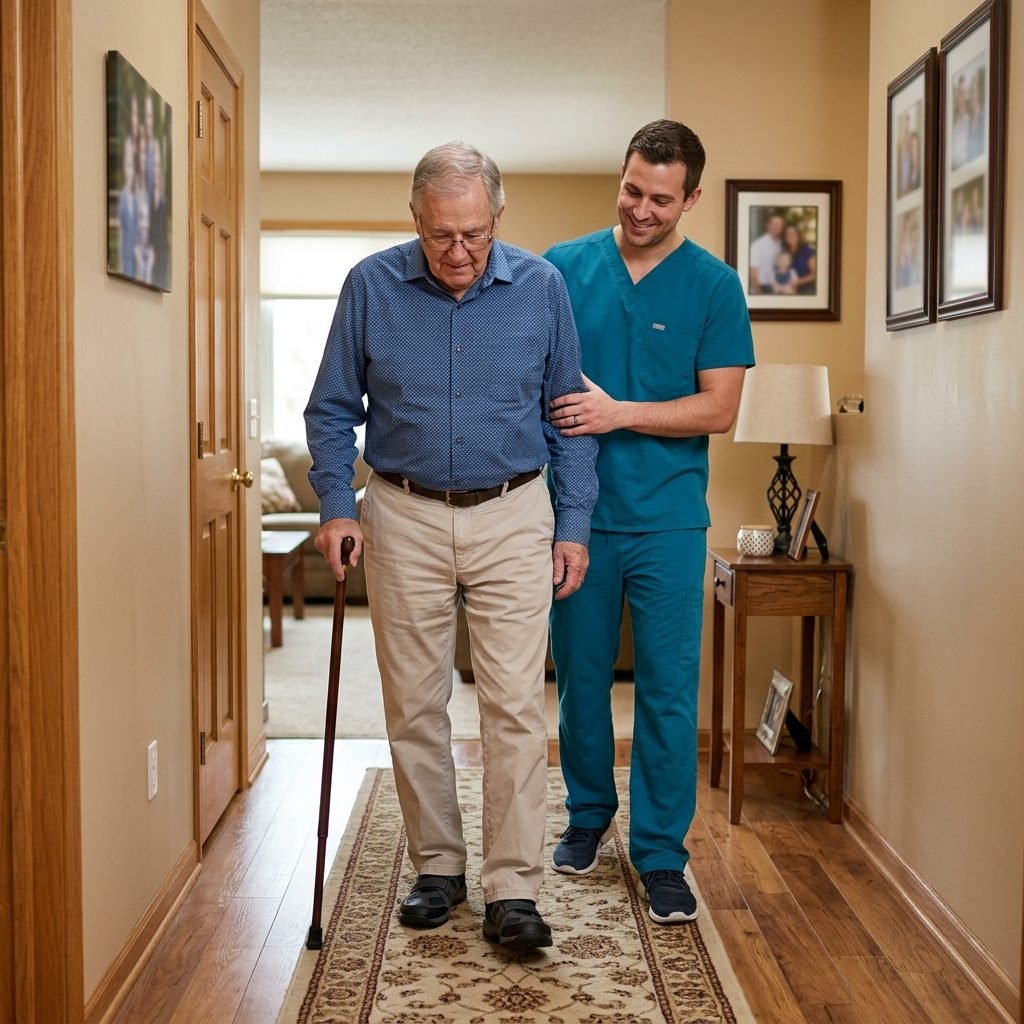
Having access to comprehensive, clinical physical therapy at home is crucial for maintaining rehabilitation progress, especially in busy neighborhoods. Al-Safa and Al Andalus districts in Jeddah present unique local mobility challenges due to high population density and traffic. At Bidaya Center, we deliver high-quality home physiotherapy and movement rehabilitation services directly to your doorstep, conforming to the clinical guidelines of the Saudi Commission for Health Specialties. We eliminate the stress of travel, traffic, and parking. We respect cultural privacy by providing certified male therapists for male patients and female therapists for female patients.
Our clinical approach in Al Andalus starts with a detailed physical and environmental safety assessment to eliminate fall hazards in the home. We bring all necessary portable, sterilized equipment to deliver a clinical standard of care comparable to external clinics. The therapist establishes a tailored milestone tracking plan to monitor muscle strength, balance, and joint range of motion (ROM) progression over time.
Why families in Al Andalus choose Bidaya for home physiotherapy
- ✅ Licensed male & female therapists — full privacy, in your own home in Al Andalus.
- ✅ Fully in-home visits across Al Andalus — no travel or traffic.
- ✅ A personalized rehab plan built after a thorough in-home assessment.
- ✅ Continuous follow-up and direct contact with your therapist throughout.
- ✅ Fast response — arrange your visit by a quick call or WhatsApp message.
We also serve nearby areas: Al Basateen · Al Bawadi · Al Fayha
* The treatment plan and expected outcomes are determined by a medical and functional assessment of each individual case.
What Home-Based Gait and Balance Rehabilitation Means for Al Andalus Residents
Gait and balance rehabilitation is a focused therapy program designed to help a person stand, walk, and move around with steadiness and confidence. Walking may look like a simple act, but it is actually the result of fine coordination between muscle strength, joint mobility, the way the feet sense the ground, the inner ear's sense of position, and the brain's rapid corrections that keep the body's center of gravity in place. When any one of these systems weakens, every step becomes a challenge, and a fear of falling often takes hold, quietly shrinking a person's world and eroding their independence and self-confidence.
At Bidaya Center we deliver this rehabilitation directly in the patient's home within the Al Andalus district of Jeddah, and that is not a minor convenience but the core of the approach. Balance is a skill tied to the actual environment a person moves through. Training someone to walk along their own hallway, rise from their usual sofa, move between the living room and the kitchen, and manage the steps at their villa entrance produces functional gains that are far closer to real life than any exercise performed on the flat, ideal floor of a clinic. Al Andalus is a spacious residential neighborhood of villas and multi-story homes with quiet streets, and many of its houses feature internal staircases, hallways, and furnished spaces. We treat all of these as genuine training tools and teach the patient to handle them safely.
The value of an in-home service becomes even clearer with older adults and anyone with impaired balance, because simply leaving the house and traveling to an external center can itself be exhausting and carry a real risk of falling. By bringing the therapist and the equipment to the home, we spare the patient that burden and give the whole family peace of mind, all within complete privacy and a familiar environment that makes it easier to focus and stay committed to the program.
Symptoms and Warning Signs That Signal It Is Time to Start
There are clear indicators that a person needs a gait and balance rehabilitation program, and when they appear they should not be dismissed or written off as a normal part of aging. Among the most important signs:
- Repeated falls or trips, or even the sense that a fall is about to happen during movement.
- Dizziness or unsteadiness when rising from a seat or when turning the head quickly.
- Walking with short, shuffling steps or widening the stance between the feet in search of more stability.
- A constant need to hold onto walls or furniture while moving around the house.
- Noticeable weakness in the leg muscles or joint stiffness that makes lifting a foot or turning difficult.
- Slowness and hesitation before the first step, especially when crossing a doorway or a narrow space.
- Growing fear of walking alone or avoidance of activities the person once did comfortably.
- Numbness or loss of sensation in the feet that reduces awareness of where the foot lands.
The appearance of one or more of these symptoms is a signal to seek an early assessment. Early intervention is easier and more effective, because it stops the patient from slipping into the cycle of fear-driven inactivity, which itself leads to further weakness and even greater instability.
Conditions and Groups Who Benefit
Gait and balance rehabilitation serves a wide range of conditions, not only older adults as many assume. Among the groups who benefit most:
- Older adults experiencing a general decline in strength and steadiness with age.
- Stroke survivors who have lost part of their motor control on one side of the body.
- People with neurological conditions such as Parkinson's disease and multiple sclerosis that affect balance and walking pattern.
- Patients who have undergone hip or knee surgery or joint replacement and need to relearn safe walking.
- Those recovering from lower-limb fractures after a period of immobilization or prolonged rest that weakened the muscles.
- People with inner-ear disorders and vertigo who feel unsteady when they move.
- Those with peripheral neuropathy, including diabetes-related nerve damage, who have reduced sensation in the feet.
- Anyone who has been bedbound or had greatly reduced mobility for a long time due to illness or recovery.
Each of these conditions has its own particulars, so no single program fits everyone. We always begin with a careful clinical and functional assessment to identify the cause and degree of the balance problem, then build an individual plan matched to the patient's abilities and realistic goals, reviewing and adjusting it as the case progresses.
Goals of the Rehabilitation Program
The gait and balance program is built around clear, measurable goals, and we make sure the patient and family understand where each stage is heading. The main objectives include:
- Strengthening the muscles of the legs, hips, and trunk that form the foundation of any steady movement.
- Improving the protective balance reactions that guard the body against a fall when stability is suddenly lost.
- Retraining the walking pattern to become more regular and confident, with better stride length and rhythm.
- Increasing joint range of motion and flexibility to make rising, turning, and climbing easier.
- Enhancing awareness of the body's position in space and improving coordination between the different senses.
- Reducing the fear of falling and restoring the confidence needed to move freely inside and outside the home.
- Raising independence in daily activities such as reaching the bathroom and moving between rooms.
- Teaching the patient and family safe movement strategies that lower the long-term risk of falling.
It is important to stress that the goals and how far they are achieved vary from person to person, depending on the individual assessment, the nature of the condition, and commitment to the program. We do not promise guaranteed results; instead, we work with a scientific method to achieve the best possible improvement within the limits of each case.
Stages and Flow of the Home Sessions
Sessions follow a considered path that progresses from assessment to empowerment, so each element builds on the one before it and the patient is gradually prepared for a higher level of safe challenge.
Stage one: comprehensive assessment. On the first home visit, the therapist carefully examines strength, flexibility, balance, and walking pattern, observes the home environment and its hazards, then sets an individual plan with realistic goals in consultation with the patient and family.
Stage two: foundation and building strength. We begin with exercises to strengthen the core muscles and improve joint flexibility, along with simple balance drills the patient performs safely near a stable surface to hold onto when needed.
Stage three: dynamic balance training. We move on to more demanding exercises such as shifting weight between the feet, standing on a narrower base, and moving while turning the head, to activate the different balance systems.
Stage four: functional gait retraining. We train the patient to walk along their own hallways, turn, step over obstacles, rise from a chair, and go up and down stairs if present, correcting the walking pattern step by step.
Stage five: empowerment and continuity. We teach the patient and family a home exercise routine to continue, provide recommendations for securing the environment, and follow up regularly to measure progress and adjust the plan. The number and length of sessions are set according to the assessment and the case's progress, not by a fixed template.
The Role of the Family and Caregiver
The success of gait and balance rehabilitation does not rest on the therapist and patient alone; the family is a key partner at every stage, especially in the home environment where the patient spends most of the day. The family's role begins with a correct understanding of the condition and letting go of two common mistakes: the first is overprotection that prevents the patient from any movement out of fear, which only deepens their weakness, and the second is neglect that leaves the patient without appropriate supervision.
We make a point of training the caregiver in how to assist correctly with rising and moving, and how to hold and accompany the patient without robbing them of their self-reliance. We also explain how to supervise the home exercises between sessions, because regular repetition is what cements improvement. We encourage families to keep offering steady moral support, since psychological confidence is a core element in regaining the ability to walk.
Family members also help us by noticing day-to-day changes and reporting them to the therapist, such as an improvement in standing time or the onset of new dizziness, and these observations help us adjust the plan at the right moment. When everyone works as one team, progress becomes faster and more stable.
Home Safety and Fall-Prevention Tips
Preventing falls is an inseparable part of the treatment, and securing the home environment multiplies the effectiveness of the exercises. We offer Al Andalus families a set of practical recommendations that are easy to apply:
- Remove loose rugs, cords, and obstacles from walking paths, and secure the edges of any rugs firmly.
- Provide adequate lighting in hallways, staircases, and the bathroom, with a night light along the route from the bedroom to the toilet.
- Install sturdy grab bars near the toilet and inside the bathroom, and place a non-slip mat in the shower area.
- Arrange furniture so that walking paths stay wide and clear, and keep tables with sharp edges away from the walking route.
- Wear comfortable closed shoes with non-slip soles, and avoid walking in socks on smooth floors.
- Keep frequently used items within easy reach to avoid excessive bending or climbing on a chair.
- Rise from sitting or lying down slowly and in stages to avoid a sudden drop in blood pressure and dizziness.
- Use recommended assistive devices such as a cane or walker correctly and in the right place.
These measures are simple but effective, and when combined with the rehabilitation program they noticeably reduce the risk of falling and give the patient and family greater peace of mind.
Frequently Asked Questions (FAQ)
Can the rehabilitation be done entirely at home without clinic machines?
Yes. A gait and balance program relies primarily on functional exercises and movement training, and the therapist brings the necessary tools to your home. The home environment itself is an advantage, because it is where you actually move, and we use its features for safe, real-world training.
How many sessions will I need before I notice improvement?
This varies with the cause and degree of the problem, the general condition, and commitment to the exercises, and no fixed number can be given before assessment. After the first visit we outline an initial plan and review it regularly as your condition develops.
Are female therapists available for treating women with full privacy?
Yes. We have licensed male and female therapists, and a female therapist can be assigned to a female patient with full respect for privacy inside the home. Your comfort and privacy are a priority on every visit.
My father is afraid of falling and refuses to walk; can the program help him?
The fear of falling is itself one of the most important things we address, and we start at a very safe level that gradually rebuilds confidence. Through step-by-step progress and psychological support, many patients regain the courage to move within the limits of their condition.
Do you guarantee a full return to normal walking?
We do not promise guaranteed results, because improvement depends on the nature of the condition and the individual assessment. What we commit to is working with a scientific method and careful follow-up to achieve the best possible improvement and the highest degree of independence and safety for each patient.
To book a home visit in the Al Andalus district of Jeddah or to ask about the gait and balance rehabilitation program, contact Bidaya Center by phone or WhatsApp by clicking Call Now. Our team is ready to help you take a steadier, safer step in your own home.
Important Home Visit Details:
- ✓Setup: Please clear a 2x2m space in the room for safety.
- ✓Clothing: Wear loose, comfortable clothes for easy movement.
- ✓Therapist Parity: Male therapists for males, females for females.
- ✓Medical Reports: Keep your MRI or doctor reports ready for evaluation.
Rehabilitation & Services in Al Andalus
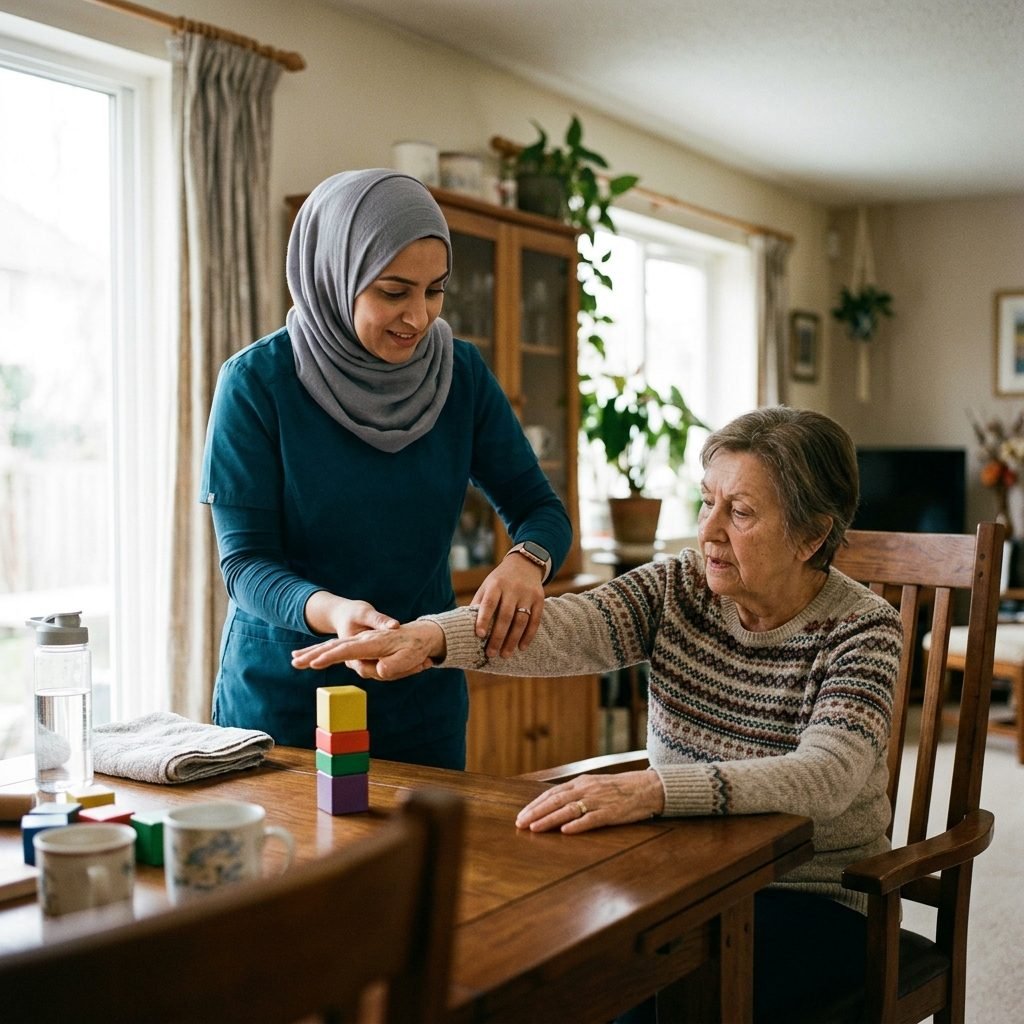
Stroke Rehabilitation
Advanced motor and neurological stroke recovery at home in Al Andalus.
Service Details ←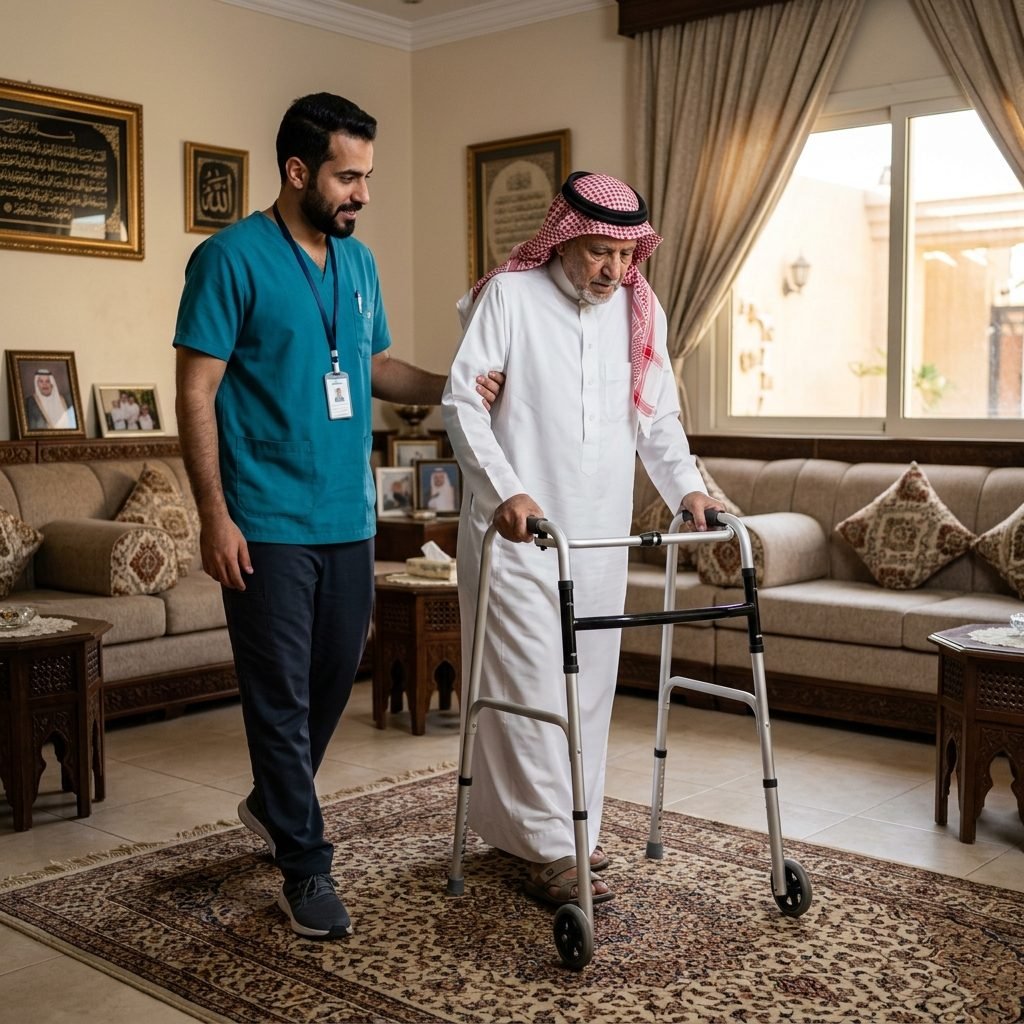
Geriatric Physical Therapy
Balance training, strengthening, and fall prevention for seniors in Al Andalus.
Service Details ←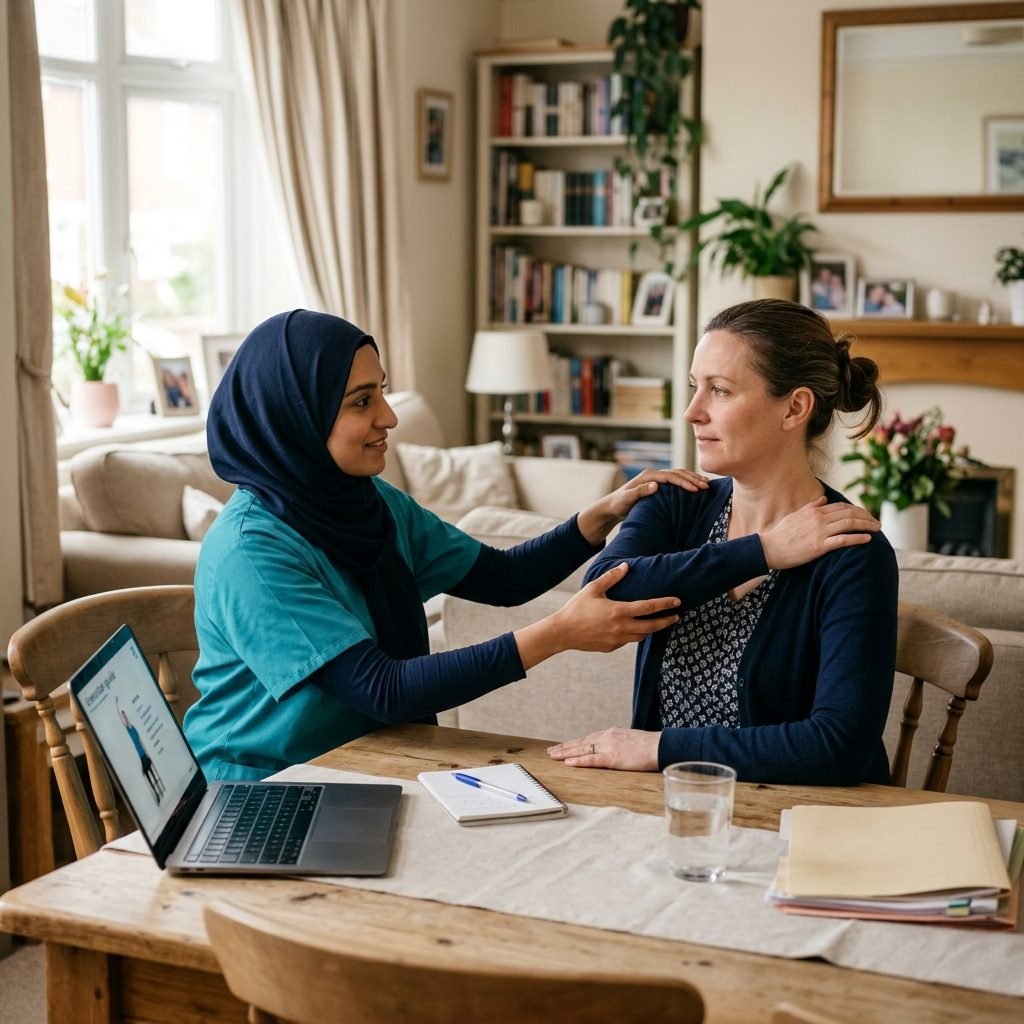
Female Physiotherapist
Licensed female therapists providing home care for women in Al Andalus.
Service Details ←