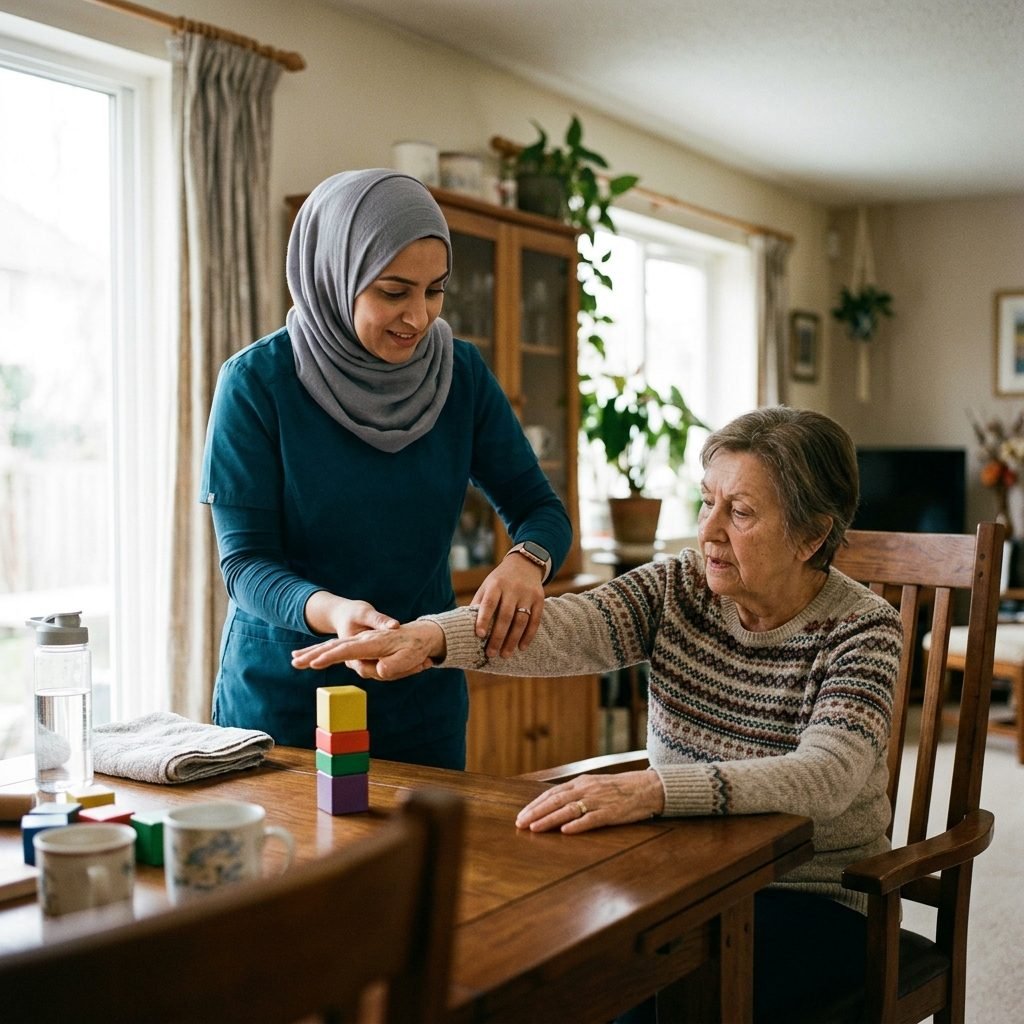
Having access to comprehensive, clinical physical therapy at home is crucial for maintaining rehabilitation progress, especially in busy neighborhoods. Al-Safa and Al Andalus districts in Jeddah present unique local mobility challenges due to high population density and traffic. At Bidaya Center, we deliver high-quality home physiotherapy and movement rehabilitation services directly to your doorstep, conforming to the clinical guidelines of the Saudi Commission for Health Specialties. We eliminate the stress of travel, traffic, and parking. We respect cultural privacy by providing certified male therapists for male patients and female therapists for female patients.
Our clinical approach in Al Andalus starts with a detailed physical and environmental safety assessment to eliminate fall hazards in the home. We bring all necessary portable, sterilized equipment to deliver a clinical standard of care comparable to external clinics. The therapist establishes a tailored milestone tracking plan to monitor muscle strength, balance, and joint range of motion (ROM) progression over time.
Why families in Al Andalus choose Bidaya for home physiotherapy
- ✅ Licensed male & female therapists — full privacy, in your own home in Al Andalus.
- ✅ Fully in-home visits across Al Andalus — no travel or traffic.
- ✅ A personalized rehab plan built after a thorough in-home assessment.
- ✅ Continuous follow-up and direct contact with your therapist throughout.
- ✅ Fast response — arrange your visit by a quick call or WhatsApp message.
We also serve nearby areas: Al Basateen · Al Bawadi · Al Fayha
* The treatment plan and expected outcomes are determined by a medical and functional assessment of each individual case.
Home-Based Post-Stroke Rehabilitation and Why It Matters for Al Andalus Residents
A stroke arrives without warning and reshapes daily life in minutes. When blood flow to a part of the brain is interrupted, movement, speech, or thinking can be affected depending on the region involved. Home-based post-stroke rehabilitation is a structured therapy program that retrains the brain and body to recover as much lost function as possible, drawing on the nervous system's remarkable capacity to reorganize itself, known as neuroplasticity. The earlier and more consistently rehabilitation begins, the clearer its impact tends to be on independence and on preventing complications.
Al Andalus is one of Jeddah's busy, densely populated residential districts, and many of its families find that repeated trips to therapy centers place a heavy burden on someone recovering from a recent stroke, especially when mobility is limited and a companion must accompany the patient every time. This is where home therapy proves its value. A qualified therapist arrives with the needed equipment and works with the patient in the very environment where recovery will actually unfold. It spares the family the strain of commuting through traffic, lowers the risk of fatigue and infection, and ties every exercise directly to the furniture, hallways, and bathroom the patient uses each day.
At Bidaya Center we believe successful rehabilitation is more than exercising muscles. It includes preparing the home, educating the family, and tracking progress step by step. Because every stroke leaves a different mark, the plan is built on a careful clinical and functional assessment of each individual case. We make no promises of specific outcomes; instead, we work transparently toward the best possible improvement within the realities of each situation.
Symptoms and Signs That Call for Starting Rehabilitation
Starting rehabilitation early, once the medical condition is stable, is a cornerstone of recovery. Several signs indicate that a patient needs a structured home program after discharge from hospital:
- Weakness or paralysis on one side of the body that makes lifting an arm or moving a leg difficult or impossible.
- Impaired balance and walking, with a tendency to fall or to hold onto walls when moving.
- Muscle stiffness and increased tone (spasticity), especially at the elbow, wrist, and ankle.
- Difficulty speaking or understanding conversation, or slurred and unclear speech.
- Swallowing problems with coughing or choking while eating and drinking.
- Weak grip and loss of fine motor skills such as holding a spoon or buttoning a shirt.
- Numbness or loss of sensation in the affected limbs.
- Reduced concentration and memory, or mood changes toward withdrawal and frustration.
The presence of any of these signs is not a final diagnosis, but it is an invitation for a specialized in-home assessment that maps out strengths and weaknesses and shapes a realistic plan. We also stress that any sudden return of new symptoms, such as acute speech difficulty or fresh weakness, calls for emergency medical contact immediately, before anything else.
Conditions and Groups Who Benefit
Home-based post-stroke rehabilitation is designed to serve a wide range of patients in Al Andalus, across different ages and degrees of impairment:
- Recent stroke patients after hospital discharge whose condition has stabilized and who wish to continue recovery in familiar surroundings.
- Those with hemiparesis or partial paralysis on one side of the body who need to relearn movement.
- Older adults for whom frequent travel is difficult and who need close, safe care within the home.
- Patients who paused rehabilitation for a while, saw their abilities decline, and want to resume the program.
- People with muscle spasticity or joint stiffness that limits range of motion and causes pain.
- Patients with swallowing or speech difficulties who need specialized training and close monitoring.
- Cases that require retraining in daily-living activities such as eating, dressing, and bathing.
We respect the privacy of every patient, and both licensed male and female therapists are available to match the preference of the patient and family, with full privacy maintained inside the home. The goal is always to help the patient regain as much independence as possible, in proportion to their individual case and without overstating expectations.
Goals of the Rehabilitation Program
Rehabilitation is not measured by the number of sessions alone, but by how much closer the patient moves toward a safer, more independent life. We therefore set clear, measurable goals that are reviewed regularly:
- Restoring muscle strength and motor control on the affected side as far as possible.
- Improving balance and the ability to sit, stand, and transfer safely.
- Retraining the walking pattern and reducing reliance on outside help.
- Lowering muscle spasticity and preserving joint flexibility to prevent stiffness.
- Developing the hand's fine motor skills to recover essential daily activities.
- Preventing complications such as pressure sores, deep vein clots, and frozen shoulder.
- Supporting the patient psychologically, building confidence, and sustaining motivation.
- Training the family to provide the right support so they become active partners in recovery.
These goals are shaped individually for each patient based on the assessment and adjusted as the case progresses. We emphasize that how fully and how quickly they are achieved depends on the nature of the injury and the patient's commitment, and no specific result can be guaranteed in advance.
Stages and Path of the Home Sessions
We follow a structured path that begins with understanding the case and ends with cementing gains into a sustainable daily routine:
- Initial assessment: a first visit in which the therapist examines muscle strength, balance, range of motion, and the ability to perform daily tasks, reviews medical reports, and sets priorities.
- Building the treatment plan: an individual program with short- and long-term goals and a proposed number of sessions, discussed with the patient and family.
- Early activation stage: gentle exercises to mobilize the joints and prevent stiffness, stimulate the affected side, and train sitting and basic balance.
- Strengthening and function stage: graded resistance exercises, standing and transfer training, and the start of relearning walking and using the hand in real tasks.
- Integration into daily life: linking exercises to actual home activities such as moving between rooms, using the bathroom, and eating with greater independence.
- Follow-up and reassessment: measuring progress periodically, adjusting the plan, and providing a home-exercise program to maintain gains between sessions.
Each session is paced to the patient's energy to avoid overexertion, and progress is recorded transparently and shared with the family. The number of sessions and their weekly frequency are determined by the assessment, not by a fixed template.
The Role of the Family and Caregiver
The family is an essential partner in the recovery journey. The therapist attends for a limited number of hours, while the patient spends the rest of the day among household members. We therefore focus on empowering the family in practice, not merely informing them:
- Learning safe transfer techniques for moving the patient from bed to chair and helping them stand without hurting the back or the affected shoulder.
- Encouraging the patient to use the affected side in daily tasks instead of relying entirely on the healthy side.
- Supervising simple home exercises and repeating them between the therapist's visits to reinforce progress.
- Watching for signs of complications such as reddened skin, a swollen leg, or a sharp change in mood.
- Offering patience and emotional support and avoiding blame for slow progress or fluctuating condition.
- Organizing medication times, rest, and meals in harmony with the rehabilitation plan.
We give the caregiver direct guidance and hands-on explanation at every visit, because an informed, cooperative family multiplies the chances of improvement and reduces setbacks. We are also careful not to exhaust the caregiver themselves by distributing and simplifying tasks.
Home Safety and Prevention Tips
A safe home environment protects a stroke patient from falls and injuries and speeds their return to daily life. We advise families in Al Andalus to consider the following:
- Removing tripping hazards such as loose rugs and trailing wires, and keeping wide, clear pathways.
- Installing firm grab bars in the bathroom, beside the bed, and near the toilet for support when moving.
- Providing adequate lighting, especially at night and in hallways, to prevent falls.
- Using firm, non-slip shoes or slippers inside the home.
- Adjusting the height of the bed and chair to make standing up and sitting down safe.
- Repositioning a bedridden patient regularly to prevent pressure sores.
- Paying attention to the texture of food and liquids for those with swallowing difficulty to avoid choking.
- Keeping a means of communication near the patient to call for help when needed.
These simple adjustments make a large difference to daily safety, and the therapist is glad to review the home and offer tailored recommendations that suit its space and layout. Here, prevention is no less important than the exercise itself.
Frequently Asked Questions
When is it best to start rehabilitation after a stroke?
Starting early, once the medical condition is stable and the treating team agrees, is generally advised, because the first weeks and months carry a good window for improvement. That said, someone who paused rehabilitation can still benefit, and the assessment determines the right starting point for each case.
Can the patient return completely to their previous state?
The extent of recovery varies from person to person depending on the size of the injury, the region affected, how early rehabilitation began, and the level of commitment. We make no promises of specific outcomes, but we work toward the best possible improvement and greater independence within the realities of the case, and the assessment sets out realistic expectations.
How many sessions does the patient need per week?
There is no fixed number that suits everyone. The number of sessions and their frequency are set after the assessment, based on the patient's condition, goals, and tolerance, and they are reviewed periodically as the program advances.
Are female therapists available for female patients?
Yes. Both licensed male and female therapists are available, and you can choose whatever suits the preference of the patient and family, with full privacy maintained inside the home throughout the session.
What should be prepared at home before the first visit?
It is enough to provide a comfortable spot for the patient, such as a bed or a firm sofa, and a small space to move, along with any medical reports and a list of medications if available. The therapist brings the essential equipment and offers recommendations for preparing the environment after the assessment.
To book a home visit in Al Andalus, Jeddah, or to ask about the post-stroke rehabilitation program, contact Bidaya Center by phone or WhatsApp by clicking Call Now. Our team is ready to help you and arrange a suitable appointment.
Important Home Visit Details:
- ✓Setup: Please clear a 2x2m space in the room for safety.
- ✓Clothing: Wear loose, comfortable clothes for easy movement.
- ✓Therapist Parity: Male therapists for males, females for females.
- ✓Medical Reports: Keep your MRI or doctor reports ready for evaluation.
Rehabilitation & Services in Al Andalus
Stroke Rehabilitation
Advanced motor and neurological stroke recovery at home in Al Andalus.
Service Details ←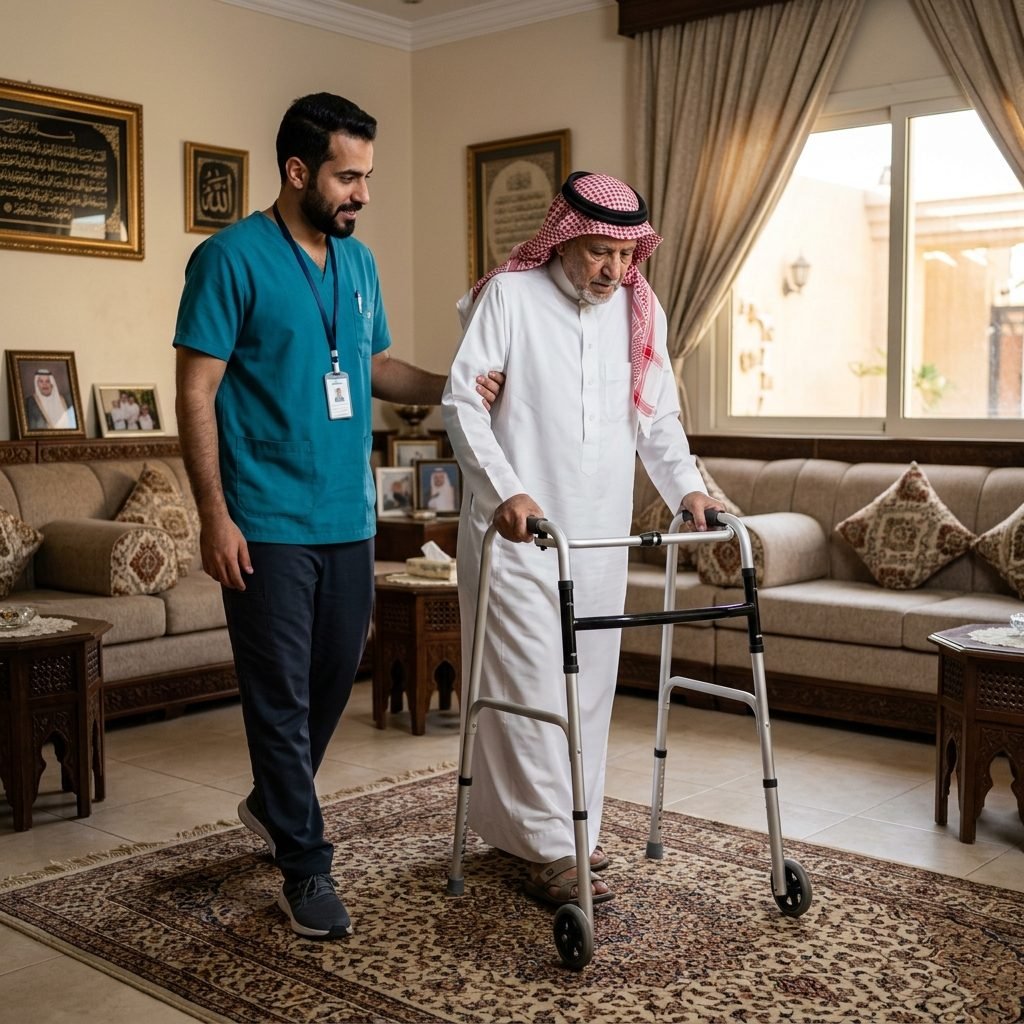
Geriatric Physical Therapy
Balance training, strengthening, and fall prevention for seniors in Al Andalus.
Service Details ←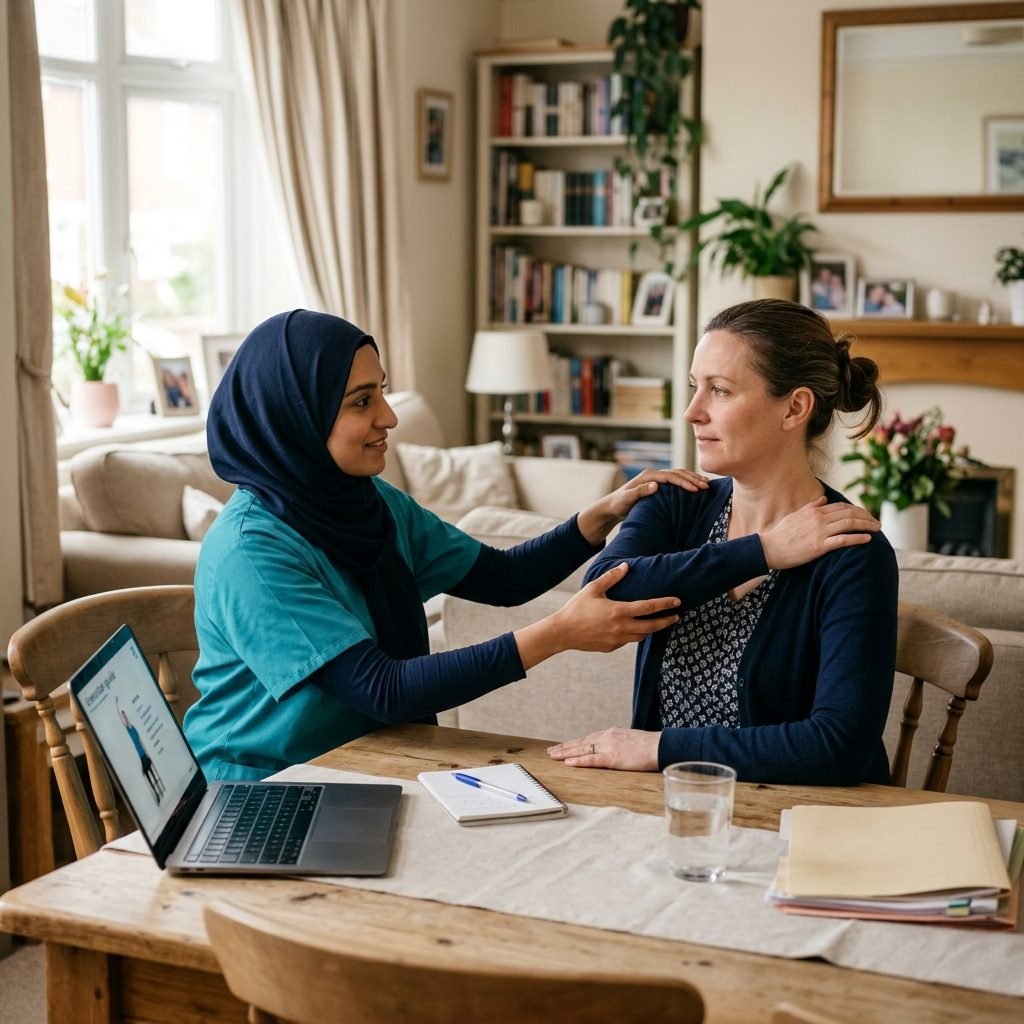
Female Physiotherapist
Licensed female therapists providing home care for women in Al Andalus.
Service Details ←