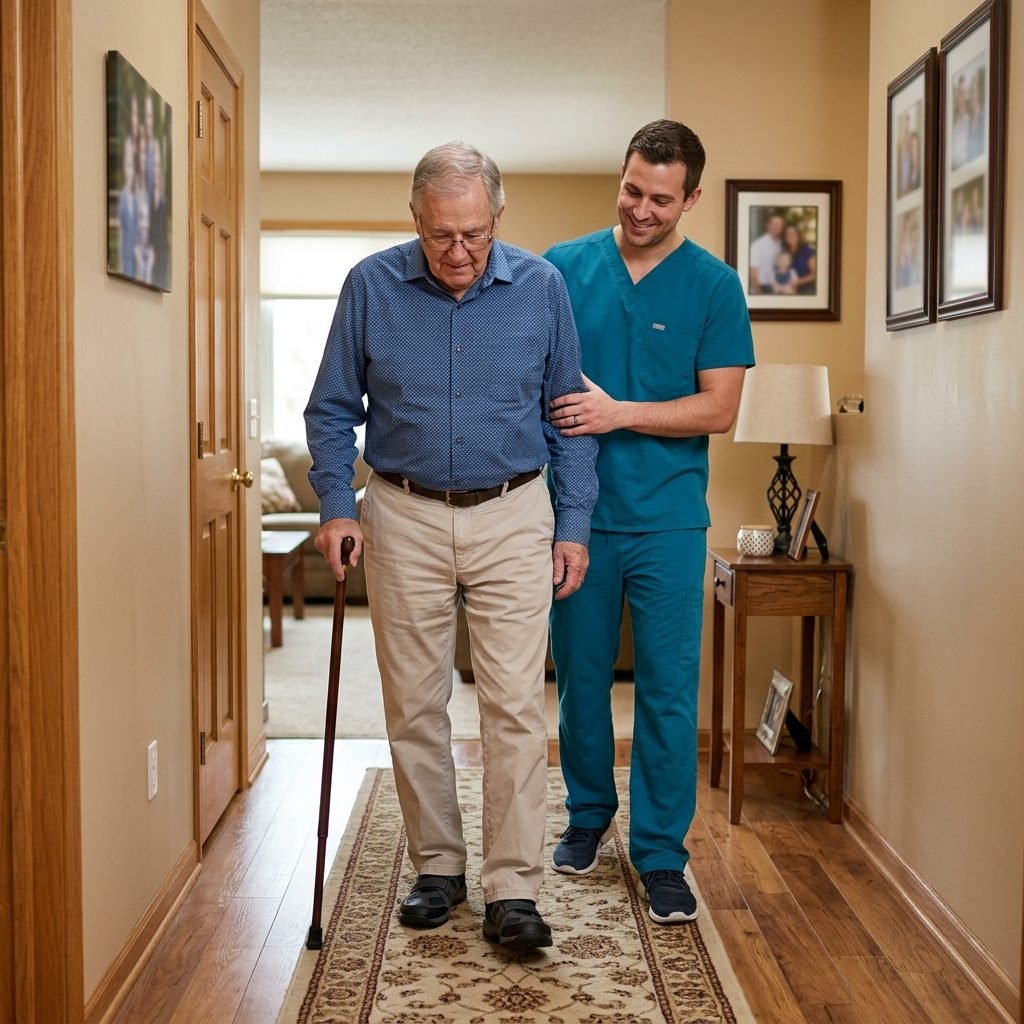
Having access to comprehensive, clinical physical therapy at home is crucial for maintaining rehabilitation progress, especially in busy neighborhoods. Al-Safa and Al Basateen districts in Jeddah present unique local mobility challenges due to high population density and traffic. At Bidaya Center, we deliver high-quality home physiotherapy and movement rehabilitation services directly to your doorstep, conforming to the clinical guidelines of the Saudi Commission for Health Specialties. We eliminate the stress of travel, traffic, and parking. We respect cultural privacy by providing certified male therapists for male patients and female therapists for female patients.
Our clinical approach in Al Basateen starts with a detailed physical and environmental safety assessment to eliminate fall hazards in the home. We bring all necessary portable, sterilized equipment to deliver a clinical standard of care comparable to external clinics. The therapist establishes a tailored milestone tracking plan to monitor muscle strength, balance, and joint range of motion (ROM) progression over time.
Why families in Al Basateen choose Bidaya for home physiotherapy
- ✅ Licensed male & female therapists — full privacy, in your own home in Al Basateen.
- ✅ Fully in-home visits across Al Basateen — no travel or traffic.
- ✅ A personalized rehab plan built after a thorough in-home assessment.
- ✅ Continuous follow-up and direct contact with your therapist throughout.
- ✅ Fast response — arrange your visit by a quick call or WhatsApp message.
We also serve nearby areas: Al Andalus · Al Bawadi · Al Fayha
* The treatment plan and expected outcomes are determined by a medical and functional assessment of each individual case.
Home-Based Gait and Balance Rehabilitation and Why It Matters for Al Basateen Residents
Gait and balance rehabilitation is a focused therapy program that helps a person walk steadily and safely again and control the position of the body while moving, standing, and shifting between postures. When balance is affected by injury, illness, or aging, the simplest daily tasks, rising from a chair, crossing a room, or stepping up a single stair, become a genuine source of worry and a fear of falling. This is where specialized physiotherapy steps in, retraining the body and the nervous system to work together in harmony.
In the Al Basateen neighborhood of Jeddah, a residential area home to many families that include older adults and people passing through recovery, a home-visit service carries particular value. Traveling to a clinic during busy hours, or waiting in a reception area, can be exhausting and even hazardous for someone who already struggles with unsteadiness. Having the therapist arrive at the front door means rehabilitation begins in the very environment where the patient moves every day: the same flooring, the same hallways, the same stairs, bathroom, and furniture.
This advantage is not merely about comfort; it is central to the therapy itself. Balance training is far more effective when it happens within the real context of movement. The therapist observes how the patient walks across the tiles of their own home, where their feet stumble, and which corners pose a risk, then builds a plan that fits their actual life rather than a generic one. At Bidaya Center, we deliver this service across Al Basateen through licensed male and female therapists, with full respect for every family's privacy.
Symptoms and Warning Signs That Call for Action
Many families delay asking for help until a painful fall occurs, yet there are early signs that flag weakening balance long before harm is done. Noticing them and acting early make a real difference to the course of recovery.
- A feeling of unsteadiness or dizziness when standing or suddenly changing direction.
- Needing to hold onto walls or furniture to move around inside the home.
- A noticeable slowing of walking speed, or short, hesitant, irregular steps.
- Difficulty rising from a chair or bed without pushing hard with the hands.
- Frequent tripping on rug edges, door thresholds, or while climbing stairs.
- One or more falls over recent months, even if no injury resulted.
- A growing fear of movement that leads the person to reduce activity and stay seated most of the day.
- The body leaning to one side or trouble staying upright while standing.
Several of these signs together call for an early assessment. Cutting back on activity out of fear of falling weakens the muscles further and makes the problem worse, turning the fear into reality. Timely intervention breaks this cycle and gradually restores confidence in movement.
Conditions and Groups That Benefit
A gait and balance rehabilitation program serves a wide range of cases united by one shared goal: regaining safe, independent movement. Among those who benefit most in Al Basateen homes are:
- Older adults with general muscle weakness and slowed balance reactions.
- Stroke survivors dealing with weakness or stiffness on one side of the body that affects their walking pattern.
- People with Parkinson's who face step freezing, shortened stride, and a forward-leaning posture.
- Those recovering from hip, knee, or ankle injuries or fractures after the initial immobilization phase.
- Patients who have had joint replacement surgery and need to relearn weight-bearing and correct walking.
- People with peripheral neuropathy who lose the fine sense of where their feet are positioned.
- Those with inner-ear disorders causing vertigo and loss of balance.
- People affected by traumatic brain injury or multiple sclerosis with impaired motor coordination.
Each of these conditions has its own particularities, so no single program suits everyone. The plan and the expected outcomes depend on a careful clinical and functional assessment of each individual, taking into account their medical history, current abilities, and daily goals.
Goals of the Rehabilitation Program
The aim is not simply "walking" as a mechanical act, but restoring a life that is safer, more independent, and more confident. With each patient and their family we set realistic, measurable goals that are reviewed and adjusted as the sessions progress.
- Strengthening the muscles of the lower limbs and trunk that form the true foundation of balance.
- Improving the balance reactions that protect the body from falling during a sudden loss of stability.
- Retraining the walking pattern to make each stride longer, more regular, and steadier.
- Enhancing the coordination between the visual, sensory, and vestibular systems responsible for balance.
- Increasing endurance and walking distance without excessive fatigue.
- Training safe transfers: sitting to standing, turning, and going up and down stairs.
- Reducing the fear of movement and rebuilding self-confidence while getting around.
- Bringing the patient to the highest possible degree of independence in daily tasks.
We are clear that we do not promise guaranteed results or specific recovery figures. The extent and pace of improvement vary from person to person according to the nature of the condition and commitment to the program, and we make sure expectations are clear and honest from the very first session.
Stages and Path of the Home Sessions
The program follows an organized, gradual path that begins with understanding the case and ends in more independent movement. Each stage has its own goals that pave the way for the next.
Stage one: comprehensive assessment. The therapist visits the home and conducts a functional evaluation of muscle strength, range of motion, walking pattern, and balance in different positions. They also examine the home environment to identify hazards and listen to the goals of the patient and family.
Stage two: building the foundation. We begin with gentle exercises to strengthen the core muscles and restore range of motion, alongside simple balance exercises in a safe, supported position, creating a base for everything that follows.
Stage three: functional training. We move on to drills closer to real daily life: standing on a narrower base of support, shifting weight, walking in different patterns, and transferring between positions, all within the home's own hallways.
Stage four: graded challenge. We steadily increase the difficulty: walking with changes of direction, stepping over simple obstacles, going up and down stairs safely, and exercises that mimic the real situations the patient meets during the day.
Stage five: consolidation and independence. We reinforce the gains and train the patient and family on a daily home program that maintains progress, with a plan to monitor warning signs and prevent relapse. The plan is continually reviewed and adjusted according to how each case responds.
The Role of the Family and Caregiver
Successful balance rehabilitation is not achieved by the therapist's sessions alone, but by what happens in the long hours between them. The family and caregiver are essential partners, and having therapy inside the home makes involving them easier and far more effective.
- Taking part in following the home exercise program and encouraging the patient to do it regularly.
- Providing safe accompaniment during movement in the early stages, without over-helping in a way that undermines independence.
- Noticing any change in the walking pattern or increase in stumbling and reporting it to the therapist.
- Helping to prepare the home and remove obstacles that could cause a fall.
- Supporting the patient emotionally and reminding them that progress is gradual and every step is an achievement.
At Bidaya Center we make a point of training the caregiver hands-on in the correct way to assist, so they know when to help and when to step back and let the patient rely on themselves safely. This balance between support and independence is what genuinely speeds recovery.
Home Safety and Prevention Tips
A safe home environment noticeably lowers the risk of falling and supports rehabilitation outcomes. The therapist's assessment of the home includes simple, practical recommendations that can be applied right away.
- Removing loose rugs and stretched cables from the main pathways of movement.
- Ensuring adequate lighting in hallways, on stairs, and along the route to the bathroom at night.
- Installing firm grab bars near the toilet and inside the bathroom and using a non-slip mat.
- Arranging furniture to leave wide, clear walking paths without sudden turns.
- Wearing closed indoor shoes with non-smooth soles instead of loose slippers or socks alone.
- Keeping daily-use items within easy reach to avoid bending down or reaching up high.
- Not rushing when getting up; sitting for a moment before standing reduces dizziness.
- Keeping a phone or means of communication close at hand to call for help when needed.
These steps do not remove the need for rehabilitation, but they multiply its effect and protect the patient between sessions. Introducing them gradually into the family's routine turns the home into an environment that supports movement rather than a source of danger.
Frequently Asked Questions (FAQ)
Can home therapy be as effective as clinic therapy?
Yes, and for gait and balance rehabilitation in particular it may be more suitable, because it takes place in the real environment where the patient moves every day, training on their own flooring, hallways, and stairs, with the necessary assessment and exercise tools on hand.
How many sessions does a patient need to improve?
There is no fixed number that suits everyone. The number of sessions and the pace of improvement depend on the clinical and functional assessment of each case, its type, and commitment to the home program. We set a realistic plan that is reviewed regularly according to the response.
Is a female therapist available while preserving privacy?
Yes. Bidaya Center includes licensed male and female therapists, and a female therapist can be chosen for women's cases. We are committed to full privacy inside the home and to respecting the family's atmosphere.
Are balance exercises safe for older adults and those who have fallen before?
Yes, when applied within a graded program under the supervision of a specialized therapist. We start at a safe, supported level and then increase the challenge gradually to match each person's ability, keeping safety in mind at every step.
What do I need to prepare at home before the first session?
No special preparations are needed. A clear space to move and a stable chair are enough; the therapist brings what is required for assessment and exercise, then offers recommendations to adapt the environment gradually after the first evaluation.
To begin your journey back to walking and balancing with confidence in Al Basateen, contact Bidaya Center by phone or WhatsApp by clicking Call Now to book a home visit and an initial assessment with one of our licensed therapists.
Important Home Visit Details:
- ✓Setup: Please clear a 2x2m space in the room for safety.
- ✓Clothing: Wear loose, comfortable clothes for easy movement.
- ✓Therapist Parity: Male therapists for males, females for females.
- ✓Medical Reports: Keep your MRI or doctor reports ready for evaluation.
Rehabilitation & Services in Al Basateen
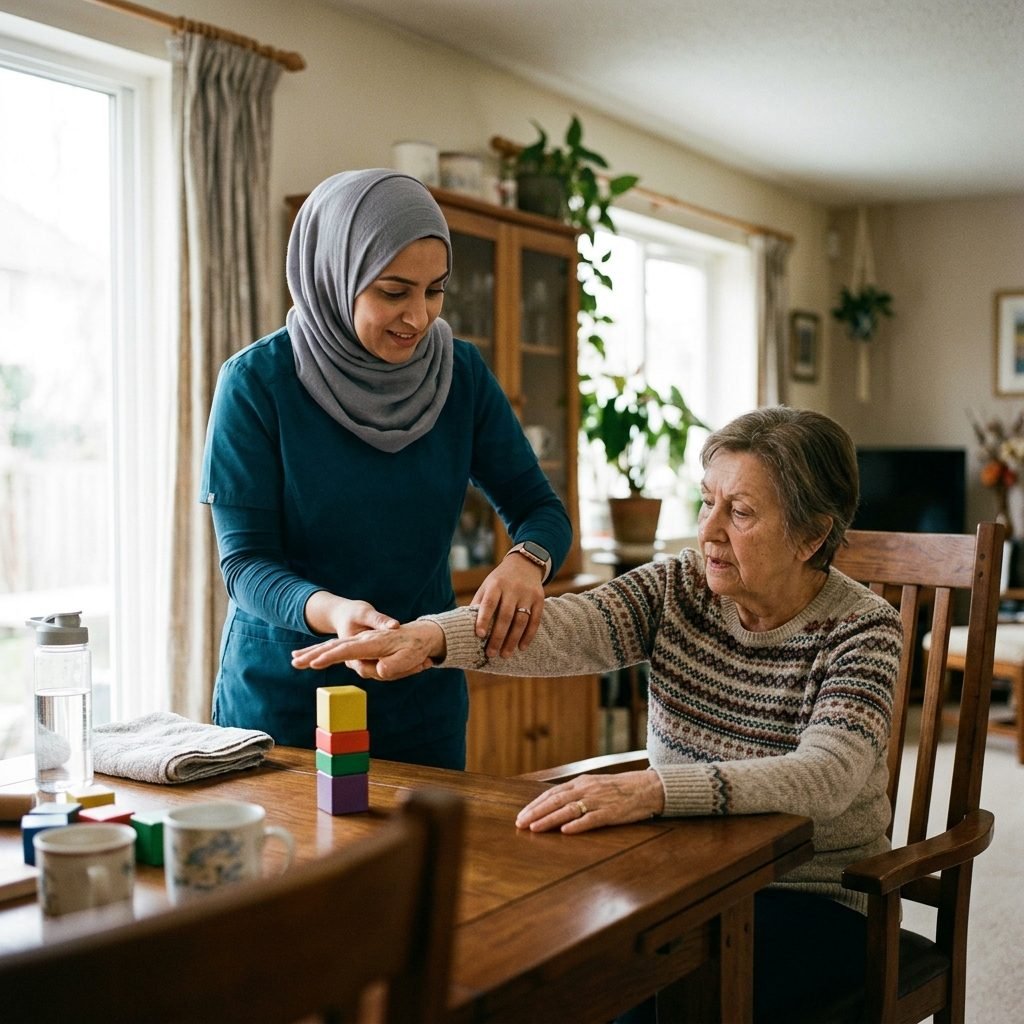
Stroke Rehabilitation
Advanced motor and neurological stroke recovery at home in Al Basateen.
Service Details ←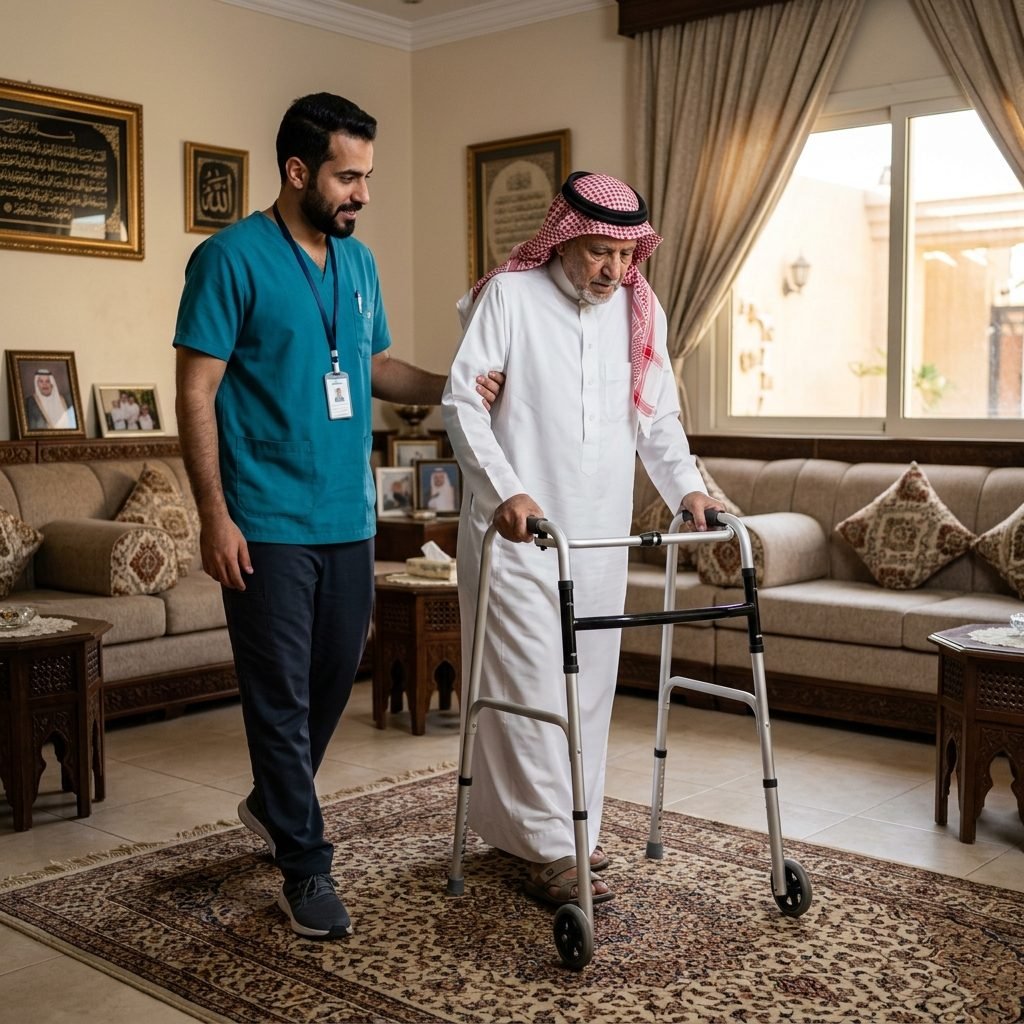
Geriatric Physical Therapy
Balance training, strengthening, and fall prevention for seniors in Al Basateen.
Service Details ←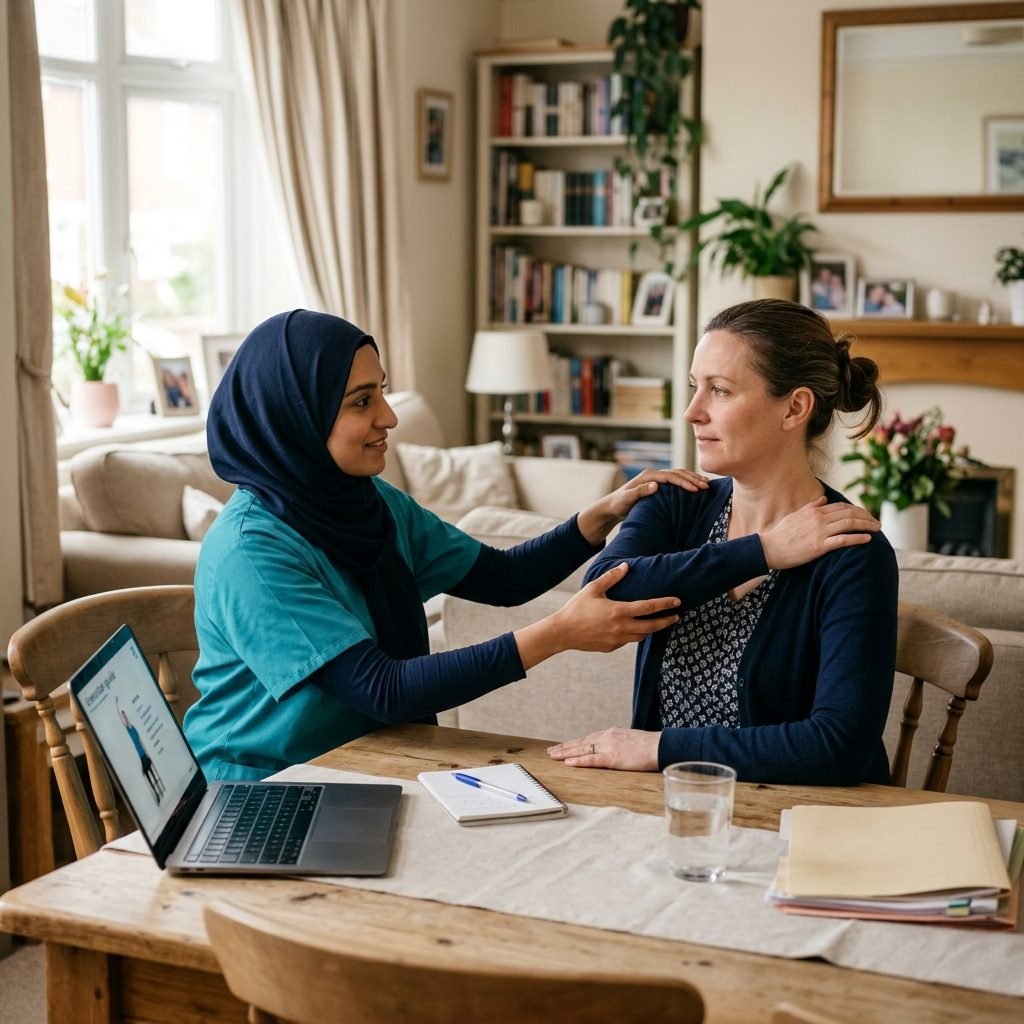
Female Physiotherapist
Licensed female therapists providing home care for women in Al Basateen.
Service Details ←