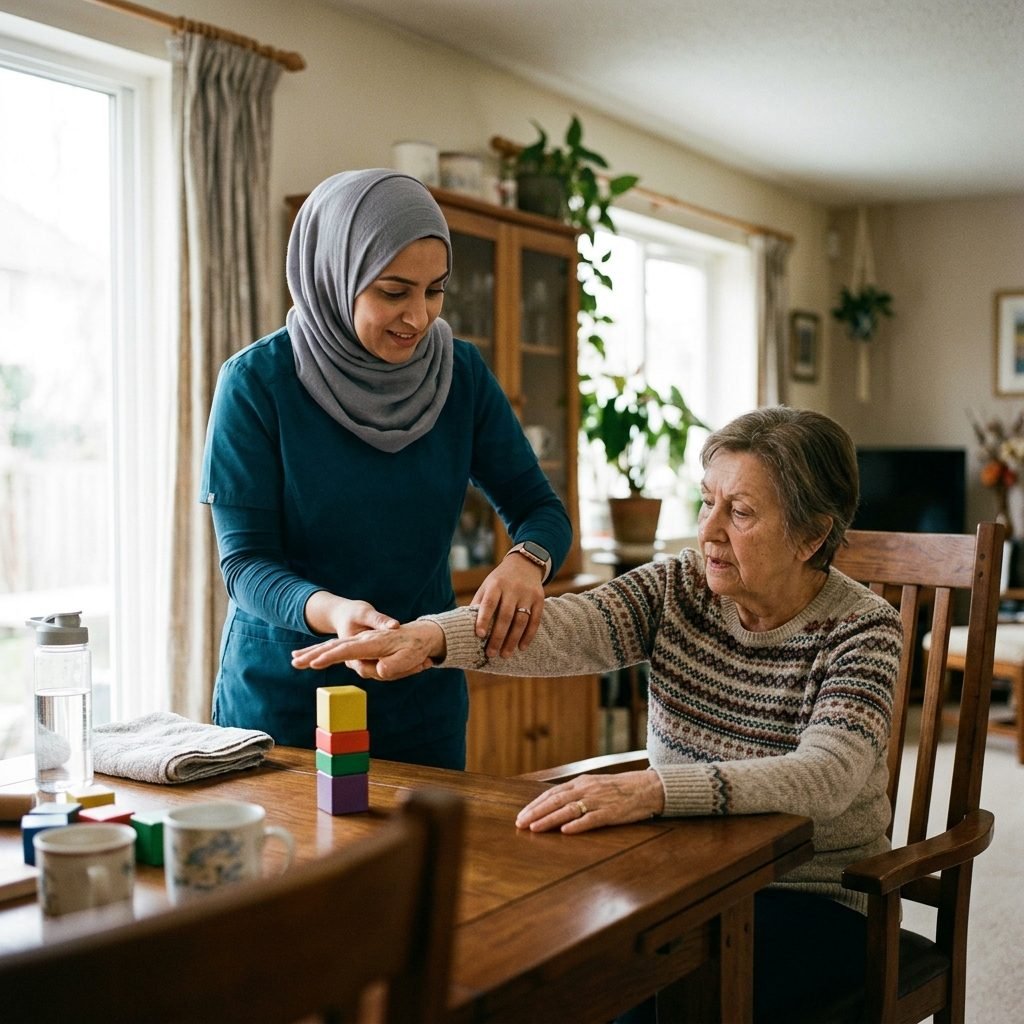
Having access to comprehensive, clinical physical therapy at home is crucial for maintaining rehabilitation progress, especially in busy neighborhoods. Al-Safa and Al Basateen districts in Jeddah present unique local mobility challenges due to high population density and traffic. At Bidaya Center, we deliver high-quality home physiotherapy and movement rehabilitation services directly to your doorstep, conforming to the clinical guidelines of the Saudi Commission for Health Specialties. We eliminate the stress of travel, traffic, and parking. We respect cultural privacy by providing certified male therapists for male patients and female therapists for female patients.
Our clinical approach in Al Basateen starts with a detailed physical and environmental safety assessment to eliminate fall hazards in the home. We bring all necessary portable, sterilized equipment to deliver a clinical standard of care comparable to external clinics. The therapist establishes a tailored milestone tracking plan to monitor muscle strength, balance, and joint range of motion (ROM) progression over time.
Why families in Al Basateen choose Bidaya for home physiotherapy
- ✅ Licensed male & female therapists — full privacy, in your own home in Al Basateen.
- ✅ Fully in-home visits across Al Basateen — no travel or traffic.
- ✅ A personalized rehab plan built after a thorough in-home assessment.
- ✅ Continuous follow-up and direct contact with your therapist throughout.
- ✅ Fast response — arrange your visit by a quick call or WhatsApp message.
We also serve nearby areas: Al Andalus · Al Bawadi · Al Fayha
* The treatment plan and expected outcomes are determined by a medical and functional assessment of each individual case.
What Home-Based Post-Stroke Rehabilitation Means for Al Basateen Residents
Post-stroke rehabilitation is a structured therapy program that retrains the brain and body to recover as much movement and function as possible after an ischemic or hemorrhagic stroke. It is built on the principle of neuroplasticity, the brain's ability to form new pathways that compensate for damaged areas. This capacity is strongest during the first months after the event, yet it remains active far longer whenever consistent, progressive practice continues.
At Bidaya Center we deliver this program inside the patient's own home in the Al Basateen neighborhood of Jeddah, a practical choice for families in this quiet, largely residential district. After hospital discharge it is often difficult to transport a stroke patient repeatedly because of weakness on one side of the body, poor balance, or rapid fatigue. Fighting traffic or climbing stairs drains the limited energy the patient needs for recovery. Home therapy removes that barrier entirely: the therapist arrives with the necessary equipment and works within the real environment where the patient will move every day.
The greatest advantage is that exercises become tied to genuine tasks: rising from the familiar bed, reaching the bathroom, sitting at the family dining chair. Linking practice to the real setting speeds up skill acquisition and closes the gap between clinic and daily life. We also respect each family's privacy fully, and both licensed male and female therapists are available to match the patient's comfort and the family's wishes.
Symptoms and Signs That Signal It Is Time to Begin
The earlier rehabilitation starts once the medical condition is stable, the better the chances of meaningful improvement. We encourage Al Basateen families to contact us when they notice any of the following after a stroke:
- Weakness or paralysis on one side of the body, appearing in the hand, leg, or face, with difficulty lifting the limb or gripping objects.
- Impaired balance and walking, a tendency to lean to one side, or repeated fear of falling.
- Muscle stiffness and increased tone that makes bending or straightening a joint difficult and painful.
- Trouble speaking, finding words, or understanding speech, or swallowing problems that cause choking during meals.
- Numbness or loss of sensation in a limb, or neglect of the affected side as though the patient is unaware of it.
- Decline in simple daily tasks such as dressing, brushing teeth, or eating with the affected hand.
Having one or more of these signs does not automatically define the course of treatment. The nature of the plan and the degree of expected improvement are determined only after a thorough clinical and functional assessment of each individual case, including measurements of muscle strength, range of motion, balance, and functional ability.
Conditions and Groups Who Benefit
The home rehabilitation program after stroke is designed to serve a broad range of patients at different stages of recovery, including:
- Recent stroke patients who have just left the hospital and want to continue rehabilitation without interruption.
- Those with hemiparesis (partial paralysis on one side) who need to retrain the arm and leg.
- Older adults who are difficult to transport to a clinic and need ongoing care within their familiar surroundings.
- Patients whose progress has plateaued and who need the plan reviewed and fresh momentum to move forward.
- Those experiencing complications of limited mobility such as joint stiffness, poor balance, or post-stroke shoulder pain.
- Cases that require training in assistive devices such as a cane, walker, or foot bracing.
We also manage cases accompanied by chronic conditions such as diabetes and high blood pressure, taking these factors into account when setting the intensity and duration of exercises. The goal is always a realistic, graduated plan that builds on what the patient can do today and expands it steadily without strain that risks a setback.
Goals of the Rehabilitation Program
We do not treat rehabilitation as a random set of exercises but as a plan with clear, measurable goals agreed upon with the patient and family. The most important of these goals are:
- Recovering as much voluntary movement as possible in the affected side and improving coordination between both limbs.
- Strengthening weak muscles and reducing the muscle tone and stiffness that obstruct movement.
- Improving balance and the ability to stand and walk safely to reduce the risk of falls at home.
- Retraining the patient in daily living activities to become more independent and self-reliant.
- Preventing common complications such as tendon contractures, pressure sores, and deep vein thrombosis.
- Supporting the patient's confidence and emotional wellbeing, since physical progress is closely tied to morale and motivation.
We state clearly that we offer no guarantee of cure or promise of specific results. Every brain heals at its own pace, and the degree of response is influenced by the size and location of the injury, the patient's age and general health, and adherence to the program. What we commit to is a structured, evidence-based plan and honest follow-up that reassesses goals as the patient progresses.
Stages and Path of the Home Sessions
The therapeutic journey begins with a comprehensive assessment visit at the patient's home in Al Basateen, in which the therapist examines muscle strength, joint range of motion, walking pattern, balance, and level of independence in daily tasks. Based on this assessment, an individual plan with short- and long-term goals is drawn up.
Sessions typically progress through connected stages:
- Preparation and prevention stage: passive range-of-motion exercises and correct positioning to prevent stiffness and sores, and to stimulate circulation in the affected limb.
- Movement activation stage: stimulating voluntary movement through guided exercises, and training to regain trunk control and balanced sitting.
- Strengthening and balance stage: exercises to build muscle strength, transfers between sitting and standing, and training to stand steadily on both feet.
- Walking and function stage: re-teaching a correct walking pattern, training the hand in fine tasks, and integrating exercises into real daily activities inside the home.
The length of each session and the number of weekly sessions are set according to the patient's tolerance and the goals of each stage. We carry out periodic reassessments to measure progress and adjust the plan, and we give the patient simple home exercises to perform between visits to accelerate results and preserve the gains made.
The Role of the Family and Caregiver
Successful rehabilitation after a stroke does not rest on the therapist alone; the family is an essential partner at every step. The patient spends most of the day among relatives, and what they do together between sessions makes a real difference in the speed and durability of recovery.
- Encouraging the patient to use the affected side in daily tasks instead of relying entirely on the healthy side.
- Helping perform the prescribed home exercises regularly and in the correct way explained by the therapist.
- Watching for correct positioning during sitting and sleeping to prevent stiffness, shoulder pain, and pressure on the skin.
- Noticing signs of excessive fatigue or unusual pain and reporting them to the therapy team.
- Offering patience and emotional support, since an encouraging word and celebrating any small gain noticeably lift the patient's motivation.
At Bidaya Center we make sure to train the caregiver practically in safe transfer techniques from bed to chair, and in how to assist with walking without hurting the caregiver's own back. This empowerment turns the home into an ongoing therapeutic environment throughout the day, not only during the session hour.
Home Safety and Prevention Tips
Stroke patients are more prone to falls and injuries because of poor balance and altered sensation, so preparing the home is a preventive step no less important than the exercises. We advise Al Basateen families to do the following:
- Remove loose rugs and scattered cables from walking paths, and secure any edges that might catch the foot.
- Provide adequate lighting, especially in the corridor between the bedroom and bathroom, with a light switch near the bed.
- Install firm grab bars in the bathroom and beside the toilet, and use a shower chair and a non-slip mat.
- Choose a closed, stable shoe with a non-slip sole instead of open slippers inside the house.
- Arrange frequently used items within easy reach to avoid bending or sudden reaching that disturbs balance.
- Reposition a bedridden patient regularly to prevent pressure sores, and ensure good fluid intake and proper nutrition.
We also recommend adhering to the medications prescribed by the treating physician to control risk factors such as blood pressure, diabetes, and cholesterol, because preventing a new stroke is an inseparable part of a successful rehabilitation journey.
Frequently Asked Questions (FAQ)
When can home rehabilitation begin after a stroke?
It is best to start as soon as possible once the medical condition is stable and the physician approves, because the early months are important for harnessing the brain's plasticity, yet rehabilitation remains beneficial even long after the injury.
Are female therapists available for female patients?
Yes, we have both licensed male and female therapists, and you may request the most suitable one for the patient's case, with full privacy guaranteed inside the home and respect for the family's preferences.
Do you guarantee that movement will return exactly as it was before the stroke?
We offer no guarantee or promise of a specific result; recovery varies from person to person depending on the size and location of the injury and adherence to the program. What we commit to is an evidence-based plan and honest follow-up that continually reassesses the goals.
How many sessions does the patient need per week?
This is determined after the initial assessment according to the patient's condition, tolerance, and the goals of each stage, and the number may change as the program advances and periodic reassessment takes place.
Do you specifically serve the Al Basateen neighborhood in Jeddah?
Yes, we bring home rehabilitation to the homes of Al Basateen residents and surrounding areas in Jeddah, and the therapist arrives at your home with the necessary equipment at the agreed appointment.
To book a home assessment visit in Al Basateen or to ask about the post-stroke rehabilitation program, contact us by phone or via WhatsApp by clicking Call Now, and the Bidaya Center team will be glad to help you and arrange a time that suits you.
Important Home Visit Details:
- ✓Setup: Please clear a 2x2m space in the room for safety.
- ✓Clothing: Wear loose, comfortable clothes for easy movement.
- ✓Therapist Parity: Male therapists for males, females for females.
- ✓Medical Reports: Keep your MRI or doctor reports ready for evaluation.
Rehabilitation & Services in Al Basateen
Stroke Rehabilitation
Advanced motor and neurological stroke recovery at home in Al Basateen.
Service Details ←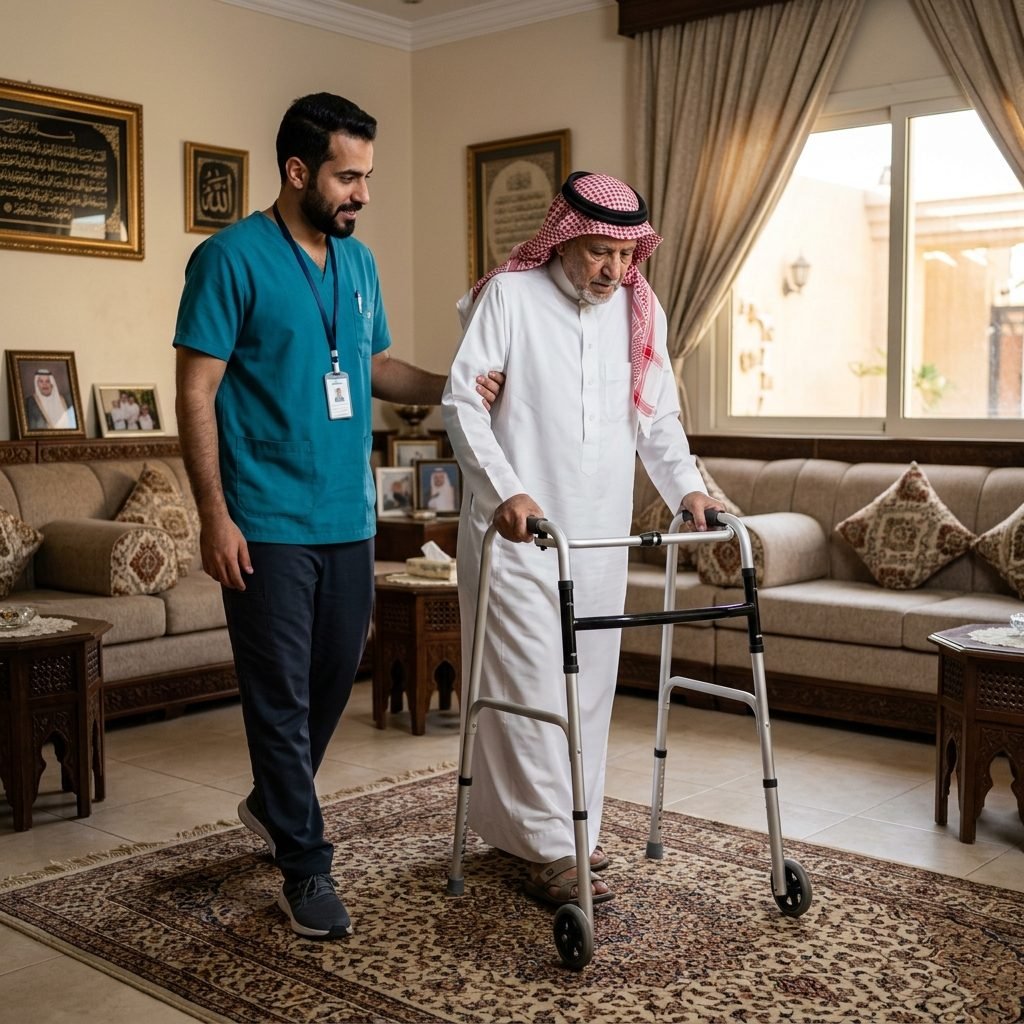
Geriatric Physical Therapy
Balance training, strengthening, and fall prevention for seniors in Al Basateen.
Service Details ←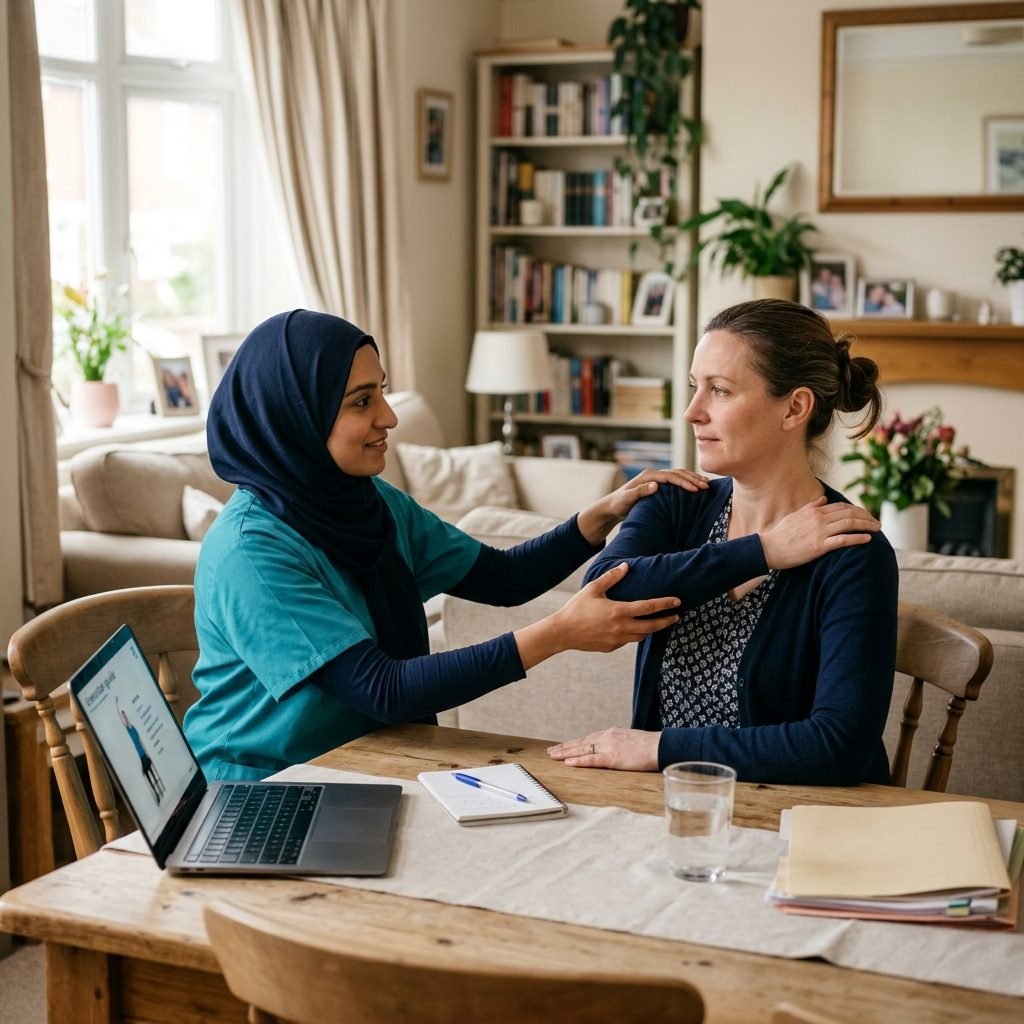
Female Physiotherapist
Licensed female therapists providing home care for women in Al Basateen.
Service Details ←