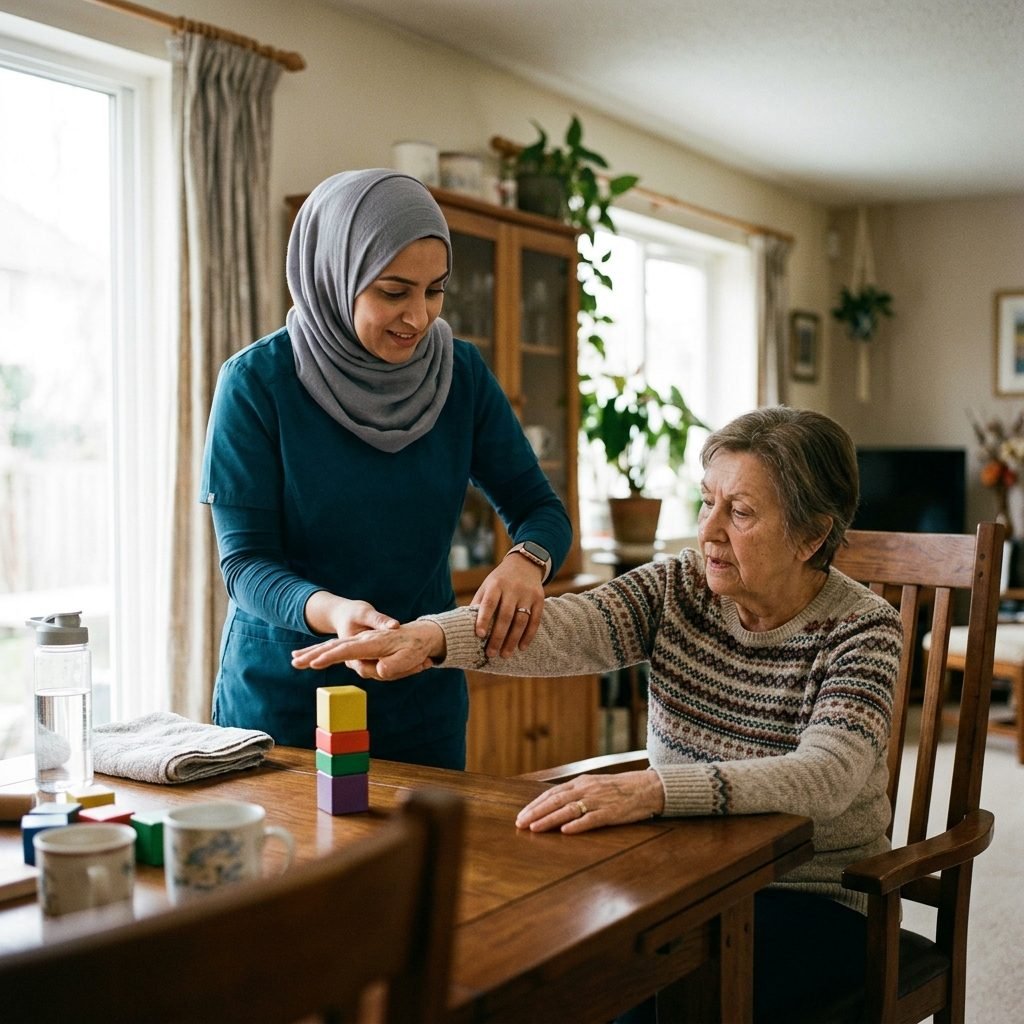
Having access to comprehensive, clinical physical therapy at home is crucial for maintaining rehabilitation progress, especially in busy neighborhoods. Al-Safa and Al Andalus districts in Jeddah present unique local mobility challenges due to high population density and traffic. At Bidaya Center, we deliver high-quality home physiotherapy and movement rehabilitation services directly to your doorstep, conforming to the clinical guidelines of the Saudi Commission for Health Specialties. We eliminate the stress of travel, traffic, and parking. We respect cultural privacy by providing certified male therapists for male patients and female therapists for female patients.
Our clinical approach in Al Andalus starts with a detailed physical and environmental safety assessment to eliminate fall hazards in the home. We bring all necessary portable, sterilized equipment to deliver a clinical standard of care comparable to external clinics. The therapist establishes a tailored milestone tracking plan to monitor muscle strength, balance, and joint range of motion (ROM) progression over time.
Why families in Al Andalus choose Bidaya for home physiotherapy
- ✅ Licensed male & female therapists — full privacy, in your own home in Al Andalus.
- ✅ Fully in-home visits across Al Andalus — no travel or traffic.
- ✅ A personalized rehab plan built after a thorough in-home assessment.
- ✅ Continuous follow-up and direct contact with your therapist throughout.
- ✅ Fast response — arrange your visit by a quick call or WhatsApp message.
We also serve nearby areas: Al Basateen · Al Bawadi · Al Fayha
* The treatment plan and expected outcomes are determined by a medical and functional assessment of each individual case.
Home-Based Hemiplegia Rehabilitation and Why It Matters for Al Andalus Residents in Jeddah
Hemiplegia is a weakness or loss of movement affecting one side of the body, most often following a stroke, a brain hemorrhage, or an injury that damages one hemisphere of the brain. Home-based hemiplegia rehabilitation is built on retraining the brain and body to recover as much movement, balance, and independence as possible, through structured physiotherapy sessions delivered in the patient's own familiar room rather than through exhausting trips to a clinic.
In the Al Andalus neighborhood of Jeddah, with its calm residential character, multi-storey buildings, and relatively spread-out layout between districts, transporting a person with hemiplegia to an external center is a genuine burden on the family. Getting down from upper floors, moving into a car, and waiting in reception all tend to tire the patient and reduce the benefit they gain from a session. Home therapy removes this strain and turns rehabilitation into a natural part of the daily routine.
The most important advantage of rehabilitating at home is that it happens in the real environment where the patient actually lives. They practice getting up from their own bed, walking along their own hallway, entering their own bathroom, and sitting on their own sofa. This realistic training makes the acquired skills immediately transferable, unlike training in an unfamiliar clinic that has little to do with everyday life. At Bidaya Center we design a home program tailored to each case, with licensed male and female therapists available and full respect for the family's privacy.
Symptoms and Signs That Signal It Is Time to Start
The earlier rehabilitation begins after the medical condition has stabilized, the better the chances of functional improvement. Several signs indicate that a patient needs a structured rehabilitation program without delay:
- Clear weakness or heaviness in the arm or leg on one side of the body, with difficulty lifting or moving it.
- Disturbed balance and walking, or the body leaning toward the affected side when standing or sitting.
- Gradual joint stiffness or increasing muscle spasticity (tightness), especially in the hand, elbow, and ankle.
- Difficulty performing daily tasks such as eating, dressing, bathing, or gripping objects.
- Decline in speech or swallowing, or altered control of facial expression on the affected side.
- Numbness, tingling, or loss of sensation on one side of the body.
- Repeated falls or a fear of moving that keeps the patient in bed more than necessary.
The appearance of one or more of these signs after a stroke or brain injury is a clear indication that a specialized assessment should begin. Neglect at this stage can lead to complications such as permanent joint stiffness, pressure sores, and muscle wasting, all of which are far easier to prevent through early intervention.
Conditions and Groups Who Benefit
The home hemiplegia rehabilitation program at Bidaya Center is aimed at a broad range of patients who experience weakness on one side of the body for varied reasons. Among the groups who benefit most are:
- Stroke patients (ischemic or hemorrhagic) after their condition has stabilized and they have been discharged from hospital.
- People affected by a brain hemorrhage or clot that has caused motor weakness on one side.
- Patients recovering from brain tumor surgery that has affected the motor pathways.
- People with traumatic head injuries from accidents that have left one-sided weakness.
- Children with one-sided cerebral palsy, with sessions adapted to their age and needs.
- Elderly individuals whose health status or difficulty getting around makes home rehabilitation the practical option.
- Cases with muscle spasticity and stiffness after a long period of inactivity, requiring motor re-education.
Each of these groups has different needs, so we do not apply a single rigid program. Instead, the rehabilitation path is built on a precise clinical and functional assessment that identifies the patient's strengths and limitations. The residential nature of Al Andalus makes reaching homes straightforward, allowing us to deliver the service flexibly around the family's schedule.
Goals of the Rehabilitation Program
The home rehabilitation program aims to achieve the greatest possible independence for the patient within the limits of their condition, with realistic goals set jointly with the family and reviewed regularly. Key objectives include:
- Gradually improving muscle strength and motor control on the affected side.
- Retraining balance and the ability to stand and walk as safely as possible.
- Reducing muscle spasticity and preserving joint range of motion to prevent stiffness.
- Enhancing independence in daily activities such as eating, dressing, and transferring from bed to chair.
- Preventing complications such as pressure sores, venous clots, and muscle wasting.
- Stimulating neuroplasticity (the brain's ability to reorganize its pathways) through structured, repeated movement.
- Supporting the patient's psychological state and building confidence in their capacity to progress.
It is important to stress that rehabilitation outcomes differ from one person to another and depend on the extent of the injury, how early treatment begins, and commitment to sessions and home exercises. We do not promise a full cure or guaranteed results; rather, we commit to a plan grounded in a clear assessment and continuous review of progress.
Stages and Pathway of the Home Sessions
Rehabilitation follows a structured pathway that begins with assessment and does not end at the session itself, extending to include progress monitoring and adjustment of the plan. The therapeutic journey typically moves through the following stages:
- Initial assessment: a visit in which the therapist evaluates muscle strength, range of motion, balance, degree of spasticity, and the ability to perform daily tasks, along with a review of the home environment.
- Setting the plan and goals: formulating short- and long-term goals in consultation with the patient and family, and defining an initial number of sessions.
- Activation and protection stage: gentle exercises to preserve range of motion, position changes, and prevention of early complications.
- Motor re-education stage: targeted strengthening exercises, training in balance, sitting and standing, and encouraging the affected side to participate in movement.
- Function and independence stage: training in walking, transfers, and activities of daily living within the actual rooms of the home.
- Follow-up and reassessment: measuring progress periodically and adjusting goals and exercises according to the response.
The length of each stage and the pace of moving between them differ from case to case, determined by the therapist based on the patient's response. Sessions are scheduled at flexible times that respect the routines of families in Al Andalus, with the caregiver able to be involved at every step.
The Role of the Family and Caregiver
Success in hemiplegia rehabilitation is not confined to the hours of the session; it is achieved mainly in the time between sessions, and this is where the family and caregiver emerge as essential partners in treatment. The patient spends most of the day with the family, and repeating the correct exercises and movements during this time is what consolidates the acquired skills.
- Learning the correct way to help the patient transfer from bed to chair without harming the patient or oneself.
- Supervising the prescribed home exercises and encouraging the patient to stay committed to them.
- Paying attention to sitting and lying positions to avoid pressure sores and stiffness.
- Preparing a safe, obstacle-free environment that encourages independent movement.
- Noticing any changes in the patient's condition and reporting them to the therapist.
- Providing psychological support and patience, since progress can be slow and needs constant encouragement.
Bidaya Center therapists are keen to train the caregiver practically during visits and provide clear guidance, so the caregiver becomes an extension of the therapy team inside the home. This collaboration between family and therapist is what makes the real difference in the recovery path.
Home Safety and Prevention Tips
A safe home environment is a core element in successful rehabilitation and accident prevention, especially with a patient whose balance or movement on one side is impaired. We advise families in Al Andalus to observe the following points:
- Remove loose rugs, wires, and obstacles from walking paths to reduce the risk of tripping.
- Install fixed grab bars near the bathroom and along hallway walls where possible.
- Provide adequate lighting in rooms and corridors, particularly at night.
- Use non-slip shoes or slippers indoors, and avoid walking in socks on smooth floors.
- Reposition a bedbound patient regularly, roughly every two hours, to avoid pressure sores.
- Keep frequently used items within reach of the unaffected hand to reduce risky movements.
- Watch for signs of venous clots such as swelling or redness in the leg and inform the doctor immediately.
- Never force the patient into painful or sudden movements, and stick to the prescribed exercises only.
These simple measures greatly reduce the risks of falls and complications and turn the home into an environment that supports recovery rather than a source of danger.
Frequently Asked Questions (FAQ)
When should we start rehabilitation after a stroke?
It is best to begin as soon as the medical condition has stabilized and the treating physician approves, because early intervention reduces complications and improves the chances of recovering function. Even later cases can benefit from rehabilitation, so it is never too late to start after the condition has been assessed.
Can the patient fully regain their movement?
Outcomes vary from person to person depending on the extent and location of the injury, how early treatment begins, and the level of commitment. We cannot promise a complete cure, but regular rehabilitation aims to achieve the best possible improvement and greater independence, with realistic expectations set after the clinical assessment.
How many sessions does the patient need per week?
There is no fixed number that suits everyone; the number and frequency of sessions are determined after the initial assessment based on the patient's condition, goals, and response, and are reviewed periodically as the program progresses.
Is a female therapist available for female patients?
Yes, we have licensed male and female therapists, and a female therapist can be arranged for female patients with full respect for the family's privacy and comfort inside the home.
What do we need to prepare at home before the session?
No complicated setup is required; a safe space to move and a bed or comfortable place for the patient are enough. During the initial assessment, the therapist will guide you on any assistive equipment that may be needed for the patient's specific case.
To book a home visit for hemiplegia rehabilitation in the Al Andalus neighborhood of Jeddah, or to ask about the service, contact Bidaya Center by phone or WhatsApp by clicking Call Now, and our team will be glad to help you and arrange a time that suits you.
Important Home Visit Details:
- ✓Setup: Please clear a 2x2m space in the room for safety.
- ✓Clothing: Wear loose, comfortable clothes for easy movement.
- ✓Therapist Parity: Male therapists for males, females for females.
- ✓Medical Reports: Keep your MRI or doctor reports ready for evaluation.
Rehabilitation & Services in Al Andalus
Stroke Rehabilitation
Advanced motor and neurological stroke recovery at home in Al Andalus.
Service Details ←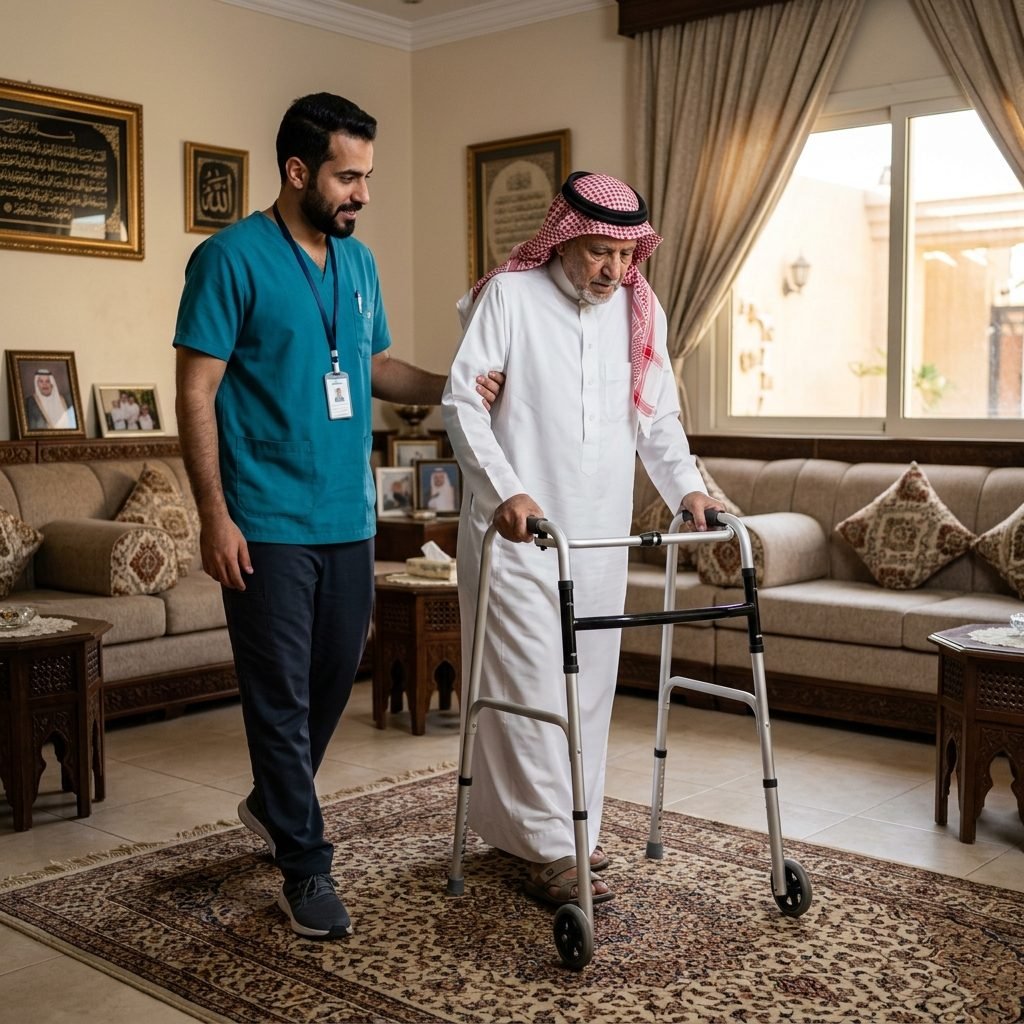
Geriatric Physical Therapy
Balance training, strengthening, and fall prevention for seniors in Al Andalus.
Service Details ←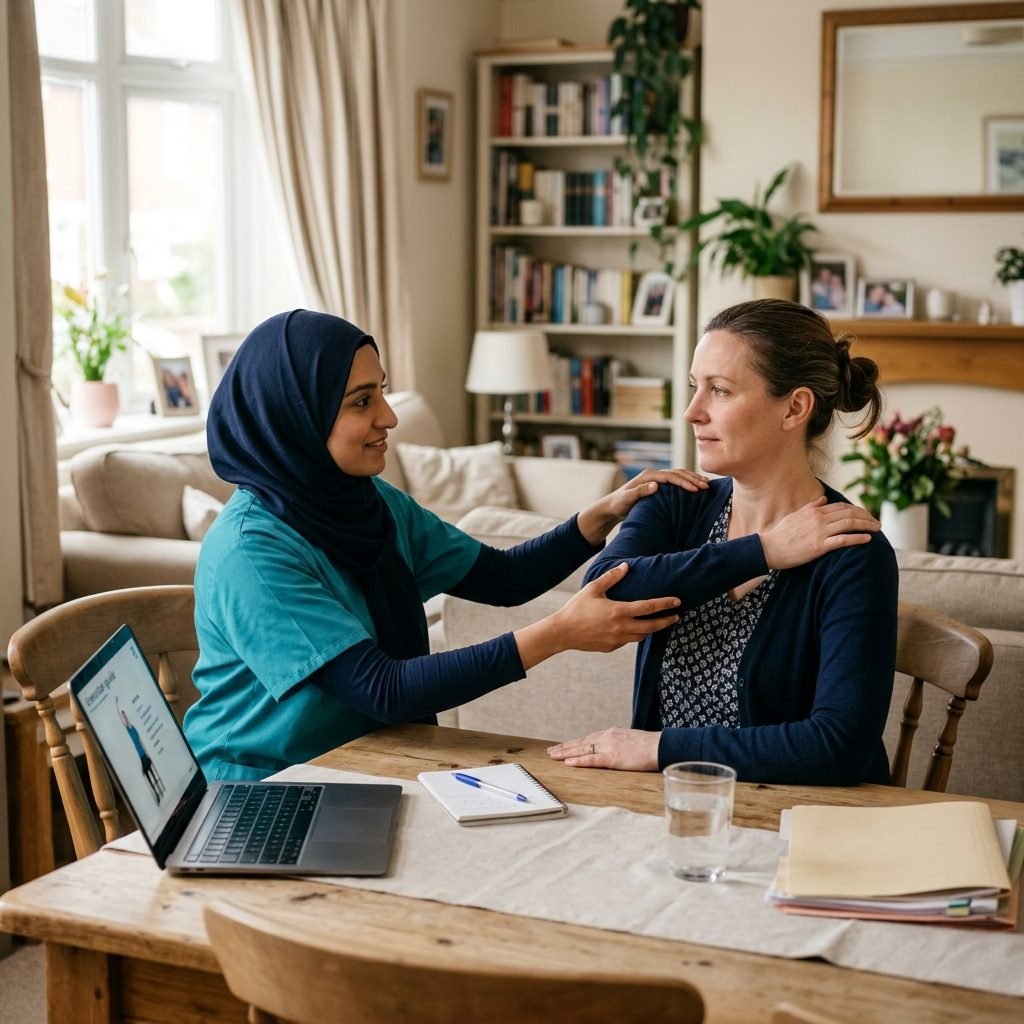
Female Physiotherapist
Licensed female therapists providing home care for women in Al Andalus.
Service Details ←