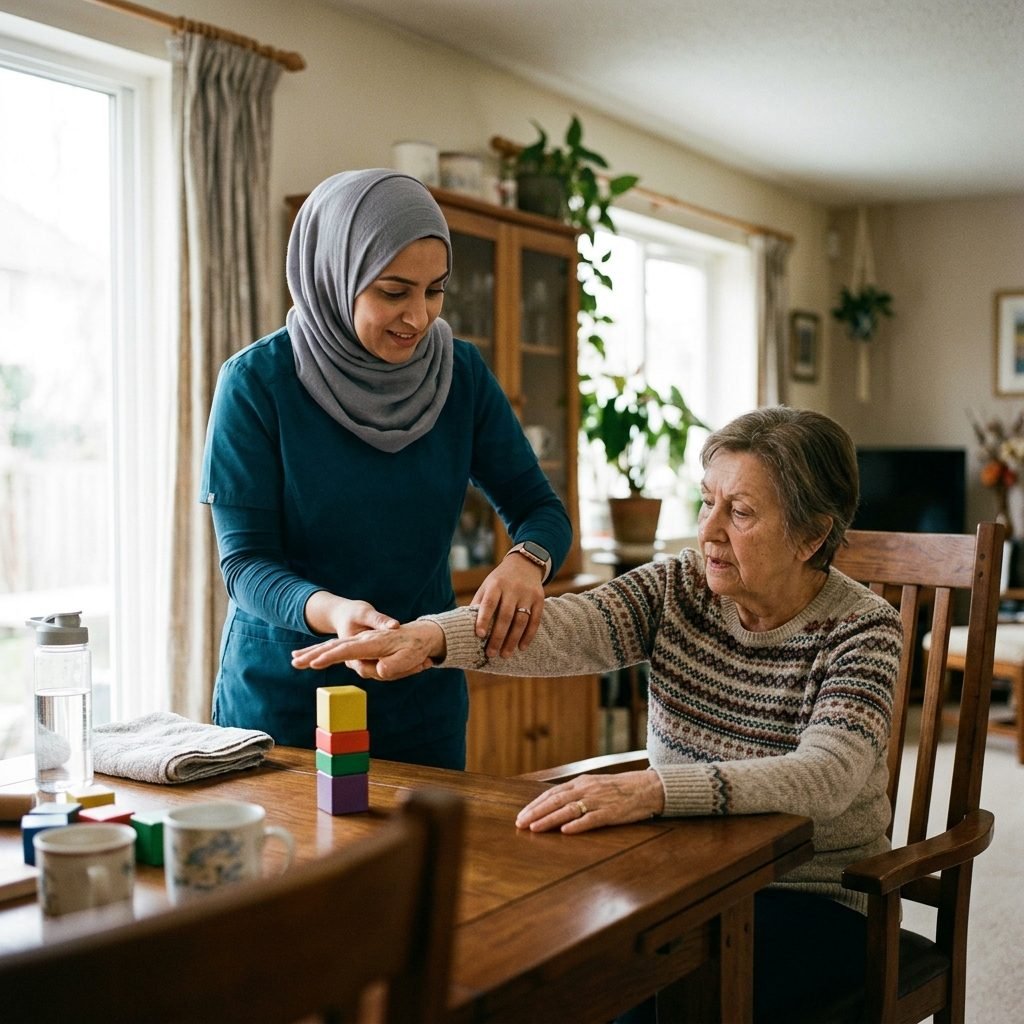
Having access to comprehensive, clinical physical therapy at home is crucial for maintaining rehabilitation progress, especially in busy neighborhoods. Al-Safa and Al Basateen districts in Jeddah present unique local mobility challenges due to high population density and traffic. At Bidaya Center, we deliver high-quality home physiotherapy and movement rehabilitation services directly to your doorstep, conforming to the clinical guidelines of the Saudi Commission for Health Specialties. We eliminate the stress of travel, traffic, and parking. We respect cultural privacy by providing certified male therapists for male patients and female therapists for female patients.
Our clinical approach in Al Basateen starts with a detailed physical and environmental safety assessment to eliminate fall hazards in the home. We bring all necessary portable, sterilized equipment to deliver a clinical standard of care comparable to external clinics. The therapist establishes a tailored milestone tracking plan to monitor muscle strength, balance, and joint range of motion (ROM) progression over time.
Why families in Al Basateen choose Bidaya for home physiotherapy
- ✅ Licensed male & female therapists — full privacy, in your own home in Al Basateen.
- ✅ Fully in-home visits across Al Basateen — no travel or traffic.
- ✅ A personalized rehab plan built after a thorough in-home assessment.
- ✅ Continuous follow-up and direct contact with your therapist throughout.
- ✅ Fast response — arrange your visit by a quick call or WhatsApp message.
We also serve nearby areas: Al Andalus · Al Bawadi · Al Fayha
* The treatment plan and expected outcomes are determined by a medical and functional assessment of each individual case.
What Home Hemiplegia Rehabilitation Means and Why It Matters for Al Basateen Residents
Hemiplegia is weakness or loss of movement affecting one side of the body, the arm and leg on the same side, usually caused by a stroke, a brain bleed, or an injury affecting one hemisphere of the brain. Hemiplegia rehabilitation is a structured therapy program designed to retrain the brain and nervous system to recover as much movement, balance, and daily independence as possible. It relies on the principle of neuroplasticity, the brain's ability to rebuild functional pathways through correct, repeated practice.
Delivering this rehabilitation inside the home carries particular value for residents of the Al Basateen neighborhood in Jeddah. It is a quiet, largely residential area with many multi-storey buildings and narrow corridors, and transporting a patient with one-sided weakness to a distant clinic several times a week is a physical and emotional burden on the family, sometimes exposing the patient to a fall risk during transfers. When the physiotherapist arrives at the front door, rehabilitation begins in the very environment where the patient actually lives: the same bed, the same bathroom, the same stairs and furniture.
This makes training more realistic and effective, because the patient learns to rise from their own bed and move between their own rooms rather than in an unfamiliar clinic layout. At Bidaya Center we provide licensed male and female therapists for Al Basateen residents with full respect for privacy, so each family can choose the therapist's gender and visit times that suit them.
Symptoms and Signs That Call for Starting
Starting hemiplegia rehabilitation early makes a meaningful difference to recovery, so it is important to recognize the signs that warrant beginning a home program without delay. The most notable include:
- Clear weakness or heaviness in the arm or leg on one side, making it hard to lift or move.
- Difficulty walking, or loss of balance and leaning toward one side when standing.
- Stiffness and spasticity in the hand, shoulder, or ankle, or fingers that curl and are hard to straighten.
- Weak grip that makes holding a cup, spoon, or clothing buttons difficult.
- Foot drop while walking, where the toes catch on the floor and increase the risk of tripping.
- Trouble getting up from a chair or bed, or complete reliance on the unaffected side.
- Neglect or lack of awareness of the affected side, and sometimes altered sensation or numbness.
The appearance of some of these signs after a stroke or brain injury indicates a need for specialist assessment. Even so, how much a patient benefits and how quickly they progress depend on a careful clinical and functional assessment of each case and cannot be judged from symptoms alone. The earlier the intervention begins within safe limits, the greater the chance of recovering function and limiting complications such as permanent stiffness.
Conditions and Groups That Benefit
Home-based hemiplegia rehabilitation serves a wide range of cases across all ages, including:
- Stroke patients in the post-medically-stable phase, whether the stroke was ischemic or hemorrhagic.
- Those recovering from a brain bleed, tumor, or brain surgery that left one-sided weakness.
- People with traumatic brain injuries resulting from accidents or falls.
- Children and young people with cerebral palsy or one-sided motor weakness.
- Those with hemiparesis following infections or other neurological problems affecting the brain.
- Older adults whose mobility and independence declined after a neurological event and who need gradual, safe rehabilitation.
The home service especially suits people for whom repeated travel is difficult and those who prefer a familiar environment that reduces stress and encourages consistency. In every case we build an individual plan; a newly injured patient has different needs from someone injured months ago, and a child differs from an older adult. This variety is exactly why we always stress that the program is built after examination, not before.
Goals of the Rehabilitation Program
A hemiplegia rehabilitation program pursues graded, realistic goals shaped by each patient's condition and severity, the most important being:
- Encouraging the return of voluntary movement in the affected limb and improving muscle control.
- Reducing spasticity and stiffness and preserving joint range of motion to prevent contractures.
- Improving balance and the ability to sit, stand, and transfer safely.
- Retraining and correcting the walking pattern, with assistive devices where needed.
- Strengthening the trunk and the unaffected side to support overall stability.
- Building the patient's independence in daily activities such as dressing, eating, and bathing.
- Preventing complications such as pressure sores, frozen shoulder, and venous clots.
- Raising self-confidence and morale through tangible, step-by-step gains.
We stress that these are goals we work toward seriously, not promises of guaranteed results. Progress differs from one person to another, and its ceiling and timeline are determined by the functional assessment, the patient's response, their commitment to the program, and family support.
Stages and Pathway of the Home Sessions
Home rehabilitation at Bidaya Center follows a structured pathway that starts from the first visit and continues flexibly as the patient improves:
- Initial assessment: the therapist visits the home to examine muscle strength, range of motion, balance, sensation, and the patient's ability to move and transfer, while understanding the family's goals and the layout of the space.
- Building the plan: an individual plan is drawn up with short- and long-term goals, a suggested number of sessions, and accompanying exercises between visits.
- Activation and protection stage: early on we focus on correct positioning, range-of-motion exercises, stimulating the affected limb, and preventing complications.
- Recovering movement and control stage: gradual strengthening exercises, training in sitting, standing, and balance, and reactivating the hand and grip.
- Walking and function stage: gait retraining, climbing and descending stairs when able, and integrating daily activities within the home.
- Follow-up and reassessment: we measure progress periodically, adjust the plan, and gradually reduce reliance on assistance toward the greatest possible independence.
The duration of each stage and the number of sessions are not fixed; they are set by the patient's response. Some cases progress quickly while others need more patience, and we transparently explain to each family where their patient stands and what the next step is.
The Role of the Family and Caregiver
The family is an essential partner in the success of hemiplegia rehabilitation. The weekly session with the therapist matters, but what happens on the remaining days matters no less. We therefore train the caregiver to:
- Help the patient perform the prescribed exercises between visits correctly and safely.
- Use proper techniques to transfer the patient from bed to chair and support them while standing without straining the caregiver's own back.
- Maintain correct positioning of the affected limb while sitting and sleeping to prevent stiffness and swelling.
- Encourage the patient to use the affected side in daily tasks rather than relying entirely on the sound side.
- Notice any change in color, pain, or skin condition and report it to the therapist.
- Provide emotional support and patience, since frustration is common and a supportive environment raises the patient's motivation.
We make sure the caregiver leaves every visit knowing exactly what to do until the next one. This cooperation between therapist and family is what turns rehabilitation from a weekly hour into a daily lifestyle that supports recovery.
Home Safety and Prevention Tips
Preparing the home safely protects the hemiplegia patient from falls and makes training easier, which is especially important in the multi-storey homes and corridors typical of Al Basateen. We recommend the following:
- Remove slippery rugs, cables, and obstacles from the usual walking paths.
- Install fixed grab bars near the toilet and in the bathroom, and use a non-slip mat.
- Provide adequate lighting, especially in corridors and on the route to the bathroom at night.
- Arrange the room's furniture to allow a wide, clear path for movement and a wheelchair when needed.
- Keep frequently used items within reach to avoid dangerous stretching or bending.
- Use closed, firm, non-slip shoes during exercises and walking.
- Do not let the patient try to walk or stand alone before the therapist clears them to do so.
- Keep to medication and rest schedules and avoid pushing the patient beyond their capacity.
These simple arrangements greatly reduce risk and make the home a supportive rehabilitation environment. During visits the therapist offers practical notes tailored specifically to your home based on what is seen on the ground.
Frequently Asked Questions (FAQ)
When should we start hemiplegia rehabilitation after a stroke?
It is best to begin early once the medical condition is stable and the treating doctor approves, because the first weeks and months are often the most responsive. We start with a home assessment to determine what is safe and appropriate for your patient's stage.
Are female therapists available for female patients?
Yes. Bidaya Center provides licensed male and female therapists, and you can choose the therapist's gender to ensure full privacy and comfort for the patient inside the home.
How many sessions does the patient need?
There is no fixed number; the number of sessions and the program's length depend on the severity of the injury and the patient's response and commitment. We set an initial plan after assessment and review it periodically as progress unfolds.
Can the affected limb return exactly as it was before?
We do not make promises of guaranteed results. The aim is to recover as much movement and independence as possible and to limit complications. The degree of improvement varies from case to case and becomes clearer with functional follow-up.
Do you reach our area in Al Basateen, and what should we prepare before the visit?
Yes, we serve Al Basateen residents and neighboring Jeddah districts. It is enough to prepare a comfortable spot for the patient and enough space to move; the therapist brings the necessary assessment tools and basic exercise equipment.
To book a home visit for hemiplegia rehabilitation in Al Basateen or to ask a question, contact Bidaya Center by phone or WhatsApp by clicking Call Now, and we will be glad to help you arrange a convenient appointment with full privacy and professionalism.
Important Home Visit Details:
- ✓Setup: Please clear a 2x2m space in the room for safety.
- ✓Clothing: Wear loose, comfortable clothes for easy movement.
- ✓Therapist Parity: Male therapists for males, females for females.
- ✓Medical Reports: Keep your MRI or doctor reports ready for evaluation.
Rehabilitation & Services in Al Basateen
Stroke Rehabilitation
Advanced motor and neurological stroke recovery at home in Al Basateen.
Service Details ←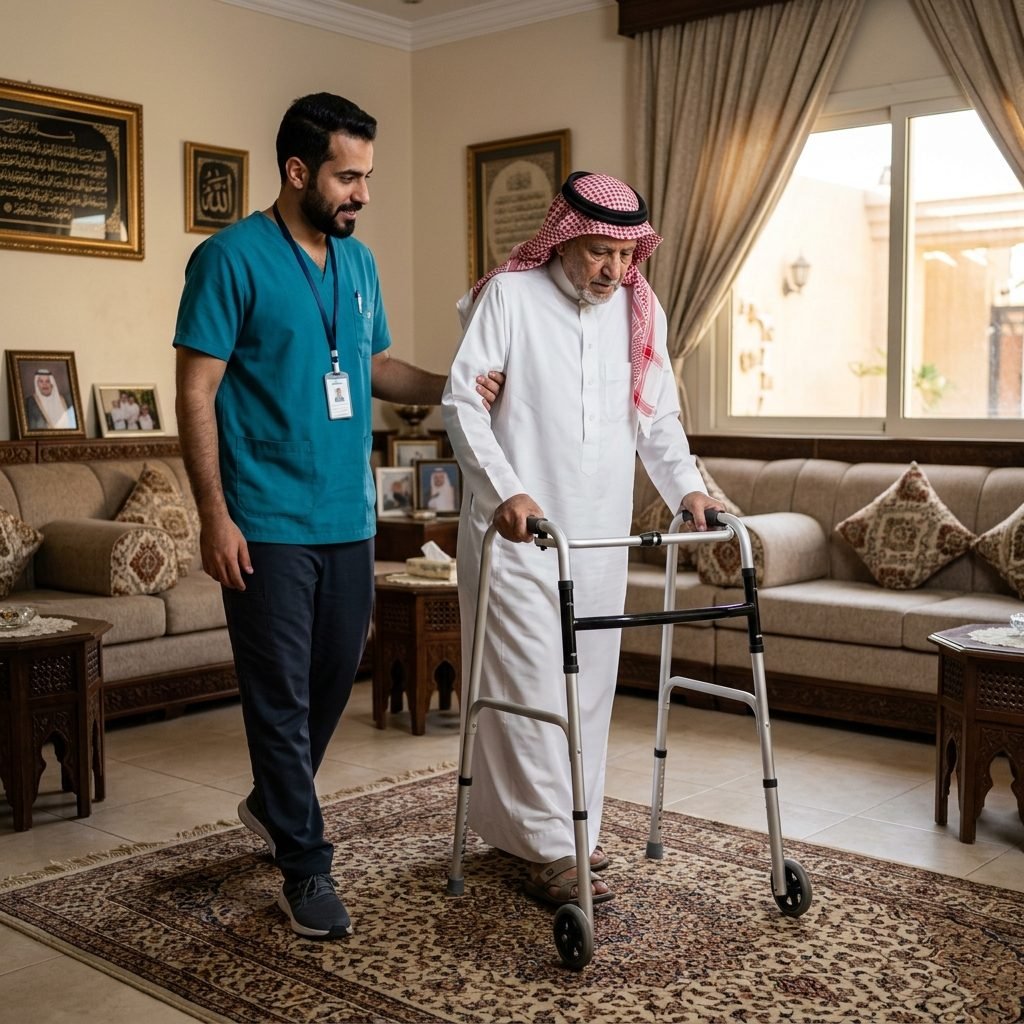
Geriatric Physical Therapy
Balance training, strengthening, and fall prevention for seniors in Al Basateen.
Service Details ←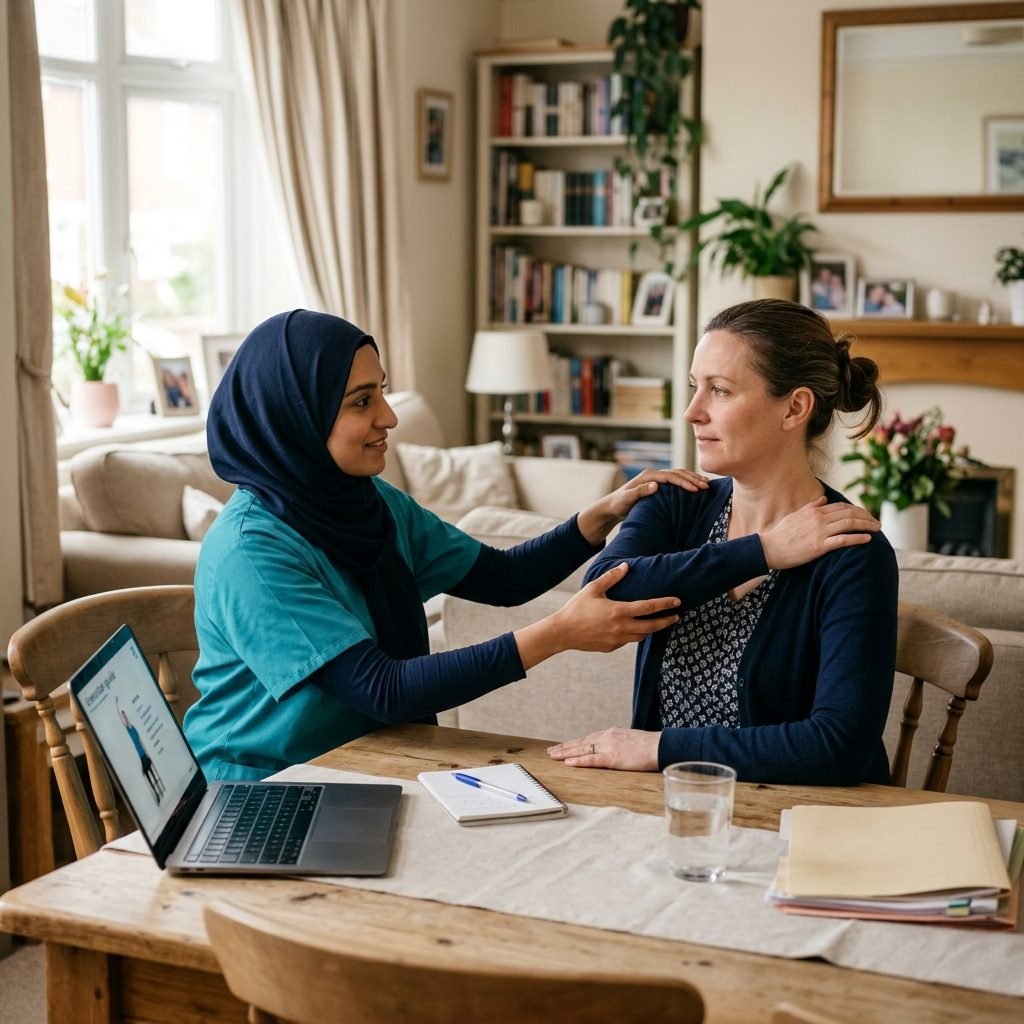
Female Physiotherapist
Licensed female therapists providing home care for women in Al Basateen.
Service Details ←