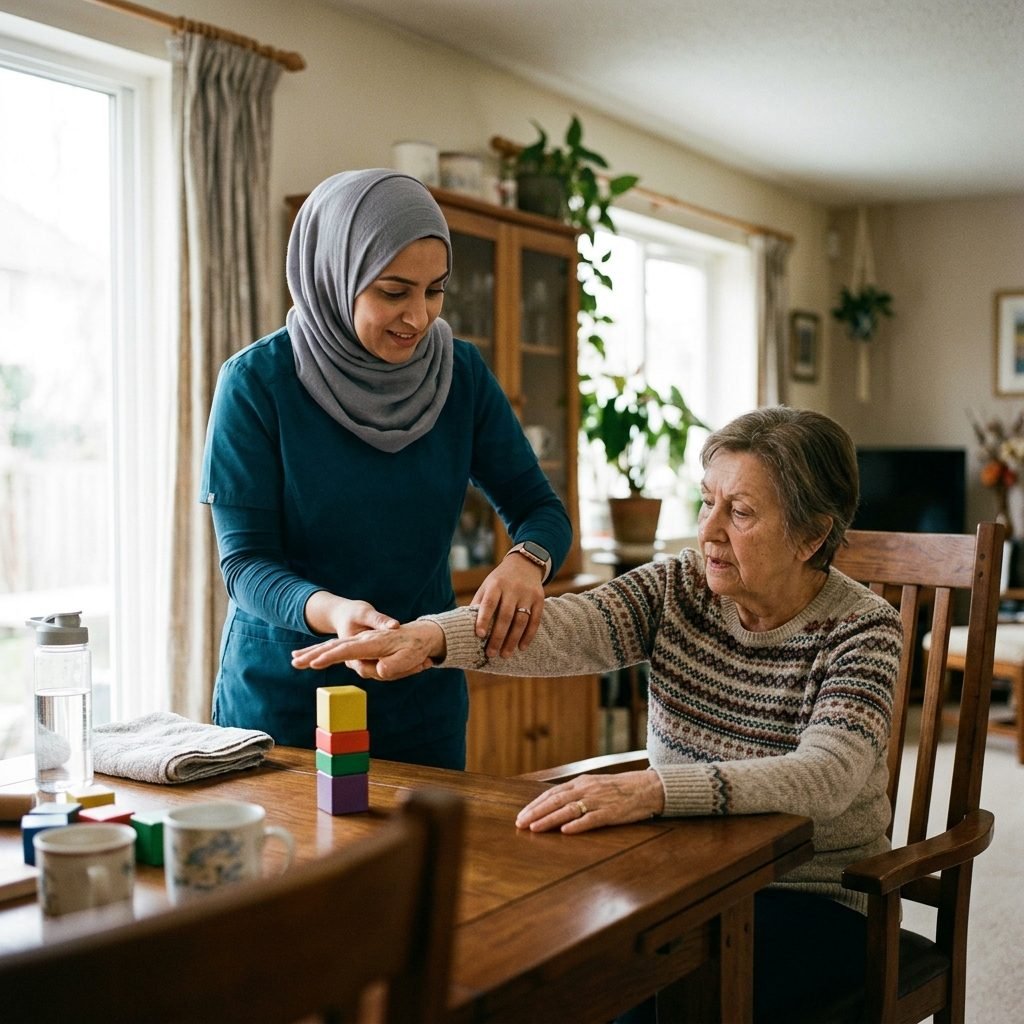
Having access to comprehensive, clinical physical therapy at home is crucial for maintaining rehabilitation progress, especially in busy neighborhoods. Al-Safa and Al Bawadi districts in Jeddah present unique local mobility challenges due to high population density and traffic. At Bidaya Center, we deliver high-quality home physiotherapy and movement rehabilitation services directly to your doorstep, conforming to the clinical guidelines of the Saudi Commission for Health Specialties. We eliminate the stress of travel, traffic, and parking. We respect cultural privacy by providing certified male therapists for male patients and female therapists for female patients.
Our clinical approach in Al Bawadi starts with a detailed physical and environmental safety assessment to eliminate fall hazards in the home. We bring all necessary portable, sterilized equipment to deliver a clinical standard of care comparable to external clinics. The therapist establishes a tailored milestone tracking plan to monitor muscle strength, balance, and joint range of motion (ROM) progression over time.
Why families in Al Bawadi choose Bidaya for home physiotherapy
- ✅ Licensed male & female therapists — full privacy, in your own home in Al Bawadi.
- ✅ Fully in-home visits across Al Bawadi — no travel or traffic.
- ✅ A personalized rehab plan built after a thorough in-home assessment.
- ✅ Continuous follow-up and direct contact with your therapist throughout.
- ✅ Fast response — arrange your visit by a quick call or WhatsApp message.
We also serve nearby areas: Al Andalus · Al Basateen · Al Fayha
* The treatment plan and expected outcomes are determined by a medical and functional assessment of each individual case.
What Home-Based Hemiplegia Rehabilitation Means for Al Bawadi Residents
Hemiplegia is weakness or loss of movement on one side of the body, either the right or the left, most often caused by an injury to the opposite side of the brain such as a stroke, a brain hemorrhage, or certain head injuries. Home-based hemiplegia rehabilitation is a structured therapy program delivered by a qualified physiotherapist inside the patient's own home, aiming to recover as much movement and independence as possible while retraining the brain and muscles to perform daily tasks again.
In Al Bawadi, a calm residential district of Jeddah with a strong family character and closely spaced apartments and villas, home sessions become an especially practical choice. Repeatedly transporting a patient with hemiplegia to a clinic places a real burden on the family, particularly given limited mobility and the frequent need for a wheelchair or two people to help with getting up and down. When the therapist comes to the home, the family is spared the strain of transport and waiting, and the rehabilitation takes place in the very environment where the patient lives each day.
This point is central to hemiplegia rehabilitation specifically. The ultimate goal is not simply to move a limb inside a treatment room, but to enable the patient to move between their bedroom, bathroom, and sitting room, to rise from their usual bed, and to manage the stairs or hallways of their own house. Training within these real surroundings makes the acquired skills immediately transferable and genuinely useful. We also provide licensed male and female therapists, with full respect for the privacy of the home and the comfort of the patient and their family.
Symptoms and Signs That Call for Starting
The earlier rehabilitation begins after the condition is medically stable, the greater the chances of improvement. It is important to notice the following signs and to contact us so they can be assessed:
- Clear weakness or heaviness in the hand and foot on one side of the body, with difficulty raising the arm or moving the fingers.
- Difficulty walking, or the body leaning toward one side with loss of balance when standing.
- Stiffness and spasticity in the shoulder, elbow, wrist, or ankle muscles that increases over time.
- Dragging or catching of the foot while stepping, and trouble lifting the front of the foot off the floor.
- Almost complete reliance on the unaffected side while neglecting the affected limb in movement and use.
- Reduced sensation or numbness on the affected side, or pain in the shoulder joint during movement.
- Difficulty controlling the trunk while sitting, or being unable to rise from a chair or bed without help.
The appearance of these signs does not mean the condition is fixed. The nervous system has a capacity to reorganize and relearn, and thoughtful rehabilitation harnesses that capacity. An early assessment defines the starting point and helps prevent complications such as permanent stiffness or tendon contractures.
Conditions and Groups Who Benefit
Home hemiplegia rehabilitation serves a wide range of cases, and we design a different plan for each one according to the cause of the injury, its severity, and how long ago it occurred:
- Stroke patients (clot or hemorrhage) who have been left with weakness in one half of the body.
- People recovering from head injuries and accidents that affected movement on one side.
- Cases following brain tumor surgery that left a one-sided motor weakness.
- Children with the hemiplegic type of cerebral palsy who need graded motor training.
- Older adults whose mobility has declined after a neurological injury and for whom clinic visits have become difficult.
- Patients in advanced recovery stages seeking to improve walking, motor precision, and a return to their activities.
Whether the injury is recent or several months old, there is always room to work on improving function or preserving gains and preventing deterioration. Al Bawadi's residential nature and the proximity of homes make reaching all of these groups convenient and quick.
Goals of the Rehabilitation Program
We do not treat hemiplegia with a single formula; instead we set realistic functional goals built together with the patient and their family after assessment. The most prominent of these goals include:
- Improving motor control on the affected side and restoring natural movement patterns as far as possible.
- Strengthening the trunk and the affected limb to support balance, standing, and walking.
- Reducing spasticity and muscle stiffness while maintaining joint range of motion and preventing contractures.
- Retraining balance and coordination to lower the risk of falling inside the home.
- Enhancing independence in daily tasks such as dressing and transferring between bed and chair.
- Encouraging renewed use of the affected limb instead of total reliance on the unaffected side.
- Relieving accompanying pain, especially in the shoulder joint, and improving overall body posture.
We state clearly that the extent and pace of improvement differ from one person to another and depend on a careful clinical and functional assessment of each case. We do not offer promises of full recovery or guaranteed results; rather we commit to professional, graded work whose effect we monitor and whose plan we continually adjust according to the patient's response.
Stages and Path of the Home Sessions
The home rehabilitation journey moves through connected stages, and we transition between them flexibly according to the case's progress:
Initial assessment: On the first visit the therapist examines muscle strength, range of motion, degree of spasticity, balance, and the ability to walk and transfer, listens to the goals of the patient and family, then sets an initial plan with measurable objectives.
Foundation stage: We focus on preparing the muscles, passive and assisted range-of-motion exercises, and setting correct positions in bed and sitting to protect the shoulder and joints from injury.
Motor activation stage: We begin stimulating voluntary movement on the affected side through guided exercises, with training in trunk control and balanced sitting before progressing to standing.
Function and gait stage: We train balance while standing, work on walking patterns and the use of assistive devices when needed, and practice daily skills genuinely within the home.
Advancement and integration stage: We gradually raise the challenge toward finer movements and more complex activities, and reinforce use of the affected limb in dual tasks.
Each session builds on the one before it, and we give the family simple home exercises between visits, because daily repetition is an essential ingredient in the success of nervous-system rehabilitation.
The Role of the Family and Caregiver
In hemiplegia rehabilitation specifically, the family is not a spectator but an essential partner in treatment. The hours a patient spends with relatives far outnumber the time of a session, which is why we make sure to train the caregiver in:
- How to transfer the patient safely between bed, chair, and bathroom without straining the back or harming the patient.
- Correct sitting and lying positions that protect the affected shoulder and reduce spasticity.
- Carrying out the prescribed home exercises between sessions at the correct dose.
- Encouraging the patient to use the affected side in daily tasks rather than ignoring it.
- Noticing any change in the skin, pain, or swelling and reporting it to the therapist.
We recognize that caring for a person with hemiplegia is emotionally and physically demanding, so we also guide the family in organizing tasks, sharing roles, and asking for help when needed, because high morale within the home reflects directly on the patient's responsiveness and progress.
Home Safety and Prevention Tips
A safe home speeds recovery and prevents setbacks and accidents. We advise Al Bawadi residents to review these points inside the home:
- Remove slippery rugs, scattered wires, and any obstacles along the patient's paths of movement.
- Install firm grab bars in the bathroom and beside the toilet, and use a non-slip shower chair.
- Provide adequate lighting, especially at night, in hallways, and beside the bed.
- Arrange essential items within easy reach on the unaffected side to make access simpler.
- Choose closed, stable, non-slip shoes instead of open slippers.
- Mind the position of the affected shoulder during transfers and sitting to avoid injuring or dislocating it.
- Reposition the patient regularly if they are bedridden to prevent pressure sores.
- Avoid leaving the patient to stand or walk alone in the early stages without supervision.
These simple arrangements make a large difference in reducing the risk of falling, one of the most significant dangers threatening a hemiplegia patient and delaying their progress.
Frequently Asked Questions (FAQ)
When should we begin rehabilitation after a stroke?
It is best to start as soon as the condition is medically stable and the treating physician approves, even if the patient is still in an early phase. The earlier rehabilitation begins, the better the chance of benefiting from the nervous system's plasticity, though even long-standing cases can improve with a suitable plan.
Can the patient return to walking completely normally?
The extent of improvement varies from person to person depending on the location and severity of the injury and the time since it occurred, and no specific result can be guaranteed in advance. The aim is to achieve the best possible level of movement and independence after careful assessment and ongoing follow-up.
How many sessions does the patient need per week?
This is determined after the initial assessment and according to each patient's condition, goals, and severity of injury. Some cases benefit from closely spaced sessions at the start, and the frequency is then adjusted gradually according to progress and the patient's response.
Are female therapists available for female patients?
Yes, we have licensed male and female therapists, and the family can choose what suits them, with full respect for the privacy of the home and the comfort of the patient. Privacy and respect are a core part of the way we work.
Is a home session as effective as the clinic?
In hemiplegia cases the home session is often more realistic, because training takes place in the actual environment where the patient moves every day, while sparing the family the strain of travel and waiting.
To book a home visit in the Al Bawadi district of Jeddah or to ask about hemiplegia rehabilitation, contact us directly by phone or WhatsApp by clicking Call Now, and the Bidaya Center team will be glad to answer your questions and arrange the assessment appointment suited to your case.
Important Home Visit Details:
- ✓Setup: Please clear a 2x2m space in the room for safety.
- ✓Clothing: Wear loose, comfortable clothes for easy movement.
- ✓Therapist Parity: Male therapists for males, females for females.
- ✓Medical Reports: Keep your MRI or doctor reports ready for evaluation.
Rehabilitation & Services in Al Bawadi
Stroke Rehabilitation
Advanced motor and neurological stroke recovery at home in Al Bawadi.
Service Details ←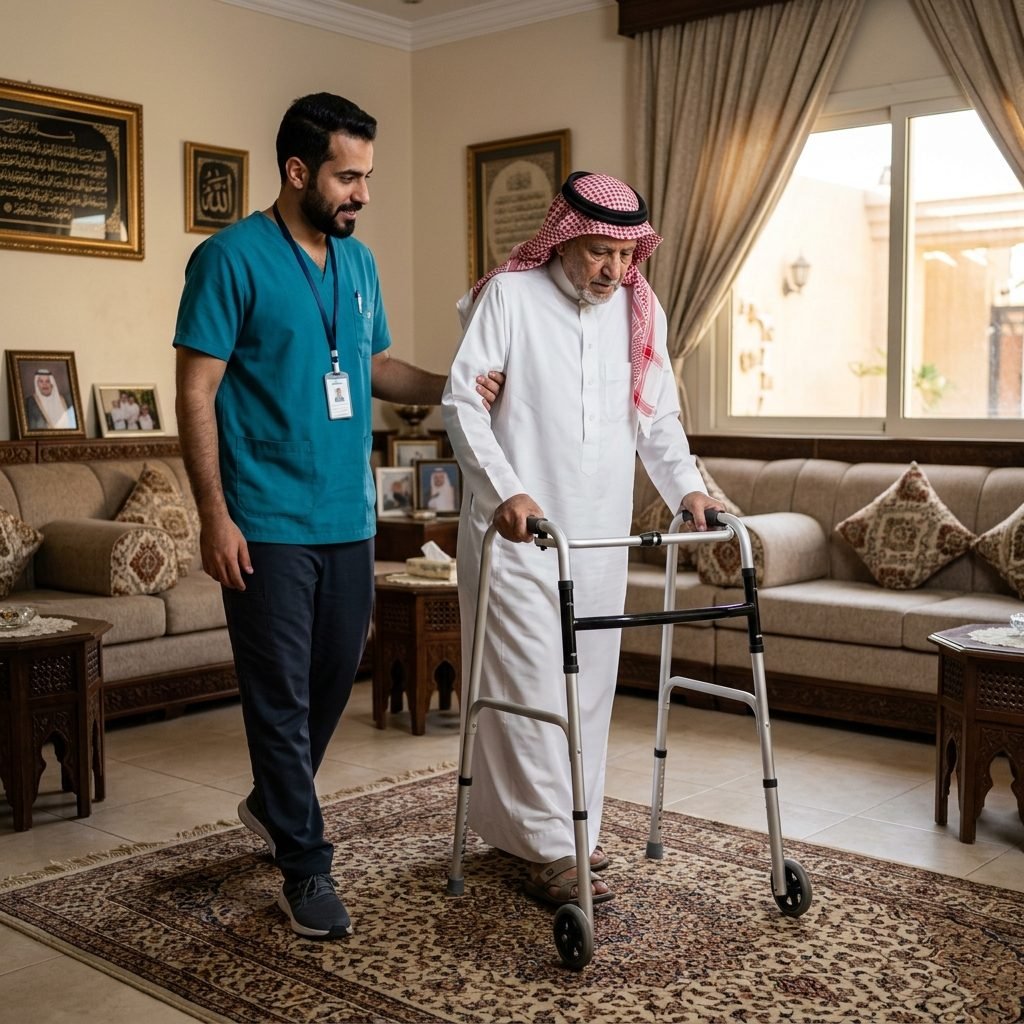
Geriatric Physical Therapy
Balance training, strengthening, and fall prevention for seniors in Al Bawadi.
Service Details ←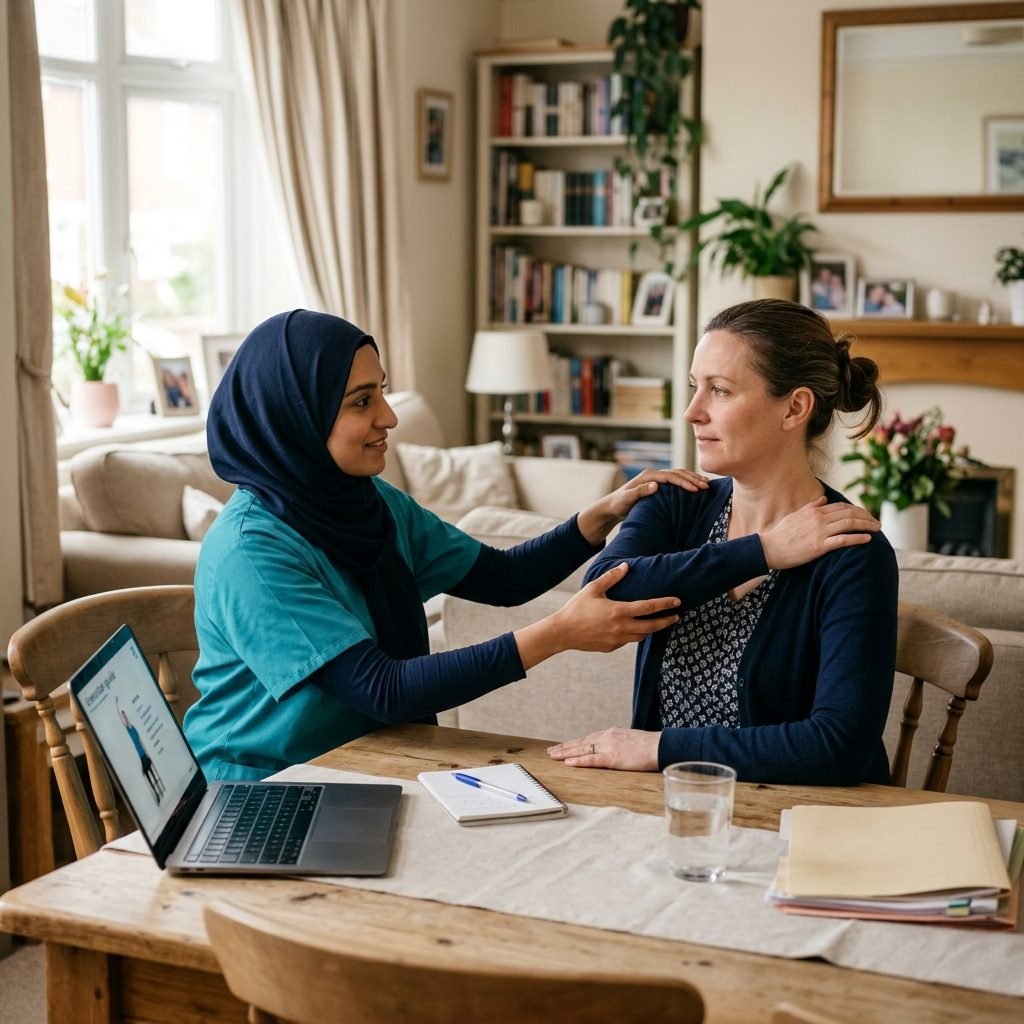
Female Physiotherapist
Licensed female therapists providing home care for women in Al Bawadi.
Service Details ←