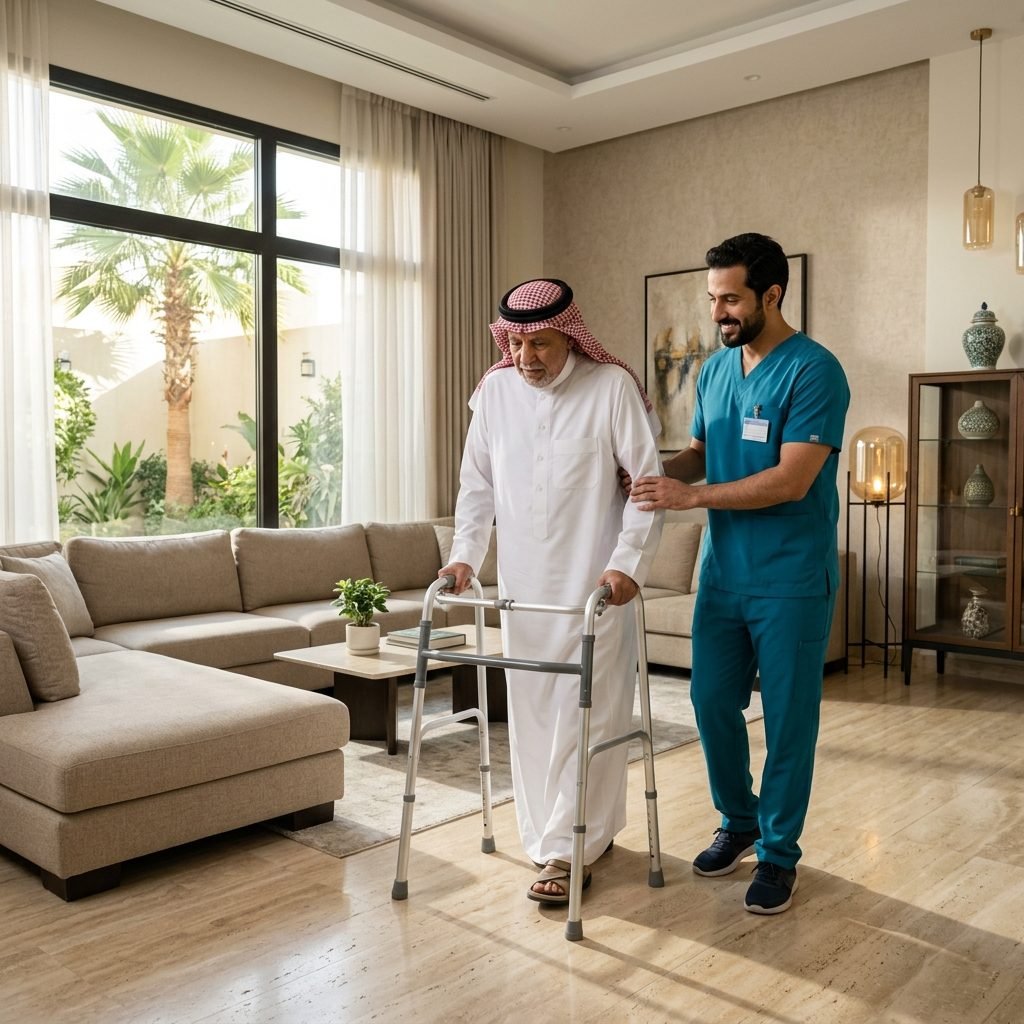
Having access to comprehensive, clinical physical therapy at home is crucial for maintaining rehabilitation progress, especially in busy neighborhoods. Al-Safa and Al Andalus districts in Jeddah present unique local mobility challenges due to high population density and traffic. At Bidaya Center, we deliver high-quality home physiotherapy and movement rehabilitation services directly to your doorstep, conforming to the clinical guidelines of the Saudi Commission for Health Specialties. We eliminate the stress of travel, traffic, and parking. We respect cultural privacy by providing certified male therapists for male patients and female therapists for female patients.
Our clinical approach in Al Andalus starts with a detailed physical and environmental safety assessment to eliminate fall hazards in the home. We bring all necessary portable, sterilized equipment to deliver a clinical standard of care comparable to external clinics. The therapist establishes a tailored milestone tracking plan to monitor muscle strength, balance, and joint range of motion (ROM) progression over time.
Why families in Al Andalus choose Bidaya for home physiotherapy
- ✅ Licensed male & female therapists — full privacy, in your own home in Al Andalus.
- ✅ Fully in-home visits across Al Andalus — no travel or traffic.
- ✅ A personalized rehab plan built after a thorough in-home assessment.
- ✅ Continuous follow-up and direct contact with your therapist throughout.
- ✅ Fast response — arrange your visit by a quick call or WhatsApp message.
We also serve nearby areas: Al Basateen · Al Bawadi · Al Fayha
* The treatment plan and expected outcomes are determined by a medical and functional assessment of each individual case.
What Integrated Home Physiotherapy Means for Al Andalus Residents
Integrated home physiotherapy in the Al Andalus district of Jeddah is a complete rehabilitation service delivered inside the patient's own home instead of requiring repeated trips to a clinic. It brings together assessment, an individual treatment plan, the therapy sessions themselves, and ongoing follow-up, all carried out in the environment where the patient actually lives. The word "integrated" is deliberate: we do not offer an isolated exercise or a single visit, but a connected pathway that ties together restoring movement, easing pain, improving daily independence, and educating the family.
Al Andalus is one of the lively residential districts of Jeddah, combining a calm neighbourhood character with easy access to everyday amenities. For an elderly person, someone recovering from surgery, or a patient in acute pain, the daily journey to a treatment centre can become a genuine burden. This is exactly where a home-based service proves its value: the therapist arrives at the front door with the needed equipment, sparing the family travel time, traffic, and the difficulty of transporting a patient with limited mobility.
The deeper advantage of treatment at home is that it happens in the patient's real functional environment. The therapist sees the bed they rise from, the stairs they climb, the bathroom they use, and the distance they walk between rooms. This allows exercises to be designed around the patient's actual daily life rather than an abstract clinic setting. Home presence also lets family members learn and take part, so therapy shifts from a weekly appointment into a continuous daily practice.
At Bidaya Center we provide licensed male and female therapists, with full respect for each family's privacy, so the household can choose the staff that suits it best. We make one point clear from the outset: the treatment plan and expected outcomes are built on a careful clinical and functional assessment of each individual case. There are no promises of a guaranteed cure or a fixed result, only a professional commitment to best practice tailored to your specific condition.
Symptoms and Signs That Signal It Is Time to Start
Many families delay seeking physiotherapy until a problem worsens, yet early intervention is often easier and safer. A number of signs should prompt you to consider starting a home programme in Al Andalus without delay:
- Persistent pain in the back, neck, shoulder, or knee that disturbs sleep, sitting, or walking even short distances inside the home.
- Noticeable stiffness in the joints, especially in the morning, or difficulty bending the knee or raising the arm to get dressed.
- General muscle weakness, or a feeling that the legs "will not hold," with frequent stumbling or a need to hold onto walls.
- Partial loss of balance, dizziness on standing, or a growing fear of falling during ordinary daily movement.
- Slow recovery after joint surgery, a fracture, a knee or hip replacement, or after a period of casting and immobilisation.
- Weakness, numbness, or tingling on one side of the body after a stroke, or difficulty with speech and swallowing alongside reduced movement.
- Swelling or tissue tightness after a sports injury or accident, with a restricted natural range of motion.
- A decline in the ability to perform simple daily tasks such as bathing, washing, or rising from a chair unaided.
Having one or more of these signs does not necessarily mean a serious condition, but it is a signal that the body needs a specialist assessment. A home therapist can distinguish between passing discomfort and a functional problem that requires intervention, and will refer you to the appropriate doctor or recommend further tests when needed before safely beginning.
Conditions and Groups Who Benefit
Integrated home physiotherapy in Al Andalus is designed to serve several groups of residents whose needs differ but who share the requirement for care that reaches them where they are:
- Older adults: to improve balance and strength, prevent falls, and preserve independence in walking and moving around the home as much as possible.
- Post-surgical patients: after joint operations, knee arthroscopy, fracture fixation, or spinal surgery, where the plan follows the recovery stage and the surgeon's instructions.
- Stroke and neurological patients: to retrain movement, improve balance control, reduce spasticity, and recover as much daily function as possible.
- People with chronic pain: such as lower back pain, disc problems, knee osteoarthritis, and recurring tendon inflammation.
- Accident and sports injury cases: to rehabilitate ligaments and muscles and restore range of motion and strength gradually and safely.
- Children with motor needs: within tailored programmes that respect age and development, coordinated with the family and the treating physician.
- Chronically ill and bed-bound patients: to prevent the complications of immobility and maintain joint flexibility and skin integrity.
- Women after childbirth: within programmes that fully respect privacy, to rebuild strength and address some pregnancy and delivery-related discomfort.
Because each group has its own needs, work always begins with an individual assessment. One patient's plan is never simply copied onto another, even when diagnoses look similar; age, the way of life inside the home, general health, and the patient's own goals all reshape the programme.
Goals of the Rehabilitation Programme
Home physiotherapy is only effective when its goals are clear, measurable, and agreed upon with the patient and family. In Al Andalus we frame goals in practical terms tied to the patient's everyday life, and the most prominent include:
- Pain relief: through manual therapy techniques, guided exercise, and supportive aids, aiming to reduce reliance on painkillers where possible.
- Restoring range of motion: releasing stiffness and increasing the flexibility of joints and muscles so basic movements become comfortable again.
- Building strength and endurance: returning power to weakened limbs gradually, in step with the body's capacity and without overloading it.
- Improving balance and walking: targeted training that lowers the risk of falls and rebuilds confidence in moving inside and outside the home.
- Enhancing functional independence: enabling the patient to stand, sit, bathe, dress, and climb stairs with less reliance on others.
- Preventing complications: avoiding joint stiffness, muscle wasting, and pressure sores in patients with limited mobility.
- Education and empowerment: teaching the patient and family safe home exercises and care principles to continue after the programme ends.
These goals are reviewed regularly and adjusted according to the patient's response; progress is not a straight line, and a slowdown may call for recalibrating the plan. We stress that the ceiling of expected outcomes is set after the clinical assessment and differs from case to case depending on the diagnosis, commitment, and overall health factors.
Stages and Pathway of the Home Sessions
So that every family in Al Andalus considering the service has a clear picture, here is the usual pathway from the first contact to completing the programme:
- Contact and preparation: you reach us by phone or WhatsApp, we listen to a description of the condition, and we set a first-visit time that suits the patient and family.
- Comprehensive initial assessment: at the first visit the therapist examines range of motion, strength, balance, and pain, reviews any available medical reports, and evaluates the home for safety.
- Building the individual plan: based on the assessment, a plan is drawn up with short and long-term goals, an approximate number of sessions, and the suitable methods of intervention.
- Treatment sessions: sessions are delivered at home according to the plan and usually include therapeutic exercise, manual therapy, functional training, and assistive aids when needed.
- Follow-up and re-assessment: progress is measured at regular intervals, and the plan is advanced or adjusted according to the actual response.
- Home exercises between sessions: the patient is given simple exercises to perform between visits to speed progress and consolidate gains.
- Completion and discharge: once goals are met, a home maintenance programme and guidance are provided to continue and prevent relapse.
The programme's length and number of sessions are not fixed; some cases need only a few weeks while others require a longer path. Professional honesty means we base this on assessment rather than advance promises, and we keep you informed of every adjustment to the plan.
The Role of the Family and Caregiver
The success of home therapy in Al Andalus does not rest on the therapist alone, but on a genuine partnership with the family and caregiver. The family's daily presence around the patient makes them an extension of the treatment plan between visits, and their role includes:
- Encouraging the patient to perform the prescribed home exercises regularly, and following up on their commitment without pressure or exhaustion.
- Providing safe help with movement and transfers between bed, chair, and bathroom, in the way the therapist demonstrates.
- Noticing any change in pain, swelling, or mobility and reporting it to the therapist so the plan can be adjusted when needed.
- Preparing a supportive environment at home: good lighting, enough space to exercise, and clear pathways free of obstacles.
- Keeping track of medication and session times, and maintaining a steady daily routine that supports stability and recovery.
- Offering emotional and moral support, since an encouraging word and patience raise the patient's motivation and reduce feelings of helplessness.
For their part, the therapist does not leave the family guessing but teaches them how to help safely, answers their questions, and explains what to avoid. This partnership turns the home into a complete therapeutic environment, makes progress faster and more durable, and eases the physical and emotional strain on the caregiver themselves.
Home Safety and Prevention Tips
A safe home environment is a core part of therapy, and many setbacks and falls can be avoided with simple steps. We advise Al Andalus families to observe the following:
- Remove slippery rugs and scattered cables from walkways, and firmly secure any necessary carpeting.
- Provide adequate lighting in corridors, bathrooms, and on the stairs, with switches that are easy to reach at night.
- Install grab bars in the bathroom and near the toilet, and use a shower chair and support when needed.
- Wear closed, non-slip footwear inside the home rather than open slippers or walking barefoot.
- Keep frequently used items within easy reach to avoid excessive bending or standing on a chair.
- Do not over-exercise or perform movements incorrectly; follow exactly what the therapist prescribes in count and method.
- Maintain good hydration and nutrition, with enough rest between periods of activity to avoid fatigue.
- Watch for warning signs such as sudden sharp pain, significant swelling, or severe dizziness, and stop and contact the therapist if they occur.
These are general guiding tips that reinforce safety, but they do not replace an individual assessment; the therapist tailors additional recommendations to each patient's condition and the nature of their home in the neighbourhood.
Frequently Asked Questions (FAQ)
Are female therapists available for female patients in Al Andalus?
Yes. Bidaya Center has a team of licensed male and female therapists, and a family can choose a female therapist for a female patient with full respect for privacy inside the home.
How many sessions will I need?
There is no fixed number; the count is determined after the initial assessment based on the diagnosis, the severity of the condition, and the degree of response, and it is reviewed regularly as the programme progresses.
Does the therapist bring the necessary equipment and tools?
Yes, the therapist arrives with the tools suited to the nature of the session. If your case calls for a particular assistive aid, we will explain this in advance so it can be prepared.
Do you guarantee a full recovery?
We do not offer promises of a guaranteed cure; expected outcomes are set after a clinical and functional assessment and depend on the diagnosis, commitment, and health factors. Our commitment is best professional practice for your condition.
How do I start and book the first home visit?
Simply contact us by phone or WhatsApp to describe the condition and set a suitable time, then the therapist comes for the initial assessment and builds a plan that fits you.
Begin your recovery journey at home in Al Andalus with the Bidaya Center team. Contact us now by phone or via WhatsApp by clicking Call Now to book a home visit and have your condition assessed, and to choose a male or female therapist that suits your comfort and privacy.
Important Home Visit Details:
- ✓Setup: Please clear a 2x2m space in the room for safety.
- ✓Clothing: Wear loose, comfortable clothes for easy movement.
- ✓Therapist Parity: Male therapists for males, females for females.
- ✓Medical Reports: Keep your MRI or doctor reports ready for evaluation.
Rehabilitation & Services in Al Andalus
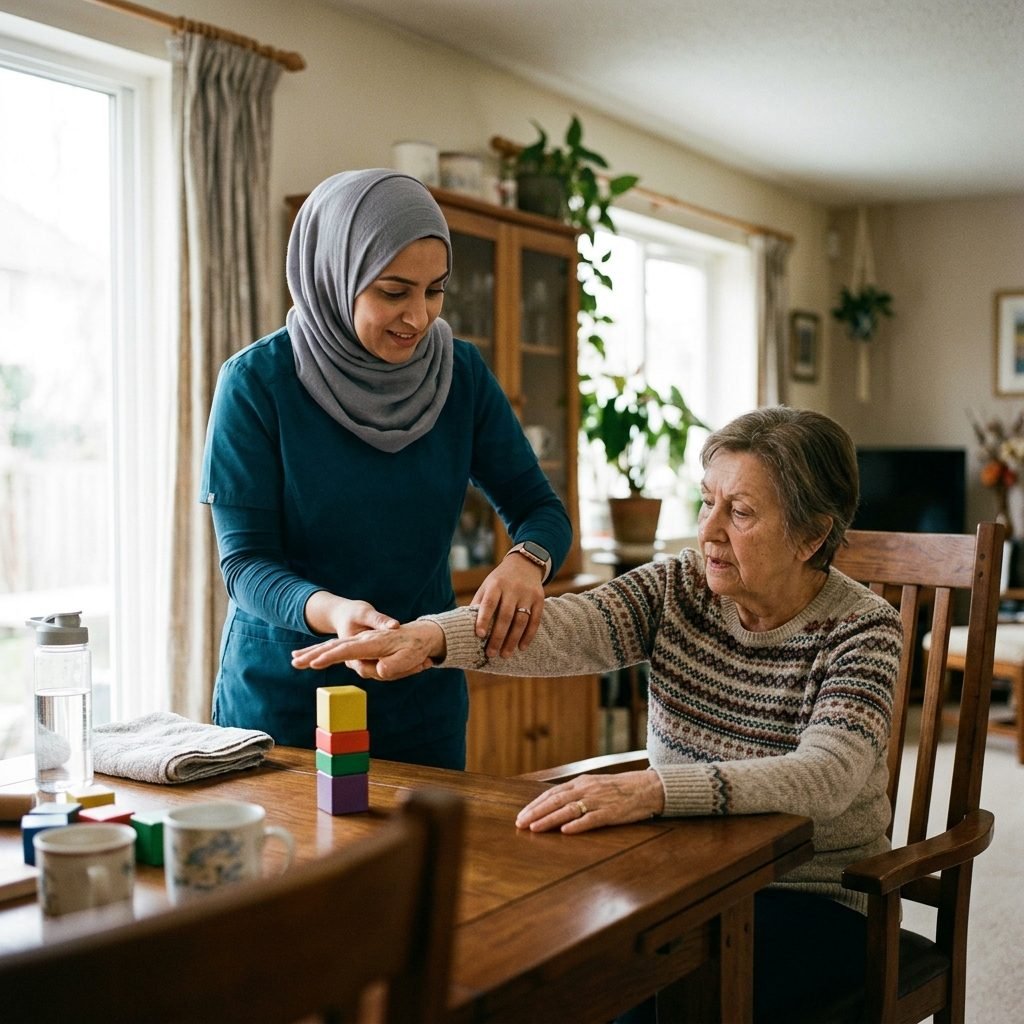
Stroke Rehabilitation
Advanced motor and neurological stroke recovery at home in Al Andalus.
Service Details ←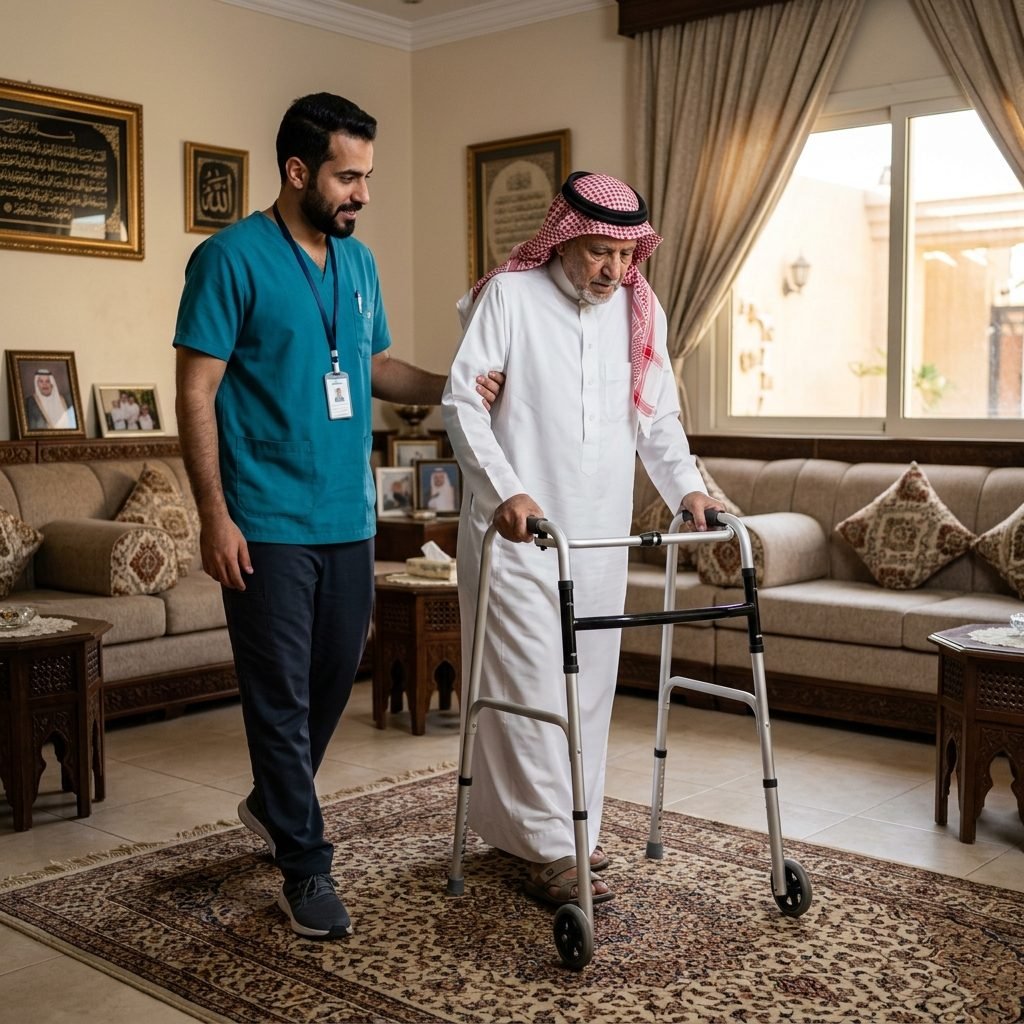
Geriatric Physical Therapy
Balance training, strengthening, and fall prevention for seniors in Al Andalus.
Service Details ←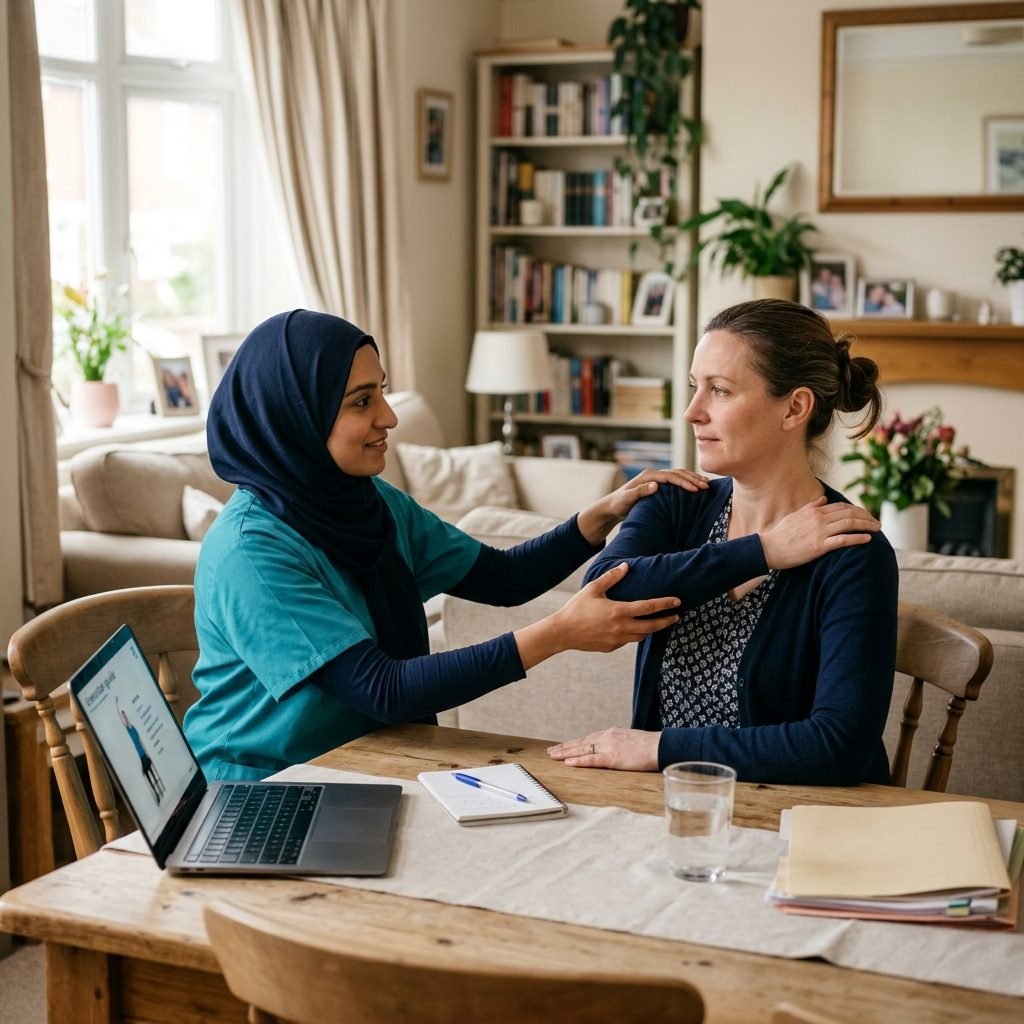
Female Physiotherapist
Licensed female therapists providing home care for women in Al Andalus.
Service Details ←