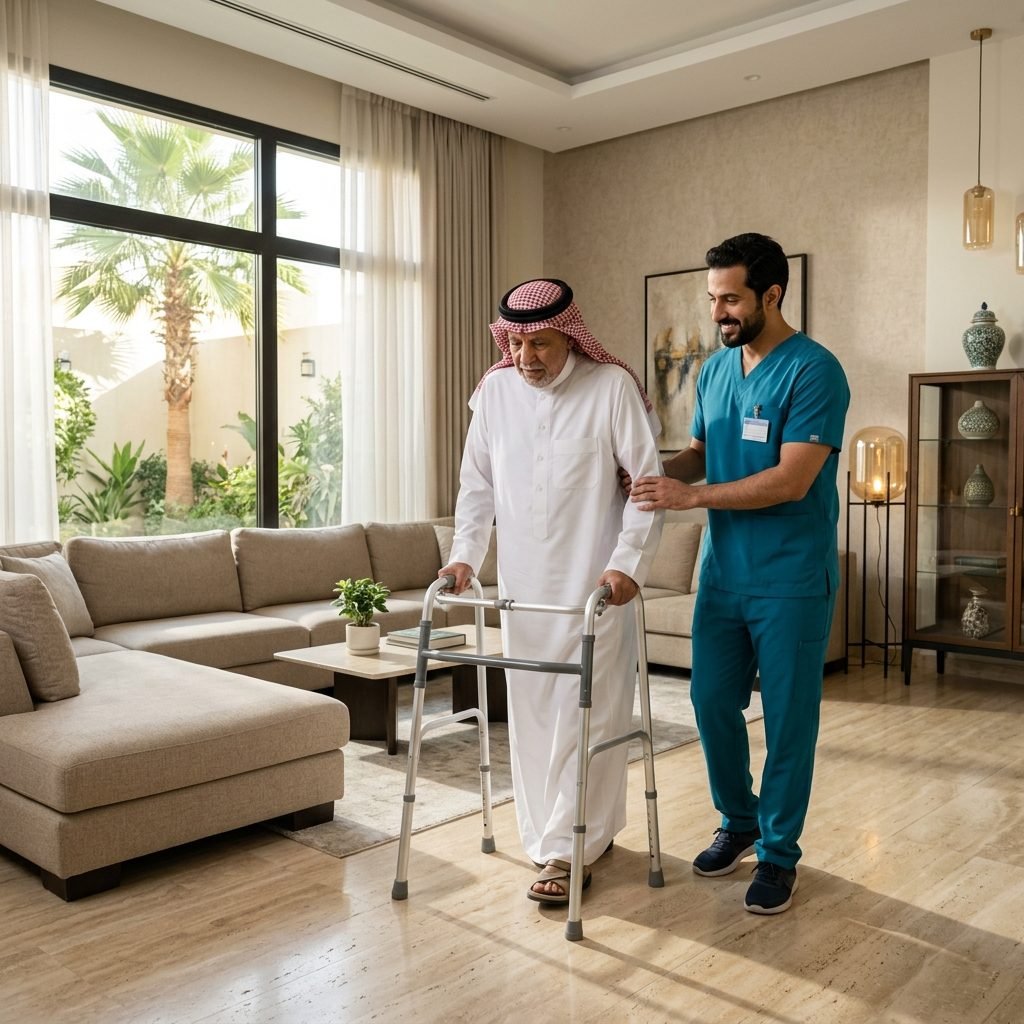
Having access to comprehensive, clinical physical therapy at home is crucial for maintaining rehabilitation progress, especially in busy neighborhoods. Al-Safa and Al Basateen districts in Jeddah present unique local mobility challenges due to high population density and traffic. At Bidaya Center, we deliver high-quality home physiotherapy and movement rehabilitation services directly to your doorstep, conforming to the clinical guidelines of the Saudi Commission for Health Specialties. We eliminate the stress of travel, traffic, and parking. We respect cultural privacy by providing certified male therapists for male patients and female therapists for female patients.
Our clinical approach in Al Basateen starts with a detailed physical and environmental safety assessment to eliminate fall hazards in the home. We bring all necessary portable, sterilized equipment to deliver a clinical standard of care comparable to external clinics. The therapist establishes a tailored milestone tracking plan to monitor muscle strength, balance, and joint range of motion (ROM) progression over time.
Why families in Al Basateen choose Bidaya for home physiotherapy
- ✅ Licensed male & female therapists — full privacy, in your own home in Al Basateen.
- ✅ Fully in-home visits across Al Basateen — no travel or traffic.
- ✅ A personalized rehab plan built after a thorough in-home assessment.
- ✅ Continuous follow-up and direct contact with your therapist throughout.
- ✅ Fast response — arrange your visit by a quick call or WhatsApp message.
We also serve nearby areas: Al Andalus · Al Bawadi · Al Fayha
* The treatment plan and expected outcomes are determined by a medical and functional assessment of each individual case.
What Integrated Home Physiotherapy Means for Al Basateen Residents
Integrated home physiotherapy brings the full rehabilitation experience out of the clinic and into the patient's own room, so that assessment, hands-on treatment, therapeutic exercise, and follow-up all happen where the person actually lives. In Al Basateen, a calm, largely residential district of Jeddah where many households include older adults or someone recovering from surgery or injury, this model becomes a genuinely practical choice. It removes the strain of repeated travel during peak traffic or the heat of the day and preserves the patient's limited energy for the therapy itself.
At Bidaya Center we build every plan on a careful clinical and functional assessment carried out in the home, because the environment a person lives in is an essential part of the treatment. How the stairs are climbed, the height of the bed, the layout of the furniture, and the type of flooring all influence movement and are factored directly into the program. Linking therapy to the real, everyday setting is what makes progress more realistic and more durable than sessions delivered in a place disconnected from the patient's actual life.
Our care is integrated in the truest sense: it is never limited to exercising one muscle or mobilizing one joint. It extends to educating the patient and family, reshaping movement habits, coaching the caregiver, and tracking progress step by step. We have both licensed male and female therapists, so every family in Al Basateen can choose what suits them while full privacy is maintained inside the home, something many households deeply value when they prefer to receive care in their own surroundings.
We want to be clear from the outset that we do not promise cures or guaranteed outcomes. The path of each case and its timeframe depend on individual assessment, the nature of the condition, and the degree of commitment to the program. What we do commit to is a thoughtful plan, clear communication, and honest follow-up aimed at achieving the best possible functional improvement within each person's own circumstances.
Symptoms and Signs That Signal It Is Time to Start
Many people delay physiotherapy hoping the problem will resolve on its own, when in fact early intervention is often the shortest route to restoring movement and avoiding complications. There is a set of signs that should prompt serious thought about beginning a home program:
- Persistent pain in the neck, back, shoulder, or knee that does not ease with rest and disrupts sleep or daily work.
- Stiffness and difficulty moving after waking or after prolonged sitting, or a reduced range of motion in a joint.
- Noticeable weakness in the limb muscles, or a sense that a leg or arm no longer "holds up" the way it used to.
- Loss of balance or repeated stumbling and falling, especially among older adults inside the home.
- Difficulty with daily tasks such as rising from a chair, dressing, or climbing stairs.
- Slow recovery after surgery, a fracture, or dislocation, or following a long period of bed rest.
- Numbness, tingling, or pins-and-needles spreading through the limbs, or an unexplained change in the way of walking.
- Swelling or stiffness around a joint after a sports injury or a minor accident.
The presence of one or more of these signs is not a diagnosis in itself, but it is reason enough for a professional assessment. We also stress that any sudden severe pain, rapidly worsening weakness, or loss of bladder or bowel control calls for urgent medical review first, before any rehabilitation program begins.
Conditions and Groups Who Benefit
The home program at Bidaya Center is designed to serve a wide range of Al Basateen residents across different ages and situations, and it is built in each case around the individual's needs rather than a one-size-fits-all template. Among the groups who benefit most:
- Older adults dealing with muscle weakness or balance problems, who need a program that preserves independence at home and reduces the risk of falls.
- Patients after orthopedic surgery such as hip or knee replacement, ligament repair, or fracture fixation, who require graded rehabilitation.
- People with neurological conditions such as stroke or spinal cord injury, where intensive home follow-up is an important factor in regaining function.
- Those with chronic spinal pain, disc herniation, and neck pain linked to long hours in front of screens.
- People with sports injuries to muscles, tendons, or ligaments who want a safe return to their activity.
- Patients with chronic diseases such as diabetes and arthritis who need safe, well-considered movement programs.
- Women in the postpartum stage who need rehabilitation for the back and abdominal wall, with female therapists available for comfort and privacy.
- Children with motor needs or delays in motor development, within a plan appropriate to their age.
This diversity means every visit begins with a central question: which function does this person most want to reclaim in their life? From that answer the goals and exercises are built, keeping in mind that the extent and expectations of benefit remain dependent on the individual assessment of each case.
Goals of the Rehabilitation Program
The success of physiotherapy is not measured by the number of sessions, but by how much the patient recovers the ability to live independently and safely. That is why we frame goals in clear, measurable, functional terms and explain them to the patient and family so that everyone becomes a partner in the journey. Among the aims we pursue:
- Relieving and managing pain through multiple treatment methods that reduce excessive reliance on painkillers wherever possible.
- Restoring joint range of motion and the flexibility of surrounding tissues gradually and safely.
- Strengthening weak muscles and rebalancing muscle groups to support and protect the joints.
- Improving balance and walking and reducing fall risk, a central goal for older adults at home.
- Retraining the patient in everyday skills: standing, sitting, climbing stairs, and moving around the house.
- Raising general fitness and endurance in a way that fits each person's condition.
- Educating the patient about correct body positions and movement patterns that guard against re-injury.
These goals are not fixed; they are reviewed regularly and adjusted according to the patient's response and progress. We repeat that any figures or expected timeframes are set only after assessment, and we offer no absolute guarantees, because response varies from one person to another depending on many health and behavioral factors.
Stages and Path of the Home Sessions
We organize the treatment journey into clear, sequential stages so the patient always knows where they are and what comes next. The journey usually begins by contacting us to arrange the first home visit at your residence in Al Basateen.
- Stage one — comprehensive assessment: the therapist visits the home and performs a clinical and functional examination covering range of motion, muscle strength, balance, and gait, while reviewing medical reports and understanding the home environment and the patient's personal goals.
- Stage two — building the plan: we shape an individual plan that sets short and long-term goals, an initial number of sessions, and the suitable exercises and techniques, explaining it in clear language to the patient and family.
- Stage three — treatment delivery: sessions are carried out using manual therapy, graded therapeutic exercise, balance and gait training, and pain-relief techniques, with the movement dose adjusted to the patient's response.
- Stage four — follow-up and reassessment: we review progress at regular intervals, measure how close we are to the goals, and adjust the plan as needed, giving the patient home exercises to perform between sessions.
- Stage five — independence and prevention: we prepare the patient to rely on themselves with a maintenance and preventive-exercise program, plus guidance to avoid relapse and preserve the gains.
This orderly progression gives the patient a sense of reassurance and control and makes progress tangible and measurable rather than a vague impression, while keeping the flexibility to adjust the path whenever the condition requires it.
The Role of the Family and Caregiver
In home therapy the family shifts from spectator to active partner in the program's success, and this is one of the greatest advantages of bringing treatment into the home. The hours the patient spends between sessions are what make the real difference, and the caregiver is the one who accompanies them through those hours.
- Support with home exercises: the therapist trains a family member to help the patient perform the prescribed exercises correctly and safely between visits.
- Preparing the environment: the family helps clear obstacles, arrange spaces, and secure safe pathways, especially for older adults and post-surgery patients.
- Observation and documentation: noting any change in pain, swelling, or mobility and reporting it to the therapist helps fine-tune the plan.
- Emotional support: encouragement, patience, and a positive atmosphere directly influence the patient's commitment and results.
- Consistency with appointments: keeping sessions and exercises on schedule preserves the continuity of progress.
We make sure our communication with the family is clear and continuous; we answer their questions and explain the reasoning behind each step, because a family aware of the plan's goals is better able to support their relative with confidence and calm, all while fully respecting the patient's privacy and comfort.
Home Safety and Prevention Tips
A safe home is an inseparable part of treatment, and many household injuries can be prevented with simple adjustments. Here we offer practical guidance suited to most Al Basateen homes, adapted to each case during the visit:
- Securing floors: removing loose rugs and exposed cables and drying any spill immediately to cut the risk of slipping.
- Adequate lighting: providing good illumination in hallways, bathrooms, and near the bed, especially for nighttime movement.
- Supports and assistive devices: installing grab bars in the bathroom and using assistive tools when needed, following the therapist's recommendation.
- Correct body mechanics: paying attention to how one sits and lifts objects and avoiding staying in one position for long periods.
- Graded movement: not jumping into heavy effort all at once and sticking to the movement dose the therapist sets.
- Suitable footwear: wearing firm, non-slip shoes indoors instead of walking in smooth socks.
- Hydration and rest: drinking enough water, taking breaks, and listening to pain signals rather than ignoring them.
These are general preventive tips, and in each visit we design precise recommendations that fit the patient's condition and the nature of their home. The aim is for the house to become an environment that supports recovery rather than a source of risk.
Frequently Asked Questions (FAQ)
Are female therapists available to ensure privacy?
Yes. We have both licensed male and female therapists, and you can request a female therapist when booking the visit, with full respect for the patient's privacy and comfort inside the home.
How many sessions will I need?
There is no fixed number set in advance; the initial number of sessions is determined after the first assessment and reviewed regularly according to your response and progress, with no promises of guaranteed results.
Do I need to provide any special equipment?
The therapist brings the basic tools needed for the session, and if your condition calls for additional assistive devices we will explain this and guide you to the most suitable options.
Is the service available specifically to Al Basateen residents?
Yes, we provide home visits for residents of Al Basateen and its surroundings in Jeddah, and the service starts by arranging an appointment for the first assessment directly at your home.
What if I am recovering after surgery?
We frequently handle post-surgical cases. We begin with a careful assessment and a review of your medical reports, then build a graded, safe rehabilitation program suited to your stage.
To book a home visit in Al Basateen or to ask a question, contact us now by phone or WhatsApp by clicking Call Now, and the Bidaya Center team will be glad to help you and arrange your first assessment at a time that suits you.
Important Home Visit Details:
- ✓Setup: Please clear a 2x2m space in the room for safety.
- ✓Clothing: Wear loose, comfortable clothes for easy movement.
- ✓Therapist Parity: Male therapists for males, females for females.
- ✓Medical Reports: Keep your MRI or doctor reports ready for evaluation.
Rehabilitation & Services in Al Basateen
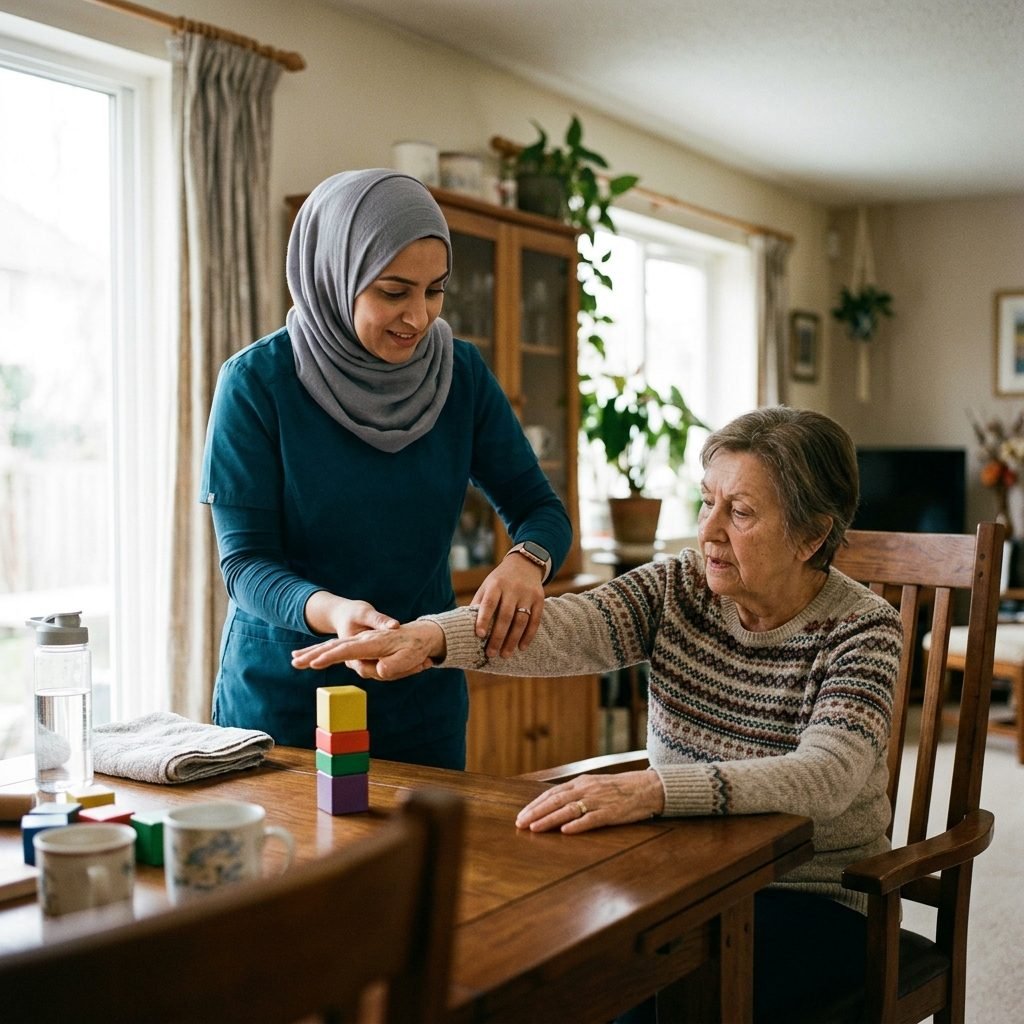
Stroke Rehabilitation
Advanced motor and neurological stroke recovery at home in Al Basateen.
Service Details ←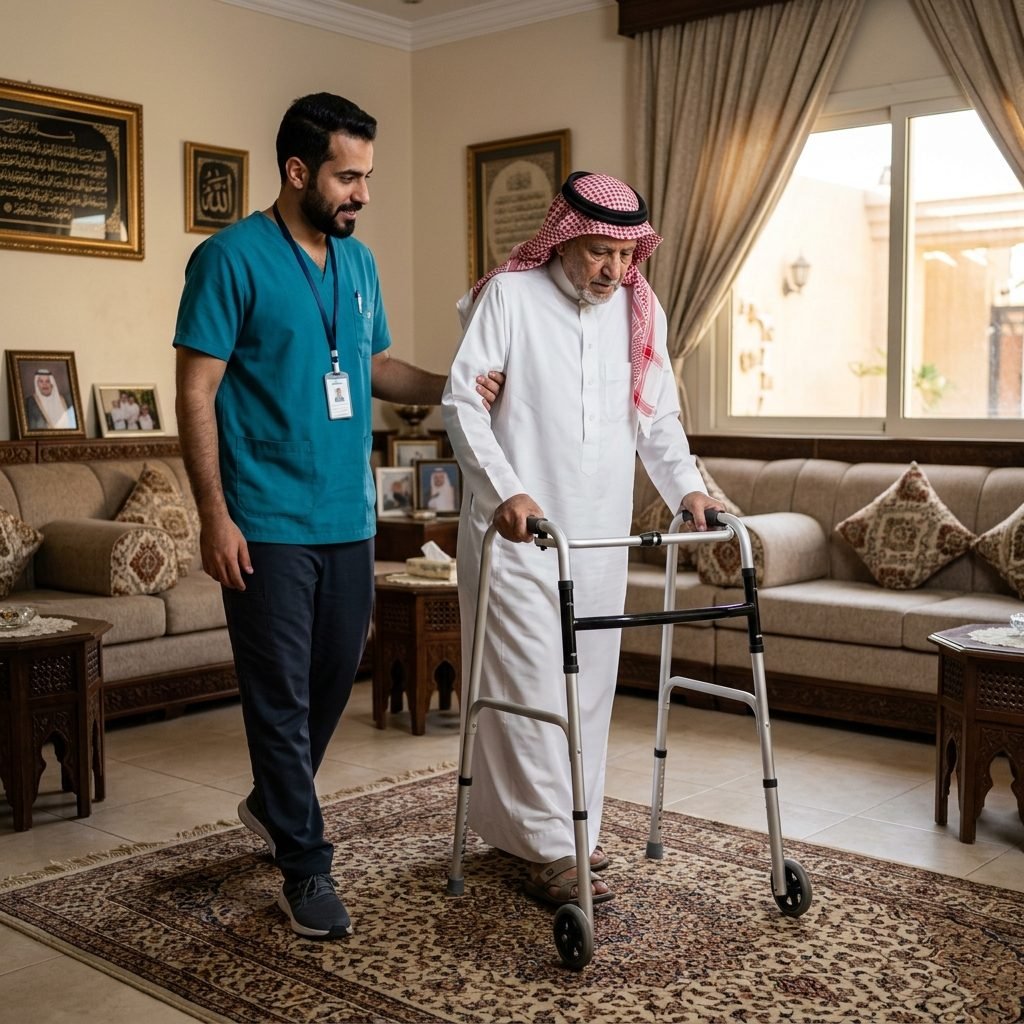
Geriatric Physical Therapy
Balance training, strengthening, and fall prevention for seniors in Al Basateen.
Service Details ←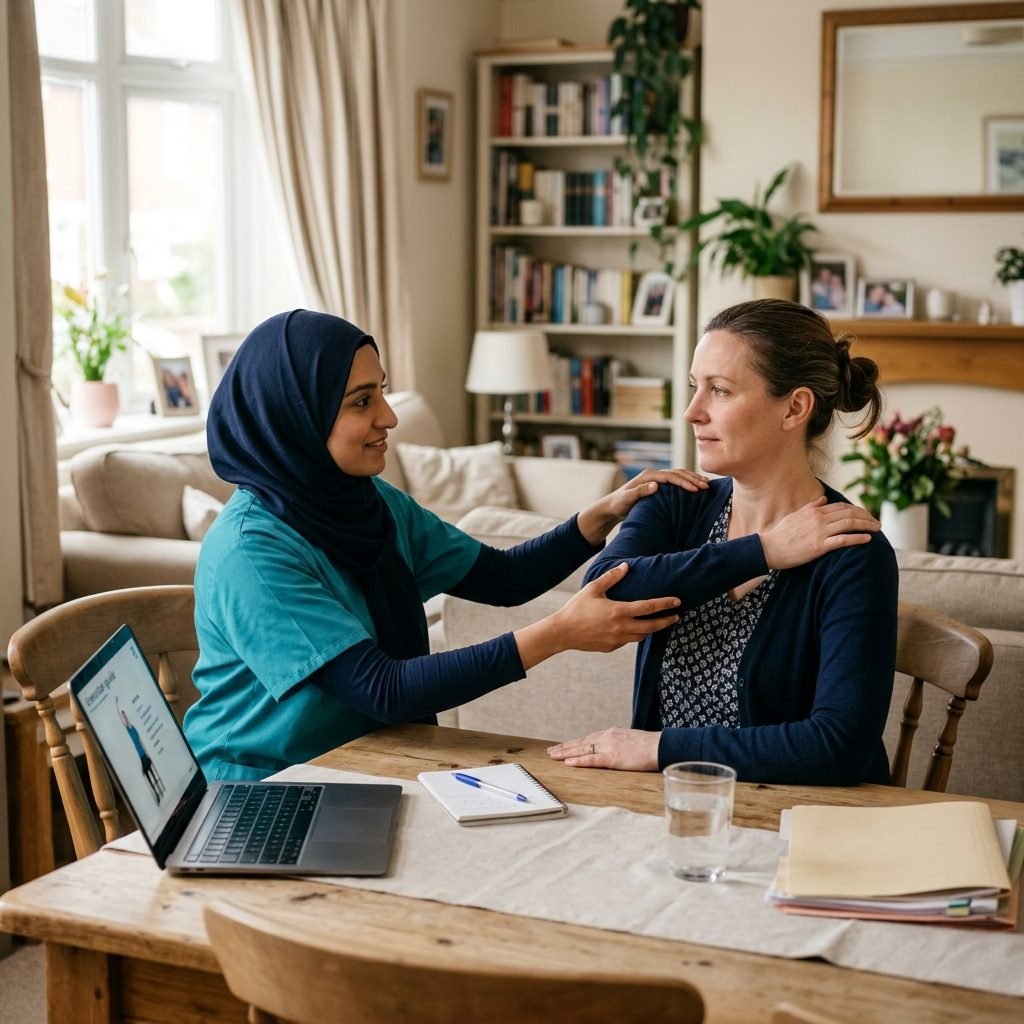
Female Physiotherapist
Licensed female therapists providing home care for women in Al Basateen.
Service Details ←