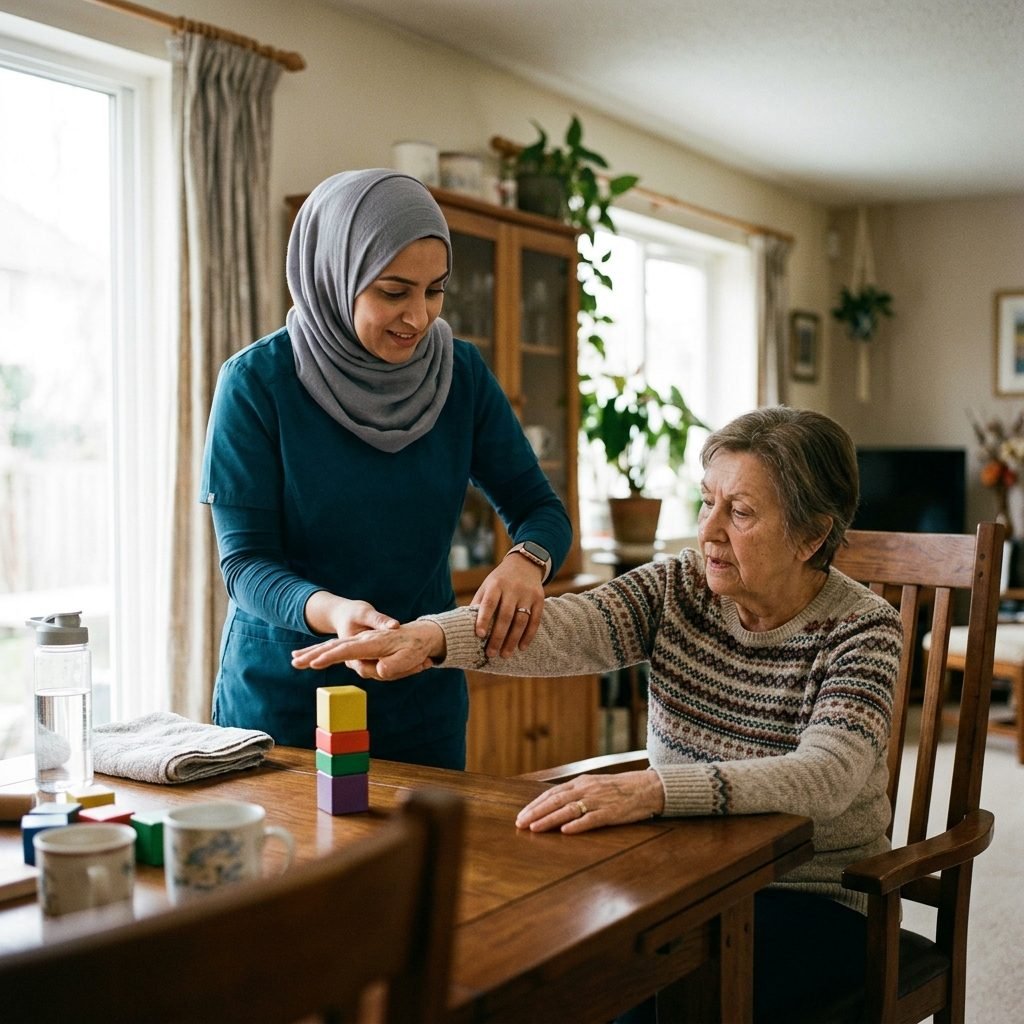
Having access to comprehensive, clinical physical therapy at home is crucial for maintaining rehabilitation progress, especially in busy neighborhoods. Al-Safa and Al Bawadi districts in Jeddah present unique local mobility challenges due to high population density and traffic. At Bidaya Center, we deliver high-quality home physiotherapy and movement rehabilitation services directly to your doorstep, conforming to the clinical guidelines of the Saudi Commission for Health Specialties. We eliminate the stress of travel, traffic, and parking. We respect cultural privacy by providing certified male therapists for male patients and female therapists for female patients.
Our clinical approach in Al Bawadi starts with a detailed physical and environmental safety assessment to eliminate fall hazards in the home. We bring all necessary portable, sterilized equipment to deliver a clinical standard of care comparable to external clinics. The therapist establishes a tailored milestone tracking plan to monitor muscle strength, balance, and joint range of motion (ROM) progression over time.
Why families in Al Bawadi choose Bidaya for home physiotherapy
- ✅ Licensed male & female therapists — full privacy, in your own home in Al Bawadi.
- ✅ Fully in-home visits across Al Bawadi — no travel or traffic.
- ✅ A personalized rehab plan built after a thorough in-home assessment.
- ✅ Continuous follow-up and direct contact with your therapist throughout.
- ✅ Fast response — arrange your visit by a quick call or WhatsApp message.
We also serve nearby areas: Al Andalus · Al Basateen · Al Fayha
* The treatment plan and expected outcomes are determined by a medical and functional assessment of each individual case.
Home-Based Post-Stroke Rehabilitation and Why It Matters for Al Bawadi Residents
Post-stroke rehabilitation is a structured therapy program designed to help a person regain as much of their movement and daily function as possible after a stroke. Whether the stroke was caused by a bleed or by a blockage in one of the brain's arteries, it often leaves an impact on movement, balance, speech, and cognition. The person then needs an organized rehabilitation effort that begins early and continues consistently. This is where the home physiotherapy offered by Bidaya Center makes a real difference: the therapist comes to the patient at home instead of the family having to arrange repeated, tiring trips to a clinic.
Al Bawadi is a large residential district in Jeddah, home to many families and older adults, and its calm character makes it a suitable environment for continuing the recovery journey at home. In the early stage after a stroke, many patients struggle to move and leave the house, and transporting a patient in a wheelchair or relying on an escort can be exhausting for the family. Delivering sessions at home spares the family this burden and allows the patient to train in the very setting where they will live their daily life: their room, their bathroom, the stairs, and the kitchen. This link between rehabilitation and the patient's real environment makes the outcomes more practical and closer to their actual needs.
We emphasize that the nature of the program, its duration, and the expected outcomes differ from one case to another and are determined only after a careful clinical and functional assessment of the patient. We do not promise a complete cure, but we commit to a well-studied, evidence-informed plan that aims for the best possible improvement within each individual's circumstances.
Symptoms and Signs That Call for Starting
The earlier rehabilitation begins after the medical condition has stabilized, the better the chances of improvement. A number of signs indicate that a stroke survivor needs an organized home rehabilitation program, most notably:
- Weakness or paralysis on one side of the body, whether in the arm, the leg, or both.
- Difficulty walking, loss of balance, or leaning to one side when standing.
- Muscle stiffness or spasticity that limits the range of joint movement.
- Weak hand grip and difficulty holding objects or performing fine tasks.
- Slurred speech or swallowing difficulty that requires follow-up and coordination with the relevant specialties.
- Persistent numbness or tingling in the limbs, or reduced sensation of heat and touch.
- Decline in the ability to perform daily activities such as dressing, using the bathroom, or eating independently.
- Fear of falling that leads the patient to move less, which worsens muscle weakness over time.
The appearance of any of these signs after the patient is discharged from hospital is a clear indicator of how important it is to begin sessions. Delay may lead to complications such as joint stiffness, muscle wasting, and increased dependence on others. Reaching out to the center early allows the assessment to be carried out and treatment priorities to be set at the right time.
Conditions and Groups That Benefit
The post-stroke rehabilitation program is aimed at a broad range of survivors whose needs vary according to the location and severity of the stroke and the time elapsed since it occurred. Among the groups who benefit most from our home sessions in Al Bawadi:
- Patients in the early acute stage, once stable and discharged from hospital, who need to begin movement gradually and prevent complications.
- Patients in the chronic stage whose stroke happened months or years ago and who still have room to improve motor function and independence.
- Older adults for whom repeated travel to clinics is difficult and who need a safe therapeutic environment at home.
- Those with one-sided weakness on the right or left side, with difficulty walking or using the hand.
- Patients experiencing balance problems and a high risk of falling.
- Those who need to be retrained in walking or in using assistive devices such as a cane or a walker correctly.
- Cases that require long-term follow-up with periodic adjustment of the treatment plan according to progress.
At the center we respect the privacy of every patient, and we have both licensed male and female therapists available, so the family can choose what suits them while full privacy is guaranteed during sessions.
Goals of the Rehabilitation Program
The rehabilitation program is built on clear goals shaped specifically for each patient after assessment, and reviewed periodically to measure progress. The overall aim is to bring the patient to the highest possible level of independence and safety in daily life. Among the goals we work toward:
- Improving muscle strength on the affected side and reactivating natural movement patterns.
- Enhancing balance and stability when standing and moving in order to reduce the risk of falling.
- Retraining the patient to walk in a pattern closer to normal, whether independently or with an assistive device when needed.
- Reducing stiffness and muscle spasticity while maintaining joint range of motion.
- Improving control of the hand and arm to perform fine daily tasks as much as possible.
- Restoring the ability to carry out daily activities such as dressing, bathing, and transferring between bed and chair.
- Preventing complications such as pressure sores and venous clots caused by lack of movement.
- Supporting the psychological side and motivating the patient to stay committed to the exercises.
These goals are not absolute promises but realistic lines of work that are adjusted according to each patient's response and abilities, and outcomes remain dependent on the nature of the injury and adherence to the program.
Stages and Pathway of the Home Sessions
Home rehabilitation at Bidaya Center follows an organized pathway that begins from the first visit and continues flexibly as the case develops. The main stages are as follows:
- Initial assessment: the therapist visits the patient at home in Al Bawadi to carry out a comprehensive evaluation of muscle strength, balance, range of movement, and the ability to perform daily activities, while reviewing previous medical reports.
- Building the treatment plan: based on the assessment, an individual plan is drawn up with short- and long-term goals, and the suggested number of sessions and their weekly frequency are set.
- Foundation stage: the first sessions focus on activating basic movement, range-of-motion exercises, preventing complications, and preparing the patient physically and mentally.
- Strengthening and retraining stage: muscle-strengthening, balance, and gait-retraining exercises are introduced, using functional exercises that mimic activities of daily living.
- Independence stage: the patient is trained to perform tasks within their real home environment and is encouraged to reduce reliance on assistance gradually.
- Follow-up and reassessment: progress indicators are re-measured periodically, and the plan and exercises are adjusted to match the new level.
The number of sessions and the length of each stage vary from case to case and are agreed upon after assessment. We make sure that progress is gradual and safe, without pushing the patient beyond their capacity.
The Role of the Family and Caregiver
The success of stroke rehabilitation does not rest on the therapist's sessions alone; it depends heavily on the role of the family and caregiver at home. The family is the patient's daily support, and what happens outside session times is no less important than the session itself. That is why we are keen to involve family members and train them in:
- The correct way to help the patient transfer between bed and chair without straining the patient or themselves.
- Encouraging the patient to perform the prescribed home exercises between sessions and to stay committed to them.
- Avoiding excessive help, which reduces the chances of regaining independence, and balancing support with motivation.
- Watching for warning signs such as reddened skin, swollen limbs, or a change in general condition, and contacting the specialists when needed.
- Creating a positive emotional atmosphere that makes the patient feel supported and encourages them to keep going despite slow progress at times.
- Organizing medication times, rest, and exercises within a clear daily routine.
The therapist provides simple, practical guidance to the caregiver at every visit, so that the caregiver becomes an active partner in the recovery journey rather than a bystander. This cooperation between the family and the therapy team is one of the most important factors in sustaining progress.
Home Safety and Prevention Tips
A safe home environment is essential for protecting a stroke patient from falls and injuries, especially during the stage of weak balance. We advise families in Al Bawadi to follow a set of simple preventive measures that make a big difference:
- Remove loose rugs, cables, and obstacles from the patient's walking paths to avoid tripping.
- Install fixed grab bars in the bathroom and beside the toilet, and use a shower chair when needed.
- Provide good lighting in rooms and hallways, especially on the route to the bathroom at night.
- Choose closed, stable, non-slip shoes instead of open slippers.
- Arrange the patient's belongings within easy reach to reduce the need to bend or stand up suddenly.
- Reposition a bed-bound patient regularly to prevent pressure sores.
- Do not leave the patient to stand or move alone during the stage when their balance is weak.
- Follow the therapist's instructions on using assistive devices in the correct way.
These tips are general safety guidance. During the visit, the therapist assesses the patient's home and suggests additional adjustments suited to the individual case and the layout of the residence.
Frequently Asked Questions (FAQ)
When should we start home rehabilitation sessions after a stroke?
It is best to start as soon as possible once the medical condition is stable and the treating physician approves, because early rehabilitation reduces complications and improves the chances of recovery. When you contact us, we carry out an assessment to determine the appropriate timing and priorities for each case.
Can the patient recover completely?
The degree of improvement varies from one patient to another depending on the location and severity of the stroke, the time elapsed, and adherence to the program. We do not promise a complete cure, but we work according to an evidence-informed plan aiming for the best possible improvement, and expectations are set after the clinical and functional assessment.
How many sessions per week does the patient need?
There is no fixed number that suits everyone; the frequency of sessions is decided after the initial assessment based on the patient's condition, goals, and response. The plan is reviewed periodically and the number of sessions is adjusted according to progress.
Are female therapists available for a patient who prefers one?
Yes, we have both licensed male and female therapists, and the family can choose what suits them with full privacy guaranteed at home during the sessions.
Do you cover all parts of the Al Bawadi district in Jeddah?
Yes, we provide home physiotherapy to residents of Al Bawadi and neighboring Jeddah districts, and the therapist comes to your home at the agreed time equipped with what the session requires.
To book a home visit or ask about the post-stroke rehabilitation program in Al Bawadi, contact Bidaya Center by phone or WhatsApp by clicking Call Now, and our team will be glad to help you and arrange a suitable assessment appointment.
Important Home Visit Details:
- ✓Setup: Please clear a 2x2m space in the room for safety.
- ✓Clothing: Wear loose, comfortable clothes for easy movement.
- ✓Therapist Parity: Male therapists for males, females for females.
- ✓Medical Reports: Keep your MRI or doctor reports ready for evaluation.
Rehabilitation & Services in Al Bawadi
Stroke Rehabilitation
Advanced motor and neurological stroke recovery at home in Al Bawadi.
Service Details ←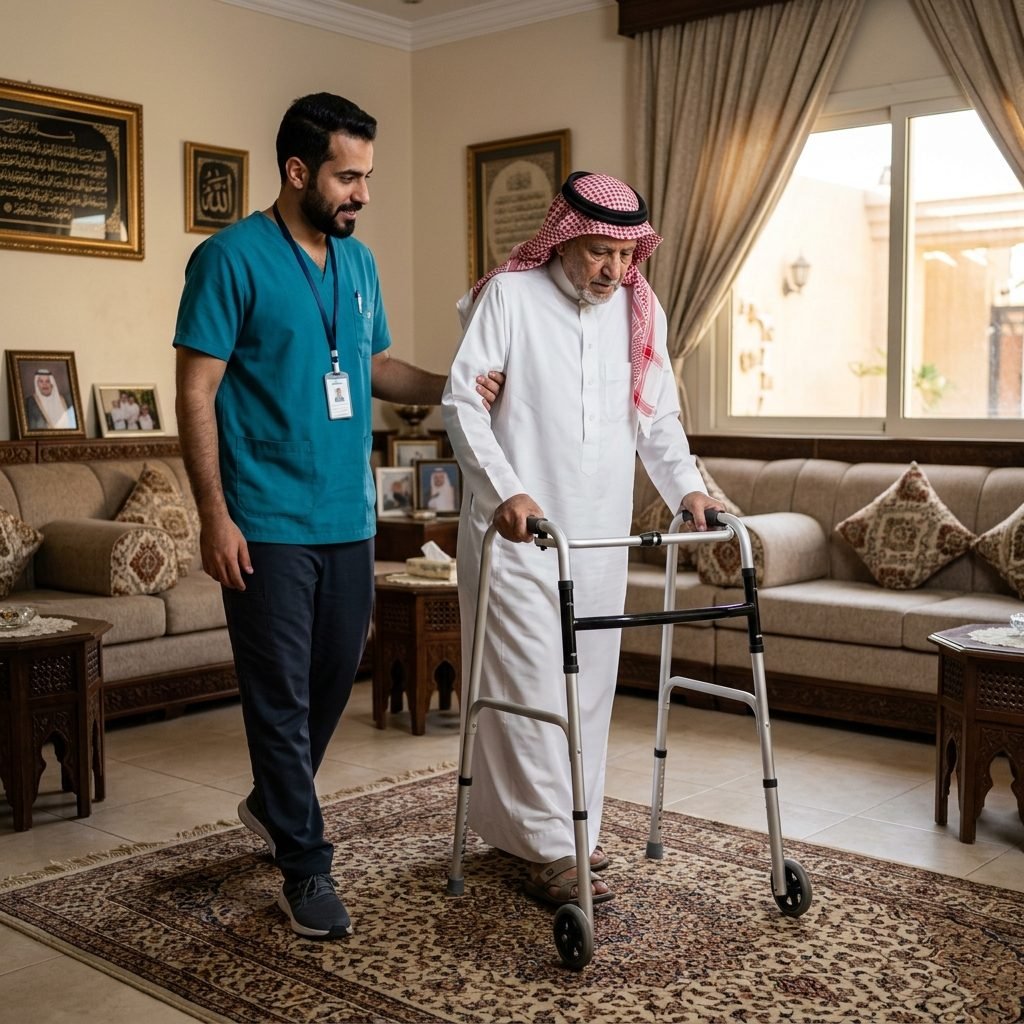
Geriatric Physical Therapy
Balance training, strengthening, and fall prevention for seniors in Al Bawadi.
Service Details ←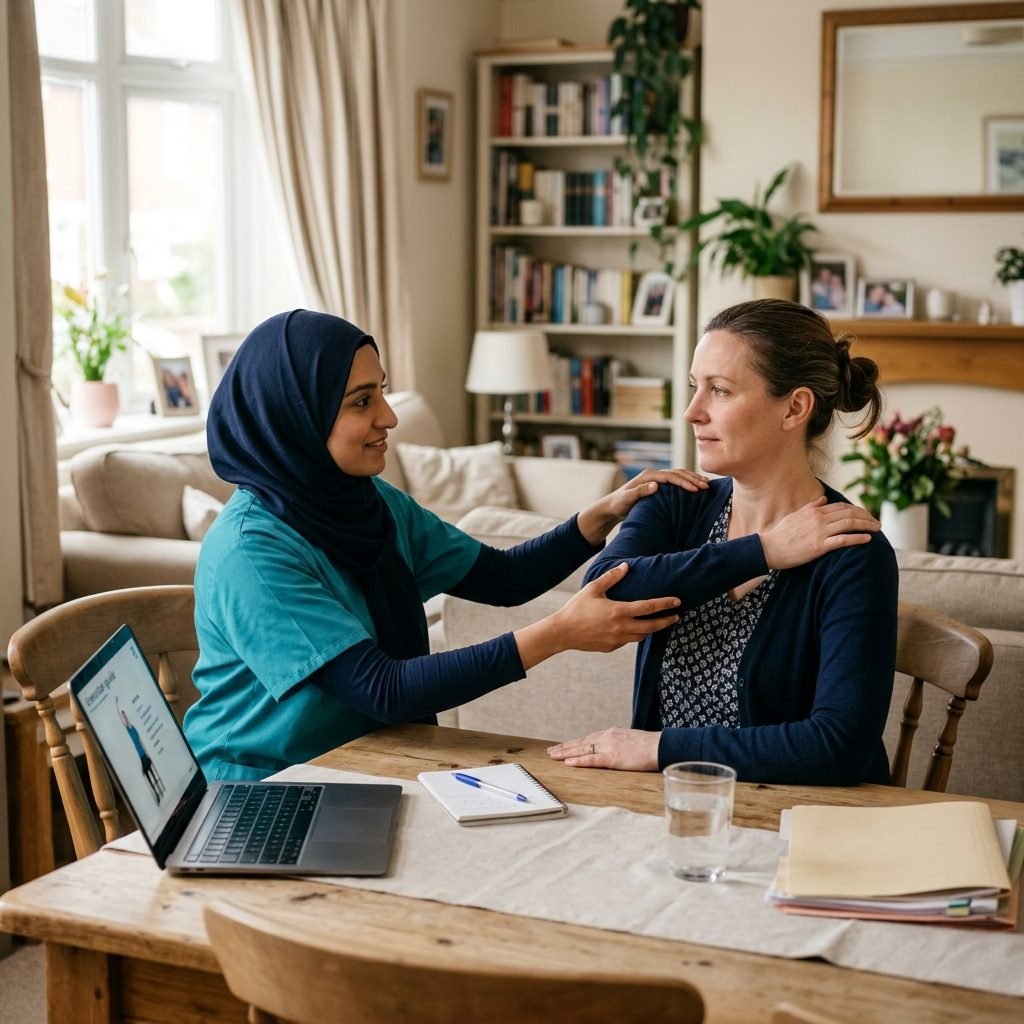
Female Physiotherapist
Licensed female therapists providing home care for women in Al Bawadi.
Service Details ←