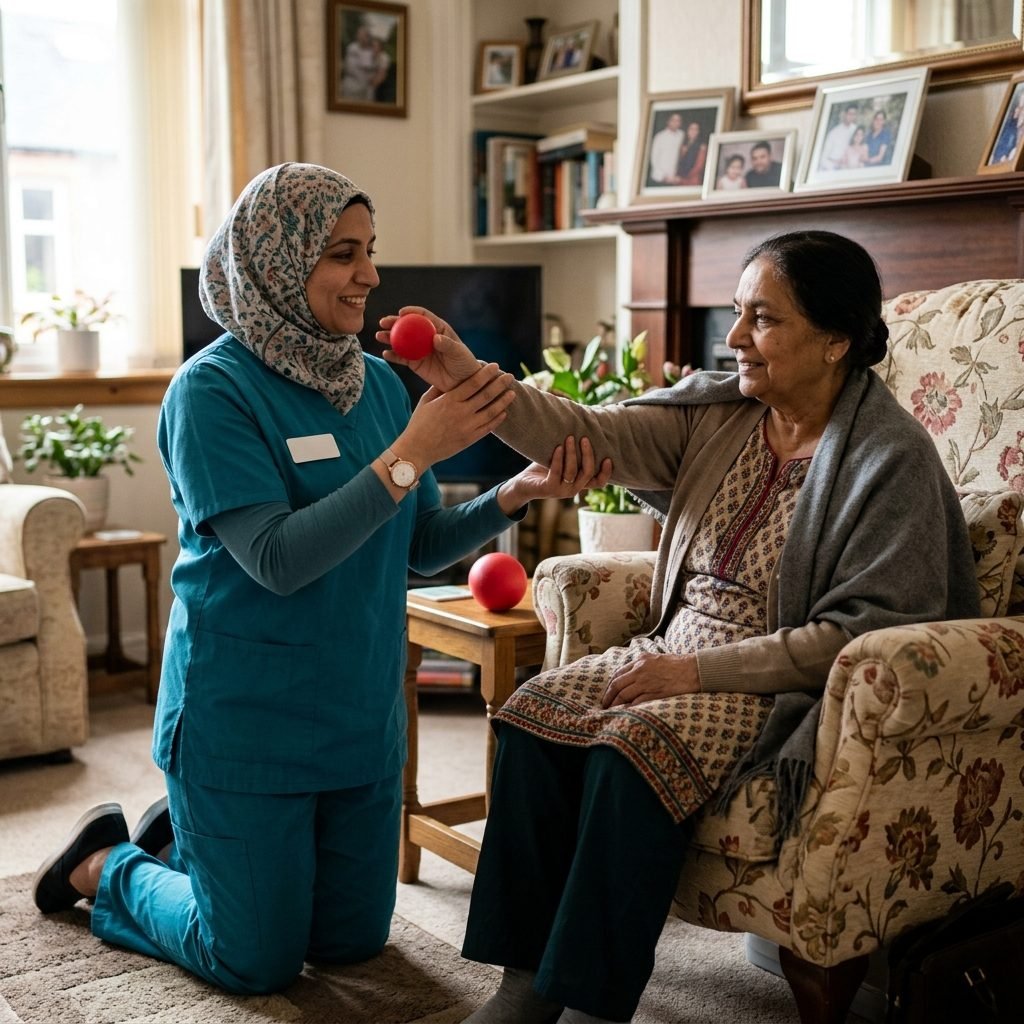
Having access to comprehensive, clinical physical therapy at home is crucial for maintaining rehabilitation progress, especially in busy neighborhoods. Al-Safa and Al Basateen districts in Jeddah present unique local mobility challenges due to high population density and traffic. At Bidaya Center, we deliver high-quality home physiotherapy and movement rehabilitation services directly to your doorstep, conforming to the clinical guidelines of the Saudi Commission for Health Specialties. We eliminate the stress of travel, traffic, and parking. We respect cultural privacy by providing certified male therapists for male patients and female therapists for female patients.
Our clinical approach in Al Basateen starts with a detailed physical and environmental safety assessment to eliminate fall hazards in the home. We bring all necessary portable, sterilized equipment to deliver a clinical standard of care comparable to external clinics. The therapist establishes a tailored milestone tracking plan to monitor muscle strength, balance, and joint range of motion (ROM) progression over time.
Why families in Al Basateen choose Bidaya for home physiotherapy
- ✅ Licensed male & female therapists — full privacy, in your own home in Al Basateen.
- ✅ Fully in-home visits across Al Basateen — no travel or traffic.
- ✅ A personalized rehab plan built after a thorough in-home assessment.
- ✅ Continuous follow-up and direct contact with your therapist throughout.
- ✅ Fast response — arrange your visit by a quick call or WhatsApp message.
We also serve nearby areas: Al Andalus · Al Bawadi · Al Fayha
* The treatment plan and expected outcomes are determined by a medical and functional assessment of each individual case.
Home Physiotherapy for Multiple Sclerosis and Why It Matters for Al Basateen Residents
Multiple sclerosis is a chronic neurological condition that disrupts how signals travel between the brain, the spinal cord, and the rest of the body. Its effects show up as fluctuating changes in movement, balance, sensation, and energy, which is why managing it takes more than medication alone. A person living with MS benefits from a steady rehabilitation program that protects functional ability and softens the impact that relapses have on daily life. Home physiotherapy delivers that program inside the patient's own environment, where they practice the very activities they perform in real life between their rooms, hallways, and stairs.
Al Basateen is a calm, largely residential district of Jeddah with a strong family character. Many of its homes span more than one floor or have entrances and steps that pose a genuine challenge for anyone with leg weakness or a balance disturbance. A specialist visiting the home spares the patient the strain of repeated travel through heat and traffic, strain that can drain the limited energy MS-related fatigue already leaves. When the therapist arrives at the door and works with the actual floors and furniture, the rehabilitation becomes realistic and immediately applicable.
At Bidaya Center we build every plan on a careful clinical and functional assessment, because no two people with MS follow the same path. We work flexibly around the variety of symptoms and their day-to-day fluctuation, calibrating the training load so we build capacity without exhausting it. Our aim is for each Al Basateen resident to stay independent and safe at home for as long as possible.
Symptoms and Signs That Call for Starting
Many people delay rehabilitation while waiting for symptoms to worsen, when in fact starting early preserves what has been gained and slows its decline. Signs that make it worth contacting a physiotherapist include:
- Weakness or heaviness in a leg or arm that makes walking or carrying things harder than usual.
- Loss of balance or a feeling of unsteadiness when standing or changing direction, with repeated near-falls.
- Muscle spasticity (stiffness) in the limbs that limits range of motion or causes pain and tightness, especially in the morning.
- Numbness, tingling, or altered sensation that affects the precision of a step or the grip of a hand.
- Marked fatigue that sets in quickly with minimal effort and gets in the way of finishing daily tasks.
- A change in walking pattern such as dragging a foot, a wider stance, or increasing reliance on walls and furniture for support.
- Difficulty with fine movements like buttoning clothes or writing, or a tremor when reaching toward a target.
The appearance of any of these signs, or noticing them after a recent relapse, is a cue that a home assessment is appropriate. Their presence does not mean decline is inevitable; early, well-judged intervention often restores part of the lost function and protects what remains.
Conditions and Groups Who Benefit
A home rehabilitation program suits a wide spectrum of people living with MS across different stages, including:
- Those recently diagnosed who want to learn how to maintain their fitness and mobility and manage early symptoms.
- Those in a period of relative stability who need a preventive program to slow decline and preserve strength and flexibility.
- Those recovering from a recent relapse who need to rebuild lost strength, balance, and motor skills.
- People with more advanced symptoms who rely on assistance or mobility aids and need to preserve range of motion and prevent complications.
- Those troubled by muscle spasticity who need a regular stretching and lengthening program to ease the tightness.
- People coping with chronic fatigue who need structured training in energy management and pacing across the day.
- Older adults with MS for whom repeated trips to a clinic are difficult.
Individual assessment always remains the reference for deciding whether home rehabilitation is the most suitable choice for a given case, along with the type, intensity, and frequency of the exercises.
Goals of the Rehabilitation Program
Physiotherapy makes no promise of curing MS, but it is an effective tool for managing its symptoms and protecting quality of life. Goals are set realistically and measurably after assessment and typically include:
- Strengthening targeted muscles, especially the trunk and legs, to support standing, walking, and rising.
- Improving balance and motor coordination to reduce the risk of falls at home.
- Easing muscle spasticity and increasing range of motion through stretching and correct positioning.
- Training the patient in fatigue-management strategies and smart pacing of energy across activities.
- Improving gait and transfers such as sitting, standing, and moving safely in and out of the bathroom.
- Reinforcing independence in daily activities and maintaining as much self-reliance as possible.
- Preventing secondary complications such as joint stiffness, general deconditioning, and pressure sores in those who move less.
These goals are reviewed periodically and adjusted according to how the body responds and how the condition changes, because MS is a variable disease that calls for a flexible plan that moves with it.
Stages and Path of the Home Sessions
We follow a structured path that begins with understanding the case and ends with the patient being as self-reliant as possible:
- Initial assessment: a thorough evaluation of strength, balance, gait, range of motion, sensation, and fatigue, while listening to the priorities of the patient and family and reading the reality of the home.
- Planning: setting clear short- and long-term goals and choosing suitable exercises and a session rhythm that fits the patient's energy level.
- Foundation phase: gentle, graded exercises focused on activating muscles and improving control without strain, while monitoring the body's response to each session.
- Progression phase: a gradual rise in challenge through balance work, functional strength, gait, and transfers that mirror real-life activities.
- Integration into routine: transferring the acquired skills into everyday home activities and training the patient in a self-managed program to practice between visits.
- Follow-up and reassessment: measuring progress periodically and adjusting the plan, ready to adapt it quickly after any relapse.
Sessions are guided by the principle of safe progression: we work within the patient's energy limits to avoid overexertion that could temporarily worsen symptoms, while keeping enough stimulus to produce tangible improvement.
The Role of the Family and Caregiver
The family is an essential partner in successful rehabilitation. Regular sessions with the specialist matter, but what happens at home between them matters just as much. We make a point of involving the caregiver and guiding them step by step so they become a confident source of support rather than a bystander.
- Learning safe ways to assist with transfers, such as rising from bed or a chair, without overloading the caregiver's or the patient's back.
- Supervising simple home exercises and encouraging the patient to keep going without excessive pressure.
- Noticing early signs of fatigue or relapse and reporting them to the treating team.
- Helping arrange and prepare the home in a way that supports safe, independent movement.
- Offering emotional support and patience, since day-to-day fluctuation in performance is part of the nature of MS and not a shortcoming on the patient's part.
We always balance providing help with preserving the patient's independence; too much assistance can weaken their abilities over the long term, and proper guidance of the caregiver is a genuine part of the treatment plan.
Home Safety and Prevention Tips
A safe home environment reduces accidents and encourages confident movement. Practical guidance for Al Basateen residents includes:
- Removing slippery rugs, loose cables, and any obstacles from regular movement paths.
- Ensuring good lighting in hallways, bathrooms, and on stairs, with a night light along the route to the bathroom.
- Installing sturdy grab bars near the toilet and in the bathroom, and using a shower chair when needed to reduce strain and the risk of slipping.
- Avoiding excess heat, since a rise in body temperature can temporarily worsen symptoms; exercising in cooler times and moderate indoor conditions is preferable.
- Wearing firm, closed shoes with non-slip soles instead of open slippers.
- Spreading rest breaks across the day and avoiding draining all energy at once, while drinking enough water.
- Keeping frequently used items within easy reach to reduce strenuous bending and reaching.
These simple steps make a real difference to daily safety, and the specialist is glad to offer recommendations tailored to the reality of each home during the visit.
Frequently Asked Questions (FAQ)
Can physiotherapy cure multiple sclerosis?
No. Physiotherapy does not cure the disease or halt its course, but it effectively helps manage symptoms and maintain strength, balance, and independence while improving quality of life. Expected outcomes are determined by the assessment of each individual case.
Is exercise safe during a relapse?
During an acute relapse we reduce the load and focus on preserving range of motion and guided rest, then gradually resume progression once things stabilize. The specialist adjusts intensity to your condition at each visit.
How many sessions per week do I need?
The number of sessions varies from person to person depending on symptom severity, goals, and energy level, and is defined precisely after the initial assessment. We usually start with a regular rhythm and adjust it as you progress.
Are both male and female therapists available?
Yes. We have licensed male and female specialists, and the patient can choose whichever suits them, with full privacy and comfort maintained inside the home.
Do I need special equipment at home?
Most exercises use body weight and simple items that may already be in the home. If your plan calls for additional tools, the specialist will guide you to what is most suitable without unnecessary added cost.
To book or ask about a home visit in the Al Basateen district of Jeddah, contact Bidaya Center by phone or WhatsApp by clicking Call Now, and our team will be glad to arrange the assessment appointment that works for you.
Important Home Visit Details:
- ✓Setup: Please clear a 2x2m space in the room for safety.
- ✓Clothing: Wear loose, comfortable clothes for easy movement.
- ✓Therapist Parity: Male therapists for males, females for females.
- ✓Medical Reports: Keep your MRI or doctor reports ready for evaluation.
Rehabilitation & Services in Al Basateen
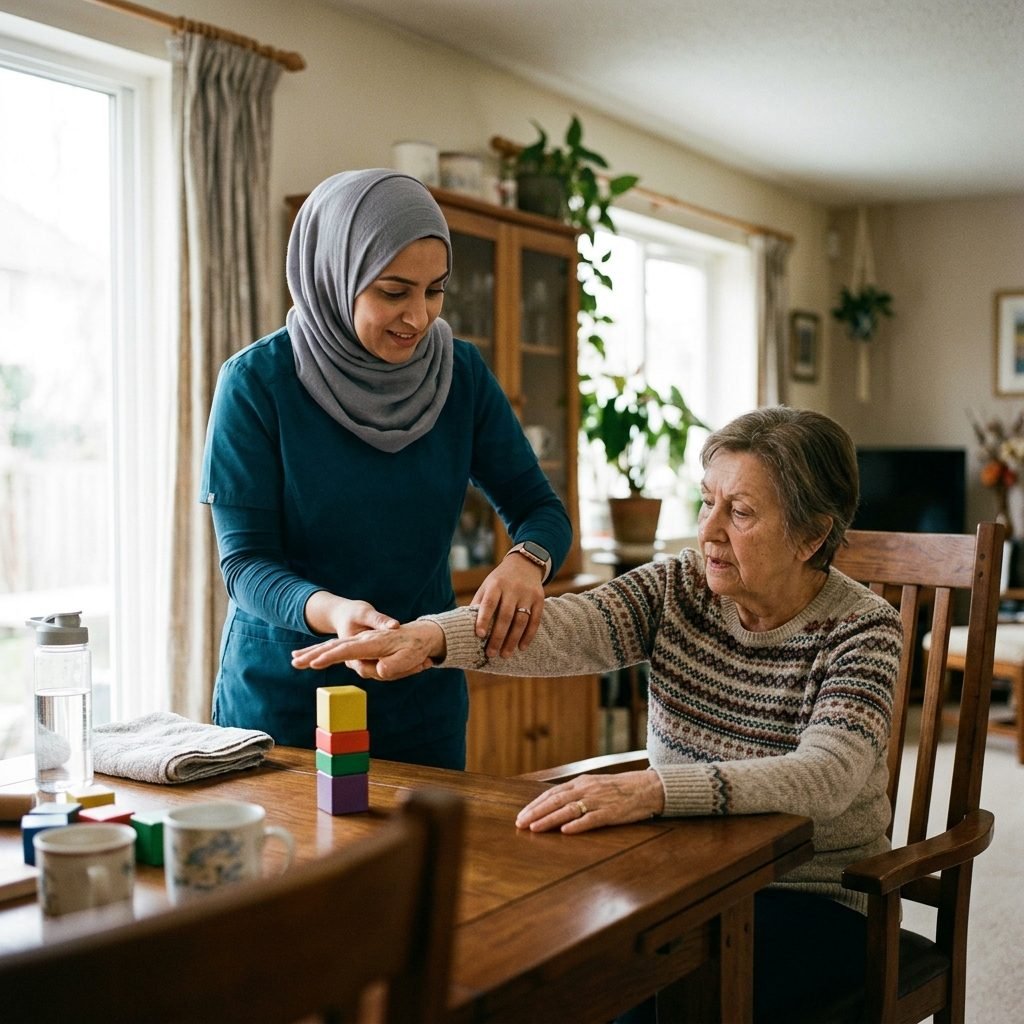
Stroke Rehabilitation
Advanced motor and neurological stroke recovery at home in Al Basateen.
Service Details ←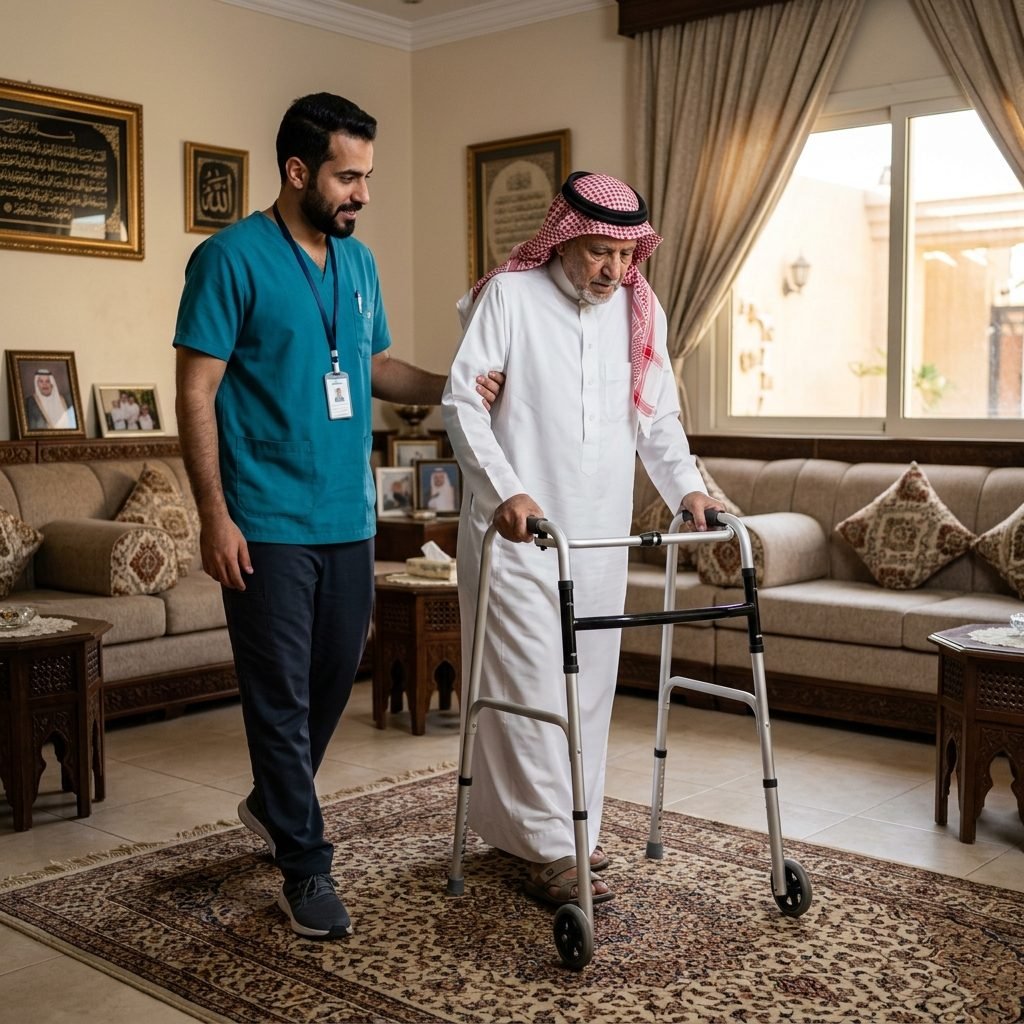
Geriatric Physical Therapy
Balance training, strengthening, and fall prevention for seniors in Al Basateen.
Service Details ←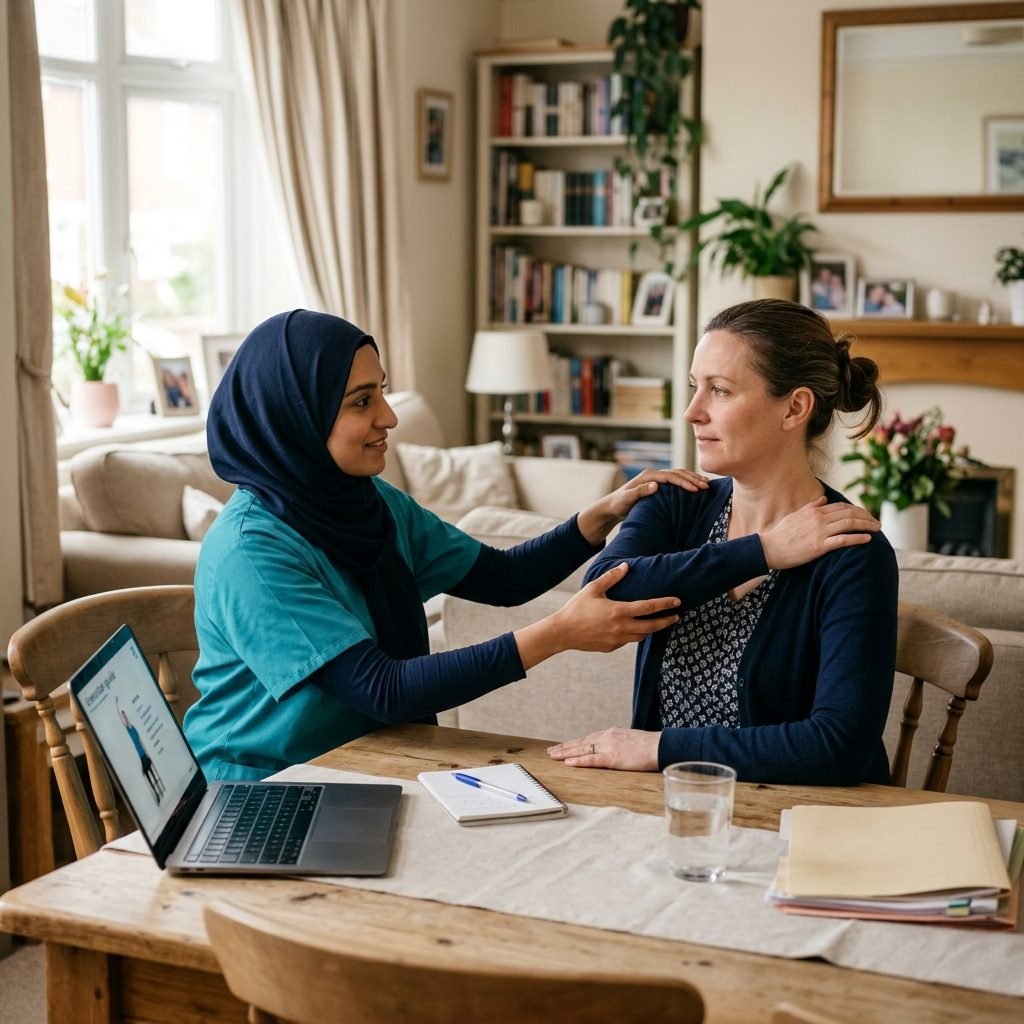
Female Physiotherapist
Licensed female therapists providing home care for women in Al Basateen.
Service Details ←