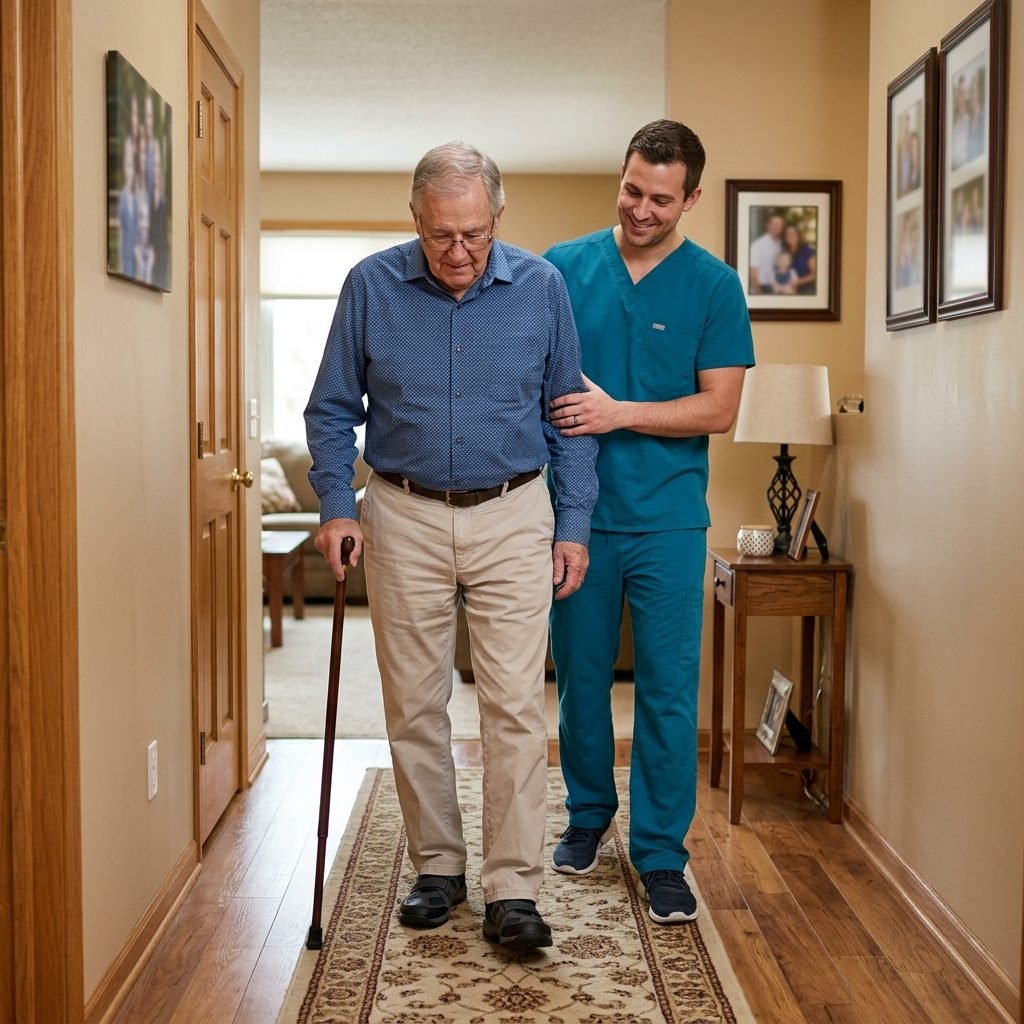
Having access to comprehensive, clinical physical therapy at home is crucial for maintaining rehabilitation progress, especially in busy neighborhoods. Al-Safa and Al Hamra districts in Jeddah present unique local mobility challenges due to high population density and traffic. At Bidaya Center, we deliver high-quality home physiotherapy and movement rehabilitation services directly to your doorstep, conforming to the clinical guidelines of the Saudi Commission for Health Specialties. We eliminate the stress of travel, traffic, and parking. We respect cultural privacy by providing certified male therapists for male patients and female therapists for female patients.
Our clinical approach in Al Hamra starts with a detailed physical and environmental safety assessment to eliminate fall hazards in the home. We bring all necessary portable, sterilized equipment to deliver a clinical standard of care comparable to external clinics. The therapist establishes a tailored milestone tracking plan to monitor muscle strength, balance, and joint range of motion (ROM) progression over time.
Why families in Al Hamra choose Bidaya for home physiotherapy
- ✅ Licensed male & female therapists — full privacy, in your own home in Al Hamra.
- ✅ Fully in-home visits across Al Hamra — no travel or traffic.
- ✅ A personalized rehab plan built after a thorough in-home assessment.
- ✅ Continuous follow-up and direct contact with your therapist throughout.
- ✅ Fast response — arrange your visit by a quick call or WhatsApp message.
We also serve nearby areas: Al Andalus · Al Basateen · Al Bawadi
* The treatment plan and expected outcomes are determined by a medical and functional assessment of each individual case.
What Home-Based Gait & Balance Rehabilitation Means for Al Hamra Residents
Gait and balance rehabilitation is a targeted physiotherapy program that rebuilds the body's ability to stand, step, and move between positions safely and steadily. It is far more than strengthening the leg muscles. It retrains the sensory and nervous systems to read the balance signals coming from the feet, the inner ear, and the eyes, and it reorganizes how the body reacts when it is suddenly thrown off balance. At Bidaya Center, we deliver this rehabilitation inside the patient's own home in the Al Hamra district of Jeddah, so that every session takes place in the exact environment where the person moves each day.
Why insist on the home? Because balance is a skill that depends heavily on its surroundings. Someone who practices walking in a fully equipped clinic may not face the same difficulty they meet when moving from the bedroom to the bathroom at night, rising from a floor-level majlis, or crossing a door threshold. Al Hamra is a quiet residential district that mixes villas, apartments, and multi-storey homes, and many of its houses have internal staircases, narrow hallways, and changing surfaces between tile and carpet. Training the patient inside these specific spaces makes the acquired skill usable straight away in daily life, with no gap between clinic and reality.
The specialist who visits the home brings more than equipment. They bring the experience to turn ordinary rooms into a safe training space: measuring the width of corridors, noticing where the lighting is poor, and identifying natural handholds such as walls and fixed furniture. This direct understanding of the Al Hamra living environment keeps the treatment plan realistic and achievable, and it lowers the risk of falls, which remains the single greatest danger tied to gait and balance disorders.
Symptoms and Warning Signs That Call for Starting
There are clear indicators that the body has lost part of its control over walking and steadiness. When they appear, an assessment should not be postponed:
- A recurring sense of unsteadiness or dizziness when standing up from sitting, or when the head turns quickly.
- Actual falls, or near-falls that were narrowly avoided, over recent months, even minor ones.
- A changed walking pattern: short shuffling steps, feet planted unusually wide for extra stability, or one foot dragging.
- Constantly reaching for walls and furniture while moving through the house, or avoiding open spaces.
- Noticeable slowness and hesitation before taking the first step, especially at doorways and narrow corridors.
- Weakness or numbness in the legs, or a feeling that the floor is unstable underfoot.
- Fear of going out to the street or climbing stairs, a fear that gradually leads to less movement and further muscle weakness.
The appearance of one or more of these signs does not necessarily mean a serious condition, but it is a signal that a careful professional assessment is needed. Early intervention offers a better chance of preserving independence before the problem turns into a cycle of fear, reduced movement, and growing weakness.
Conditions and Groups Who Benefit
Gait and balance disturbance is not a single disease but a symptom shared across many conditions, which is why the range of people who benefit from this program inside Al Hamra homes is broad:
- Older adults who have begun to lose confidence in their footing because of age-related muscle weakness or multiple medications that affect balance.
- Post-stroke patients who have weakness on one side of the body that disrupts the coordination of their gait.
- People with chronic neurological conditions such as Parkinson's and multiple sclerosis, in which balance is often among the first things affected.
- Those recovering from joint or spinal surgery who need to relearn walking after a period of limited movement.
- Patients with peripheral neuropathy who have lost some sensation in the feet, particularly those living with diabetes.
- People experiencing dizziness caused by inner-ear and vestibular disorders.
- Anyone who has had a fracture or sprain and whose fitness has declined after a long rest period.
Each of these groups has a different need, so there is no single standard plan. Work always begins with an individual assessment that identifies the source of the imbalance and its degree, and the sessions are then built on that foundation to suit the patient's age, general condition, and the space available in their Al Hamra home.
Goals of the Rehabilitation Program
The overarching aim is to restore safe, independent movement, but that large goal is translated into smaller, practical targets whose progress can be measured:
- Reducing the risk of falls by improving the body's balance reactions and strengthening the muscles responsible for stability.
- Improving the walking pattern in terms of step length, rhythm, and coordination between the limbs.
- Increasing the strength of the trunk, hip, and leg muscles that form the base of stability during standing and movement.
- Training daily transitions: rising from bed and chair, turning, climbing and descending stairs, and crossing thresholds.
- Restoring psychological confidence in movement and shedding the fear that limits activity.
- Building the ability to perform more than one task at once, such as walking while carrying something or talking, which mirrors real daily life.
- Preserving independence in daily activities and reducing reliance on others.
It is important to be clear that these goals and their expected outcomes depend on a clinical and functional assessment of each individual case. We do not promise absolute results; we offer a realistic plan that is continually reviewed and adjusted according to the patient's response and rate of progress.
Stages and Path of the Home Sessions
The program proceeds inside the patient's Al Hamra home along a considered path that begins with understanding before intervention:
Stage one — comprehensive assessment: On the first visit, the specialist examines muscle strength, joint range of motion, and sensation, observes the walking pattern across the home's different surfaces, and measures indicators of static and dynamic balance. They also survey the home environment to identify sources of risk.
Stage two — building the foundation: The early sessions focus on strengthening the core muscles, improving range of motion, and steadying the standing position with support, preparing for more demanding stages.
Stage three — dynamic balance training: Training progresses to shifting weight between the feet, walking along defined paths within the home's corridors, and exercises that challenge balance in a gradual, safe way.
Stage four — functional skills: The skills are woven into real tasks such as the internal staircase, rising from a floor-level majlis, and walking while turning the head, reflecting the genuine challenges of the home.
Stage five — sustainability: A simple home program is designed for the patient to continue between visits, with periodic review to measure progress and adjust the plan. Reassessment is repeated regularly to document improvement and fine-tune the goals.
The length of each session and the number per week are set according to the patient's condition and tolerance; no fixed pace is imposed on everyone.
The Role of the Family and Caregiver
Success in gait and balance rehabilitation does not rest on the specialist alone but on the cooperation of those who share the patient's daily life. Families in Al Hamra are often present and supportive, and that presence can be guided in useful ways:
- Accompanying the patient during home exercises between visits and encouraging them to keep going without pressure or haste.
- Learning the correct way to support the patient when helping them stand or move, protecting both patient and helper from injury.
- Striking the careful balance between offering help and leaving room for independence; too much assistance gradually undoes what we are trying to build.
- Noticing any change in the walking pattern, an increase in dizziness, or a fall, and reporting it to the specialist.
- Helping to prepare the home: clearing obstacles, securing rugs, and improving night-time lighting in corridors.
We make a point of training the caregiver practically during the sessions, because what happens between visits matters no less than what happens during them. An informed caregiver multiplies the effect of the program and protects the patient from setbacks.
Home Safety and Prevention Tips
A safe home environment is an integral part of treatment, and many falls can be avoided with simple adjustments inside Al Hamra homes:
- Remove loose rugs or fix them firmly in place, as they are among the most common causes of tripping.
- Keep corridors clear of cables, excess furniture, and items scattered on the floor.
- Improve lighting, especially on the path between the bedroom and bathroom at night, and use a soft night light.
- Install grab bars in the bathroom and beside the stairs where needed, and use non-slip mats.
- Wear closed, stable footwear with a non-slip sole indoors, and avoid walking in socks on tile.
- Keep frequently used items within easy reach to avoid excessive bending or standing on a chair.
- Rise in stages: sit on the edge of the bed for a moment before standing to avoid sudden dizziness.
- Use any prescribed walking aid (cane or walker) correctly and do not abandon it before the right time.
These adjustments do not remove the need for rehabilitation, but they protect the gains and reduce risk during the period of rebuilding strength and confidence.
Frequently Asked Questions (FAQ)
Is home-based gait and balance rehabilitation as effective as the clinic?
Yes, and for many balance disorders the home is actually the better environment, because the patient practices the skills in the very space they use every day, making the acquired skill directly applicable and closing the gap between training and reality.
How many sessions will I need?
There is no fixed number that suits everyone. The number and frequency of sessions are determined after the initial assessment, based on the cause and degree of the disorder and the patient's general condition, and they are reviewed as the program progresses.
Are both male and female therapists available to ensure privacy?
Yes, licensed male and female therapists are available, and a preference for the therapist's gender can be accommodated while fully preserving the privacy of the patient and family inside the home.
My father is elderly and afraid of falling; is this program suitable for him?
This program is designed precisely for cases like his. A core part of it is restoring confidence in movement and reducing fall risk through safe, gradual exercises carried out under direct supervision within a secure environment.
Do you guarantee a full recovery or a return to normal walking?
We do not promise absolute results. We set a realistic plan based on a careful assessment of your case and work toward the best possible improvement, reviewing the goals continually according to your response and progress.
To book a home visit for gait and balance rehabilitation in the Al Hamra district of Jeddah, or to ask about your case, contact Bidaya Center by phone or WhatsApp by clicking Call Now, and we will be glad to help you arrange a time that suits you.
Important Home Visit Details:
- ✓Setup: Please clear a 2x2m space in the room for safety.
- ✓Clothing: Wear loose, comfortable clothes for easy movement.
- ✓Therapist Parity: Male therapists for males, females for females.
- ✓Medical Reports: Keep your MRI or doctor reports ready for evaluation.
Rehabilitation & Services in Al Hamra
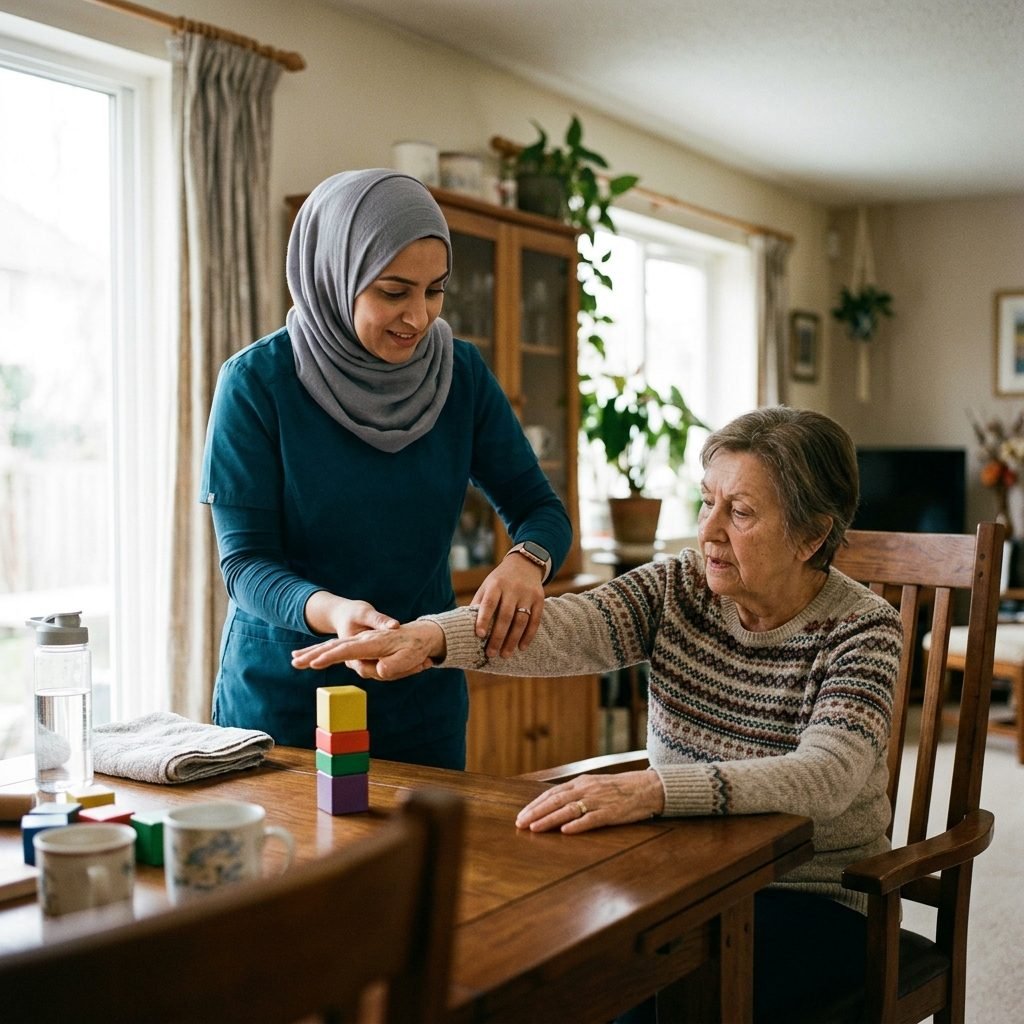
Stroke Rehabilitation
Advanced motor and neurological stroke recovery at home in Al Hamra.
Service Details ←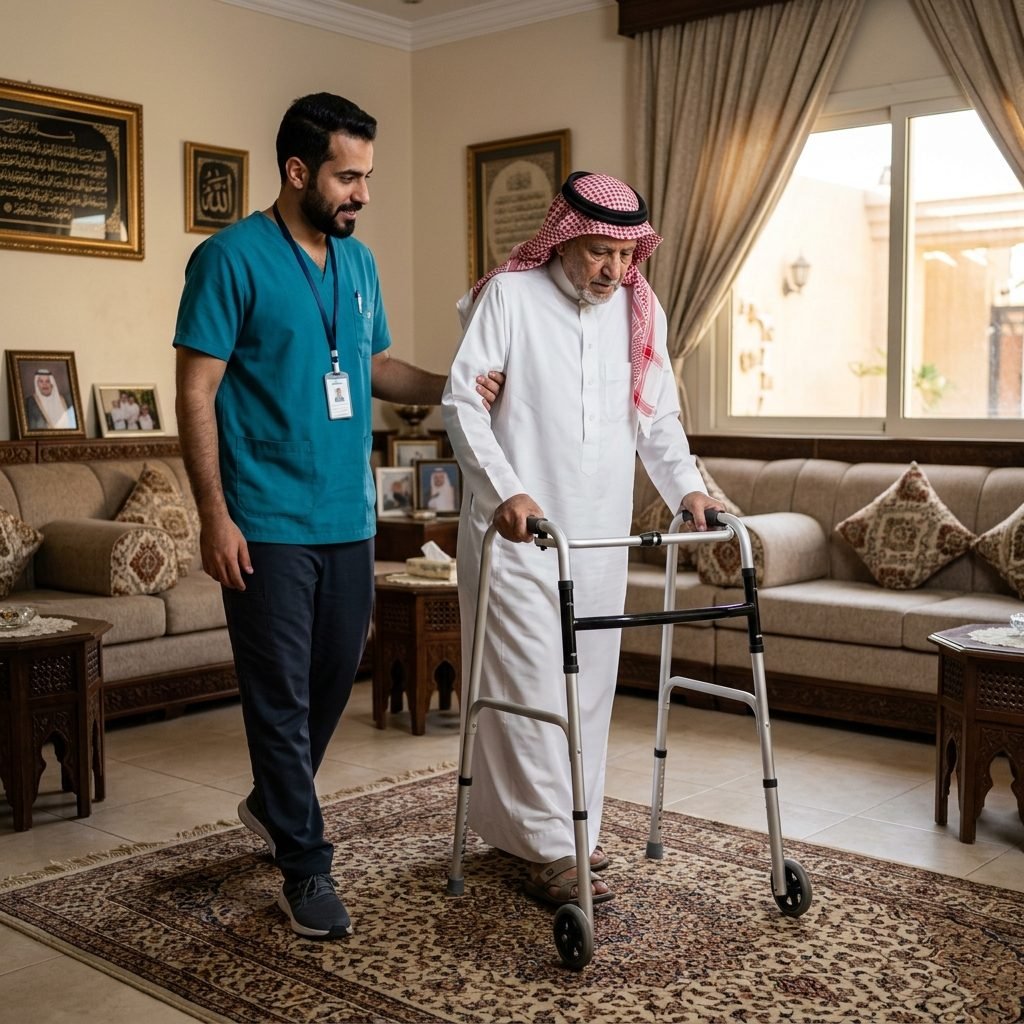
Geriatric Physical Therapy
Balance training, strengthening, and fall prevention for seniors in Al Hamra.
Service Details ←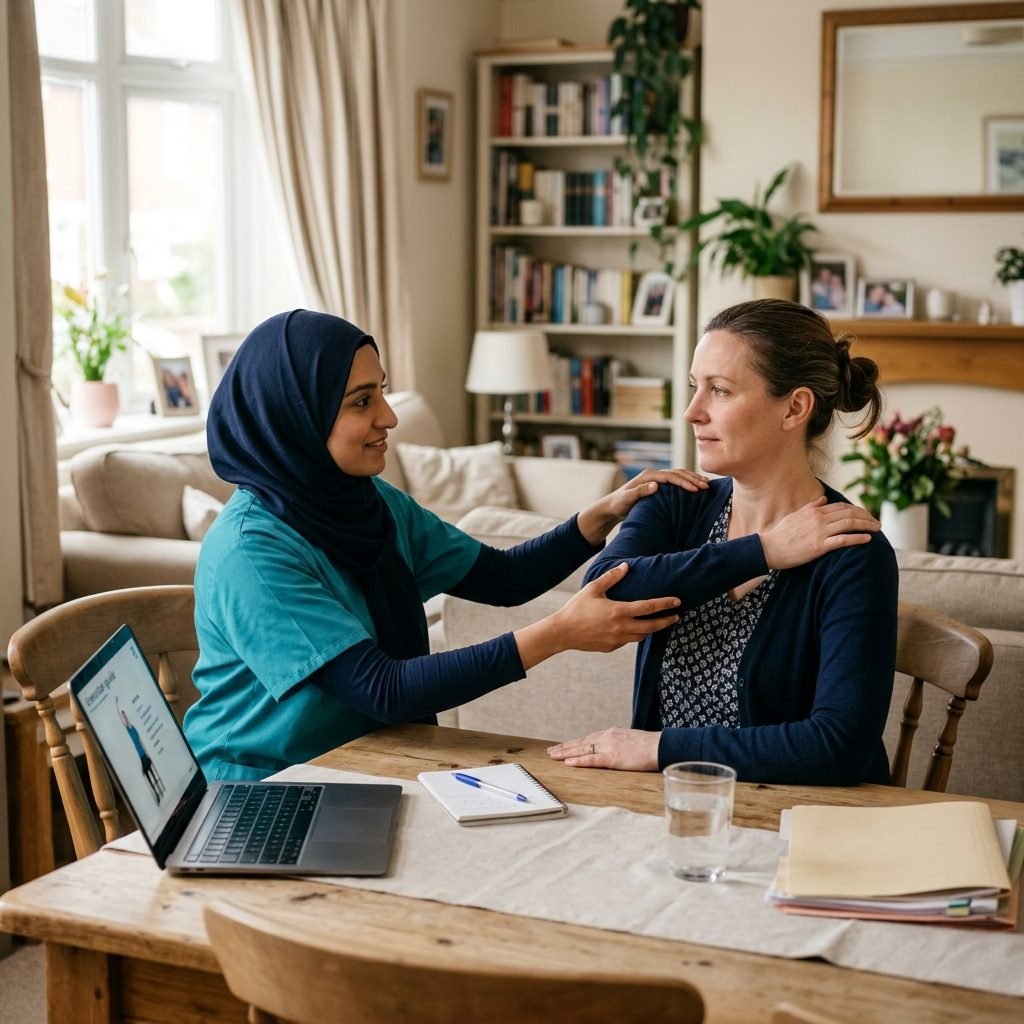
Female Physiotherapist
Licensed female therapists providing home care for women in Al Hamra.
Service Details ←