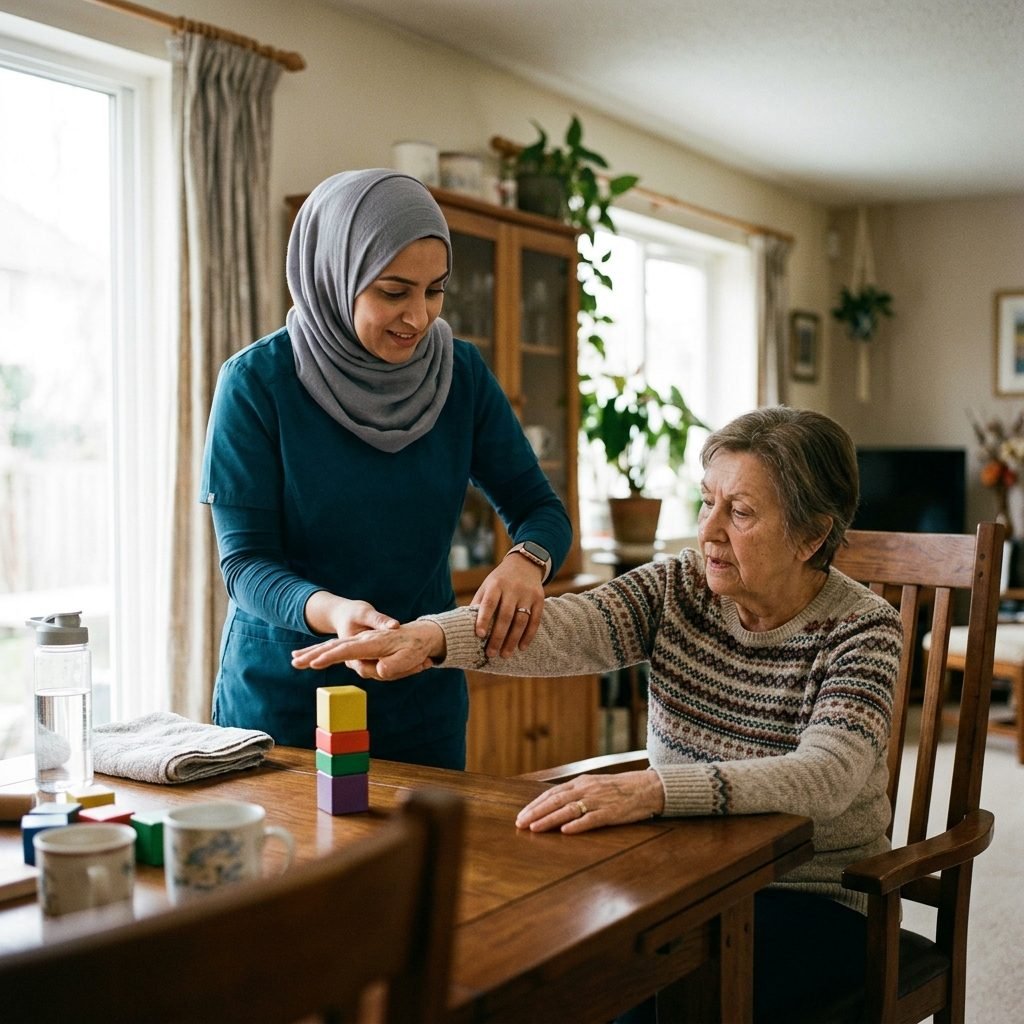
Having access to comprehensive, clinical physical therapy at home is crucial for maintaining rehabilitation progress, especially in busy neighborhoods. Al-Safa and Al Hamra districts in Jeddah present unique local mobility challenges due to high population density and traffic. At Bidaya Center, we deliver high-quality home physiotherapy and movement rehabilitation services directly to your doorstep, conforming to the clinical guidelines of the Saudi Commission for Health Specialties. We eliminate the stress of travel, traffic, and parking. We respect cultural privacy by providing certified male therapists for male patients and female therapists for female patients.
Our clinical approach in Al Hamra starts with a detailed physical and environmental safety assessment to eliminate fall hazards in the home. We bring all necessary portable, sterilized equipment to deliver a clinical standard of care comparable to external clinics. The therapist establishes a tailored milestone tracking plan to monitor muscle strength, balance, and joint range of motion (ROM) progression over time.
Why families in Al Hamra choose Bidaya for home physiotherapy
- ✅ Licensed male & female therapists — full privacy, in your own home in Al Hamra.
- ✅ Fully in-home visits across Al Hamra — no travel or traffic.
- ✅ A personalized rehab plan built after a thorough in-home assessment.
- ✅ Continuous follow-up and direct contact with your therapist throughout.
- ✅ Fast response — arrange your visit by a quick call or WhatsApp message.
We also serve nearby areas: Al Andalus · Al Basateen · Al Bawadi
* The treatment plan and expected outcomes are determined by a medical and functional assessment of each individual case.
What Home-Based Post-Stroke Rehabilitation Means for Al Hamra Residents
Post-stroke rehabilitation is a structured therapy program designed to help a person recover as much movement and independence as possible after a stroke has affected one side of the body, balance, speech, or swallowing. A stroke injures a specific region of the brain, and the role of rehabilitation is to encourage the brain to reorganise its neural pathways through purposeful, repeated functional movement. This capacity, known as neuroplasticity, is the scientific foundation of modern physiotherapy for stroke.
At Bidaya Center we deliver this program directly inside the patient's home in the Al Hamra neighborhood of Jeddah. Al Hamra is a calm, upscale residential district on the city's western side, home to many older adults and families who prefer their loved one to stay in familiar surroundings rather than making repeated trips to a clinic. Stroke patients in particular benefit greatly from home-based care, because weakness on one side of the body makes car transfers, stairs, and getting in and out exhausting and carries a real risk of falling. Training inside the home also ties every exercise to the real environment the patient moves through each day: the same bed, the same bathroom, the same step.
Another advantage of home rehabilitation in Al Hamra is that the physiotherapist sees the actual obstacles inside the house and addresses them on the spot, coaching the patient to rise from their usual chair, walk along their own hallway, and reach the kitchen. Linking each exercise to a genuine daily task builds independence faster than abstract drills performed in a clinic far removed from the patient's reality.
Symptoms and Signs That Signal It Is Time to Start
The earlier rehabilitation begins once the medical condition is stable, the better the chances of functional recovery. It is a mistake to simply wait for "spontaneous improvement"; structured intervention guides that recovery and prevents complications. Signs that a home rehabilitation program is needed include:
- Weakness or paralysis of the arm or leg on one side of the body, or difficulty moving the hand and fingers.
- Loss of balance and low confidence when standing or walking, or full reliance on others to move around.
- Increased muscle stiffness (spasticity), especially in the hand and ankle, with the limb tending toward a fixed, tight posture.
- Difficulty rising from a bed or chair, and trouble sitting in balance without support.
- Repeated falls, or such a strong fear of falling that the patient avoids moving altogether.
- Neglect of or reduced attention to the affected side, or numbness and altered sensation.
- Facial muscle weakness, swallowing difficulty, or changes in speech clarity.
- Swelling in the affected hand or foot caused by lack of movement.
The presence of one or more of these signs does not predetermine any specific outcome; it means the case needs a careful clinical and functional assessment to build a suitable plan. We also stress that any sudden new decline in strength, awareness, or speech is a medical emergency requiring immediate hospital care, not rehabilitation alone.
Who Benefits: Conditions and Groups We Serve
Our home post-stroke rehabilitation program in Al Hamra serves several groups, with the plan tailored to each case according to the stroke type, its severity, and the time elapsed since the event:
- Patients who had an ischaemic stroke (a blocked artery) or a haemorrhagic stroke, once the medical condition is stable and the physician has approved rehabilitation.
- Patients with hemiplegia following a stroke, whether on the right or left side.
- Those recently discharged from hospital who need to continue rehabilitation at home on a regular basis.
- Older adults for whom repeated travel to a center is difficult, a large share of Al Hamra's residents.
- Patients in the chronic phase, months after the stroke, whose progress has plateaued and who need a fresh rehabilitation push to improve walking, balance, and hand use.
- Those with marked weakness in the hand and arm who want a program focused on recovering fine function as far as possible.
- Patients who need safety and transfer training to reduce the risk of falling inside the home.
We have licensed male and female therapists, and the family can choose a therapist of the same gender as the patient, with full privacy maintained inside the home, something many families in Al Hamra value.
Goals of the Rehabilitation Program
Goals are set collaboratively with the patient and family. They are realistic, measurable, and tied to real daily tasks. Among the key areas we work on:
- Improving motor control of the affected side and reactivating natural movement patterns instead of faulty compensations.
- Strengthening balance while sitting, standing, and walking to reduce the risk of falls.
- Restoring the ability to walk safely, whether independently or with an appropriate aid such as a cane or walker.
- Managing muscle spasticity, preserving joint range of motion, and preventing stiffness and contractures.
- Training the hand and arm on functional tasks such as grasping and reaching, as far as the condition allows.
- Strengthening weak muscles and building endurance so daily activities can be done without rapid fatigue.
- Increasing independence in transfers: bed to chair, sitting to standing, and getting to the bathroom.
- Preventing complications of immobility such as pressure sores, venous clots, and painful shoulder stiffness.
We emphasise that how far and how quickly these goals are met depends on the clinical and functional assessment of each individual case. We make no promises of a full cure or a guaranteed result, only a clear plan of action and honest tracking of progress.
Stages and Path of the Home Sessions
The path begins with a comprehensive assessment visit at the patient's home in Al Hamra, where the therapist examines muscle strength, balance, sensation, degree of spasticity, range of motion, and the ability to walk and transfer, and reviews medical reports and medications. From this, an individual plan is built with short-term and longer-term goals.
- Stage one — preparation and protection: establishing correct body positioning, preserving joint range of motion, early exercises to activate the affected side, and training balanced sitting.
- Stage two — restoring motor control: guided exercises to re-teach movement, gradual weight-bearing through the affected limb, and controlled sit-to-stand transitions.
- Stage three — standing and walking: balance training in standing, beginning to walk inside the home with aids when needed, and working toward a safer walking pattern.
- Stage four — function and independence: integrating skills into real tasks around the patient's own home, such as walking the hallway, managing a step, reaching the kitchen, and training the hand on daily tasks.
- Stage five — consolidation and home program: reinforcing gains, a daily home exercise program, and gradually reducing reliance on sessions with periodic follow-up.
Progress measures are repeated regularly and the plan is adjusted according to response. The length of each session and the number per week are set according to the patient's condition and tolerance, and visit times are coordinated to fit the family's schedule in Al Hamra.
The Role of the Family and Caregiver
The family is a core partner in successful stroke rehabilitation, because improvement does not happen only during the session hour but through repeating the skill throughout the day. We therefore coach the caregiver in practical skills that turn the home into a supportive therapeutic environment:
- The safe way to help the patient stand and transfer without placing harmful strain on the affected shoulder.
- Encouraging the patient to use the affected side in daily tasks rather than relying entirely on the sound side.
- Supervising the home-program exercises and repeating them at the recommended dose between sessions.
- Watching for warning signs such as increasing spasticity, shoulder pain, swelling, or skin redness, and reporting them.
- Supporting the patient emotionally; frustration and mood swings are common after a stroke, and calm encouragement raises adherence.
- Organising rest and activity to avoid the fatigue that hinders progress.
When the family's efforts align with the therapist's plan, every day becomes an added training opportunity, one of the most important factors in the success of home rehabilitation.
Home Safety and Prevention Tips
Preparing the home is an important preventive step, especially since falls are among the leading risks for a stroke patient. We advise Al Hamra families as follows:
- Remove loose rugs and cables from walking paths, and secure any edges that could cause tripping.
- Provide good lighting in hallways, the bathroom, and beside the bed, particularly for night-time movement.
- Install grab bars in the bathroom and beside the toilet, and use a shower chair when needed.
- Place a non-slip surface in the bathroom and keep floors dry.
- Choose firm, closed, non-slip footwear during walking and training.
- Keep essential items within easy reach to reduce risky movements or sudden reaching.
- Do not use any walking aid until its height has been adjusted and the patient has been trained on it with the therapist.
- Mind the position of the affected shoulder and support it well to avoid pain and partial dislocation.
These measures reduce risk but do not replace specialist supervision. We also advise adhering to the physician's medications and controlling risk factors such as blood pressure and diabetes to lower the chance of another stroke.
Frequently Asked Questions (FAQ)
When can rehabilitation begin after a stroke?
It is best to start early once the medical condition is stable and the treating physician has approved it. The first home assessment determines the right starting point and the exercises that are safe for the patient's condition.
Does home rehabilitation mean the patient will return exactly to how they were?
The aim is to recover as much movement and independence as possible, and the degree of improvement varies from case to case according to the clinical and functional assessment. We make no promises of a full cure, only a realistic plan and honest follow-up.
Is a female therapist available for female patients in Al Hamra?
Yes. We have licensed male and female therapists, and you can choose a therapist of the same gender as the patient, with full privacy maintained inside the home.
How many sessions per week does a patient need?
The number and length of sessions are set after the assessment, based on the patient's condition, tolerance, and goals, and the plan is reviewed periodically according to progress.
What if a long time has passed since the stroke?
Even in the chronic phase, improvement in balance, walking, and hand use can be achieved through a focused, well-designed program, and the assessment defines the opportunities available for each case.
To book or ask about home-based post-stroke rehabilitation in the Al Hamra neighborhood of Jeddah, contact Bidaya Center by phone or WhatsApp by clicking Call Now, and we will be glad to arrange a home assessment visit at a time that suits you.
Important Home Visit Details:
- ✓Setup: Please clear a 2x2m space in the room for safety.
- ✓Clothing: Wear loose, comfortable clothes for easy movement.
- ✓Therapist Parity: Male therapists for males, females for females.
- ✓Medical Reports: Keep your MRI or doctor reports ready for evaluation.
Rehabilitation & Services in Al Hamra
Stroke Rehabilitation
Advanced motor and neurological stroke recovery at home in Al Hamra.
Service Details ←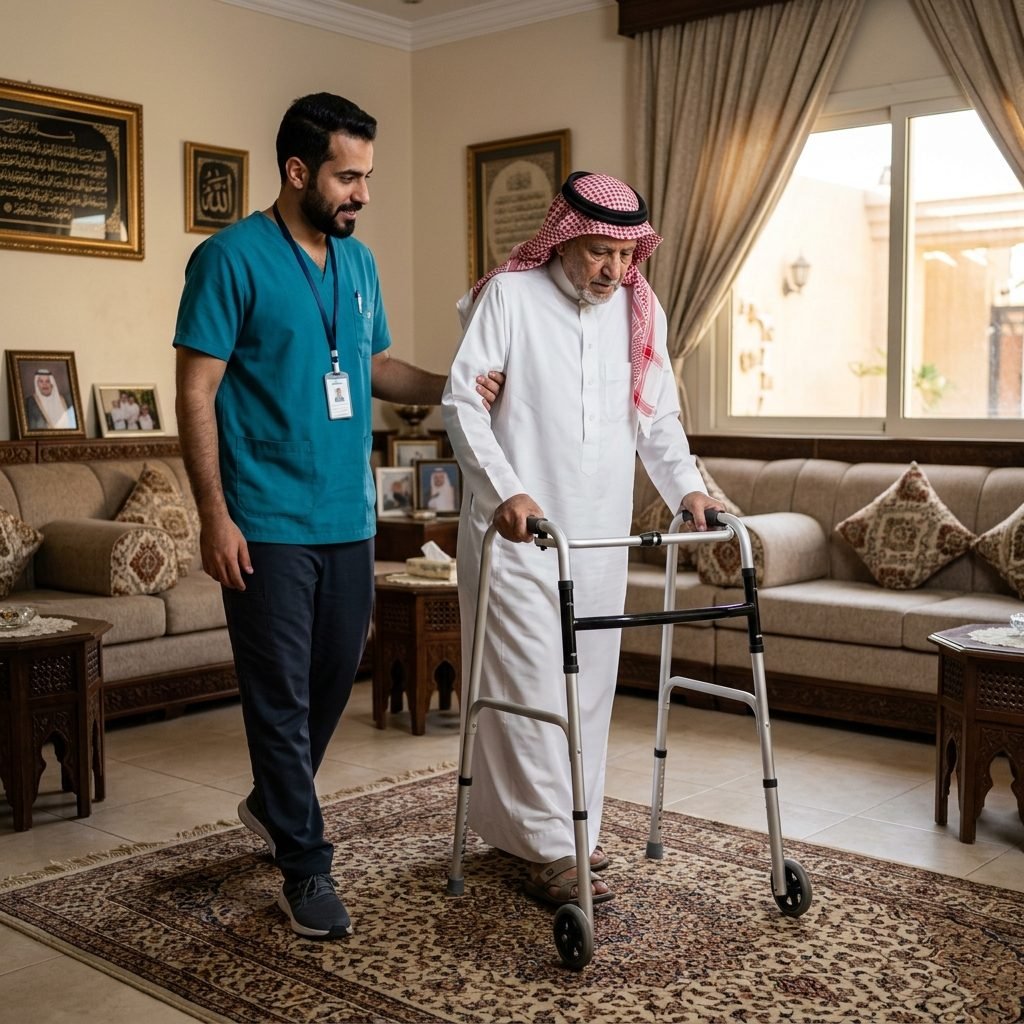
Geriatric Physical Therapy
Balance training, strengthening, and fall prevention for seniors in Al Hamra.
Service Details ←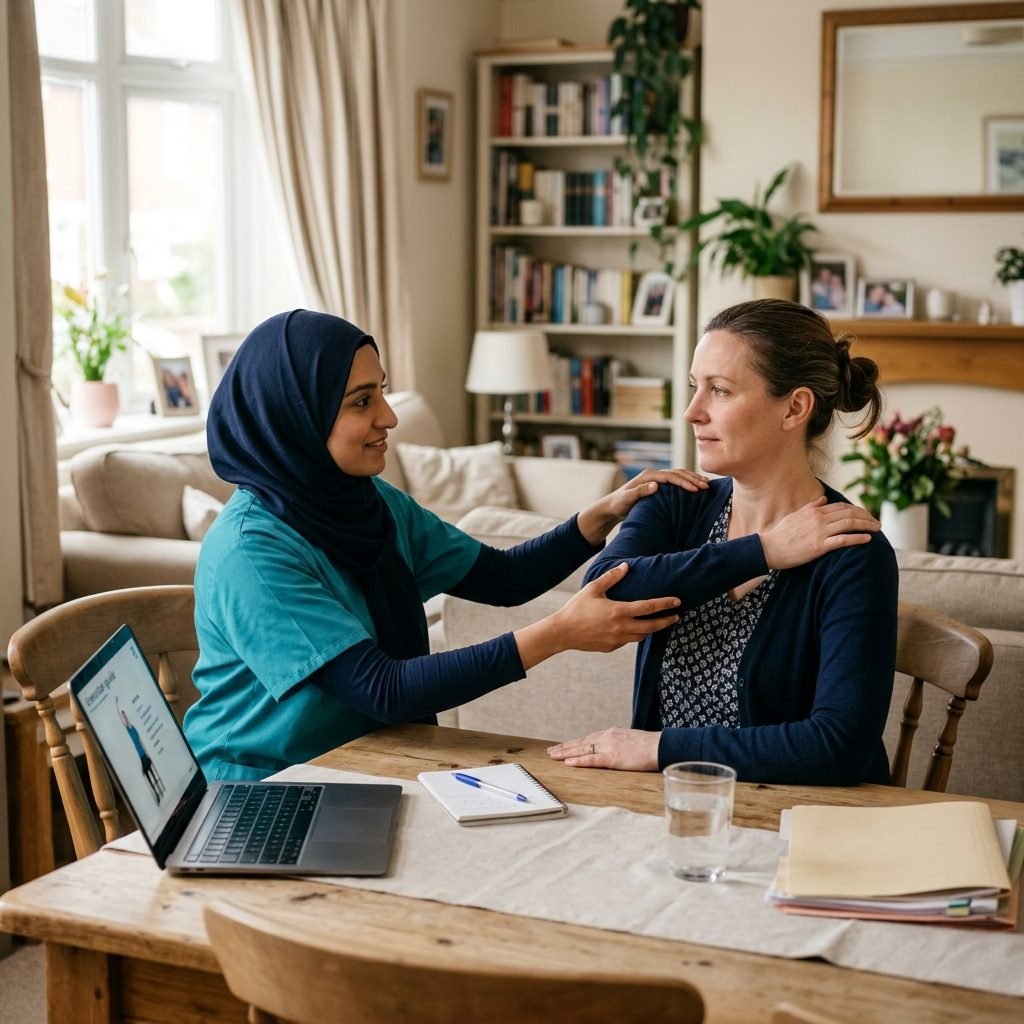
Female Physiotherapist
Licensed female therapists providing home care for women in Al Hamra.
Service Details ←