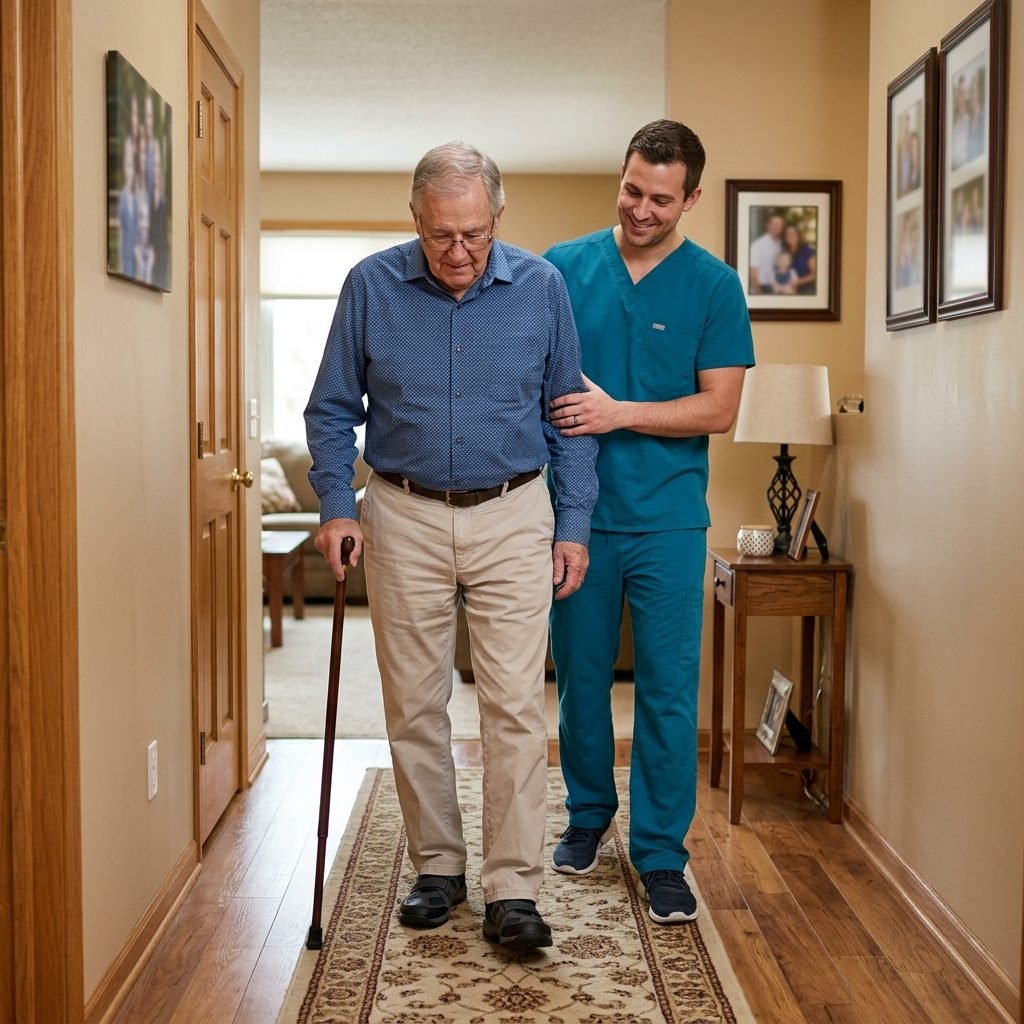
Having access to comprehensive, clinical physical therapy at home is crucial for maintaining rehabilitation progress, especially in busy neighborhoods. Al-Safa and Al Khaldiyah districts in Jeddah present unique local mobility challenges due to high population density and traffic. At Bidaya Center, we deliver high-quality home physiotherapy and movement rehabilitation services directly to your doorstep, conforming to the clinical guidelines of the Saudi Commission for Health Specialties. We eliminate the stress of travel, traffic, and parking. We respect cultural privacy by providing certified male therapists for male patients and female therapists for female patients.
Our clinical approach in Al Khaldiyah starts with a detailed physical and environmental safety assessment to eliminate fall hazards in the home. We bring all necessary portable, sterilized equipment to deliver a clinical standard of care comparable to external clinics. The therapist establishes a tailored milestone tracking plan to monitor muscle strength, balance, and joint range of motion (ROM) progression over time.
Why families in Al Khaldiyah choose Bidaya for home physiotherapy
- ✅ Licensed male & female therapists — full privacy, in your own home in Al Khaldiyah.
- ✅ Fully in-home visits across Al Khaldiyah — no travel or traffic.
- ✅ A personalized rehab plan built after a thorough in-home assessment.
- ✅ Continuous follow-up and direct contact with your therapist throughout.
- ✅ Fast response — arrange your visit by a quick call or WhatsApp message.
We also serve nearby areas: Al Andalus · Al Basateen · Al Bawadi
* The treatment plan and expected outcomes are determined by a medical and functional assessment of each individual case.
What home-based gait & balance rehabilitation means for Al Khaldiyah residents
Gait and balance rehabilitation is a structured therapy program designed to restore the ability to walk steadily and safely, and to improve how the body controls itself while standing, moving, and transitioning from sitting to standing. It is far more than simply "strengthening muscles." It involves retraining the sensory-motor system to read balance signals arriving from the feet, joints, inner ear, and eyes, and to translate them into a confident step free of the fear of falling. When this rehabilitation is delivered inside the patient's own home in Al Khaldiyah, its value multiplies, because it takes place in the real environment where the person actually moves every day.
Al Khaldiyah is one of the established residential districts in central Jeddah, dominated by family homes, multi-storey buildings with internal staircases, and relatively narrow corridors. These very details are what make home rehabilitation more realistic than a session inside a clinic with perfect flooring. We train the patient on the steps of their own staircase, on the walk from the bedroom to the bathroom, on standing at the washbasin, and on moving across the living-room carpet and tiles. What they learn becomes immediately applicable in its natural setting.
Many families in Al Khaldiyah prefer home therapy to spare a patient with poor balance the ordeal of being transported through traffic, parking levels, and elevators, all of which carry a genuine risk of falling during the journey itself. Coming to the home removes that burden and allows the therapist to see firsthand the household obstacles that may be a hidden cause of repeated stumbling. Both licensed male and female therapists are available, with full respect for privacy inside the home, so each family can choose what suits them.
Symptoms and signs that mean it is time to begin
You should not wait for an actual fall before seeking help. Many balance problems announce themselves early through signs that are easy to overlook. Among the clearest reasons to begin a gait and balance program:
- A feeling of unsteadiness or "lightheadedness" when standing up from sitting or turning quickly.
- A changed walking pattern: short hesitant steps, feet placed wider apart than usual for stability, or dragging one foot.
- Needing to hold on to walls or furniture to move around the house.
- Repeated tripping at the edge of a rug, a door threshold, or the first stair.
- Avoiding going outside, or dropping former activities out of fear of falling.
- One or more falls in recent months, even if no injury resulted.
- Noticeable leg-muscle weakness, numbness in the feet, or slowed reactions when balance is lost.
The presence of any of these signs does not necessarily mean a serious disease, but it is a genuine signal that the balance system needs assessment and intervention. The earlier rehabilitation begins, the faster and more lasting the return of confidence in movement.
Conditions and groups who benefit
Gait and balance rehabilitation is not aimed at a single age group; it serves a broad range of people united by the need for safer movement. Among the main beneficiaries in Al Khaldiyah homes:
- Older adults living with age-related muscle weakness and slowed reflexes, who are the most exposed to the complications of falls.
- Those recovering from a stroke or neurological injury who have regained some movement and need to refine their walking pattern and balance.
- Patients with chronic neurological conditions such as Parkinson's and multiple sclerosis, for whom balance disturbance is a daily challenge.
- People after joint surgery or fractures of the hip, thigh, or knee who need to relearn walking after a period of rest.
- Those with positional vertigo and inner-ear-related dizziness once their medical condition is stable.
- People with poor balance due to peripheral neuropathy or diabetic complications in the feet.
- Individuals who lost fitness after a long spell of bed rest or illness and have grown fearful of walking independently.
Each of these conditions has different causes and a different course, which is why work always begins with an individual assessment that identifies the true source of the problem before any plan is drawn up.
Goals of the rehabilitation program
A gait and balance program is built around practical, measurable goals rather than general promises. Priorities differ from one person to another, but they usually revolve around:
- Tangibly reducing the risk of falling inside and outside the home by addressing its direct causes.
- Improving the walking pattern: step length, rhythm, load distribution across the feet, and confidence in walking without support.
- Strengthening the leg and trunk muscles responsible for stability, and improving joint flexibility and range of motion.
- Training the rapid balance reactions that prevent a fall when equilibrium is suddenly lost.
- Rebuilding psychological confidence and breaking the fear barrier that leads many to move less, which only weakens them further.
- Raising independence in daily activities: rising from bed, entering the bathroom, climbing the home stairs.
- Training the patient and family in the correct use of assistive devices when they are needed.
It must be stated clearly that the extent and speed with which these goals are achieved depend on the clinical and functional assessment of each individual case, and on the patient's consistency and the family's commitment. There are no guaranteed or uniform results, only a realistic plan that is reviewed and adjusted periodically according to progress.
Stages and pathway of the home sessions
Work inside an Al Khaldiyah home is organised in progressive stages, each building on the one before it:
- Initial assessment: the therapist visits the home and performs a functional examination measuring balance during standing and walking, muscle strength, and range of motion, while also noting hazard points in the house such as slippery rugs, dim lighting, and handrail-free stairs.
- Planning: short- and long-term goals are drawn up together with the patient and family, and a suitable session frequency is set.
- Foundation stage: exercises to strengthen the legs and trunk, stretching exercises, and training in body-position control from a safe, supported position.
- Functional training: moving to real movement within the home — rising from a chair, walking the corridor, turning, and going up and down the stairs under direct supervision.
- Progressive challenge: adding dual tasks (such as walking while carrying something) and practising on different surfaces, to bring the exercise closer to everyday situations.
- Follow-up and review: periodic re-measurement, adjusting the exercises, and designing a home program the patient performs between sessions.
No fixed duration is imposed on everyone; some cases progress quickly while others need more time, and the decision is based on the actual response observed session after session.
The role of the family and caregiver
The success of gait and balance rehabilitation does not rest on the session alone, but on what happens during the rest of the day. The family in Al Khaldiyah is a core partner, and its role includes:
- Encouraging the patient to perform the home exercises regularly, without overdoing it to the point of exhaustion or neglecting it to the point of slowing progress.
- Providing safe supervision during walking and moving in the early days, while learning the correct way to assist without pulling the patient or throwing them off balance.
- Striking a careful balance between offering help and leaving room for independence; over-protection erodes confidence, while neglect increases risk.
- Noticing any changes — increased dizziness or new stumbling — and reporting them to the therapist so the plan can be adjusted.
- Helping to prepare the home and remove the obstacles the therapist points out.
- Offering emotional support, since many balance patients experience anxiety about movement, and encouragement from loved ones has a real effect on recovery.
We make a point of training the caregiver hands-on during sessions, so they become an extension of the therapy program throughout the week rather than a mere observer of it.
Home safety and prevention tips
A safe home environment reduces the risk of falling before the exercises even take effect. We advise Al Khaldiyah families to review these points:
- Secure or remove rugs, especially small sliding pieces at room entrances.
- Improve lighting in corridors and bathrooms, and add night lighting along the route between bedroom and bathroom.
- Install firm grab bars near the toilet and washbasin and along the staircase.
- Keep cables and movable furniture clear of walking paths, and arrange frequently used items within easy reach without bending or standing on tiptoe.
- Choose closed shoes with a firm sole, and avoid walking in socks on smooth tiles.
- Place a non-slip mat in the bathroom and use a shower chair when needed.
- Avoid rushing when getting up from bed, sitting for a moment before standing to prevent a sudden drop in blood pressure.
These simple measures, combined with the therapeutic exercises, form a double line of defence: rehabilitation that strengthens the body from within, and a safe environment that protects it from without.
Frequently asked questions (FAQ)
Is home rehabilitation suitable for someone afraid to walk after a previous fall?
Yes, it is one of the most appropriate options for this situation. Starting in a familiar, safe environment eases anxiety, and we progress the exercises gradually from a supported position toward independent movement, building confidence step by step.
How many sessions will I need before I notice improvement in Al Khaldiyah?
There is no fixed number that suits everyone; some indicators such as improved steadiness may appear early, while the walking pattern needs longer. The number of sessions is determined after the initial assessment and reviewed according to your actual response.
Is a female therapist available to treat a female patient at home?
Yes, we have licensed male and female therapists, and the visit can be arranged to ensure full privacy inside the home according to the family's wishes.
Do I need special equipment or devices at home?
Most exercises rely on body weight and ordinary household furniture in their early stages. If your case calls for a particular assistive or supportive device, the therapist explains this and trains you to use it correctly and safely.
Can my improvement stall if I stop the exercises?
Consistency is a fundamental factor in balance rehabilitation; stopping may slow progress or weaken the gains made. That is why we design a simple home program you can keep up between sessions and after the program ends.
To book a home visit in Al Khaldiyah or to ask about gait and balance rehabilitation, contact Bidaya Center by phone or via WhatsApp by clicking Call Now, and we will be glad to help you regain safer, more confident movement.
Important Home Visit Details:
- ✓Setup: Please clear a 2x2m space in the room for safety.
- ✓Clothing: Wear loose, comfortable clothes for easy movement.
- ✓Therapist Parity: Male therapists for males, females for females.
- ✓Medical Reports: Keep your MRI or doctor reports ready for evaluation.
Rehabilitation & Services in Al Khaldiyah
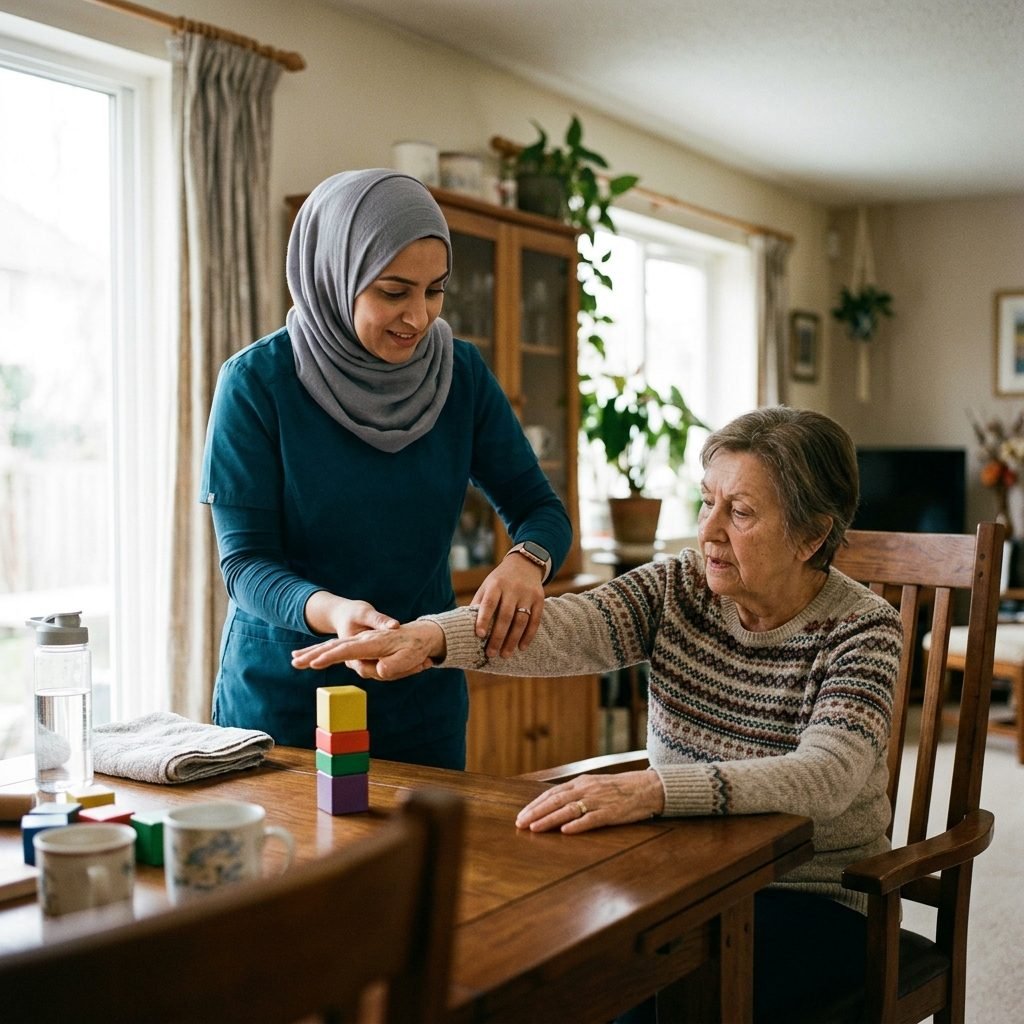
Stroke Rehabilitation
Advanced motor and neurological stroke recovery at home in Al Khaldiyah.
Service Details ←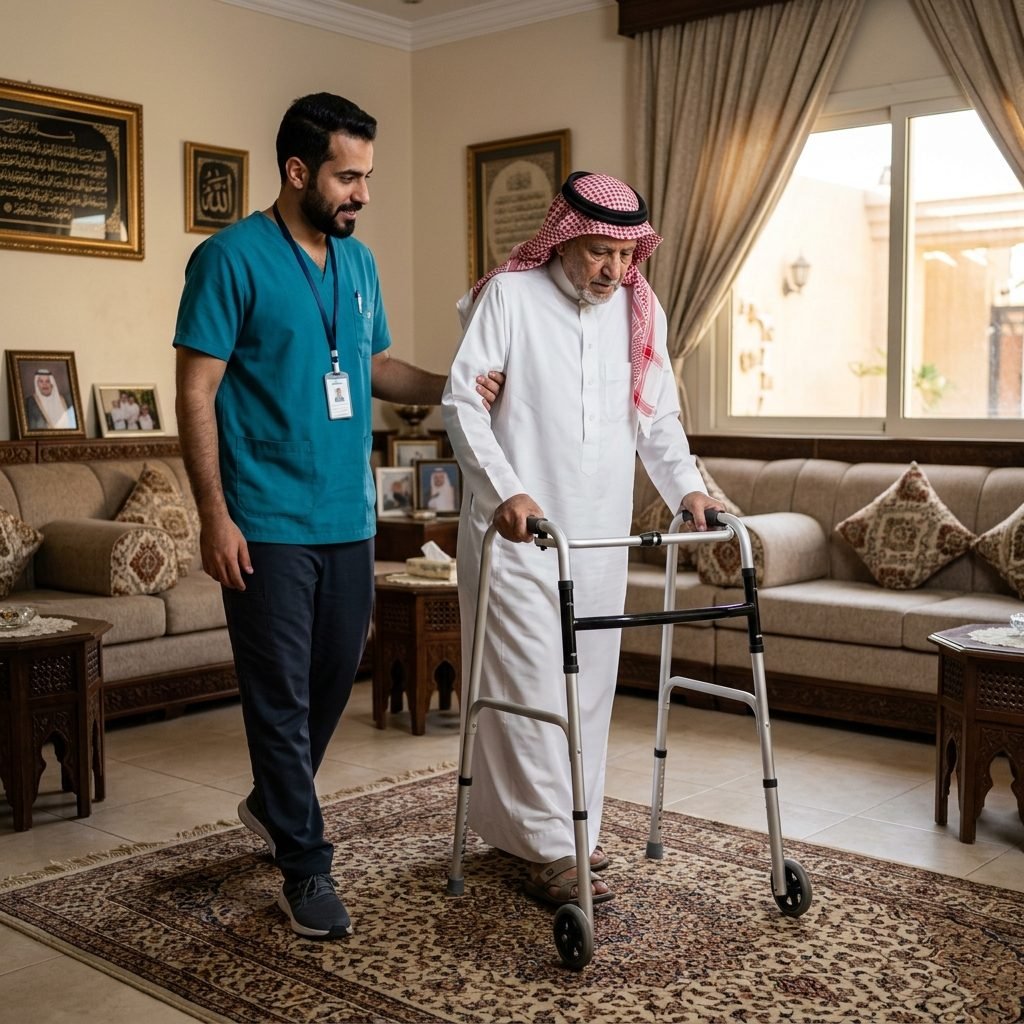
Geriatric Physical Therapy
Balance training, strengthening, and fall prevention for seniors in Al Khaldiyah.
Service Details ←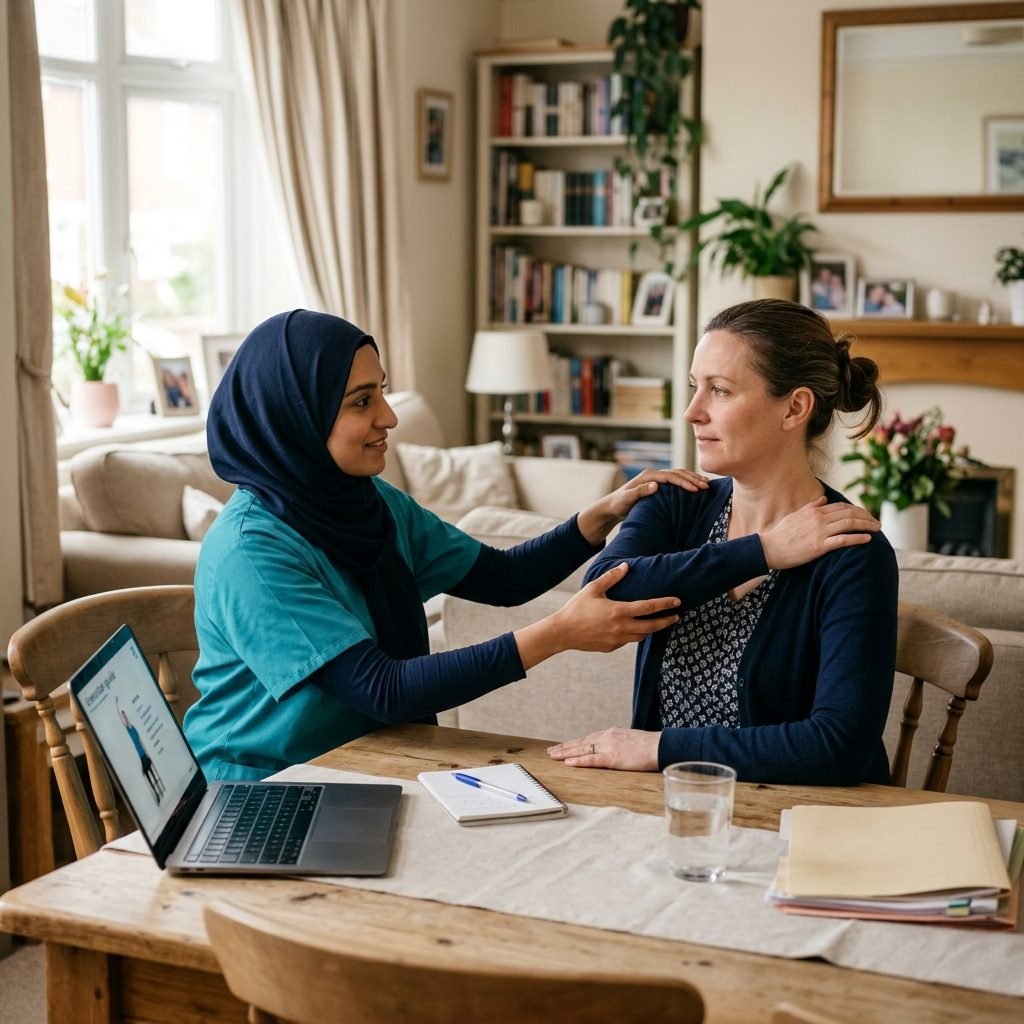
Female Physiotherapist
Licensed female therapists providing home care for women in Al Khaldiyah.
Service Details ←