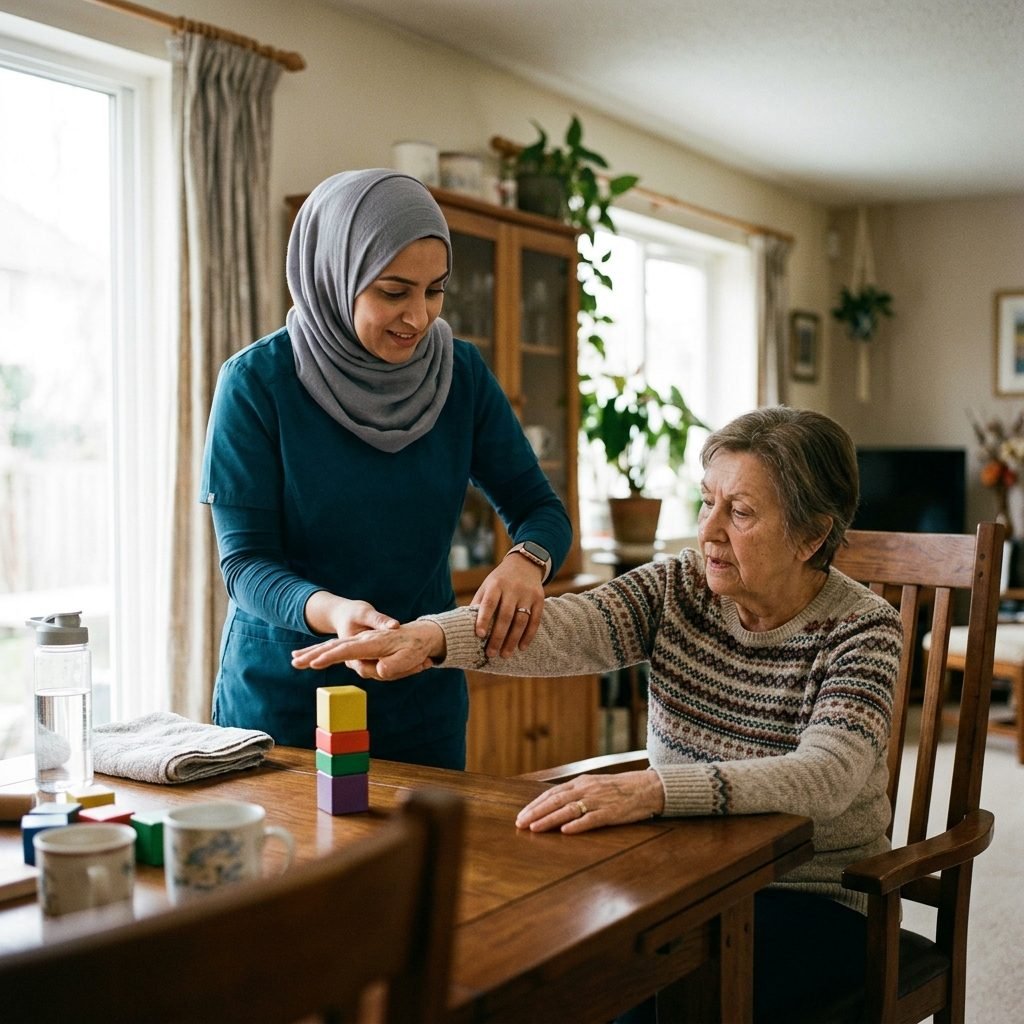
Having access to comprehensive, clinical physical therapy at home is crucial for maintaining rehabilitation progress, especially in busy neighborhoods. Al-Safa and Al Khaldiyah districts in Jeddah present unique local mobility challenges due to high population density and traffic. At Bidaya Center, we deliver high-quality home physiotherapy and movement rehabilitation services directly to your doorstep, conforming to the clinical guidelines of the Saudi Commission for Health Specialties. We eliminate the stress of travel, traffic, and parking. We respect cultural privacy by providing certified male therapists for male patients and female therapists for female patients.
Our clinical approach in Al Khaldiyah starts with a detailed physical and environmental safety assessment to eliminate fall hazards in the home. We bring all necessary portable, sterilized equipment to deliver a clinical standard of care comparable to external clinics. The therapist establishes a tailored milestone tracking plan to monitor muscle strength, balance, and joint range of motion (ROM) progression over time.
Why families in Al Khaldiyah choose Bidaya for home physiotherapy
- ✅ Licensed male & female therapists — full privacy, in your own home in Al Khaldiyah.
- ✅ Fully in-home visits across Al Khaldiyah — no travel or traffic.
- ✅ A personalized rehab plan built after a thorough in-home assessment.
- ✅ Continuous follow-up and direct contact with your therapist throughout.
- ✅ Fast response — arrange your visit by a quick call or WhatsApp message.
We also serve nearby areas: Al Andalus · Al Basateen · Al Bawadi
* The treatment plan and expected outcomes are determined by a medical and functional assessment of each individual case.
What Home-Based Post-Stroke Rehabilitation Means for Al Khaldiyah Residents
A stroke happens when blood flow to part of the brain is interrupted, so the abilities that region once controlled, movement, speech, balance, or sensation, become impaired. Post-stroke rehabilitation is a structured journey to retrain the brain and body to perform these tasks again, drawing on the nervous system's capacity to reorganize its pathways and build alternative connections, a property known as neuroplasticity. The earlier and more consistently the work begins, the stronger the foundation we build on.
In Al Khaldiyah, one of the busy residential districts in central Jeddah, many families find that transporting a recent stroke patient to repeated clinic appointments is a genuine burden: mobility is limited, fatigue mounts, and rush-hour traffic multiplies the difficulty. This is where home physiotherapy proves its value. A licensed therapist comes to the home with the needed equipment, so the patient trains in the very place they actually live, between their own stairs, bathroom, bed, and familiar furniture. Practising inside the real environment transfers each skill straight into daily life instead of leaving it locked inside a treatment room.
At Bidaya Center we provide licensed male and female therapists with full respect for privacy inside the home, and we design every program after a careful individual assessment, with no promises of guaranteed results. Each patient's path depends on the type and location of the stroke, their overall condition, and how soon rehabilitation begins.
Symptoms and Signs That Signal It Is Time to Start
Often a patient leaves the hospital medically stable, yet the effects of the stroke remain clear in movement and function. Signs that point to the need for a structured home rehabilitation program include:
- Weakness or paralysis on one side of the body, making it hard to raise the arm or move the leg.
- Difficulty standing, shifting weight, or walking without support, along with a fear of falling.
- Stiffness and tightening in the hand, shoulder, or ankle muscles (spasticity) that limits range of motion.
- Loss of balance and dizziness when changing position from sitting to standing.
- A weak grip that interferes with holding a spoon, a cup, or fastening buttons.
- A dropping foot or toes catching on the floor while stepping.
- Quick exhaustion and loss of fitness after a period of bed rest.
- Altered sitting posture and a tendency to lean toward and neglect the affected side.
The presence of any of these signs does not mean the situation is fixed; it is precisely what rehabilitation targets. However, emergency symptoms such as sudden new numbness, severe speech difficulty, or an abrupt decline in awareness call for immediate emergency care, not waiting.
Conditions and Groups Who Benefit
The post-stroke rehabilitation program in Al Khaldiyah is designed to cover the range of cases we meet in homes, including:
- Patients recovering from an ischemic stroke (a blocked artery) or a hemorrhagic stroke, once medically stable and cleared by the physician to begin rehabilitation.
- Those with one-sided weakness (hemiparesis) affecting the arm and leg on the same side.
- Patients who have lost independent walking and need gradual, staged retraining.
- Older adults whose condition calls for a gentle pace and close monitoring for signs of fatigue.
- People who have developed muscle spasticity or joint stiffness needing careful stretching and exercise.
- Patients recently discharged from hospital who need to continue rehabilitation without interruption.
- Longer-standing cases whose progress had plateaued and who wish to resume purposeful, functional work.
The final decision to accept any case, and how suitable home care is for it, remains tied to the clinical assessment, and we may recommend parallel medical follow-up when needed.
Goals of the Rehabilitation Program
The aim is not merely to "move the affected limb," but to restore as much independence as each case allows. We set realistic, measurable, functional goals and review them regularly:
- Improving motor control on the affected side and gradually activating weak muscles.
- Retraining balance and transfers: bed to chair, and sitting to standing.
- Restoring a safer, steadier walking pattern, with or without a suitable assistive device.
- Managing muscle spasticity through stretching and correct positioning to reduce stiffness.
- Building fitness and endurance to counter rapid fatigue.
- Improving use of the hand and arm in daily tasks the patient chooses personally.
- Preventing complications: pressure sores, joint contractures, and falls.
- Raising the patient's self-confidence and reducing reliance on others in daily details.
These goals are shaped for each patient individually and adjusted with every gain or challenge that appears, without any guarantee of a specific final outcome.
Stages and Path of the Home Sessions
The path at home unfolds in gradual steps that build on one another:
- Initial assessment: We measure strength, range of motion, balance, spasticity, and the ability to transfer and walk, listen to the priorities of the patient and family, and inspect the home for hazards.
- Building the plan: We define short- and long-term goals and select the exercises and techniques suited to the stage of recovery.
- Activation stage: Exercises to stimulate weak muscles, controlled weight-bearing, and posture training to reduce neglect of the affected side.
- Function stage: Training transfers, standing, and walking, and introducing real daily tasks within the rooms of the home.
- Progression stage: Gradually increasing the challenge in distance, balance, and accuracy, and safely reducing support.
- Reassessment: Periodic measurement of progress and plan adjustment, with a home exercise program between sessions.
The number and frequency of sessions are set according to the case and its response, and we keep a pace that respects the patient's energy level and avoids excessive fatigue.
The Role of the Family and Caregiver
In stroke rehabilitation the home becomes a partner in treatment, and the family is a core element in the program's success. We take care to train the caregiver in:
- The correct way to assist with transfers without straining the helper's back or hurting the patient.
- Encouraging the patient to use the affected side in tasks rather than neglecting it.
- Supervising simple home exercises between sessions at the recommended pace.
- Watching for signs of fatigue, pain, or skin redness and reporting them.
- Organizing medication, rest, and activity times in a balance that supports recovery.
Emotional support matters no less than exercise; patience, gentle encouragement, and valuing small steps lift the patient's morale and strengthen their commitment. We also guide families to avoid "over-protection," which can unintentionally weaken the patient's independence.
Home Safety and Prevention Tips
Preparing the home is an essential preventive step, especially in the apartments and villas of Al Khaldiyah with their corridors and stairs. Practical recommendations include:
- Removing slippery rugs and scattered cords, and securing any edges that could cause tripping.
- Providing adequate lighting in hallways, the bathroom, and the path to the room at night.
- Installing fixed grab bars near the toilet and shower, and using a shower chair when needed.
- Choosing closed, firm-soled shoes instead of open slippers to reduce slipping.
- Keeping frequently used items within reach to avoid bending or sudden standing.
- Changing sitting or lying position regularly to protect the skin from pressure sores.
- Not letting the patient stand or walk without support before the therapist approves it.
- Sticking to the prescribed exercises and avoiding forceful or sudden, unplanned movements.
These measures lower the risk of falls and complications and make the home environment supportive of every step on the road to recovery.
Frequently Asked Questions (FAQ)
When can home rehabilitation begin after a stroke?
Usually once the medical condition is stable and the physician approves. An early, structured start is beneficial, but the precise timing and session content are decided after the individual home assessment.
Will rehabilitation restore movement exactly as it was before the stroke?
The degree of improvement differs from person to person depending on the type and location of the stroke and overall condition. Our goal is to recover as much function and independence as possible, with no promise of a guaranteed result.
How many sessions does a patient need per week?
It depends on the stage of recovery, energy level, and goals. We set an initial schedule after the assessment and adjust it according to response and progress.
Is a female therapist available for female patients, with privacy?
Yes, we have licensed male and female therapists, with full respect for the privacy of the home and the comfort of the patient and family.
Do you reach homes in Al Khaldiyah and nearby areas?
Yes, we serve Al Khaldiyah and neighboring districts in Jeddah with home visits, and we arrange the appointment to suit the patient's condition and the family's circumstances.
To book a home visit in Al Khaldiyah or to ask about the post-stroke rehabilitation program, contact Bidaya Center by phone or WhatsApp by clicking Call Now, and we will help you arrange the first assessment appointment at the earliest suitable time.
Important Home Visit Details:
- ✓Setup: Please clear a 2x2m space in the room for safety.
- ✓Clothing: Wear loose, comfortable clothes for easy movement.
- ✓Therapist Parity: Male therapists for males, females for females.
- ✓Medical Reports: Keep your MRI or doctor reports ready for evaluation.
Rehabilitation & Services in Al Khaldiyah
Stroke Rehabilitation
Advanced motor and neurological stroke recovery at home in Al Khaldiyah.
Service Details ←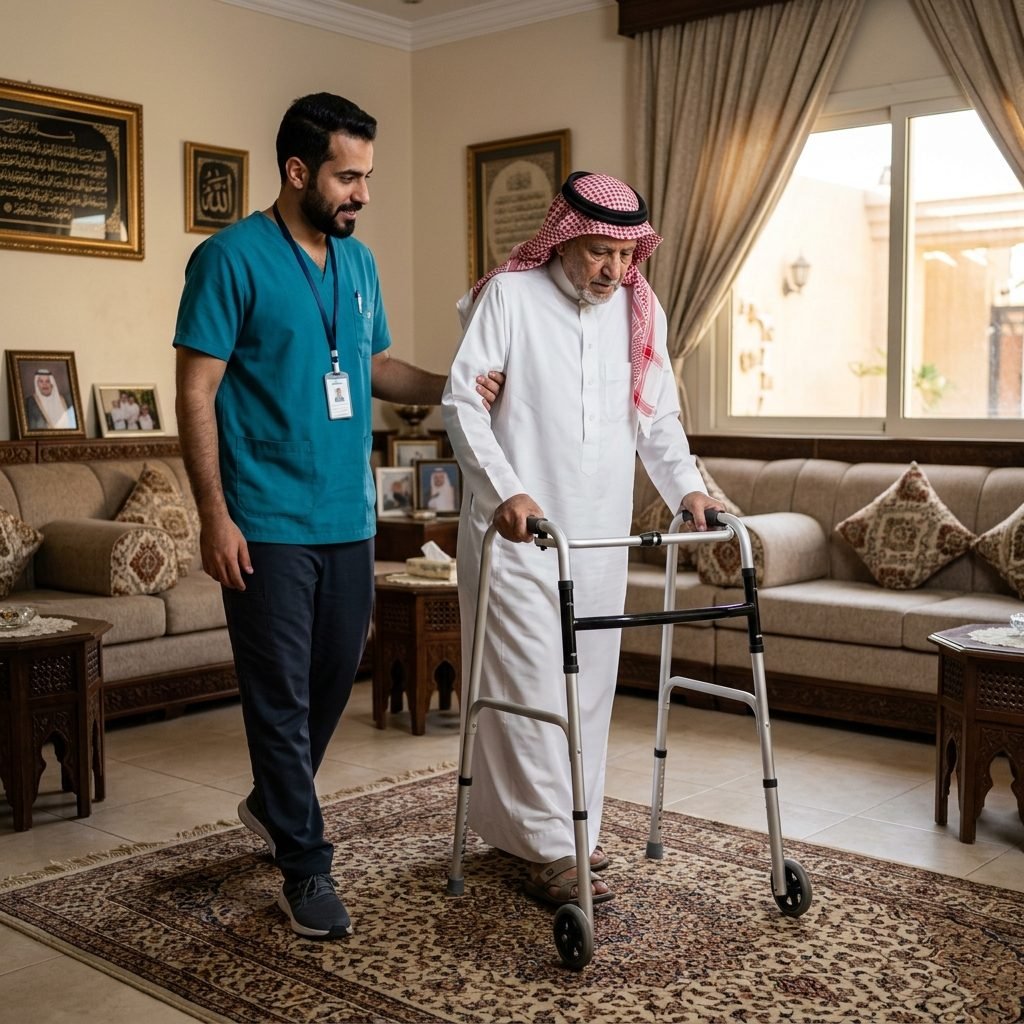
Geriatric Physical Therapy
Balance training, strengthening, and fall prevention for seniors in Al Khaldiyah.
Service Details ←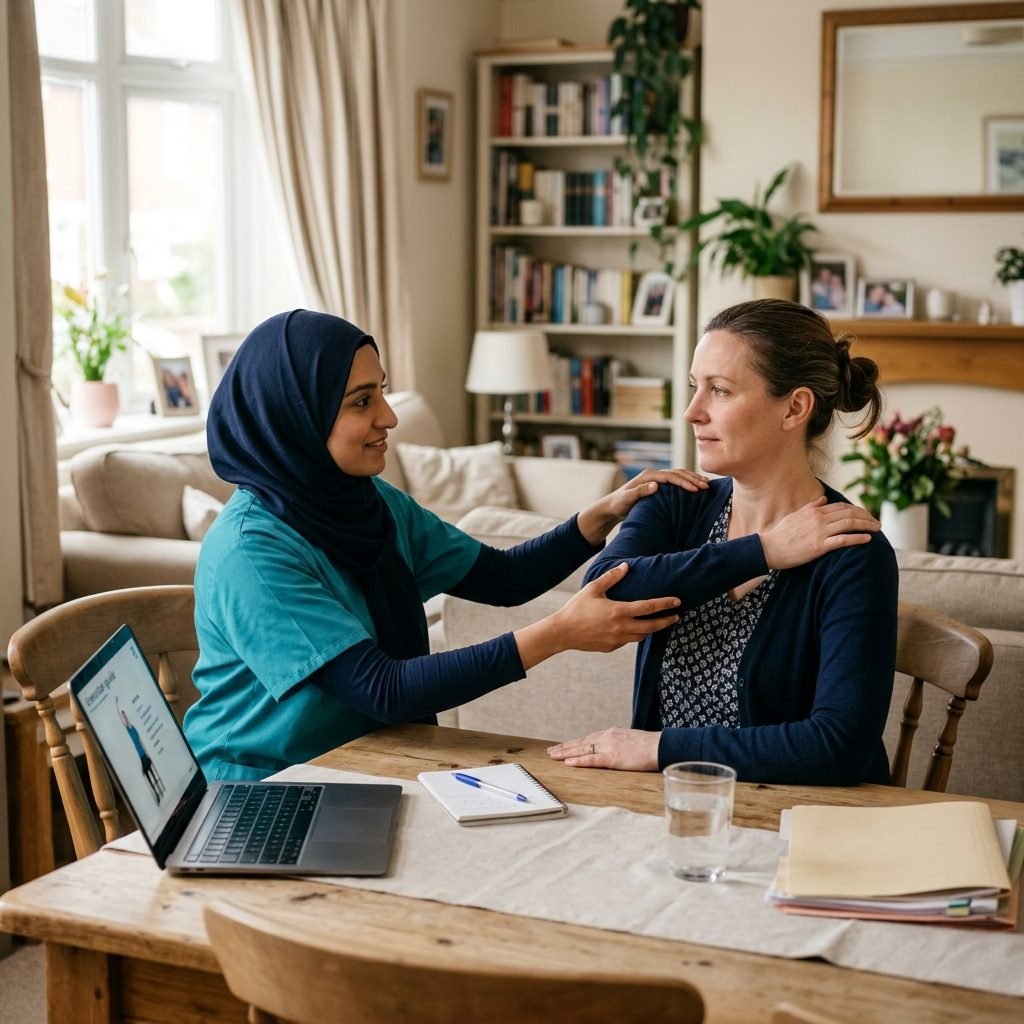
Female Physiotherapist
Licensed female therapists providing home care for women in Al Khaldiyah.
Service Details ←