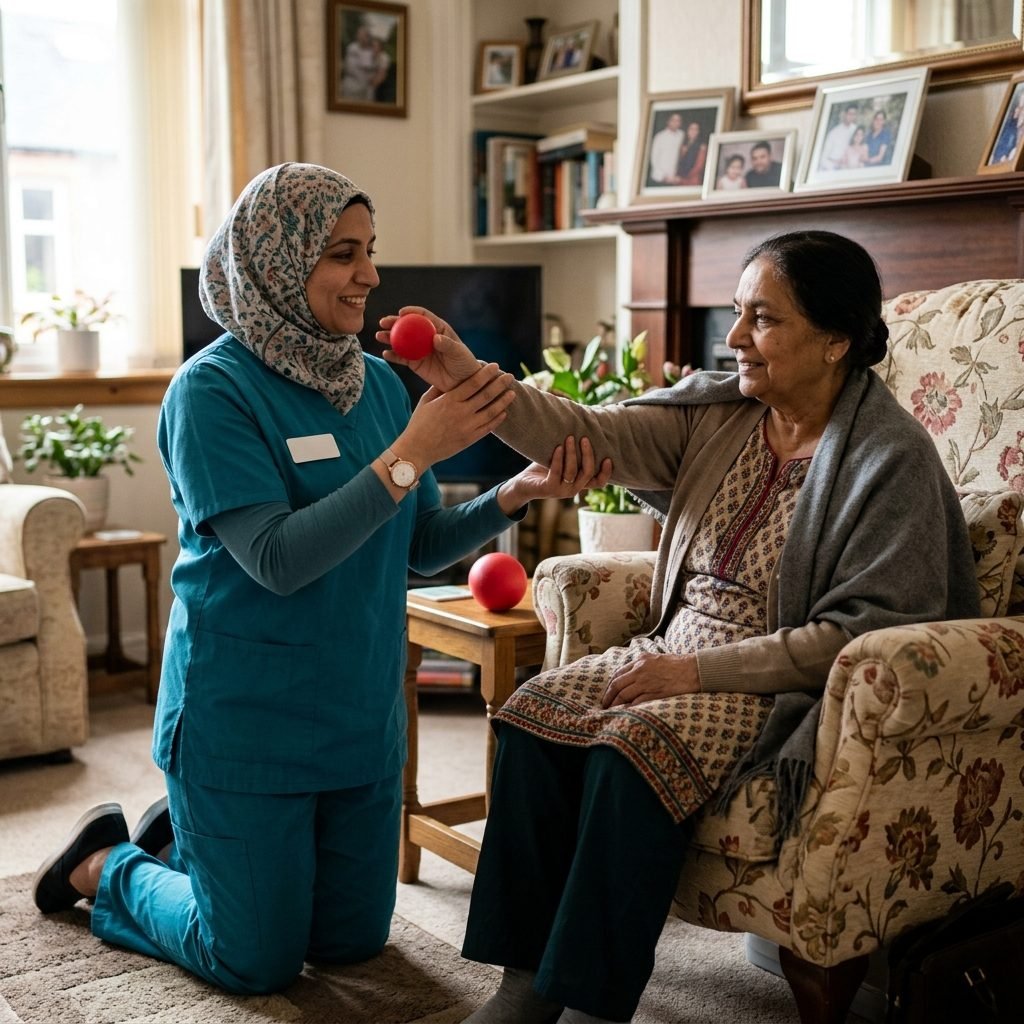
Having access to comprehensive, clinical physical therapy at home is crucial for maintaining rehabilitation progress, especially in busy neighborhoods. Al-Safa and Al Khaldiyah districts in Jeddah present unique local mobility challenges due to high population density and traffic. At Bidaya Center, we deliver high-quality home physiotherapy and movement rehabilitation services directly to your doorstep, conforming to the clinical guidelines of the Saudi Commission for Health Specialties. We eliminate the stress of travel, traffic, and parking. We respect cultural privacy by providing certified male therapists for male patients and female therapists for female patients.
Our clinical approach in Al Khaldiyah starts with a detailed physical and environmental safety assessment to eliminate fall hazards in the home. We bring all necessary portable, sterilized equipment to deliver a clinical standard of care comparable to external clinics. The therapist establishes a tailored milestone tracking plan to monitor muscle strength, balance, and joint range of motion (ROM) progression over time.
Why families in Al Khaldiyah choose Bidaya for home physiotherapy
- ✅ Licensed male & female therapists — full privacy, in your own home in Al Khaldiyah.
- ✅ Fully in-home visits across Al Khaldiyah — no travel or traffic.
- ✅ A personalized rehab plan built after a thorough in-home assessment.
- ✅ Continuous follow-up and direct contact with your therapist throughout.
- ✅ Fast response — arrange your visit by a quick call or WhatsApp message.
We also serve nearby areas: Al Andalus · Al Basateen · Al Bawadi
* The treatment plan and expected outcomes are determined by a medical and functional assessment of each individual case.
What Home-Based Multiple Sclerosis Physiotherapy Means for Al Khaldiyah Residents
Multiple sclerosis (MS) is an immune-related condition of the central nervous system in which the protective coating around nerve fibres is damaged, disrupting the signals travelling between the brain and the rest of the body. The result can be weakness in the limbs, poor balance, numbness, disproportionate fatigue, or a walking pattern that changes from one day to the next. This is where physiotherapy for multiple sclerosis plays its role: not as a cure for the disease itself, but as a practical tool for preserving as much movement and independence as possible and reducing the impact of relapses on daily life.
Delivering this service inside the home in Al Khaldiyah, Jeddah, is a logical choice given the nature of the condition. People with MS often deal with a fatigue that drains their energy before they even reach a clinic, and many are sensitive to heat, which makes travelling under Jeddah's sun and humidity a genuine burden that can temporarily worsen their symptoms. Al Khaldiyah is a calm, well-established residential district, and its stable home environment lets the therapist design a programme carried out in an air-conditioned room, at the time of day when the patient's energy is at its peak, without the strain of traffic or crowds.
A home session also gives the therapist the chance to see the real environment the patient moves through: the height of the bed, the type of flooring, an internal staircase, the layout of the bathroom, and the distances between rooms. These details never surface in a clinic, yet they are what truly determine how safe and independent a person is. For that reason, rehabilitation at home is more precise and closer to the reality of each case, built on real observations rather than assumptions.
Symptoms and Signs That Signal It Is Time to Begin
MS is an unpredictable condition, and its symptoms do not follow a single pattern from one person to another. It is important to start rehabilitation early when any of the following signs appear, rather than waiting for them to worsen:
- Severe, recurring fatigue that is out of proportion to the effort made, worsening towards the end of the day or in the heat.
- Weakness or heaviness in a leg or arm that makes steps less steady or gripping objects harder.
- Unsteady balance or dizziness when standing or changing direction, with a tendency to stumble.
- Stiffness or spasticity in the limb muscles, especially the legs, that restricts range of movement and causes pain or night cramps.
- Numbness, tingling, or pins-and-needles in the limbs that affects the accuracy of movement.
- A change in walking pattern: shorter steps, dragging a foot, or needing to hold onto walls.
- Difficulty with fine coordination or tremor when performing a task that requires precision.
Symptoms that appear after an acute relapse, or that persist enough to affect everyday activities, are a clear sign that an assessment is needed. The period following the settling of a relapse is an important window for restoring function, and it is best not to let it slip by.
Who Benefits From This Programme
There is no single form of MS, and the rehabilitation programme adapts to the stage of the disease and the degree to which it affects the person. Among those who benefit most from home physiotherapy in Al Khaldiyah:
- People newly diagnosed who want to build functional fitness and sound movement habits that protect them over the long term.
- Those in the relapsing-remitting phase who need to recover what was affected after each relapse.
- Those experiencing a gradual progression of symptoms who want to preserve as much independence as possible and slow the decline in function.
- Those whose main challenge is fatigue and who need to learn energy management and how to pace effort.
- Those with muscle spasticity that limits movement and causes pain or difficulty with self-care.
- Those who have lost some confidence in walking because of repeated stumbles or a fear of falling.
- Those using a walking aid (cane, walker) who need training to use it safely and efficiently.
Both licensed male and female therapists are available, ensuring complete privacy and letting each patient choose what suits them and feel comfortable during sessions inside their own home.
Goals of the Rehabilitation Programme
The core goal is not to "cure" MS but to enable the patient to live their life with as few restrictions as possible. Goals are set precisely after a clinical and functional assessment and are reviewed regularly according to how the case responds. The most important include:
- Preserving muscle strength and range of movement and limiting the impact of weakness on daily tasks.
- Improving balance and stability to reduce the risk of falls inside and outside the home.
- Managing fatigue by learning to distribute energy and applying energy-conservation techniques throughout the day.
- Easing muscle spasticity through stretching exercises and specific positioning that reduce cramps.
- Improving walking pattern and efficiency and gradually, safely increasing endurance distance.
- Enhancing coordination and control of fine movements as far as possible.
- Maintaining cardiovascular and respiratory fitness within safe limits that do not exhaust the patient.
- Supporting independence in self-care activities and transfers (from bed, chair, and bathroom).
These goals are realistic and measurable, and they are continuously adjusted; what works for a patient at one stage may not suit another, and the plan stays flexible, following the patient's condition rather than the reverse.
Stages and Course of the Home Sessions
The pathway begins with a comprehensive assessment visit at home, during which strength, balance, range of movement, walking pattern, and fatigue levels are examined, along with an evaluation of the home environment in Al Khaldiyah to identify hazards. Based on this, an individual plan with short- and long-term goals is drawn up.
- Assessment and foundation stage: building trust, explaining the nature of the disease and the plan, and setting priorities with the patient and family.
- Core working stage: carefully structured exercises for strength, balance, and stretching, plus training in walking and transfers, with close monitoring of fatigue signs and adjustment of exercise intensity.
- Functional integration stage: transferring what has been achieved into real-life tasks inside the home such as standing up, climbing stairs, and moving between rooms.
- Follow-up and maintenance stage: a gradual reduction in session frequency alongside a home programme that preserves the gains, with prompt intervention if a new relapse occurs.
Sessions are designed to respect the unpredictable nature of the disease; on days when fatigue is high or soon after a recent relapse, intensity is reduced and priorities are rearranged. Care is also taken to carry out the session in a moderately cool environment inside the home, to avoid the temporary worsening of symptoms that heat can trigger in many people with MS, an important consideration in Jeddah's climate.
The Role of the Family and Caregiver
Successful rehabilitation of an MS patient is not complete through the therapist's effort alone; the family is an essential partner, especially since sessions are limited in time while the patient spends the rest of their day with loved ones. The therapist therefore takes care to train and involve the family in:
- Understanding that fatigue is a genuine symptom of the disease rather than laziness, and respecting the patient's need for rest and timing.
- Assisting safely with transfers and walking without over-supporting in a way that weakens the patient's independence.
- Supervising the prescribed home exercises and encouraging adherence without exhausting pressure.
- Noticing any change in symptoms or signs of a new relapse and informing the medical team.
- Creating a supportive emotional atmosphere, since mood directly affects energy and motivation.
A caregiver who understands the limits of the patient's capacity and balances helping with letting them rely on themselves makes a real difference in preserving independence over the long term.
Home Safety and Prevention Tips
Simple adjustments at home can significantly reduce the risk of falls and fatigue. Among the key recommendations for Al Khaldiyah residents:
- Keep the home moderately cool, avoid exercise and exertion during the hottest hours, and drink plenty of water.
- Remove loose rugs, cables, and obstacles from walkways, and ensure good lighting, especially at night.
- Install fixed grab bars in the bathroom and near the toilet, and use a non-slip surface.
- Keep everyday items within easy reach to reduce bending and unnecessary effort.
- Use a chair while showering or preparing food when fatigue sets in, to conserve energy.
- Wear closed, stable footwear indoors instead of loose slippers.
- Spread tasks across the day with planned rest breaks rather than doing everything at once.
These measures complement the rehabilitation programme; their aim is to make the home environment an ally for the patient rather than a daily source of risk.
Frequently Asked Questions (FAQ)
Does physiotherapy cure multiple sclerosis for good?
No, physiotherapy does not cure the disease or halt its course, but it helps preserve movement, balance, and independence and manage symptoms such as fatigue and spasticity; expected outcomes depend on an assessment of each individual case.
Could exercise make fatigue worse?
When properly designed with controlled intensity and paced effort, structured exercise helps improve energy tolerance rather than drain it; the therapist continuously monitors fatigue signs and adjusts the programme to match the patient's day.
Does the heat in Jeddah affect the sessions?
Many people with MS feel their symptoms temporarily intensify as temperatures rise, so home sessions are carried out in a moderate, air-conditioned environment, and exertion during the hottest hours is best avoided.
How many sessions will I need and how long are they?
There is no fixed number; it depends on the form of the disease, how much it affects you, and your goals, and it is determined after the initial assessment, with the plan reviewed regularly and adjusted according to your response and any relapses that may occur.
Is a female therapist available for female patients?
Yes, both licensed male and female therapists are available, with complete privacy inside the home, and you can choose what suits you when booking.
To book a home visit in Al Khaldiyah or to ask about the multiple sclerosis physiotherapy programme, contact us by phone or WhatsApp by clicking Call Now, and the Bidaya Center team will be glad to help and arrange the time that best fits your energy.
Important Home Visit Details:
- ✓Setup: Please clear a 2x2m space in the room for safety.
- ✓Clothing: Wear loose, comfortable clothes for easy movement.
- ✓Therapist Parity: Male therapists for males, females for females.
- ✓Medical Reports: Keep your MRI or doctor reports ready for evaluation.
Rehabilitation & Services in Al Khaldiyah
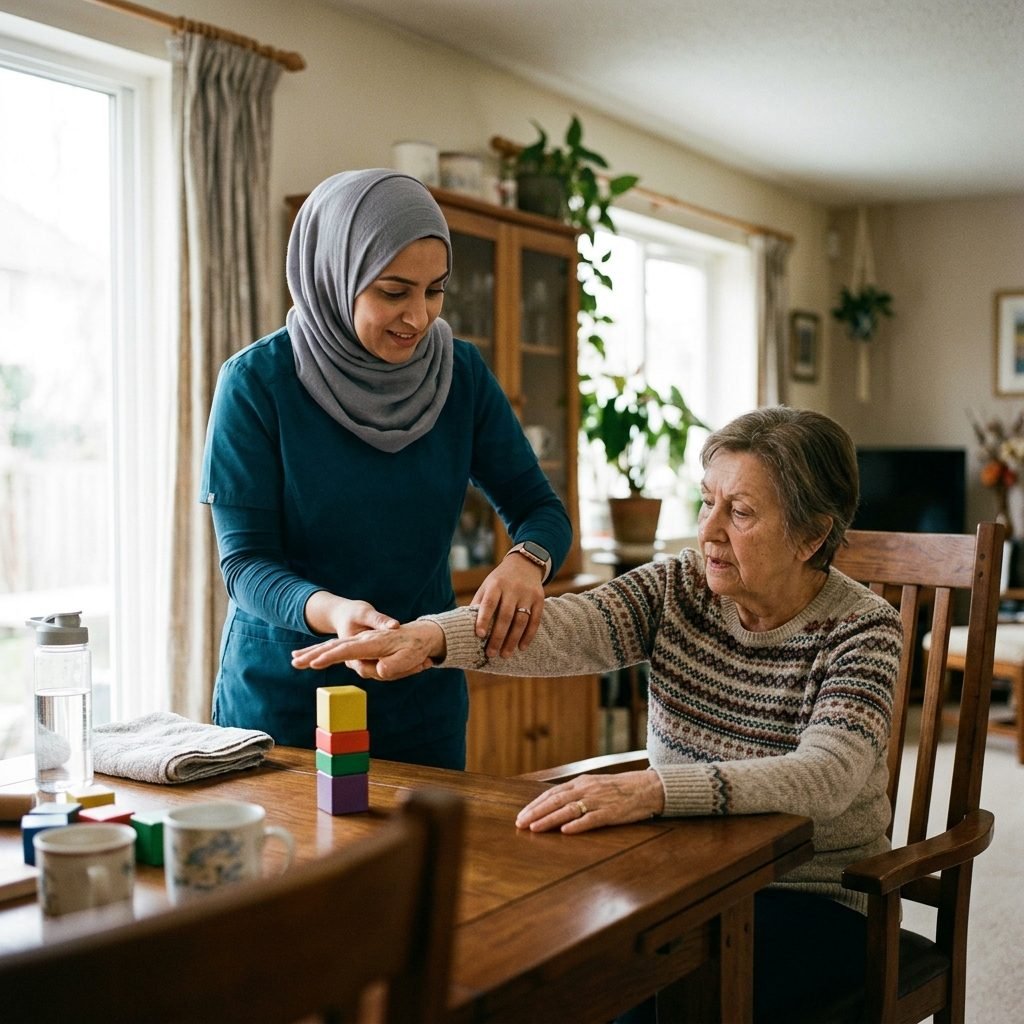
Stroke Rehabilitation
Advanced motor and neurological stroke recovery at home in Al Khaldiyah.
Service Details ←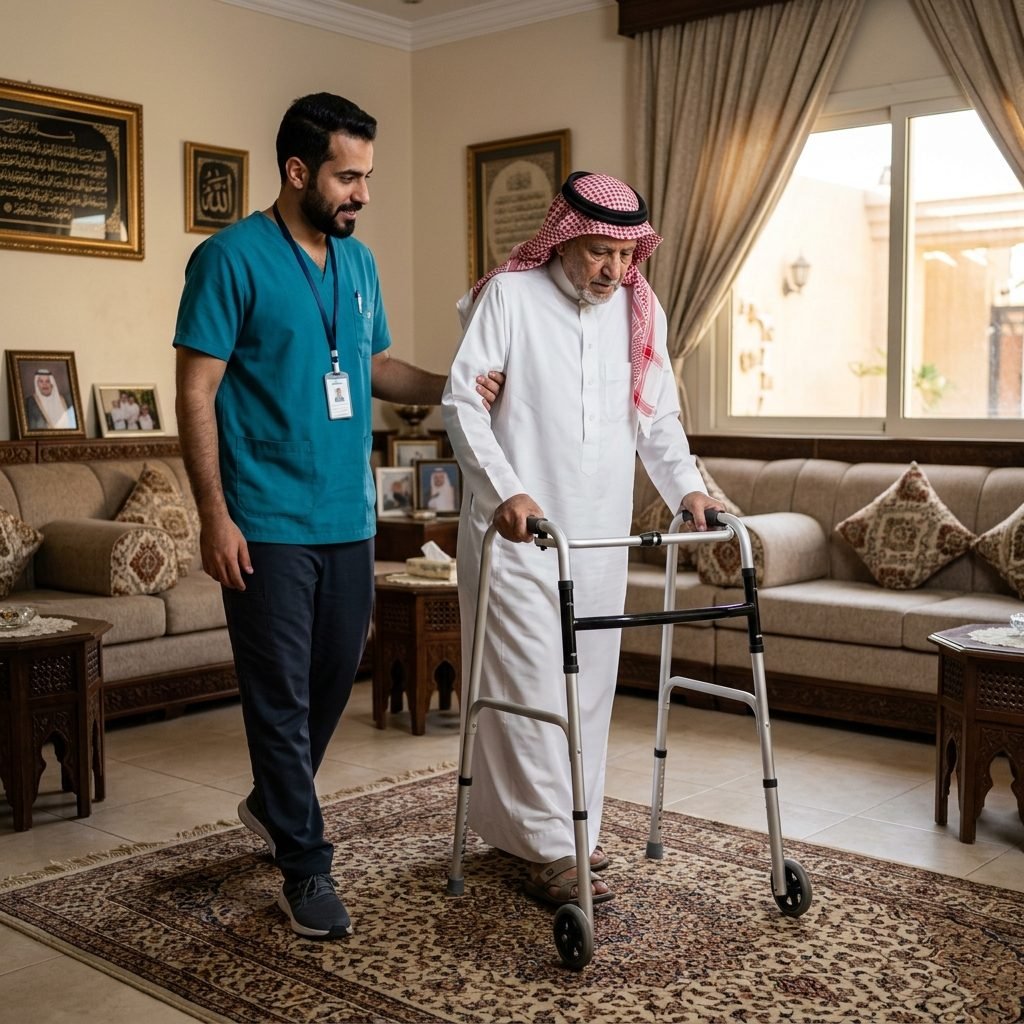
Geriatric Physical Therapy
Balance training, strengthening, and fall prevention for seniors in Al Khaldiyah.
Service Details ←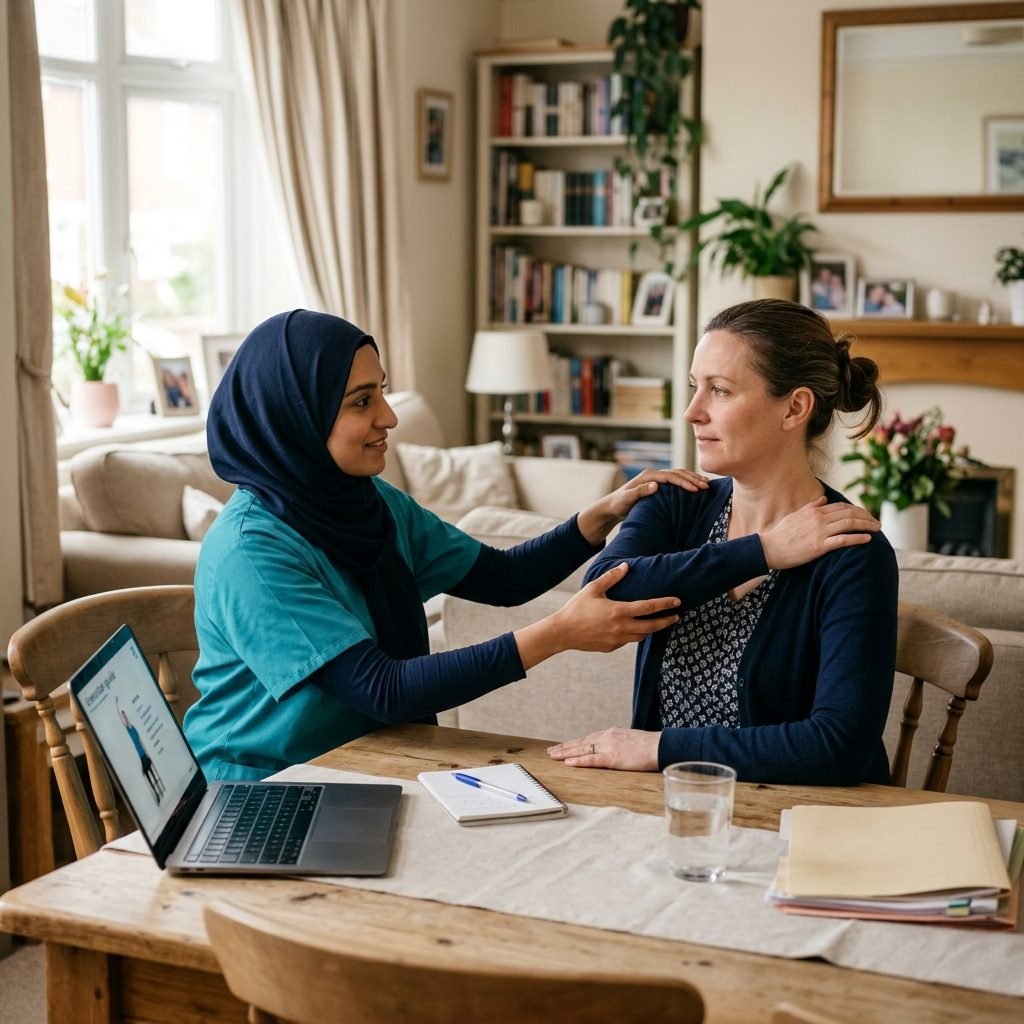
Female Physiotherapist
Licensed female therapists providing home care for women in Al Khaldiyah.
Service Details ←