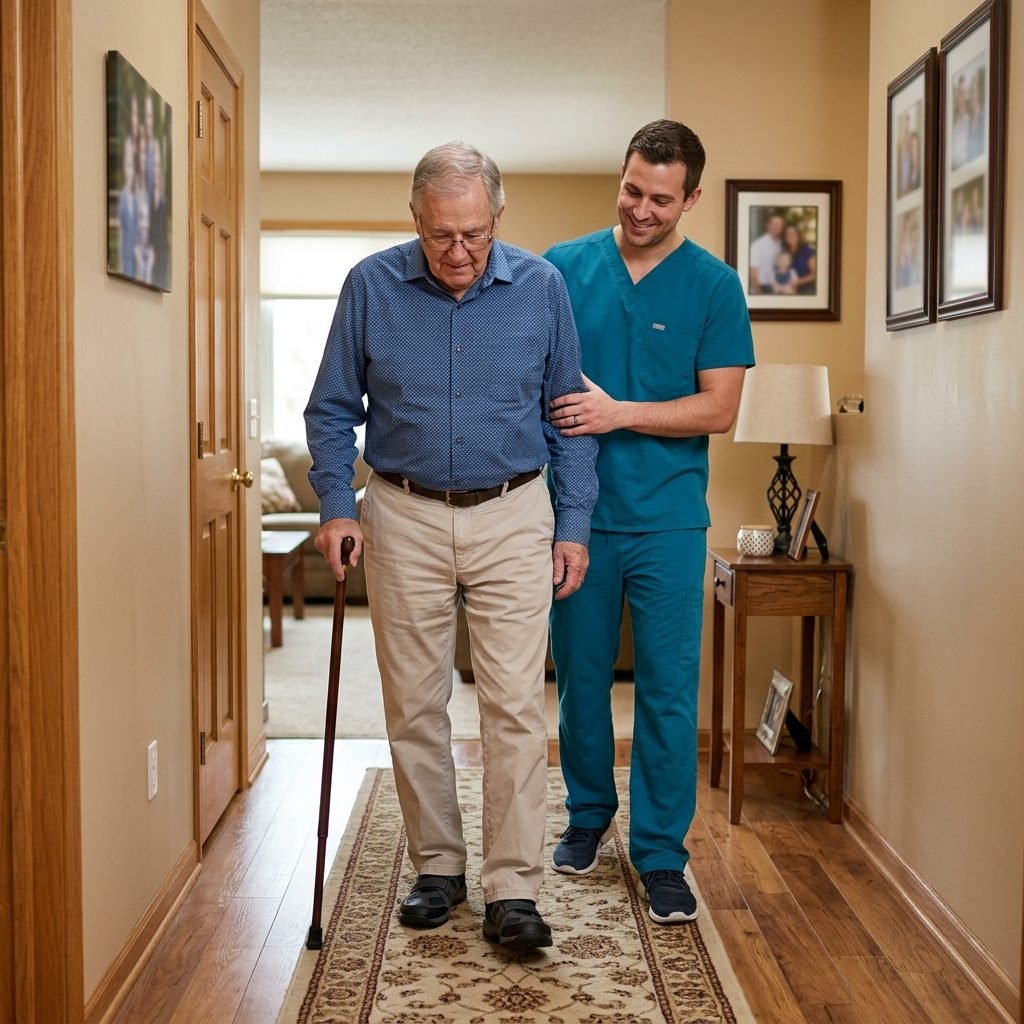
Having access to comprehensive, clinical physical therapy at home is crucial for maintaining rehabilitation progress, especially in busy neighborhoods. Al-Safa and Al Marwah districts in Jeddah present unique local mobility challenges due to high population density and traffic. At Bidaya Center, we deliver high-quality home physiotherapy and movement rehabilitation services directly to your doorstep, conforming to the clinical guidelines of the Saudi Commission for Health Specialties. We eliminate the stress of travel, traffic, and parking. We respect cultural privacy by providing certified male therapists for male patients and female therapists for female patients.
Our clinical approach in Al Marwah starts with a detailed physical and environmental safety assessment to eliminate fall hazards in the home. We bring all necessary portable, sterilized equipment to deliver a clinical standard of care comparable to external clinics. The therapist establishes a tailored milestone tracking plan to monitor muscle strength, balance, and joint range of motion (ROM) progression over time.
Why families in Al Marwah choose Bidaya for home physiotherapy
- ✅ Licensed male & female therapists — full privacy, in your own home in Al Marwah.
- ✅ Fully in-home visits across Al Marwah — no travel or traffic.
- ✅ A personalized rehab plan built after a thorough in-home assessment.
- ✅ Continuous follow-up and direct contact with your therapist throughout.
- ✅ Fast response — arrange your visit by a quick call or WhatsApp message.
We also serve nearby areas: Al Andalus · Al Basateen · Al Bawadi
* The treatment plan and expected outcomes are determined by a medical and functional assessment of each individual case.
Understanding Home Gait and Balance Rehabilitation and Why It Matters for Al Marwah Residents
Walking feels automatic until the day it stops being so. Only then do we realize it is a finely tuned system in which the brain, nerves, muscles, joints, and the balance organs of the inner ear all cooperate. When any part of that system falters, a confident stride turns into hesitation, and rising from a chair or crossing the living room becomes a task that drains energy and confidence alike. Gait and balance rehabilitation is a carefully structured therapeutic program that rebuilds this skill step by step and retrains the body to reclaim a safe, steady pattern of movement.
At Bidaya Center, we deliver this rehabilitation inside your own home in Al Marwah, Jeddah, and that choice is far from a minor detail. The environment a person trains in should resemble the environment they actually live in. When a patient learns to balance on their own floor, to climb the step at their entrance, and to turn inside their narrow kitchen, they gain a skill that transfers directly to daily life rather than one confined to clinic walls.
Al Marwah is a large, lively district, its buildings ranging from villas with staircases to apartments served by elevators, and its streets busy with daily activity. Many older adults and people recovering from injury find the trip to a clinic a genuine burden, especially given Jeddah's heat and humidity through the long summer months. A home session removes that burden entirely; care arrives at the door, and the patient's focus stays wholly on the exercise rather than on the ordeal of getting there.
We work as a team of licensed male and female physiotherapists, with full respect for privacy inside the home. We stress from the outset that any program we build begins with a precise clinical and functional assessment of your condition, and that results vary from one person to another depending on diagnosis, response, and commitment. Our promise is meticulous, methodical work, not ready-made guarantees of a cure.
Symptoms and Warning Signs
Gait and balance disorders rarely appear overnight; they usually begin with small signals a person overlooks or attributes to simply getting older. Noticing these signs early opens a wider door to improvement. Among the most common we observe:
- Recurrent unsteadiness or dizziness when standing up from sitting or when changing direction suddenly.
- A clear slowing of walking speed and a shortening of stride, with a tendency to shuffle rather than lift the feet.
- Needing to hold onto walls or furniture to move around the home, a habit sometimes called "furniture walking."
- Frequent tripping on rug edges or door thresholds, or actual falls, however minor.
- Widening the distance between the feet while walking to seek a steadier base, or a trunk that sways side to side.
- A growing fear of falling that pushes the person to move less and gradually withdraw indoors.
- Difficulty walking while turning the head or talking at the same time, so stumbles increase when the mind is occupied.
- Weakness or numbness in the legs, or morning stiffness in the knees and hips that hampers the first steps of the day.
- Imbalance that worsens in dim light or when the eyes are closed, such as during washing or getting dressed.
Having one or more of these signs does not necessarily point to a single diagnosis; some may stem from overlapping neurological, muscular, vestibular, or medication-related causes. That is why our work always begins with an assessment that pinpoints the source of the problem before any rehabilitation plan is drawn up.
Conditions and Groups That Benefit
Gait and balance rehabilitation is not reserved for one group; it serves a wide range of people united by a shared need to reclaim safe movement. Among those who benefit most in Al Marwah:
- Older adults whose steps have begun to lose steadiness and who need lower-limb strengthening and improved balance reactions to guard against falls.
- Stroke survivors who experience weakness on one side of the body and a disrupted gait pattern that calls for careful retraining.
- People with Parkinson's disease who face freezing of gait, shortened steps, and difficulty starting movement or turning.
- Those with peripheral nerve injury and neuropathy that dulls sensation in the soles and unsettles balance.
- Post-joint-surgery patients, such as after hip or knee replacement, who need to restore a natural walking pattern after a period of rest.
- People with vertigo and inner-ear disorders who suffer recurrent dizziness that robs them of their sense of balance.
- People with multiple sclerosis or spinal cord injury, within long-term rehabilitation plans that account for a fluctuating condition.
- Those recovering from fractures or trauma to the pelvis or legs after a long period of immobilization that weakened the muscles.
- People with general weakness after prolonged illness or bed rest, whose fitness and confidence in movement have declined.
Each of these conditions follows a different path; what suits someone recovering from a fracture does not necessarily suit a person with Parkinson's. That is why we never treat the program as a ready-made template but design it after understanding each patient's story, daily goals, and home environment.
Goals of the Rehabilitation Program
The ultimate aim is not merely to cover a longer distance but to restore independence and confidence in movement within everyday life. With each patient we set realistic, measurable goals that are reviewed and adjusted as sessions progress. Among the most important things we work toward:
- Improving standing stability and the ability to balance in different positions, and reducing reliance on holding onto objects.
- Strengthening the muscles of the lower limbs and trunk, which form the solid foundation of every step.
- Correcting the walking pattern: stride length, rhythm, adequate foot clearance, and coordination between both sides.
- Training the quick balance reactions that protect the body during a sudden trip and keep it from becoming a fall.
- Lowering the risk of falls by combining exercise with practical modifications to the home environment.
- Gradually increasing endurance so the patient can cover longer distances without exhaustion.
- Restoring the ability to perform dual tasks, such as walking while carrying something, talking, or turning.
- Training safe, smooth ascent and descent of stairs and transitions between sitting and standing.
- Reducing the fear of movement and rebuilding the psychological confidence that so often breaks after a first fall.
- Teaching the patient and family self-monitoring methods to preserve gains after the sessions end.
We emphasize that these goals are directions of work, not guarantees; how fully and how quickly they are reached depends on the nature of the condition and the degree of commitment to the program, something we explain candidly from the very first assessment.
Stages and Flow of the Home Sessions
We follow an organized path that respects your body's pace and does not rush results, usually moving through the following stages:
Stage one: comprehensive assessment. The therapist visits you at home to carry out a precise clinical and functional evaluation; observing your gait, measuring muscle strength and joint range, testing your balance in various positions, and surveying the home for its sources of risk. From this assessment the individual treatment plan is born.
Stage two: foundation and preparation. We begin with gentle exercises that reactivate dormant muscles, improve joint flexibility, and train awareness of body position. The aim of this stage is to build a safe base before moving on to greater challenges.
Stage three: building balance and strength. We raise the level of exercise gradually; static and dynamic balance drills, targeted strengthening for the legs and trunk, and training to shift weight confidently between the feet, using simple tools available at home.
Stage four: gait retraining. We turn to direct work on the walking pattern within the home's hallways and rooms; correcting stride length and rhythm, safe turning, walking on different surfaces, and negotiating thresholds and stairs.
Stage five: complex functional tasks. We blend walking with real-life tasks; carrying items, opening doors, rising for prayer, moving around the kitchen, and walking while talking, because life does not unfold along an empty straight line.
Stage six: follow-up and sustainability. We review progress with clear measurement tools, adjust the plan, and hand the patient and family a home program to maintain gains and prevent relapse. The number and frequency of sessions are set according to your condition, not a fixed template.
The Role of the Family and Caregiver
The success of home rehabilitation is never complete through the therapist's effort alone; the family is an essential partner in every step. The hours a patient spends between sessions are the real arena in which newly acquired skills are tested, and the family's informed presence makes a tangible difference to the pace of improvement.
We take care to train the caregiver practically in essential matters:
- The correct way to support the patient while standing and walking without bearing their full weight, so they do not lose the chance to exercise.
- How to supervise the daily home exercises safely, and encourage the patient without pressure that discourages them.
- Recognizing signs of strain or pain that call for a pause, and distinguishing them from normal effort.
- Organizing a safe space for exercise inside the home and clearing away anything that obstructs movement during sessions.
- How to handle moments of hesitation and fear, offering reassurance rather than overprotection.
We always balance help against independence; too much assistance weakens the patient and keeps them dependent, while neglect exposes them to danger. The balanced middle ground is what we teach each family in a way suited to their patient's condition. We also remind families that emotional support is no less important than the physical side; a sincere word of encouragement may prompt a patient to make one more attempt they would otherwise have avoided.
Home Safety and Prevention Tips
A safe home is half the road to rehabilitation. Many falls arise not from the patient's weakness alone but from a home environment full of hidden hazards. Here are practical guidelines we apply and recommend in Al Marwah homes:
- Secure rugs firmly or remove small ones, since their curling edges are among the most common causes of tripping.
- Ensure adequate lighting in hallways, the staircase, and the route to the bathroom at night, with easily reachable switches nearby.
- Install fixed grab bars near the toilet, inside the bathroom, and along the stairs.
- Lay a non-slip mat in the bathroom and provide a suitable shower chair when needed, since a wet bathroom floor is a dangerous place.
- Keep floors free of cords and scattered items, and organize hallways so they stay wide and clear.
- Choose a closed indoor shoe with a non-slip sole, and avoid walking in socks on smooth tile.
- Arrange frequently used items within easy reach to avoid excessive bending or reaching for high shelves.
- Rise from bed or a chair in stages: sit first, then stand slowly, to avoid the dizziness of a sudden drop in blood pressure.
- Stay well hydrated, especially in Jeddah's hot summer, since dehydration can cause dizziness that raises the risk of falling.
These are general preventive guidelines, and we tailor them to each home after inspecting it in person during the initial assessment, because every house has its own particular challenges.
Frequently Asked Questions (FAQ)
Is a home session as effective as a clinic session for gait rehabilitation?
Yes, and for this kind of rehabilitation in particular it may be even more fitting. Training balance and walking within your real environment, with its own floors, stairs, and hallways, makes the skill directly transferable to your daily life, keeping in mind that every plan is built on an individual assessment.
How many sessions will I need before I notice improvement?
There is no single number; the count and frequency of sessions depend on your diagnosis, the degree of the disorder, your response, and how consistently you do the exercises. We determine this after the first assessment and review it regularly based on your measured progress.
Can a female therapist attend for female patients?
Yes, we have licensed male and female therapists, and you may request a female therapist for a female patient, with full respect for privacy and the family's comfort inside the home.
My father is elderly and afraid of exercising; how do you handle that?
We start at a gentle level suited precisely to his condition and progress slowly while building confidence gradually. Fear of movement is a natural part we address with patience, and we involve the family in encouragement to make the experience reassuring rather than exhausting.
Do you need special equipment, or is what is in the home enough?
We rely mainly on simple tools and items found in most homes, and we bring light rehabilitation equipment when needed. The goal is for the patient to keep exercising using what surrounds them after the program ends.
To begin your journey of reclaiming confident steps in Al Marwah, Jeddah, reach out to Bidaya Center by phone or WhatsApp by clicking Call Now, and let our team visit you at home to carry out the assessment and design the rehabilitation plan that suits you.
Important Home Visit Details:
- ✓Setup: Please clear a 2x2m space in the room for safety.
- ✓Clothing: Wear loose, comfortable clothes for easy movement.
- ✓Therapist Parity: Male therapists for males, females for females.
- ✓Medical Reports: Keep your MRI or doctor reports ready for evaluation.
Rehabilitation & Services in Al Marwah
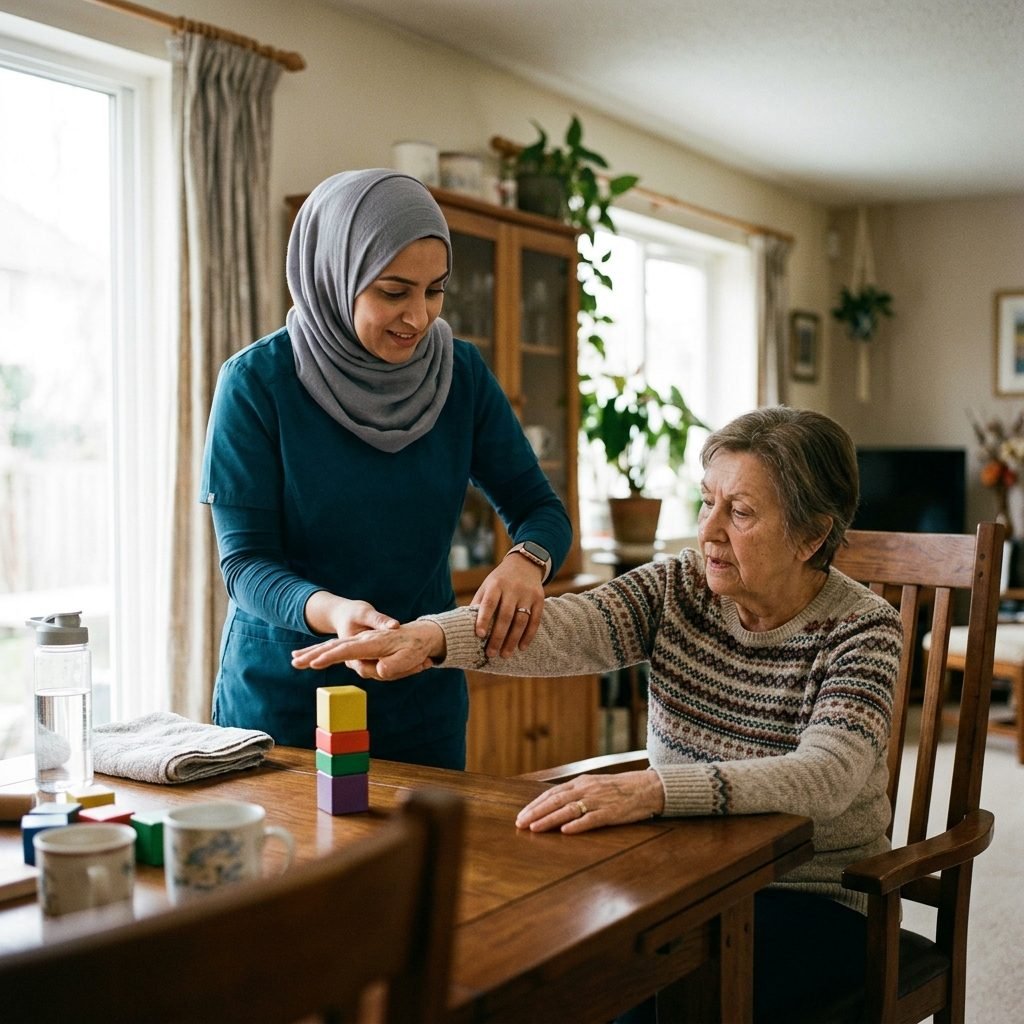
Stroke Rehabilitation
Advanced motor and neurological stroke recovery at home in Al Marwah.
Service Details ←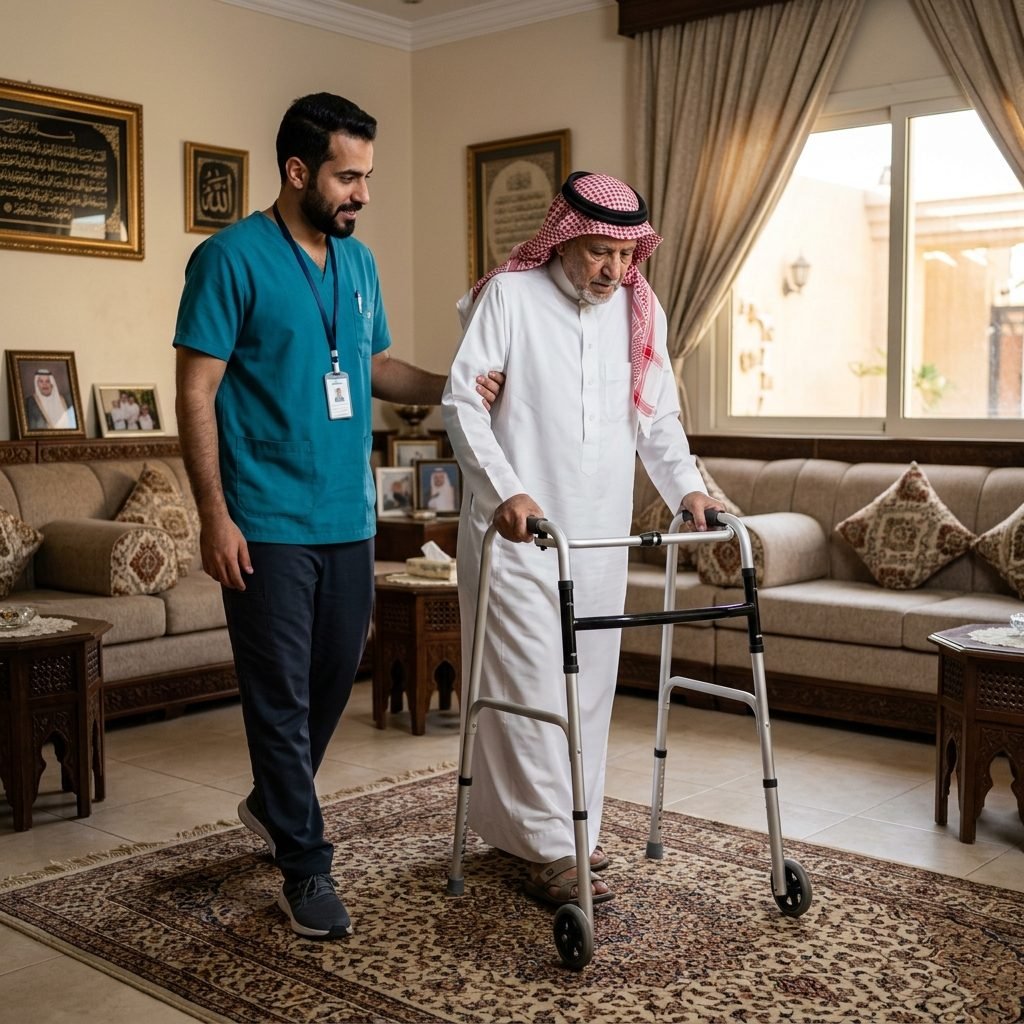
Geriatric Physical Therapy
Balance training, strengthening, and fall prevention for seniors in Al Marwah.
Service Details ←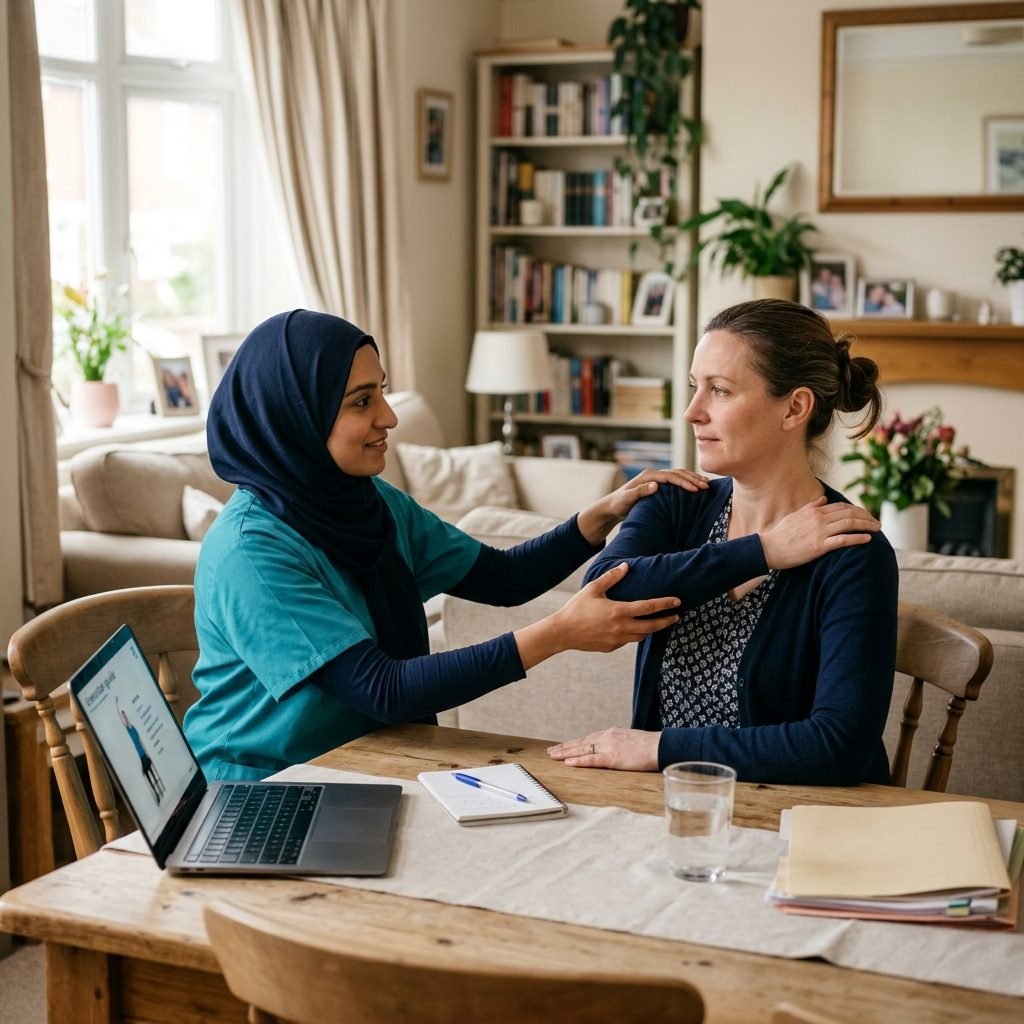
Female Physiotherapist
Licensed female therapists providing home care for women in Al Marwah.
Service Details ←