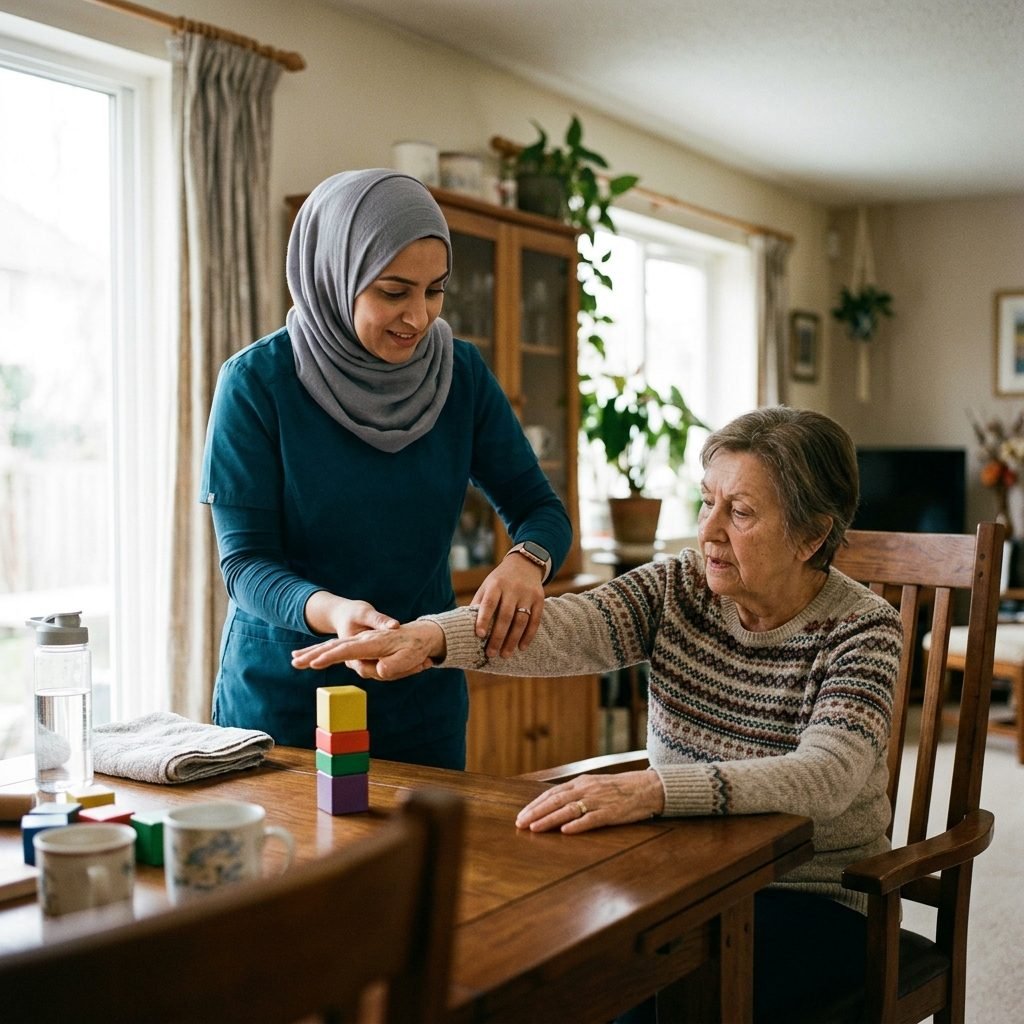
Having access to comprehensive, clinical physical therapy at home is crucial for maintaining rehabilitation progress, especially in busy neighborhoods. Al-Safa and Al Marwah districts in Jeddah present unique local mobility challenges due to high population density and traffic. At Bidaya Center, we deliver high-quality home physiotherapy and movement rehabilitation services directly to your doorstep, conforming to the clinical guidelines of the Saudi Commission for Health Specialties. We eliminate the stress of travel, traffic, and parking. We respect cultural privacy by providing certified male therapists for male patients and female therapists for female patients.
Our clinical approach in Al Marwah starts with a detailed physical and environmental safety assessment to eliminate fall hazards in the home. We bring all necessary portable, sterilized equipment to deliver a clinical standard of care comparable to external clinics. The therapist establishes a tailored milestone tracking plan to monitor muscle strength, balance, and joint range of motion (ROM) progression over time.
Why families in Al Marwah choose Bidaya for home physiotherapy
- ✅ Licensed male & female therapists — full privacy, in your own home in Al Marwah.
- ✅ Fully in-home visits across Al Marwah — no travel or traffic.
- ✅ A personalized rehab plan built after a thorough in-home assessment.
- ✅ Continuous follow-up and direct contact with your therapist throughout.
- ✅ Fast response — arrange your visit by a quick call or WhatsApp message.
We also serve nearby areas: Al Andalus · Al Basateen · Al Bawadi
* The treatment plan and expected outcomes are determined by a medical and functional assessment of each individual case.
Understanding Home-Based Post-Stroke Rehabilitation and Its Importance for Al Marwah Residents
A stroke reshapes life in an instant, not only for the person affected but for everyone around them. Once the acute medical phase has passed and the situation stabilizes, a longer and often more meaningful journey begins: the work of reclaiming the abilities that were disrupted. Post-stroke rehabilitation is a structured therapeutic program designed to help the brain rebuild its neural pathways and to retrain the body to perform the movements and skills interrupted when blood flow to a part of it was cut off. When that program is delivered inside the home, it gains a value that no clinic setting can fully replicate.
At Bidaya Center we treat the familiar environment as a therapeutic ingredient in its own right. The patient who practices rising from bed is training on the very bed they will use each night, and the hallway where they relearn to walk is the same one they will cross daily toward the living room or kitchen. This direct link between practice and real life makes newly gained skills more durable and quicker to carry over into everyday function.
For residents of the Al Marwah district in Jeddah, home therapy answers real, practical challenges. Repeatedly transporting a patient with one-sided weakness or impaired balance is physically and emotionally draining for a family, and traffic congestion and the heat of certain seasons only add to the burden. When the therapy team arrives at the front door, those obstacles fall away, and keeping up with regular sessions becomes both possible and sustainable, which is the very foundation on which any rehabilitation plan succeeds.
We work with a team of licensed male and female physiotherapists, with full respect for each family's privacy and the freedom to choose a therapist of the gender the patient and household find most comfortable. From the outset we are clear that every plan is built on a careful clinical and functional assessment of the individual case. Outcomes differ from one person to another depending on the location and size of the injury, the time elapsed, and overall health. We make no promises of complete cure; we commit to considered professional work aimed at the best possible improvement.
Symptoms and Signs That Call for Starting
Many families hesitate to begin rehabilitation, assuming they must wait a long while first. In reality, early and structured intervention often makes a tangible difference. A number of signs indicate that a patient would benefit from a home rehabilitation program, including:
- Weakness or paralysis on one side of the body: difficulty moving the hand or leg on the affected side, or noticeable heaviness when trying to lift or grip.
- Impaired balance and walking: the body leaning to one side, frequent stumbling, or a fear of falling that keeps the patient from moving independently.
- Muscle stiffness and spasticity: painful tightness in the arm or leg muscles and difficulty straightening or bending a joint normally.
- Swallowing and speech problems: choking while eating or drinking, or slurred, effortful speech and trouble finding or understanding words.
- Loss of fine control: being unable to hold a spoon, button a shirt, or write, everyday fine-motor skills that are directly affected.
- Reduced ability to self-care: needing full help with bathing, dressing, or transferring from bed to chair.
- Changes in cognition and mood: forgetfulness, poor concentration, or withdrawal and low mood stemming from a sense of helplessness.
The presence of one or more of these signs points to the importance of early assessment. We consistently advise against delaying rehabilitation in the hope of spontaneous recovery, because the first weeks and months after a stroke represent an important window for regaining function, provided the medical condition is stable and the treating physician approves.
Conditions and Groups That Benefit
The home post-stroke rehabilitation program is designed to serve a wide range of cases, because stroke affects people across ages and circumstances. Among the groups that benefit most in Al Marwah and its surroundings:
- Those recovering from a recent stroke: people just discharged from hospital who need to continue rehabilitation, uninterrupted, in a safe and comfortable setting.
- People with older strokes: those whose injury occurred long ago and who stopped rehabilitation, now wishing to recover lost ground or prevent further decline.
- Older adults: for whom repeated travel to a center is difficult and who need close follow-up that accounts for frailty and co-existing conditions.
- Patients with hemiplegia: those whose entire side has been affected and who need methodical retraining of movement and balance.
- Those experiencing spasticity: who need stretching exercises and specialized techniques to ease tightness and prevent joint deformity.
- Patients with accompanying chronic illness: such as diabetes and high blood pressure, where the program is tailored to their overall health.
- Those needing functional re-training: for a gradual return to daily activities or simple tasks at home and work.
Because every case is unique, no patient's program is copied onto another. Instead, each person receives a distinct path built from their assessment results, personal goals, and the reality of their daily life in their home and neighborhood.
Goals of the Rehabilitation Program
Rehabilitation is not merely about moving a limb or strengthening a muscle; it is an integrated effort to restore a person's role in their own life. With each family we set realistic, measurable goals that are reviewed and adjusted as the case progresses. Among the outcomes we work toward:
- Restoring movement and strength: improving the affected limb's ability to move and gradually building muscle strength that serves daily tasks.
- Improving balance and walking: training the patient to stand, transfer, and walk safely, and lowering the risk of falls at home.
- Easing spasticity and pain: through stretching exercises and manual techniques that preserve joint mobility and reduce discomfort.
- Rebuilding fine-motor skills: training the hand in gripping, grasping, and the precise movements needed for eating, dressing, and self-care.
- Increasing independence: enabling the patient to accomplish as much as possible on their own and reducing reliance on others.
- Preventing complications: such as pressure sores, joint stiffness, muscle wasting, and circulation problems caused by inactivity.
- Psychological support and motivation: lifting the patient's spirits and strengthening their confidence to progress step by step.
These goals are not fixed promises but aims we pursue professionally. The degree and pace of improvement depend on the clinical and functional assessment, the commitment of patient and family to the plan, and accompanying health factors. We speak candidly with every family about the reality of their case and its expected outcomes.
Stages and Course of the Home Sessions
We organize the therapeutic journey along a clearly defined path, from the first contact to the stage where the patient has achieved the greatest possible independence. The following are the stages of work as we apply them in the home:
- Stage one — comprehensive assessment: during the first visit the therapist examines motor and sensory ability, balance, and level of independence, listens to the goals of patient and family, and inspects the home environment to identify obstacles and hazards.
- Stage two — building the individual plan: based on the assessment, a tailored treatment plan is drawn up defining short- and long-term goals, the number of weekly sessions, and the appropriate types of exercise.
- Stage three — foundational exercises: we begin with gentle work that stimulates circulation, preserves joint range of motion, and prevents stiffness, alongside training in safe position changes.
- Stage four — functional training: we move to exercises that mirror daily life, such as rising from a chair, transferring between bed and seat, and walking with assistance or supportive aids when needed.
- Stage five — reinforcing independence: we raise the challenge gradually toward more complex activities, working to restore fine-motor skills and improve endurance and confidence in movement.
- Stage six — follow-up and reassessment: we measure progress periodically, adjust the plan as circumstances change, and provide the family with supportive home exercises to bridge the gaps between sessions.
The length and frequency of each session are set according to the patient's condition and tolerance, and we schedule visits flexibly to suit family circumstances in Al Marwah, ensuring the program continues without exhaustion.
The Role of the Family and Caregiver
Success in post-stroke rehabilitation does not rest on the therapist alone; it is a genuine partnership in which the family is the closest and most important ally. The patient spends the whole day with loved ones, while a therapy session is only a portion of that time, so what happens between sessions matters no less than what happens during them.
We make sure the caregiver becomes an informed partner. We explain the condition in plain language and teach them how to help the patient move and transfer safely, protecting both the patient and the caregiver's own back. We also train them to follow the simple recommended home exercises and to watch for correct sitting and sleeping positions that prevent pressure sores and joint stiffness.
One important family role is encouraging the patient to use the affected limb in daily tasks rather than relying entirely on the sound side, since this continual stimulation strengthens the rebuilding of neural pathways. We consistently emphasize the value of patience and of avoiding comparisons with other cases, because every patient moves at their own pace.
The emotional dimension is no less important than the physical. A word of encouragement, including the patient in family gatherings, and celebrating the smallest achievement all lift morale and guard against withdrawal and depression. We accompany the family throughout this journey, answer their questions, and offer the guidance that makes their role both effective and reassuring.
Home Safety and Prevention Tips
A safe home is a cornerstone of recovery, since stroke patients are more prone to falls and injury owing to impaired balance and movement. Here is a set of practical guidelines that help create a safe and supportive home environment:
- Clear the walkways: remove loose rugs, cords, and obstacles from the patient's paths to provide a clear, safe route for walking.
- Good lighting: ensure adequate light in rooms and hallways, especially on the way to the bathroom at night.
- Equip the bathroom: install sturdy grab bars, use a shower chair, and place non-slip mats inside and around the bathroom.
- Suitable footwear: wear closed, stable shoes with non-slip soles instead of open slippers.
- Arrange belongings: keep daily-use items within easy reach to avoid bending or straining to reach them.
- Correct positioning: reposition a bedbound patient regularly to prevent pressure sores, and support the affected limb with appropriate cushions.
- Hydration and nutrition: ensure adequate fluids and balanced nutrition, following safe-swallowing guidance for those who struggle with it.
- A call for help within reach: keep a phone or alert bell beside the patient so they can summon assistance when needed.
These simple steps make a large difference in preventing complications and speeding recovery. During the first visit, the therapist offers observations tailored to your specific home layout and the patient's particular needs.
Frequently Asked Questions (FAQ)
When can rehabilitation begin after a stroke?
It is best to begin as soon as the medical condition stabilizes and the treating physician approves, since the early phase is important for regaining function. Even older cases may benefit, and the initial assessment determines the right starting point for each patient.
Does home rehabilitation mean a guaranteed complete cure?
We make no promises of full recovery, because outcomes vary with the location and size of the injury, overall health, and the patient's commitment to the plan. What we do commit to is considered professional work aimed at the best possible improvement, clarified by each case's clinical and functional assessment.
How many sessions does a patient need per week?
The number differs from case to case according to the severity of the injury, the goals, and the patient's tolerance. The plan is set after assessment and reviewed periodically to raise or adjust the pace of sessions in a way that serves the patient's progress without overtaxing them.
Are female therapists available for female patients?
Yes. We have licensed male and female specialists, and you may choose a therapist of the gender that suits the comfort of the patient and family, with full respect for privacy inside the home during every session.
What sets home therapy apart from the center?
Home therapy spares the trouble of travel and allows training in the real environment where the patient lives, making skills more realistic. It also improves session consistency and involves the family directly in the recovery journey.
Begin the recovery journey with the Bidaya Center team in Al Marwah, Jeddah. Contact us now to book a home visit and an initial assessment of your case by phone or WhatsApp by clicking Call Now. We will be glad to answer all your questions and walk beside you, step by step, toward a more independent life.
Important Home Visit Details:
- ✓Setup: Please clear a 2x2m space in the room for safety.
- ✓Clothing: Wear loose, comfortable clothes for easy movement.
- ✓Therapist Parity: Male therapists for males, females for females.
- ✓Medical Reports: Keep your MRI or doctor reports ready for evaluation.
Rehabilitation & Services in Al Marwah
Stroke Rehabilitation
Advanced motor and neurological stroke recovery at home in Al Marwah.
Service Details ←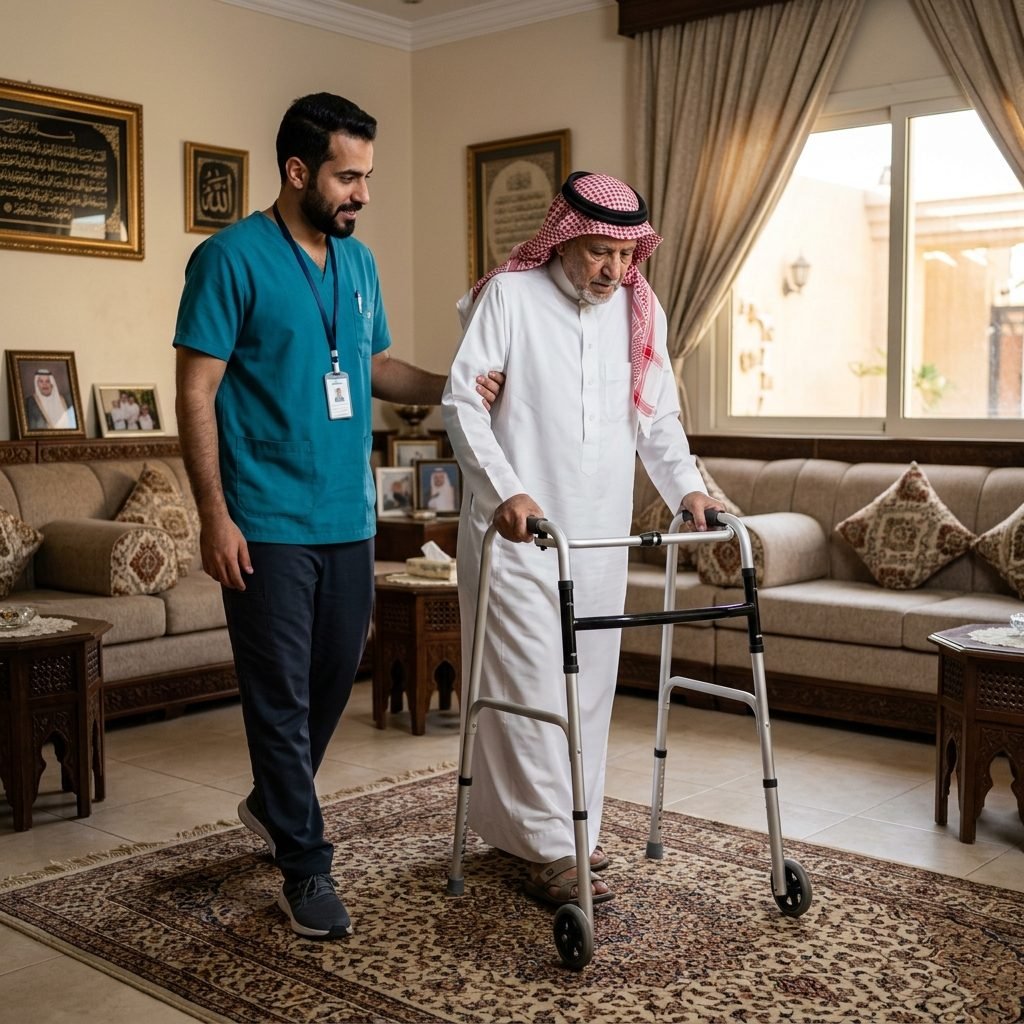
Geriatric Physical Therapy
Balance training, strengthening, and fall prevention for seniors in Al Marwah.
Service Details ←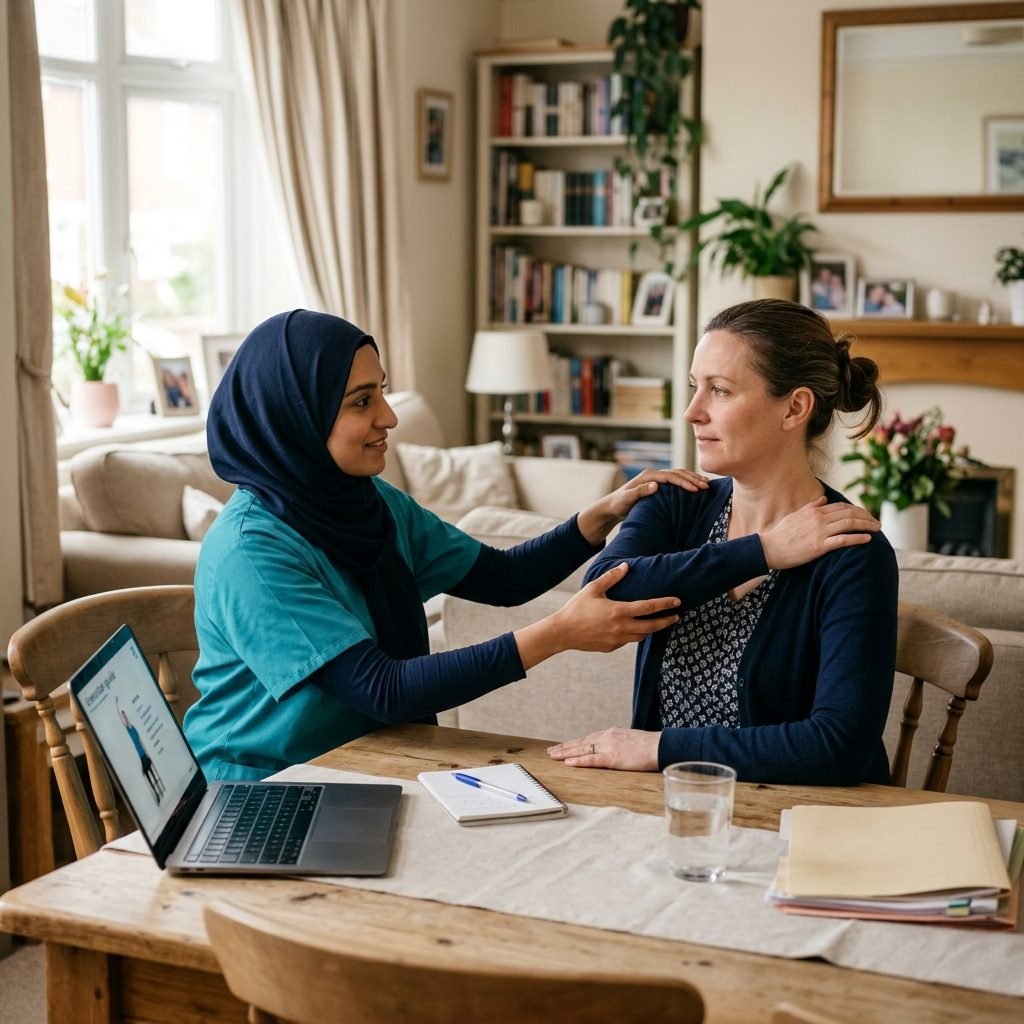
Female Physiotherapist
Licensed female therapists providing home care for women in Al Marwah.
Service Details ←